
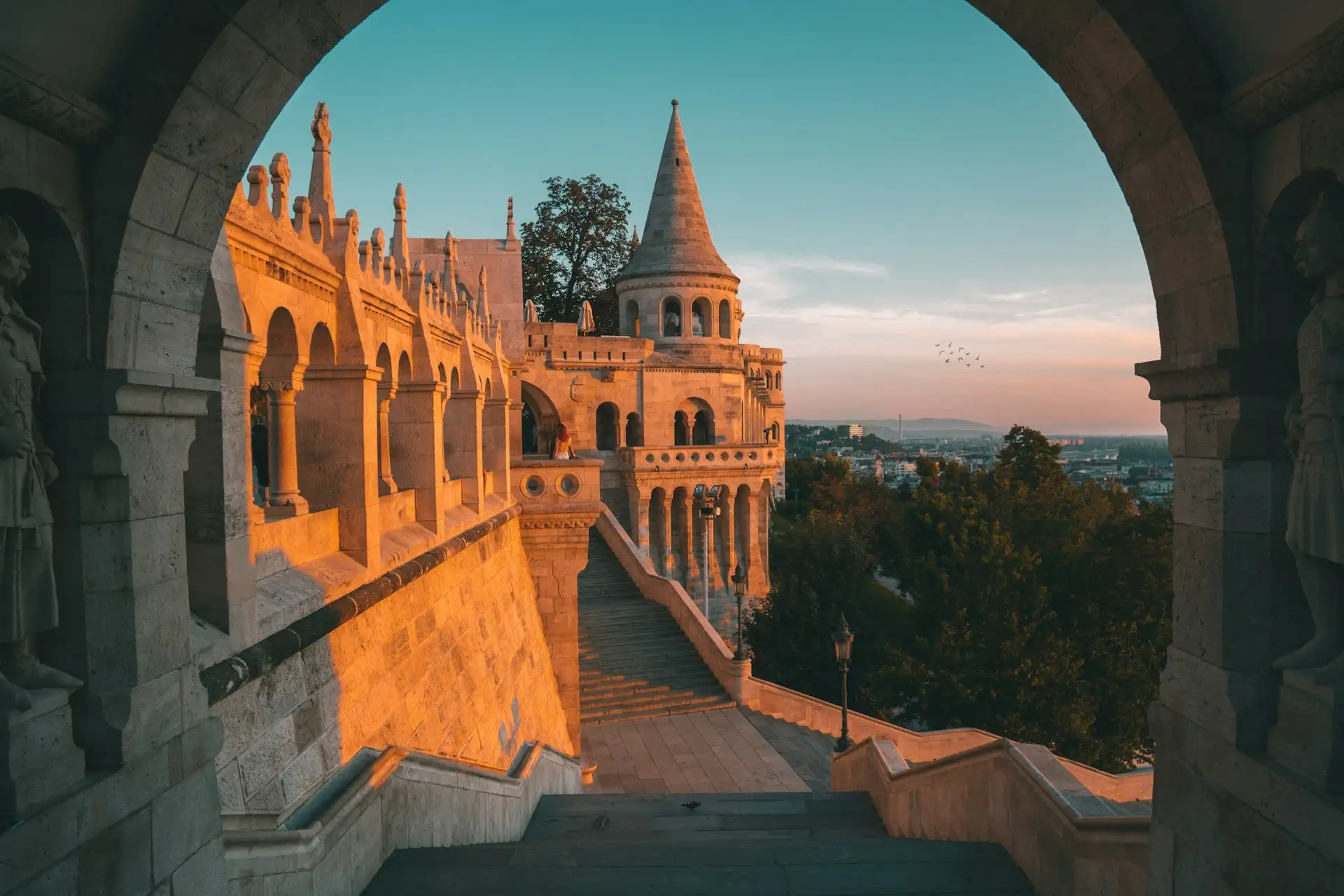
What You're Actually Getting Into
Hungary punches well above its size on the European travel circuit, and the reason is mostly one city. Budapest, split by the Danube into hilly Buda and flat Pest, spent the 2010s turning derelict Jewish Quarter apartment blocks into ruin bars and now runs some of the best-value thermal bathing, food and nightlife in the EU. But the country around the capital has its own case to make: Lake Balaton, Central Europe's largest lake, ringed by vineyards; Eger, a baroque town built over a network of wine cellars carved into volcanic rock; and a stretch of the Danube north of the city, the Danube Bend, where the river curves hard enough to fill postcards.
Hungary joined the EU in 2004 and has been in the Schengen Area since 2007, but it kept its own currency, the forint, and its own language, Hungarian, a Uralic tongue with no meaningful relationship to German, Slavic or Romance languages spoken around its borders. That linguistic isolation is part of what makes the country feel distinct from its neighbors even though it's fully integrated into the EU travel zone.
The honest complications
Budapest's popularity has consequences: District VII's ruin bar streets get loud and crowded on weekend nights, and the classic sights (Fisherman's Bastion, the Parliament, Széchenyi Baths) draw real queues in peak summer. Hungarian is genuinely difficult and not closely guessable from any other European language, so don't expect to pick up survival phrases the way you might in a Romance-language country. English is common with younger Hungarians and in the tourist core, but noticeably less so outside Budapest and with older generations. Hungary also had a significant, closely watched political turnover in April 2026, when Peter Magyar's Tisza party ended Viktor Orban's 16-year run in a landslide; it doesn't affect entry rules or day-to-day travel, but it's a large enough story that Hungarians may bring it up.
A History Worth Knowing
Hungarians are Magyars, descendants of nomadic tribes who crossed the Carpathians in the 9th century and settled the Pannonian plain, a distinct origin from every Slavic and Germanic nation around them. A medieval kingdom, a century and a half of Ottoman occupation, absorption into the Habsburg empire, a brutal WWII siege, a crushed 1956 uprising against Soviet rule, and a 2026 election that ended a 16-year political era: the short version of how the country you're visiting got here.
- 895
The Magyar conquest. Nomadic Magyar tribes led by Árpád cross the Carpathian mountains and settle the Pannonian plain, founding the polity that becomes Hungary.
- 1000
Kingdom of Hungary. Stephen I is crowned king on Christmas Day, converting the country to Christianity and founding a kingdom that lasts, in various forms, for nearly a millennium.
- 1526
Battle of Mohács. Ottoman forces crush the Hungarian army; the kingdom splits three ways between Habsburg, Ottoman and semi-independent Transylvanian rule.
- 1541–1699
Ottoman Buda. Central Hungary, including Buda, spends roughly 150 years under Ottoman administration; the thermal bath culture visible today largely dates from this period.
- 1867
The Austro-Hungarian Compromise. Hungary becomes an equal partner with Austria in the Austro-Hungarian Empire; Budapest booms as an imperial capital.
- 1873
Budapest unified. Buda, Óbuda and Pest merge into a single city.
- 1920
Treaty of Trianon. Post-WWI settlement strips Hungary of about 71 percent of its territory, a loss still referenced in Hungarian political life today.
- 1956
The Hungarian Revolution. A nationwide uprising against Soviet-imposed policy is crushed by Soviet tanks in early November after less than three weeks.
- 1989–2004
Transition and EU accession. Hungary opens its border with Austria in 1989, helping trigger the wider fall of the Iron Curtain, joins NATO in 1999 and the EU in 2004.
- 2026
A political turnover. Peter Magyar's Tisza party wins a landslide April election, ending Viktor Orban's 16-year premiership.
Read the full history: Ottoman Buda, the Habsburgs, 1956 and Trianon
The Magyars' distinct linguistic and ethnic origin, unrelated to the Slavic and Germanic peoples who surround Hungary today, is central to how Hungarians understand their own identity: a nation that arrived from the east and carved out a permanent home in the middle of Europe. Stephen I's coronation in the year 1000 is treated as the founding moment of the Hungarian state, and his crown, the Holy Crown of Hungary, remains a genuine national symbol displayed in the Parliament building.
The 1526 defeat at Mohács is one of the most consequential battles in Hungarian history: it ended medieval Hungarian statehood and led to nearly two centuries of division. Ottoman rule over Buda and the central plain, from 1541 to 1699, left a lasting mark that's easy to miss if you don't know to look for it, most visibly in the thermal bath culture: several of Budapest's working baths, including parts of the Rudas complex, incorporate genuine 16th-century Ottoman-era bathhouse architecture, not just later imitations.
The 1867 Compromise that created Austria-Hungary triggered Budapest's belle-epoque boom: the Parliament building, the Basilica, Andrássy Avenue and continental Europe's first underground metro line all date from this roughly 50-year period of imperial confidence, cut short by WWI. The 1920 Treaty of Trianon, which reduced Hungary's territory by about 71 percent and left millions of ethnic Hungarians outside the new borders in Romania, Slovakia and elsewhere, remains a live topic in Hungarian political and cultural life a century later.
1956. The Hungarian Revolution began as student protests in Budapest on October 23 and briefly toppled the Soviet-backed government before Soviet tanks crushed it on November 4. Around 2,500 Hungarians and 700 Soviet soldiers died, and roughly 200,000 Hungarians fled the country in the aftermath. October 23 remains a national holiday, and the House of Terror museum on Andrássy Avenue, in the former secret police headquarters, covers both the fascist and communist periods of 20th-century Hungarian repression.
The 2026 election. The April 2026 parliamentary election saw Peter Magyar's Tisza party, formed by a former Fidesz insider, win a landslide two-thirds majority against Viktor Orban's Fidesz-KDNP coalition, ending Orban's uninterrupted 16-year premiership. It's a major domestic story and Hungarians, especially in Budapest, may want to talk about it, but it has no bearing on visa rules, currency, or safety for visitors.
Top Destinations
Hungary divides naturally into five travel zones: the capital, the lake, the wine country to the northeast, the Danube Bend just north of Budapest, and the south around Pécs. Hungary is a small, flat country by European standards, so almost everywhere is a manageable train or car ride from Budapest. A week covers the capital and one other zone well; two weeks covers most of the country without rushing.
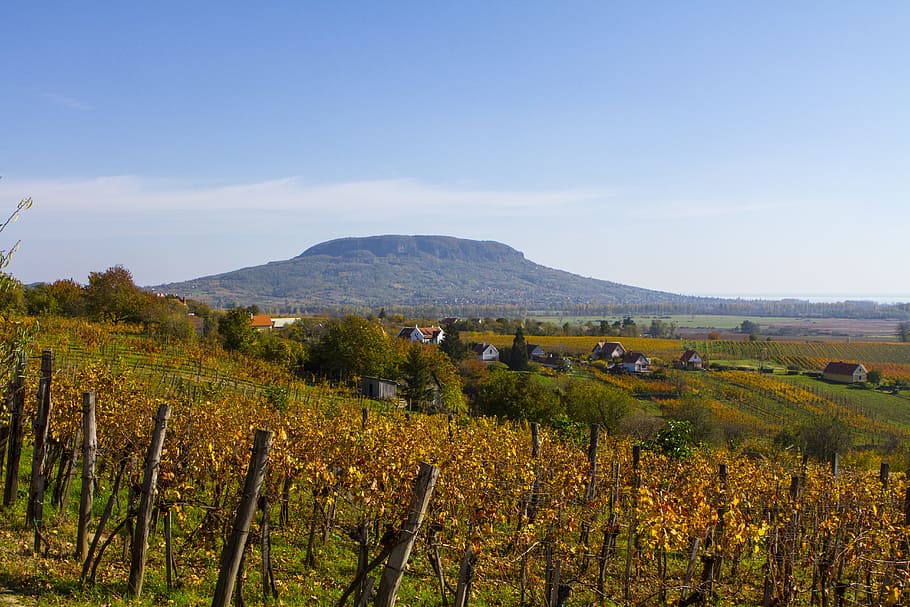
Budapest, the capital on two banks
Budapest is Hungary's overwhelming first stop and, for most visitors, the whole trip: hilly Buda on the west bank, holding the Castle District and Fisherman's Bastion, and flat Pest on the east, holding the Parliament, the ruin bars and most of the hotels and restaurants. The city's thermal baths, fed by more than 100 natural hot springs, are a genuine daily-life institution, not a tourist gimmick, and the Jewish Quarter's ruin bars, built into condemned apartment courtyards starting with Szimpla Kert in 2002, are now copied worldwide but still best experienced at the original. See our full Budapest city guide for neighborhoods, hotels, restaurants and a complete itinerary.
Lake Balaton, the Hungarian Sea
Lake Balaton is the largest freshwater lake in Central Europe, a shallow, warm, 600-square-kilometer body of water that Hungarians treat the way other nations treat a coastline. The southern shore, anchored by Siófok, is the party side: beach clubs, boat bars and the loudest nightlife outside Budapest. The northern shore is the wine and scenery side: Balatonfüred's genteel promenade, the volcanic Badacsony hills planted with Olaszrizling and Kékfrankos vines, and the Tihany peninsula, a lavender-scented promontory with a Benedictine abbey and views back across the water. The lake's shallow water, warm enough to swim from May to September and never far above waist-deep for a long way out, makes it an easy choice for families.
Eger, the wine town built on cellars
Eger, about two hours northeast of Budapest, pairs a baroque old town with a genuinely famous wine tradition: Egri Bikavér, "Bull's Blood," a full-bodied red blend whose name comes from a 16th-century legend that Hungarian defenders drank red wine before repelling an Ottoman siege, staining their beards and unnerving the attackers into believing they'd been drinking bull's blood for strength. The Szépasszony-völgy (Valley of the Beautiful Women) just outside town is a hillside honeycombed with small family wine cellars, most open for tastings without a reservation. Eger Castle, the site of that 1552 siege, and the Turkish-built Minaret, the northernmost surviving Ottoman minaret in Europe, are the other two reasons to stay overnight rather than day-trip.
The Danube Bend
North of Budapest, the Danube curves hard around the Börzsöny and Visegrád hills, and three towns along that curve make an easy, classic day trip from the capital. Szentendre, the closest, is an artists' colony town with Serbian Orthodox churches and cobbled lanes, popular enough to feel busy by midday. Visegrád holds the ruined hilltop citadel of a medieval royal palace, with the best view of the river bend itself. Esztergom, the furthest and most rewarding, is Hungary's ecclesiastical capital and home to the country's largest church, the Esztergom Basilica, directly across the river from Slovakia.
Pécs & the Villány wine region
Pécs, about two and a half hours south of Budapest, is a warm, Mediterranean-feeling university city with an Ottoman-era mosque converted into a Catholic church still standing on its main square, and an Early Christian necropolis, a UNESCO World Heritage site, with painted burial chambers from the 4th century. It's also the gateway to Villány, Hungary's warmest wine region and the country's best-known source of serious red wine, particularly Kékfrankos and Cabernet Franc, with a wine village well set up for tastings.
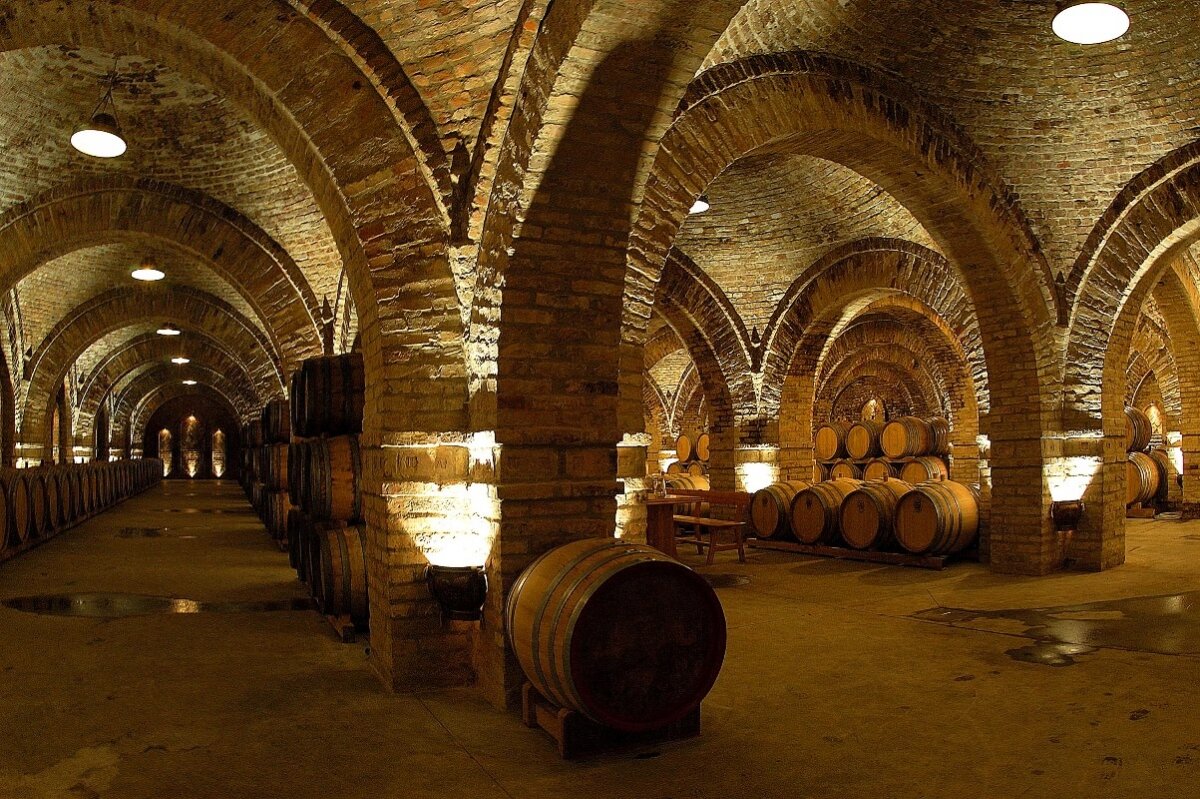
Hidden gems beyond the main circuit
The zones above cover a first or second trip well. With extra days, these are the spots that rarely make the standard guides but reward the detour.
The Children's Railway
A narrow-gauge railway through the Buda Hills, staffed almost entirely by children aged 10-14 in conductor roles (adults drive the trains), a genuine surviving piece of Hungary's communist-era youth program and now a scenic half-day escape from the city.
Szilvásvárad & the Lipizzaner stud
A quiet village in the Bükk hills, home to Hungary's state stud farm for Lipizzaner horses and a narrow-gauge forest railway through the gorge above town. Easily combined with an Eger stay.
Hollókő
A UNESCO-listed village of traditional whitewashed Palóc folk houses, still lived in rather than preserved as a museum piece, with a small hilltop castle above. Best combined with a longer countryside loop rather than a rushed day trip.
Szeged
Hungary's sunniest city, rebuilt in unified Art Nouveau style after a catastrophic 1879 flood, known for its paprika industry and the Szeged Fish Soup (halászlé). A genuine Great Plain city with almost no tourist crowds.
Tokaj
The original Tokaj wine region, source of the sweet aszú wines once served at European royal courts. A quieter, less packaged wine-tourism experience than Eger, with the small town of Tokaj itself as a base.
Hortobágy National Park
A UNESCO-listed puszta, the vast grassland steppe of Hungarian herding tradition, with working csikós horsemen demonstrations and the country's largest protected wetland bird habitat.
Culture & Etiquette
Hungarian culture runs on a few durable institutions: the thermal bath as a place for actual bathing, not just sightseeing; the coffeehouse as a place to sit for hours over one drink; and wine and pálinka (fruit brandy) as the default social lubricant rather than beer. Hungarians are often described by neighbors as reserved with strangers and warm once you're past that first layer, a dynamic that plays out clearly in how service and hospitality work here compared to more overtly friendly parts of Southern Europe.
Do
- Use the thermal baths properly. Bring your own towel, flip-flops and a swim cap if required at certain pools; locals treat baths as a wellness routine, not a tourist photo op, and the etiquette (shower before entering, keep noise down in the indoor pools) matters.
- Greet with "Szia" (informal) or "Jó napot"(formal, good day). A little Hungarian goes further than expected precisely because so few foreign visitors attempt it.
- Toast with wine or pálinka, not beer. Many Hungarians still avoid clinking beer glasses, tied to a widely repeated (though not fully verified) 1849 story about Austrian generals celebrating the execution of Hungarian revolutionary generals. Toasting wine or spirits is unaffected.
- Validate public transport tickets. Budapest runs frequent ticket inspections on trams, buses and the metro; a valid but unvalidated ticket still results in an on-the-spot fine.
- Carry small cash (forint). Card payments are widely accepted in Budapest, but market stalls, small rural guesthouses and some wine cellars are cash-only.
Don't
- Assume everyone speaks German. A common assumption given Hungary's Habsburg-era ties to Austria; English is the more useful default with younger Hungarians and in tourist areas.
- Jaywalk carelessly at marked crossings. Hungarian drivers generally observe pedestrian right of way at crossings with signals, and jaywalking is more visibly frowned upon than in some neighboring countries.
- Photograph inside synagogues or during services without checking first. The Great Synagogue and other Jewish Quarter sites welcome respectful visitors but have specific rules around photography and dress.
- Confuse Hungarian with a Slavic language. Hungarian is Uralic, unrelated to Slovak, Croatian, Serbian or Romanian, all of which surround it; a mistake locals hear often enough to notice.
- Skip validating a Budapest transit ticket "just this once." Inspectors are common enough, and plainclothes, that this is a genuinely bad bet.
Deeper culture: the language, coffeehouse tradition and thermal bathing
The language. Hungarian belongs to the Uralic language family's Finno-Ugric branch, distantly related to Finnish and Estonian but not meaningfully mutually intelligible with either; the shared ancestry is roughly as distant as English is from Russian. With 18 grammatical noun cases and an agglutinative structure, it's consistently ranked among the harder languages for Indo-European-language speakers to learn, which is part of why so few visitors attempt more than a handful of phrases.
Coffeehouse culture. Budapest's turn-of-the-century coffeehouses, most famously the New York Café, opened in 1894 in eclectic Italian Renaissance style and marketed as "the most beautiful café in the world," were the gathering places of Hungary's literary establishment: a story persists that the writer Ferenc Molnár threw the café's front-door key into the Danube to stop it from ever closing. The tradition of sitting for hours over one coffee, reading or writing, survives today across the city's grander cafés.
Thermal bathing. Budapest sits on more than 100 thermal springs, a legacy of geology exploited first by the Romans at Aquincum, then significantly expanded under Ottoman rule in the 16th and 17th centuries, and again during the Habsburg-era bath-building boom that produced Széchenyi. Bathing here isn't a spa-day indulgence so much as an ordinary part of city life: locals go to soak, play chess in the outdoor pools at Széchenyi, and socialize, year-round, indoors and out.
Food & Drink
Hungarian food runs on paprika, pork fat and slow-cooked stews, a heavier, more Central European cuisine than its Balkan or Mediterranean neighbors. The best of it is not always at the smartest restaurant: a market-hall lángos stand or a no-frills neighborhood vendéglő often beats a tourist-menu restaurant on the main squares, and Budapest's Michelin scene now runs seven starred restaurants for travelers who want to go the other direction entirely.
Gulyás (Goulash) €6-10
A paprika-forward beef and vegetable soup, not the thick stew often served abroad under the same name; the real thing is soupier and lighter. Order it as a starter, the way Hungarians do, not a main.
Lángos €3-6
Deep-fried disc of dough, crisp outside and pillowy inside, traditionally topped with sour cream, grated cheese and garlic. Hungary's essential street food, best from a market-hall stand rather than a sit-down restaurant.
Egri Bikavér & Tokaji From €4/glass
Bull's Blood, a robust red blend from Eger, and Tokaji aszú, a historic sweet white from the Tokaj region once served at European royal courts, are Hungary's two signature wines and both widely available in Budapest wine bars.
Kürtőskalács (Chimney Cake) €3-5
A cylinder of sweet yeast dough, spit-roasted over coals and rolled in sugar, cinnamon or nuts. A Transylvanian-Hungarian tradition sold hot from market and street stalls across Budapest.
Töltött Káposzta & Pörkölt
Stuffed cabbage rolls in paprika-tomato sauce, and pörkölt, a thicker, richer paprika stew (the dish outsiders often mistakenly call goulash), both staples of a proper vendéglő menu.
Pálinka €2-4/shot
Fruit brandy, typically apricot or plum, distilled to a genuine EU-protected standard. Offered as a welcome drink at guesthouses and traditional restaurants; strong enough to sip slowly.
When to Go & Itineraries
May, June, September and October are the best months for everything at once: mild temperatures, manageable crowds, and both Budapest and Lake Balaton at their most pleasant. July and August are hot (Budapest regularly tops 30°C) and it's peak season at the lake; December brings sub-zero temperatures but also Budapest's well-regarded Christmas markets. Winter overall is the cheapest and quietest time for the capital, though Lake Balaton largely shuts down outside summer.
All four seasons compared, with temperatures
| Season | Verdict | Temps (Budapest) | Prices & crowds |
|---|---|---|---|
| May-Jun & Sep-Oct | Best | 15-23°C | Mid prices, manageable crowds |
| Jul-Aug | Good (hot) | 24-30°C, can exceed 32°C | Peak Balaton season, busy Budapest sights |
| Mar-Apr | Good | 8-17°C | Lower prices, fewer tourists, some rain |
| Nov-Feb | Quiet (Dec: Christmas markets) | 0-6°C, often below freezing at night | Cheapest, quietest outside December; Balaton largely closed |
Year-round averages are for Budapest; the countryside and Balaton run 1-3°C cooler in winter and similar in summer. Lake Balaton's water is swimmable roughly May to September.
Itineraries
A week covers Budapest thoroughly with a day trip. Two weeks adds Lake Balaton and the wine country without feeling rushed. The constraint in Hungary is rarely distance, the country is small and the train network is decent, but wanting more time in Budapest than you planned.
- Days 1–4
Budapest. Castle District and Fisherman's Bastion, the Parliament, a full afternoon at Széchenyi Baths, the Jewish Quarter and its ruin bars, Great Market Hall.
- Day 5
Danube Bend. Train or organized tour to Szentendre and Visegrád, back in Budapest by evening.
- Days 6–7
Eger. Train from Budapest (under 2 hours), Eger Castle and the Minaret, an evening in the Szépasszony-völgy cellars.
- Days 1–5
Budapest, unhurried. The full sightseeing circuit plus a second bath (Rudas or Lukács), the House of Terror, and at least one grand coffeehouse afternoon.
- Days 6–7
Danube Bend. A full two days: Szentendre, Visegrád's citadel, and Esztergom's basilica.
- Days 8–10
Eger & the north. Eger Castle and cellars, a side trip to Szilvásvárad's Lipizzaner stud and forest railway.
- Days 11–14
Lake Balaton. Balatonfüred and Tihany on the north shore, a wine tasting in the Badacsony hills, a beach day if the season allows.
- Days 1–6
Budapest extended. The full circuit plus day trips to Szentendre and Visegrád, and multiple bath visits at a relaxed pace.
- Days 7–9
Eger & the Bükk hills. Eger overnight, Szilvásvárad, and time in the wine cellars.
- Days 10–14
Lake Balaton, both shores. Siófok for a night of the lake's livelier side, then the northern shore's wine towns and Tihany.
- Days 15–17
Pécs & Villány. The Ottoman-era mosque-church, the Early Christian necropolis, and wine tasting in Villány.
- Days 18–21
Hollókő & back to Budapest. The UNESCO folk village, then an unhurried final stretch in the capital.
Getting there & around
Budapest Ferenc Liszt International Airport (BUD) is Hungary's only major international gateway, with budget and full-service carriers connecting from most European hubs (2.5 hrs from London, flights from around €30-120). The 100E Airport Express bus runs directly to central Budapest in about 40 minutes for 2,500 HUF (roughly €7); the budget route is bus 200E plus the M3 metro for a standard 500 HUF fare. Hungary's train network (MÁV) is a genuinely practical way to see the rest of the country: Eger is under 2 hours from Budapest, Pécs about 2.5, and the Danube Bend towns are a short suburban HÉV or train ride away.
All transport options with prices: trains, buses, car rental
| Option | Price | Notes |
|---|---|---|
| 100E Airport Express | ~2,500 HUF (~€7) | Direct to Kálvin tér / Deák Ferenc tér, about 40 minutes, no transfer. |
| 200E bus + M3 metro | ~500 HUF (~€1.40) | Budget route from the airport, one transfer at Kőbánya-Kispest. |
| Airport taxi | 11,000-14,000 HUF (~€30-35) | Official ranked taxis only; agree or confirm the meter before departing. |
| Trains (MÁV) | €3-15/route | Budapest–Eger under 2 hrs; Budapest–Pécs about 2.5 hrs; Budapest–Szentendre suburban HÉV, ~30 min. |
| Rental car | €25-45/day | Useful for Lake Balaton's northern shore and the wine regions, less necessary for a Budapest-only trip. |
Public transport in Budapest: a single BKK ticket costs 450 HUF (or 400 HUF bought in a block of 10), and a 24-hour travel card runs about 2,500 HUF. Trams, the metro (Continental Europe's oldest underground line, opened 1896) and buses cover the city well; validate every ticket, since plainclothes inspectors are common.
Practical prep: buy a Hungarian SIM at the airport or an eSIM before landing. Standard EU travel insurance covers Hungary without special provisions. GetTransfer offers fixed-price airport pickups from BUD if you'd rather not deal with public transit on arrival.
Where to stay
Budapest hostels
District VII and District V both have a dense hostel scene aimed at younger travelers close to the ruin bars and the main sights; dorm beds run €10-25 depending on season, private rooms €40-70.
Mid-range Budapest hotels
District V (the Inner City) and the Jewish Quarter both offer well-reviewed 3 and 4-star options within walking distance of the main sights and the nightlife.
Castle District stays
Quieter, more atmospheric, and set among the cobbled streets above the river; a short funicular or bus ride from central Pest rather than walking distance.
Lake Balaton & Eger guesthouses
Family-run pensions and wine-cellar guesthouses are the norm outside Budapest, often cheaper and more characterful than a chain hotel, especially in the Eger wine valley.
Budget Planning
Hungary remains one of the more affordable EU and Schengen countries, noticeably cheaper than Austria or Germany for comparable quality, though Budapest's popularity has pushed prices up from a decade ago. Prices are quoted here in forint (HUF) and euro-equivalent; card payments are widely accepted, but keep some cash for markets and rural areas.
- Hostel dorm bed €10-25
- Lángos and market meals €3-8
- Public transport day pass ~€7
- Free sights: Parliament exterior, Margaret Island, Castle District walk
- 3-4 star hotel or boutique guesthouse
- Restaurant dinners €10-20/person
- Thermal bath entry + one paid attraction
- Intercity trains to Eger or the Danube Bend
- Castle District or riverside luxury hotel
- Michelin-starred tasting menus
- Private guides and wine-country tours
- Rental car for Balaton and the wine regions
Quick reference prices: coffee, transit, entry fees
| Lángos from a market stall | ~€3-4 |
| Coffee (espresso, café) | €2-3 |
| Restaurant meal (mid-range) | €10-18 |
| Beer at a ruin bar | €2.50-3.50 |
| BKK single transit ticket | ~€1.25 |
| Széchenyi Baths entry | ~€40-46 |
| Fisherman's Bastion (upper towers) | ~€4 |
| Parliament tour (non-EEA adult) | ~€38 |
| Budapest–Eger train | ~€8-14 |
Prices reflect August 2026 research and drift over time, especially thermal bath entry and hotel rates in peak season. Treat them as a planning baseline, not a quote.
Visa & Entry
Hungary is a full Schengen Area member, so entry rules follow the standard Schengen framework: US, UK, Canadian, Australian and most other visa-exempt passport holders can enter for up to 90 days in any rolling 180-day period, and that clock is shared across every Schengen country, not reset at each border. From late 2026, visa-exempt travelers will also need an ETIAS travel authorization, a roughly 20-euro online application typically approved within minutes; check the official ETIAS information site for the confirmed rollout date closer to travel.
✓ Valid passport
At least 3 months validity beyond your planned departure date from the Schengen Area, and issued within the past 10 years.
✓ Proof of onward travel
May be requested at the border, along with proof of sufficient funds and accommodation for your stay.
✓ ETIAS (from late 2026)
A roughly €20 online authorization for visa-exempt travelers, valid for multiple entries over three years. Not yet required as of this guide's publication; confirm the current status before booking.
✓ Full Schengen member
Time in Hungary counts fully toward your 90/180-day Schengen allowance, unlike Albania or Montenegro, which sit outside the zone.
| Hungary | Austria | |
|---|---|---|
| Daily budget | €35-50 gets you far; noticeably cheaper | Comparable Western European prices, especially Vienna and Salzburg |
| Capital's draw | Thermal baths, ruin bars, Danube skyline | Imperial architecture, classical music, coffeehouse tradition of its own |
| Currency | Forint (HUF), not euro | Euro |
| Countryside | Lake Balaton, wine country, the Danube Bend | The Alps, Salzkammergut lake district |
| Schengen | Yes, full member | Yes, full member |
Safety, Solo Women & Family
Hungary is safe for tourists and rated Level 1, "Exercise Normal Precautions," by the US State Department, its safest tier. Violent crime against visitors is rare. The real, practical risks are pickpocketing in crowded tourist areas and on the international train routes between Budapest, Vienna and Bratislava, and the ordinary hazards of a busy capital city, not violent crime.
Pickpocketing
Concentrated around major sights, on crowded trams and buses, and on the Budapest-Vienna-Bratislava rail corridor. Keep bags zipped and in front of you in dense crowds.
Demonstrations
Mostly in Budapest, tied to political and economic issues and significant national holidays. Generally peaceful but avoid the immediate area of any protest as a matter of routine caution.
Nightlife safety
District VII's ruin bar streets get very crowded on weekend nights. Standard precautions apply: watch your drink, know your way back, and use official taxis or a ride-hailing app late at night.
One more thing worth knowing: unlicensed taxis
Unlicensed taxis occasionally approach arriving travelers at the airport or near major sights with inflated fares. Use the official taxi rank, a registered ride-hailing app, or the 100E airport bus, and avoid flagging an unmarked car on the street.
The 3 scams to actually know about
Hungary is not a high-scam destination by European standards, but a few patterns specifically target visitors in Budapest's busiest areas. Knowing them going in avoids nearly all of it. The full country list lives on our Hungary travel alerts page.
The overpriced bar bill
A friendly local invites a solo traveler to a bar, orders drinks with no visible prices, and the bill arrives massively inflated, sometimes with a "security" presence discouraging refusal to pay. Only enter bars you chose yourself and always see a priced menu first.
Unlicensed taxi overcharging
Unofficial drivers at the airport or near tourist sights quote flat, inflated fares. Use the official rank, a licensed app, or pre-booked transfer, and confirm the meter is running in a legitimate cab.
Bad exchange rates & DCC
Street exchange booths advertise attractive headline rates with hidden fees, and card terminals push "dynamic currency conversion" at a poor rate. Use bank ATMs and always choose to pay in forint, not your home currency.
Solo women travelers
Hungary rates well for solo women overall, especially in Budapest and the main tourist towns, where street harassment is uncommon and public transport runs late into the night with reasonable safety. The usual capital-city precautions apply: stay aware in crowded nightlife areas late at night, use official taxis or a ride-hailing app rather than unmarked cars, and keep valuables secure on crowded trams and at major sights. Full detail on our Solo Woman Explorer pages.
Emergency numbers
Embassies in Budapest
112 is the pan-European standard number, with English and German-speaking operators readily available and reachable free from any phone, even without a SIM or unlocked keypad. Most embassies sit in Budapest's District II, V or XII.
- USA
- +36-1-475-4400
- UK
- +36-1-266-2888
- Germany
- +36-1-488-3500
- France
- +36-1-374-1100
- Canada
- +36-1-392-3360
- Australia
- +36-1-457-9777
- Netherlands
- +36-1-336-6300
- Italy
- +36-1-483-2200
Family travel & pets
Hungary is a good family destination: the thermal baths, especially Széchenyi's mix of indoor and outdoor pools, work well for kids, Margaret Island's playgrounds, paddleboats and car-free paths give children room to run, and Lake Balaton's shallow, warm shoreline is genuinely low-stress for parents of younger kids. Public transport is stroller-manageable on newer trams and metro line M4, less so on some older tram and bus stock.
Bringing pets to Hungary
Pets: EU pet passport holders can bring dogs, cats and ferrets with a valid rabies vaccination and microchip. Non-EU visitors need a veterinary health certificate issued shortly before travel, current rabies vaccination, and to meet standard EU non-commercial pet travel requirements. Dogs are welcome on outdoor café terraces in much of Budapest and on regional trains with a valid ticket.
Hungary FAQ
Is Hungary safe to visit?
Yes. Hungary is rated Level 1 by the US State Department, its safest tier. Violent crime against visitors is rare; the main risks are pickpocketing in crowded tourist areas and on the Budapest-Vienna train route, not violent crime.
Do I need a visa for Hungary?
Citizens of the US, UK, Canada, Australia and most other visa-exempt countries can enter Hungary and the rest of the Schengen Area visa-free for 90 days in any 180-day period. From late 2026, visa-exempt travelers will also need an ETIAS authorization, a 20-euro online form approved within minutes.
How much does a trip to Hungary cost?
Hungary remains one of the more affordable EU countries. Budget travelers manage on €35-50 a day, mid-range on €70-110. A sit-down restaurant meal costs 8-15 euros and a hostel bed in Budapest costs around 10-15 euros.
When is the best time to visit Hungary?
May, June, September and October: mild temperatures, manageable crowds, and Lake Balaton and the wine harvests both accessible. July and August are hot and busy at the lake; December brings Budapest's Christmas markets at their own kind of peak.
How many days do you need in Hungary?
A week covers Budapest properly with a day trip to the Danube Bend or Eger. Two weeks adds Lake Balaton and the wine country without rushing.
Is Hungary in the Eurozone?
No. Hungary uses the forint (HUF), not the euro, despite being an EU and Schengen member. Card payments are widely accepted, but small vendors, market stalls and some rural guesthouses are cash-only.
What language is spoken in Hungary?
Hungarian (Magyar), a Uralic language unrelated to its Indo-European neighbors and considered one of the harder European languages to learn. English is common in Budapest's tourist areas and among younger Hungarians, less so in rural towns and with older generations.
Is Hungary part of the Schengen Area?
Yes, Hungary has been a full Schengen member since 2007. There are no border checks crossing into neighboring Schengen countries like Austria or Slovakia, and time in Hungary counts toward the standard 90/180-day Schengen limit.
What is the Danube Bend?
The stretch of the Danube north of Budapest where the river curves sharply around the Börzsöny and Visegrád hills, taking in the artists' town of Szentendre, the ruined royal palace at Visegrád, and the basilica town of Esztergom. An easy day trip from the capital.
Is Hungary good for solo female travelers?
Generally yes, particularly in Budapest and the main tourist towns, where street harassment is uncommon and public transport runs late with reasonable safety. Standard urban precautions apply, especially around nightlife districts late at night.
Is Hungary good for families with kids?
Yes. Budapest's thermal baths, Margaret Island's playgrounds and paddleboats, and Lake Balaton's shallow, warm shoreline all work well for kids, and Hungarians are generally welcoming to traveling families.
What happened in the 2026 Hungarian election?
In April 2026, Peter Magyar's Tisza party defeated Viktor Orban's Fidesz in a landslide, ending Orban's 16-year premiership. The result does not affect entry rules, safety, or day-to-day travel logistics for visitors.
What Stays With You
Every traveler who spends a proper afternoon at Széchenyi, floating in outdoor thermal water in the middle of a European capital, or an evening in a Szépasszony-völgy cellar with a glass of Bull's Blood, comes away slightly bewildered that Hungary doesn't sell itself louder than it does. It's a country that kept its own language and currency inside a fully integrated EU and Schengen framework, and a capital that turned condemned apartment blocks into the most-copied nightlife format in Europe rather than tearing them down.
Go for Budapest, and let the baths, the wine country and the river bend make the case for staying longer than you planned.