
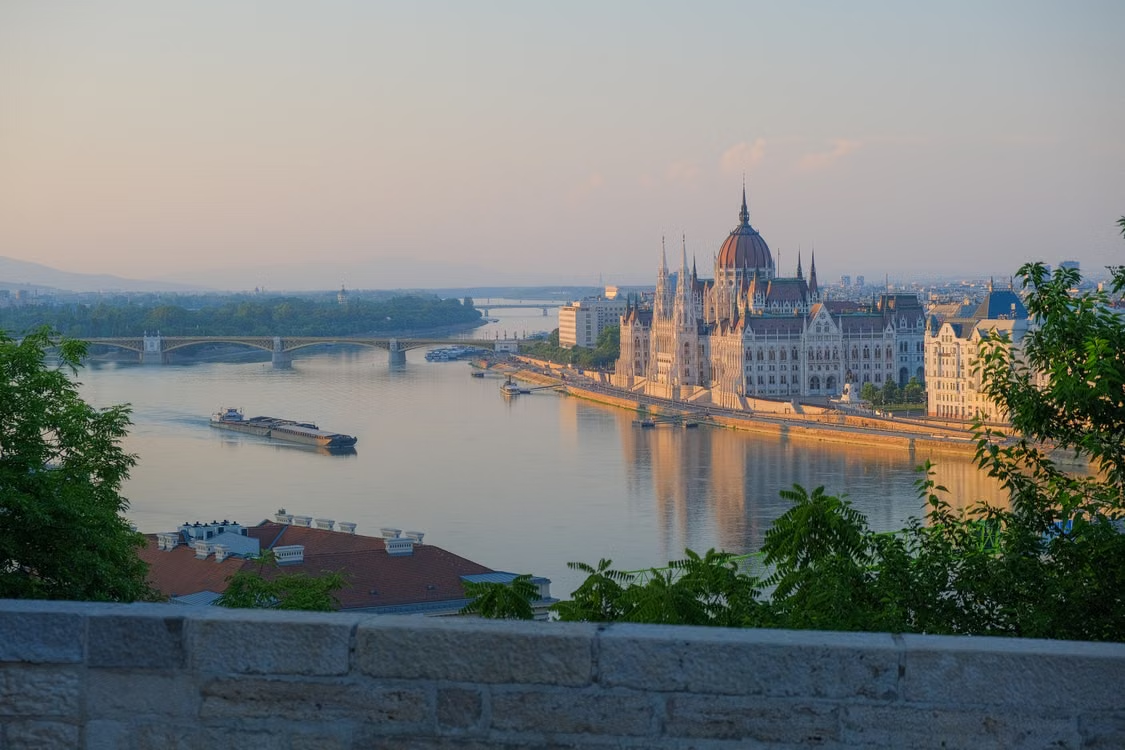
A capital that bathes in geology and drinks in ruins
Budapest is technically young, formed in 1873 when Buda, Óbuda and Pest merged into one city, but everything under it is old: more than 100 natural thermal springs that the Romans tapped first, the Ottomans expanded in the 16th and 17th centuries, and the Habsburgs turned into grand bathhouses like Széchenyi. That layered history is why soaking in hot mineral water here feels like local life rather than a spa-day indulgence, chess players and pensioners share the outdoor pools with tourists year-round.
The other defining Budapest institution is much newer. In 2002, a condemned apartment building in the Jewish Quarter reopened as Szimpla Kert, furnished with salvaged junk and mismatched furniture, and the "ruin bar" format it invented has since been copied by cities worldwide. Between the baths and the ruins, plus a genuinely cheap and good food scene and a UNESCO-listed river frontage, Budapest delivers more per day than its reputation as a "cheap Prague alternative" gives it credit for.
The honest complications
Budapest's popularity has real costs: the Castle District, Fisherman's Bastion and Széchenyi Baths all get genuinely crowded in peak summer, and District VII's ruin bar streets are loud enough on weekend nights that light sleepers should avoid rooms facing them. Gellért Baths, one of the two most famous thermal complexes alongside Széchenyi, closed in October 2025 for a full renovation and isn't expected to reopen before 2028, so plan around Széchenyi and Rudas instead rather than an outdated guidebook's Gellért recommendation. Hungarian is a genuinely difficult, unrelated language, so don't expect to guess your way through signage the way you might in a Romance-language city, and English fluency, while common with younger Hungarians in the tourist core, is patchier elsewhere.
Two banks, four areas that matter
Budapest splits cleanly down the Danube: hilly, quieter Buda on the west bank, flat, dense Pest on the east. Almost every first-time visitor ends up basing themselves in Pest, and the choice within it comes down to how central versus how atmospheric you want the surrounding streets.
District V, the Inner City & Parliament
Belváros-Lipótváros, District V, holds the Hungarian Parliament building, the Danube promenade, Váci utca's shopping strip and the Great Market Hall at its southern edge. It's the most central base in the city, walkable to nearly everything on the Pest side and a short tram or walk from the river-facing views of Buda across the water.
District VII, the Jewish Quarter
Erzsébetváros, home to the Great Synagogue and the ruin bar scene that began at Szimpla Kert in 2002, is now the densest concentration of bars, street food and late-night energy in the city. Staying here means being a short walk from nearly every recommendation in this guide's Food and Things to Do chapters, at the cost of real weekend-night noise on the main streets.
The Castle District, Buda
Várnegyed, on top of Castle Hill across the river, holds Buda Castle, Fisherman's Bastion and Matthias Church, along with the city's best sunset views back over Pest. It's genuinely quieter at night than anywhere in central Pest, reachable by the funicular from Clark Ádám tér or bus 16, but it trades that calm for being a ride, not a walk, from most restaurants and nightlife.
Margaret Island
Margitsziget, a 2.5-kilometer car-free island in the middle of the Danube between Buda and Pest, is Budapest's answer to Central Park: running paths, a musical fountain, a small zoo and its own thermal spa hotel. Reachable by tram 4 or 6 to the Margitsziget stop, it's the easiest genuine escape from the city without leaving it.
From a riverside palace to a €9 hostel bed
Budapest's hotel scene spans a genuine five-star riverside icon down to some of Central Europe's cheapest hostel beds, and prices remain noticeably lower than Vienna or Munich at every level. These four picks cover the range.
At the very top, Four Seasons Hotel Gresham Palace occupies a fully restored 1906 Art Nouveau landmark directly facing the Chain Bridge, with an infinity-edge pool and the riverside Kollázs Brasserie & Bar; nightly rates run into four figures in peak season and vary enormously by date, so treat any quoted number as a starting point, not a ceiling.
In the Castle District, The Baltazár is a small, family-owned boutique hotel a short walk from Fisherman's Bastion, from around 65,000-70,000 HUF (roughly €165-180) a night, the quiet, atmospheric option if you don't mind a funicular or bus ride into central Pest each evening.
In the Jewish Quarter, Bohem Art Hotel sits on Molnár utca between Szimpla Kert and the Great Synagogue, a mid-range design hotel in the €70-110 range that puts guests inside the ruin bar district itself rather than a tram ride from it.
At the budget end, Flow Spaces Budapest, in the Jewish Quarter, is a sociable hostel with a quiet co-working area and a shared kitchen, dorm beds from around €9-15 a night, among the cheapest good-quality beds in any EU capital.
Lángos for a few euros, a Michelin tasting menu for the other end
Budapest eats well and, outside a handful of tourist-square restaurants, cheaply. The city also carries genuine culinary weight: seven Michelin-starred restaurants as of 2026, a level unmatched by most Central European capitals, sitting alongside no-frills vendéglő diners that locals still swear by.
Lángos
Deep-fried dough, crisp outside and pillowy inside, topped with sour cream, cheese and garlic. Retro Lángos near Nyugati Railway Station is a reliable, well-reviewed stall; the ground floor of the Great Market Hall is the other classic spot, best visited before 10am on a weekday to beat the tour groups.
Traditional Hungarian
Frici Papa, a no-frills, old-school eatery in District VII, is beloved by locals for generous portions of home-style Hungarian cooking at €5-8 a full meal, no tourist-menu markup. Drum Cafe near the Great Market Hall is a similarly straightforward pick for gulyás and chicken paprikash, €8-12 a plate.
Ruin bar dining
Mazel Tov, open since 2014 in a roofless former courtyard with hanging vines and a section of the old ghetto wall visible at the back, elevates the ruin bar format with a Mediterranean and Middle Eastern menu (shakshuka, falafel, hummus) and live music most nights, one of the more polished ways to experience the genre. Szimpla Kert itself, the original ruin bar since 2002, runs a Sunday farmers' market from 9am with food stalls alongside its usual sprawling multi-room bar.
Michelin-starred dining
Budapest's 2026 Michelin roster runs seven stars: Stand, the city's only two-star, with an eight-course tasting menu around 89,500 HUF; and six one-stars including Costes, Hungary's first Michelin-starred restaurant, and Borkonyha Winekitchen, built around a 200-plus-bottle Hungarian wine list. All expect reservations well in advance, especially Stand, which can sell out 60 days out.
Baths, a dome, a market and a ruin
Budapest's sights split naturally across both banks, with the thermal baths doing more to explain the city's daily rhythm than any single monument.
Széchenyi Thermal Bath
Széchenyi Thermal Bath, in City Park, is Europe's largest medicinal bath complex, a grand Neo-Baroque building with both indoor thermal pools and outdoor pools where locals play chess in the steam year-round. Spa-day tickets start from around €40-46; go on a weekday morning to avoid the worst of the crowds. With Gellért Baths closed for renovation until at least 2028, Rudas Thermal Bath, with genuine 16th-century Ottoman-era octagonal pool architecture beneath its dome, is the other bath worth planning around, weekday all-zone entry runs about 12,000 HUF.
The Hungarian Parliament Building
The Parliament, on the Pest riverbank, is one of the largest legislative buildings in the world and holds the Holy Crown of Hungary. Interior visits are guided-tour or audio-guide only with timed entry; EEA citizens pay around 7,000 HUF, non-EEA visitors about 14,000 HUF, and tickets for the May-September high season sell out days ahead, so book online in advance rather than showing up.
Fisherman's Bastion & the Castle District
Fisherman's Bastion, a fairy-tale rampart of white turrets on Castle Hill, is free to enter at the lower terraces and stairs; only the seven upper towers and connecting walkway charge admission, around 1,700 HUF. Matthias Church next door, with a colorfully tiled roof and 700 years of coronation history, charges roughly 2,200-3,500 HUF. The Buda Castle funicular up from Clark Ádám tér is a 90-second ride with Danube and Chain Bridge views, around 5,500 HUF return.
The Great Market Hall & House of Terror
The Great Market Hall, a neo-Gothic 1896 building at the southern end of District V, is Budapest's largest and most photogenic market: paprika stalls, produce, and a food-stall upper floor aimed more at visitors than locals. The House of Terror, in the former secret police headquarters on Andrássy Avenue, covers both Hungary's fascist and communist repression with unflinching detail; adult admission is about 4,000 HUF, with 50% discounts for under-26 and over-62 EEA citizens.
One, two or three days, planned bank by bank
Three to four full days cover Budapest properly; even one focused day hits the essentials if you pick one bath and one bank. A fourth or fifth day is best spent on the Danube Bend or Eger day trip below.
- Morning
Parliament and the riverside. A booked Parliament tour, then a walk along the Danube promenade toward the Chain Bridge.
- Midday
Great Market Hall. Lángos and a look at the paprika stalls, then cross to Buda.
- Afternoon
Castle District. Funicular up, Fisherman's Bastion, Matthias Church, and the view back over Pest.
- Evening
Jewish Quarter. Dinner at Frici Papa or Mazel Tov, then Szimpla Kert.
- Day 1
The one-day route: Parliament, Great Market Hall, Castle District, dinner and Szimpla Kert.
- Day 2 morning
Széchenyi Baths. A full morning soaking, followed by a walk through City Park to Heroes' Square.
- Day 2 afternoon
Margaret Island. A slow walk or bike loop, the musical fountain, and a coffee stop.
- Day 2 evening
New York Café, then dinner and a second ruin bar, Instant-Fogas or Kertem in season.
- Days 1-2
The two-day route above, at a gentler pace.
- Day 3
Danube Bend or House of Terror. Either a day trip to Szentendre and Visegrád, or a slower city day covering the House of Terror, a second bath at Rudas, and Andrássy Avenue.
Compact, transit-friendly, and strict about ticket checks
Budapest Ferenc Liszt International Airport (BUD) sits about 16km southeast of the centre. The 100E Airport Express bus runs directly to Kálvin tér and Deák Ferenc tér in around 40 minutes for about 2,500 HUF; the budget route is bus 200E to the M3 metro for a standard 500 HUF fare. An official taxi from the airport rank costs 11,000-14,000 HUF (€30-35).
The centre itself is compact and walkable, and the public transport network, trams, the metro (Continental Europe's oldest underground line, opened 1896) and buses, covers everywhere else well. A single BKK ticket costs 450 HUF (400 HUF bought in a block of 10), and a 24-hour travel card runs about 2,500 HUF. Validate every ticket: plainclothes inspectors are common on trams and the metro, and an unvalidated ticket, even a purchased one, results in an on-the-spot fine.
Best time to visit
Budapest works as a city break in every season, since the thermal baths are a genuine year-round draw, but May, June, September and October are the most comfortable: 15-23°C, manageable crowds, and outdoor bath sessions that don't require summer heat to enjoy. Winter (November-February) is cold, 0-6°C and often below freezing at night, but December brings well-regarded Christmas markets around Vörösmarty tér and St. Stephen's Basilica.
One of the EU's more affordable capitals
Budapest is noticeably cheaper than Vienna, Munich or any Western European capital, and still reasonable next to Prague. The main cost trap is the same as everywhere: eating at the handful of tourist-menu restaurants directly on the Castle District or Váci utca instead of walking a few minutes into District VII or the market hall.
- Hostel dorm bed €9-15
- Lángos and market meals €3-8
- Public transport day pass ~€7
- Free sights: Parliament exterior, Margaret Island, lower Fisherman's Bastion
- 3-4 star hotel or design hotel €70-110
- Restaurant dinners €10-20/person
- Full thermal bath session at Széchenyi or Rudas
- Parliament tour and one museum entry
- Four Seasons or Castle District luxury stay
- Michelin tasting menus at Stand or Costes
- Private Danube Bend or Eger tour
- Airport transfers over the shuttle bus
Safe by capital-city standards, with the usual caveats
Budapest is safe for tourists. Violent crime against visitors is rare, central areas and the Jewish Quarter are fine to walk at night with normal urban awareness, and Hungary overall sits at the US State Department's safest rating, Level 1. The practical risks are pickpocketing and the ordinary hazards of a busy nightlife district, not violent crime.
The three things that actually catch visitors: pickpocketing, concentrated on crowded trams, at major sights, and on the international train routes toward Vienna and Bratislava, so keep bags zipped and in front of you; the overpriced bar bill, where a friendly local steers a solo traveler to a bar with no visible prices and an inflated tab follows, avoidable by only entering bars you chose yourself; and unlicensed taxis at the airport or near major sights quoting flat, inflated fares, avoidable with the official rank, a licensed app, or the 100E bus. Budapest is a reasonable choice for solo female travellers, broadly in line with Hungary's strong overall safety rating: harassment is uncommon in the centre, and public transport runs late with reasonable safety.
Emergency numbers match the rest of Hungary: 112 general emergency (English and German-speaking operators), 104 ambulance, 105 fire, 107 police.
The Danube Bend, and Eger for a longer day
Budapest's central position makes it a workable base for two very different day trips; the Danube Bend is the easy, classic choice, while Eger rewards an early start or an overnight stay.
Szentendre & Visegrád
Szentendre, the closest Danube Bend town, is an artists' colony with Serbian Orthodox churches and cobbled lanes, reached by the H5 suburban HÉV train from Batthyány tér in about 40 minutes; note the return fare requires a separate suburban ticket plus a standard BKK ticket once back inside the city limit. Visegrád, further north and reached by bus or a combined river-and-road tour, holds the ruined hilltop citadel of a medieval royal palace with the best view of the river's sharp bend. Both are commonly combined into a single day.
Eger
Eger, Hungary's baroque wine town, is a longer but rewarding day trip: Eger Castle, the site of a famous 1552 siege against Ottoman forces, the northernmost surviving Ottoman minaret in Europe, and the Szépasszony-völgy cellar valley for an afternoon of Bull's Blood tastings. Direct trains run under two hours from Budapest's Keleti station; an overnight stay lets you actually enjoy the cellars without rushing for the last train back.
Budapest FAQ
Is Budapest safe for tourists?
Yes. Violent crime against visitors is rare and central Budapest is fine to walk at night with normal urban awareness. Pickpocketing on crowded trams, at major sights and around District VII's nightlife streets is the main practical risk, not violent crime.
How many days do I need in Budapest?
Three to four days covers the city properly: the Castle District, the Parliament and Inner City, a full thermal bath afternoon, and the Jewish Quarter. A fifth day fits a Danube Bend or Eger day trip well.
How much does Budapest cost per day?
Budget travellers manage on €35-50 a day with hostel beds and market-hall meals; mid-range runs €70-110. Budapest is one of the more affordable capital cities in the EU.
When is the best time to visit Budapest?
May, June, September and October: mild temperatures and manageable crowds. Budapest also works well in December for the Christmas markets, despite the cold, and the thermal baths are a genuine year-round draw.
Is the Gellért Baths open in 2026?
No. Gellért Baths closed in October 2025 for a full renovation and is not expected to reopen before 2028. Széchenyi and Rudas are both fully open and are the two baths to plan around instead.
What is a ruin bar?
A bar built inside a condemned or derelict building, usually a courtyard apartment block in the Jewish Quarter, furnished with salvaged and mismatched decor. Szimpla Kert opened the first one in 2002 and the format has since been copied by cities worldwide.
How do I get from Budapest airport to the city centre?
The 100E Airport Express bus runs directly to Kálvin tér and Deák Ferenc tér in about 40 minutes for roughly 2,500 HUF. The budget option is bus 200E plus the M3 metro for a standard 500 HUF fare. An official taxi costs 11,000-14,000 HUF.
What is the best area to stay in Budapest?
District V (the Inner City) or District VII (the Jewish Quarter) for first-timers: both are walkable to the Parliament, the river and the best restaurants. The Castle District is quieter and more atmospheric but a short ride from central Pest rather than walking distance.
Can I do a day trip to the Danube Bend from Budapest?
Yes, easily. Szentendre is about 30-40 minutes by suburban HÉV train, and Visegrád and Esztergom are reachable the same day by bus or a combined tour. A comfortable full-day trip covering all three is common.
Do I need to validate public transport tickets in Budapest?
Yes. Budapest runs frequent, sometimes plainclothes ticket inspections on trams, buses and the metro. An unvalidated ticket, even if purchased, results in an on-the-spot fine.
What Stays With You
Budapest does not have Vienna's polish or Prague's postcard perfection, and it isn't trying to. What it has is a city that turned condemned buildings into its defining nightlife export, and geothermal plumbing the Romans and Ottomans both used into a bathing culture that's still, genuinely, how locals spend a Sunday. The steam rising off Széchenyi's outdoor pools in winter, the ghetto wall fragment visible in a bar courtyard, the lángos stall with a line of locals moving fast before 10am: none of it is staged for visitors, and all of it explains why so many people extend a planned weekend into a week.
Sit in a ruin bar on your last night, or better, soak in a thermal pool until closing, and understand why this city keeps outperforming its own reputation.