
What You're Actually Getting Into
Estonia is the smallest and, culturally, the most Nordic-leaning of the three Baltic states: about 1.3 million people in a country the size of the Netherlands, with a language related to Finnish rather than to Latvian, Lithuanian or Russian despite the regional grouping. It spent five decades under Soviet occupation until a peaceful, song-driven independence movement restored its statehood in 1991, then rebuilt itself so aggressively around digital government that it is now cited internationally as the model for how a small state can run itself almost entirely online.
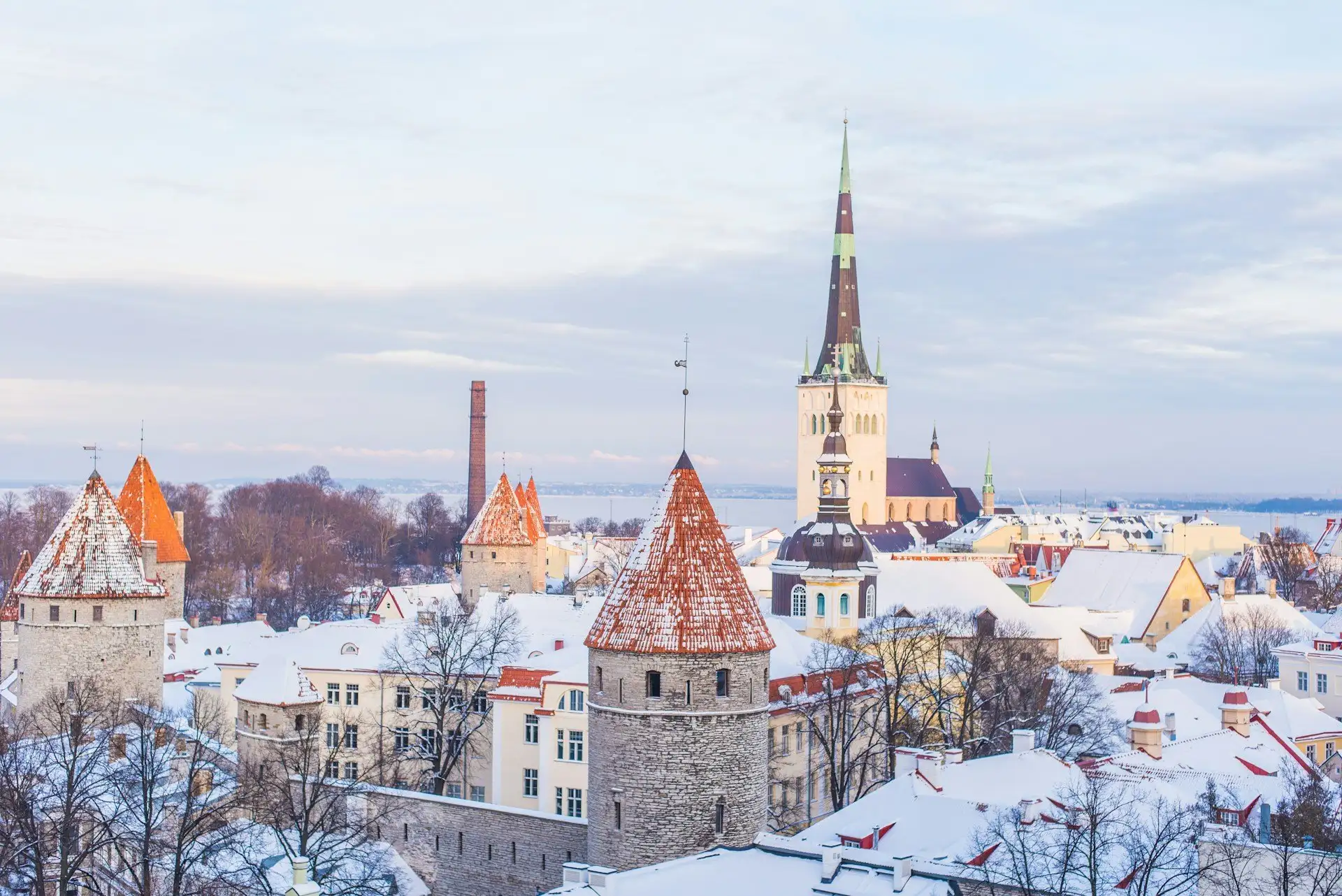
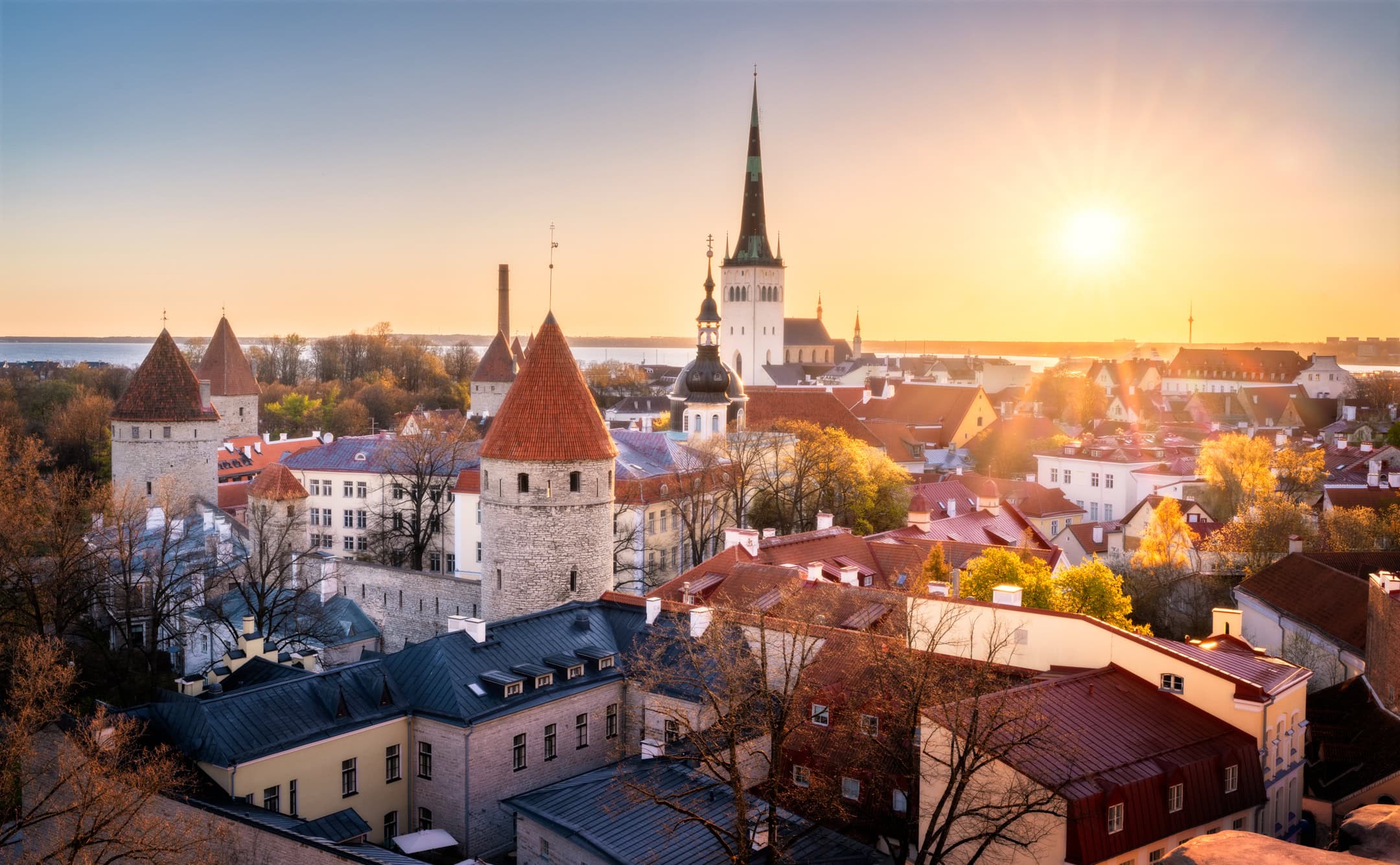
None of that digital reputation is at the expense of the physical place. Tallinn's Old Town is one of the best-preserved medieval city centers in Europe, a UNESCO World Heritage Site with its city walls, defensive towers and merchant-guild architecture still largely intact rather than reconstructed. Beyond the capital, roughly half the country is forest, the coastline runs to two sizeable islands, and Lahemaa National Park's bogs and manor houses sit under an hour from the airport. It's a country built for a long weekend that quietly turns into a week.
The honest complications
Estonia is not a cheap Balkans-style bargain destination: prices sit closer to Central Europe than to Southeast Europe, and Tallinn's Old Town restaurants in particular charge tourist-district rates. The climate is a real factor, too: winters are long, dark and icy from November to March, and even summer weather can turn cool and wet without much warning. Estonian culture also runs reserved by default, more Nordic than Southern European in its social register; visitors expecting effusive hospitality on arrival sometimes misread quiet courtesy as coldness. And roughly a quarter of the population, concentrated in the northeast around Narva, is Russian-speaking, a demographic reality tied to the Soviet era that occasionally surfaces in regional politics but has no bearing on the safety of a standard visitor circuit.
A History Worth Knowing
Tallinn's name comes from the Estonian "Taani linn," Danish castle or Danish town, after a Danish fleet under King Valdemar II landed and built a fortress on Toompea hill in 1219. The centuries that followed brought German merchants, Hanseatic League membership, Swedish rule, two centuries under the Russian Empire, a brief interwar independence, Soviet occupation, and a restoration of statehood that came through singing rather than fighting. Now an EU, NATO and Eurozone member since 2004 and 2011 respectively, Estonia has spent its three decades of renewed independence building one of the most digitally governed states on earth.
- 1219
Danish Tallinn. A Danish fleet under Valdemar II fortifies Toompea hill; the city's name, "Taani linn," or Danish castle, dates from this founding.
- 13th-16th c.
Hanseatic Tallinn. German merchants arrive from the 1230s; Tallinn joins the Hanseatic League and becomes a key trading link to Novgorod, building the Old Town that survives today.
- 1710-1918
Russian Empire. Swedish rule gives way to nearly two centuries as part of Imperial Russia following the Great Northern War.
- 1918-1940
First independence. Estonia declares independence in 1918 and holds it for barely two decades before Soviet occupation in 1940, a brief Nazi German occupation from 1941, and renewed Soviet control from 1944.
- 1986-1991
The Singing Revolution. Mass gatherings of Estonians singing banned patriotic songs become a peaceful engine of the independence movement; statehood is restored on 20 August 1991 as the USSR collapses.
- 2004-present
EU, NATO, digital state. Estonia joins the EU and NATO in 2004, adopts the euro in 2011, and builds e-Residency, i-voting and near-total online government into a defining national identity.
Read the full history: Hanseatic Tallinn, occupation, and the digital rebuild
Before the Danes, Estonia's ancient tribal territories had traded across the Baltic for centuries, but 1219 marks the start of continuous written history for the city that became Tallinn. German crusading orders and merchants, invited in the 1230s, built the stone city that still stands: Toompea for the nobility and clergy, the Lower Town for Hanseatic merchant guilds, divided by an internal wall for much of the medieval period. Tallinn's Lübeck city rights, granted in 1248, tied it into the same commercial and legal framework as other major Hanseatic ports, and its 14th and 15th-century wealth built the guild halls, church spires and defensive towers that now draw visitors.
Swedish rule from the 17th century, remembered locally as the relatively benign "good old Swedish time," gave way to Russian imperial control after the Great Northern War in 1710, a period that lasted until the collapse of the Russian Empire in 1917-1918. Estonia's first independence, declared in 1918, survived a war of independence against both Soviet Russia and Baltic German forces, only to be extinguished by Soviet occupation under the Molotov-Ribbentrop Pact in June 1940, a brutal Nazi German occupation from 1941, and a return to Soviet control from 1944 that lasted until 1991. Mass deportations to Siberia, forced collectivization and Russification defined much of this half-century.
The Singing Revolution. From 1986, Estonians began gathering by the tens and eventually hundreds of thousands at the Tallinn Song Festival Grounds to sing patriotic songs banned or discouraged under Soviet rule, a peaceful mass movement that spread across all three Baltic states and culminated in the two-million-person Baltic Way human chain in August 1989. Estonia restored its independence without a shot fired on 20 August 1991, one of the few late-20th-century independence movements achieved almost entirely through nonviolent, cultural resistance.
The digital rebuild. Faced with rebuilding state infrastructure from almost nothing after 1991, Estonia's government made a deliberate bet on digital-first administration: the X-Road data exchange layer, online voting from 2005, and e-Residency from 2014, which lets anyone in the world register and run an EU company remotely without setting foot in the country. Skype, built by a team of Estonian programmers, remains the country's best-known tech export and a point of national pride. Today, over 99 percent of Estonian public services are available online, with only marriage, divorce and real estate transactions still requiring an in-person visit.
Top Destinations
Estonia divides into five natural zones: the capital and its immediate surroundings, the university city of Tartu, the beach resort of Pärnu, the western islands, and Lahemaa National Park on the north coast. The country is compact, roughly 45,000 square kilometers, so nowhere is more than a half-day's drive from Tallinn, but each zone has a genuinely distinct character rather than being a scaled-down version of the capital.
Tallinn, the medieval capital that went digital
Tallinn is Estonia's near-universal first stop, and reasonably so: the UNESCO Old Town, a warren of cobbled lanes, church towers and merchant houses inside a still-standing defensive wall, is genuinely one of the best-preserved medieval city centers left in Europe. Beyond the Old Town, Kadriorg Palace and its surrounding park, built for Catherine I in the 1710s, and the wooden-house district of Kalamaja with the adjoining Telliskivi Creative City give the capital real range beyond its historic core. A full breakdown of neighborhoods, hotels, food and a day-by-day itinerary lives on our dedicated Tallinn city guide.
Tartu, Estonia's university city
Tartu has been Estonia's academic heart since its university was founded in 1632, and the city carries that identity everywhere: a neoclassical main university building anchors the Old Town, the ruined 13th-century cathedral crowns Toomemägi hill above it, and student-driven street art turns ordinary walks into a scavenger hunt. Raekoja Plats, the pastel-colored Town Hall Square, is the compact, cafe-lined center; the wooden-house district of Supilinn, its streets named for soup vegetables, sits just across the Emajõgi river. Tartu works well as a one or two-night stop on the way south or as a standalone weekend, and it's often described as Estonia's cultural or spiritual capital alongside Tallinn's political one.
Pärnu, the summer capital
Pärnu earns its nickname, Estonia's "summer capital," with a long sand beach, a lively promenade, more than a dozen spas built on a tradition dating to the 1830s, and a relaxed pace that's a deliberate contrast to Tallinn. Rows of romantic wooden villas and early-20th-century functionalist buildings line the streets around the beach, and a summer calendar of music and food festivals keeps the town busy from June through August. It's the natural base for beach time and spa days, less essential outside the warm months when much of the resort infrastructure winds down.
Saaremaa & Hiiumaa, the western islands
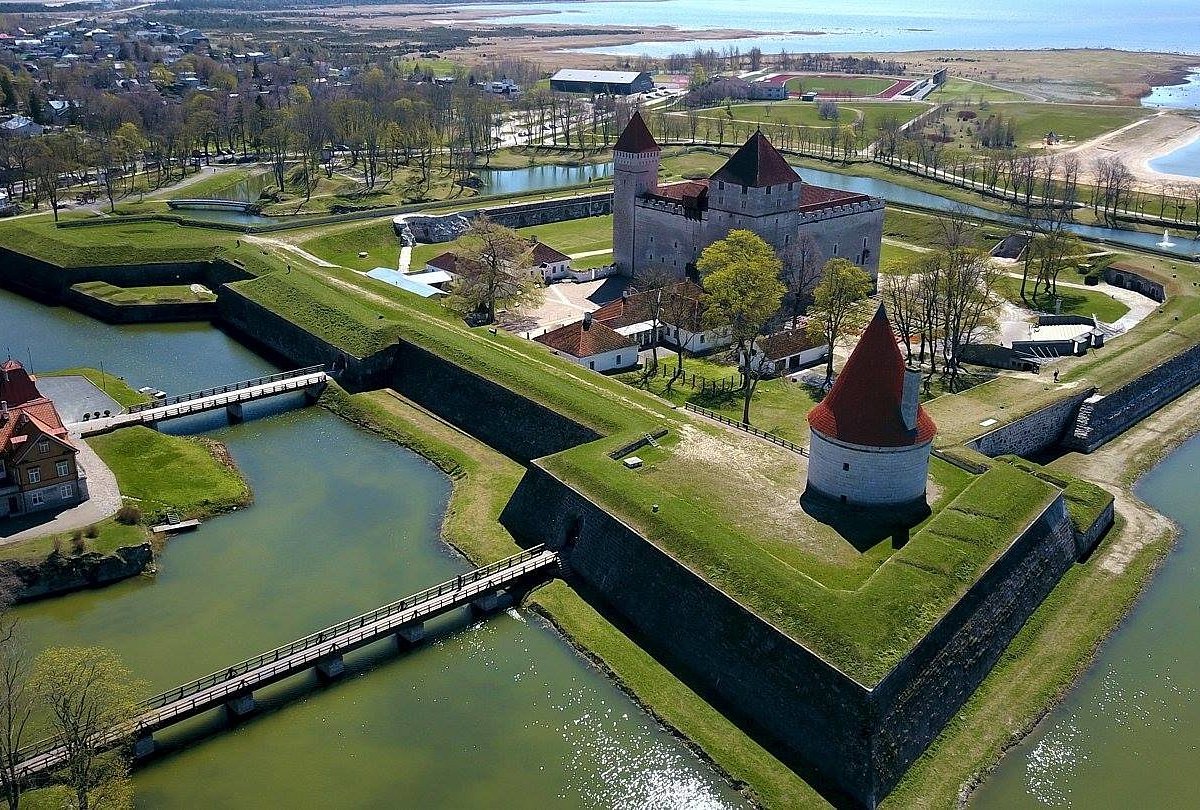
Saaremaa, Estonia's largest island, centers on Kuressaare and its remarkably intact 14th-century bishop's castle, one of the best-preserved medieval fortresses in the Baltics, with a moat and long causeway bridges still crossing the water around it. The island's slower pace, windmills, juniper-covered landscape and its own spa tradition make it a worthwhile two or three-day detour from the mainland circuit. Reaching it means a roughly 30-minute ferry from Virtsu to Kuivastu on neighboring Muhu island, then a short drive on to Saaremaa proper. Hiiumaa, Estonia's second island, is smaller, quieter and less developed for tourism, better suited to travelers who specifically want solitude over sights.
Lahemaa National Park
Lahemaa, Estonia's largest national park and less than an hour east of Tallinn, packs bog trails, a rugged coastline of fishing villages and several restored manor houses into a single accessible day trip. The Viru bog boardwalk is the classic short walk; Palmse and Sagadi manors give a look at the Baltic German estate life that shaped the region for centuries; and coastal villages like Käsmu and Altja preserve a fishing-and-smuggling heritage largely untouched by mass tourism. Public buses reach the park's edge at Loksa, but the interior sights are genuinely awkward without a car or a guided tour, since connecting between the bog, the manors and the coast by public transport involves multiple changes and long walks.
Hidden gems beyond the main circuit
The zones above cover a first or second trip well. With extra days, these are the spots that rarely make the standard guides but reward the detour.
Rakvere
A quiet town built around the ruins of a hilltop castle, with historical reenactment activities and a genuine catapult on the grounds. A low-key stop between Tallinn and Lahemaa.
Haapsalu
A Tsarist-era seaside spa town with a striking ruined bishop's castle, wooden villa architecture, and a local legend of a "White Lady" said to appear on the castle wall each August full moon.
Lake Peipsi & Setomaa
Old Believer fishing villages line the shore of one of Europe's largest lakes, while Setomaa, home to the distinct Seto minority culture and its own polyphonic singing tradition, sits further south.
Viljandi
A hilltop castle-ruin town on a lake, best known for its summer folk music festival, one of the largest folk gatherings in the Baltics, drawing performers from across the region each July.
Soomaa National Park
Known for its "fifth season," a springtime flood that turns forest floors into paddling routes; canoe trips through the flooded woodland are a genuinely unusual way to see the landscape.
Narva
Estonia's third city faces Russia's Ivangorod Fortress directly across the river, the two castles staring at each other from opposite banks. A striking, safe, and rarely visited border-city detour.
Culture & Etiquette
Estonian culture runs reserved and understated by Nordic default rather than Southern European warmth: personal space is respected, small talk with strangers is rare, and silence in a conversation isn't considered awkward. That reserve pairs with one of the most digitally integrated societies on earth, where over 99 percent of government services are handled online, and with a deep, genuine connection to nature that shows up in everything from sauna culture to the legal right to forage on almost any land.
Do
- Take your shoes off indoors. Removing shoes at the door of a home, and often a guesthouse, is close to universal; look for a pile of shoes by the entrance as your cue.
- Take sauna culture seriously. Saunas are a genuine social and wellness institution, not a tourist gimmick; if invited to one, go, and follow your host's lead on etiquette.
- Learn a few Estonian words. Tere (hello), aitäh (thank you), jah/ei (yes/no). Estonian is unrelated to Russian or the other Baltic languages, so don't assume overlap.
- Expect near-total cashlessness. Contactless card and phone payment work almost everywhere, including small cafes and public transport; carrying cash is a backup, not a necessity.
- Respect "everyman's right." Estonia's right to roam lets anyone walk, forage for berries and mushrooms, and camp briefly on most unfenced land, forest or coast, as long as you leave no trace.
Don't
- Mistake reserve for unfriendliness. Estonians are typically direct, quietly helpful and not prone to unnecessary small talk; it isn't coldness, it's a different social default.
- Assume Estonia is "post-Soviet" in feel. Three-plus decades on, Tallinn and Tartu read as thoroughly modern Nordic-EU cities; Soviet-era references land as history, not lived reality.
- Confuse Estonian with Russian. Estonian is a Finno-Ugric language related to Finnish, not a Slavic or Baltic language; conflating the two, or Estonia with Russia generally, is a common and unwelcome mistake.
- Expect everything to be open early or late. Many shops and restaurants outside Tallinn's tourist core keep modest hours, especially on Sundays and in winter.
- Litter or leave a mess when foraging. Everyman's right comes with an implicit leave-no-trace expectation; abusing it is a fast way to draw local disapproval.
Deeper culture: song festivals, the Kalevipoeg epic, and the digital state
Song and dance festivals. Estonia's national song festival tradition, held roughly every five years at Tallinn's purpose-built Song Festival Grounds, can draw tens of thousands of singers and hundreds of thousands of spectators, and is recognized on UNESCO's Intangible Cultural Heritage list alongside the equivalent Latvian and Lithuanian traditions. It was this same choral tradition that powered the peaceful Singing Revolution of 1986-1991.
Kalevipoeg. Estonia's national epic, compiled in the 19th century from oral folklore, tells the story of a giant hero-king and remains a foundational reference point in Estonian literature, place names and national identity, broadly comparable in cultural weight to Finland's Kalevala.
The digital state, in practice. Beyond e-Residency, ordinary residents vote online, file taxes in minutes through pre-filled digital forms, and access medical records through a single national health portal; the X-Road data-exchange backbone underpinning all of it is now licensed to other governments as an export in its own right. Visitors mostly experience the edges of this: near-universal wifi, digital public transport tickets, and a striking absence of paperwork almost everywhere they go.
Food & Drink
Estonian food draws on Nordic, German and Russian influences layered over a base of rye, dairy, pork and Baltic fish, built for a short growing season and a long winter. It isn't a cuisine built to dazzle visually, but the best of it, dense black bread, smoked fish, forest berries, rewards a willingness to eat what's actually seasonal and local rather than hunting for a signature dish.
Leib Rye bread
Dense, dark, sourdough-fermented rye bread anchors nearly every Estonian meal and is treated as close to sacred; a good bakery loaf is one of the country's quiet culinary highlights.
Kilu Baltic sprats
Small oily Baltic sprats, smoked or spiced and canned, served on buttered rye or hard-boiled egg as an open sandwich. A genuinely local flavor most visitors haven't tried before.
Vana Tallinn Liqueur
A dark, spiced, rum-based liqueur and Estonia's best-known drink export, typically sipped neat, mixed into coffee, or stirred into a cocktail rather than downed as a shot.
Verivorst Blood sausage
Blood sausage mixed with barley, traditionally the centerpiece of the Christmas table alongside sauerkraut and roast pork, though good versions turn up on menus year-round.
Kama
A distinctly Estonian mix of roasted barley, rye, oat and pea flour, stirred into buttermilk or kefir for a traditional snack or dessert with a nutty, slightly sweet flavor.
Marzipan & Kalev chocolate
Tallinn's Town Hall Pharmacy claims one of Europe's earliest marzipan-selling traditions, and Kalev, the national chocolate brand since 1806, remains the standard souvenir.
When to Go & Itineraries
June, July and August bring Estonia's warmest weather, 19-23°C, and close to 19 hours of daylight, making them the easy default for a first visit. May and September are quieter, cheaper shoulder months with comfortable walking weather. Winter, November through March, is genuinely cold and often icy underfoot, but it's also when Tallinn's Christmas market runs and hotel prices drop to the year's lowest, especially in March.
All four seasons compared, with temperatures
| Season | Verdict | Temps | Prices & crowds |
|---|---|---|---|
| Jun-Aug | Best | 19-23°C, up to 19 hrs daylight | Peak prices and crowds, especially Old Town and Pärnu |
| May & Sep | Good | 12-19°C | Quieter, mid prices, comfortable for walking |
| Dec | Good (festive) | -2 to 3°C | Christmas market crowds, cold, short days |
| Jan-Mar | Cold but cheap | -7 to 2°C, icy underfoot | Lowest hotel prices of the year, especially March |
Daylight swings dramatically by season: nearly 19 hours around the June solstice, down to around 6-7 hours in December. Layered clothing and waterproof shoes matter more than a specific temperature range.
Itineraries
Four days covers Tallinn properly. A week adds Tartu or Pärnu plus a day trip into Lahemaa or a night on Saaremaa. Ten days or more makes sense as a full Baltic states loop combining Estonia with Latvia and Lithuania.
- Days 1-2
Tallinn Old Town. Toompea, Town Hall Square, the city walls and towers, Kadriorg Palace and park.
- Day 3
Kalamaja & Telliskivi. The wooden-house district and creative quarter, plus the Seaplane Harbour museum on the waterfront.
- Day 4
Lahemaa National Park. A day trip east: the Viru bog boardwalk, Palmse or Sagadi manor, and a coastal village like Käsmu.
- Days 1-3
Tallinn. The four-day route above, condensed to three days.
- Day 4
Helsinki day trip. The 2-hour-15-minute ferry across the Gulf of Finland and back.
- Days 5-6
Tartu. The university quarter, Toomemägi, Supilinn, and the Emajõgi riverside.
- Day 7
Pärnu. A relaxed final day or two on the beach and in the spas of Estonia's summer capital.
- Days 1-4
Estonia core. Tallinn, Lahemaa and a Helsinki day trip, as in the 4 and 7-day routes.
- Days 5-6
Saaremaa. The Virtsu-Kuivastu ferry out, two nights around Kuressaare Castle and the island's spas and windmills.
- Day 7
Pärnu. A beach and spa stop on the drive south toward the Latvian border.
- Days 8-10+
Onward to Latvia & Lithuania. The direct Tallinn-Riga bus corridor extends naturally into a full Baltic states loop for travelers with more time.
Getting there & around
Lennart Meri Tallinn Airport (TLL) sits just 4 kilometers from the city center, with tram lines T2 and T4 and city buses running directly to the Old Town edge for a €2 single ticket; an official airport taxi costs around €15. Trains and long-distance buses connect Tallinn to Tartu and Pärnu comfortably, and a rental car earns its keep for Lahemaa's interior sights and the island ferries, both awkward on public transport alone.
All transport options with prices: trains, buses, ferries, city transit
| Option | Price | Notes |
|---|---|---|
| Tallinn public transport | €2 (1 hr), €5.50 (1 day) | Trams, buses and trolleybuses; contactless card tap works directly on board. |
| Tallinn-Tartu train/bus | ~€10-15 | About 2-2.5 hours; frequent daily departures. |
| Tallinn-Pärnu bus | ~€8-12 | Around 2 hours on a well-served route. |
| Helsinki ferry | From ~€19 one way | 2 hrs 15 min crossing; Tallink, Viking Line and Eckerö all operate the route. |
| Virtsu-Kuivastu ferry (Saaremaa) | Vehicle + passenger fare | About 30 minutes across the Suur Strait to Muhu, then a short drive on to Saaremaa. |
Practical prep: buy an Estonian eSIM before landing or a local SIM at the airport; coverage is strong nationwide including on the islands. Estonia is one of the most cashless societies anywhere, so a fee-free travel card is worth more here than almost anywhere else in Europe. Standard Schengen travel insurance applies; check winter coverage specifically if visiting between November and March, since icy-fall injuries are the most common travel insurance claim in that period.
Where to stay
Tallinn hostels & budget stays
Old Town Munkenhof and Fat Margaret's are both well-regarded, central Old Town hostels around €16-20 a dorm bed; private rooms across the city's hostels run roughly €35-55.
Tallinn Old Town heritage hotels
Schlössle Hotel, a restored medieval merchant house, and Hotel Telegraaf, a 5-star Autograph Collection property inside the Old Town walls, are the two standard heritage picks.
Kalamaja & Telliskivi stays
Converted wooden-house apartments and boutique stays around Kalamaja and Telliskivi run typically €20-30 cheaper per night than Old Town equivalents, a 15-minute walk from Town Hall Square.
Pärnu beach hotels & spas
Pärnu's spa hotel tradition dates to the 1830s; Hedon Spa is one of the longest-running, and rates rise sharply in July-August compared to the shoulder months.
Budget Planning
Estonia sits in the middle of the European price spectrum: noticeably cheaper than the Nordic countries across the Gulf of Finland, but pricier than the Balkans or Southern Europe. Tallinn's Old Town restaurants carry a visible tourist-district markup; stepping a few streets away, or eating the weekday päevapraad lunch special, closes most of that gap.
- Hostel dorm bed €16-25
- Päevapraad lunch specials €5-8
- Walking plus public transport day pass
- Free Old Town wandering & viewpoints
- 3-star or boutique hotel €80-150
- Restaurant dinners €18-30/person
- Tallinn Card for museums & transit
- Helsinki ferry or island day trip
- Old Town heritage or design hotel
- Tasting menu at NOA or 180° by Matthias Diether
- Private guide or day tour
- Spa day in Pärnu
Quick reference prices: coffee, beer, transport, entry fees
| Cappuccino | ~€3.50 |
| Draft beer | €4-6 |
| Päevapraad lunch special | €5-8 |
| Mid-range dinner with a drink | €18-30 |
| Public transport single ticket | €2 (1 hr) |
| Tallinn Card (24 hr) | €29 |
| Helsinki ferry, one way | from ~€19 |
| Airport taxi to city centre | ~€15 |
Prices reflect August 2026 research and drift over time, especially peak-summer accommodation. Treat them as a planning baseline, not a quote.
Visa & Entry
Estonia is a full Schengen Area member, so its visa rules are the same as the rest of Schengen: US, UK, Australian, Canadian and New Zealand citizens, among many others, enter visa-free for up to 90 days in any rolling 180-day period, shared across all Schengen countries combined, not reset at each border. From the fourth quarter of 2026, visa-exempt travelers will also need ETIAS, a simple online pre-travel authorization costing €7 and valid for three years.
✓ Valid passport
Valid for at least 3 months beyond your planned departure from the Schengen Area, issued within the last 10 years.
✓ ETIAS from Q4 2026
A €7 online authorization, valid 3 years, required for visa-exempt nationalities entering any Schengen country including Estonia.
✓ Proof of funds & return travel
Occasionally requested at the border: evidence of sufficient funds for your stay and an onward or return ticket.
✓ Schengen 90-day clock
Time in Estonia counts against your shared 90-day Schengen allowance, unlike a trip to non-Schengen countries such as Albania or Georgia.
| Estonia | Latvia | |
|---|---|---|
| Capital's Old Town | Tallinn: more intact medieval core, UNESCO-listed | Riga: larger, with Europe's densest Art Nouveau district |
| Daily budget | €45-65 gets you comfortably around | Broadly similar, a touch cheaper outside Riga's centre |
| Easy add-on | Helsinki, 2 hrs 15 min by ferry | No equivalent short international ferry hop |
| Character | Nordic-leaning, reserved, tech-forward | More overtly Baltic-German and Soviet-era architectural layering |
| Schengen | Yes, shared 90-day clock | Yes, same shared clock |
Safety, Solo Women & Family
Estonia is safe for tourists. The US State Department rates it Level 1, Exercise Normal Precautions, its lowest advisory tier, last confirmed in an update on 31 March 2026. Violent crime against visitors is rare, and Tallinn and Tartu are both comfortable to walk at night with normal urban awareness. The real hazards here are environmental, not criminal: winter ice and traffic, not muggings or scams.
Winter ice & icicles
Icy pavements and falling icicles from building eaves are a genuine seasonal hazard from roughly November to March. Wear proper winter footwear and give building edges a wide berth after a thaw.
Zero-tolerance driving rules
Estonia treats drunk driving as a serious criminal offense with essentially no tolerance; even one drink can trigger a DUI arrest. Don't drive after drinking, full stop.
Old Town pickpocketing
Low-level but present in crowded tourist streets and the Christmas market in December. Keep bags zipped and in front of you in dense pedestrian areas.
One more thing worth knowing: the Russian border
Estonia shares a roughly 294-kilometer border with Russia, running along the Narva River and Lake Peipsi in the country's east. This has no bearing on the safety of a standard visitor circuit through Tallinn, Tartu, Pärnu or the islands, and the State Department's Level 1 rating reflects that directly. Estonia has been a NATO member since 2004, and the border city of Narva itself, while unusual for its close-up view of Russia's Ivangorod Fortress across the river, is a normal, safe Estonian city rather than a restricted zone.
Solo women travelers
Estonia rates very well for solo women, consistently among the safer countries in Europe on this measure. Street harassment is uncommon, and the same reserved social culture that can read as cool to some visitors also means strangers generally keep a respectful distance rather than the reverse. Normal precautions apply around nightlife areas late at night, particularly in Tallinn's bar-heavy Old Town streets on weekends, but nothing beyond what any confident traveler would already practice in a European capital.
Emergency numbers
The single-number system, and embassies in Tallinn
Estonia uses only 112 for all emergency services, police, fire and ambulance, following the European standard; operators handle English-language calls. The US Embassy in Tallinn is at Kentmanni 20, telephone +372-668-8100, with most other Western embassies clustered nearby in the city centre.
Family travel
Estonia is a solid family destination: Tallinn's Old Town is compact, low-traffic and easy to navigate with kids, the Seaplane Harbour maritime museum on the waterfront works well for a rainy afternoon, and Pärnu's beach makes an easy, safe base for a family week in summer. Winter travel with young children is more demanding given the cold, ice and short daylight hours, and is better suited to families who specifically want the Christmas market experience.
Estonia FAQ
Is Estonia safe to visit?
Yes. The US State Department rates Estonia Level 1, Exercise Normal Precautions, its lowest advisory tier. Violent crime against visitors is rare; the main practical hazards are icy pavements and falling icicles in winter, not crime.
How much does Estonia cost per day?
Budget travelers manage on €45-65 a day using hostels and lunch specials, mid-range runs €90-140. Estonia is cheaper than the Nordic countries but pricier than the Balkans or Southern Europe.
Do I need a visa for Estonia?
Citizens of the US, UK, Australia, Canada and New Zealand can enter visa-free for up to 90 days in any 180-day period. Estonia is in the Schengen Area, so this allowance is shared across all Schengen countries. From Q4 2026, visa-exempt travelers will also need ETIAS pre-travel authorization.
When is the best time to visit Estonia?
June, July and August have the warmest weather and nearly 19 hours of daylight. May and September are quieter shoulder months with comfortable temperatures. Winter is cold but atmospheric, with Tallinn's Christmas market and the lowest hotel prices of the year.
How many days do you need in Estonia?
Four days covers Tallinn properly. A week adds Tartu or Pärnu and a day in Lahemaa National Park or on Saaremaa. Ten days or more lets you combine Estonia with Latvia and Lithuania as a full Baltic states trip.
Is Tallinn's Old Town really medieval?
Yes, genuinely. Tallinn's Old Town is a UNESCO World Heritage Site and one of the best-preserved medieval city centers in Europe, with intact city walls, towers and a street layout largely unchanged since the Hanseatic League era.
Should I visit Tallinn or Riga?
They're not mutually exclusive: a direct bus connects them in about 4-4.5 hours, and many trips combine both. Tallinn has the more intact medieval core and easier Helsinki ferry access; Riga has a larger Art Nouveau district. If choosing one, Tallinn edges it for a first-time visitor's Old Town experience.
Is it easy to day-trip to Helsinki from Tallinn?
Yes. The ferry takes about 2 hours 15 minutes, with roughly 80-plus sailings a week across three operators, and one-way economy fares start around €19. It's one of the most popular day trips from Tallinn.
What language is spoken in Estonia?
Estonian, a Finno-Ugric language closely related to Finnish and unrelated to Latvian, Lithuanian or Russian despite Estonia's Baltic states grouping. English proficiency is very high, especially among under-40s in Tallinn and Tartu.
Is Estonia good for digital nomads?
Yes. Estonia pioneered e-Residency, letting anyone register and run an EU company remotely, and offers a dedicated Digital Nomad Visa for remote workers who meet an income threshold. Free public wifi and near-universal card payment make daily logistics easy.
Is Estonia safe for solo female travelers?
Yes, very. Estonia consistently rates among the safer countries in Europe for solo women, with low rates of street harassment and a reserved but not unfriendly culture. Normal urban precautions apply, especially around nightlife areas late at night.
Is Estonia good for families with kids?
Yes. Tallinn's Old Town is walkable and low-traffic, the Seaplane Harbour museum and city parks work well for kids, and Pärnu's beach is an easy, safe base for a family week in summer.
What Stays With You
Estonia doesn't announce itself the way bigger European destinations do. There's no single monument doing all the marketing, no single dish everyone's heard of. What you take away instead is the specific, slightly disorienting feeling of standing inside a genuinely 800-year-old city wall while checking a bus timetable on a phone that talks to a government running almost entirely on code. The country spent five decades erased from the map and rebuilt itself twice over, once as a nation and once as a piece of working software, and it did both without losing the cobblestones.
Walk Toompea at dawn before the tour groups arrive, take the ferry to Helsinki and back just to see how close it really is, and eat the päevapraad instead of the tourist menu. That's the Estonia that's actually there, once you stop looking for the postcard version.