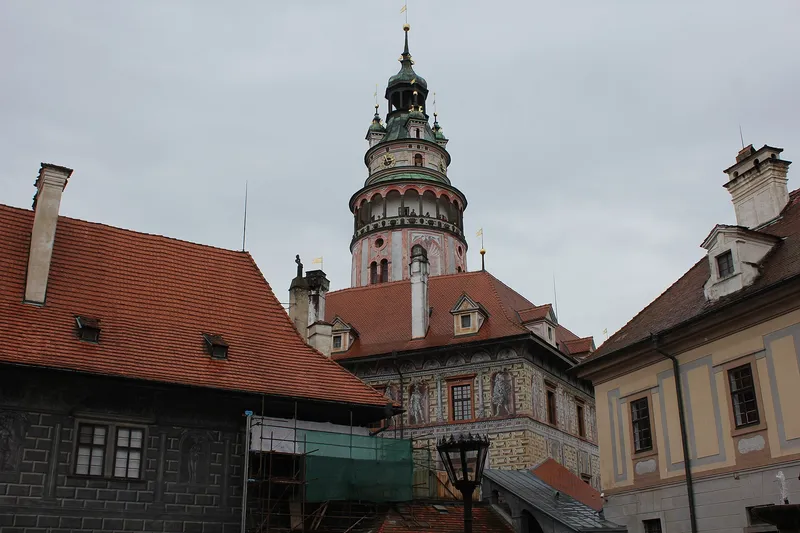
Castle complex
Český Krumlov Castle
The second largest castle complex in Czechia, with a tower rising 86 metres above the Vltava.
Book a private walking tour
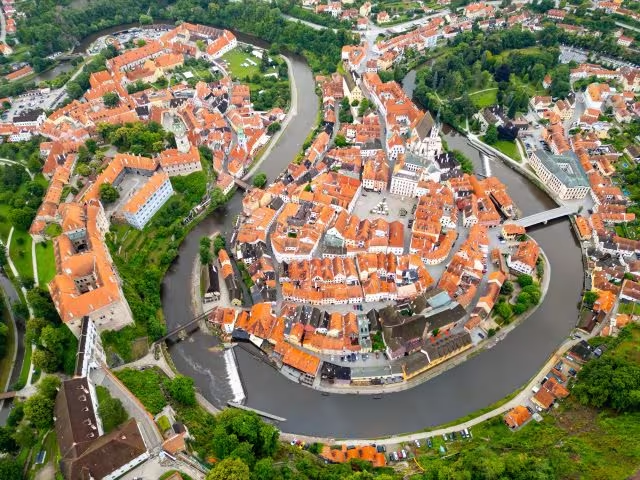
A castle on a rock above a looping river, a medieval town planned in the 13th century, and a UNESCO listing since 1992. Český Krumlov is small enough to see in a day and busy enough that two are better, and most of the visitors arriving here come from abroad. This guide sorts out what the castle ticket actually covers, where to sleep, how to get here from Prague and what to do when the main season is over.
The Gothic castle sits above the meanders of the Vltava, and the town below it has been a protected urban heritage reserve since 1963 and a UNESCO World Heritage Site since 1992. The castle was first mentioned in writing in 1253, and the Rožmberk, Eggenberg and Schwarzenberg families held the town in turn; the Schwarzenbergs kept it until 1947. It is a small place with a very large reputation, and the reputation is mostly earned.
The Czech Statistical Office counted 232,000 guests in Český Krumlov's accommodation in 2025, making it the second most visited town in South Bohemia after České Budějovice (249,000). It is also the region's most international town: about 68% of those guests were non-residents, led by visitors from Taiwan (25.3%), Austria (10.7%), Germany (10.4%), China (6.6%) and the United States (6.3%). The town's own tourist office says one day covers the historic centre, the castle, the tower and the gardens, two days allow museums, galleries and viewpoints at a relaxed pace, and three days leave room for more sights or a trip into the surrounding area.
Opening times change with the season. When this guide was checked in November 2026, the castle's own site listed only the castle museum and castle tower with dates (1 November to 20 December, Tuesday to Sunday, 9:00 to 15:30); the guided tours, the Baroque theatre, the Bellaria summer house, the stables and the garden showed no scheduled dates at all. Check the castle's opening-hours page before you plan around any one interior.
Money works slightly differently from what many visitors expect. The currency is the Czech koruna, and the tourist office advises paying in korunas if a card terminal offers to charge you in euros, and declining the offer if an ATM wants to convert the amount into your home currency. It also notes that parking spaces cannot be reserved or bought online in advance.
The old town is a loop of the Vltava with the castle on one side of it, so the layout is easy: you cross the river, you are in the next district. The three parts below sit next to each other on both banks of the river.
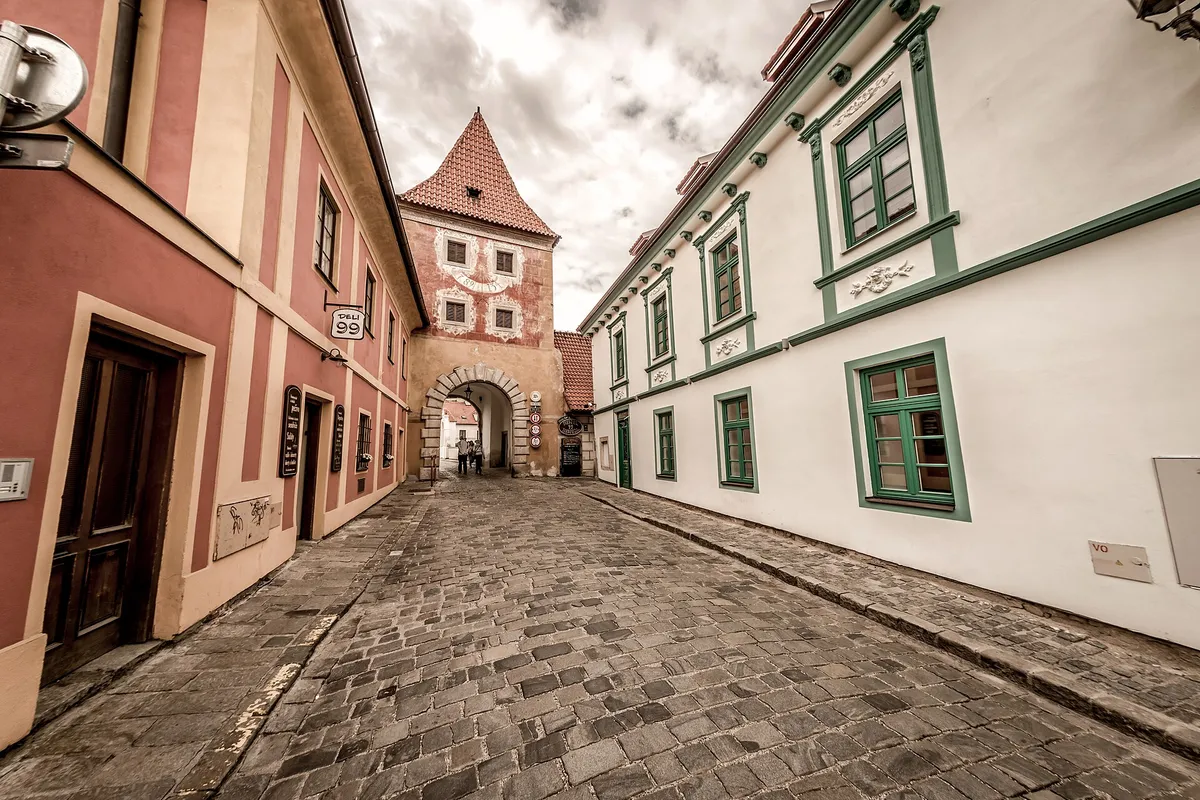
The Inner Town sits on the peninsula inside the right bank of the Vltava and was built to a plan from the 13th century. Svornosti Square is the centre of the historic old town: a Baroque fountain with a plague column from 1716 stands in the square, and the town hall facade takes up almost the entire northern side. The Infocentre is at Svornosti Square 2, and Hotel Grand is on the square itself.
The older part of the historic core, on the left bank of the Vltava beneath the castle. It runs from the wooden Barber's Bridge to the Budějovická Gate, and its houses were mostly home to castle servants. The Minorite and Poor Clares monastery complex lies on its eastern side. The Barber's Bridge connects it to the Inner Town.
The tourist office says only Prague Castle rivals it in size, and the town's visitor site calls it the second largest of its kind in Czechia. It includes the small Hrádek and around 40 other buildings and palaces. The castle garden covers 11 hectares, and bears have lived in the lower castle moat since 1707.
Český Krumlov has plenty of small hotels and guest houses inside the historic centre, and several are rated 9 or higher by guests. These picks cover the range and every one is listed on Booking.com with a rating from real guest reviews.
Prices below are rough winter midweek averages for a double room (February 2027), so check current rates for your dates. At the top, Boutique Hotel Villa Beatika is a five-star on Prikra street that guests rate 9+ (around €110 to €120 a night). In the old town, Garni hotel Castle Bridge on Hradební (around €110 to €115) has close to 2,000 guest reviews averaging about 9, and Hotel Grand sits right on Svornosti Square (around €105 to €110, guests rate it 8.9 from over 1,200 reviews).
In the four-star middle, Hotel Latrán in the Latrán district (around €90) has a guest rating of 9.3 from over 450 reviews, and Hotel Dvořák on Radniční street (around €85 to €115) is rated 9 from over 900 reviews. On a tighter budget, Pension Kristian on Masná (around €75) and Penzion Landauer on Rooseweltova (around €70) both score above 9 from several hundred reviews, and Residence Muzeum Vltavínů, an apartment property on Panská (around €45), is rated 9.1 from over 500 reviews.
The town's own historic brewery supplies local beer, and a few kitchens lean on it. The venues below are the ones this guide could confirm with the town's tourist office or the national tourism portal; check current opening hours before you go, as none of the sources list them.
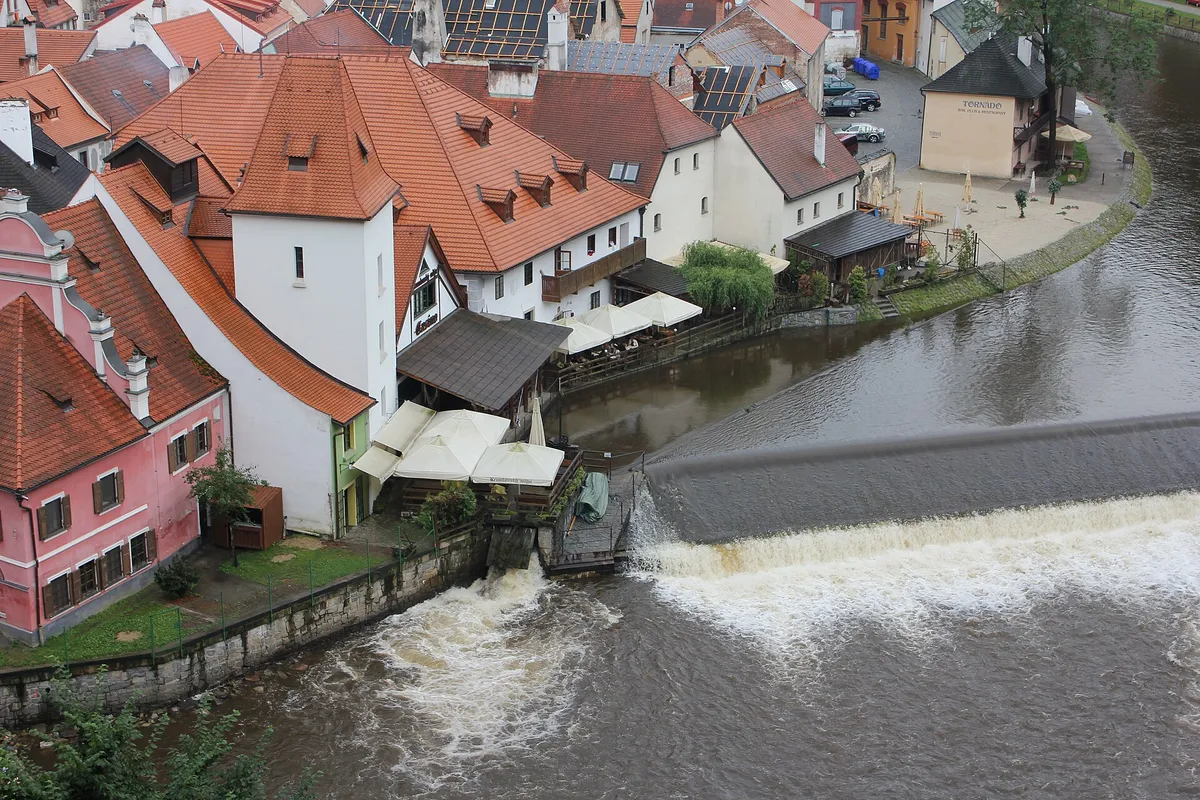
A medieval-style tavern with 120 seats (80 indoors, 40 outdoors), less than 500 metres from the main square. The kitchen grills suckling pig, game and chicken over open fire, and the drinks list includes Moravian wines and Budvar light and dark beer. The tourist office lists it as open all year.
A family-run restaurant in a Renaissance house in the historic centre, with interiors styled after the 1930s and a summer garden. The national tourism portal says it serves traditional restaurant cooking with classic Czech dishes and pours beer from the local historic Krumlov brewery.
Opened in 2024 in a former manor brewery, Port 1560 has four exhibitions across a Gothic-Renaissance palace, a neo-Gothic brewhouse and an industrial kiln building. The town's event listings have included guided tours of the historic brewhouse, which show the brewhouse where Krumlov beer is made today and include a tasting; dates and prices change, so check the tourist office's events page.
One day covers the historic centre, the castle, the tower and the gardens. Everything else is a bonus: museums, viewpoints, the river and the monasteries just outside the centre.
The second largest castle complex in Czechia, with a tower rising 86 metres above the Vltava.
Book a private walking tour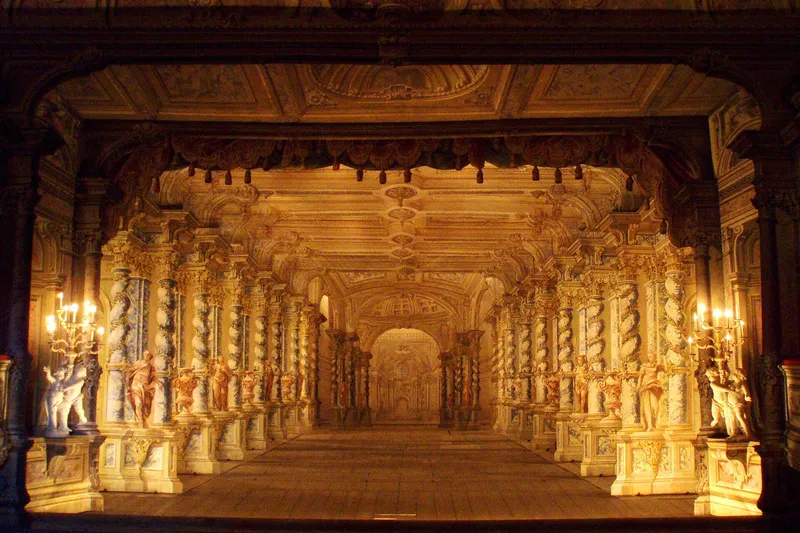
One of the best preserved Baroque theatres in the world, with its original stage machinery and costumes.
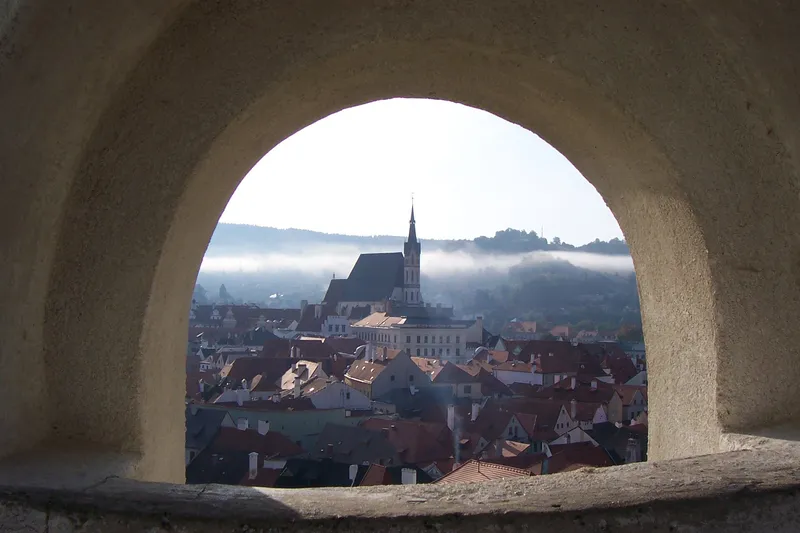
A three-nave church with a late Gothic core, a neo-Gothic tower and Gothic frescoes from the early 15th century.
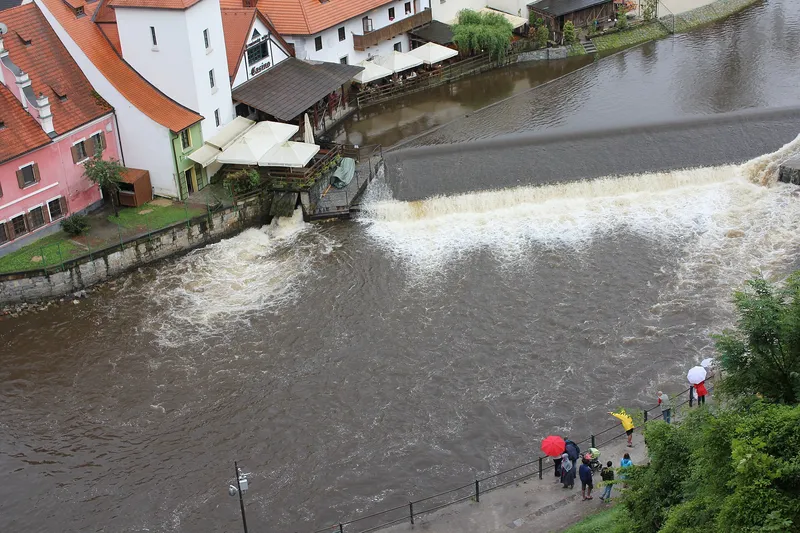
Rental companies run boats, rafts and canoes on the river, from half-day trips through the town to day trips to Zlatá Koruna.
Book a 50-minute raft cruiseThe castle's own site lists these adult prices: castle museum and castle tower (self-guided) 280 CZK, tour route I 300 CZK, tour route II 260 CZK, the Baroque Castle Theatre 400 CZK, the Bellaria summer house 200 CZK and the stables 80 CZK. The castle garden is free. The tower is the viewpoint: the tourist office puts it 86 metres above the river. The castle's highlights include the Masquerade Hall decorations and the Baroque theatre, and the garden has a cascading fountain and the rococo Bellaria summer house. If you would rather have the context explained, a private two-hour walking tour (guests rate it 4.8 from over 100 reviews) covers the town and its history.
St Vitus Church, the Minorite and Poor Clares monasteries (14th to 18th century), the Museum Fotoatelier Seidel, the synagogue and the Egon Schiele Atelier, the house on the Vltava bank where Schiele lived and worked in 1911, all appear in the tourist office's top ten sights. The Schiele suite is open to the public in summer. Port 1560, opened in 2024, is the newest of them. Latrán also has houses with historic decoration: house no. 39 carries a mural of the Rosenberg Rider and house no. 15 has Gothic interior paintings.
Many rental companies operate on the Vltava, and rentals usually include equipment and transport to the start and from the finish. Beginners may prefer a guided trip with an instructor. Routes range from a half-day trip through the town to a day trip to Zlatá Koruna and multi-day trips from Vyšší Brod; the tourist office recommends booking well in advance in high season, and whether a trip goes ahead depends on the water level. For a relaxed look at the town from the river, the wooden raft cruise lasts about 50 minutes and guests rate it 4.8 from over 700 reviews.
The tourist office's own guidance sets the shape: one day for the centre, castle, tower and gardens, two for museums and viewpoints, three for more sights or a trip out of town. These routes follow it.
The castle. The castle museum and tower (280 CZK), then the free castle garden.
Lunch at Hospoda Na Louži or Krčma Šatlava. Classic Czech dishes in a 1930s-style interior, or open-fire grills in a medieval-style tavern.
Latrán and the Inner Town. Walk Latrán to the Budějovická Gate, cross the Barber's Bridge and finish on Svornosti Square, with its 1716 plague column.
Stay the night. A night in the old town lets you see it outside day-trip hours; the hotels in this guide are all in the historic centre.
The one-day route: castle, lunch, Latrán and the Inner Town.
Port 1560. Four exhibitions in a former manor brewery, with the historic brewhouse tour if it is running on your dates.
Museums and viewpoints. St Vitus Church, the Museum Fotoatelier Seidel, the monasteries, and the Egon Schiele Atelier in summer.
Dinner at the other of the two venues above, or the Baroque Castle Theatre if it is open on your dates.
The two-day route above, at a gentler pace.
On the river. A half-day raft or canoe trip through the town, or a day trip to Zlatá Koruna Monastery, booked ahead in high season.
České Budějovice. 22 km away, about 30 minutes by bus at regular intervals.
The nearest international airports are Prague (180 km), Linz (70 km), Vienna (210 km) and Munich (300 km). From Prague, the tourist office gives about 3 hours by bus, several times a day either directly or with a change in České Budějovice. FlixBus lists its fastest trip as 2 hours 35 minutes, with arrival stops at the bus station (Nemocniční 586) and at Špičák (U Luny 137).
By train, České dráhy runs a direct Jižní expres once a day, leaving Prague at 8:01 and returning from Český Krumlov at 14:07; the journey takes just under 3 hours and tickets start from 195 CZK. Other trains involve a change in České Budějovice. The station is 1.7 km north of the centre, a walk of about 35 minutes to the square. The bus station is 650 m from Svornosti Square (about 13 minutes on foot) and Špičák is 800 m (about 15 minutes).
By car it is 180 km from Prague, about 2.5 hours, on the E55. More than 800 parking spaces in lots P1 to P5 and P7 are 480 to 880 metres (8 to 15 minutes on foot) from Svornosti Square and are open year-round; they cannot be reserved in advance. Once in town the sights are on foot. An eSIM bought before you travel saves hunting for a SIM in a small town.
Most shops, restaurants and accommodation accept cards, but euro payments depend on the business and the official currency is the Czech koruna, so the tourist office suggests carrying some cash in korunas. Exchange is available at the Infocentre (Svornosti Square 2) and at banks and exchange offices in the centre, and ATMs are common. If a terminal or an ATM offers to charge or convert in euros or your home currency, decline and pay in korunas.
Rather than a day-budget guess, here are the prices that official and booking sources actually state: the castle tickets, the train from Prague and the hotel brackets. Restaurant and pub prices are not published by the sources above, so none are quoted.
Canada's advisory for Czechia is its lowest level, "Take normal security precautions", and it describes violent crime as low. It also notes that petty crime such as pickpocketing and purse snatching is common, with pickpockets most active in Prague, at major transport hubs and at tourist sites, so the same habits apply on the Prague leg of the trip as in the small town itself.
The UK government advises reporting a theft in person at a Czech police station within 24 hours, to get a crime number for insurance, and using a major taxi company rather than picking one up in the street. The emergency number is 112. For the scams that catch visitors across the country, see the Czechia scam guide.
Český Krumlov works as a base for the surrounding Vltava valley, and as a day trip in its own right from Prague.
The region's most visited town by registered guests, with 249,000 in 2025 against 232,000 for Český Krumlov, and the place where some bus and train routes from Prague change. Buses run at regular intervals.
A Cistercian monastery on a promontory surrounded on three sides by the Vltava, described by the tourist office as one of the most valuable Gothic complexes in Central Europe. It is also the end of the day river trip from Český Krumlov.
A large medieval monument on a promontory above the confluence of the Vltava and the Křemežský Stream, near a Celtic oppidum, in the village of Třísov.
If you are starting in Prague, a long day is possible by direct train or bus, but an overnight is better. Guided options include a full-day tour with pickup (9 hours, rated 4.8 from over 650 reviews), a full-day trip with lunch (11 hours, rated 4.6 from nearly 1,400 reviews) and a combined Český Krumlov and České Budějovice day trip (10 hours). The Prague city guide covers the other end of the journey.
Yes. The castle is first mentioned in 1253, the old town has been a UNESCO World Heritage Site since 1992, and the Czech Statistical Office counted 232,000 guests in its accommodation in 2025, about 68% of them from abroad. It is small, so one day covers the main sights.
The town's tourist office says one day covers the historic centre, the castle, the tower and the gardens. Two days allow museums, galleries and viewpoints at a relaxed pace, and three days leave room for more sights or a trip into the surrounding area.
By bus it takes about 3 hours, several times a day, either directly or with a change in České Budějovice; FlixBus lists its fastest trip as 2 hours 35 minutes. České dráhy runs a direct Jižní expres train once a day, leaving Prague at 8:01 and taking just under 3 hours, with tickets from 195 CZK.
The castle's own site lists these adult prices: castle museum and tower 280 CZK, tour route I 300 CZK, tour route II 260 CZK, the Baroque Castle Theatre 400 CZK, the Bellaria summer house 200 CZK and the stables 80 CZK. The castle garden is free.
In November 2026 the castle's site listed the castle museum and castle tower as open Tuesday to Sunday, 9:00 to 15:30, from 1 November to 20 December. It showed no scheduled dates for the guided tours, the Baroque theatre, the Bellaria summer house, the stables or the garden, so check the castle's opening-hours page before you travel.
Inside the historic centre, in the Inner Town or in Latrán below the castle. Booking.com guest ratings of 9 or higher are common among the old-town hotels, and winter midweek prices run around €85 to €115 a night for four-star hotels and around €45 to €75 for guest houses and apartments.
Yes. Many rental companies operate on the river, and rentals usually include equipment and transport to the start and from the finish. Routes range from a half-day trip through the town to a day trip to Zlatá Koruna, and the tourist office recommends booking well in advance in high season; whether a trip goes ahead depends on the water level.
The official currency is the Czech koruna. Most shops, restaurants and accommodation accept cards, and euro payments depend on the business. If a card terminal offers to charge you in euros, or an ATM offers to convert the amount into your home currency, decline and pay in korunas.
Canada's advisory for Czechia is its lowest level, "Take normal security precautions", and it describes violent crime as low. Petty crime such as pickpocketing is common, most of all in Prague, at transport hubs and at tourist sites. The emergency number is 112.
Český Krumlov is a town built around a river bend and a castle, and nothing about that layout is staged. The castle was first recorded in 1253, the plague column on the square dates from 1716, and bears have lived in the lower castle moat since 1707. None of it was built for visitors, which is why the town still feels like a place rather than a set.
Stay the night, walk Latrán once the day-trip groups have gone, and the town stops being a postcard and becomes a place.