National forest park
Cape Greco
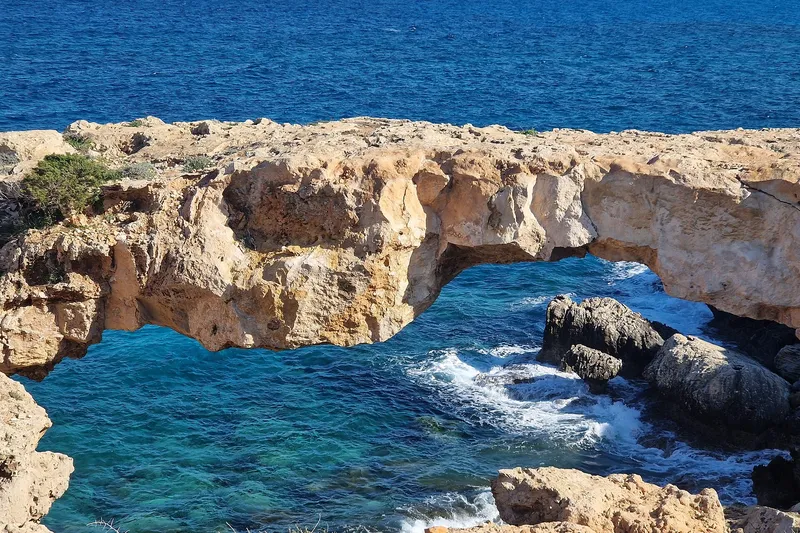
Sea cliffs, caves and a natural rock arch on the coast east of town, walked on marked trails.
Book a Blue Lagoon cruise
A fishing harbour that only got its first breakwater in the early 1970s now sits at the centre of one of the busiest tourist coasts on Cyprus. Shallow turquoise water at Nissi Beach, sea caves and cliff trails at Cape Greco, a roughly 500-year-old monastery tucked into the main square, and a late-night strip that has made the town famous for different reasons. Ayia Napa is two towns in one, and the trick is knowing which one you came for.
Ayia Napa is one of the most-visited tourist areas in the Republic of Cyprus. In the Cyprus Statistical Service's 2024 figures, 15.9% of tourists said they stayed in Ayia Napa and another 11.4% in neighbouring Paralimni, the only area ahead of the pair being Paphos at 31.5%. Its fame rests on two things that barely overlap: some of the island's clearest, shallowest beaches, and a bar-and-club district that peaked in the early 2000s, when the town was a hub of the UK garage scene.
The town itself grew out of a quiet bay with a handful of fishing boats, and its first breakwater only went in during the early 1970s. What is left of the older place is the Ayia Napa Monastery in the central square, built around 1500 in the form of a medieval castle, which still anchors the centre while hotels and bars have spread around it. The visitor mix has shifted since: Cyprus Mail reported in 2025 that the Russian market has largely disappeared, partly replaced by Poles, Serbs and Romanians, and that older tourists now mix with the young. Clubbing is now only part of the scene, with pool parties, boat trips and beach days filling the daytime.
Ayia Napa is not a quiet cultural town. The bar district is loud late into the night in season, and Cyprus Mail described a clear divide in 2025 between the family-friendly beach road and the rowdier, more run-down Bar Street. In June 2026 the mayor asked for extra police after two violent fights in one week, though police said the situation was not out of control. If you want calm, book away from the bar streets or choose a quieter bay.
Summer is hot: July and August regularly pass 35°C on the coast, and prices follow. There is also no train in Cyprus and no direct public bus from Larnaca airport, so you plan the transfer rather than improvise it. The sea is the point, but the infrastructure around it asks for a little preparation.
Ayia Napa spreads along the coast rather than around a single core. The central square and bar streets sit in the middle, the big beach hotels line the road toward Nissi, the marina and Makronissos lie to the west, and Cape Greco's cliffs and trails mark the eastern edge. Where you sleep decides how loud your nights are.
The central square holds the Ayia Napa Monastery, and the bars, clubs and most restaurants cluster within a few minutes' walk. It is the most convenient base and the noisiest. Cyprus Mail described Bar Street in 2025 as the rowdier, more run-down end of town, so choose a hotel a few streets back rather than on the strip if you want to sleep.
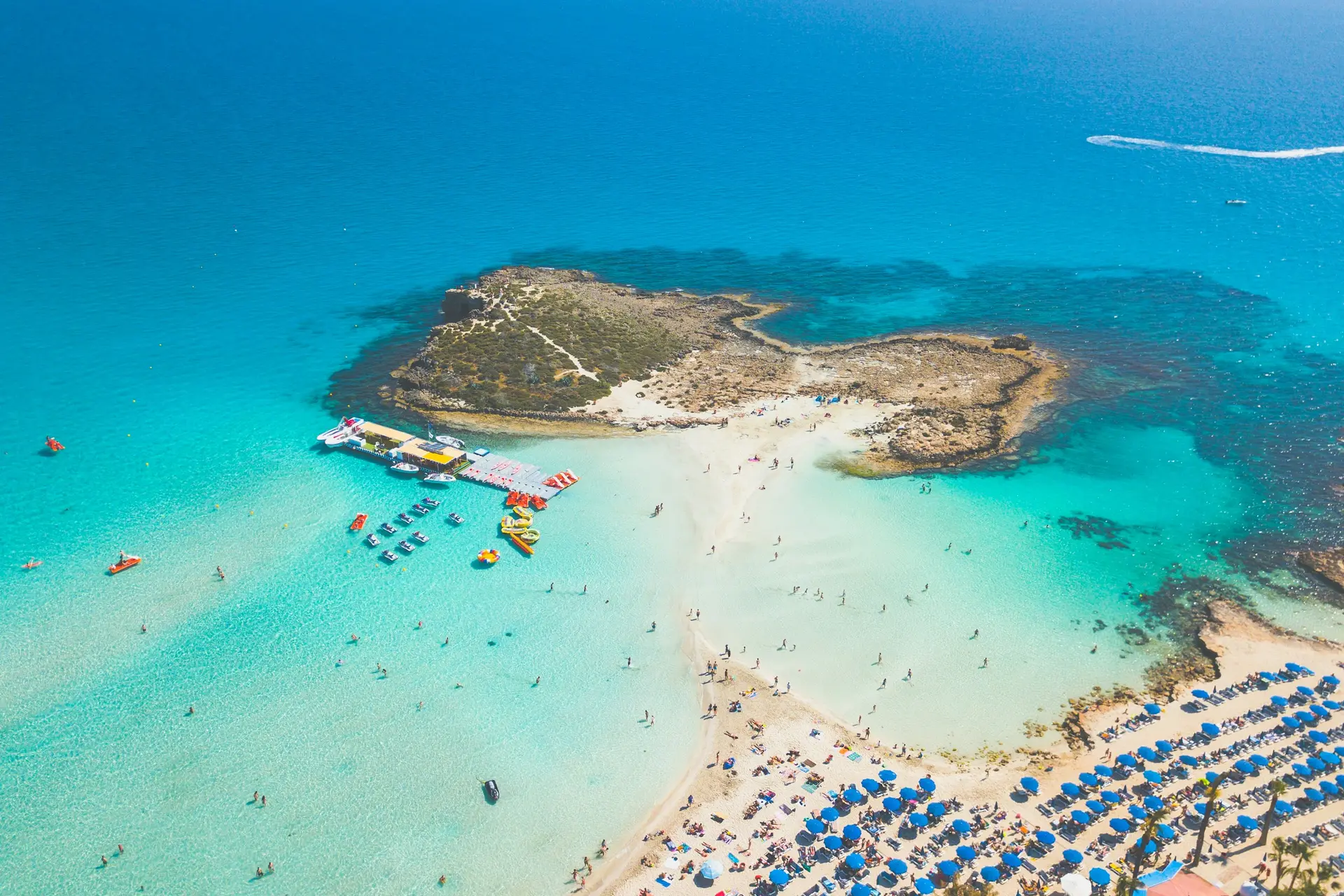
Nissi Beach has blonde sand, shallow and safe water, and a small islet about 45 metres offshore that is joined to the beach by a natural sand lane. It has lifeguards, restaurants, beach bars, water sports and parking, and it is the busiest beach in town. Several large beachfront hotels, including Chrysomare and Aktea Beach Village, sit along Nissi Avenue, and traditional tavernas such as the Old Village Tavern are on the same road.
About 5 km west of the centre, Makronissos has white sand, clear calm water, a diving centre and a canteen. Nearby, Ayia Napa Marina sits between Ayia Thekla and Makronissos beaches and can host up to 600 yachts, with shops, restaurants and wellness services around it. The Greek-myth-themed WaterWorld waterpark is on Ayia Thekla road, opposite the marina, and the Makronissos Tombs are in the same western stretch.
Ayia Thekla is a golden-sand bay with calm, shallow, clear water inside a Natura 2000 area. Pantachou is a 1.2 km stretch that is lively at one end and quiet and family-friendly at the other, with restaurants, bars and lifeguards. Both suit visitors who want beach days without staying next to the clubs.
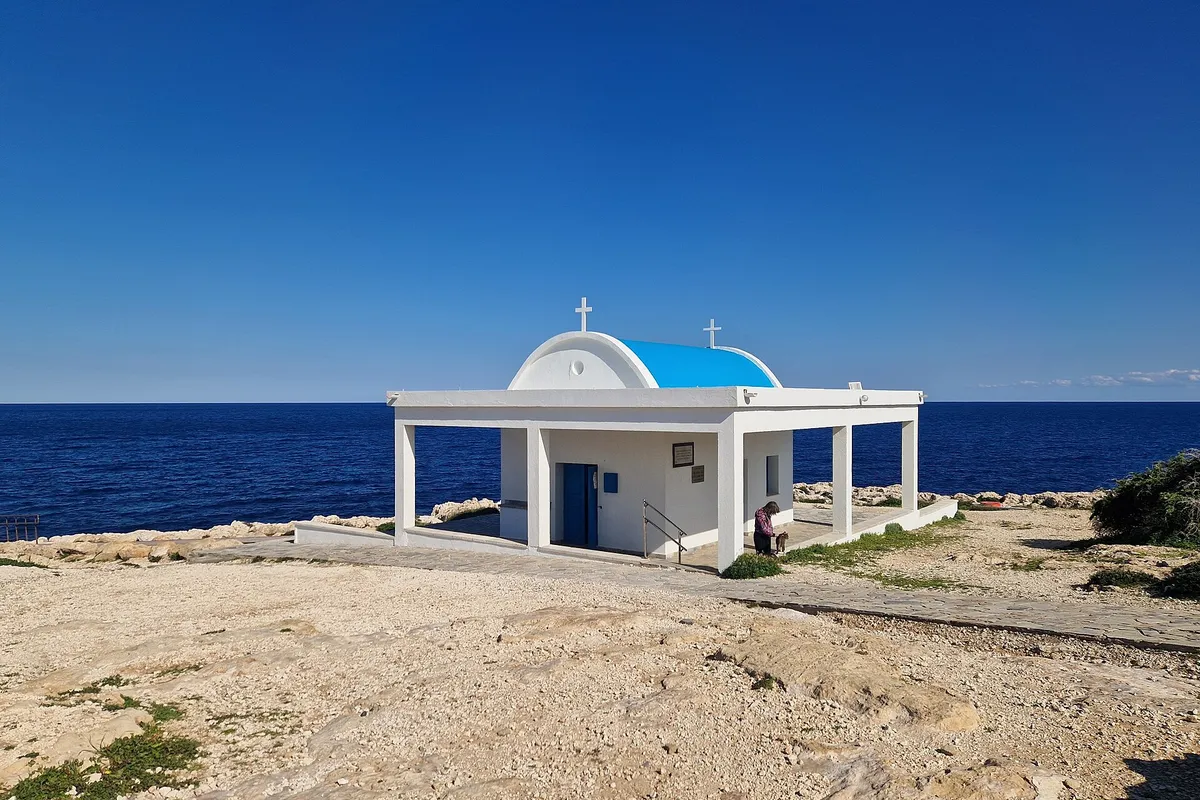
Cape Greco is a national forest park of sea cliffs, caves and coastal trails east of town. Konnos Bay sits at the park's eastern edge and works well for a walk plus a swim, and the Agioi Anargyroi chapel is built above a sea cave where the saint is said to have lived an ascetic life. It is a half-day outing rather than a place to stay, but a car or the local bus reaches it easily.
Pernera is a calmer beach with lifeguards and, offshore, the MUSAN underwater sculpture museum: over 93 sculptures about 200 m off the coast in a marine protected zone. Protaras, just beyond in the Paralimni municipality, suits families and couples better than the clubbing scene, as the Cyprus country guide notes.
Ayia Napa is a resort town, so the choice runs from large all-facility beach hotels to small apartment hotels a few streets from the square. These picks all score 8.0 or higher with guests and have hundreds of reviews.
Prices below are rough February midweek averages per night for a double room, from Booking.com availability, so check current rates for your dates; summer prices are higher, and the country guide puts peak coastal rates 30 to 50% above shoulder season. At the top end, Chrysomare Beach Hotel & Resort is a 5-star beachfront resort on Nissi Avenue with indoor and outdoor pools and a spa, and guests rate it 8.7 from over 4,500 reviews (around €175 a night). Among the mid-range picks, Aktea Beach Village is a 4-star beachfront resort with an infinity pool and a kids' club that guests rate 8.7 from over 1,100 reviews (around €90 a night), and Limanaki Beach Hotel & Suites (around €135) is a 4-star hotel in the town centre with a sauna and an outdoor pool open all year.
For good value close to the action, Nelia Gardens is a 4-star town-centre hotel with a pool that guests rate 8.6 from over 1,600 reviews (around €55 a night). Smaller apartment hotels score even higher: Liquid Hotel Apartments (around €60) and Bellagio Napa Suites (around €70) are both rated 9+ by guests, and Panas Villas (around €70), in the Nissi Beach area, is rated 9+ with a pool.
On the tightest budget, River View Boutique Apts (around €50) is an apartment hotel in the centre that guests rate 8.2 from nearly 2,000 reviews. If you want quiet, ask for a room facing away from the bar streets, whichever property you pick.
Ayia Napa's tourist menus are easy to find, but the best value is a proper sit-down meze at a family taverna. Cypriot food here is the same grilled halloumi, souvlaki, sheftalia and salads you find across the island, and the island-wide price guide of €15-25 a person for meze holds as a baseline.
Taverna Napa at the northern entrance of town, on Dimokratias Street, has been run by the same family since 1976 and describes itself as the first family-run tavern in Ayia Napa. The Old Village Tavern at 48 Nissi Avenue, on the outskirts, serves a classic meat or fish meze and a Cyprus Mail reviewer praised its grilled meats and sheftalies; it plays live music in the evenings. Check opening times in season, as menus and hours change.
The Visit Famagusta tourism board lists cafes, fish tavernas and seaside restaurants around the harbour, plus restaurants at Makronissos and the marina. These are good for a sunset meal; prices are higher than in the town's back-street tavernas.
Halloumi runs €5-9, a souvlaki or sheftalia pitta €6-12, and a Keo beer €3-5 in a taverna, per the Cyprus country guide. A sweet Commandaria after dinner is a local habit; the Cyprus Mail reviewer of the Old Village Tavern noted two complimentary glasses came with the bill.
Beaches are the headline, but the area is richer than a sun lounger. Cape Greco's trails, an open-air sculpture park, two small museums and the Makronissos rock tombs fill the days between swims, and boat trips cover the caves and coves from the water.
Sea cliffs, caves and a natural rock arch on the coast east of town, walked on marked trails.
Book a Blue Lagoon cruise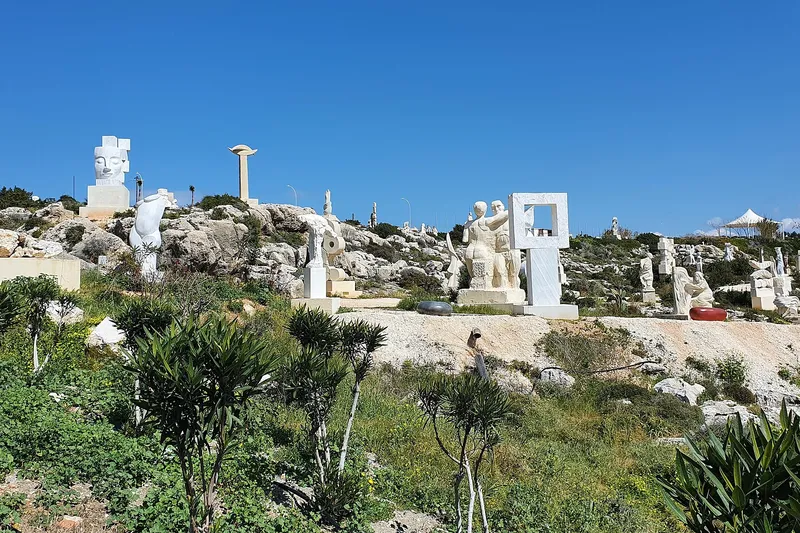
A 20,000 square metre park with works by over 50 artists, next to a Mediterranean cactus garden.
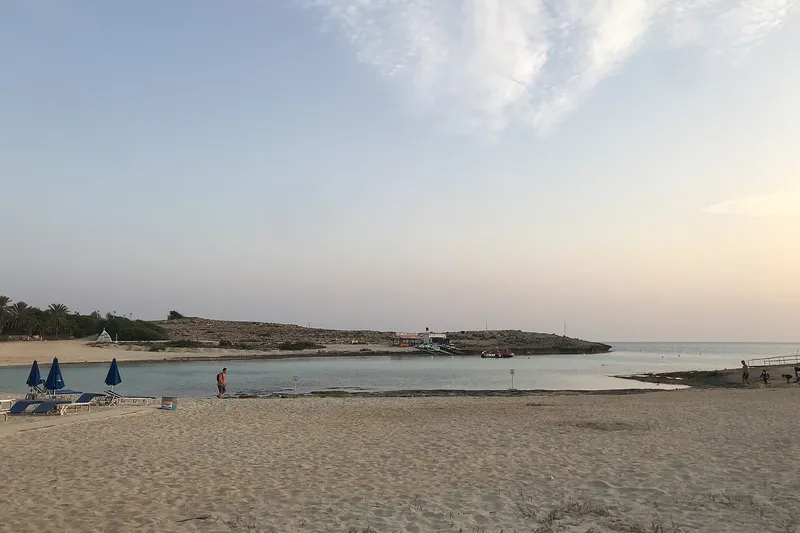
A sheltered, shallow sandy cove with lifeguards, restaurants and water sports.
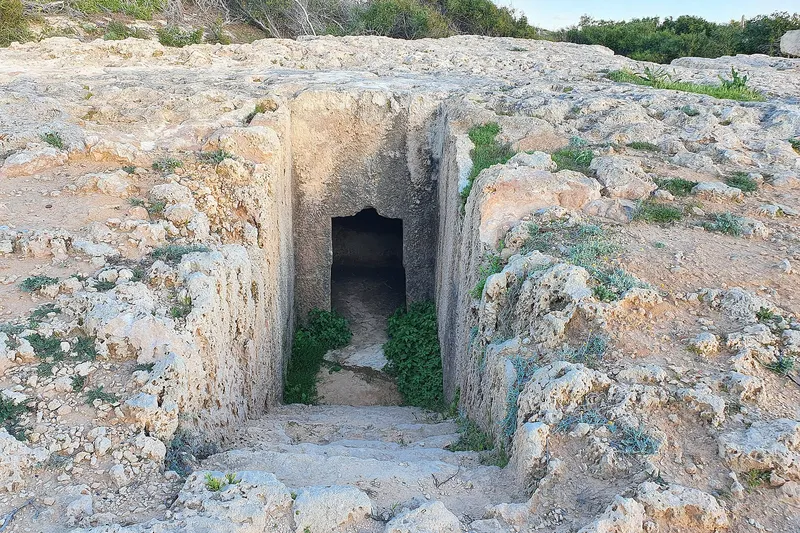
Nineteen rock-cut tombs, a small sanctuary and an ancient quarry west of the town.
Nissi Beach is the famous one, and in the 2026 European Beach Index from UK insurer Quotezone it ranked second best in Europe, behind Mogren Beach in Montenegro; summer sea temperatures there average above 27°C. The islet 45 metres offshore is reached by a sand lane. For quieter water, Landa is a golden, sheltered bay that is relaxed and family-friendly, Ammos tou Kambouri is quiet, pebbly and rock-framed, Makronissos is calm with a diving centre, and Ayia Napa Marina Beach is man-made and breakwater-protected with a beach bar-restaurant. Obey the beach warning flags: the UK government notes there can be strong waves and currents, so swim only on approved beaches.
The Ayia Napa Monastery in the central square is the town's most important historical site. It was built around 1500 in the form of a medieval castle, is partly built underground and cut into the rock, was restored in 1950, and became an ecumenical conference centre in 1978. An ancient sycamore by the south gate is believed to be over 600 years old. Entry is free, donations accepted, and Visit Cyprus lists hours of 9:30 to 14:30 from November to April and 9:30 to 19:00 from May to October, closed on public holidays. Dress modestly.
The Konnoi to Agioi Anargyroi circular trail is 4.8 km and takes about 2 hours, starting at Konnos Beach or at the Agioi Anargyroi church. It runs beside the sea to the church built above a sea cave, then to the natural Kamara tou Koraka arch and the ruins of a temple of Aphrodite. Several caves along this coast are only accessible from the sea, and the natural arch known as Lovers' Bridge is also on the route, so a boat trip with a swim stop at the Blue Lagoon is the easiest way to see them.
The Thalassa Municipal Museum on Leoforos Kryou Nerou covers Cyprus's marine heritage and holds a life-size replica of the ancient Kyrenia ship; entry is €4 for adults and €1.50 for children, closed Sundays outside June to September. The Ammochostos Motor Museum shows 105 exhibits, including 70 classic cars, for €12 for adults and €6 for under-12s, open daily 10:00 to 22:00. WaterWorld on Ayia Thekla road is the Greek-myth-themed waterpark; its 2027 season opens on 26 March, with listed prices of €52 for adults and €34 for children aged 3 to 12, with discounted online tickets advertised.
Boat trips are the best way to see the coast. The Blue Lagoon and Turtle Cruise (about 4.5 hours, guests rate it 4.7 from over 2,700 reviews) includes two swim stops, and the Lazy Day Cruise (about 5 hours, rated 4.8 from over 2,700 reviews) adds Turtle Cove, sea caves and lunch. Cruises on GetYourGuide start around €25 to €50 a person. A quad bike safari (about 3 hours, from €75 for a single rider) needs a full driving licence; the UK government warns that quad and moped rental firms usually provide only third-party insurance, so check what is covered before you ride.
Three days covers Ayia Napa itself without rushing. Walks and sights go in the morning, beach time in the afternoon, and the evening is yours to take quiet or loud.
The monastery and the Sculpture Park. The Ayia Napa Monastery in the central square, then a stroll through the free Sculpture Park.
Meze lunch. A sit-down meze at a family taverna such as Taverna Napa.
Nissi Beach. Swim to the islet's sand lane and spend the afternoon in the shallows.
Dinner on Nissi Avenue. The Old Village Tavern for live music and meze, or the marina for a sunset meal.
The one-day route: monastery, Sculpture Park, meze lunch, Nissi Beach and a Nissi Avenue dinner.
Cape Greco. The Konnoi to Agioi Anargyroi circular trail, about 2 hours, before the heat builds.
Konnos or Vathia Gonia. A swim, then a quiet afternoon on a smaller beach.
Marina sunset. Dinner at one of the marina restaurants, between Ayia Thekla and Makronissos.
The two-day route above, at a gentler pace, adding the Thalassa museum.
A boat day. The Blue Lagoon and Turtle Cruise with swim stops, home by mid-afternoon.
Famagusta and Varosha. A guided day trip into the Turkish-administered north, passport required.
WaterWorld. A family day at the waterpark on Ayia Thekla road, in season.
Ayia Napa is about 50 km from Larnaca airport (LCA), a 40 to 55 minute journey. Cyprus Mail's airport guide lists the Kapnos airport shuttle from €13 per adult, 45 to 55 minutes, to fixed stops at Ayia Napa Square and Nissi Avenue, and advises booking a seat in summer. A taxi or private transfer is indicatively €50-70, taxis wait outside arrivals around the clock, and Bolt serves the airport, so check the app for availability and pricing. There is no direct public bus from the airport to Ayia Napa: the local route 425 goes to central Larnaca.
Within Ayia Napa, the centre and Nissi Avenue are walkable. OSEA local buses 101 and 102 link Ayia Napa with Protaras and Paralimni and pass the Cape Greco park entrance, so check the current timetable at publictransport.com.cy because winter schedules differ. A rental car is roughly €30-50 a day and Cyprus drives on the left; the UK government warns that driving standards are poor and that drink-driving and phone use are heavily fined. Paphos airport is far away, so fly into Larnaca for Ayia Napa.
April to June and September to October are the sweet spots: warm sea, manageable crowds and lower prices than peak summer. July and August regularly pass 35°C on the coast and are the busiest and loudest months. March is mild with low prices and few tourists, and from November to February the coast runs 10 to 17°C with the lowest prices; the waterpark is seasonal, and its 2027 season opens on 26 March.
Practical prep: pack sun protection, and an eSIM before landing saves the airport queue; EU roaming rules apply in Cyprus.
Ayia Napa follows the Cyprus price range: cheaper than Western Europe, pricier than the Balkans. Accommodation is the swing factor, with peak July and August rates 30 to 50% above shoulder season, while meals and attractions stay comparatively stable.
The US State Department rates Cyprus Level 1, its lowest category, as of June 2026. The UK FCDO does not advise against travel to Cyprus, though its page notes a high risk of sudden escalation in the Middle East and advises keeping departure plans under review, and Canada advises normal security precautions. Violent crime against tourists is rare; the practical risks in Ayia Napa are nightlife, the sea and the road.
In summer 2025, Cyprus Mail reported 35 to 40 police officers guarding the resort each night, and in June 2026 the mayor asked for more police after two violent fights in a week, which police said were not out of control. Buy your own drinks and keep them in sight, because the UK government warns of drink spiking, check prices before ordering, avoid cabaret-style venues, and stay with your group. Never leave your passport with a rental company as a deposit, as the UK government advises. The wildfire season runs from April to October. Emergency number is 112 from any phone, 199 also reaches the police, and 1460 is for police complaints.
Ayia Napa is a good base for the east of the island and, with a long day, for Cyprus's best-known sites. Most organised tours include hotel pick-up, so you do not need a car.
Guided tours cross into the Turkish-administered north to see the abandoned Varosha district and, on the longer trip, the ancient site of Salamis and St Barnabas Monastery. The Famagusta Ghost Town tour takes about 4 hours, and the Famagusta and Salamis day trip takes about 8 hours and is rated 4.8 from over 800 reviews. Your government's ability to help you in the north is limited, so treat it as a separate travel decision.
A guided Nicosia, Larnaca and Lefkara tour takes about 8 hours and combines the divided capital with Larnaca and the village of Lefkara. The Cyprus country guide covers Nicosia's Green Line checkpoint in detail.
The Paphos and Kourion day trip from Ayia Napa lasts about 10 hours, rated 4.6 from over 700 reviews, and passes Aphrodite's Rock. It is a lot of driving for one day; if Paphos is the main goal, read our Paphos city guide and base yourself there instead.
Cruises from Protaras Pier and Ayia Napa run to the Blue Lagoon, Turtle Cove and the sea caves. The Protaras Blue Lagoon cruise takes about 3 hours and guests rate it 4.7 from over 3,000 reviews.
Yes for most visitors. The US State Department rates Cyprus Level 1, its lowest category, as of June 2026, and violent crime against tourists is rare. The risks are concentrated in the late-night bar and club area, where fights have been reported and the UK government warns of drink spiking, so watch your drink, check prices before ordering and avoid cabaret-style venues.
Three days covers the town, a beach day, Cape Greco and a boat trip. A week suits a beach holiday that adds the Protaras coast and a day trip to Larnaca, Nicosia or Paphos.
Budget travellers manage on €45-70 a day with a budget apartment, taverna meals and free beaches; mid-range runs €90-160. Hotel prices rise sharply in July and August compared with spring and autumn.
April to June and September to October: warm sea, manageable crowds and lower prices than peak summer. July and August regularly pass 35°C on the coast and are the busiest, loudest months.
No. The nightlife is real but concentrated around the Bar Street area, while the beach road, Cape Greco, the Sculpture Park and the Thalassa museum suit families and couples. Cyprus Mail reported in 2025 that older tourists now mix with the young and that clubbing is only part of the scene.
Ayia Napa is about 50 km from Larnaca airport, a 40 to 55 minute drive. The Kapnos airport shuttle runs from €13 per adult to Ayia Napa Square and Nissi Avenue, and a taxi or pre-booked transfer is indicatively €50-70. There is no direct public bus.
Not for the town and Nissi Beach, which you can reach on foot or by local bus. A car helps for Cape Greco, Protaras, Larnaca and day trips; rental runs roughly €30-50 a day and Cyprus drives on the left.
Nissi Beach is the famous one: golden sand, shallow water and an islet reached by a sand lane. It is also the busiest. Landa, Vathia Gonia and Ammos tou Kambouri are quieter, and Ayia Thekla is a calm, family-friendly bay.
Yes, as a day trip into the Turkish-administered north, which needs your passport at the checkpoint. Guided tours of about 4 to 8 hours leave from Ayia Napa, but your government's ability to help you in the north is limited, so treat it as a separate travel decision.
No. Cyprus is in the EU but outside Schengen as of this guide, uses the euro, and runs its own passport control. Check current entry rules, including ETIAS timing, on the Cyprus country guide before you travel.
Ayia Napa has a reputation to match the nights, but the days are what most people remember: water so shallow and clear that the sea floor looks lit from below, a walk along cliffs to a small white chapel above a cave, a monastery that has outlasted five centuries of change in the middle of a party town. The town is not hiding either side of itself.
Walk the Cape Greco coast once in the morning, before the heat and before anyone else is up, and you will see the part of Ayia Napa that the postcards and the bar streets both leave out.