
What You're Actually Getting Into
Cyprus is the third-largest island in the Mediterranean, and it packs an unusual amount of contradiction into a landmass roughly the size of Connecticut. It's the mythological birthplace of Aphrodite and the site of a UN-patrolled buffer zone that has run through the middle of the capital since 1974. It has three UNESCO World Heritage listings, Neolithic settlements older than Stonehenge, and beach resorts built almost entirely in the last three decades. It is, depending on which decade of the twentieth century you're discussing, a British colony, a newly independent republic, or a country split in two by a coup and an invasion in the same year.
Most visitors experience none of the complication directly. The government-controlled south, the Republic of Cyprus, is an EU member with excellent roads, reliable infrastructure, and a tourism industry built around UNESCO archaeology, wine villages in the Troodos foothills, and some of the clearest water in the Mediterranean. This guide covers the Republic. The island's political division shapes how the north is visited (a separate entry process, a different currency, a UN checkpoint to cross) more than it shapes a standard first trip to Paphos, Nicosia or the Troodos.
The honest complications
Early 2026 brought a genuine scare: after the Iran-Israel-US conflict began on 28 February, a drone struck a building on the British Sovereign Base Area near Larnaca on 2 March, and the US State Department authorized non-emergency government staff to leave the island in early March. Day-to-day tourism in Paphos, Larnaca, Limassol and Ayia Napa continued throughout without interruption, and the US restored Cyprus to its lowest-risk Level 1 rating in June 2026 as regional tensions eased. It's worth knowing this happened, and worth checking current advisories before you travel, rather than either ignoring the region's volatility or overreacting to a resolved event.
The other honest complication is more mundane: Cyprus has no train network, bus coverage between towns is thin, and the country genuinely expects you to rent a car. July and August push coastal temperatures past 35°C. And Nicosia, the capital most visitors add as a day trip rather than a base, is a genuinely strange place to walk through: a working European city with a checkpoint and a dead zone running through its historic core.
A History Worth Knowing
Cyprus has been fought over and settled by nearly every Mediterranean power in recorded history: Mycenaean Greeks, Phoenicians, Assyrians, Egyptians, Persians, Romans, Byzantines, Crusader kings, Venetians, Ottomans and the British all held it in turn. The short version that actually matters for a visit: Ottoman rule from 1571, British control from 1878, independence in 1960, a coup and a Turkish invasion in the same year, 1974, and a division that has now outlasted the united republic that preceded it.
- c. 7000 BCE
Choirokoitia. One of the best-preserved Neolithic settlements in the eastern Mediterranean, now a UNESCO World Heritage Site, predates the pyramids by millennia.
- 1571
Ottoman conquest. The Ottomans take Cyprus from Venice after a brutal siege of Famagusta, beginning three centuries of Ottoman rule.
- 1878
British administration. The Cyprus Convention transfers administration to Britain; Cyprus becomes a Crown colony in 1925.
- 1960
Independence. The Republic of Cyprus is founded with a power-sharing constitution between Greek and Turkish Cypriots, and Britain retains two sovereign military base areas that remain British territory today.
- 1974
Coup and division. A Greek-junta-backed coup aiming for union with Greece triggers a Turkish invasion. Turkish forces hold the northern third of the island; Nicosia becomes Europe's last divided capital.
- 2004–present
EU membership. Cyprus joins the EU in 2004 and adopts the euro in 2008. Reunification talks have repeatedly stalled, most recently at Crans-Montana in 2017, while EU law remains suspended in the north.
Read the full history: antiquity, the Lusignans, and where things stand in 2026
Cyprus's ancient history is dense even by Mediterranean standards. Mycenaean Greek settlers arrived from around 1400 BCE, and the island's mix of Greek city-kingdoms, Phoenician trading posts and, according to legend, the birthplace of Aphrodite at Petra tou Romiou near Paphos, all belong to this period. Rome absorbed Cyprus in 58 BCE; the Apostle Paul preached on the island and reputedly converted the Roman proconsul, one of the events that gives Cyprus its claim to housing the first Christian ruler in history. Byzantine rule followed the empire's split, interrupted briefly when Richard the Lionheart conquered the island during the Third Crusade in 1191 and sold it to the Knights Templar, who in turn sold it to the Lusignan dynasty. Venice took over in 1489 and held it until the Ottoman conquest of 1571.
The British period (1878–1960) left the island with left-hand driving, English as a widely spoken second language, and a colonial administrative structure that shaped the eventual 1960 constitution. Intercommunal violence between Greek and Turkish Cypriots flared through the 1960s and culminated in the events of 1974: a coup backed by Greece's military junta aiming for enosis, union with Greece, gave Turkey the pretext to invade in defense of the Turkish Cypriot population. The ceasefire line, the Green Line, has divided the island since, patrolled by a UN peacekeeping force, UNFICYP, that has been there so long it predates the division itself, originally deployed in 1964 for the earlier intercommunal violence.
Where things stand in 2026. The Republic of Cyprus, EU member since 2004, has spent the year working toward Schengen accession: the European Commission gave it a positive readiness assessment in July 2026, with a Council vote scheduled for September. Reunification talks remain stalled since the Crans-Montana conference collapsed in 2017, and the Turkish Republic of Northern Cyprus remains recognized only by Turkey. None of this stops a visit to the south, but it explains why Nicosia's old town has a checkpoint in the middle of it, and why the two halves of the island run on different clocks in more than one sense.
Top Destinations
Cyprus divides into five practical zones: Paphos and the west, the capital Nicosia, the second city Limassol, the beach resorts of the east around Ayia Napa, and the Troodos Mountains in the interior. Distances are short by European standards, rarely more than 90 minutes between zones, but the lack of a rail network and thin bus coverage mean a rental car does most of the work.
Paphos, UNESCO ruins and a working harbour
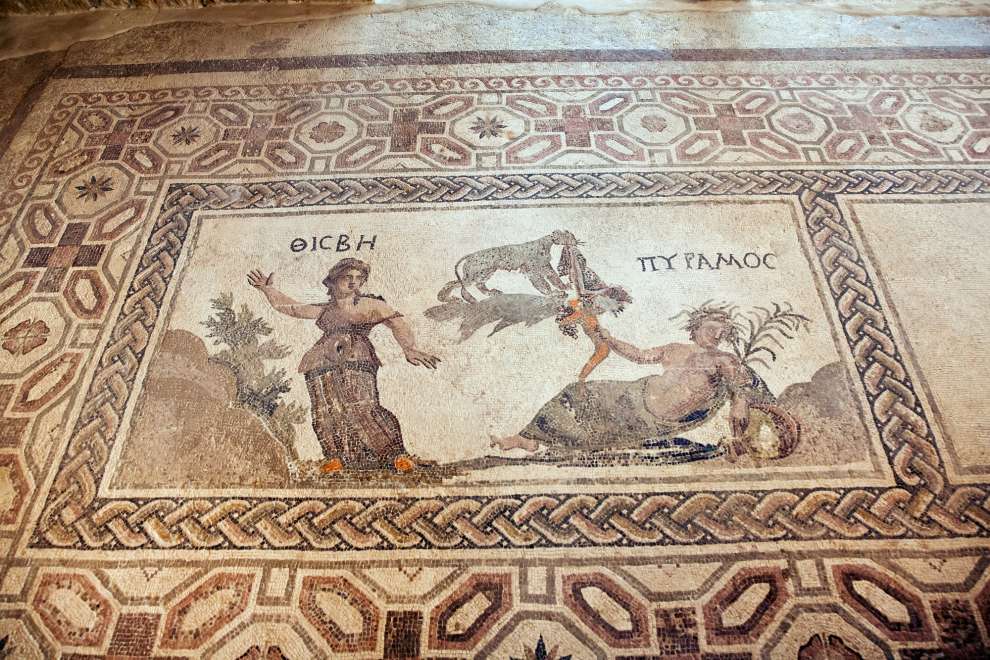
Paphos is the most first-timer-friendly base on the island: a UNESCO World Heritage Site's worth of Roman mosaics and royal tombs, a genuine harbour, and enough beach and coastline nearby to fill three or four days without a rental car doing all the work. It's covered in full in our dedicated Paphos city guide, which goes deep on neighborhoods, hotels and the Akamas Peninsula day trips. Nearby, Petra tou Romiou, Aphrodite's Rock, is the coastal outcrop where legend places the goddess's emergence from the sea, roughly 25 minutes east along the coast road toward Limassol.
Nicosia, the last divided capital in Europe
Nicosia is unlike any other EU capital: a UN buffer zone, the Green Line, runs through the middle of its Venetian-walled old town, and a pedestrian checkpoint on Ledra Street lets visitors cross into the Turkish-administered north with a passport in hand. On the Republic's side, the Cyprus Museum holds the island's best archaeological collection, the old town inside the 16th-century Venetian Walls has restored Ottoman and colonial buildings, and Ledra Street itself is the main pedestrian shopping street leading straight to the checkpoint. It's a compelling half or full day, best combined with Troodos or done as a stop between Paphos and Larnaca airport.
Limassol, marina city with ancient ruins on its doorstep
Cyprus's second city has the liveliest restaurant and marina scene on the island, an old town worth an afternoon, and two genuinely major ancient sites within a short drive: the Greco-Roman theatre at Kourion, still used for performances and superbly sited above the coast, and the medieval Kolossi Castle, a Crusader-era fortress once tied to the sugar and wine trade. Limassol also hosts Cyprus's biggest wine festival each September, a good reason to time a visit around it.
Ayia Napa & Protaras, the beach coast
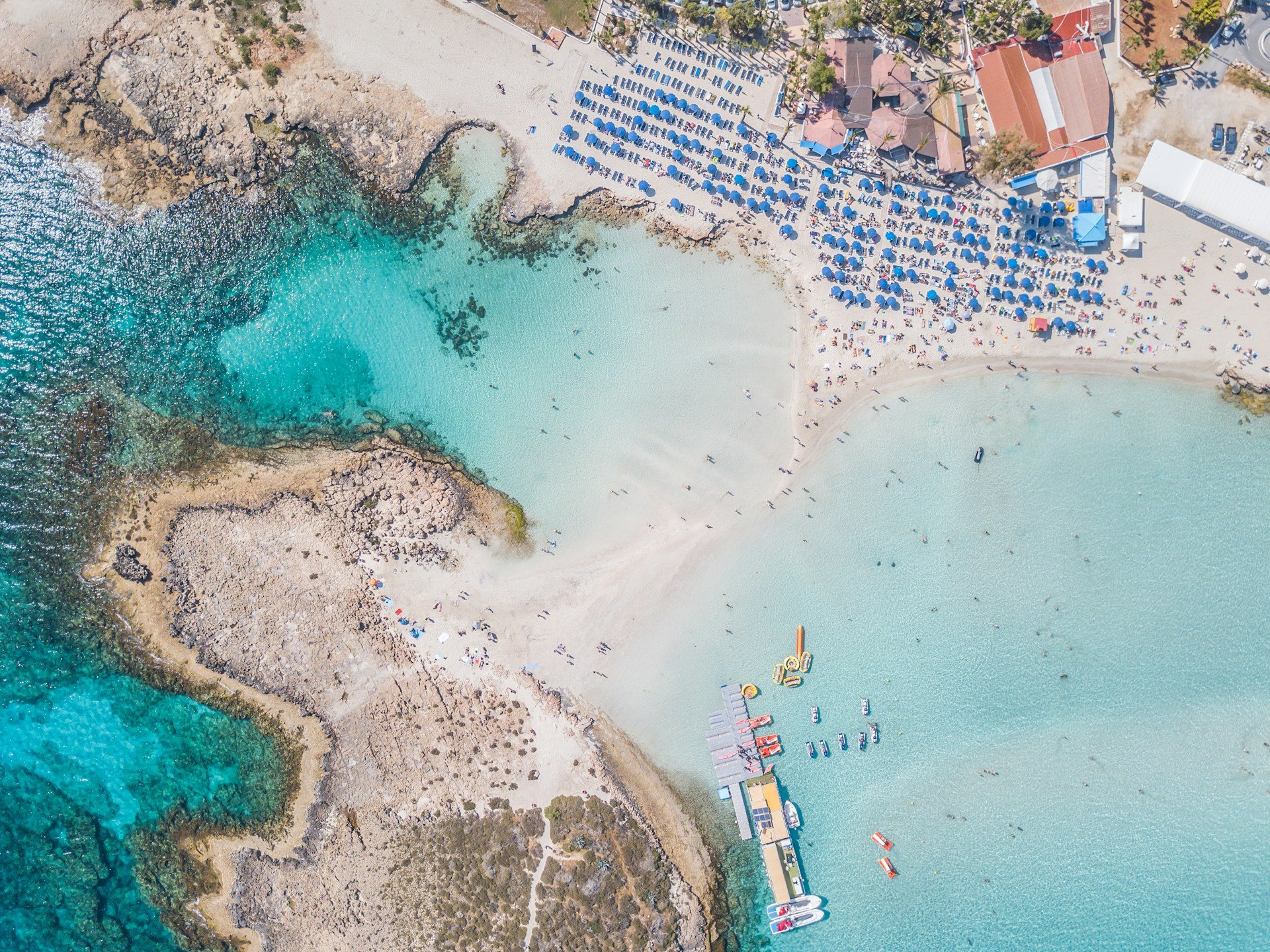
The southeastern tip of the island holds Cyprus's best beaches and its main nightlife hub. Nissi Beach, shallow turquoise water over white sand, regularly features on European best-beach lists and is the busiest stretch by far. Cape Greco National Forest Park has sea caves, coastal walking trails and a natural rock arch with none of the crowds. Ayia Napa's main square is the after-dark center; quieter Protaras nearby suits families and couples better than the clubbing scene.
The Troodos Mountains, painted churches and wine villages
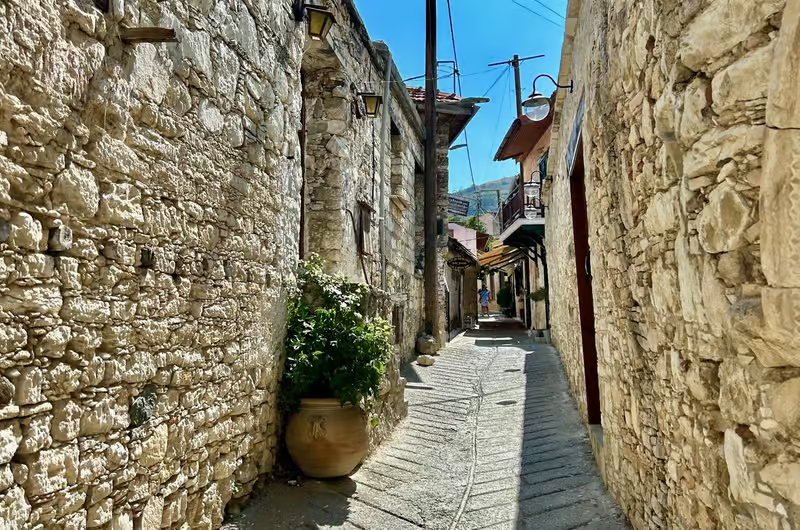
Cyprus's mountainous interior is a different country from the coast: pine forest, stone villages, ten UNESCO-listed Byzantine painted churches scattered across the range, and the island's wine region centered on villages like Omodos and Kathikas. Kykkos Monastery, one of the wealthiest and most important in Cyprus, sits deep in the mountains with a small museum of icons and manuscripts. Mount Olympus, the island's highest point, has enough snow most winters for a small ski operation, a genuine surprise for a Mediterranean island. Best reached by car from Limassol (about 45 minutes) or Nicosia (about an hour), and a welcome break from coastal heat in July and August.
Hidden gems beyond the main circuit
The zones above cover a first or second trip well. With extra days, these are the spots that rarely make the standard guides but reward the detour.
Choirokoitia
A UNESCO-listed Neolithic settlement dating to roughly 7000 BCE, one of the best-preserved in the eastern Mediterranean and largely overlooked by first-time visitors focused on the Roman-era sites.
Avakas Gorge
A limestone canyon with a half-hour walking route between sheer rock walls, part of an undeveloped peninsula that also holds Lara Beach's sea turtle nesting site and the legendary Baths of Aphrodite.
Cape Greco sea caves
Coastal walking trails past sea caves and a natural rock arch, a quieter counterpoint to Ayia Napa's beach and club scene just a few kilometers away.
Culture & Etiquette
Cypriot hospitality, filoxenia, means "friend to the stranger" and shows up constantly: an invitation for coffee, a free round of something after a meal, a shopkeeper who wants to talk before they want to sell. The Republic of Cyprus is majority Greek Orthodox, and religious practice shapes the calendar, from Easter (the most important holiday, bigger than Christmas) to the many small chapels dotted across the countryside. Life still runs partly on "island time": punctuality is looser than in Northern Europe, and rushing a meal or a conversation reads as odd rather than efficient.
Do
- Accept hospitality when it's offered. A coffee or a small plate offered by a shop or restaurant owner is a genuine gesture; declining outright can feel like a rebuff.
- Dress modestly for churches and monasteries. Cover shoulders and knees, especially at working monasteries like Kykkos.
- Greet elders first. Respect for age is a visible social norm; a nod or greeting to the oldest person in a group goes a long way.
- Carry your passport if you plan to cross into the north. The Ledra Street and other checkpoints require it, even for a short walk across the line.
- Learn a few Greek words. Efharisto (thank you), kalimera (good morning), and ne/ohi (yes/no) are appreciated even in heavily touristed areas.
Don't
- Raise the political division uninvited. Locals will discuss 1974 and the current situation candidly if they bring it up; as a visitor, let them lead.
- Expect Sunday to run like a weekday. Many shops, especially outside the main resort strips, close or run reduced hours.
- Rely on public transport for a tight itinerary. Cyprus has no trains and thin, infrequent bus coverage between towns.
- Assume "cabaret" or "gentlemen's club" venues are ordinary nightlife. The US State Department specifically flags these for aggressive bill scams; steer clear.
- Underestimate the August heat. Coastal towns regularly pass 35°C in July and August; plan midday activity around shade and water.
Deeper culture: Commandaria, the Green Line, and religious festivals
Commandaria. Produced in the Troodos foothills, Commandaria is among the oldest named wines still in continuous production, with a documented history stretching back to the Crusader era. It's a sweet, amber dessert wine traditionally served at Cypriot weddings and religious celebrations.
The Green Line. The UN buffer zone runs the length of the island and through the middle of Nicosia's old town. Several pedestrian and vehicle crossings, including the well-known one on Ledra Street, allow visitors with a passport to cross into the Turkish-administered north for a day trip; check current requirements before you go, as rules and hours can change.
Religious festivals. Orthodox Easter, which can fall weeks apart from Western Easter depending on the year, is the biggest event on the Cypriot calendar: candlelit processions, fireworks, and the breaking of the fast define the holiday far more than Christmas does.
Food & Drink
Cypriot food sits at the crossroads of Greek and Middle Eastern traditions, built around grilled meat and halloumi, olive oil, fresh vegetables, and a meze culture that turns a meal into an event rather than a course. The best of it is unpretentious: village tavernas, family-run grill houses, and markets rather than the resort-strip restaurants with laminated multilingual menus.
Halloumi €5-9
The island's signature cheese, a sheep's and goat's milk blend firm enough to grill or fry without melting. Traditionally garnished with fresh mint; often served alongside watermelon for a sweet-salty pairing.
Meze €15-25/person
A Ottoman-rooted tradition of small shared plates: dips like tzatziki and hummus, grilled halloumi, souvlaki, sheftalia (spiced sausage), octopus or calamari on the coast. Order it and let the table fill up; it's built for lingering, not rushing.
Commandaria & Zivania €4-8/glass
Commandaria is Cyprus's sweet, amber dessert wine from the Troodos foothills, one of the oldest named wines in continuous production. Zivania is a strong pomace brandy usually drunk after a meal; the Brandy Sour, mixing brandy, lemon squash, Angostura bitters and soda, is the island's signature cocktail.
Souvlaki & Sheftalia €6-12
Grilled pork or chicken skewers, or sheftalia, a caul-fat-wrapped spiced sausage, both usually served in pitta with salad and fries: the everyday street food standard.
Makaronia tou Fournou
Baked pasta layered with seasoned minced meat, tomato and cinnamon under a halloumi-infused béchamel: Cyprus's answer to pastitsio, and a common Sunday-lunch dish.
Keo Beer €3-5
The island's dominant local beer brand, a light lager that's the default order alongside meze in most tavernas, coastal or inland.
When to Go & Itineraries
April to June and September to October are Cyprus's sweet spots: warm enough for the coast, cool enough for archaeology and hiking without the peak-summer extremes. July and August regularly pass 35°C on the coast and the Troodos Mountains become the better midsummer option. Winter is mild in Paphos and Limassol, cold enough in the Troodos for a short skiing season on Mount Olympus.
All four seasons compared, with temperatures
| Season | Verdict | Temps | Prices & crowds |
|---|---|---|---|
| Apr-Jun & Sep-Oct | Best | 20-28°C coast | Mid prices, manageable crowds |
| Jul-Aug | Good (hot) | 30-38°C coast | Peak prices, busiest; Troodos is the escape |
| Mar | Good | 15-20°C coast | Low prices, few tourists |
| Nov-Feb | Quiet | 10-17°C coast | Lowest prices; Troodos cold, occasional snow above 1,500m |
Year-round city averages: Paphos 19°C, Limassol 20°C, Nicosia 20°C, Larnaca 20°C, Troodos (Platres) 14°C. Nicosia and the inland plain run several degrees hotter than the coast in summer.
Itineraries
A week covers Paphos, Nicosia and one more region well. Ten days to two weeks adds the Troodos wine villages, Limassol's ancient sites and the eastern beaches without rushing the driving.
- Days 1–3
Paphos. Kato Paphos Archaeological Park, Tombs of the Kings, the harbour, and a day out to the Akamas Peninsula.
- Days 4–5
Troodos Mountains. Drive inland via the wine villages of Kathikas and Omodos, Kykkos Monastery, and one of the UNESCO painted churches.
- Days 6–7
Nicosia. The Cyprus Museum, the Venetian Walls old town, the Ledra Street checkpoint, before flying out of Larnaca.
- Days 1–3
Paphos & Akamas. The 7-day Paphos block, with a full day dedicated to Avakas Gorge, the Blue Lagoon and the Baths of Aphrodite.
- Days 4–5
Troodos Mountains. Wine villages, Kykkos Monastery, a painted church, and a night in a mountain village.
- Days 6–7
Limassol. The marina old town, Kourion's ancient theatre, and Kolossi Castle.
- Days 8–10
Nicosia & the east. A day in the divided capital, then Ayia Napa's Nissi Beach and the Cape Greco trails before flying from Larnaca.
- Days 1–4
Paphos extended. UNESCO sites, Akamas Peninsula in full (Avakas Gorge, Blue Lagoon boat trip, Baths of Aphrodite, Lara Beach), and Petra tou Romiou.
- Days 5–7
Troodos slow. Multiple wine villages, Kykkos Monastery, several painted churches, and hiking trails around Platres.
- Days 8–10
Limassol & the south coast. Kourion, Kolossi Castle, the old town, and the wine festival if timed for September.
- Days 11–12
Nicosia. A full day inside the walls, the Cyprus Museum, and a checkpoint crossing to the north for the afternoon.
- Days 13–14
Ayia Napa & Protaras. Nissi Beach, Cape Greco, and a slower finish on the east coast before Larnaca.
Getting there & around
Two international airports serve the island: Larnaca (LCA), the main hub with the widest range of airline connections, and Paphos (PFO), smaller and increasingly served by budget carriers like Ryanair and easyJet. The two airports sit about 142km apart, so pick based on which end of the island you're starting from. Cyprus has no train network, and bus coverage between towns is limited and infrequent; a rental car, roughly €30-50 a day, left-hand drive, is the practical way to see more than one region. Intercity coaches connect the main towns for those without a car, but schedules are thin outside peak commuter hours.
Budget Planning
Cyprus sits in the middle of the European price range: noticeably cheaper than Western Europe, pricier than the Balkans. Peak season, July and August, pushes accommodation 30-50% above shoulder-season rates, while restaurant and attraction prices stay comparatively stable year-round.
- Hostel dorm or budget apartment
- Taverna meze and bakery lunches
- Free beaches and archaeological park entry
- Shared or public transport where available
- 3-4 star hotel or boutique guesthouse
- Restaurant dinners with wine €25-40
- Rental car €30-50/day
- Boat trips, wine tastings, tours €15-40
- 5-star beachfront resort
- Fine dining and premium Commandaria
- Private guided tours
- Peak-season coastal accommodation
Quick reference prices: coffee, meze, ferries and entry fees
| Coffee (Cyprus coffee) | ~€2 |
| Souvlaki pitta from a grill house | €4-6 |
| Meze per person, sit-down taverna | €15-25 |
| Keo beer, taverna | €3-5 |
| Kato Paphos Archaeological Park entry | ~€4.50 |
| Rental car, economy | €30-50/day |
| 3-star hotel, shoulder season | €60-100/night |
| Blue Lagoon boat trip, Akamas | €25-45 |
Prices reflect August 2026 research and drift over time, especially peak-season coastal accommodation. Treat them as a planning baseline, not a quote.
Visa & Entry
Cyprus is an EU member state but, as of this guide, still sits outside the Schengen Area: a Schengen visa alone does not cover entry, and Cyprus stamps its own passport control. US, UK, EU/EEA, Canadian and Australian citizens can enter visa-free for up to 90 days in any 180-day period. From late 2026, visa-exempt travelers will also need an ETIAS travel authorization, a quick online registration rather than a visa. Rules change; the Cyprus government's travel advice page is the authoritative source.
✓ Valid passport
At least 3 months validity beyond your planned departure date.
✓ ETIAS from late 2026
An online travel authorization for visa-exempt nationals, separate from a visa and linked to your passport.
✓ Not Schengen
A Schengen visa or residence permit does not, on its own, cover Cyprus; check specific Cyprus entry requirements even if you hold one.
✓ Passport for north crossings
Day trips across the Green Line into the Turkish-administered north require your passport at the checkpoint, even for a short walk.
| Cyprus | Malta | |
|---|---|---|
| Schengen | Not yet; accession vote due Sept 2026 | Full member since 2007 |
| Ancient sites | UNESCO Roman mosaics, Neolithic Choirokoitia, ten painted churches | Megalithic temples older than the pyramids, Valletta's baroque core |
| Getting around | No trains; car rental essential | Small enough to cover by bus; car optional |
| Coast | Longer coastline, wider range from cliffs to Akamas wilderness | Compact, dramatic cliffs and the Blue Lagoon on Comino |
| Daily budget | €45-70 gets you far outside peak season | Similar range, slightly pricier in Valletta and Sliema |
Safety, Solo Women & Family
Cyprus is safe for tourists. The US State Department restored it to Level 1, its lowest-risk rating, in June 2026, after an early-year regional scare tied to the Iran-Israel-US conflict: a drone struck a building on the British Sovereign Base Area near Larnaca on 2 March 2026, and non-emergency US government staff were briefly authorized to leave. Day-to-day tourism in Paphos, Larnaca, Limassol and Ayia Napa continued uninterrupted throughout, and by summer 2026 the situation had normalized. Violent crime against visitors is rare across the Republic of Cyprus.
Nightclub bill scams
The US State Department specifically warns about so-called "cabaret" or "gentlemen's club" venues that lure patrons in and then inflate the bill with threats. Avoid these venues entirely rather than trying to negotiate once inside.
Petty theft
Uncommon but not unheard of around crowded beaches and nightlife strips in Ayia Napa and Limassol. Standard precautions with valuables are sufficient.
Driving
Left-hand drive can catch out visitors from right-hand-drive countries, especially at roundabouts. Mountain roads in the Troodos are narrow with sharp switchbacks.
The Green Line, the north, and staying current on regional risk
Crossing into the north. Day trips across the Green Line are routine and generally straightforward with a passport, but the Turkish-administered north operates a different legal and consular system: your government's ability to assist you there is limited, and it is a separate travel decision from a standard Republic of Cyprus trip.
Regional risk. Cyprus's location in the eastern Mediterranean means it can be indirectly affected by wider regional conflicts, as the March 2026 drone strike demonstrated. Check your government's current travel advisory before departure rather than relying on this guide's snapshot.
Solo women travelers
Cyprus rates well for solo women, with low levels of street harassment outside nightlife districts. The main caution, as above, is around cabaret-style venues rather than everyday street safety. Standard precautions apply in nightlife areas: watch your drink, stick to well-lit streets late at night, and use licensed taxis rather than unmarked cars.
Emergency numbers
Embassy assistance in Nicosia
112 is the EU-standard emergency number with English-speaking operators, covering police, ambulance and fire. Most foreign embassies and high commissions are based in or near Nicosia; the US Embassy's citizen emergency line is +357-22-393939 (press 0 for after-hours emergencies). Check your own government's current Cyprus travel page for embassy contact details before you go, as addresses and numbers do change.
Family travel
Cyprus works well for families: calm, shallow beaches like Nissi Beach and Coral Bay suit young children, the ancient sites at Paphos and Kourion have space to explore rather than crowd, and halloumi, souvlaki and fresh bread are easy wins with picky eaters. Car seats are required by law and available through most rental agencies with advance notice.
Cyprus FAQ
Is Cyprus safe to visit?
Yes. The US State Department restored Cyprus to its lowest-risk Level 1 rating in June 2026, after an early-2026 spike in regional tension eased. Day-to-day life in Paphos, Larnaca, Limassol and Ayia Napa continued throughout, and violent crime against visitors is rare.
Is Cyprus in the Schengen Area?
Not yet. Cyprus is an EU member but has stayed outside Schengen. The European Commission gave Cyprus a positive readiness assessment in July 2026 and a Council vote on accession is scheduled for September 2026, but as of this guide Cyprus is still a non-Schengen entry and exit.
Do I need a visa for Cyprus?
Citizens of the US, UK, EU/EEA, Canada and Australia can enter visa-free for up to 90 days in a 180-day period. A Schengen visa alone does not cover Cyprus. From late 2026, visa-exempt travelers will also need an ETIAS travel authorization.
How much does Cyprus cost per day?
Budget travelers manage on €45-70 a day using hostels, apartments and taverna meals; mid-range comfort runs €90-160. Peak season (July-August) pushes accommodation 30-50% above shoulder-season prices.
When is the best time to visit Cyprus?
April to June and September to October: warm without the July-August extremes, which regularly pass 35°C on the coast. Winter is mild in Paphos and Limassol and cold enough for skiing on Mount Olympus in the Troodos.
Why is Cyprus divided?
A 1974 coup backed by the Greek military junta, aiming for union with Greece, triggered a Turkish invasion. Turkish forces have controlled the northern third of the island since, a self-declared state recognized only by Turkey. Nicosia is Europe's last divided capital.
How many days do you need in Cyprus?
A week covers Paphos, Nicosia and one more region well. Ten days to two weeks adds the Troodos wine villages, Limassol and the beaches of the east comfortably, without rushing the driving between them.
Is it better to rent a car in Cyprus?
Yes, for most itineraries. Cyprus has no train network and bus coverage between towns is limited and infrequent. A rental car, left-hand drive, costs roughly €30-50 a day and is the only practical way to reach the Troodos villages and the Akamas Peninsula.
What language is spoken in Cyprus?
Greek is the main official language in the government-controlled south, with Turkish spoken in the north. English is extremely widely spoken in tourist areas, hotels and restaurants, a legacy of British rule until 1960.
Is Cyprus safe for solo female travelers?
Yes, generally. Cyprus rates well for solo women, with low levels of street harassment outside nightlife areas. The main caution is around so-called cabaret or gentlemen's club venues, which the US State Department flags for aggressive bill scams.
Is Cyprus good for families with kids?
Yes. Calm, shallow beaches like Nissi Beach and Coral Bay work well for young children, the ancient sites at Paphos and Kourion have space to run around, and the food, halloumi, souvlaki, fresh bread, is an easy sell for picky eaters.
What Stays With You
Cyprus rewards visitors who don't try to resolve its contradictions and just let them sit side by side. The mosaic floor that's been in the ground since Rome ruled the island, the coffee offered by a stranger who wants to talk before they want to sell, the checkpoint in the middle of a European capital that turns a city walk into a small act of border-crossing: none of it fits into a single postcard idea of a Mediterranean island holiday, and that's the point.
Go for the ruins and the beaches, certainly, but leave room for the parts that don't resolve neatly. Cyprus has been a crossroads for three thousand years; a week or two as a visitor barely scratches it.