
A small city carrying an outsized amount of history
Paphos splits into two halves that used to be separate towns: Kato Paphos, the lower town by the sea, built up around a harbour and now full of hotels, restaurants and the archaeological park; and Ktima, the old town on the hill above, which is where Paphos actually lived before tourism arrived. The whole of Kato Paphos has been a UNESCO World Heritage Site since 1980, recognized for a concentration of Roman-era mosaic floors that rank among the finest anywhere in the eastern Mediterranean, still largely in situ rather than in a museum case.
Paphos was the European Capital of Culture in 2017, and the harbour promenade, several museums and public spaces still show the investment from that year. It's a smaller, quieter city than Limassol or Ayia Napa, built more around history and coastline than nightlife, and a genuinely easy base for a first trip to Cyprus: compact enough to walk, with the wild Akamas Peninsula and the mythological Aphrodite's Rock both within a short drive.
The honest complications
Poseidonos Avenue, the main hotel and restaurant strip through Kato Paphos, is about as generic-resort as Cyprus gets: international menus, souvenir shops, and prices a notch above what you'd pay two streets back. Paphos International Airport (PFO) has fewer direct connections than Larnaca, so some itineraries fly into one and out of the other, a 142km drive apart. And Paphos's nightlife is genuinely modest compared with Ayia Napa; if a big club scene is the point of the trip, this isn't the city for it.
Five areas, one clear first-timer's choice
Paphos's neighbourhoods split cleanly by distance from the harbour and by how much of a resort feel you want. Where to base yourself comes down to whether you'd rather walk to the ruins or drive to the beach.
Kato Paphos
The lower town holds the harbour, the castle, the archaeological park, most of the hotels, and the Poseidonos Avenue restaurant and nightlife strip. Everything a first-time visitor wants, the Tombs of the Kings, the mosaics, the sea, is within a 10 to 20 minute walk. It's also the most tourist-facing part of the city, with prices to match.
Ktima (Old Town)
Up the hill from Kato Paphos, Ktima is where Paphos residents actually live: a restored historic core around Kennedy Square, local cafes, a produce market, and noticeably cheaper food than the harbour strip. It's a 15 to 20 minute walk or a short taxi from Kato Paphos, and worth basing yourself here if atmosphere and value matter more than sea views.
Coral Bay
Paphos's best swimming beach, a sheltered sandy bay a short drive or bus ride northwest of the centre, with a more resort-led, family-oriented feel than the archaeology-focused harbour area. Better sand and calmer water than anything in Kato Paphos itself.
Tombs of the Kings Road
The road connecting Kato Paphos to Coral Bay is lined with mid-range hotels, apartments and restaurants, a practical, if unglamorous, base within reach of both the ruins and the beach.
Chloraka
A quiet coastal suburb just north of Kato Paphos, popular with long-stay visitors and residents who want affordable, calm coastal living without the tourist density of the harbour strip.
From beachfront five-star to a bed above the old town
Paphos's hotel scene runs from serious beachfront resorts to simple guesthouses in Ktima, with prices that roughly double between shoulder season and the July-August peak. These picks span the range, each with a clear reason to choose it.
At the top, Elysium is Paphos's best-known five-star, a resort with direct beach access about a mile from the harbour, built around a blend of classical-style architecture and genuine beach-and-spa comfort. In the same upscale bracket, Almyra and Annabelle are both established Kato Paphos spa hotels with sea-view rooms, the kind of properties that anchor a slower, resort-style stay rather than a sightseeing-focused one.
For a boutique option closer to the ruins, Nereus Hotel sits in Paphos's historical district, about a 15-minute walk from the harbour and close to the archaeological park, while Thalassa Boutique Hotel leans into a wellness angle with yoga sessions alongside its rooms. Both suit travellers who want a smaller property without leaving the walkable core.
At the value end, Harbour Lights Studio Apartments, a short walk from St. Paul's Pillar and overlooking the sea, and 777 Beach Guesthouse, about 11 minutes on foot from the mosaics, both offer self-catering simplicity near the main sights. For genuine budget, Bee Hostel Paphos and economy properties like Pyramos Hotel and King's Hotel cover backpacker and shoestring stays without pushing you out to the suburbs.
Halloumi, meze and a harbour view, roughly in that order
Paphos's food scene ranges from generic tourist-menu restaurants on the main strip to genuinely excellent, family-run tavernas a few streets back. The pattern is familiar from the rest of Cyprus: the closer to the water, the higher the price for broadly similar food; walk two streets inland and the quality often improves while the bill drops.
Laona
A family-run restaurant tucked down a passageway in Paphos old town, built around recipes passed down through generations: lamb, beef stifado, moussaka, and a meze spread that regulars call some of the most authentic in the city. Mostly a lunchtime spot, though open all day on Tuesdays and Fridays.
The Moorings Cafe Restaurant
Overlooking Paphos harbour at Marina Court on Poseidonos Avenue, a reliable all-day address for breakfast through dinner with vegan and vegetarian options and a genuinely good spot to watch the sun go down over the water.
Boulevard Bistro Wine Bar
Set in Paphos old town's main pedestrianised square, with a courtyard setting that looks out over the harbour below: a good choice for an evening that's more about the wine list and the view than a quick bite.
Hondros Taverna
Paphos's oldest working taverna, serving traditional Cypriot dishes for over seventy years. The kind of address that outlasts food trends because it never chased them.
Roman mosaics, royal tombs, and a wilderness peninsula next door
Paphos's sights split into two groups: the UNESCO core you can walk to from the harbour, and the Akamas Peninsula and Aphrodite's Rock, both a short drive away and easily filling a half or full day on their own.
The UNESCO core
Start at the Kato Paphos Archaeological Park, home to some of the finest Roman mosaic floors in the eastern Mediterranean, still in the ground where they were laid roughly 1,800 years ago. The House of Dionysus is the highlight, its floors depicting scenes from Greek mythology in extraordinary detail, alongside an ancient Odeon and agora. Budget at least two hours, more with the midday sun in summer; go early or late in the day when temperatures allow. A coastal path, roughly 2.5km each way, leads from the harbour past beaches and rocky coves to the Tombs of the Kings, a UNESCO-listed necropolis covering 32 hectares with eight major underground tomb complexes cut from solid rock, dating to the 4th century BCE, despite the name built for high-ranking officials rather than actual kings.
The harbour and castle
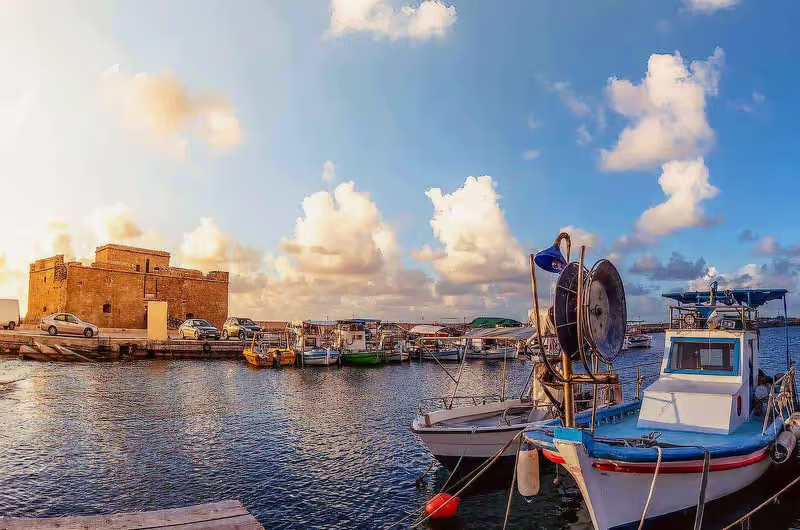
Paphos Castle, a small medieval fort guarding the harbour mouth, is worth the short climb for the view back over the fishing boats, especially near sunset. The harbour promenade itself, rebuilt substantially around the city's 2017 European Capital of Culture year, is the natural place for an evening walk, with The Moorings Cafe Restaurant and Sail at Castle, a casual all-day spot near the castle serving everything from breakfast to cocktails, both good options for a harbourside meal.
Aphrodite's Rock and the Akamas Peninsula
About 25 minutes east along the coast road toward Limassol, Petra tou Romiou, Aphrodite's Rock, is the sea stack where Greek mythology places the goddess's emergence from the waves: a striking stop for photos and a swim rather than a full excursion. In the other direction, the undeveloped Akamas Peninsula holds the Avakas Gorge, a limestone canyon with a roughly half-hour walking route between sheer rock walls, widely considered one of Cyprus's most impressive natural sites. Boat trips to the Blue Lagoon depart from the fishing village of Latchi, typically combined with a stop at the Baths of Aphrodite, a shaded natural pool where legend says the goddess bathed, and views over Lara Beach, a protected sea turtle nesting site best observed respectfully from a distance in nesting season.
Wine villages nearby
The village of Kathikas, a short drive north of Paphos on the way to the Akamas, is the closest of the Cyprus wine villages, with small producers open for tastings, a good half-day add-on without the full drive into the Troodos.
One, two or three days, planned around the ruins and the coast
Two to three full days covers Paphos properly, with a car opening up the Akamas Peninsula without eating into city time.
- Morning
Kato Paphos Archaeological Park. The House of Dionysus mosaics and the Odeon, before the midday heat.
- Midday
Coastal walk to the Tombs of the Kings. The 2.5km path along the water, then back to the harbour for lunch.
- Afternoon
Paphos Castle and the harbour. A short climb for the view, then browse the promenade.
- Sunset
Dinner at The Moorings or Sail at Castle. Both look straight over the harbour as the light drops.
- Day 1
The one-day route: archaeological park, coastal walk to the Tombs of the Kings, the castle, harbour dinner.
- Day 2 morning
Ktima old town. Kennedy Square, the local market, and a proper meze lunch at Laona.
- Day 2 afternoon
Petra tou Romiou. A short drive east for Aphrodite's Rock and a swim.
- Day 2 evening
Boulevard Bistro Wine Bar. Back in the old town square, overlooking the harbour lights below.
- Days 1-2
The two-day route above, at a gentler pace.
- Day 3
Akamas Peninsula. Avakas Gorge in the morning while it's cool, then a Blue Lagoon boat trip from Latchi with a stop at the Baths of Aphrodite in the afternoon.
Walkable at the centre, a car for everything else
Kato Paphos itself is compact and walkable: the harbour, castle, archaeological park and most hotels sit within a 20-minute walk of each other. Paphos International Airport (PFO) is about 15km from the centre, with no rail or metro connection; a taxi or pre-booked transfer takes 15 to 20 minutes, and most car rental desks are in the arrivals hall. PFO has fewer direct international connections than Larnaca (LCA), 142km away, so check both airports when booking.
Cyprus has no train network, and local bus coverage beyond the town centre is thin and infrequent; a rental car, left-hand drive, roughly €30-50 a day, is the practical way to reach Coral Bay, the Akamas Peninsula, Petra tou Romiou and the wine villages. Taxis and ride apps cover short trips within Kato Paphos and Ktima well.
Best time to visit Paphos
April to June and September to October are the sweet spots: warm enough for the sea and the coastal walk to the Tombs of the Kings, without the July-August heat that regularly passes 35°C and makes midday sightseeing uncomfortable. Winter is mild, rarely dropping below 10°C, and the archaeological park is far quieter with none of the peak-season coach-tour crowds.
Mid-pack for the Mediterranean, cheaper off the main strip
Paphos sits in the middle of the Mediterranean price range: cheaper than the French or Italian Riviera, pricier than the Balkans. The clearest cost trap is Poseidonos Avenue, where tourist-menu restaurants and hotel-adjacent cafes charge a real premium over Ktima or the backstreets.
- Hostel or budget apartment €20-40
- Taverna meze and bakery meals €12-20
- Archaeological park entry, walking
- Local bus where routes allow
- 3-4 star hotel or boutique stay €70-140
- Restaurant meals with wine €30-50
- Rental car €30-50/day
- Akamas boat trip or tour €25-45
- Beachfront five-star €200+
- Fine dining and premium wine
- Private Akamas or Troodos tour
- Peak-season (Jul-Aug) rates
One of the safer cities on a safe island, with one clear warning
Paphos shares Cyprus's Level 1 rating from the US State Department as of June 2026, its lowest risk category. Violent crime against visitors is rare, the harbour and old town are comfortable to walk at night, and day-to-day tourism here continued uninterrupted even during the brief regional tension earlier in 2026 tied to the Iran-Israel-US conflict.
The one specific warning worth repeating: the US State Department flags so-called "cabaret" or "gentlemen's club" venues across Cyprus, including in Paphos, for a bill-inflation scam backed by intimidation. Avoid these venues outright rather than testing the waters. Beyond that, standard precautions apply: watch belongings in crowded spots like the harbour promenade in peak season, and use licensed taxis rather than unmarked cars late at night. Emergency number is the EU-standard 112 from any phone.
Paphos puts the rest of western and central Cyprus in reach
Beyond the Akamas Peninsula covered in Things to Do, Paphos is a workable base for three further trips, all requiring a rental car given Cyprus's limited bus network.
Troodos Mountains & wine villages
The mountain villages of Omodos and Kathikas, Kykkos Monastery, and several of the ten UNESCO-listed painted Byzantine churches scattered through the range. A genuine change of scenery from the coast, and the natural summer escape from Paphos's heat.
Limassol & Kourion
Cyprus's marina city, with the Greco-Roman theatre at Kourion, superbly sited above the coast and still used for performances, and the Crusader-era Kolossi Castle on the way.
Nicosia, the divided capital
A longer day, but a genuinely unique one: the Cyprus Museum, the Venetian Walls old town, and the Ledra Street checkpoint into the Turkish-administered north. Best attempted as an early start given the distance.
Paphos FAQ
Is Paphos safe for tourists?
Yes. Paphos is part of the Republic of Cyprus, which the US State Department rates Level 1, its lowest risk category, as of June 2026. Violent crime against visitors is rare; the main caution is avoiding cabaret-style nightclub venues, which are flagged for aggressive bill scams.
How many days do I need in Paphos?
Two to three full days covers the city well: one for the Kato Paphos Archaeological Park and the Tombs of the Kings, one for the harbour and old town, and one for an Akamas Peninsula day trip. A car extends that easily with Troodos or Aphrodite's Rock.
How much does Paphos cost per day?
Budget travellers manage on €45-70 a day with hostels or budget apartments and taverna meals; mid-range comfort runs €90-160. Kato Paphos hotel prices roughly double from July to September compared with shoulder season.
When is the best time to visit Paphos?
April to June and September to October: warm, fewer crowds at the archaeological sites, and lower prices than peak summer. July and August regularly pass 35°C, though the sea stays swimmable well into autumn.
What is the best area to stay in Paphos?
Kato Paphos for first-timers: the harbour, the archaeological park and most restaurants are within walking distance. Ktima, the old town, is quieter and better value. Coral Bay suits travellers who want beach over sightseeing.
How do I get from Paphos airport to the centre?
Paphos International Airport (PFO) is about 15km from Kato Paphos. There is no rail or metro link; a taxi or pre-booked transfer takes 15-20 minutes, and most car rental desks are in the arrivals hall.
Do I need a car in Paphos?
Not for the city centre itself, which is walkable, but yes for the Akamas Peninsula, Aphrodite's Rock and the Troodos wine villages. Cyprus has no train network and local bus coverage is limited.
What is the Kato Paphos Archaeological Park?
A UNESCO World Heritage Site since 1980 holding some of the finest Roman mosaic floors in the eastern Mediterranean, including the House of Dionysus, plus an ancient Odeon and agora. Budget at least two hours.
Is Paphos good for a beach holiday?
Yes, though it's better known for history than for sand. Coral Bay, a short drive away, has the area's best swimming beach, while Lara Beach on the Akamas Peninsula is a protected sea turtle nesting site worth visiting responsibly.
What is the Akamas Peninsula?
An undeveloped wilderness area northwest of Paphos with the Avakas Gorge hiking trail, the Baths of Aphrodite, Lara Beach's turtle nesting site, and Blue Lagoon boat trips departing from Latchi. Best visited on a half or full day trip.
What Stays With You
Paphos doesn't announce itself the way some Mediterranean cities do. There's no single postcard monument; instead there's a mosaic floor that's simply been in the ground since Rome ruled here, a rock-cut tomb complex built for officials rather than kings, and a coastline that goes from a working harbour to an undeveloped wilderness peninsula in the space of a short drive. None of it is staged for effect, which is exactly why it holds up.
Walk the coastal path from the harbour to the Tombs of the Kings at the end of the day, when the light goes low over the water, and you'll understand why a small fishing town ended up on a UNESCO list.