
What You're Actually Getting Into
Bulgaria spends most travel conversations being confused with somewhere else, Romania, Hungary, sometimes Russia, when it is in fact the country that gave the world the Cyrillic alphabet, sits on some of the oldest continuously worked farmland in Europe, and has spent 2026 quietly finishing its integration into the EU's core: full Schengen membership since January 2025, the euro since 1 January 2026. None of that shows up in the way most people picture it. What they picture, if they picture anything, is vague: something Balkan, something cheap, something involving yogurt.
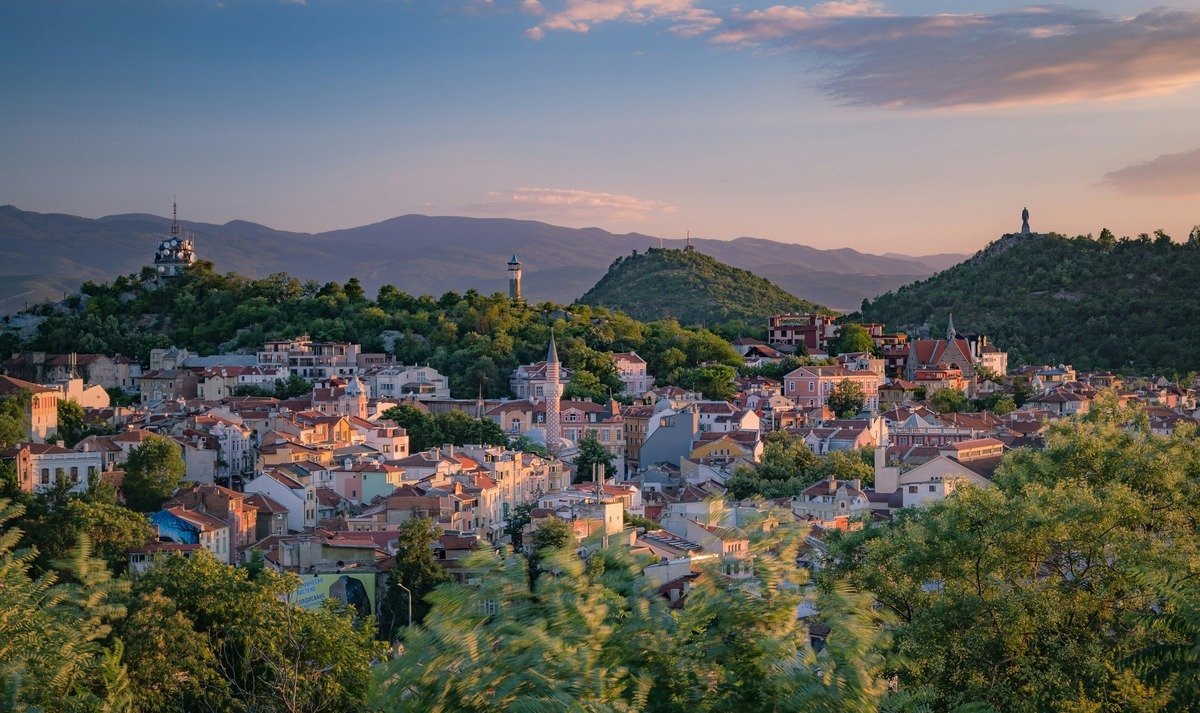
What's actually there is a country with four distinct travel zones inside a space smaller than the US state of Tennessee: a capital, Sofia, with a Roman street laid out under a working metro station; Plovdiv, one of the oldest continuously inhabited cities in Europe, with a 1st-century Roman theatre that still sells concert tickets; a Black Sea coast running from the UNESCO old town of Nessebar to the beach resorts around Sunny Beach; and the Rila and Pirin mountains, home to a 10th-century monastery and a chain of glacial lakes reached by chairlift. Prices across all of it remain some of the lowest in the EU, even after the euro changeover.
The honest complications
The euro changeover happened on 1 January 2026, and while the fixed rate (1.95583 lev per euro) is set and the lev stopped being legal tender on 1 February, expect some shops and older machines still quoting or rounding awkwardly in the changeover's first year, and keep a mental note of the fixed rate if a price looks off. Road quality outside the motorways connecting Sofia, Plovdiv and the coast is inconsistent, and Bulgarian driving culture, particularly overtaking on blind curves, rewards defensive driving. English is reliably spoken in Sofia, Plovdiv and coastal resorts, less so in small towns and villages, where Cyrillic-only signage is the norm and a phone with offline translation earns its keep. None of this makes Bulgaria a difficult country to visit; it makes it a country where a little preparation goes further than in Western Europe.
A History Worth Knowing
Bulgaria's national story runs from the Thracians, an ancient people who worked this land from around 1000 BC, through two medieval empires that at their height rivaled Byzantium, nearly five centuries under Ottoman rule, a Soviet-aligned communist government, and a democratic and European transition that only fully completed itself this year with the euro. It is a longer and more eventful history than the country's current quiet reputation suggests.
- 681
First Bulgarian Empire. Khan Asparuh establishes the Bulgarian state south of the Danube, one of the oldest continuously named states in Europe.
- 893–927
Tsar Simeon I's Golden Age. Territory and culture expand; the Cyrillic alphabet is developed at the Preslav Literary School by disciples of Saints Cyril and Methodius.
- 1185
Second Bulgarian Empire. Founded with its capital at Veliko Tarnovo, contemporaries compared the city's grandeur to Constantinople.
- 1396–1878
Ottoman rule. Nearly five centuries, ending with the Bulgarian National Revival and the 1876 April Uprising.
- 1878
Liberation. Russia's victory in the Russo-Turkish War restores Bulgarian statehood.
- 1946–1989
Communist rule. A Soviet-aligned People's Republic, ending with the fall of communism across Eastern Europe.
- 2007–2026
European integration completes. EU membership in 2007, full Schengen membership from January 2025, the euro from January 2026.
Read the full history: Thracians, the Bulgarian Empires, the Ottomans and the Revival
The Thracians, who worked this land from at least 1000 BC, are considered a foundational ancestral layer of the modern Bulgarian population alongside the Slavic tribes and Bulgar horsemen who arrived later. Their gold and silver work, much of it excavated from burial mounds across the country, forms the core of Bulgaria's archaeological museums and is one of the most underrated ancient treasuries in Europe.
Khan Asparuh's First Bulgarian Empire, founded in 681, became a major regional power under Tsar Simeon I in the late 9th and early 10th centuries, a period Bulgarians still call the Golden Age. It was during this reign that disciples of Saints Cyril and Methodius, working at the Preslav Literary School, developed the Cyrillic alphabet, now used by more than 250 million people across Eastern Europe and Central Asia and one of Bulgaria's most consequential exports. The empire fell to Byzantine conquest by 1018.
The Second Bulgarian Empire, founded in 1185 with its capital at Veliko Tarnovo, rebuilt Bulgarian statehood and, at its height, controlled territory stretching toward three seas. Ottoman forces conquered the last Bulgarian strongholds by 1396, beginning nearly five centuries of Ottoman rule during which Bulgarian language, church and cultural identity survived largely through monasteries like Rila, which functioned as centers of manuscript preservation and clandestine education.
The Bulgarian National Revival of the 18th and 19th centuries, a cultural and educational reawakening, built toward the failed but galvanizing April Uprising of 1876 and Russia's intervention in the Russo-Turkish War of 1877 to 1878, which restored Bulgarian statehood under the Treaty of Berlin. The 20th century brought two world wars on the losing side, a Soviet-aligned communist government from 1946 to 1989, and a democratic transition that culminated in EU membership in 2007. Full Schengen membership, including open land borders, followed on 1 January 2025, and the euro replaced the lev on 1 January 2026, completing a three-decade European integration process.
Top Destinations
Bulgaria divides naturally into five travel zones: the capital, the second city of Plovdiv, the former medieval capital Veliko Tarnovo and the north, the Black Sea coast, and the Rila and Pirin mountains. The country is compact, roughly the size of Tennessee, so a rental car or the intercity train and bus network makes combining two or three zones in a week entirely realistic.
Sofia, the capital that hides its history underground
Sofia is one of Europe's least-hyped capitals, and one of its most rewarding for exactly that reason: it has a gold-domed cathedral, a Roman street excavated beneath a working metro station, a UNESCO church with 800-year-old frescoes, and a mountain, Vitosha, rising directly at the edge of the city with hiking trails a short bus ride from downtown. Prices remain some of the lowest of any EU capital. See our full Sofia city guide for neighbourhoods, hotels, restaurants and a complete itinerary. Budget two full days for the city alone.
Plovdiv, older than Rome and still proving it
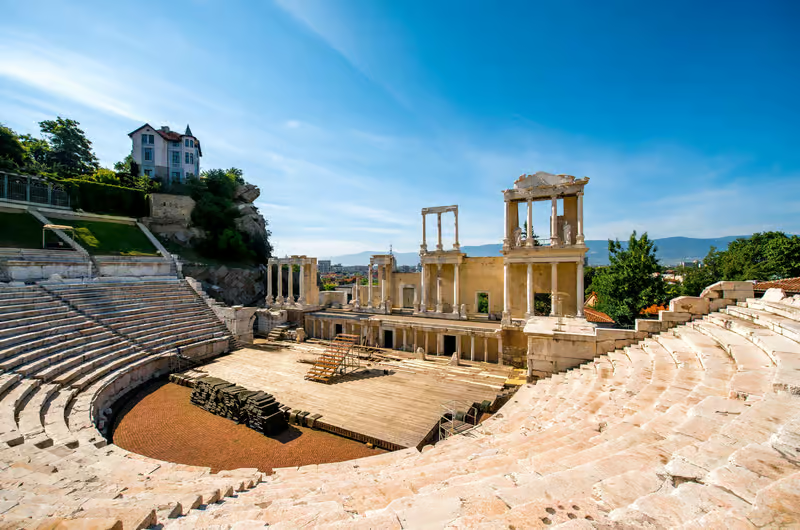
Plovdiv is one of the oldest continuously inhabited cities in Europe, and unlike many cities that claim antiquity, it has the excavated proof at street level: a 1st-century Roman theatre built under Trajan that still hosts opera and concerts on summer nights, and a stadium buried beneath the main pedestrian street with a section left open to view. The Old Town above the theatre is genuine 19th-century Bulgarian Revival architecture, cobbled lanes and colourful merchant houses, not a reconstruction, and the Kapana district just below it has become the liveliest concentration of galleries, workshops and bars in southern Bulgaria. Plovdiv was a joint European Capital of Culture in 2019 and the infrastructure from that year still shows. Two hours from Sofia by train, easily a two-day stop or a long day trip.
Veliko Tarnovo, the medieval capital on a river bend
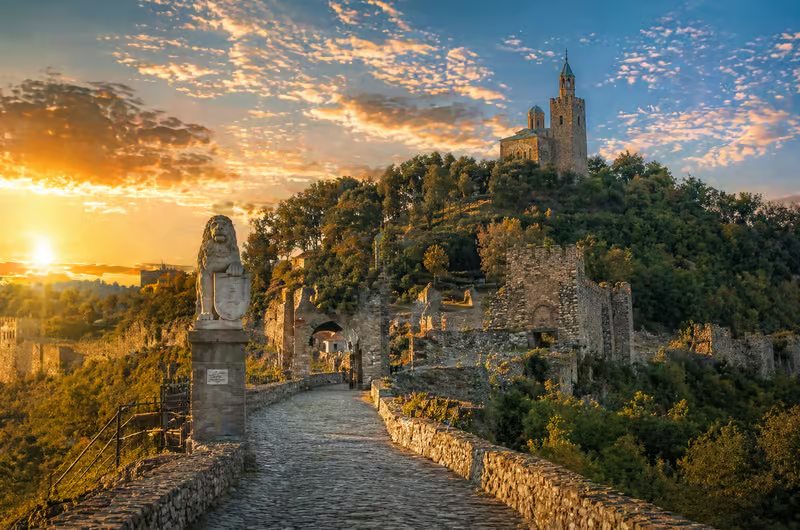
Veliko Tarnovo was the capital of the Second Bulgarian Empire from 1185 to 1396, and medieval travellers compared its grandeur to Constantinople. The Tsarevets Fortress, its stone walls stretching nearly a kilometre around a hilltop bounded on three sides by the Yantra River, is the country's most dramatic single ruin, and a sound-and-light show plays across the fortress walls on selected evenings. The town below is genuinely walkable, with old houses stacked up the gorge in a way that recalls Berat in Albania or Toledo in Spain, and it functions as the natural base for the north of the country.
Nessebar, Varna & the resort coast
Bulgaria's Black Sea coast runs from Varna in the north to Sozopol in the south, with the UNESCO-listed old town of Nessebar, a peninsula of Byzantine-era churches built in alternating bands of red brick and white stone, as its standout stop. Sunny Beach, immediately next to Nessebar, is the large-scale resort strip: long sand, package hotels, and prices well below equivalent Spanish or Greek coastline. Varna itself is a working port city with a genuine urban life beyond the beach, a sea garden park and a strong archaeological museum. Best visited June to September; the coast largely shuts down outside summer.
Rila Monastery & the Seven Rila Lakes
Rila Monastery, founded in the 10th century and rebuilt in its current striped, arcaded form in the 19th, is Bulgaria's most-visited religious site and a UNESCO World Heritage Site, about two hours south of Sofia. Further into the same range, the Seven Rila Lakes, a chain of glacial lakes reached by a chairlift from the village of Panichishte, is the country's best day hike, open roughly mid-June to early October.
Bansko, the ski town that works in summer too
Bansko, at the foot of the Pirin Mountains, is Bulgaria's best-known ski resort in winter and a base for Pirin National Park hiking in summer, with a well-preserved old town of stone houses and wooden verandas that gets overlooked by the ski crowd entirely.
Hidden gems beyond the main circuit
The zones above cover a first or second trip well. With extra days, these are the spots that rarely make the standard guides but reward the detour.
The Valley of the Roses
Bulgaria produces more than half the world's rose oil, and the valley around Kazanlak turns pink every June during the Rose Picking Festival, with fields open to visitors during the harvest.
Melnik & the Sandstone Pyramids
Bulgaria's smallest town sits among eroded sandstone pyramids and produces some of the country's best wine from centuries-old cellars carved into the rock.
Sozopol's Old Town
A quieter alternative to Nessebar on the same coast, a fishing-town peninsula of wooden 19th-century houses with far fewer package tourists.
Belogradchik Rocks
Red sandstone rock formations up to 200 metres tall surrounding a 19th-century Ottoman-era fortress, one of Bulgaria's more dramatic and least-visited landscapes.
Shipka Memorial Church
A gold-domed church built to commemorate the decisive Battle of Shipka Pass in the 1877-78 Russo-Turkish War, in a mountain setting near the Rose Valley.
Bachkovo Monastery
Bulgaria's second-largest monastery after Rila, founded in 1083, in a wooded gorge south of Plovdiv and easily combined with a Rhodope Mountains day out.
Culture & Etiquette
Bulgaria's best-known cultural quirk is real and worth knowing before you arrive: a single head shake side to side traditionally means yes, and a nod up and down means no, the reverse of most of the world. One historical theory traces it to the Ottoman era, when Bulgarians reversed their outward gestures as a quiet form of resistance; a newer generation raised on Western media increasingly uses the international version instead, so in Sofia and Plovdiv you may see either, or a confusing blend of both. Bulgaria is majority Orthodox Christian, with Alexander Nevsky Cathedral in Sofia as the faith's most visible landmark, and the country takes real pride in the Cyrillic alphabet as a homegrown export: 24 May, the Day of Bulgarian Education and Culture and Slavonic Literacy, is a genuine national holiday, not a manufactured one.
Do
- Confirm yes and no verbally. If a head gesture and a spoken answer seem to contradict each other, especially with an older Bulgarian, trust the words. The gesture is fading among the young but still catches visitors out.
- Dress modestly for churches and monasteries. Cover shoulders and knees at Rila Monastery, Boyana Church and Alexander Nevsky Cathedral; scarves for women are appreciated though rarely enforced.
- Learn a few Bulgarian words. Blagodarya (thank you) or the shorter merci, which Bulgarians also use casually, and dobar den (good day) go further than expected.
- Carry small euro notes and coins. Post-changeover, markets, small bakeries and rural bus fares are still often cash-preferred; large notes can be hard to break.
- Try the local wine. Bulgaria has a serious, underrated wine tradition, particularly the Melnik region's dark, tannic reds. Ordering it rather than a familiar import is well received.
Don't
- Assume everyone speaks English outside the capital and coast. Small-town Bulgaria runs on Cyrillic signage and Bulgarian; download offline translation before heading to Veliko Tarnovo's surrounding villages or inland towns.
- Hand over your wallet to anyone claiming to be plainclothes police. Real police carry visible ID and don't inspect or hold your money; if approached, ask to go to a marked police station.
- Get in an unmarked taxi at the airport or a coastal resort. Overcharging is the most common tourist scam; use a licensed app instead.
- Expect lev prices anywhere after February 2026. The lev stopped being legal tender on 1 February 2026; everything is euro-priced now, though older signage or menus may lag.
- Photograph military or border installations. A minor, easily avoided issue, but Bulgaria still enforces it at a handful of sensitive sites.
Deeper culture: the Cyrillic alphabet, Bulgarian yogurt and the Rose Valley
The Cyrillic alphabet. Developed at the Preslav Literary School under Tsar Simeon I in the late 9th and early 10th centuries by disciples of Saints Cyril and Methodius, it is now used by more than 250 million people from Eastern Europe to Central Asia. Bulgarians consider it a founding cultural export on the level of Greece's alphabet or Rome's law, and 24 May is a genuine public holiday celebrating it.
Bulgarian yogurt. The specific bacterial strain Lactobacillus bulgaricus, first isolated and named by a Bulgarian scientist in the early 20th century, is credited with the distinctive tang of Bulgarian yogurt, still made traditionally in villages and served at nearly every meal.
The Rose Valley. The area around Kazanlak in central Bulgaria produces more than half the world's rose oil, an ingredient in a large share of the world's perfumes. The Rose Picking Festival each June opens the fields to visitors during harvest, when workers still pick by hand before sunrise, when the oil content is highest.
Food & Drink
Bulgarian food sits at a Balkan-Mediterranean crossroads: fresh vegetables, grilled meats, yogurt and white brined cheese in nearly everything, with clear Ottoman and Slavic layers. The best of it is unpretentious and cheap: a proper sit-down meal with a drink rarely tops 15 euros outside Sofia's smartest addresses.
Banitsa ~€1-2
Layered pastry filled with eggs, yogurt and sirene, Bulgaria's white brined cheese: the standard breakfast, sold warm from bakery counters across the country. New Year's versions bake in small paper-wrapped fortunes.
Shopska Salad ~€3-5
Chopped tomato, cucumber, pepper and onion under a generous layer of grated sirene, the colours read as the red, white and green of the Bulgarian flag. The default starter at nearly every restaurant.
Rakia ~€1-2 a shot
Fruit brandy, usually grape or plum, starting around 40% ABV and often homemade in rural areas. Offered as a welcome or to open a meal; polite to accept at least a small glass.
Kavarma €6-10
A thick stew of meat, usually pork, with peppers, onions and mushrooms, slow-cooked and served bubbling in its own clay pot. One of the heartiest orders on any menu.
Tarator €2-4
Cold soup of yogurt, cucumber, garlic, dill and crushed walnuts, thinned with water: the classic Bulgarian answer to a hot summer, especially on the coast.
Bulgarian Yogurt & Wine
Yogurt, credited to the Lactobacillus bulgaricus strain, appears at nearly every meal. For wine, look for reds from the Melnik region in the south, underrated and rarely exported.
When to Go & Itineraries
Mid-May through June and September to early October are the best windows: warm without the worst summer heat, the Seven Rila Lakes chairlift running, and manageable crowds everywhere except the Black Sea coast, which is really a June-to-September proposition. July and August bring the coast to its busiest and priciest, and the mountain trails at their most reliably snow-free. December to February is ski season around Bansko and cold, quiet sightseeing everywhere else.
All four seasons compared, with temperatures
| Season | Verdict | Temps | Prices & crowds |
|---|---|---|---|
| May-Jun & Sep-early Oct | Best | 18-27°C | Mid prices, manageable crowds, lakes and trails open |
| Jul-Aug | Good (hot) | 27-35°C, coast & south | Peak coast prices and crowds; mountains are the escape |
| Mar-Apr | Good | 10-19°C | Low prices, few tourists; mountain lifts and coast largely closed |
| Dec-Feb | Ski season / quiet | -2 to 6°C | Bansko busy and priced for skiing; elsewhere low season |
Year-round city averages: Sofia 10.6°C, with a January high around 4°C and an August high around 27°C. Plovdiv and the south run several degrees warmer; the Black Sea coast is milder in shoulder season than inland Sofia.
Itineraries
Seven days covers Bulgaria's golden triangle comfortably. Two weeks adds the Black Sea coast, Veliko Tarnovo and the mountains around Bansko without feeling rushed.
- Days 1–3
Sofia. Alexander Nevsky Cathedral, Boyana Church, Vitosha Mountain, the full city itinerary in our Sofia guide.
- Day 4
Rila Monastery. Full-day trip from Sofia, by rental car, shuttle or organized tour.
- Days 5–7
Plovdiv. Train from Sofia (about 2.5 hours), two full days for the Old Town, Roman theatre and Kapana district.
- Days 1–3
Sofia, plus the Rila Monastery day trip.
- Days 4–5
Plovdiv. Old Town, Roman theatre, Kapana district, a day trip to Bachkovo Monastery.
- Days 6–8
Veliko Tarnovo. Tsarevets Fortress, the sound-and-light show if the schedule allows, day trips into the surrounding villages.
- Days 9–12
Black Sea coast. Varna for two nights, then Nessebar's old town and a night in Sozopol for a quieter finish.
- Days 13–14
Return via Sofia, with a final Vitosha Mountain half-day if weather allows.
- Days 1–4
Sofia extended. Full city itinerary plus Rila Monastery and a Seven Rila Lakes hike if the chairlift season allows.
- Days 5–7
Plovdiv & the Rhodopes. Old Town, Kapana, Bachkovo Monastery, a Rhodope Mountains village day.
- Days 8–10
Melnik & the southwest. The sandstone pyramids, wine cellars, and the Pirin foothills.
- Days 11–13
Bansko. Pirin National Park hiking and the well-preserved old town.
- Days 14–16
Veliko Tarnovo & the north. Tsarevets Fortress, the Rose Valley near Kazanlak en route.
- Days 17–21
Black Sea coast, unhurried. Varna, Nessebar, Sunny Beach and Sozopol at a relaxed pace before returning to Sofia.
Getting there & around
Sofia Airport is the main international gateway, with direct flights from most major European hubs (around 2.5 hrs from London, budget carriers included). Plovdiv and Varna have smaller international airports with seasonal routes, useful if the Black Sea coast is the main goal. Intercity trains connect Sofia, Plovdiv and Varna reliably and cheaply; a rental car (from around €25-35/day) is the better choice for Veliko Tarnovo's surrounding villages, the Rila and Pirin mountains, and combining several destinations in one loop.
All transport options with prices: trains, buses, car rental
| Option | Price | Notes |
|---|---|---|
| Sofia–Plovdiv train | ~€5-6 | 2.5-3 hrs, about six departures daily. |
| Intercity buses | €5-15/route | Cover routes trains miss, generally comfortable and on time. |
| Rental car | €25-35/day | Standard EU or international license; best for the mountains and rural north. |
| Sofia Airport to centre (metro) | €0.80 | Metro Line 4 direct to Serdika, about 18 minutes. |
Practical prep: buy a Bulgarian eSIM before landing or a local SIM at the airport; coverage is reliable nationwide including most mountain trails. Standard travel insurance works well; check it covers mountain rescue if hiking the Seven Rila Lakes or Pirin. Airalo eSIM is the simplest way to land with data already active.
Where to stay
Hostels
Sofia and Plovdiv both have strong hostel scenes with social atmospheres and included breakfast at some properties. See our Sofia guide for specific picks near Alexander Nevsky Cathedral.
Old Town guesthouses
Plovdiv's Old Town and Veliko Tarnovo both have small family-run guesthouses in restored Revival-era houses, atmospheric and well positioned for early-morning, tourist-free sightseeing.
Black Sea coast
Nessebar and Sozopol have boutique options in restored old-town houses; Sunny Beach is almost entirely large package hotels. Prices roughly double from June to Sunny Beach's August peak.
Sofia boutique & luxury hotels
Concentrated around Vitosha Boulevard and the historic centre, walking distance from Alexander Nevsky Cathedral and the best restaurants. Full picks in the Sofia city guide.
Budget Planning
Bulgaria remains one of the best-value countries in the EU even after the 2026 euro changeover, since the fixed conversion rate simply relabeled existing lev prices rather than raising them. Budget travelers eat and sleep well on 30 to 45 euros a day; the only segment approaching Western European prices is peak-season Black Sea coast accommodation in July and August.
- Hostel dorm bed €6-15
- Bakery and market meals €3-6
- Intercity trains and buses
- Free sights: churches, squares, parks
- Boutique hotel or 3-star €70-120
- Restaurant dinners €10-18/person
- Rental car €25-35/day
- Museum and monastery entries
- Best available hotels in Sofia
- Fine dining with Melnik wine
- Private guided day trips
- Peak-season Black Sea coast stays
Quick reference prices: coffee, museum entries, transport
| Banitsa from a bakery | ~€1-2 |
| Coffee (espresso) | ~€1.50-2 |
| Restaurant meal (mid) | €8-15 |
| Rakia (shot, local) | €1-2 |
| Sofia–Plovdiv train | ~€5-6 |
| Sofia metro single ride | ~€0.80 |
| Rila Monastery entry | ~€4 |
| Boyana Church entry | ~€5-6 |
| National History Museum entry | ~€5 |
| Seven Rila Lakes chairlift | ~€10-15 return |
Prices reflect August 2026 research, converted at the fixed euro-lev rate, and drift over time, especially Black Sea coast accommodation in peak season. Treat them as a planning baseline, not a quote.
Visa & Entry
Bulgaria became a full Schengen member, including open land borders, on 1 January 2025, after joining for air and sea travel the previous year. That means US, UK, Canadian, Australian and New Zealand citizens enter visa-free for up to 90 days in any 180-day period, and that allowance is now shared across the entire Schengen area rather than counted separately for Bulgaria, unlike the pre-2025 arrangement. Rules can change; the Bulgarian Ministry of Foreign Affairs is the authoritative source, not third-party paid "e-visa" sites that rank well in search but charge for something that's free for most Western passports.
✓ Valid passport
At least 6 months validity beyond your planned departure date, with at least two blank pages.
✓ Schengen 90/180 counted together
Time spent anywhere in the Schengen area, including Bulgaria, counts against the same 90-day allowance.
✓ ETIAS from late 2026
The EU's new pre-travel authorization is expected to launch around October or November 2026; a €20 fee applies for travelers aged 18-70.
✓ Biometric entry (EES)
The EU's Entry/Exit System collects fingerprints and a facial image on first entry to the Schengen area, replacing manual passport stamping.
| Bulgaria | Romania | |
|---|---|---|
| Daily budget | €30-45 gets you far; one of the EU's cheapest | Similar range, Bucharest runs a touch pricier |
| Coast | Black Sea: Nessebar's UNESCO old town, Sunny Beach resorts | Shorter Black Sea coast, less developed for tourism |
| Mountains | Rila & Pirin, Rila Monastery, Bansko skiing | The Carpathians and Transylvania's castle country |
| Old towns | Plovdiv's Roman theatre, Veliko Tarnovo's fortress | Sibiu, Brasov, Sighisoara's Saxon towns |
| Currency | Euro since Jan 2026 | Leu, not yet on a euro adoption date |
Safety, Solo Women & Family
Bulgaria is safe for tourists. Violent crime against visitors is rare, and by the measures that matter most to travelers, street robbery and physical assault, Sofia consistently rates safer than Paris, Rome or London. The real risks are petty theft in crowded tourist areas and a handful of well-known scams, not violent crime.
Pickpocketing
Concentrated on Sofia's Vitosha Boulevard, crowded public transport, and major tourist sites nationwide. Keep bags closed and in front of you in crowds.
Taxi & currency scams
Unlicensed taxis at airports and coastal resorts can charge five to ten times a fair rate; use Bolt or Uber. Count change carefully at street currency exchange, though this matters less post-euro.
Fake police
A scammer claiming to be plainclothes police may ask to check your wallet for counterfeit currency. Real police carry visible ID and never handle your money; ask to walk to a public police station instead.
Two more things worth knowing: night areas and mountain safety
Areas to avoid at night. The area immediately around Sofia's central railway station is best avoided late at night; the city centre and Vitosha Boulevard area are fine with normal urban awareness.
Mountain safety. Weather on the Seven Rila Lakes trail and in the Pirin range can shift quickly even in summer. Check chairlift operating hours before setting out (roughly mid-June to early October, 8am-5pm), start early, and tell your accommodation your plan.
Solo women travelers
Bulgaria is a reasonably comfortable destination for solo female travelers. Street harassment is less common than in many Western European cities, and Sofia, Plovdiv and the coastal towns are fine to walk with normal city awareness. As everywhere, extra caution is sensible around nightlife districts late at night and on unlicensed transport. Full detail on our Solo Woman Explorer pages.
Emergency numbers
Embassies in Sofia and hospital info
112 is the EU-standard emergency number with English-speaking operators. In Sofia, Acibadem City Clinic Tokuda Hospital (51B Nikola Vaptsarov Blvd, emergency line +359 2 403 4112) is a private, internationally accredited hospital with English-language support.
- USA
- +359-2-937-5100
- UK
- +359-2-933-9222
- Germany
- +359-2-918-380
- France
- +359-2-965-1100
- Italy
- +359-2-921-7300
- Netherlands
- +359-2-816-9100
- Canada
- +359-2-969-9710
- Australia
- via Athens, +30-21-0870-4000
Family travel & pets
Bulgaria works well for families: the Black Sea beaches are gentle and shallow in most resort areas, the Seven Rila Lakes chairlift turns a serious hike into a manageable one for kids over about 8, and Sofia's Borisova Gradina park and Vitosha Mountain foothills give younger children space to run that a purely city-bound itinerary wouldn't.
Bringing pets to Bulgaria
As an EU and Schengen member, Bulgaria follows standard EU pet travel rules: EU pet passport holders can enter with dogs, cats and ferrets given valid rabies vaccination and a microchip. Non-EU visitors need a veterinary health certificate issued shortly before travel, current rabies vaccination, and to meet standard EU import requirements. Most hotels outside the luxury tier are pet-tolerant if arranged in advance.
Bulgaria FAQ
Is Bulgaria safe to visit?
Yes. Violent crime against visitors is rare and Sofia consistently rates safer than Paris, Rome or London on that measure. The practical risks are pickpocketing in crowded tourist spots and the odd taxi or currency scam, not violent crime.
How cheap is Bulgaria?
One of the best-value countries in the EU. Budget travelers manage on €30-45 a day, mid-range on €70-110. A hostel dorm bed runs €6-15 and a sit-down meal with a drink is typically €8-15.
Do I need a visa for Bulgaria?
Citizens of the US, UK, Canada, Australia and New Zealand can enter visa-free for up to 90 days in any 180-day period. Bulgaria became a full Schengen member on 1 January 2025, so that 90-day allowance is shared with every other Schengen country, not counted separately.
When is the best time to visit Bulgaria?
Mid-May to late June and September to early October: warm without the worst summer heat, mountains fully open, manageable crowds. July and August are hot and busy on the Black Sea coast; December to February is ski season around Bansko.
What currency does Bulgaria use?
The euro. Bulgaria adopted the euro on 1 January 2026 at a fixed rate of 1.95583 lev per euro, retiring the Bulgarian lev as legal tender from 1 February 2026.
How many days do you need in Bulgaria?
Seven days covers the golden triangle: Sofia, Plovdiv and Rila Monastery. Two weeks adds Veliko Tarnovo, the Black Sea coast and the mountains around Bansko.
Is Bulgaria in the EU and Schengen?
Yes to both. Bulgaria joined the EU in 2007 and became a full Schengen member, including land borders, on 1 January 2025, so there are no passport checks crossing between Bulgaria and other Schengen countries.
What language is spoken in Bulgaria?
Bulgarian, written in the Cyrillic alphabet, which was developed in medieval Bulgaria under Tsar Simeon I. English is common in Sofia, Plovdiv and coastal resorts; less so in small towns and villages.
Is Bulgaria good for a beach holiday?
Yes. The Black Sea coast runs from Varna to Sozopol with the UNESCO old town of Nessebar and the resort strip of Sunny Beach in between, at a fraction of Western Mediterranean prices.
Is Bulgaria safe for solo female travelers?
Generally yes. Street harassment is less common than in many Western European cities, and Sofia, Plovdiv and the coastal towns are comfortable to walk in with normal city awareness.
Is Bulgaria good for families with kids?
Yes. The Black Sea beaches, the Seven Rila Lakes chairlift, and city parks like Sofia's Borisova Gradina all work well for kids, and Bulgarians are generally warm toward traveling families.
Is Bulgaria cheaper than Romania?
They run close, with Bulgaria now pricing in euros after its January 2026 changeover. Bulgaria's Black Sea coast is generally the better-value beach option; Romania's Transylvanian towns and Bucharest nightlife are its own draw.
What Stays With You
Most travelers arrive in Bulgaria with almost no expectations and leave trying to explain why that was a mistake. It's the country that invented the alphabet half of Eastern Europe still writes in, the country whose second city has been continuously inhabited since before Rome existed, the country where a monastery founded in the year 927 still has monks living behind its striped arches. None of it is marketed loudly, which is precisely why it still feels like a discovery rather than a checklist.
2026 happens to be the year the country's long European integration finished: full Schengen membership settled in, the euro now in every wallet. Visit before the rest of the continent notices what that quietly unlocked.