
What Travellers Should Know About Bulgaria
Bulgaria's scam landscape concentrates at two points of entry: Sofia Airport (taxi fraud) and the Black Sea coast (resort price manipulation). The rest of the country is largely scam-free by European standards.
Common Scams in Bulgaria
Bulgaria's tourist scams are consistent and well-documented. Each has a clear countermeasure.
Sofia Airport's taxi scam is one of the most consistently reported tourist frauds in the Balkans. Unlicensed drivers — and some licensed ones operating without meters — solicit passengers in the arrivals hall, offering rides into the city. The quoted price appears reasonable in euros but translates to 5–10× the metered lev rate. Some drivers use meters set to a "tariff 2" rate (the nighttime premium rate, applied during daylight hours). The journey from the airport to Sofia city centre is approximately 10km; the correct metered fare is BGN 15–25 depending on traffic and time of day.
- Use Bolt — widely available at Sofia Airport, provides upfront pricing in BGN with driver identification. Book from inside the terminal before exiting.
- If using a metered taxi: use only OK Supertrans (yellow cabs, +359 2 973 2121) or Yellow Taxi (+359 2 91119) — both are legitimate Sofia operators with regulated rates.
- The official taxi rank is outside the terminal — ignore all approaches inside the building.
- Sofia's metro (Line 1) connects the airport to the city centre in approximately 20 minutes for BGN 1.60 — the cheapest and scam-proof option.
- A legitimate metered taxi should show a starting rate of BGN 0.79–0.90/km daytime on the meter display.
Bulgaria's currency exchange scam is sophisticated and operates in plain sight. Exchange offices display two numbers — one large and prominent, one small. The large number is almost always the rate at which they buy your foreign currency (meaning you get fewer leva per euro), not the rate at which they sell leva to you. A tourist who sees "1.95 EUR/BGN" and hands over €100 expecting BGN 195 may receive BGN 130 because the "1.95" was the buy rate for BGN, and the sell rate is buried in small print. A secondary technique involves "commission-free" signs — the unfavourable rate is the commission.
- The Bulgarian lev is pegged at a fixed rate of BGN 1.95583 per euro — this never varies. Any exchange office offering significantly less is profiting on the spread.
- Use ATMs inside bank branches (Unicredit Bulbank, DSK Bank, Raiffeisen Bank) for the best rates without manipulation.
- If using an exchange office, use those inside shopping centres or bank branches rather than street-facing tourist-area booths.
- Always ask "How many leva will I receive for €100?" — get the final number before handing over cash.
- Decline any exchange office that cannot give you a clear final amount before the transaction.
Bulgaria's fake police scam follows a consistent pattern: one individual approaches tourists claiming to be an undercover officer, often showing a fake or borrowed badge. A second person — an accomplice posing as a compliant tourist already being checked — is sometimes present to establish credibility. The "officer" asks to inspect the tourist's wallet for counterfeit notes or drugs. During the inspection, cash is palmed or card details are observed. A variant involves genuine police who direct tourists to a nearby "office" that turns out to be an accomplice's location where a secondary theft occurs.
- Genuine Bulgarian police do not conduct random currency checks or drug searches of tourists on the street.
- If approached by anyone claiming to be police, say you want to go to the nearest полицейски участък (police station) to deal with any matter — genuine officers will comply; scammers will not.
- Never hand over your wallet, passport, or phone to anyone claiming to be a plainclothes officer on the street.
- Ask to see an official police identification card (служебна карта) — genuine officers carry these and are required to show them on request.
- If you feel unsafe, call 112 (EU emergency) immediately and describe your location.
Sunny Beach concentrates Bulgaria's most aggressive tourist-facing commercial practices. Bar and nightclub bill manipulation takes several forms: menus without prices ("ask the waiter"), drinks charged at significantly above the verbally quoted price, rounds of drinks added to the bill that were never ordered, "hostess" charges added when a person sits with you, and beach sunlounger fees that double between the quoted price and billing. The door-to-door promotion on the strip involves commission-paid touts who receive payment for bringing customers to venues — they sometimes block the pavement to channel tourists into specific establishments.
- Only enter bars and restaurants where prices are displayed on a printed menu — never order from a venue that cannot show you a price list first.
- Check the bill against what you ordered before paying — itemise every line.
- For beach sunloungers, agree the price explicitly before sitting down and get it in writing if possible.
- Avoid venues promoted by street touts — commission-driven touts send you to the highest-margin venues, not the best value ones.
- Nessebar old town (5km from Sunny Beach, accessible by bus) has genuine restaurants at honest prices — a worthwhile contrast.
ATM card skimming — the attachment of card-reading overlay devices and pinhole cameras — is documented in Bulgaria, particularly on standalone street ATMs away from bank branches. Bulgaria has historically had one of the EU's higher rates of card fraud; the problem is concentrated on tourist-area ATMs that are not monitored by bank staff. A secondary technique is "helpful bystander" fraud: a person offers to assist with a Bulgarian-language ATM interface and observes the PIN.
- Use ATMs only inside bank branches during opening hours — Unicredit Bulbank, DSK, and Raiffeisen branches are distributed throughout Sofia and Varna.
- Cover the keypad with your hand when entering your PIN — always.
- Check the card slot and keypad before inserting your card — any loose or unusual fitting is a skimmer.
- Decline all unsolicited assistance at ATMs regardless of how helpful it appears.
- ATMs in shopping centres (Mall of Sofia, Paradise Center, Grand Mall Varna) are the safest alternatives outside banking hours.
Bulgaria has a well-documented hostess bar / strip club overcharging scam operating in Sofia and coastal resort cities. Solo male tourists are approached on the street or online with an invitation to a bar, sometimes by an apparently friendly local who "knows a great place." Once inside, they are presented with extremely large bills for drinks consumed by themselves and their companions — amounts of hundreds or thousands of leva. Intimidation or physical coercion to pay is documented in some instances. This is distinct from legitimate entertainment venues and is targeted specifically at foreign male visitors.
- Never follow strangers to bars or entertainment venues — the "friendly local who knows a great place" is the setup in almost every case.
- If you want to visit a bar or club in Sofia or the coast, book through your hotel or choose from venues with visible online reviews.
- If presented with an extreme bill, remain calm, request an itemised receipt, and state clearly that you will pay only for what you ordered at prices shown on the menu you were given. Call 112 if coerced.
- The UK Foreign Office and US State Department both have specific advisories about this scam in Bulgaria — it is well-documented.
Bulgaria's Key Destinations
Bulgaria's scam concentration is highest at Sofia Airport and the Sunny Beach strip. Away from these, the country is relaxed, safe, and extraordinary value.
Sofia is one of Europe's most underrated capitals — a city of Orthodox churches, Soviet-era monumentalism, Roman ruins visible through glass in the metro floor, free walking tours, and some of the cheapest excellent coffee and food in the EU. The Alexander Nevsky Cathedral, Boyana Church (UNESCO), the National History Museum, and the free Sofia Ancient Serdica complex in the city centre are all extraordinary. Vitosha Mountain rises directly behind the city — a 20-minute bus ride to the ski lifts from the city centre.
- Airport taxi overcharging — use Bolt or metro Line 1 (BGN 1.60) from the airport
- Fake police on Vitosha Boulevard and NDK area — never hand over wallet to anyone claiming authority
- Currency exchange fraud near tourist sites — use bank ATMs or bank-branch exchange offices
- Hostess bar luring in Studentski grad and centre — never follow strangers to recommended bars
- Free Sofia walking tour (donations): genuinely excellent; meets daily at the Palace of Justice
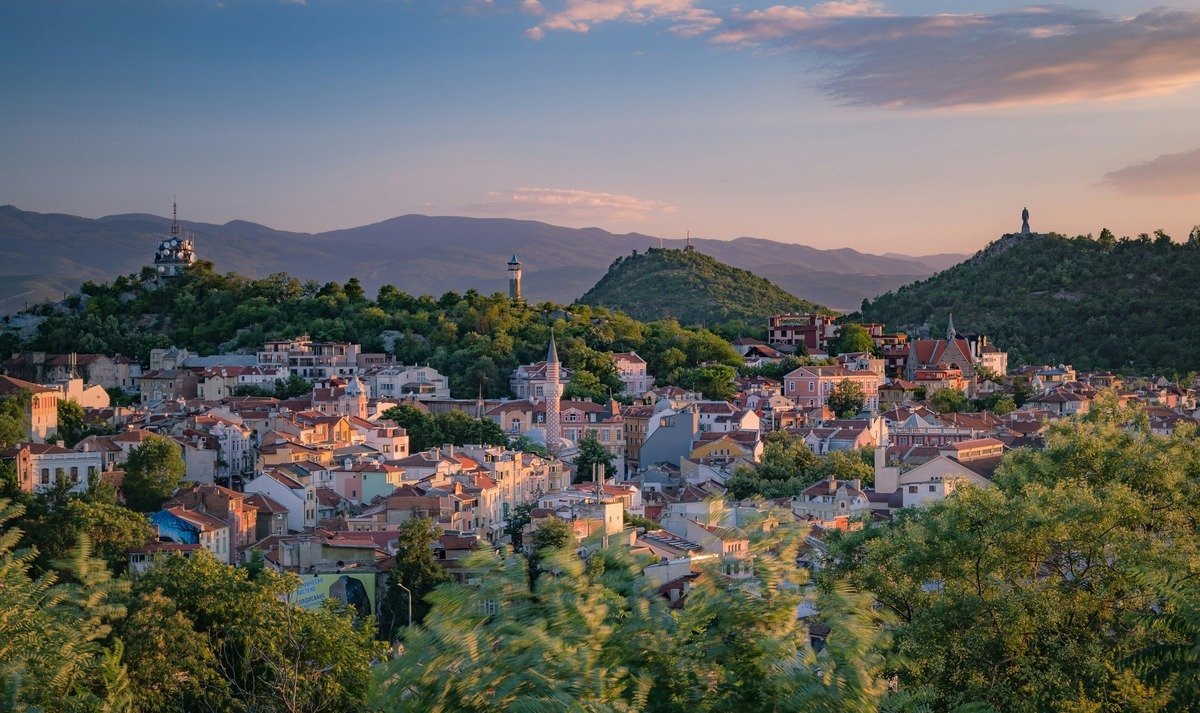
Plovdiv — European Capital of Culture 2019 — is Bulgaria's second city and arguably its most beautiful. The Old Town (Старият град) on three hills contains 19th-century National Revival houses with overhanging upper storeys in vivid colours, cobbled streets, and the extraordinary 2nd-century Roman theatre that seats 7,000 and still hosts performances. The Kapana creative quarter has excellent independent cafés, restaurants, and galleries. Plovdiv has virtually no tourist scam infrastructure.
- Virtually no tourist scams — among the safest city-break destinations in the Balkans
- Roman Theatre and Ancient Stadium: admission fees are genuine and modest (BGN 5–10)
- Kapana district: independent restaurants with honest pricing, far from any tourist trap economy
- Day trip to Bachkovo Monastery (30km south): one of Bulgaria's finest medieval monasteries, free entry
- Plovdiv is 2 hours from Sofia by bus or train — easily combined in a single itinerary
The Black Sea coast is Bulgaria's mass-tourism heartland — 378km of coastline with beach resorts ranging from the enormous Sunny Beach to the quieter Albena, Golden Sands, and Sozopol. The beach and sea are genuinely excellent; the tourist economy in the main resort strips has the highest scam concentration in the country. Sozopol (south coast) and Nessebar (UNESCO old town near Sunny Beach) are far more authentic and honest alternatives to the main resort strips.
- Bar bill manipulation — menus without prices, charges for unordered items, hostess charges
- Beach sunlounger price bait-and-switch — agree price explicitly before sitting
- Taxi overcharging between resort towns — agree metered fare or use Bolt where available
- ATM skimming at resort area standalone ATMs — use bank-branch ATMs or shopping centre ATMs
- Nessebar old town (5km from Sunny Beach): UNESCO-listed peninsula city, honest restaurants, worth visiting over the resort strip
Veliko Tarnovo — the medieval capital of the Second Bulgarian Empire — is one of the Balkans' most dramatically situated cities: houses cascading down cliffs to the Yantra River, which loops in a near-complete circle below the Tsarevets fortress. The sound-and-light show at Tsarevets (summer evenings) illuminates the fortress walls in changing colours visible from across the gorge. The old craftsmen's quarter of Arbanasi (5km, excellent day trip) and the Preobrazhenski Monastery are outstanding. No significant tourist scam presence.
- No significant tourist scams
- Tsarevets fortress admission and sound-and-light show: genuine, modest cost (BGN 6 entry, BGN 12 sound-and-light)
- Samovodska Charshia craft street: genuine local craftspeople selling pottery, woodwork, and rose products at honest prices
- Excellent base for Arbanasi, Preobrazhenski Monastery, and Elena village day trips
The Rila Monastery — Bulgaria's most important Orthodox monastery, founded in the 10th century, a UNESCO World Heritage Site — sits in a mountain valley at 1,147m in the Rila Mountains, 2 hours from Sofia. Its exterior striped arches and the Hrelyo Tower are unmistakable; the interior frescoes covering every wall are extraordinary. Bansko (a further hour south) is Bulgaria's most popular ski resort and has a charming old town of stone houses. The Seven Rila Lakes trekking circuit is one of Bulgaria's finest hikes.
- No tourist scams in mountain areas
- Rila Monastery entry is free; nominal fee for photography inside
- Tour operators from Sofia offering day trips to Rila: use established agencies rather than informal operators approached in tourist areas
- Bansko ski equipment hire: standard European resort practices; compare prices before committing to specific shops
- Mountain hiking: weather changes rapidly in the Rila above 2,000m — proper footwear and layers essential regardless of valley conditions
The Rhodope Mountains — a vast, forested range covering southern Bulgaria — are among Europe's most undervisited highlands. The Trigrad Gorge and Devil's Throat Cave (where a river disappears underground and reappears 60m lower) are extraordinary geological features. The village of Shiroka Laka is a National Revival architecture showcase. The Rhodopes are the homeland of Bulgarian folk music — the gaida (bagpipe), the tapan drum, and the distinctive female choir tradition. Smolyan and Devin are the main towns.
- No tourist scams in this region
- Devil's Throat Cave admission: genuine and modest (approximately BGN 8)
- Devin has thermal spa hotels at extraordinary value by European standards
- Driving in the Rhodopes: mountain roads are narrow and steep — allow extra time and drive carefully
- Arda River kayaking operators: use established local operators; the river rapids are genuine challenges
Safety Tips for Bulgaria
- ✓ From Sofia Airport: use Bolt for upfront pricing, take the metro Line 1 (BGN 1.60 to the city centre), or use the official taxi rank with OK Supertrans or Yellow Taxi. Never accept a ride from someone who approaches you inside the terminal.
- ✓ The Bulgarian lev is fixed at BGN 1.95583 per euro — memorise this. Any exchange office offering significantly less is taking an excessive spread. Ask "how many leva for €100?" before any transaction.
- ✓ Genuine Bulgarian police do not conduct random street checks of tourists' wallets or currency. If approached, say you want to go to the police station (полицейски участък) — scammers will not follow.
- ✓ In Sunny Beach: only enter venues with a visible printed menu showing prices. Check your bill against every item before paying. Never pay bar bills that include unordered items — dispute them calmly and request itemisation.
- ✓ Use ATMs only inside bank branches during opening hours. Cover your PIN. Check the card slot for skimming attachments before inserting your card.
- ✓ Never follow strangers to bars or clubs they recommend — the hostess bar overcharging scam is well-documented in Sofia, Varna, and the coast.
- ✓ For the Rila Monastery, book an organised day trip from Sofia or take the morning bus from Sofia's Ovcha Kupel bus terminal — the monastery is 2 hours and the day trip is entirely straightforward.
- ✓ Visit Nessebar rather than staying on the Sunny Beach strip for food and atmosphere — it's 5km away by frequent bus, and the honest pricing and UNESCO old-town setting make it worth the short journey.
- ✓ Bulgaria's free walking tours in Sofia are genuinely excellent — the Free Sofia Tour meets daily at the Palace of Justice at 11am and 6pm (tips only). A better introduction to the city than any paid tour.
Book Right, See the Real Bulgaria
Pre-booked transfers and verified hotels in the right neighbourhoods eliminate Bulgaria's two most common tourist traps from the start.
Emergency Numbers & Contacts
Bulgaria uses the EU standard 112 emergency number for all services. Report theft at the nearest police station to obtain a police report (needed for insurance claims).