
What You're Actually Getting Into
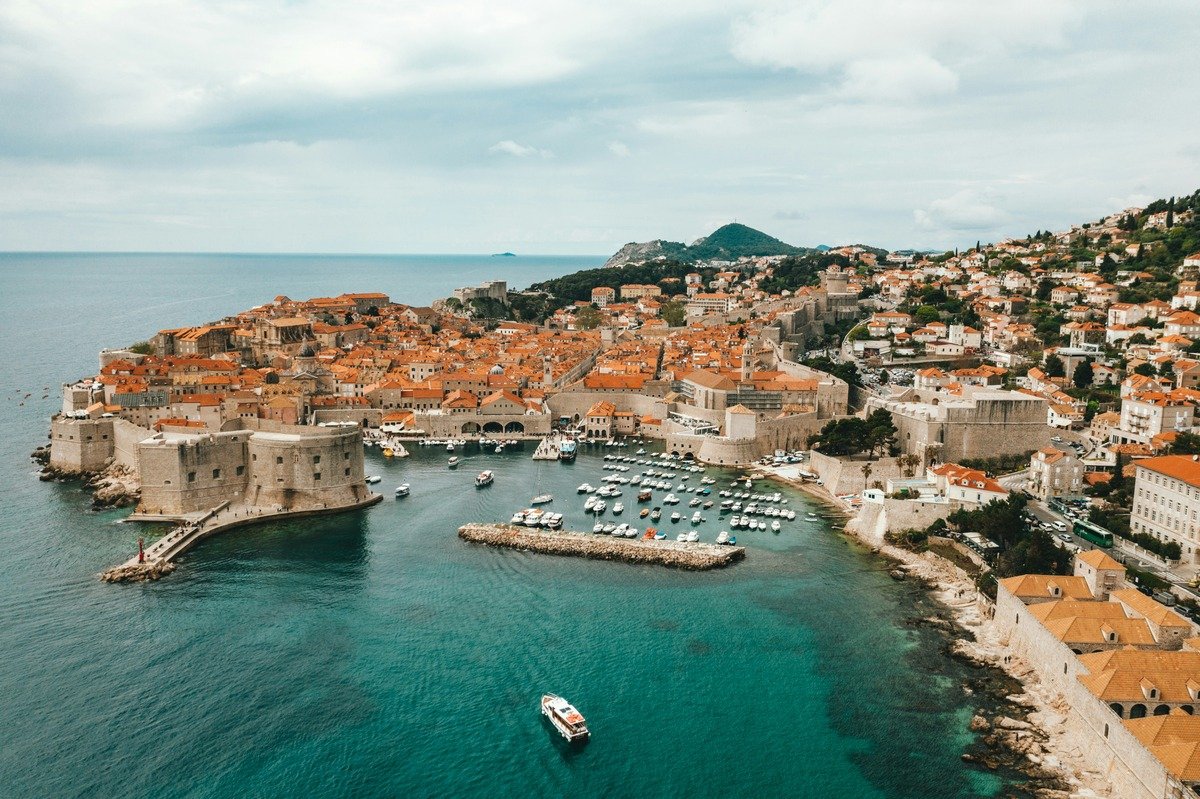
Croatia's transformation is one of the fastest in European tourism. Twenty-five years ago the coast was recovering from a war that had shelled Dubrovnik's own UNESCO Old Town. Today that same Old Town appears in luxury travel features, wedding photography and, for an entire television generation, King's Landing. The country earned the attention: 1,244 islands and islets along the Adriatic, only around 50 of them permanently inhabited, a walled Renaissance-Baroque city that survived siege and earthquake, and a Roman emperor's retirement palace in Split that never became a museum because people simply kept living in it.
What that attention has done to prices and crowds, especially in Dubrovnik in July and August, is the other half of the story, and this guide doesn't soften it. Croatia rewards travelers who go outside peak summer or spend real time inland: Istria's truffle-hunting hill towns, Plitvice's less-visited neighbor Krka, and Zagreb's espresso-and-flea-market Advent season are all excellent and comparatively calm.
The honest complications
Dubrovnik's Old Town genuinely struggles with overtourism: the city now caps simultaneous visitors inside the walls at 11,200 and limits cruise ship arrivals to two a day under its "Respect the City" program, and city walls tickets have climbed sharply, to around €40 for a peak-season adult ticket as of 2026. From 2026, walls and museum entry increasingly requires advance timed booking rather than walking up. July and August coastal accommodation runs at Italian Riviera prices, not Balkan ones. And a small amount of unexploded ordnance remains from the 1990s Homeland War in rural, forested parts of Karlovac and Lika-Senj counties, nowhere near the coast or islands, but worth knowing about if you're the kind of traveler who wanders off marked trails inland.
A History Worth Knowing
Croatia's coast was Roman Dalmatia before it was anything else, which is why Diocletian retired to a palace in Split rather than a village. Venice ruled the Dalmatian coast for centuries, except for Dubrovnik, which stayed independent as the maritime Republic of Ragusa. Habsburg rule, two world wars, four decades in socialist Yugoslavia, and the 1991-95 Homeland War that included the siege of Dubrovnik itself: the short version of how the country you're visiting got here.
- c. 305 AD
Diocletian's Palace. The retired Roman emperor builds a fortified palace at Split; 1,700 years later people still live, eat and shop inside its walls.
- 1358–1808
Republic of Ragusa. Dubrovnik stays independent of Venice for over four centuries as a maritime trading power, ruled by the motto "Libertas," until Napoleon abolishes it.
- 1918–1991
Yugoslavia. Croatia joins the Kingdom of Serbs, Croats and Slovenes after WWI, then socialist Yugoslavia under Tito after WWII.
- 1991–1995
The Homeland War. Croatia declares independence on 25 June 1991; the JNA besieges and shells Dubrovnik's Old Town from October 1991 to May 1992. Operation Storm in 1995 ends the war.
- 2013
EU accession. Croatia joins the European Union on 1 July 2013.
- 2023
Schengen & the euro. Croatia adopts the euro and joins the Schengen Area on the same day, 1 January 2023.
Read the full history: Illyrians, Rome, Ragusa and the siege of Dubrovnik
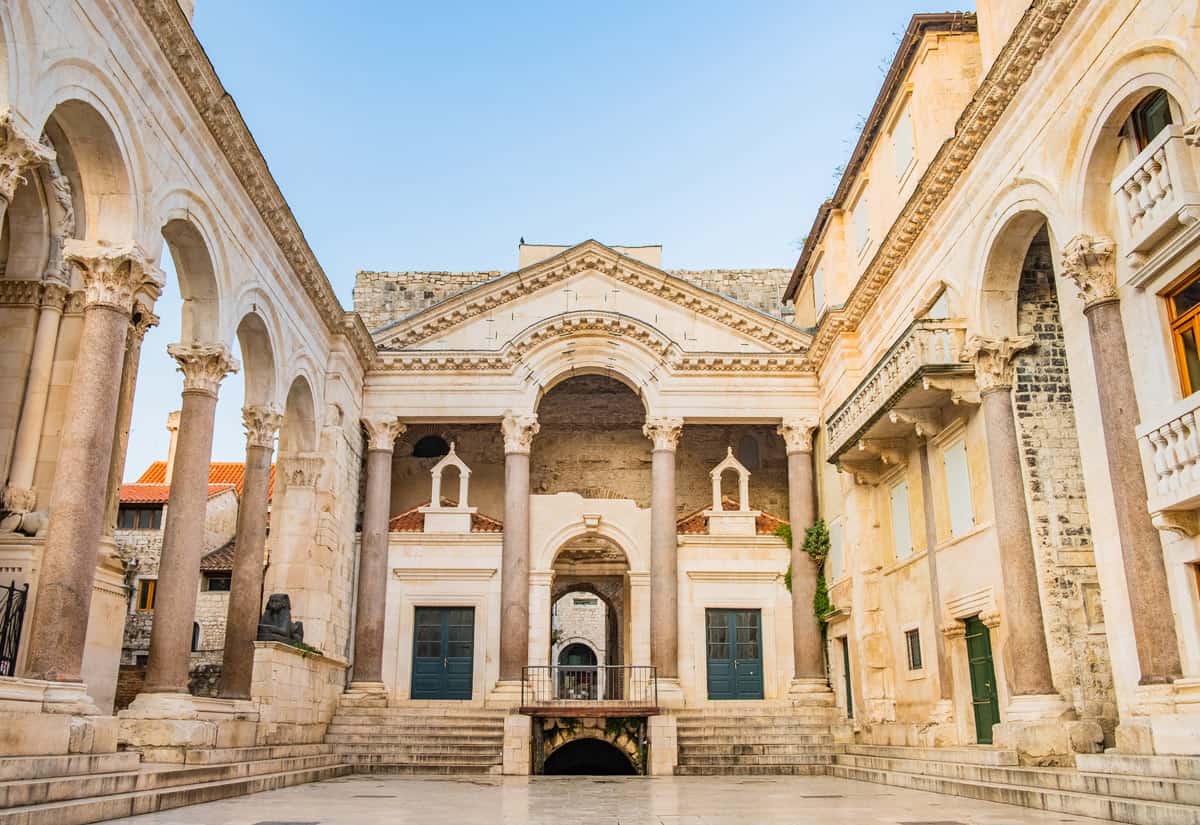
Before Rome, the Adriatic coast belonged to Illyrian tribes and Greek colonists. Rome absorbed the region as the province of Dalmatia, and its most visible legacy is Diocletian's Palace in Split, built around 305 AD as a fortified retirement compound for the emperor. Unlike most Roman ruins, it was never abandoned: medieval Splićani moved into the empty halls, and the palace's basement, courtyards and cellars are still a functioning, lived-in neighborhood today.
Medieval Croatia had its own kingdom, with Tomislav crowned around 925, before entering a personal union with Hungary in 1102 that lasted for centuries. Along the coast, Venice extended control over most of Dalmatia, but Dubrovnik held out as the independent Republic of Ragusa from 1358 to 1808, a small but sophisticated maritime and diplomatic power whose motto, "Libertas," is stamped over the Pile Gate to this day. Ragusa's wealth built the Old Town's palaces, its walls, and one of Europe's oldest continuously operating pharmacies, inside the Franciscan Monastery, founded in 1317.
The 19th and early 20th centuries brought Habsburg rule, then union with the new Kingdom of Serbs, Croats and Slovenes after World War I, renamed Yugoslavia in 1929. World War II brought Nazi occupation and the brutal, Nazi-aligned Independent State of Croatia, followed by Tito's socialist Yugoslavia, within which Croatia became the federation's tourism engine, developing much of the coastal infrastructure still in use today.
The Homeland War. Croatia declared independence on 25 June 1991, triggering war with the Yugoslav National Army and Serb paramilitary forces. Dubrovnik itself, a UNESCO World Heritage Site with no serious military value, was besieged and shelled from October 1991 to May 1992, damaging roughly two-thirds of the Old Town's buildings; the damage has since been meticulously restored using traditional materials and techniques. Vukovar, in eastern Croatia, suffered one of the war's worst sieges. Croatian forces retook Serb-held territory in Operation Storm in August 1995, effectively ending the war. The country joined the EU in 2013 and, a decade later, both the Schengen Area and the eurozone on the same day, 1 January 2023.
Top Destinations
Croatia splits naturally into five zones: the walled south, Split and the central Dalmatian islands, Istria in the north, the interior's waterfall national parks, and the capital. Distances along the coast are longer than they look on a map, since the road hugs a narrow strip between mountains and sea; the interior and Istria are a different, calmer trip entirely.
Dubrovnik, the walled city
Dubrovnik's Old Town is the country's single most famous sight: a complete circuit of 2-kilometer medieval walls enclosing limestone streets, the Rector's Palace, Sponza Palace and the Franciscan Monastery's 1317 pharmacy. It is also the country's most crowded and most expensive stop, especially on the roughly two cruise-ship-call days each week. See our full Dubrovnik city guide for neighborhoods, prices and how to time it right.
The Pelješac Peninsula & Ston
An hour north of Dubrovnik, reached since 2022 via the Pelješac Bridge without crossing into Bosnia's Neum corridor, this is Croatia's best wine region for Plavac Mali reds, plus Ston, whose own 5.5-kilometer defensive walls (Europe's second-longest after China's) protect what may be Europe's oldest continuously operating oyster and salt works.
Split & Diocletian's Palace
Split is built literally inside and around Diocletian's 4th-century retirement palace, a UNESCO World Heritage Site that is not a fenced-off ruin but a living neighborhood of cafes, apartments and market stalls. Climb the cathedral bell tower for the best rooftop view, walk the palm-lined Riva waterfront promenade, and hike up Marjan Hill for a wider view over the city and the sea. Split is also the main ferry hub for the central Dalmatian islands.
Hvar, Brač & Vis
Hvar Town is Croatia's glamour island: lavender-scented hills, a hilltop fortress, and a harbor that fills with yachts every summer. Brač has Zlatni Rat, the country's most photographed beach, a shifting spit of pebble that changes shape with the current. Vis, the furthest out and the last island opened to foreign visitors after Yugoslav-era military restrictions lifted in 1989, is the quietest and least developed of the three.
Rovinj & the coast
Istria, the heart-shaped peninsula in Croatia's north, feels more Italian than Croatian, unsurprising given centuries of Venetian rule and a still-bilingual Italian minority. Rovinj is the standout: a tight cluster of pastel houses climbing to a hilltop church, ringed by a harbor that looks staged for a postcard and mostly isn't.
Motovun & the truffle hill towns
Inland Istria is hill-town and truffle country: Motovun, perched on a forested hilltop above the Mirna valley, is the best known, surrounded by oak forest where white truffles are hunted from September through December. Pula, Istria's largest city, has a remarkably intact 1st-century Roman amphitheater still used for concerts today.
Plitvice Lakes
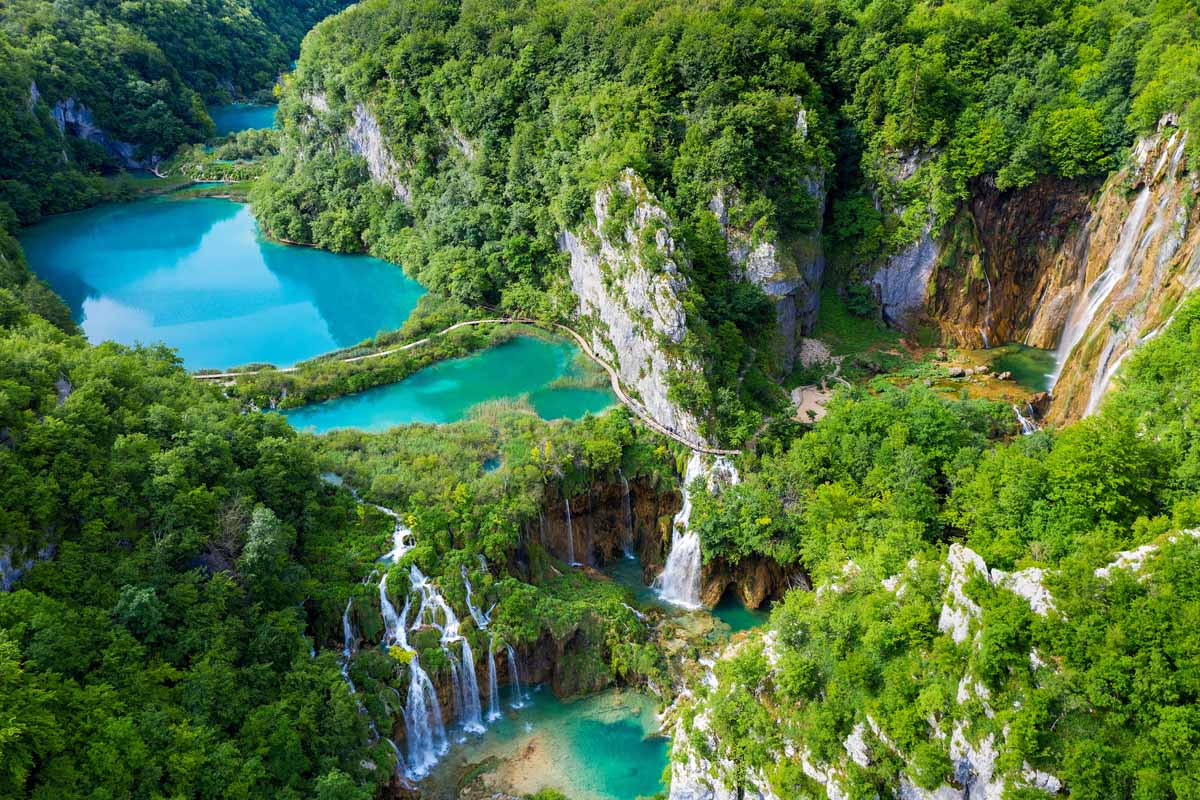
Sixteen terraced turquoise lakes connected by waterfalls and wooden boardwalks, UNESCO-listed since 1979 and Croatia's single most-visited inland attraction. Peak-season adult tickets run around €40 (June-September), dropping to roughly €23 in April, May and October and around €10 in winter; tickets are timed and sell out on summer weekends, so book ahead.
Krka National Park
Plitvice's less-crowded cousin near Šibenik, with its own dramatic waterfalls at Skradinski Buk and a boat trip to the island monastery of Visovac. Rules around swimming near the falls have shifted more than once in recent years for ecological reasons, so confirm the current policy locally before planning a lake day around it.
Zagreb, the underrated capital
Croatia's inland capital gets a fraction of the coast's attention despite an excellent Upper Town (Gornji Grad), the red-umbrella stalls of Dolac Market just above Ban Jelačić Square, and the genuinely moving Museum of Broken Relationships, built from donated objects and the stories behind failed relationships worldwide. Zagreb's Advent Christmas market has repeatedly been rated among Europe's best.
Hidden gems beyond the main circuit
The zones above cover a first or second trip well. With extra days, these are the spots that rarely make the standard itinerary and reward the detour.
Mljet National Park
A forested island with two saltwater lakes, one holding a tiny 12th-century Benedictine monastery on its own islet. Far quieter than the Elaphiti Islands closer to Dubrovnik.
Krka's Skradinski Buk
The park's largest waterfall system, reached by boat from Skradin, with wooden boardwalks winding directly past cascading travertine terraces.
Grožnjan, the artists' town
A near-abandoned hill town resettled by artists from the 1960s onward, now full of small galleries and studios with almost none of Rovinj's crowds.
Zadar's Sea Organ
An architectural installation of stone steps that turns the motion of the Adriatic into ambient music, next to the "Greeting to the Sun" solar-powered light display. Both free, both best at sunset.
Rab Island
A medieval town with four distinctive bell towers on a narrow peninsula, plus Rajska Plaža, one of Croatia's best sandy (not pebble) beaches.
Rastoke
A cluster of old watermills and cottages built directly over cascading waterfalls at the confluence of two rivers, near the town of Slunj.
Culture & Etiquette
Coastal Croatian culture runs on fjaka, a specifically Dalmatian concept of unhurried, guilt-free idleness that shows up as long afternoon coffees and a general resistance to rushing, especially in summer heat. It's a rhythm worth adopting rather than fighting. Croatia is majority Catholic, with churches active as places of worship as well as sights, and a genuine, well-earned pride in the country's rapid postwar recovery.
Do
- Dress modestly in churches. Cover shoulders and knees, especially at active places of worship like Dubrovnik Cathedral or Split's Cathedral of St. Domnius.
- Round up or tip 10%. Not obligatory, but genuinely appreciated at sit-down restaurants; rounding up is standard for cafes and taxis.
- Learn a few Croatian words. Hvala (thank you), Dobar dan (good day), Molim (please/you're welcome). English is widely spoken in tourist areas, but the effort lands well.
- Book ahead for peak season. Restaurants, city walls tickets, Plitvice entry and island ferries all sell out in July and August; last-minute plans work far better in shoulder season.
- Slow down for the fjaka. Long lunches and slower afternoons are the local rhythm on the coast, not a service failure.
Don't
- Assume Kuna is still in use. Croatia fully switched to the euro on 1 January 2023; old kuna notes are no longer legal tender for payment.
- Jump from the city walls or unauthorized cliffs. Buža Bar's cliffside setting in Dubrovnik looks casual; injuries from unofficial jump spots happen most summers.
- Expect trains to connect the coast. Croatia's rail network barely touches Dalmatia; buses and ferries, not trains, are how you actually get around the coast.
- Wander off marked trails in rural inland areas without checking locally first, given the residual landmine risk in parts of Karlovac and Lika-Senj counties from the 1990s war.
- Compare Dubrovnik unfavorably to its TV fame. Locals have complicated feelings about the Game of Thrones association; enjoy the connection without leading every conversation with it.
Deeper culture: klapa singing, the cravat, and the Republic of Ragusa's legacy
Klapa singing. Traditional Dalmatian a cappella singing in multi-part harmony, usually performed by small male groups, added to UNESCO's Intangible Cultural Heritage list in 2012. Heard at festivals, weddings and, informally, in Dubrovnik's and Split's old streets on summer evenings.
The necktie. The modern necktie traces back to Croatian mercenaries serving in France in the 17th century, whose knotted neckcloths, "cravate" in French, caught on with Parisian fashion. Croatia leans into this: 18 October is Croatian Cravat Day.
Ragusan diplomacy. The Republic of Ragusa (Dubrovnik) survived for over four centuries between larger powers not through military strength but through careful, professional diplomacy, one of Europe's first states to maintain a genuinely professional consular network. Some of that instinct for careful hosting survives in Dalmatian hospitality today.
Homeland War memory. The 1990s war is recent enough that most Croatians over 40 lived through it directly. War Photo Limited in Dubrovnik's Old Town presents the siege and the wider Yugoslav wars through unflinching photojournalism; it's a sober, worthwhile stop rather than a difficult one to avoid.
Food & Drink
Coastal Croatian food is Mediterranean and Italian-adjacent: olive oil, fresh Adriatic seafood, cured ham and slow-cooked meat, built around ingredients rather than heavy sauces. Istria adds truffles and a genuinely serious wine scene; the interior leans more Central European, with schnitzel and stews closer to Austrian and Hungarian cooking than anything on the coast.
Peka €20-35/serves 2
Meat, octopus or vegetables slow-cooked under a bell-shaped lid buried in hot embers for hours. The best version requires ordering 2 to 4 hours ahead, which most konobas (taverns) will explain when you sit down for lunch and ask about dinner.
Pašticada
Dalmatia's signature dish: beef slow-braised for hours with prunes, sweet wine and vinegar, served over hand-rolled gnocchi. Rich, sweet-savory, and worth seeking out over the simpler grilled-fish default.
Crni Rižot (Black Risotto) €14-20
Risotto colored and flavored with cuttlefish ink, a coastal classic that looks more intimidating than it tastes: briny, savory, and less "fishy" than the color suggests.
Pršut & Paški Sir €8-15
Dalmatian air-dried ham, similar to Italian prosciutto, and Pag Island's distinctive sheep's cheese, its flavor shaped by the salty, herb-covered wind the sheep graze in. A standard, excellent starter almost anywhere on the coast.
Istrian Truffles €30+
White truffles, hunted with trained dogs around Motovun from September through December, appear shaved over pasta, eggs or steak at Istrian restaurants; black truffles are available and more affordable year-round.
Plavac Mali & Malvazija €15-40/bottle
Plavac Mali, a robust red related to Zinfandel, grown on the Pelješac Peninsula's steep coastal slopes, and Malvazija, Istria's crisp signature white. Rakija, fruit brandy, is the standard welcome or after-dinner drink.
When to Go & Itineraries
May, June, September and October are the best months for nearly everyone: warm enough to swim, noticeably fewer people, and lower prices than peak summer. July and August are hot, busy and expensive on the coast, particularly Dubrovnik and Hvar, though the water and nightlife are at their best if crowds don't bother you. Winter is quiet and cold on the coast but genuinely charming inland, especially Zagreb's Advent market in December.
All four seasons compared, with temperatures
| Season | Verdict | Temps | Prices & crowds |
|---|---|---|---|
| May-Jun & Sep-Oct | Best | 20-27°C coast, 15-22°C interior | Mid prices, manageable crowds |
| Jul-Aug | Good (hot & busy) | 28-34°C coast | Peak prices; Dubrovnik and Hvar heavily booked |
| Mar-Apr | Good, cooler | 13-20°C coast | Low prices, few tourists; sea still cold for swimming |
| Nov-Feb | Quiet, inland shines | 4-12°C Zagreb | Lowest prices; coast partly closed, Zagreb's Advent market in December |
Year-round city averages: Dubrovnik 18°C, Split 17°C, Zagreb 12°C, Rovinj 16°C. The Adriatic sea itself is warmest, and most swimmable, from June to September.
Itineraries
Seven days covers a Dubrovnik-Split-island loop well. Ten days adds Plitvice and either Istria or Zagreb without feeling rushed; fourteen fits nearly everything above at a comfortable pace.
- Days 1–3
Dubrovnik. City walls at opening time, Old Town landmarks, cable car to Srđ, a day trip to Ston or the Elaphiti Islands.
- Days 4–5
Split. Bus north via the Pelješac Bridge (3-4.5 hours). Diocletian's Palace, the Riva, Marjan Hill.
- Days 6–7
Hvar or Brač. Ferry from Split; one island, unhurried, before flying home from Split Airport.
- Days 1–3
Dubrovnik. As above, with a full day added for Mljet National Park or a Kotor day trip.
- Days 4–6
Split & islands. Diocletian's Palace, then Hvar or Vis for two nights.
- Days 7–8
Plitvice Lakes. Bus or transfer from Split (around 4-5 hours) or Zagreb; a full day walking the boardwalks.
- Days 9–10
Zagreb. Upper Town, Dolac Market, the Museum of Broken Relationships, before flying home.
- Days 1–4
Dubrovnik & south. Old Town, Ston, Pelješac wine country, and a full-day Elaphiti Islands boat trip.
- Days 5–7
Split & central islands. Diocletian's Palace, then Hvar and Brač's Zlatni Rat.
- Days 8–9
Plitvice & Krka. Both waterfall parks, timed en route between the coast and the interior.
- Days 10–11
Zagreb. Two unhurried days in the capital.
- Days 12–14
Istria. Rovinj, Motovun and inland hill towns, Pula's Roman arena, before flying home from Pula or driving back to Zagreb.
Getting there & around
Croatia has three main international gateways: Zagreb (ZAG) for the capital and inland routes, Split (SPU) for central Dalmatia and the islands, and Dubrovnik (DBV) for the south, each well served from major European hubs in summer with fewer routes in winter. Buses are the backbone of coastal travel: an extensive network connects every major town, now faster between Split and Dubrovnik since the 2022 Pelješac Bridge lets traffic bypass Bosnia's Neum corridor entirely. Trains connect Zagreb, Rijeka and Split but do not reach Dalmatia's southern coast at all.
All transport options with prices: ferries, buses, rental cars
| Option | Price | Notes |
|---|---|---|
| Coastal buses | €10-35/route | Split-Dubrovnik roughly 3-4.5 hours. Frequent in summer, sparser off-season. |
| Jadrolinija ferries | €5-25 | Main public operator for island car ferries and passenger catamarans; sailings drop sharply outside summer. |
| Rental car | €30-55/day | Worth it for Istria, the interior national parks and slow coastal detours; less necessary if sticking to Dubrovnik-Split-islands. |
| Domestic flights | €40-120 | Zagreb-Split-Dubrovnik routes save time on a short trip but add up on longer, multi-stop plans. |
Island logistics: ferry timetables, not road distance, are the real constraint on any island-hopping plan. Slow car ferries carry vehicles and foot passengers; fast passenger-only catamarans are quicker and land in town centers. Check Jadrolinija's schedule before locking in an itinerary, especially outside June-September.
Practical prep: an EU/UK driving license is valid for rentals; other nationalities may need an International Driving Permit, worth confirming with the rental company. Buy a Croatian SIM or an eSIM before landing; coverage is good along the coast and patchier on some smaller islands. GetTransfer offers fixed-price airport pickups at all three main gateways.
Where to stay
Split's Old Town & Varoš
Inside or just outside Diocletian's Palace for atmosphere, or the quieter Varoš neighborhood a short walk uphill for lower prices and fewer crowds at the same central access.
Zagreb's Lower Town
Well-connected, walkable to the Upper Town and Dolac Market, and consistently the country's cheapest major-city accommodation outside the coast.
Istrian hill towns & Rovinj
Rovinj's Old Town commands coastal prices in summer; Motovun and the inland hill towns cost noticeably less for a similarly atmospheric base.
Dubrovnik
Croatia's most expensive city to sleep in, especially in July and August. See our Dubrovnik city guide for a full neighborhood-by-neighborhood breakdown.
Budget Planning
Croatia's cost varies more by location and season than almost anywhere else in Europe. Zagreb, Istria and the interior run noticeably cheaper than Western Europe; Dubrovnik and Hvar in July and August do not, with hotel and restaurant prices that rival Italy's coast. Traveling in May, June, September or October, or basing time inland, is the single biggest lever on your budget.
- Hostel dorm or budget guesthouse €20-35
- Konoba lunches and market food €10-18
- Intercity buses over rental cars
- Free beaches and walking tours
- 3-star hotel or private apartment
- Restaurant dinners €20-40/person
- Rental car or domestic flight
- Plitvice entry, an island ferry, a wine tour
- 4-5 star hotels, higher in peak Dubrovnik
- Fine dining, including Michelin-starred options
- Private boat and island transfers
- Peak-season coastal accommodation
Quick reference prices: coffee, buses, entry fees
| Coffee (espresso) | €1.50-2.50 |
| Konoba lunch (mid) | €12-20 |
| Split-Dubrovnik bus | €15-30 |
| Jadrolinija island ferry | €5-15 |
| Plitvice Lakes entry (summer) | ~€40 |
| Dubrovnik city walls (peak) | ~€40 |
| Rental car | €30-55/day |
| Beer (local, 0.5L) | €3-5 |
Prices reflect August 2026 research and drift over time, especially Dubrovnik and Hvar accommodation in peak season. Treat them as a planning baseline, not a quote.
Visa & Entry
Croatia has been a full Schengen Area member since 1 January 2023, the same day it adopted the euro. US, UK, Australian, Canadian and EU/EEA citizens enter visa-free for up to 90 days in any 180-day period, under the same rules as the rest of Schengen. From Q4 2026, visa-exempt travelers will additionally need to register online for ETIAS, a roughly €20 travel authorization, before arrival; it is not a visa and applies across the whole Schengen Area, not just Croatia.
✓ Valid passport
At least 3 months validity beyond your planned departure date from the Schengen Area.
✓ ETIAS from Q4 2026
A roughly €20 online travel authorization for visa-exempt nationalities, applied for before departure, not on arrival.
✓ Full Schengen member
Time in Croatia counts fully toward your Schengen 90/180-day allowance if you're also visiting other Schengen countries.
✓ Watch the Bosnia border
Driving Split to Dubrovnik along the old coastal route briefly crosses into Bosnia and Herzegovina's Neum corridor; the Pelješac Bridge bypasses this entirely if you'd rather not carry your passport for a 9km stretch.
| Croatia | Bosnia and Herzegovina | |
|---|---|---|
| Daily budget | €60-90 outside peak coast; Dubrovnik/Hvar run much higher in summer | Noticeably cheaper across the board, even in Sarajevo and Mostar |
| Landscape | 1,244 Adriatic islands, walled coastal cities, terraced waterfall parks | Mountains, river canyons, the Ottoman old bridge at Mostar |
| Crowds | Dubrovnik and Hvar are genuinely overtouristed in July-August | Far less visited outside a handful of day-trip towns |
| Schengen | Yes, since 2023, and eurozone too | No; separate border stamp and non-euro currency |
| Best paired as | Main trip, with a Bosnia day trip from Dubrovnik | A one or two-day add-on via Mostar, not usually a standalone coastal trip |
Safety, Solo Women & Family
Croatia is safe for tourists. The US State Department rates it Level 1, Exercise Normal Precautions, its lowest advisory tier, last updated 18 May 2026. Violent crime against visitors is rare, and the main real risks are petty theft in crowded tourist zones and a small number of avoidable scams, not personal safety.
Petty theft
Pickpocketing and bag-snatching occur in crowded spots like Dubrovnik's Stradun, Split's Riva and public transport. Keep bags closed and in front of you in dense crowds.
Rural landmines
A small amount of unexploded ordnance remains from the 1990s Homeland War, concentrated in rural, forested parts of Karlovac and Lika-Senj counties, well away from the coast, islands and standard tourist routes. Stay on marked trails inland and the risk to a normal itinerary is effectively zero.
Sun & heat
Coastal summer heat is intense and city walls, boardwalks and ferry decks offer little shade. Water, sunscreen and an early start beat the crowds and the worst of the sun together.
The scams to actually know about
Taxi overcharging. Unofficial drivers at airports, ferry ports and bus stations quote flat rates 2-3 times the normal fare. Use Uber or Bolt where available, or insist on a metered, marked taxi.
Tourist-zone restaurant pricing. A handful of restaurants in Dubrovnik's Old Town and Split's waterfront charge inflated, sometimes undisclosed, cover or bread charges. Check the menu for prices before ordering and review the bill line by line.
ATM dynamic currency conversion. Some ATMs and card terminals offer to charge you in your home currency at a poor exchange rate. Always choose to be charged in euros.
Solo women travelers
Croatia rates consistently well for solo women, with internal surveys citing roughly 97% of women who traveled solo reporting feeling safe or very safe throughout their trip. Harassment is uncommon in tourist areas, and walking at night in central Dubrovnik, Split or Zagreb feels normal with standard city awareness. The caveat is the same as anywhere: keep bags secured in dense crowds like the Stradun in peak season, and use registered taxi apps rather than unmarked cars late at night. Full detail on our Solo Woman Explorer pages.
Emergency numbers
Embassies in Zagreb and maritime rescue
112 is the EU-standard number and works from any phone free of charge, with English-speaking operators. Croatia also runs dedicated lines: 192 police, 193 fire, 194 ambulance, 195 maritime search and rescue, and 1987 for roadside assistance (HAK).
- USA
- +385-1-661-2200
- UK
- +385-1-600-9100
- Germany
- +385-1-630-0100
- France
- +385-1-489-4600
- Italy
- +385-1-482-1080
- Australia
- +385-1-489-1200
- Canada
- +385-1-488-1200
- Netherlands
- +385-1-684-8200
On the water: Croatia's coast and islands see heavy summer boat traffic; for maritime emergencies call 195 or the general 112. If renting a boat, confirm the operator's safety briefing covers weather changes, since the bura and jugo winds can turn conditions quickly.
Family travel & pets
Croatia is a strong family destination: calm, mostly pebble beaches suit younger kids with water shoes, Plitvice and Krka's boardwalks work well for children old enough to walk a few kilometers, and the walled Old Towns of Dubrovnik and Split turn naturally into an exploring game for younger visitors.
Kids at Plitvice, city walls with strollers, and bringing pets
Plitvice with children: the main boardwalk loops are manageable for kids aged 6 and up with reasonable stamina; strollers work on some but not all sections, so a carrier is the safer bet for toddlers. The electric boat crossing is a highlight for most children.
Dubrovnik's walls with strollers: the city walls circuit involves stairs throughout and is not stroller-friendly; the flat Stradun and most of the Old Town's main streets are, though cobblestones make for a bumpy ride.
Pets: as a full EU and Schengen member, Croatia accepts EU pet passports for dogs, cats and ferrets with valid rabies vaccination and microchipping, the same as elsewhere in the Schengen Area. Non-EU visitors need an EU health certificate issued by an accredited vet within the required window before travel. Dogs must be leashed in most public urban areas, and beach access for dogs is often restricted or seasonal, worth checking locally.
Croatia FAQ
Is Croatia safe to visit?
Yes. The US State Department rates Croatia Level 1, its lowest advisory tier. Violent crime against visitors is rare; the main real risks are pickpocketing in crowded tourist areas and a handful of avoidable scams, not personal safety.
Do I need a visa for Croatia?
Citizens of the US, UK, Australia, Canada and the EU can enter visa-free for up to 90 days in any 180-day period, since Croatia is fully in the Schengen Area. From Q4 2026, visa-exempt travelers will also need to register online for ETIAS (about €20) before arrival.
What currency does Croatia use?
The euro. Croatia switched from the kuna to the euro on 1 January 2023, the same day it joined the Schengen Area, so there's no separate currency or exchange step for anyone coming from elsewhere in the eurozone.
When is the best time to visit Croatia?
May, June, September and October: warm enough to swim, noticeably fewer people and lower prices than peak summer. July and August are hot and heavily booked on the coast, especially in Dubrovnik and Hvar.
How many days do you need in Croatia?
Seven days covers Dubrovnik, Split and one island well. Ten to fourteen days lets you add Plitvice Lakes, Istria and Zagreb without feeling rushed.
Is Croatia in the Schengen Area?
Yes, since 1 January 2023. Time in Croatia counts toward the standard Schengen 90-day allowance if you're also visiting other Schengen countries.
What is the best way to get between Split and Dubrovnik?
Bus is the standard option, about 3 to 4.5 hours depending on stops, now faster since the 2022 Pelješac Bridge lets traffic bypass the Bosnian Neum corridor entirely. Flying is faster but pricier and less frequent; a rental car gives the most flexibility for stopping along the way.
Are there landmines in Croatia?
A small amount of unexploded ordnance remains from the 1990s Homeland War, concentrated in rural, forested parts of Karlovac and Lika-Senj counties, well away from the coast, islands and every standard tourist route. The Croatian government has targeted full demining by the end of 2026.
Is Croatia expensive?
It depends heavily on where and when. Zagreb, Istria and the interior are noticeably cheaper than Western Europe; Dubrovnik and Hvar in July and August are not, with prices that rival Italy or the French Riviera.
Is Croatia good for solo female travelers?
Yes, consistently rated among the safer countries in Europe for solo women. Harassment is uncommon in tourist areas and normal city awareness, particularly around bag security in crowds, covers nearly everything you'll encounter.
Is Croatia good for families with kids?
Yes. The coast is calm and swimmable, Plitvice and Krka's boardwalks work well for kids old enough to walk a few kilometers, and the walled Old Towns turn naturally into a game for younger children.
What Stays With You
Croatia's honest sell is a contradiction it doesn't fully resolve: a coast that was, within living memory, a war zone, now booked out months in advance by people who've mostly forgotten why. Both things are true at once, and the country doesn't pretend otherwise, War Photo Limited sits two minutes from the Stradun's designer boutiques, and nobody's hiding it. The reward for going anyway, especially outside August, is real: waterfalls that don't need a filter, a Roman palace that never stopped being a neighborhood, and a walled city that earned its second act.
Go in the shoulder season if you can. Walk the walls before nine. And spend at least one night somewhere that isn't the coast, Zagreb in December or a truffle town in Istria, to see the Croatia that existed before anyone else showed up.