
Croatia Travel Scams
Croatia is safe, but peak-season tourism pressure on Dubrovnik and Split has produced a well-documented set of financial traps. This page covers ferry terminal taxi overcharging, Euronet ATM fees, restaurant bill padding, and a surge in fake accommodation listings flagged by Croatian police in 2026.
Croatia Scam Overview 2026
Two things happened that shaped the current scam landscape. First, Croatia's extraordinary summer popularity, with Dubrovnik and Split regularly overwhelmed by cruise ship passengers, has created a compressed tourist window where vendors know visitors have limited time and limited local knowledge. Second, Croatia switched to the Euro in January 2023, removing the old currency confusion scam but introducing the Euronet ATM problem, which has become one of the most consistently reported tourist money issues in the country.
Croatia's tourist scams fall into four categories. The first is taxi overcharging at ferry terminals and airports, particularly in Split and Dubrovnik, where the problem was serious enough that the Croatian Transport Minister announced plans to reintroduce maximum fare caps in response to media coverage of cases in August 2025. The second is restaurant bill padding, including charges for bread, cover fees, and items never ordered. The third is the Euronet ATM fee trap. The fourth, flagged as a growing problem by Croatian police and consumer protection agencies as recently as May 2026, is fake accommodation listings concentrated around Split and Dubrovnik where demand outstrips supply in summer.
Rare against tourists. Croatia has one of the lower crime rates in the Mediterranean, and most visits are entirely trouble-free.
Most reported tourist scam in Croatia, specifically at Split's ferry terminal and Dubrovnik's bus station. Croatian government responded with fare cap proposals in 2025.
Bright blue/orange ATMs in tourist areas charge high fees and unfavorable conversion rates. Use Croatian bank ATMs and decline dynamic currency conversion.
Charges for bread, cover charges, and unordered items concentrated in tourist-facing restaurants near Old Town walls and coastal promenades.
Croatia Safety at a Glance
Dubrovnik Scams
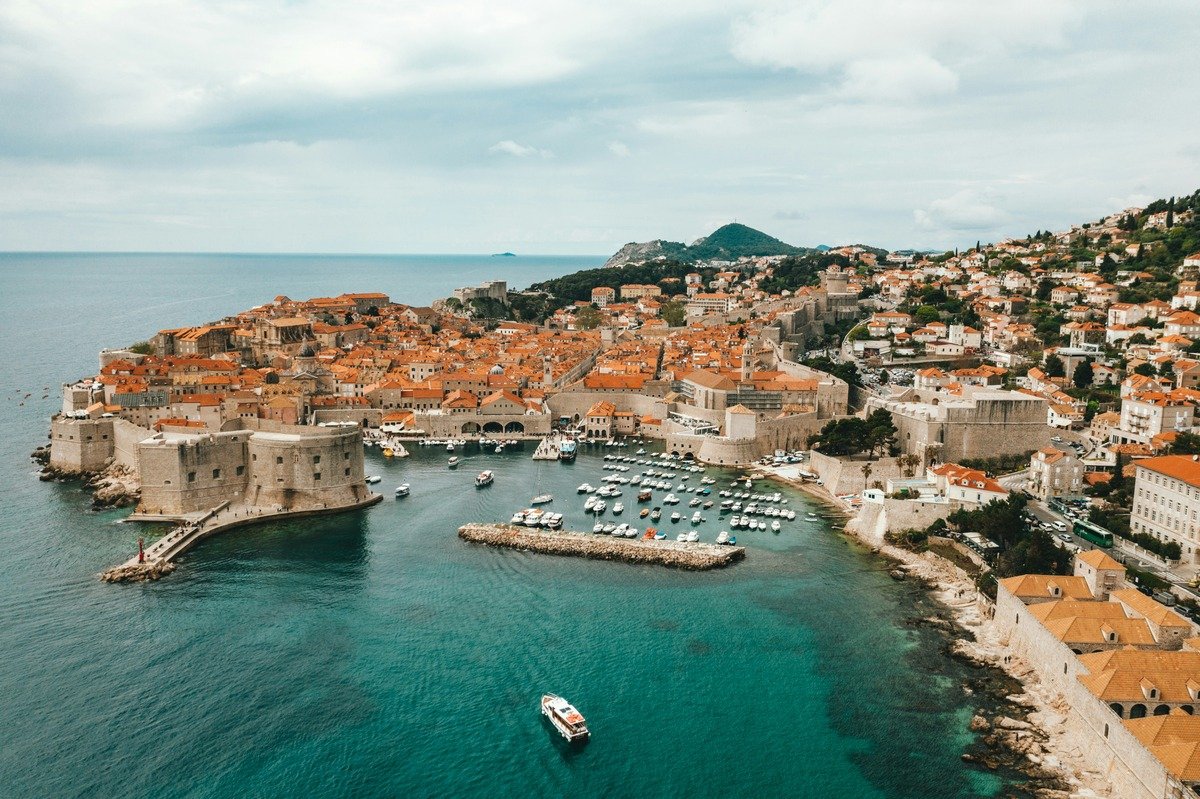
Dubrovnik's UNESCO World Heritage Old Town is extraordinary and genuinely crowded in summer, with cruise ships alone bringing thousands of visitors per day into a walled city designed for a fraction of that number. The scam risk here is exactly proportional to that density.
🚕 Taxi Overcharging at the Bus Station & Port
Drivers at Dubrovnik's bus station and cruise terminal approach passengers with flat rates far above the metered fare, sometimes quoting EUR 30-50 for journeys that should cost EUR 10-15. Croatian law allows drivers to set their own rates as long as a printed price list is visible in the vehicle, which means technically-legal overcharging is not illegal to the driver, only avoidable by the passenger.
Use Bolt or Uber, both available in Dubrovnik, which show a confirmed fare before you book. If you use a street taxi, check the rate card inside the vehicle before the journey starts and confirm the total fare explicitly. Pre-book transfers through your hotel or a licensed operator if arriving by cruise ship.
👷 Pickpocketing in the Old Town
The narrow lanes of Dubrovnik's Old Town and the summer-crowded Stradun create exactly the conditions that make pickpockets effective: dense crowds, lots of distraction, and visitors focused on cameras and views rather than their pockets. The UK's FCDO specifically names Dubrovnik's Old Town as a pickpocket zone.
Keep bags zipped and worn across the body, and use a money belt or hidden pocket for passports and cards. Keep your phone in a front pocket, particularly when stopping for photos on the Stradun.
🍼 Restaurant Bill Padding
Some restaurants add charges for bread, olive oil, or table cover that weren't mentioned when ordering. Bills for intoxicated patrons have been known to include items never ordered. Menus outside some tourist-zone restaurants quote a lower price than appears on the bill inside.
Check prices on the menu you're actually given at the table, not the board outside. Ask whether bread is included before it arrives. Request an itemized bill and check each line before paying. If an item is wrong, calmly ask for it to be removed before paying.
Split & Coastal City Scams
Split is the main ferry hub for the Dalmatian islands and one of Croatia's most visited cities. The ferry terminal is where the country's most-reported taxi scam concentrates, made worse by the frequency of late-night ferry arrivals when passengers are tired and less alert.
🚕 Split Ferry Terminal Taxi Overcharging
Touts meet passengers emerging from the ferry terminal gate, sometimes offering to carry luggage, and steer them to vehicles with laminated rate cards showing EUR 15-20 per kilometer, rates that produce fares of EUR 40-80 for journeys within Split. This is technically legal under Croatian taxi law, which permits any rate as long as a price list is displayed, and it was specifically covered in Croatian national media in August 2025 leading to the Transport Minister's announcement of proposed maximum fare limits. Late-night arrivals when Uber and Bolt may have fewer available cars are the highest-risk window.
Book a Bolt or Uber before disembarking so the car is ready when you arrive. Decline all unsolicited approaches from drivers in the terminal area. If using a street taxi, look inside the vehicle for the rate card before agreeing to anything.
🏰 Diocletian's Palace Bait-and-Switch Accommodation
Touts at ferry terminals and palace entrances offer private rooms or apartments at attractive nightly rates. The room exists but the price doesn't include a mandatory tourist tax, a linen fee, or an "early check-in" charge that appears only on arrival. Some hosts also misrepresent proximity to the palace walls or the apartment's condition relative to what was shown in photos on a phone.
Get the all-inclusive price confirmed in writing before agreeing, and book through platforms with payment protection rather than following a tout from the terminal. If a price seems surprisingly good for Split in summer, it usually is.
🌄 Informal Currency Exchange Tricks
Unofficial exchangers around Split's open-air Pazar market and the Riva waterfront offer attractive rates but use sleight of hand during the count, peeling off notes while handing over the stack and relying on tourists unfamiliar with euro denominations to not recount immediately.
Use licensed exchange offices or Croatian bank ATMs. Count any cash received before leaving the counter, in full view of the cashier, before putting it away.
🧺 Bait-and-Switch Souvenir Jewelry
Small shops selling coral jewelry and "traditional" crafts in the palace area show you one quality item, wrap it for you, and when you check later the package contains a cheaper substitute or a broken piece.
Open and inspect any purchase before leaving the shop. Never accept an item wrapped before you've seen it. Take photos of expensive items before they're packaged, and check the package matches before you pay.
Booking through GetYourGuide means a licensed operator and a fixed price agreed before you go, avoiding the fake boat tour listings that have been flagged by Croatian police in 2026.
Zagreb Scams
Zagreb has a meaningfully calmer tourist scam picture than the Dalmatian coast, and its Gornji Grad (Upper Town) and central areas are consistently safe. The scams that do exist are the same generic urban patterns found in most European capitals.
👷 Pickpocketing at Dolac Market & Trams
Pickpocketing in Zagreb concentrates at the Dolac market and around tram stops, the same crowded-transit pattern found across the region. The US State Department notes to pay close attention to trams specifically, which travel at high speeds through narrow streets and can be distracting in themselves.
Keep bags zipped and valuables in front pockets on trams and in markets. Be especially alert when trams are crowded during peak morning and evening hours.
🍷 Gentlemen's Club & Inflated Drink Bill Trap
Attractive strangers in Zagreb's nightlife areas invite visitors to specific clubs or bars with the promise of drinks and company. Bills arrive at massively inflated prices, sometimes for rounds that were never explicitly agreed, with security enforcing payment once presented.
Choose your own venue rather than following someone you just met. Check the drink price list before ordering, and be wary of unsolicited invitations from strangers to join them at a specific bar.
Taxis, Ferries & Transport
Croatia's coastal roads are beautiful but narrow and challenging in summer. A few transport-specific points are worth knowing beyond the taxi overcharging already covered above.
⛵ Fake or Non-Existent Boat Tours
Fake bookings for island-hopping and Blue Cave boat tours have been flagged by Croatian police in 2026, promoted through Facebook travel groups and generic tour aggregators, with no boat ever appearing on the tour date. Informal touts near ferry terminals also sell boat trips to unregistered operators who provide cut-rate, unsafe, or non-existent services.
Book island and cave tours through licensed operators with physical offices, or through established platforms with reviews, rather than through a Facebook group post or a stranger at the waterfront. Legitimate operators have fixed locations and consistent contact details.
🏓 The Pelješac Bridge & Former Bosnia Crossing
Not a scam, but a practical update worth knowing: the coastal road between Split and Dubrovnik used to pass through a strip of Bosnia-Herzegovina at Neum, requiring a border crossing and passport check. The Pelješac Bridge, which opened in July 2022, now lets you drive the full Split-Dubrovnik route without leaving Croatia. Many older travel guides still mention the Bosnia crossing; it's no longer necessary for most drivers using the main route.
Your passport is not required for the standard coastal drive from Split to Dubrovnik via the Pelješac Bridge. If your route does take you through Neum specifically, you will still need your passport for the border crossing.
🚗 Coastal Road Safety
Not a scam, but one of the real practical risks: Croatia's coastal roads are narrow, winding, and shared with fast local drivers and summer campervan traffic. Driving standards can be aggressive, particularly in peak season.
Drive slowly on coastal and island roads, allow overtaking, and be prepared for oncoming traffic on narrow single-track sections. Park only in designated areas in Old Town zones to avoid fines.
Money & ATM Scams
Croatia uses the Euro since January 2023. Cards are accepted at most hotels and restaurants, though cash is still preferred at markets, smaller shops, and some island businesses. The single most avoidable money trap is walking up to the nearest ATM without checking its brand name first.
🚴 Euronet ATM Fee Trap
Euronet ATMs (bright blue and orange, very visible in tourist zones throughout Split, Dubrovnik, and Hvar) charge significantly higher fees than Croatian bank ATMs and use a technique called dynamic currency conversion: they offer to charge your home-currency account directly instead of euros, which adds an additional, unfavorable conversion rate on top of their already elevated fees. The "helpful" phrasing of the screen makes accepting the worse option feel like the right choice.
Use ATMs at Croatian bank branches: Zagrebačka banka (ZBA), Privredna banka Zagreb (PBZ), Erste Bank, and Raiffeisenbank all have lower fees than Euronet. At any ATM, always select to pay in euros (the local currency) when asked, rather than your home currency. The Euronet machine will phrase this confusingly, but the correct answer is always to decline the conversion and pay in euros.
A Wise card or Revolut account lets you pay in euros at the real exchange rate wherever cards are accepted, reducing your exposure to Euronet ATMs and the currency-conversion trick. Both show instant notifications for any charge, useful for catching restaurant bill padding immediately.
Digital & Accommodation Fraud
🏠 Fake Accommodation Listings (Growing Problem, 2026)
Croatian police and consumer protection agencies issued warnings in May 2026 about a growing wave of fake accommodation listings targeting summer visitors. Scammers copy real photos from legitimate villas and apartments and repost them on unofficial websites or social media at attractive prices. Tourists who book discover on arrival that the property doesn't exist or is already occupied by guests who booked through official channels. High demand during peak season creates urgency that makes quick payment more likely.
Book through verified platforms with payment protection (Booking.com, Airbnb with verified hosts) rather than links shared on social media or offers from unofficial websites. Never pay via direct bank transfer to an individual listing. Verify the property exists using Google Maps Street View before paying a deposit, and treat any listing priced substantially below the Split or Dubrovnik average as a red flag.
💖 Romance Scams & Online Fraud
The US State Department's Croatia advisory specifically notes that scams are common in Croatia, including internet romance scams where someone posing as a US citizen in need of help asks for money. The Advisory also specifically cautions US citizens about real estate purchases in Croatia, recommending consulting a lawyer before signing any contracts.
Never send money to someone you have not met in person. If considering real estate purchase in Croatia, consult an independent qualified attorney before any contract and ensure you understand every part of the agreement.
🌐 Public WiFi Data Interception
Public WiFi networks in tourist hotspots carry the same general data-interception risk found anywhere in the world.
Use a local SIM or eSIM for banking and sensitive logins rather than public hotel or cafe WiFi.
An Airalo eSIM gives you local data from arrival, useful for Bolt and Uber fare checks before getting into any taxi, navigation on coastal roads, and staying connected on islands where WiFi is often the only alternative.
Universal Prevention Guide
Use Bolt Before Leaving the Ferry
Book your ride before disembarking. This single step eliminates the ferry terminal taxi scam, the most consistently reported tourist issue in Croatia.
Save Emergency Numbers Before You Go
112 covers police, fire, and ambulance nationwide. US Embassy Zagreb is +385-1-661-2200.
Avoid Euronet ATMs. Always.
Blue and orange, found everywhere tourists go. Use Zagrebačka banka, PBZ, Erste, or Raiffeisenbank ATMs instead, and always decline dynamic currency conversion at any machine.
Check the Menu Price Before You Order Anything
Ask if bread is charged separately before it arrives. Ask for an itemized bill and check each line. Dispute any unordered charge before paying.
Book Accommodation Through Protected Platforms
Croatian police issued specific warnings about fake listings in May 2026. Never pay via direct bank transfer for accommodation; use platforms with payment protection and published reviews.
Keep Bags Zipped in Old Town Crowds
Dubrovnik's Old Town and Split's Diocletian's Palace area are named pickpocket zones, particularly during peak summer cruise ship arrivals. Standard anti-theft habits cover most of the risk.
Solo Women Travelers
Croatia is generally well regarded for solo women travelers, with low violent crime and a tourism culture where visitors are broadly treated respectfully. Dubrovnik, Split, and Zagreb are consistently cited as comfortable for solo travel, and the coastal towns frequented by international visitors maintain a fairly progressive atmosphere during summer season.
The standard precautions that apply elsewhere apply here: don't leave drinks unattended in bars, use Bolt rather than accepting an uninvited taxi at night, and stay aware on the coastal water taxis late in the evening when parties from island venues can make transfers more chaotic. The gentlemen's club/drink trap documented in Zagreb is worth particular awareness for solo women, since attractive strangers inviting visitors to specific bars target this demographic specifically.
Driving Croatia's coastal roads solo is safe in terms of personal safety but demanding in terms of the roads themselves; narrow, winding, and fast in summer. Plan daylight arrival at unfamiliar island or coastal locations rather than navigating new territory after dark.
Reporting Scams in Croatia
If you are the victim of a scam or theft in Croatia, reporting it creates a record that supports insurance claims and card disputes. Croatian police have increased awareness around tourist scams in Dubrovnik and Split specifically, and English-language assistance is available in both cities.
Step-by-step: What to Do if You're Scammed
Croatia is Worth It. Book a Bolt at the Ferry Terminal, Dodge the Blue ATMs.
Most visitors to Croatia come away talking about the clarity of the Adriatic, the walled city of Dubrovnik at dusk, the silence of an island morning, and the food. The scams documented here are real, particularly the ferry terminal taxi problem in Split and the Euronet ATM trap that quietly adds EUR 5-15 to every cash withdrawal in tourist areas, but they're all manageable with a bit of preparation.
Book a Bolt before you disembark. Choose Croatian bank ATMs and decline the currency conversion option. Check every restaurant bill line by line. Book accommodation through protected platforms only. Four habits that cover the overwhelming majority of what goes wrong in Croatia and leave you free to concentrate on everything that makes it one of the Mediterranean's most compelling destinations.