
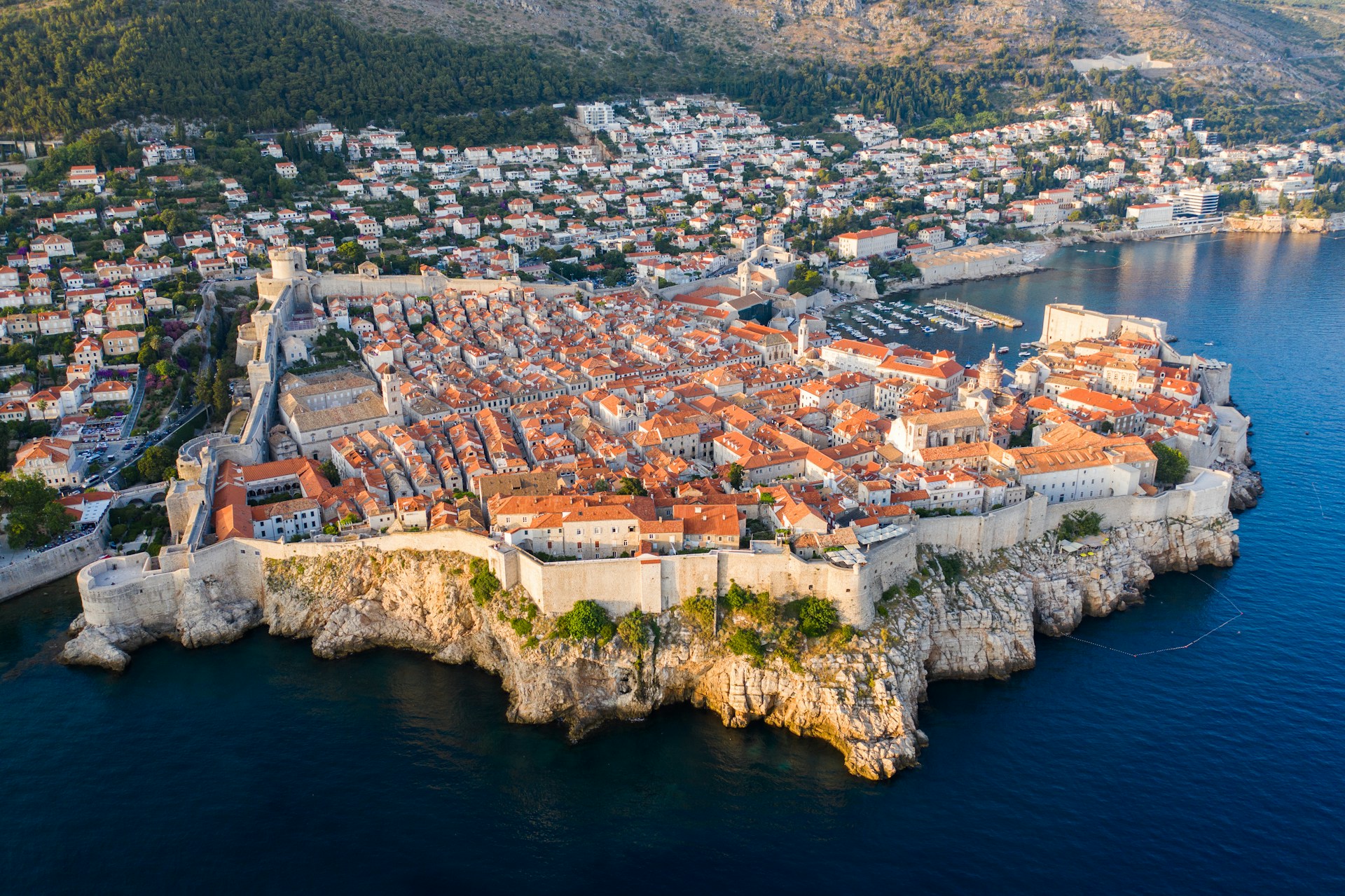
A walled city that earned its fame twice over
Dubrovnik's Old Town sits inside a complete, walkable circuit of medieval and Renaissance fortifications, limestone streets polished glass-smooth by seven centuries of foot traffic, and a harbor that once anchored an independent maritime republic wealthy and diplomatically skilled enough to survive between Venice and the Ottomans for over four hundred years. It is also, since the early 2010s, the most recognizable filming location in modern television, and the combination of genuine historical weight and mainstream fame has made it one of the most visited small cities in Europe relative to its size.
What that means in practice: the Old Town itself is walkable end to end in about fifteen minutes, small enough that peak-season crowding is intense and unmistakable, and prices, for hotels, city walls tickets and restaurant meals alike, run higher than almost anywhere else in Croatia. None of that erases what makes Dubrovnik worth the trip. It does mean timing your visit, and this guide is built around helping you do that.
The honest complications
Dubrovnik has one of the most severe tourist-to-resident ratios in Europe, and the city has responded with real limits: a cap of 11,200 simultaneous visitors inside the Old Town walls, and a "Respect the City" program limiting cruise ship arrivals to two vessels a day. City walls tickets have climbed sharply, running around €40 for a peak-season adult ticket in 2026, and from 2026 onward, walls and museum entry increasingly requires advance timed booking rather than walking up and buying on the spot. On a two-cruise-ship day in July or August, the Stradun between roughly 10am and 4pm is genuinely uncomfortable to walk through. Outside those windows, and especially outside July-August entirely, the same streets are a different, much better experience.
Five areas, one very small Old Town
Dubrovnik's Old Town is compact enough to see everything on foot; where you sleep is really a question of atmosphere versus price versus beach access, since nowhere in the city is more than a 20-minute bus ride from the walls.
Old Town (Grad)
Staying inside the walls means waking up in the postcard, a two-minute walk from the Stradun, the Rector's Palace and the harbor. It also means the highest prices in the city, no vehicle access at all (expect to carry luggage over cobblestones and stairs), and noise from bars and day-trippers until late. Book a specific address and confirm luggage-carrying distance before committing.
Pile
Just outside the Old Town's western Pile Gate, close to Fort Lovrijenac and the bus stops that serve the rest of the city. This is the practical first-timer's choice: full walking access to everything inside the walls at a real, if still not cheap, discount versus staying inside them.
Ploče
The eastern approach to the Old Town, near the port, Dubrovnik's main public beach (Banje) and the lower cable car station up to Mount Srđ. Home to the city's cluster of luxury waterfront hotels and some of the best Old Town views from outside the walls.
Lapad & Babin Kuk
A peninsula with its own small center, restaurants and Sunset Beach, well connected to the Old Town by frequent buses. Babin Kuk, the more secluded northwestern part of the peninsula, holds Dubrovnik's biggest concentration of large resort hotels, pools and kids' facilities. This is the base for travelers who want beach time and a quieter evening more than a five-minute walk to the Stradun.
Gruž
Dubrovnik's real, working harbor: the main bus station, the ferry terminal for islands and international routes, and the cheapest accommodation in the city, at the cost of a less atmospheric base and a bus ride to everything else.
From waterfront palaces to a three-room Old Town guesthouse
Dubrovnik is Croatia's most expensive city to sleep in, and the gap between shoulder-season and August rates is dramatic. These picks span the realistic range, from the port's luxury cluster to the Old Town's smallest, most personal option.
At the top of the market, Hilton Imperial Dubrovnik sits directly outside Pile Gate, the easiest luxury-hotel walk into the Old Town in the city, with an indoor pool that matters more than it sounds like it should after a hot day on the walls. On the eastern, Ploče side, the waterfront cluster around Hedera Estate and Hedera A14 puts you steps from Banje Beach and roughly a 13-minute walk from the walls, with sea views most Old Town hotels can't match.
Inside the walls, Roko House is the small-scale option worth knowing about: a stylish collection of just three rooms and three kitchenette apartments rather than a full hotel, genuinely inside the Old Town at a price that doesn't require a luxury budget. For beach-focused, family-oriented stays, the Babin Kuk resort cluster on the Lapad peninsula holds Dubrovnik's largest concentration of pools, kids' clubs and sports facilities, all a 15-20 minute bus ride from the Old Town.
At the budget end, Dubrovnik's hostel scene is smaller than Split's or Zagreb's but real: Old Town Hostel and Hostel & Rooms Ana, both genuinely inside the walls, and City Walls Hostel Old Town, all put you in the heart of things for a fraction of a hotel rate. Expect to pay noticeably more than the Croatian average for a dorm bed here, since even budget beds carry an Old Town premium.
A Michelin star on the walls, and a €10 seaside lunch two streets over
Dubrovnik's food scene spans a genuine Michelin-starred fine-dining room to family-run konobas that have fed the same neighborhood for decades. The tourist-menu traps concentrate right on the Stradun; walk one or two streets off it and both quality and price improve fast.
Restaurant 360
Dubrovnik's Michelin-starred room, set on a terrace built directly into the medieval walls above the Old Port with sweeping views of the harbor, the Old Town and St. John's Fortress. A serious tasting menu built around Croatian ingredients and technique; book well ahead, especially for a terrace table at sunset.
Marco Polo Restaurant
Set in a quiet traditional courtyard on the vaulted street Lučarica, in the heart of the Old Town, serving Dalmatian classics like black risotto and pašticada alongside more international plates, paired with Croatian wine.
Lucin Kantun & Trattoria Carmen
Lucin Kantun does exquisite small-plate tapas in a warm, informal setting; Trattoria Carmen leans into authentic Mediterranean cooking. Both sit well off the main Stradun crush and reward a short detour.
Bota Šare Oyster & Sushi Bar
An unusual but genuinely good pairing: fresh Adriatic oysters, often sourced from Ston's centuries-old beds an hour up the coast, alongside a proper sushi menu.
Poklisar
A family-run restaurant with a seaside terrace right beneath the City Walls, offering quick, friendly service, live music some evenings, and a solid, unpretentious Dalmatian seafood menu.
The walls first, then everything else
Dubrovnik rewards an early start more than almost any European city its size: the same walk that's magical at 8am is a shuffle through a crowd by noon in peak season. This chapter walks through the city roughly the way a good two or three days would.
The City Walls
The single best thing most visitors do here: a complete 2-kilometer circuit atop the medieval and Renaissance fortifications, taking 1.5 to 2 hours at an unhurried pace with photo stops. Three entry points exist, Pile Gate, Ploče Gate and near the Maritime Museum by Fort St. John, with Pile the most common starting point. Along the way: Bokar Fort and Puncjela Tower overlooking the kayaking harbor, the best views of Fort Lovrijenac across the water, and Minčeta Tower, the highest point in the Old Town, with a small cafe worth the stop. Tickets run around €40 for an adult in peak season (April-October), dropping to roughly €15 November through February; go right at opening, 8 or 9am, to beat both the heat and the crowds.
Cable car to Mount Srđ
A four-minute ride from just outside the walls up to the 412-meter summit of Mount Srđ, with a genuinely different, wide-angle view over the Old Town, the coastline and the islands than anything visible from ground level. Return tickets run roughly €27-30; the summit also holds a small fort-turned-museum on the 1991-92 siege of Dubrovnik.
Lokrum Island
A 15-minute ferry from the Old Port reaches this forested nature reserve, with a botanical garden, peacocks descended from a 19th-century Habsburg import, a saltwater lake locals call the Dead Sea, and a replica Iron Throne left over from Game of Thrones filming. The ferry ticket, around €30, covers both the crossing and the island's nature reserve entry; boats run every 15-30 minutes in high season from 9am to around 7pm.
Old Town landmarks
The Rector's Palace and Sponza Palace anchor the Republic of Ragusa's civic history; the Franciscan Monastery holds one of Europe's oldest continuously operating pharmacies, founded in 1317. War Photo Limited presents the 1991-92 siege and the wider Yugoslav wars through sober, unflinching photojournalism, a worthwhile counterweight to the postcard version of the city. For a drink with a view, Buža Bar perches on the cliffs just outside the walls, a genuine local institution and also, honestly, the site of most of the city's cliff-jumping injuries; watch your footing and don't jump without knowing the water depth and conditions.
Game of Thrones locations
Dubrovnik's Old Town and walls doubled as King's Landing for most of the show's run. Fort Lovrijenac served as the Red Keep's exterior and the tourney grounds; Minčeta Tower appears as the House of the Undying; and Fort Bokar and the seaside stretch of wall near it stand in for other King's Landing scenes. A dedicated walking tour connects the locations with behind-the-scenes context if you want more than the self-guided version.
One, two or three days, timed around the crowds
Two full days covers the Old Town and walls properly. A third day is best spent outside the city entirely, on the water or across a border.
- Early morning
City walls at opening. The full 2-kilometer circuit before the heat and the crowds arrive, starting from Pile Gate.
- Midday
Old Town landmarks. Rector's Palace, Sponza Palace, the Franciscan Monastery pharmacy, lunch off the Stradun.
- Afternoon
Cable car to Srđ. The wide-angle view over everything you just walked, plus the siege museum at the summit.
- Sunset
Buža Bar or the harbor. A drink on the cliffs, or a seaside dinner back inside the walls.
- Day 1
The one-day route above: walls at opening, Old Town landmarks, cable car, sunset drink.
- Day 2 morning
Lokrum Island. The early ferry from the Old Port, the botanical garden and the saltwater lake before day-trippers arrive.
- Day 2 afternoon
Banje Beach or Lapad. A genuine beach afternoon, either the Old Town's closest option or a bus out to Lapad's Sunset Beach.
- Day 2 evening
Restaurant 360 or Poklisar. A splurge dinner on the walls, or a lower-key seaside meal beneath them.
- Days 1-2
The two-day route above, at a slightly gentler pace.
- Day 3, option A
Kotor, Montenegro. A guided day trip to the Bay of Kotor and Perast, roughly 1.5-2 hours each way with a border crossing.
- Day 3, option B
Elaphiti Islands. A full-day boat trip to Lopud, Šipan and Koločep, swimming and village time without the border crossing.
Car-free inside the walls, a short shuttle from everywhere else
Dubrovnik Airport (DBV) sits about 20km south of the city. The official Platanus shuttle bus runs on a flight-linked schedule, €10 one-way or €15 for an open return valid 15 days, stopping near Ploče Gate and at the main Gruž bus station, a 30-40 minute ride. Local public bus lines 11, 27 and 38 also connect the airport to the center for €4-5, cheaper but less frequent and less convenient with luggage. A taxi or rideshare costs more but runs on your schedule rather than a shuttle timetable.
Inside the city, the Old Town is entirely pedestrian, no vehicles of any kind cross the gates, so getting around on foot is the only option once you're inside the walls. Local buses connect Pile, Ploče, Lapad, Babin Kuk and Gruž efficiently and cheaply; a single ticket costs around €2, cheaper bought in advance than from the driver.
Best time to visit and the cruise ship calendar
May-June and September-October are Dubrovnik's sweet spots: warm enough to swim, meaningfully fewer cruise-day crowds, and lower prices than peak summer. July and August are hot, heavily booked, and the peak of both leisure and cruise tourism at once.
Cruise ship days: Dubrovnik's "Respect the City" program limits arrivals to two cruise ships a day, but on the days two ships do call, the Old Town between roughly 10am and 4pm is dramatically busier than on a no-ship day. Several tour operators and local sites publish daily port-call schedules; checking one before booking your walls ticket or a big sightseeing day is worth the two minutes it takes.
Croatia's most expensive city, with real ways to soften it
Dubrovnik costs meaningfully more than Split, Zagreb or Istria, and the July-August premium on top of that is real. The single biggest lever is timing: the same hotel room or restaurant table can cost half as much in May or October as it does in August.
- Hostel dorm, Old Town premium included €25-40
- Market food and konoba lunches €15-25
- Walking plus one local bus pass
- Free beaches, Buža views, one paid sight
- 3-4 star hotel in Pile or Ploče €100-200
- Restaurant meals with wine €40-70
- City walls ticket, cable car, Lokrum
- A day trip to Kotor or the Elaphiti Islands
- Hilton Imperial or Ploče waterfront luxury
- Restaurant 360 tasting menu
- Private boat day to the Elaphiti Islands
- Peak-season August accommodation
Very safe, with a short, specific list to know
Dubrovnik is very safe by any standard measure; violent crime against tourists is rare, and the city is comfortable to walk at night, including the Old Town and Pile. The real, specific risks here are less about crime and more about heat, crowds and cliffs.
The things that actually catch visitors: pickpocketing, concentrated on the crowded Stradun and around the walls entrances on peak days, so keep bags closed and in front of you; sun and heat on the walls, which offer almost no shade across the full 2-kilometer circuit, so water, sunscreen and a hat matter more here than in most cities; and cliff jumping at Buža Bar, a real local tradition but also a genuine source of injuries most summers from misjudged jumps into unfamiliar water. Emergency number is the EU-standard 112 from any phone.
Two countries and an island archipelago, all within a day
Dubrovnik's position at Croatia's southern tip puts it within day-trip range of Montenegro and Bosnia and Herzegovina, plus its own quieter island group just offshore. Three trips are worth a day each.
Elaphiti Islands
Lopud, Šipan and Koločep, the closest inhabited islands to Dubrovnik, reachable on full-day group cruises that typically include lunch, swimming stops and time in each island's small harbor village. No border crossing, and noticeably quieter than the Old Town even in peak season.
Kotor & Perast, Montenegro
The Bay of Kotor is Montenegro's answer to the Dalmatian coast: a fjord-like bay, a walled Old Town of its own beneath a mountain fortress, and Perast's Our Lady of the Rocks, a tiny church on an artificial islet reachable by a short boat ride. Requires crossing into Montenegro, a non-Schengen country, so bring your passport for a genuine border stamp.
Mostar, Bosnia and Herzegovina
A longer day built around Stari Most, Mostar's 16th-century Ottoman stone bridge, rebuilt after being destroyed in the 1990s war, plus the old bazaar quarter around it. Many tours pair Mostar with the Kravica Waterfalls. Also a genuine, non-Schengen border crossing, worth confirming your travel insurance and any visa requirements cover before booking.
Dubrovnik FAQ
Is Dubrovnik safe for tourists?
Yes. Violent crime against tourists is rare; the main concerns are pickpocketing on the crowded Stradun, sun exposure on the shade-free city walls, and unofficial cliff-jumping injuries around Buža Bar. Standard city awareness covers nearly everything.
How many days do I need in Dubrovnik?
Two full days covers the Old Town, city walls and cable car well. A third day fits a day trip to the Elaphiti Islands, Kotor or Mostar and is worth adding if you have it.
How much does Dubrovnik cost per day?
Budget travellers manage on €70-100 a day outside peak season; mid-range runs €150-250. Dubrovnik is Croatia's most expensive city, and July-August prices climb well above these baselines.
When is the best time to visit Dubrovnik?
May-June and September-October: warm enough to swim, far fewer cruise-day crowds, and noticeably lower prices than July-August, which is hot, heavily booked and the peak of cruise ship arrivals.
Is it worth paying to walk the Dubrovnik city walls?
Yes, most visitors rate it the single best thing they do in the city. It isn't cheap, around €40 for a peak-season adult ticket, but the 2-kilometre circuit is the clearest way to see the Old Town's layout, the sea and Fort Lovrijenac at once. Go at opening time to beat both heat and crowds.
How do I get from Dubrovnik Airport to the Old Town?
The Platanus shuttle bus runs on a flight-linked schedule for €10 one-way or €15 return, stopping near Ploče Gate and at the main bus station. Local bus lines 11, 27 and 38 are cheaper (€4-5) but less frequent and require more planning.
What is the best area to stay in Dubrovnik?
Pile for the easiest walk into the Old Town at a slightly lower price than inside the walls. Lapad or Babin Kuk for beaches, more space and a 15-20 minute bus ride in. The Old Town itself for atmosphere, at the highest prices and with the most noise.
Is Dubrovnik as crowded as people say?
On cruise ship days in July and August, yes, genuinely. The city now caps simultaneous Old Town visitors at 11,200 and limits cruise arrivals to two ships a day. Visiting in shoulder season or timing your walls visit for early morning avoids most of it.
Can I visit Montenegro or Bosnia from Dubrovnik in a day?
Yes, both are popular day trips. Kotor and Perast in Montenegro are about 1.5-2 hours each way; Mostar in Bosnia and Herzegovina is a longer 10-12 hour day. Both involve a real border crossing since neither country is in Schengen.
Is Dubrovnik connected to Game of Thrones?
Yes, extensively. The Old Town and walls doubled as King's Landing for most of the show's run: Fort Lovrijenac appears as the Red Keep's exterior and Minčeta Tower as the House of the Undying, among many other locations around the city.
What Stays With You
Dubrovnik at 8am, walls to yourself, the Adriatic still flat and silver before the first tour groups arrive, is one of the genuinely great early mornings available anywhere in Europe. The same city at 1pm on a two-cruise-ship August day is a different, harder experience, and pretending otherwise would be doing you no favors. The trick isn't avoiding Dubrovnik. It's timing it: early starts, shoulder-season dates if you have the flexibility, and one afternoon spent on a boat to Lokrum or the Elaphiti Islands instead of fighting the Stradun at its worst.
Walk the walls once at sunrise and once, if you can manage a second trip up, at golden hour from Mount Srđ. Between the two, you'll understand both why the Republic of Ragusa's motto was "Libertas," and why nobody who built these walls ever imagined a cruise ship.