
What You're Actually Getting Into
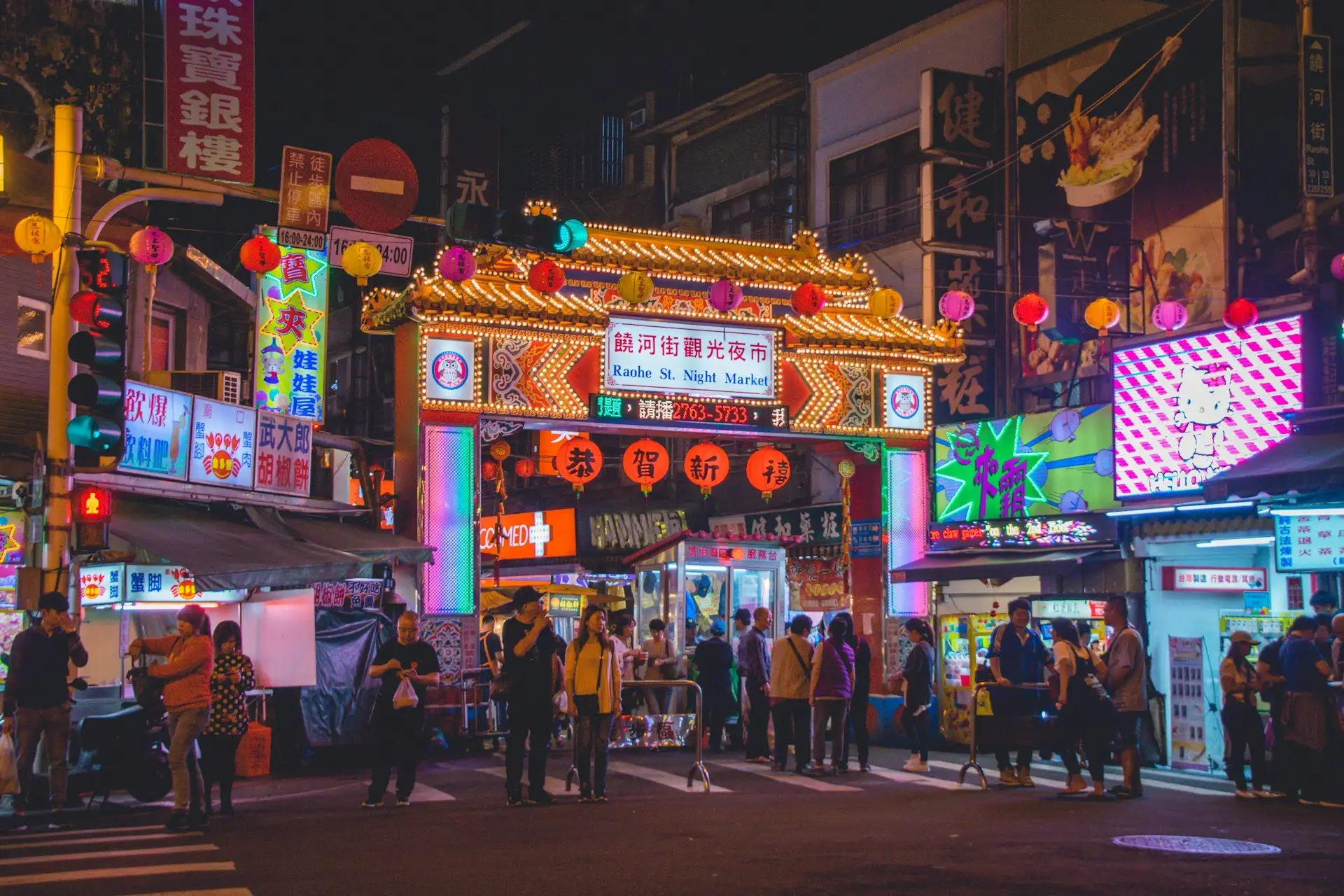
Taiwan is the island that keeps getting recommended in a whisper: travelers who've been go quiet and slightly evangelical about it, then admit they almost skipped it for Japan or Thailand. The island is roughly the size of Maryland, and in a single week you can walk a night market in a capital of glass towers, soak in a hot spring in a converted Japanese-era bathhouse, and stand under marble cliffs a river cut through in a few million years. Taiwan governs itself, has its own currency, military, elections and passport, and the political question of its status with mainland China, genuinely contested and worth understanding before you go, has essentially no bearing on how safe, easy or welcoming it is to visit.
What surprises most first-time visitors is the ease of it. The MRT in Taipei is one of the best metro systems in Asia: clean, on time, English-signed throughout. Convenience stores (7-Eleven and FamilyMart, on nearly every block) function as informal utility hubs, paying bills, buying concert tickets, printing documents. And the hospitality culture, less performative than Japan's, warmer and more spontaneous, tends to produce the kind of small, unplanned kindnesses that end up in every visitor's stories: a shop owner walking you two blocks to find an address, a stranger insisting you try their favorite stall.
The honest complications
Taiwan sits on an active seismic zone and in the direct path of Pacific typhoons: minor earthquakes are routine and mostly unnoticed, but the April 2024 Hualien earthquake and the typhoons that followed did real, lasting damage to Taroko Gorge's trail network, some of which is still being repaired in 2026. Summer (June-September) is hot, humid and typhoon-prone, and a storm can cancel flights and close mountain roads with a day or two of notice. English drops off fast outside Taipei and the other big cities, so a translation app earns its keep in smaller towns. And while Taiwan is overwhelmingly safe and easy, it is not undiscovered: Taipei's best-known sights get genuinely crowded, just less so than their equivalents in Tokyo or Seoul.
A History Worth Knowing
Taiwan's indigenous Austronesian peoples arrived thousands of years before any Chinese, Dutch or Japanese settlement, and their linguistic and genetic heritage is now understood to be the root of the entire Austronesian language family that spread across the Pacific. What follows is a short version of a history that visitors will see referenced constantly, on museum placards, in Beitou's Japanese-era bathhouses, at Tainan's centuries-old temples.
- Pre-1600s
Indigenous Taiwan. Austronesian peoples inhabit the island for millennia before significant outside contact; today's officially recognized indigenous tribes retain distinct languages and traditions, most visibly in the east and mountains.
- 1624–1662
Dutch and Spanish colonization. The Dutch East India Company establishes a trading base in the south (modern Tainan); a Spanish outpost briefly holds the north. Both are eventually expelled.
- 1895–1945
Japanese rule. Ceded by Qing China after the First Sino-Japanese War. Japan builds railways, schools and much of Taipei's early infrastructure; the era's architecture is still visible in Beitou and elsewhere.
- 1949
The Republic of China retreats to Taiwan. After losing the Chinese Civil War, Chiang Kai-shek's Nationalist government relocates to Taiwan, which has governed itself separately from the mainland ever since.
- 1987
Martial law ends. After 38 years, one of the longest periods of martial law in modern history, Taiwan begins a rapid transition to multi-party democracy.
- 1996–present
Direct presidential elections and today. Taiwan holds its first direct presidential election in 1996 and has since built a robust democracy and a globally significant semiconductor economy, while its political status relative to mainland China remains unresolved and closely watched.
Read more: indigenous heritage, the Japanese era and the cross-strait question
Taiwan's officially recognized indigenous peoples, including the Amis, Atayal, Paiwan and Bunun among sixteen recognized groups, make up roughly 2 percent of the population but a much larger share of the island's cultural distinctiveness, especially in Hualien and Taitung counties on the east coast. Taiwan is considered by many linguists to be the likely homeland of the entire Austronesian language family, which stretches from Madagascar to Easter Island.
The 50 years of Japanese colonial rule (1895-1945) left a deep architectural and administrative legacy: the red-brick bathhouses of Beitou, sections of the rail network, and a bureaucratic and educational system that shaped modern Taiwan. Attitudes toward this period are complicated and vary by generation, but its physical traces are everywhere and openly preserved rather than erased.
The cross-strait question, briefly and factually: Taiwan (formally the Republic of China) has governed itself independently since 1949, with its own constitution, military, currency and elected government. The People's Republic of China claims Taiwan as a province and has not ruled out the use of force to bring it under Beijing's control; Taiwan's government and the large majority of its population reject this claim. Most countries, including the US, maintain unofficial relations with Taiwan while officially recognizing Beijing, a deliberately ambiguous arrangement that has held for decades. None of this affects a visitor's day-to-day experience: Taiwan is self-governed, issues its own visas, and functions as a fully independent destination for travel purposes.
Top Destinations
Taiwan divides naturally into the capital and north, the dramatic east coast, the mountainous interior, and the warmer, more laid-back south. The island's High Speed Rail (THSR) connects the western cities in under two hours end to end, which makes combining regions easier than the map suggests.
Taipei, the obvious base
Taiwan's capital is the near-universal first stop: the sole major international gateway, the best transit network, and the widest range of hotels, food and day trips of anywhere on the island. It gets its own full city guide, since three days here barely scratches the surface: Taipei 101, the National Palace Museum, Ximending's neon streets, Longshan Temple, and the Beitou hot springs are the headline stops, and Yongkang Street alone justifies a dedicated afternoon of eating.
Taroko Gorge
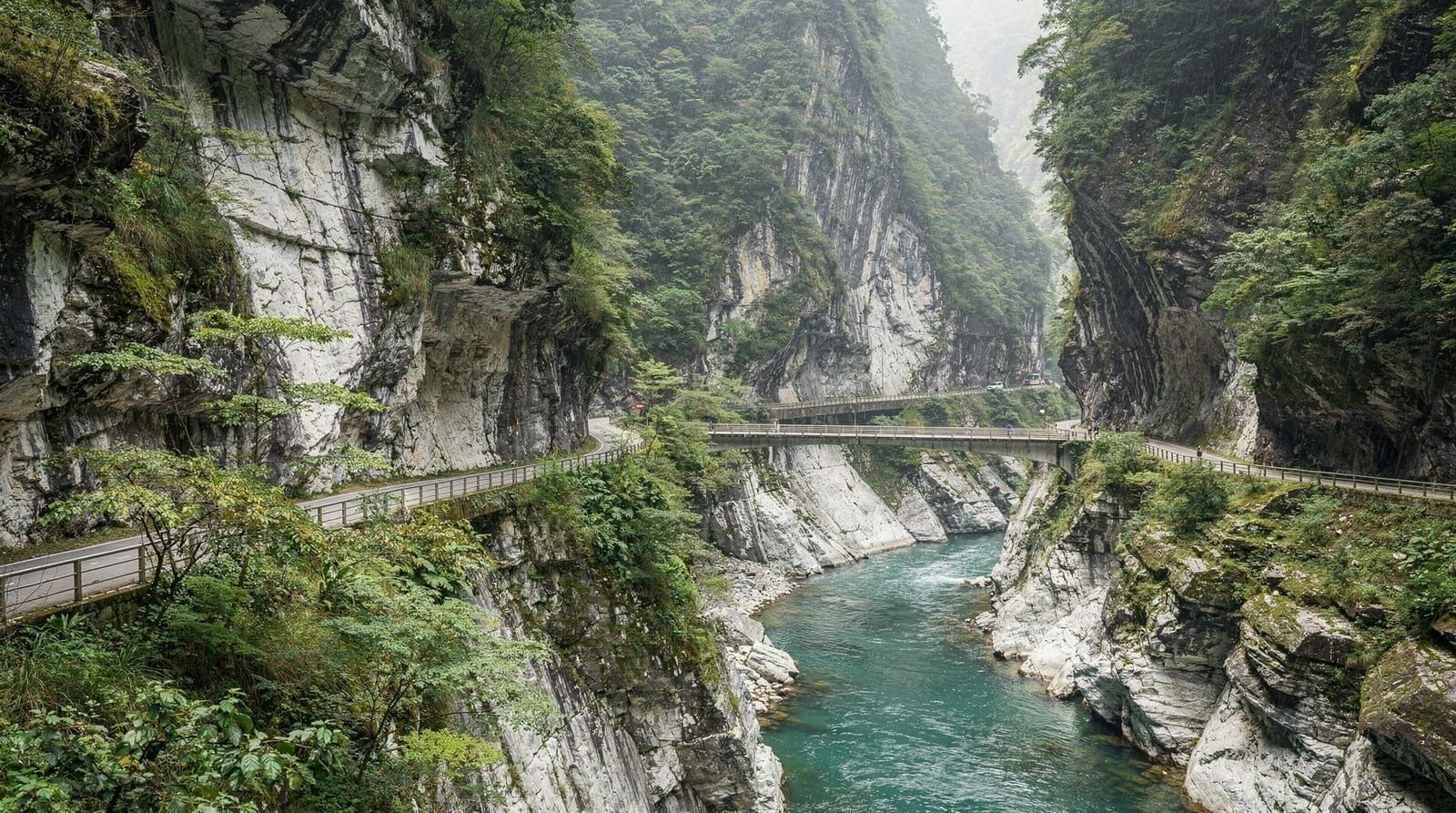
A marble canyon cut by the Liwu River near Hualien, on Taiwan's dramatic, sparsely populated east coast, and one of the most photographed landscapes in Asia. The April 2024 Hualien earthquake and a run of subsequent typhoons badly damaged the trail and road network; Taroko National Park announced fuller reopening in April 2026, but some trails, including the Shakadang Trail and the Tunnel of Nine Turns, remain closed long-term for repairs, and road access through parts of the gorge runs on timed release windows rather than free flow. Confirm current trail and road status before you go: the Taroko Terrace Trail, Tiansiang Recreational Area and Baiyang Trail were all open as of this writing. Reach Hualien by express train from Taipei Main Station (about 2 hours), then taxi or shuttle bus roughly 25 minutes to the gorge entrance.
Sun Moon Lake
Taiwan's largest lake, in the mountains of Nantou County, ringed by cycling paths rated among the world's best by international cycling media, a cable car (ropeway) up to Formosan Aboriginal Culture Village, and the lakeside Wenwu and Xuanzang temples. Quieter and gentler than the mountains further south, and an easy add-on to an Alishan trip.
Alishan
A high-altitude national scenic area famous for its narrow-gauge forest railway, built by the Japanese to log the mountain's cypress trees and now run largely for the sunrise crowds who ride it up before dawn to watch the sea of clouds break over the peaks. Cool, misty, and a genuine change of pace from the coast and cities.
Tainan
Taiwan's oldest city and former capital, founded by Dutch traders in the 1620s, with more historic temples than anywhere else on the island and a street food reputation that rivals Taipei's night markets on a smaller, more concentrated scale. A slower, more traditional counterpoint to the capital.
Kaohsiung
Taiwan's second city and main southern port, reached from Taipei in 1.5-2 hours on the High Speed Rail. Once industrial and overlooked, it has reinvented its harbourfront around the Pier-2 Art Center and the Love River promenade, with a slower, less crowded pace than Taipei and a genuinely different urban feel.
Culture & Etiquette
Taiwanese culture blends indigenous Austronesian roots, centuries of Chinese settlement, fifty years of Japanese colonial administration, and a fast, distinctly Taiwanese modern identity shaped by decades of democracy the mainland never had. The result is warm, informal and unusually easygoing for East Asia: strangers help without being asked, night markets are genuinely social spaces, and the standard of public courtesy, queueing, quiet on transit, is high without feeling rigid.
Do
- Take off your shoes indoors. At homes, some guesthouses and traditional restaurants with tatami-style seating, shoes come off at the door; look for a shoe rack.
- Use two hands for money and business cards. A small formality that reads as genuine respect, especially with older people.
- Queue properly on the MRT. Taipei's platforms have marked lines for boarding; standing to the right on escalators is standard.
- Try convenience store culture. 7-Eleven and FamilyMart aren't just for snacks: pay bills, buy event tickets, use the ATM, and grab genuinely decent hot food.
- Learn a few words. Xièxiè (thank you) and nǐ hǎo (hello) go a long way, even in English-heavy Taipei.
Don't
- Stick chopsticks upright in a rice bowl. It resembles funeral incense and is considered bad luck; rest them on the provided holder instead.
- Bring up cross-strait politics casually. Views on Taiwan's status with mainland China are personal and varied; it's a real topic, not a small-talk one with strangers.
- Expect tipping. It isn't customary; a service charge is sometimes already added at nicer restaurants, and rounding up is appreciated but not expected.
- Be loud on public transit. Phone calls and eating are both frowned upon on the MRT; Taiwanese commuters keep it notably quiet.
- Assume everyone speaks English outside Taipei. It drops off quickly in smaller towns; a translation app is genuinely useful.
Deeper culture: temples, night markets and indigenous heritage
Temple culture. Taiwan practices a syncretic blend of Buddhism, Taoism and folk religion, often within the same temple complex. Visitors are welcome to look around respectfully; dress modestly, keep voices low near worshippers, and ask before photographing people in prayer.
Night market culture. More than a food destination, night markets function as informal town squares: families, students and elderly regulars alike treat them as a nightly social ritual rather than a tourist activity, which is part of why they still feel authentic despite their popularity with visitors.
Indigenous heritage. Taiwan's sixteen officially recognized indigenous tribes, concentrated in the mountains and on the east coast around Hualien and Taitung, maintain distinct languages, festivals and craft traditions. Cultural centers and village visits, arranged respectfully through local operators, are a meaningful way to engage beyond the standard circuit.
Food & Drink
Taiwanese food draws on Fujianese, Hakka, Japanese and indigenous influences, and the island's night market culture means excellent food is cheap, everywhere and eaten standing up. Taipei's food scene gets its own detailed chapter in the city guide; this is the island-wide shortlist.
Xiaolongbao ~NT$250/12
Soup dumplings, Taiwan's most internationally famous dish thanks to Din Tai Fung, whose original Taipei location still sets the standard. Delicate skins, a mouthful of hot broth inside each one.
Beef Noodle Soup NT$120-200
Considered Taiwan's unofficial national dish: slow-braised beef and a rich broth, either clear or spiced with soy and chili, over hand-pulled noodles. Every city has a beloved local shop.
Bubble Tea NT$40-70
Invented in Taichung in the 1980s and now a global phenomenon; the original is still better here than the export version, with fresher tapioca pearls and less sugar-forward tea.
Oyster Omelet NT$60-100
A night market staple: fresh oysters, egg and a starchy batter fried to a crisp-chewy texture, topped with a sweet-savory sauce. A Shilin and Raohe night market classic.
Stinky Tofu NT$50-80
Fermented tofu, deep-fried or braised, with a smell that precedes it by a block and a flavor most visitors end up liking more than they expected. A genuine rite of passage.
Gua Bao NT$50-70
Braised pork belly, pickled mustard greens, cilantro and crushed peanuts in a steamed folded bun, sometimes called the Taiwanese hamburger. Rich, sweet and salty in one bite.
When to Go & Itineraries
October to December and March to April are Taiwan's best months: cooler, drier, and outside the worst of typhoon season. Summer (June-September) is hot, humid and the highest-risk window for typhoons, which can disrupt flights and close mountain roads with little notice; winter is mild in the lowlands but genuinely cold and wet in the mountains. Lunar New Year (dates shift each year) sees mass domestic travel and many small businesses close for several days, worth planning around rather than into.
All four seasons compared, with temperatures
| Season | Verdict | Temps (Taipei) | Notes |
|---|---|---|---|
| Oct-Dec & Mar-Apr | Best | 18-26°C | Cooler, drier, outside peak typhoon season |
| Jun-Sep | Caution | 28-35°C, humid | Typhoon season; flights and mountain roads can be disrupted |
| Jan-Feb | Good, cool | 12-18°C, damp | Lunar New Year crowds and closures on shifting dates |
| May | Good | 22-28°C | Plum rain season brings periodic heavy showers |
Alishan and the central mountains run noticeably cooler than the lowland cities year-round; pack a layer even in summer if you're heading up.
Itineraries
A week covers Taipei plus one other region well. Two weeks lets you combine the east coast and the central mountains, or add the south. The High Speed Rail makes longer loops realistic even on a single trip.
- Days 1–3
Taipei. Taipei 101, the National Palace Museum, Ximending, Longshan Temple, Beitou hot springs, and a night market crawl.
- Day 4
Jiufen & Shifen. Full-day trip via Ruifang: hillside teahouses and lantern-lit alleys in Jiufen, sky lanterns and the waterfall in Shifen.
- Days 5–7
Taroko Gorge. Express train to Hualien, two nights near the park to allow flexibility around road access windows, marble canyon trails, back to Taipei.
- Days 1–3
Taipei, as above, at a fuller pace including Yongkang Street and Yangmingshan National Park.
- Days 4–6
Taroko Gorge & Hualien. The gorge, plus the east coast's slower pace and indigenous cultural sites around Hualien.
- Days 7–9
Sun Moon Lake & Alishan. THSR to Taichung, transfer to Sun Moon Lake, then up to Alishan for the forest railway and sunrise.
- Days 10–12
Tainan. THSR south; temples, historic sites and the country's best-regarded street food.
- Days 13–14
Kaohsiung. Pier-2 Art Center, the Love River, and a slower final stretch before flying home or back to Taipei.
- Days 1–4
Taipei extended. Full city guide pace plus a second day trip, Wulai hot springs or Yehliu Geopark on the north coast.
- Days 5–8
East coast extended. Taroko Gorge, plus Taitung and the slower, indigenous-heritage-rich stretch of coast further south.
- Days 9–12
Central mountains. Sun Moon Lake, Alishan, and a slower pace through Chiayi and Taichung.
- Days 13–17
The south. Tainan, Kaohsiung, and a side trip to the Kenting beaches at Taiwan's southern tip.
- Days 18–21
Return to Taipei via the west coast, with time built in for a second Taroko visit if the first was weather-affected, or an outlying island like Penghu.
Getting there & around
Taoyuan International Airport (TPE) is the main international gateway, about 40km from central Taipei; Taipei Songshan Airport (TSA), closer to downtown, handles mainly regional routes to Japan and China. The Airport MRT runs from Taoyuan directly to Taipei Main Station in roughly 35-50 minutes for about NT$150. Within cities, get an EasyCard (NT$100 at any MRT station or convenience store, then load credit): it covers the MRT, buses and even some convenience store purchases nationwide, and MRT fares start around NT$20. Between cities, the High Speed Rail (THSR) covers Taipei to Kaohsiung in 1.5-2 hours, while the slower Taiwan Railway (TRA) reaches the east coast and smaller towns the THSR doesn't.
All transport options with prices
| Option | Price | Notes |
|---|---|---|
| Airport MRT (TPE to Taipei) | ~NT$150 | 35-50 mins, direct to Taipei Main Station |
| Taipei MRT | NT$20+ | Fares scale with distance; EasyCard required or pay per ride |
| High Speed Rail (Taipei-Kaohsiung) | ~NT$1,490 standard | 1.5-2 hrs; book ahead on weekends and holidays |
| TRA express (Taipei-Hualien) | ~NT$440-500 | ~2 hrs; the standard route to Taroko Gorge |
| Domestic flights | Varies | Mainly useful for outlying islands like Penghu and Kinmen |
Prices reflect August 2026 research and drift over time. Treat them as a planning baseline, not a quote.
Budget Planning
Taiwan is roughly half the cost of Tokyo, Singapore or Hong Kong for comparable quality, and food and local transport are especially cheap. Accommodation and shopping sit closer to regional mid-range pricing.
- Hostel dorm NT$500-900
- Night market meals NT$100-200
- MRT and buses via EasyCard
- Free temples and viewpoints
- 3-4 star hotel NT$2,500-5,000
- Restaurant meals NT$300-600
- THSR travel between cities
- Paid attractions and one tour
- 5-star hotels like the Grand Hyatt Taipei
- Fine dining and tasting menus
- Private drivers and guided tours
- Hot spring resort stays
Quick reference prices: coffee, MRT, entry fees
| Bubble tea | NT$40-70 |
| Coffee (cafe) | NT$100-150 |
| Night market meal | NT$100-200 |
| Beef noodle soup | NT$120-200 |
| Taipei MRT ride | NT$20+ |
| Taipei 101 observatory | ~NT$600 |
| National Palace Museum | NT$350 |
| Hostel dorm bed | NT$500-900/night |
| THSR Taipei-Kaohsiung | ~NT$1,490 |
Prices reflect August 2026 research and drift over time. Treat them as a planning baseline, not a quote.
Visa & Entry
Taiwan has one of the most permissive visa regimes in Asia: citizens of the US, UK, EU, Canada, Australia, New Zealand and more than 160 other countries can enter visa-free for up to 90 days. Since 1 October 2025, every visitor, visa-free or not, must also complete the free Taiwan Online Immigration Arrival Card (TWAC) within 3 days before arrival; airlines can deny boarding without it. Rules do change, so the Bureau of Consular Affairs is the authoritative source, not third-party sites that charge for something that's free for most nationalities.
✓ Valid passport
At least 6 months validity from date of entry. Keep a digital copy separate from the original.
✓ Taiwan Online Arrival Card (TWAC)
Mandatory for all visitors since 1 October 2025. Free, submitted online within 3 days before arrival.
✓ Return/onward ticket
May be requested at check-in or immigration; standard for visa-free entry.
✓ 90 days visa-free
For US, UK, EU, Canada, Australia, New Zealand and 160+ other nationalities. Extensions are not typically available; plan your stay within the window.
| Taiwan | Japan | |
|---|---|---|
| Daily budget | NT$1,400-2,000 gets you far; roughly half the cost of Tokyo | Noticeably pricier for accommodation and dining, even with a weaker yen |
| Crowds | Far fewer international tourists at major sights | Heavily visited; major cities and icons can feel overwhelmed |
| Food | Night market culture, cheap and social | More refined dining culture, higher average cost |
| Nature | Compact, dramatic: gorges, mountains and coast in one week | Vast and varied, but requires more time and distance to cover |
| Transport | THSR is fast and notably cheaper than Japan's Shinkansen | The most extensive and reliable rail network in the world |
Safety, Solo Women & Family
Taiwan is one of the safest destinations in Asia. The US State Department rates it Level 1, Exercise Normal Precautions, its lowest advisory tier. Violent crime against visitors is rare, cities are safe to walk at night including for solo women, and the country's real risks are natural: earthquakes, typhoons and mountain weather, not crime.
Earthquakes
Taiwan sits on an active seismic zone; minor tremors are routine and rarely felt as more than a brief sway. Buildings are built to strict seismic codes. Familiarize yourself with basic drop-cover-hold guidance.
Typhoons
Peak season is June to September. Flights, ferries and mountain roads can close with a day or two of notice; check forecasts if traveling in this window and build flexibility into your itinerary.
Petty theft
Rare even by regional standards, but standard awareness at night markets and on crowded transit is still sensible. Scooters are the more common hazard for pedestrians in cities.
One more thing worth knowing: scooter traffic
Scooters are the dominant form of transport in Taiwanese cities and move in patterns that take visitors a day or two to read: look both ways even on one-way streets, and don't assume a scooter will stop at a crossing just because you have right of way. This is a far more relevant everyday risk than crime.
Solo women travelers
Taiwan rates well for solo women travelers: low crime, a reliable and safe late-night MRT and bus network in Taipei, and a well-established hostel and night-market culture that makes meeting other travelers straightforward. Standard city awareness applies, and the biggest practical consideration is the same as for everyone: watch for scooters at crossings, not people.
Emergency numbers
Healthcare and family travel
Taiwan's healthcare system is high-standard and affordable even for visitors paying out of pocket; hospitals in Taipei have English-speaking staff, and travel insurance is still recommended for anything beyond a minor visit. Taiwan is genuinely easy with children: night markets are family-friendly and low-stress, the MRT is stroller-accessible, and convenience stores solve most minor emergencies (diapers, snacks, basic medicine) at any hour.
Taiwan FAQ
Is Taiwan safe to visit?
Yes, very. The US State Department rates Taiwan Level 1, Exercise Normal Precautions, its lowest risk tier. Violent crime against visitors is rare; the real risks are natural ones, earthquakes, typhoons and mountain weather, not crime.
Do I need a visa for Taiwan?
Citizens of the US, UK, EU, Canada, Australia, New Zealand and over 160 other countries can enter visa-free for up to 90 days. Since 1 October 2025 everyone must also complete the free Taiwan Online Immigration Arrival Card (TWAC) within 3 days of arrival.
How many days do you need in Taiwan?
A week covers Taipei plus one region well, either the east coast (Taroko Gorge) or the interior (Sun Moon Lake and Alishan). Two weeks lets you do both, plus Kaohsiung or Tainan in the south.
What is the best time to visit Taiwan?
October to December and March to April are best: cooler, drier and outside typhoon season. Avoid July to September if possible, peak typhoon season, and book well ahead if your trip lands on Lunar New Year.
Is Taroko Gorge open in 2026?
Mostly, yes. Taroko National Park announced fuller reopening in April 2026 after the 2024 Hualien earthquake and repeated typhoon damage, but a handful of trails including Shakadang and the Tunnel of Nine Turns remain closed long-term, and road access runs on timed release windows. Check current status before you go.
How much does Taiwan cost per day?
Budget travelers manage on NT$1,400-2,000 a day (about US$45-65) with hostel dorms, night market food and the MRT. Mid-range runs higher; Taiwan is roughly half the cost of Tokyo, Singapore or Hong Kong for comparable quality.
Is Taiwan part of China?
Taiwan has governed itself separately since 1949 with its own government, currency, military and passport. The People's Republic of China claims Taiwan as part of its territory; Taiwan's government disputes this. The political status is genuinely contested, but it does not affect entry, safety or daily travel for visitors.
What language is spoken in Taiwan?
Mandarin Chinese is the official language, alongside Taiwanese Hokkien, Hakka and several Austronesian indigenous languages. English is widely understood in Taipei, at hotels and on transit signage; less so at small local restaurants.
Is Taiwan cheaper than Japan?
Yes, especially for food and local transport: MRT fares start around NT$20 versus roughly double for the Tokyo subway. Taiwan also draws far fewer international tourists, so popular sites feel noticeably less crowded than Japan's.
How do I get from Taoyuan Airport to Taipei?
The Airport MRT runs directly from Taoyuan International Airport to Taipei Main Station in roughly 35-50 minutes for about NT$150 with an EasyCard. Taxis and airport buses are the other options, both slower in traffic and pricier.
Is Taiwan good for solo female travelers?
Yes, it's one of the easier countries in Asia for solo women: low crime, reliable late-night transit in Taipei, and a well-established hostel and night-market culture that makes meeting other travelers easy.
What Stays With You
Every visitor to Taiwan seems to arrive expecting a stopover and leaves planning a longer trip. It's the ease of the place that does it: a metro that runs like clockwork, a convenience store on every corner that solves whatever small problem you have, a night market that turns dinner into an hour of wandering and small decisions. None of it is trying especially hard to impress you, which somehow makes it more memorable than places that are.
Go before the rest of the world catches up to what a small, quietly confident island 180 kilometers off the coast of China has been doing right for decades.