
What You're Actually Getting Into
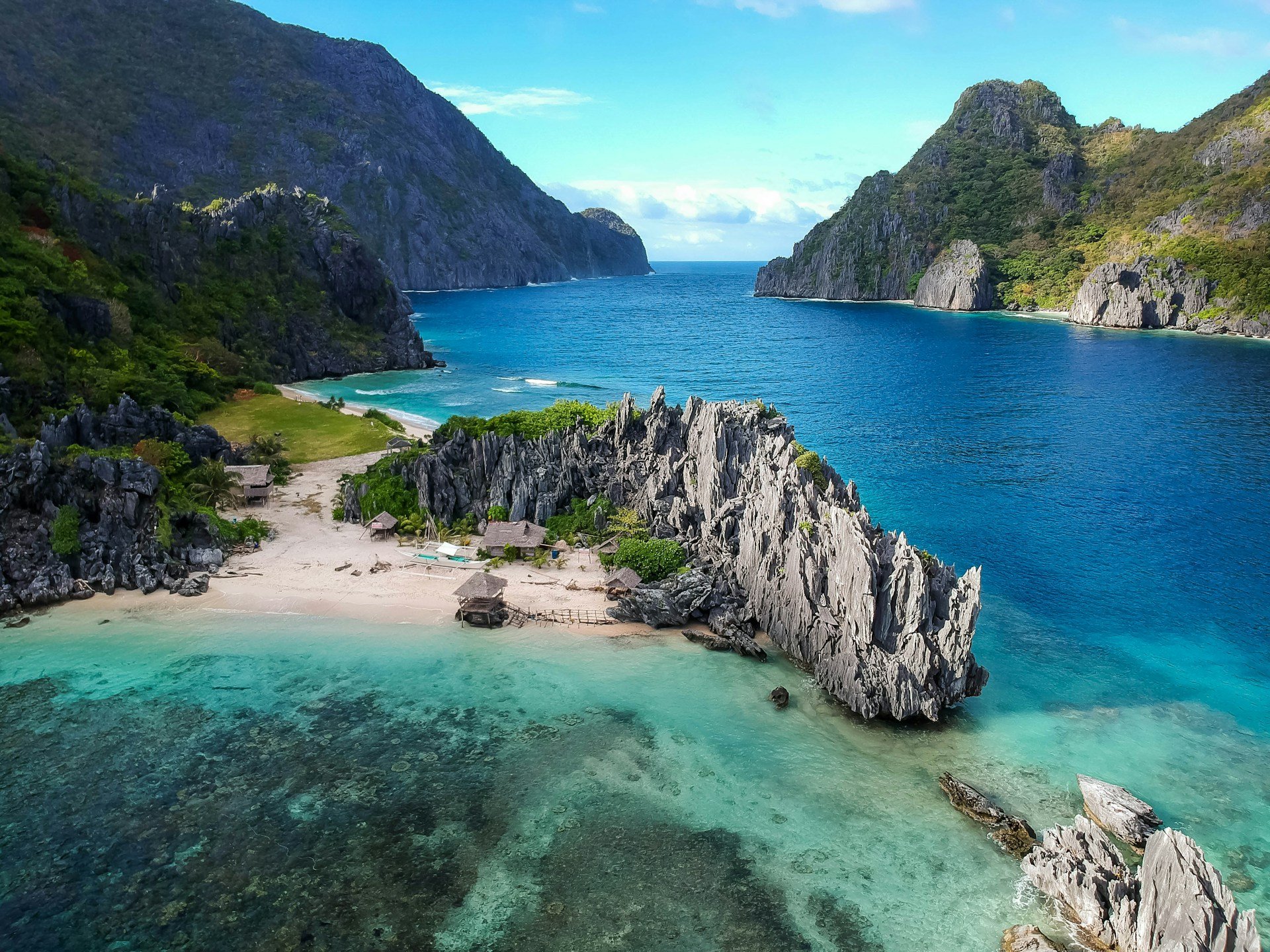
The Philippines is an archipelago of roughly 7,641 islands scattered across the western Pacific, of which only around 2,000 are inhabited, and the single biggest adjustment for a first-time visitor is realizing this is not a country you drive across. It's a country you fly and ferry between, island by island, and the destinations that make it famous, Palawan's lagoons, the Visayas' beaches and diving, Boracay's white sand, are spread far enough apart that a two-week trip covers two or three regions well, not five.
What makes up for the logistics is the combination of scenery that genuinely earns the superlatives, some of the friendliest, most fluently English-speaking hospitality in Asia, and a food culture shaped by more than 300 years of Spanish rule, centuries of trade with China, and a modern Filipino identity that took the best of both and made it its own. Manila, the capital, is the usual entry point: a sprawling, traffic-heavy megacity with pockets, Intramuros, Makati, BGC, worth a day or two before island-hopping starts.
The honest complications
Inter-island transport is the real cost and time sink: domestic flights and ferries between regions add up in both money and travel days that a map doesn't make obvious. Manila's traffic is some of the worst in Asia, and a "20-minute" trip on the map can take an hour at rush hour. Typhoon season, June through November with a July-to-October peak, can disrupt ferries and flights with little warning, and the country's overall safety rating is dragged down almost entirely by Mindanao and the Sulu Archipelago in the south, which this guide does not cover and which carry a meaningfully different risk profile from Palawan, the Visayas, Boracay or Manila's business districts. None of that is reason to skip the country; it's reason to plan the logistics deliberately rather than assume it works like a single landmass.
A History Worth Knowing
Austronesian-speaking peoples settled the islands over thousands of years before European contact, building trade links with China, India and the Islamic sultanates of maritime Southeast Asia. Ferdinand Magellan landed in 1521 and was killed months later at the Battle of Mactan; Spain returned to stay in 1565 and ruled for 333 years, followed by nearly five decades of American colonial rule, a devastating Japanese occupation in WWII, and full independence in 1946. The short version of how the country you're visiting got here.
- 1521
Magellan and Mactan. Ferdinand Magellan reaches the islands for Spain, is killed at the Battle of Mactan by the chieftain Lapu-Lapu, still celebrated as the first resistance to European colonization in the region.
- 1565–1898
Spanish rule. Miguel López de Legazpi founds Manila as the colonial capital in 1571. 333 years of Spanish administration bring Catholicism, the encomienda land system, and the Latin American-influenced culture still visible in the country's food, surnames and architecture.
- 1896–1898
Revolution. The Katipunan uprising begins in 1896; national hero José Rizal is executed by the Spanish that December. Independence is declared at Kawit, Cavite on 12 June 1898.
- 1898–1946
American era. Spain cedes the Philippines to the US after the Spanish-American War; the Philippine-American War (1899-1902) follows. Commonwealth status begins in 1935, interrupted by brutal Japanese occupation and the destruction of Manila in WWII, before full independence on 4 July 1946.
- 1972–1986
Marcos and People Power. Ferdinand Marcos declares martial law in 1972; two decades of authoritarian rule end in the peaceful EDSA People Power Revolution of February 1986.
- 1990s–present
Modern tourism. Infrastructure and low-cost carriers open up Palawan, the Visayas and Boracay to mainstream international travel, and the country becomes one of Southeast Asia's fastest-growing tourism markets.
Read the full history: Spanish rule, the revolution and WWII
Before Magellan, the islands were never a single political unit but a patchwork of barangays, coastal trading sultanates in the south, and inland chiefdoms, connected by maritime trade routes reaching China, Borneo and beyond. Spanish colonization from 1565 imposed a centralized administration under Manila, a friar-run Catholic church that converted the great majority of the population, and a caste-like social order that shaped land ownership for centuries. The galleon trade between Manila and Acapulco, running for 250 years, made the islands a hinge point between Asia and the Americas and explains much of the shared vocabulary, food and surnames between the Philippines and Latin America today.
José Rizal, a novelist and polymath whose writing exposed Spanish abuses, was executed in December 1896 in what is now Rizal Park in Manila; his death is widely credited with accelerating the revolution rather than suppressing it. Independence was declared in 1898, but the Spanish-American War handed the islands to the United States instead, triggering the Philippine-American War, a conflict still underrepresented in most Western accounts of the period. American rule brought English-language education, a legal and political system Filipinos still draw on, and a promise of eventual independence delivered on schedule in 1946, delayed only by WWII.
The Battle of Manila, 1945. The monthlong battle to retake Manila from occupying Japanese forces killed an estimated 100,000 Filipino civilians and reduced Intramuros, the old walled city, to rubble; much of what stands in Intramuros today is reconstruction. It's one of the most devastating urban battles of the Pacific war and explains why so little of pre-war Manila survives intact.
Marcos and EDSA. Ferdinand Marcos's martial law period (1972-1981, with authoritarian rule continuing to 1986) is remembered for human rights abuses, cronyism and economic decline alongside genuine infrastructure investment. The bloodless People Power Revolution that removed him in February 1986, centered on EDSA highway in Manila, is a defining moment of modern Filipino identity and a point of national pride.
Top Destinations
The Philippines divides into island groups rather than regions you can drive between: Luzon in the north (Manila and the highlands), the Visayas in the center (Cebu, Bohol, Boracay), and Palawan to the southwest. Mindanao, in the far south, carries a significantly stronger government travel warning than the rest of the country and sits outside the scope of this guide. Pick one or two island groups per trip; trying to cover all of them in under two weeks means more time in airports than on beaches.
Manila, the sprawling capital
Manila is most visitors' entry point and, for many, one or two days rather than the main event. Intramuros, the walled Spanish colonial old town largely rebuilt after WWII, holds San Agustin Church, a UNESCO World Heritage Site and the oldest stone church in the country, and Fort Santiago. Rizal Park honors the national hero executed there in 1896, and the free National Museum Complex nearby covers fine arts, anthropology and natural history properly. See our full Manila city guide for neighborhoods, food and a complete itinerary.
El Nido, the lagoon capital
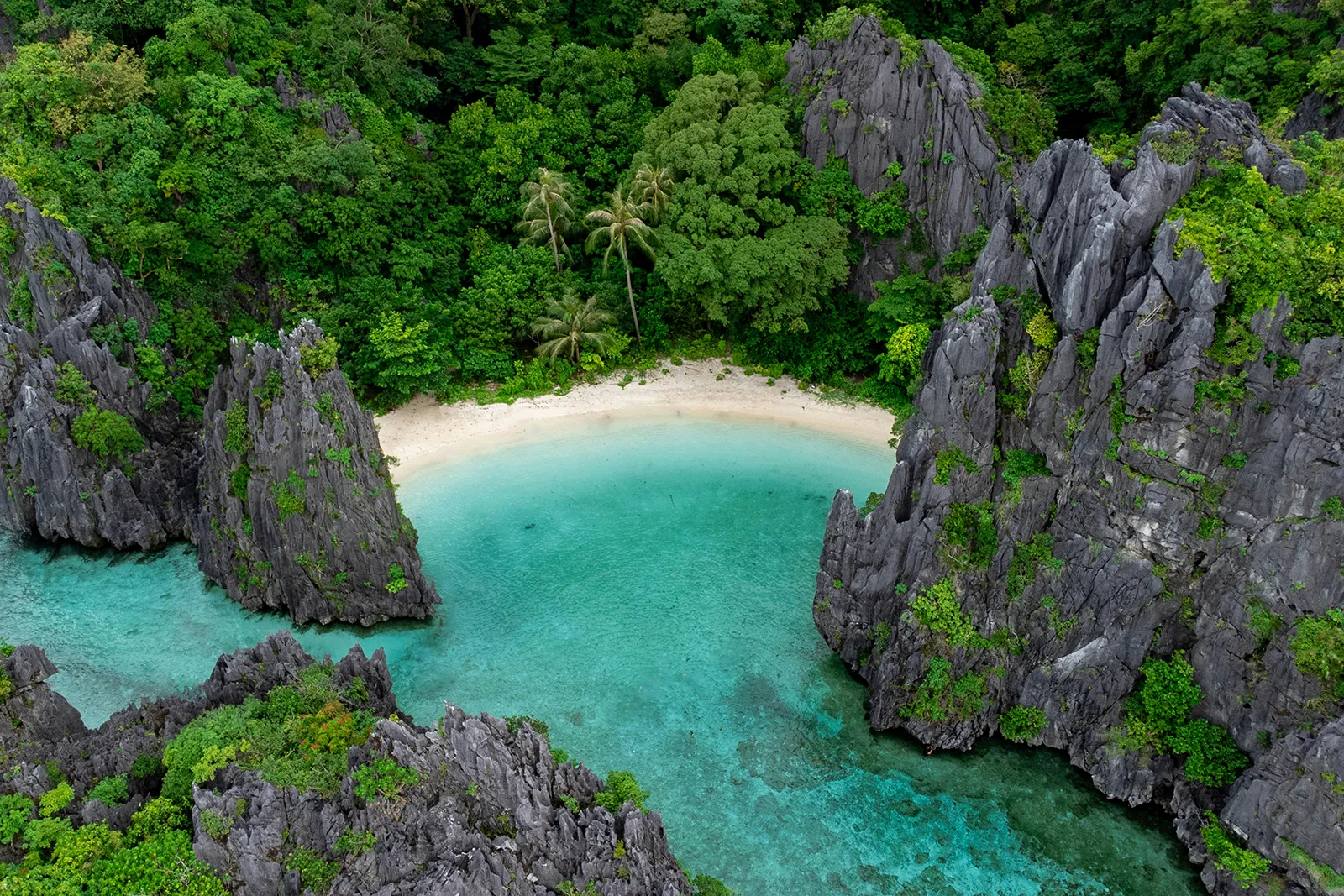
El Nido has the greatest density of postcard scenery in the country: limestone karst islands rising straight out of turquoise water, hidden lagoons reachable only by kayak or narrow swim-through, and island-hopping tours (Tours A through D) that each cover a different cluster of beaches and lagoons. It suits first-time visitors best precisely because there's so much concentrated in a small area.
Coron, wrecks and clarity
Coron trades El Nido's density for clearer water, some of the best wreck diving in Southeast Asia (a dozen Japanese WWII vessels sunk in a single 1944 US raid, many divable), and noticeably thinner crowds. Kayangan Lake, frequently cited as one of the cleanest lakes in Asia, is the signature stop. A fast ferry connects El Nido and Coron in roughly four hours, making both destinations realistic on a trip of a week or more.
Cebu, the second city
Cebu City is the Philippines' oldest city and its second major hub, with its own international airport making it a practical alternative entry point. Beyond the city, Cebu island has serious diving and, at Oslob in the south, controversial but hugely popular whale shark encounters in shallow water close to shore. Moalboal's sardine run, a dense, swirling bait ball visible from the surface, is one of the country's most reliable marine spectacles.
Bohol, hills and beaches
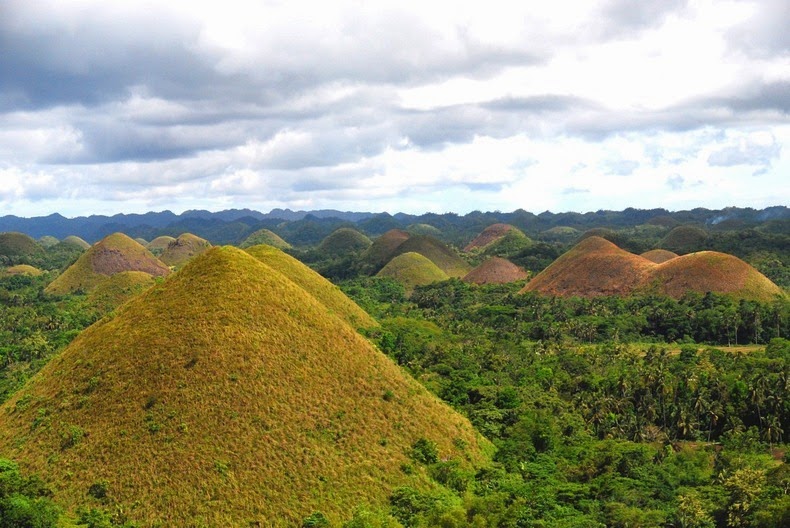
Bohol pairs easily with Cebu via a roughly two-hour ferry. The Chocolate Hills, more than a thousand symmetrical grass-covered mounds that turn brown in the dry season, are the island's signature sight, alongside the Loboc River for a cruise and the diminutive, protected Philippine tarsier at a dedicated sanctuary. Panglao Island, connected to Bohol by bridge, has the beach resorts.
Boracay, the comeback island
Boracay closed entirely for six months in 2018 for environmental rehabilitation after decades of overdevelopment strained its sewage and infrastructure; it reopened with stricter capacity limits, no more smoking or drinking on the beach itself, and a genuinely cleaner White Beach as a result. It remains the country's most resort-dense, convenience-first island: the best restaurant and nightlife density anywhere in the Philippines, watersports on demand, and the least logistics of any beach destination in this guide, a short flight to Caticlan or Kalibo followed by a boat transfer.
Banaue & Sagada, the Cordillera
The Banaue Rice Terraces, carved into the Ifugao mountains an estimated 2,000 years ago and UNESCO-listed, are the reason to make the roughly 8-to-9-hour bus trip north from Manila. Sagada, another hour or so beyond Banaue, adds hanging coffins, cave exploration and a noticeably cooler climate. This is a slower, more remote add-on best suited to travelers with two weeks or more who want mountains and Indigenous Ifugao culture alongside the beaches.
Culture & Etiquette
Filipino culture centers on family and hospitality with an intensity that visitors from more individualist cultures often find remarkable. Bayanihan, communal cooperation without expectation of direct repayment, and pakikisama, prioritizing smooth group harmony, both shape everyday interactions. The country is roughly 80 percent Roman Catholic, a direct legacy of Spanish rule, with a significant Muslim minority concentrated in the south and Indigenous traditions still practiced in highland communities. English is an official language taught from primary school, so language is rarely a real barrier.
Do
- Learn "mano po." Younger people greet elders by taking their hand and pressing it gently to their forehead, a respect gesture worth recognizing even if you're not expected to perform it yourself.
- Accept food when offered. Filipino hospitality runs on feeding guests; politely declining repeatedly can read as rejection rather than restraint.
- Use "po" and "opo" if you attempt Tagalog. These respect particles, added when speaking to elders or authority figures, go a long way even from a visitor with three words of the language.
- Tip in cash. 10 percent at restaurants without a service charge already added, and small tips for hotel staff and drivers are genuinely appreciated rather than expected as a formality.
- Expect "Filipino time." Social gatherings routinely start later than stated; build slack into plans that involve local hosts rather than treating delays as rudeness.
Don't
- Lose your temper publicly. Public displays of anger cause the person you're addressing to lose face and rarely produce the result you want; a calm, indirect approach resolves more.
- Point with your finger. Lips are commonly used to indicate direction instead; a raised chin or lip-point toward an object is normal and not rude.
- Assume Manila represents the whole country. Regional identity is strong; a Cebuano or Ilocano will often correct an assumption that Tagalog customs apply everywhere.
- Refuse a small gift outright. A polite initial refusal followed by acceptance is the expected dance in many households; an immediate flat no can read as cold.
- Wear beachwear away from the beach. Casual dress is fine in resort towns, but modest clothing is expected in churches and more conservative provincial towns.
Deeper culture: regional identity, religion and the diaspora
Regional identity. The Philippines has more than 180 languages and dialects; Tagalog-based Filipino and English are the official languages, but Cebuano, Ilocano, Hiligaynon and others are the first language of tens of millions of Filipinos. Regional pride runs deep, particularly in the Visayas and Mindanao, where Manila-centric assumptions are not always welcome.
Religion. Catholicism, introduced by Spain, shapes the calendar as much as daily life: Christmas celebrations traditionally begin in September, Holy Week (Lent's final days) sees mass exodus from cities as families return to home provinces, and town fiestas built around a patron saint happen somewhere in the country almost every week of the year.
The diaspora. An estimated 10 percent or more of Filipinos work abroad as overseas Filipino workers (OFWs), and remittances are a major part of the national economy. This has produced a culture unusually comfortable with English, international travel and Western media, and family separation across borders is a lived reality for a huge share of Filipino households.
Food & Drink
Filipino food blends Malay, Chinese, Spanish and American influences into something that doesn't taste quite like any of them individually: sour and salty flavor profiles, vinegar-based marinades and sauces, and a communal eating culture where dishes land in the middle of the table rather than as individual plates. It's less internationally famous than Thai or Vietnamese food, which locals will tell you is an injustice.
Adobo ₱150-300
Often called the unofficial national dish: meat, usually chicken or pork, braised in vinegar, soy sauce, garlic and bay leaf until deeply savory. Every region and honestly every family has its own version; there is no single "correct" adobo.
Sisig ₱180-350
Chopped pork face and ears, seasoned with calamansi and chili, served sizzling on a hot plate, often with a raw egg cracked on top to stir in. Invented in Pampanga; Manam's version is a well-known modern take on the classic.
Halo-Halo ~₱150
Shaved ice layered with sweetened beans, jellies, fruit, leche flan and ube ice cream, mixed together before eating (the name literally means "mix-mix"). The definitive answer to Manila's heat.
Lechon ₱250-500/kg
Whole roasted pig, crackling skin over tender meat, is the centerpiece of Filipino celebrations. Cebu's version, seasoned inside with herbs and spices rather than served plain, is widely regarded as the country's best.
Sinigang & Kare-Kare
Sinigang is a sour tamarind-based soup, usually with pork or fish and vegetables, the comfort food of choice on a rainy day. Kare-kare is oxtail and vegetables in a rich peanut sauce, served with fermented shrimp paste (bagoong) on the side.
Lumpia & Pancit
Lumpia are Filipino spring rolls, fresh or fried; pancit is the catch-all term for the country's many stir-fried noodle dishes, traditionally served at birthdays for their symbolic long life.
When to Go & Itineraries
December through May is the dry season and the most reliable window, with December to February the coolest and driest stretch. June through November is typhoon season, peaking July to October, with roughly 10 to 15 typhoons making landfall somewhere in the country each year; northern and eastern Luzon and the eastern Visayas are the most exposed, while Palawan and the western Visayas are comparatively sheltered even in the wet months.
All seasons compared, with temperatures
| Season | Verdict | Temps | Notes |
|---|---|---|---|
| Dec-Feb | Best | 24-31°C | Coolest, driest, busiest and priciest around Christmas/New Year |
| Mar-May | Good (hot) | 27-35°C | Hot and increasingly humid; April-May calmest seas for island-hopping |
| Jun-Sep | Caution | 26-32°C, wet | Rainy, typhoon risk rising; Palawan/western Visayas more sheltered |
| Oct-Nov | Caution | 25-31°C | Peak-to-late typhoon season; fewer crowds and lower prices if you accept the risk |
Manila averages 27-33°C year-round with high humidity. Highland areas like Sagada and Baguio run noticeably cooler, into the mid-teens at night in the cool season.
Itineraries
One week suits a single island group done properly rather than a rushed multi-region tour. Two weeks is the sweet spot for combining Manila with either Palawan or the Visayas. Three weeks allows a genuinely relaxed pace across two regions with room for the inter-island transport days that shorter trips have to skip.
- Days 1–2
Manila. Intramuros, San Agustin Church, the National Museum Complex, dinner in Makati or BGC, then fly onward.
- Days 3–5
El Nido. Fly Manila-El Nido direct or via Puerto Princesa; two full days of island-hopping tours across the lagoons and beaches.
- Days 6–7
Coron. Fast ferry from El Nido (~4 hrs); Kayangan Lake, wreck snorkeling or diving, fly back to Manila from Busuanga.
- Days 1–2
Manila. Intramuros, museums, food in Makati/BGC; day trip to Tagaytay for the Taal Lake viewpoint.
- Days 3–7
Palawan. El Nido (3 days of island-hopping) then the ferry to Coron (2 days) for wrecks and Kayangan Lake.
- Days 8–11
Cebu & Bohol. Fly Palawan to Cebu via Manila; Oslob or Moalboal, then the ferry to Bohol for the Chocolate Hills and Panglao beaches.
- Days 12–14
Boracay. Fly to Caticlan via Manila or Cebu; three unhurried days on White Beach before flying home.
- Days 1–3
Manila extended. Add Binondo's Chinatown food crawl and the free National Museum properly, rather than a rushed half-day.
- Days 4–5
Northern highlands. Overnight bus to Banaue for the rice terraces, on to Sagada for hanging coffins and caves.
- Days 6–10
Palawan slow. El Nido and Coron at a relaxed pace, adding Port Barton or Culion for travelers who want fewer other tourists.
- Days 11–15
Visayas. Cebu diving, Moalboal's sardine run, the ferry to Bohol for the Chocolate Hills, tarsiers and Panglao.
- Days 16–21
Boracay & return. Five or six days on White Beach, watersports and nightlife, fly home via Manila.
Getting there & around
Ninoy Aquino International Airport (NAIA) in Manila is the main international gateway, with Mactan-Cebu International Airport a growing second option, especially for Visayas-first itineraries. Domestic flights, mainly on Cebu Pacific, Philippine Airlines and AirAsia Philippines, are how most visitors move between island groups; book these well ahead in dry season, as fares climb fast. Ferries (2GO for longer routes, OceanJet and similar operators for shorter fast-ferry hops like El Nido-Coron or Cebu-Bohol) fill the gaps flights don't cover.
All transport options with prices: flights, ferries, city transport
| Option | Price | Notes |
|---|---|---|
| Domestic flights | $30-100 | Manila-Palawan, Manila-Cebu and similar routes; book early in Dec-May, prices spike around holidays |
| Inter-island fast ferries | $20-40 | El Nido-Coron (~4 hrs), Cebu-Bohol (~2 hrs); can be cancelled in rough weather with little notice |
| Grab (ride-hailing) | ₱150-500 | Fixed upfront pricing; the reliable way to avoid Manila's taxi-meter scams |
| Jeepneys | ₱13-20 | The classic shared minibus; cheapest option in cities, cash only |
| LRT/MRT (Manila) | ₱20-60 | Fastest for fixed corridors in the capital; get a reloadable Beep card |
Practical prep: complete the free eTravel registration online within 72 hours of your flight (a border-control form, not a visa); buy a local SIM or an eSIM before landing for maps and Grab; and if traveling in typhoon season, build a flexible buffer day or two into any inter-island leg in case ferries or flights are delayed.
Where to stay
Backpacker hostels
Strongest in Manila's Makati and Malate districts, El Nido town and Boracay's Station 2 area: social hostels with pools, rooftop bars and organized tour bookings are the norm rather than the exception.
Mid-range hotels
Chain and boutique options are dense in Makati, BGC and Cebu City, with island destinations charging a premium for beachfront or lagoon-view rooms over the same standard inland.
Resort stays
El Nido and Boracay have the country's best resort concentration, from overwater-adjacent lagoon lodges to full-service beach resorts with their own dive centers.
Luxury & private island
El Nido's private-island resorts (accessible only by the resort's own boat transfer) and Manila's five-star hotels in Makati sit at the top of the market, often bundling meals and activities into the rate.
Budget Planning
Day-to-day costs in the Philippines are low by Western standards; the line item that surprises first-timers is inter-island transport, which can rival or exceed accommodation and food combined on a multi-region trip. Build flights and ferries into the budget as their own category rather than an afterthought.
- Hostel dorm or basic guesthouse
- Carinderia meals ₱80-150
- Jeepneys, tricycles & public ferries
- Free beaches, churches & museums
- Mid-range hotel or private room
- Restaurant meals $8-15/person
- Domestic flights & fast ferries
- Island-hopping tours & dive trips
- Resort or luxury hotel stays
- Private island transfers
- Private guides & boat charters
- Fine dining in Manila & resort towns
Quick reference prices: food, transport, entry fees
| Carinderia meal (turo-turo) | ₱80-150 |
| Coffee (local cafe) | ₱60-120 |
| Restaurant meal (mid-range) | ₱300-600 |
| Jeepney ride | ₱13-20 |
| Grab, short city trip | ₱150-350 |
| El Nido island-hopping tour | ₱1,400-1,800 |
| Domestic flight (one-way) | $30-100 |
| El Nido-Coron fast ferry | ~$25-35 |
| Fort Santiago entry | ~₱75 |
Prices reflect August 2026 research (roughly ₱60-61 to $1) and drift over time, especially domestic flights around the December-January peak. Treat them as a planning baseline, not a quote.
Visa & Entry
The Philippines has a permissive visa regime: citizens of the US, UK, Canada, Australia, most of the EU and more than 150 nationalities in total can enter visa-free for 30 days. India and China gained dedicated 14-day visa-free windows in 2025 and January 2026 respectively. Separately, every arriving and departing passenger, regardless of nationality, must complete the free eTravel registration online within 72 hours of their flight; it's a health and border-control form, not a visa, and produces a QR code to show at immigration.
✓ Valid passport
At least 6 months validity from date of entry, per standard Bureau of Immigration guidance.
✓ Return/onward ticket
May be checked at immigration; the 30-day visa-free stay is non-extendable at the border and non-convertible to another visa category on arrival.
✓ eTravel QR code
Complete the free registration at the official eTravel portal within 72 hours of your flight and keep the QR code accessible on arrival.
✓ Proof of funds (occasional)
Immigration officers retain discretion to ask for evidence of sufficient funds or onward travel; rarely enforced for typical tourist itineraries but worth having ready.
| Philippines | Thailand | |
|---|---|---|
| Visa-free stay | 30 days for most Western passports | 30 days (reduced from 60 in July 2026) |
| Geography | Archipelago; flights/ferries between regions | Mostly connected by road and rail |
| Beaches & islands | El Nido, Coron, Boracay: less developed, more remote feel | Phuket, Krabi, the Andaman coast: more built-up infrastructure |
| English | Official language, very widely spoken | Common in tourist areas, less so elsewhere |
| Logistics | Slower and pricier between destinations | Generally faster and cheaper overland |
Safety, Solo Women & Family
The US State Department rates the Philippines Level 2, Exercise Increased Caution, citing crime, terrorism, civil unrest and kidnapping as general country-wide concerns, but the destinations in this guide, Manila's business districts, Palawan, Cebu, Bohol, Boracay and the northern highlands, see this play out mainly as petty crime and scams rather than a direct threat to standard tourist itineraries. The advisory carries specific, much stronger warnings for the Sulu Archipelago and Mindanao (crime, terrorism, civil unrest and kidnapping) and for Marawi City (terrorism and civil unrest); this guide does not cover any of those areas and they should not be treated as an extension of a normal Philippines itinerary.
Petty theft
Phone and bag snatching on crowded jeepneys and in markets is the most common tourist-relevant crime. Keep valuables zipped and in front of you, especially in Manila's busier districts.
Taxi & NAIA overcharging
Rigged or ignored meters and inflated flat fares from touts working outside NAIA's arrival halls are the most consistently reported tourist scam. Use Grab or the official MIAA-licensed yellow-cab queue instead.
Weather disruption
Typhoons (June-November, peak July-October) can ground flights and cancel ferries with little notice. Build flexibility into any inter-island itinerary during these months.
Two more things worth knowing: informal transport and swimming safety
Informal transport. Jeepneys and tricycles are safe in the ordinary sense but are also where opportunistic pickpocketing happens most, particularly at busy boarding stops. Grab remains the lowest-friction option for tourists unfamiliar with routes and fares.
Swimming and boat safety. Not all island-hopping boats carry life jackets as standard or brief passengers on safety procedures; ask before boarding if this matters to you, and treat currents around river mouths and typhoon-swollen seas with more caution than the calm-looking water suggests.
The 3 scams to actually know about
None of these are unique to the Philippines, and none should be reason to skip the destinations in this guide, but knowing them going in avoids nearly all of it. The full country list lives on our Philippines travel alerts page.
NAIA taxi touts
Unofficial drivers approach arrivals before the official taxi queue and quote a flat, inflated fare. Skip them entirely with a pre-booked Grab or the metered, MIAA-licensed yellow-cab rank.
Taxi meter tampering
Some Manila metered taxis run rigged or fast-jumping meters, or the driver simply won't turn it on. If the meter looks wrong or the driver resists, get out and use Grab instead.
Jeepney pickpocketing
Phones and wallets go missing during the jostle of boarding a crowded jeepney at a busy stop. Keep valuables in a zipped front pocket or bag, not a back pocket or open tote.
Solo women travelers
The Philippines rates reasonably well for solo women in the destinations this guide covers, especially Palawan's resort towns, Boracay and Manila's Makati and BGC districts, where street harassment is uncommon and the hostel and resort scene makes meeting other travelers easy. As anywhere, use Grab rather than unmarked taxis at night, agree tricycle and boat fares before boarding, and take the same normal precautions in unfamiliar or poorly lit areas that apply in any large city. Full detail on our Solo Woman Explorer pages.
Emergency numbers
Embassies in Manila and tourist police
911 is the unified national emergency number covering police, fire and medical response. Tourist police units operate at major airports, Intramuros and other key tourist hubs specifically for theft, scams and disputes with service providers. Most embassies are located in Manila's Makati and Pasay areas.
- USA
- +63-2-5301-2000
- UK
- +63-2-8858-2200
- Canada
- +63-2-8857-9000
- Australia
- +63-2-7757-8100
- Germany
- +63-2-8702-3000
- France
- +63-2-8857-6900
Family travel & pets
The Philippines works well for families: Filipino culture is exceptionally warm toward children, resort destinations like Boracay and El Nido have gentle, calm-water beaches, and Bohol's tarsier sanctuary and Chocolate Hills land well with kids. The main practical adjustment is inter-island transport days, which are more tiring with young children than a single-base beach holiday.
Kids on boats, sun safety, and bringing pets
Island-hopping with children: confirm life jackets are available in child sizes before booking a boat tour, and consider a private rather than shared boat for families with younger kids to control the pace and stops. The equatorial sun is intense year-round; reef-safe sunscreen and a rash guard cut down on both sunburn and coral damage.
Pets: the Philippines requires an import permit from the Bureau of Animal Industry, a valid rabies vaccination and, depending on origin country, a quarantine period. The process is bureaucratic enough that most visiting travelers do not bring pets; check requirements well ahead if this applies to you.
Philippines FAQ
Is the Philippines safe to visit?
For the destinations in this guide, generally yes. The US State Department rates the country Level 2, Exercise Increased Caution, mainly for petty crime and scams rather than a threat to typical tourist itineraries. The exceptions are Mindanao and the Sulu Archipelago, which carry a much stronger warning and are excluded from this guide entirely.
Do I need a visa for the Philippines?
Citizens of the US, UK, Canada, Australia, the EU and most of the Asia-Pacific can enter visa-free for 30 days. Everyone must also complete the free eTravel registration online within 72 hours of arrival; it's not a visa but a separate border-control requirement.
How much does a trip to the Philippines cost?
Budget travelers manage on $30-45 a day, mid-range on $80-100. Inter-island flights and boat transfers are the main cost that surprises first-time visitors, since the country is an archipelago rather than one connected landmass.
When is the best time to visit the Philippines?
December to May is the dry season and the safest bet, with December to February the coolest and driest. June to November is typhoon season, peaking July to October; Palawan and the western Visayas are comparatively sheltered even then.
How many islands does the Philippines have?
Around 7,641 islands, though only roughly 2,000 are inhabited. Most visitors see a small handful: Luzon (Manila), Palawan, Cebu, Bohol and Boracay cover the country's best-known highlights.
Should I visit El Nido or Coron?
El Nido has the greater density of postcard lagoons and beaches and suits first-timers; Coron has clearer water, WWII wreck diving and fewer crowds. With seven or more days, a fast ferry connects the two and you can do both.
Can I visit Mindanao?
This guide does not cover Mindanao. The US State Department and other governments maintain a significantly stronger travel warning for Mindanao and the Sulu Archipelago than for the rest of the country, citing kidnapping, terrorism and armed conflict, and it falls outside the scope of a first-time visitor itinerary.
Is English widely spoken in the Philippines?
Yes. English is an official language alongside Filipino, taught in schools from an early age, and used in business, government and most tourist interactions. Language is rarely a barrier for English-speaking visitors.
Is the Philippines good for solo female travelers?
Generally yes in the destinations this guide covers, especially Palawan's resort towns, Boracay and central Manila districts like Makati and BGC. The usual precautions apply: agree transport fares or use Grab, and take normal care at night in unfamiliar areas.
What is the currency in the Philippines?
The Philippine peso (PHP, ₱). ATMs are widely available in cities and resort towns; carry cash for jeepneys, tricycles, markets and smaller islands where cards aren't accepted.
Is the Philippines cheaper than Thailand?
Broadly comparable for food and budget accommodation, but inter-island transport in the Philippines adds up faster than Thailand's more connected road and rail network, since most Philippine itineraries require domestic flights or ferries between destinations.
What Stays With You
Every traveler who does the Philippines properly comes home with the same complaint: it took longer and cost more in flights and ferries than they budgeted, and it was worth every peso. The lagoon in El Nido that looked fake in every photo until you were treading water in it. The sisig and the ice-cold San Miguel at a plastic table on a Manila sidewalk. The family who fed you more than you could eat at a carinderia and refused to let you overpay for it. None of it reads like a single trip, because it isn't: it's a few thousand islands, and you only ever see a handful.
Pick one or two island groups, resist the urge to cram in a fifth destination, and go in December through May if the calendar allows it. The rest sorts itself out.