

What You're Actually Getting Into
Singapore is a city, an island and a country at once, 734 square kilometers with no other cities to travel between and no countryside to speak of, and it packs more genuinely different experiences into that footprint than countries a hundred times its size. It went from a swampy trading port to one of the world's wealthiest nations in about two generations, a transformation founding prime minister Lee Kuan Yew engineered through a combination of pragmatic economic policy and a level of social control, strict laws, mandatory conformity, minimal tolerance for disorder, that visitors feel the moment they land and mostly end up appreciating.
The food alone justifies the trip. Hawker centres, open-air complexes of dozens of independent stalls, serve some of the best food in Asia for a few dollars a plate, several of them Michelin-recognized, one of them holding an actual Michelin star. Add Gardens by the Bay's supertrees, the Marina Bay skyline, and an MRT system that runs on a schedule you can actually trust, and Singapore earns its reputation as one of the easiest, most rewarding stops in Southeast Asia.
The honest complications
Singapore is genuinely expensive by regional standards: hotel rooms, alcohol and anything beyond hawker food cost roughly what they cost in a major Western city. The heat and humidity are constant and can wear visitors down faster than they expect, 24 to 32°C with high humidity essentially year-round. And the country's famous strictness is not a tourist-brochure exaggeration: fines and penalties for things that are non-issues elsewhere, vaping, importing chewing gum, jaywalking, eating on the MRT, are real, enforced, and apply to visitors exactly as they apply to citizens. None of this makes Singapore unpleasant to visit. It makes it a place where reading the rules before you land is worth ten minutes of your time.
A History Worth Knowing
Singapore's modern story starts in 1819, when Stamford Raffles established a British trading post at the mouth of the Singapore River, turning a small fishing settlement into one of the region's great ports within decades. Japanese occupation during World War II, a brief and uneasy merger with Malaysia, and a sudden, unwanted independence in 1965 set up the next sixty years: an island nation with no natural resources that built itself into a global financial and shipping hub through discipline, planning and an unsentimental willingness to prioritize order over almost everything else.
- 1819
Raffles arrives. Stamford Raffles, working for the British East India Company, establishes a trading post on the island, then home to a small Malay fishing and pirate settlement.
- 1942–1945
Japanese occupation. Singapore falls to Japan in February 1942 in what Winston Churchill called the worst disaster in British military history. Occupation is harsh; the period is remembered as Syonan-to.
- 1963–1965
Malaysia and separation. Singapore joins the Federation of Malaysia in 1963, then is expelled two years later over political and racial tensions. Independence on 9 August 1965 arrives as crisis, not celebration.
- 1965–1990
Lee Kuan Yew's Singapore. Rapid industrialization, public housing for the vast majority of citizens, English-medium education and an anti-corruption civil service transform the island within a generation.
- 1990s–2000s
Financial hub era. Singapore establishes itself as Asia's leading financial and shipping centre, with Changi Airport and the port both becoming among the world's busiest.
- 2010–present
Marina Bay era. Marina Bay Sands (2010) and Gardens by the Bay (2012) redefine the skyline; tourism, biotech and finance diversify an already wealthy economy.
Read the full history: Raffles, occupation, merger and the Lee Kuan Yew era
Before Raffles, the island had been a minor outpost of the Johor Sultanate, its earlier history as the 14th-century trading settlement of Temasek and later Singapura largely faded by the time the British arrived. Raffles' 1819 treaty with local rulers, and the East India Company's subsequent development of a free port, drew Chinese, Malay, Indian and other traders to the island within years, establishing the multiethnic population structure that still defines Singapore today.
The fall of Singapore to Japanese forces in February 1942 remains one of the most studied military disasters of the war: a garrison of some 85,000 Allied troops surrendered to a smaller invading force. The occupation that followed, 1942 to 1945, was marked by the Sook Ching massacre of ethnic Chinese residents and severe hardship; it is remembered soberly rather than as a footnote, and several wartime sites, including the Battlebox and the former Ford Factory, are preserved as memorials.
Postwar, Singapore moved through self-governance toward the 1963 merger with the Federation of Malaya, Sabah and Sarawak to form Malaysia, a union driven partly by economic logic and partly by a shared desire to counter communist influence. The merger collapsed within two years over disputes about the political role of Singapore's Chinese majority within a Malay-dominated federation; Singapore's expulsion on 9 August 1965 left the new nation with no natural resources, no domestic market and a hostile larger neighbor, a genuinely precarious starting position.
Lee Kuan Yew, prime minister from 1959 to 1990, is the figure most associated with what followed: a program of export-oriented industrialization, a public housing scheme that now houses roughly 80% of the resident population, mandatory English-medium education layered atop mother-tongue instruction, and a civil service built around meritocracy and a famously low tolerance for corruption. The same era produced the strict social laws, and the limits on political dissent, that still generate debate about the tradeoffs of the "Singapore model." Lee died in 2015; his son Lee Hsien Loong served as prime minister until handing over to Lawrence Wong in 2024, the first transition outside the founding family's direct line in the country's history as an independent state.
Top Destinations
Singapore has no second city, so "destinations" here means zones within one compact island, plus two genuinely worthwhile excursions across the water. Everything below sits within about 40 minutes of everything else by MRT, which is part of what makes Singapore such an efficient place to explore.
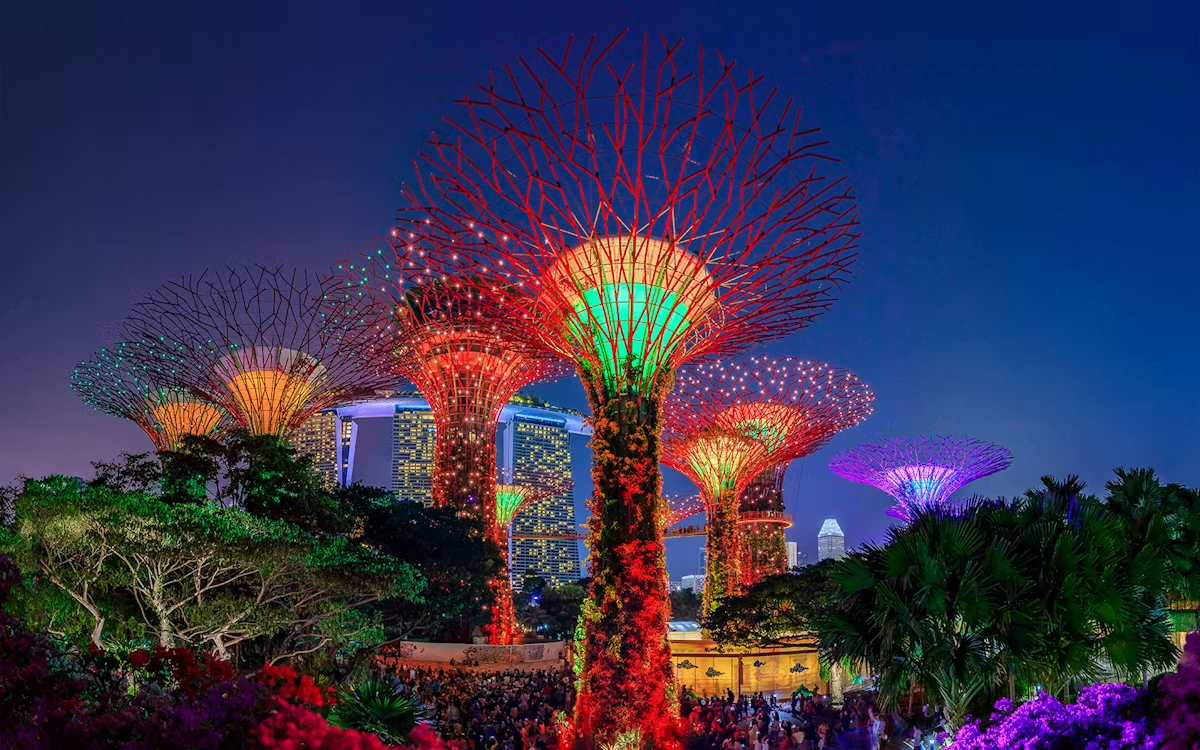
Marina Bay, the skyline everyone recognizes
Marina Bay is Singapore's modern centerpiece: the three-towered Marina Bay Sands with its rooftop infinity pool and SkyPark Observation Deck, Gardens by the Bay's Supertree Grove and climate-controlled Flower Dome and Cloud Forest conservatories, and the Merlion statue spouting water across the bay toward the old Fullerton Building. The outdoor gardens and the waterfront promenade are free; the conservatories and the SkyPark charge separate admission, and it's worth budgeting a half or full day here rather than rushing it. The nightly Spectra light-and-water show at Marina Bay Sands and the Garden Rhapsody light show at the Supertree Grove are both free and worth timing your evening around.
Chinatown, Little India & Kampong Glam
Singapore's three historic ethnic quarters sit within walking distance of the CBD and each other, and each still functions as a living neighborhood rather than a museum piece. Chinatown centers on the ornate Buddha Tooth Relic Temple and the Chinatown Complex hawker centre; Little India is louder and more chaotic, its streets thick with the smell of spices and jasmine garlands around Tekka Centre and the Sri Veeramakaliamman Temple; Kampong Glam, the historic Malay-Muslim quarter, holds the golden-domed Sultan Mosque and the boutique-lined lanes of Haji Lane and Arab Street. All three reward an unhurried wander rather than a checklist visit.
Tiong Bahru & Katong
Two neighborhoods that show a quieter, more residential Singapore. Tiong Bahru's Art Deco housing blocks from the 1930s now hold independent bookshops and cafes around a hawker market that locals actually use. Katong and Joo Chiat, on the eastern side of the island, are the heartland of Peranakan culture, where intermarriage between early Chinese immigrants and local Malays produced a distinct cuisine and the pastel-colored, ornately tiled shophouses along Koon Seng Road, among the most photographed streets in Singapore.
Sentosa Island
A resort island off Singapore's south coast, connected by a short cable car ride, a pedestrian boardwalk, or a monorail, and built almost entirely around organized leisure: Universal Studios Singapore, the S.E.A. Aquarium, several manmade beaches, and Fort Siloso, a preserved coastal fort from the colonial era. It's unabashedly commercial and touristy, closer in spirit to a theme-park resort than the rest of Singapore, and worth a day if you have kids or want the rides; skippable if you don't.
Singapore Botanic Gardens
Singapore's only UNESCO World Heritage Site, and free to enter: 82 hectares of tropical garden dating to 1859, including the National Orchid Garden (small paid entry) with over a thousand orchid species and hybrids. It's a genuinely restful counterpoint to the density of the rest of the city, and a short MRT ride from Orchard Road.
MacRitchie Reservoir & the Rain Forest
A reminder that Singapore was rainforest before it was a city: MacRitchie's TreeTop Walk, a 250-metre suspension bridge through the canopy, and its network of jogging and hiking trails through secondary rainforest, sit a short drive from the CBD. Long-tailed macaques are common along the trails; don't feed them.
Johor Bahru, Malaysia
Across the Causeway by bus or car, Johor Bahru is Malaysia's southernmost city and a genuinely different, cheaper, more laid-back experience a world away in feel from Singapore despite the short distance. A new cross-border train, the RTS Link, connecting Woodlands North to Bukit Chagar in about five minutes, is targeted to open by the end of 2026; until it does, the Causeway Link bus and KTM shuttle are the practical options, and both can involve long immigration queues at peak times.
Batam & Bintan, Indonesia
A 45 to 70-minute ferry from HarbourFront Ferry Terminal reaches Batam, known for cheap spas, golf and seafood; a slightly longer crossing reaches Bintan, better suited to a proper resort beach day. Both are visa-free for most nationalities that can enter Singapore visa-free, and both make an easy, inexpensive day or overnight trip.
Hidden gems beyond the main circuit
The zones above cover a first visit well. With extra time, these reward the detour.
Pulau Ubin
A rustic island reached by a short bumboat ride, kept deliberately undeveloped: kampong houses, rubber plantations, mountain-biking trails and a slower pace that feels decades removed from the mainland ten minutes away.
East Coast Park
A long stretch of reclaimed coastline with cycling paths, seafood restaurants and one of the best sunset spots on the island, popular with locals rather than tour groups.
Club Street & Ann Siang Hill
A cluster of restored shophouses just uphill from Chinatown, now home to some of Singapore's best small bars and restaurants, with almost none of the tourist traffic that fills the main Chinatown streets.
Culture & Etiquette
Singapore's defining cultural fact is its deliberate multiethnic balance: roughly three-quarters Chinese, with substantial Malay and Indian populations plus a large expatriate community, four official languages, and a government policy of racial and religious harmony taken seriously enough that inflammatory speech about race or religion is a criminal offense. The result is a society that is genuinely, functionally multicultural in daily life, not just on paper, and visitors who show basic respect for that balance are received warmly.
Do
- Queue properly. Singaporeans queue for everything and take queue-jumping seriously; join the back of the line, always.
- Remove your shoes before entering homes and some religious sites; look for shoe racks at the entrance as your cue.
- Dress modestly at mosques and temples. Cover shoulders and knees; robes are often provided at the door if needed.
- Use both hands (or your right hand) when giving or receiving something from an elder, a small gesture that reads as noticeably respectful.
- Tap out with SimplyGo or a card on the MRT and buses. Contactless bank cards and phones work directly on the gantries; no separate transit card is required for most short trips.
Don't
- Don't litter, jaywalk or eat on the MRT. All three are fined, and enforcement is real, not theoretical, for visitors as much as residents.
- Don't bring in vapes. Vaping is fully illegal in Singapore, unlike in much of the region; possession alone carries an on-the-spot fine.
- Don't discuss race, religion or Singaporean politics carelessly. These are managed with real legal weight; casual visitors have no need to weigh in.
- Don't assume all of Southeast Asia is this orderly. Locals are proud of what Singapore has built and don't love having it flattened into a generic "Asia" comparison.
- Don't tip. Tipping isn't customary and can occasionally come across as awkward; a 10% service charge is already built into most restaurant bills.
Deeper culture: Peranakan heritage, the four official languages and Singlish
Peranakan culture. Descendants of early Chinese immigrants who intermarried with local Malays, the Peranakans (also called Straits Chinese) developed a distinct cuisine, dress and architecture, still visible in the tiled shophouses of Katong and the intricate beadwork and batik on display at the Peranakan Museum.
Four official languages. English, Mandarin, Malay and Tamil are all official; Malay is the ceremonial national language (the national anthem is in Malay), English is the language of government, business and instruction, and most Singaporeans grow up genuinely multilingual.
Singlish. The colloquial English spoken on the street, layered with Hokkien, Malay and Tamil loanwords and particles like "lah" and "leh," is distinct enough from standard English that visitors sometimes need a moment to adjust; it's a genuine source of national identity and pride, not broken English.
Racial Harmony Day (21 July) commemorates the 1964 race riots and is marked in schools nationwide, a reminder that today's harmony is the product of deliberate, ongoing policy rather than an accident of geography.
Food & Drink
Singaporean food is built around the hawker centre, an open-air complex of independent stalls, and around the fusion of Chinese, Malay, Indian and Peranakan cooking that four cultures sharing one small island for two centuries naturally produced. It is, by wide consensus, one of the best food cities on earth, and one of the very few places where dishes with real culinary pedigree, some Michelin-recognized, cost the same as a fast-food meal elsewhere.
Hawker classics S$4-6
Hainanese chicken rice, laksa, char kway teow and Hokkien mee are the everyday staples, found at every hawker centre. Maxwell Food Centre, Chinatown Complex and Tiong Bahru Market are three of the most reliable starting points.
Michelin hawker food S$3-5
Hill Street Tai Hwa Pork Noodle, the only hawker stall in Singapore with a Michelin star, serves bak chor mee (minced pork noodles) at Crawford Lane; go 9-11am or after 1:30pm to dodge the worst of the queue. Liao Fan Hawker Chan, the soy sauce chicken stall that first put hawker food on the Michelin map, holds Bib Gourmand recognition today.
Chili crab ~S$80-150/kg
Singapore's signature dish for a proper sit-down meal: whole crab in a sweet, savory, tomato-chili sauce, mopped up with fried mantou buns. Priced by weight at seafood restaurants like Jumbo Seafood and Long Beach Seafood; confirm the per-kilo price and the crab's weight before it's cooked.
Kaya toast & kopi S$3-6
The classic Singaporean breakfast: toast with coconut jam and cold butter, soft-boiled eggs with soy sauce and white pepper, and kopi, local coffee brewed with condensed milk. Ya Kun Kaya Toast and Toast Box are the two big chains, both reliable.
Peranakan food S$8-20
Nyonya laksa, ayam buah keluak (chicken with black nuts) and kueh (sweet, colorful rice-flour cakes) reflect the Chinese-Malay fusion at the heart of Peranakan culture, best found in Katong and Joo Chiat.
Rooftop bars & local beer S$18-28/cocktail
Alcohol is genuinely expensive in Singapore, taxed heavily; a rooftop cocktail with a skyline view runs S$18-28, and Tiger and Archipelago are the two well-known local beer brands worth trying at a fraction of the price.
When to Go & Itineraries
Singapore sits one degree north of the equator, so temperature barely moves across the year, 24 to 32°C with high humidity, and there is no genuinely bad season for sightseeing. February to April is the driest stretch and the closest thing to a "best" window; December is the wettest month, with frequent, usually brief, afternoon downpours during the Northeast Monsoon that runs December to March. The Southwest Monsoon, June to September, brings its own shorter thunderstorms but is milder overall.
All seasons compared, with temperatures
| Season | Verdict | Temps | Notes |
|---|---|---|---|
| Feb-Apr | Driest, best overall | 25-32°C | Least rain, still humid; the closest thing to a "dry season" |
| May-Sep | Good | 25-32°C | Southwest monsoon brings shorter afternoon storms |
| Oct-Nov | Good, transitional | 24-31°C | Occasional regional haze possible from agricultural burning nearby |
| Dec-Jan | Wettest | 24-30°C | Northeast monsoon; heaviest, most frequent rain, still warm |
Because so much of Singapore's best sightseeing (Gardens by the Bay's conservatories, the malls, museums, hawker centres) is indoors or covered, rain is rarely a trip-wrecker; pack a light rain jacket or umbrella and carry on.
Itineraries
Three days covers Singapore's essentials comfortably. A week lets you add Sentosa properly, a Johor Bahru or Batam day trip, and a genuinely unhurried pace in between.
- Day 1
Marina Bay. Gardens by the Bay in the afternoon, the Supertree Grove light show and a hawker dinner in the evening.
- Day 2
Heritage districts. Chinatown in the morning, Little India at midday, Kampong Glam and Haji Lane in the afternoon, Club Street for dinner and drinks.
- Day 3
Sentosa or the Botanic Gardens. A full day at Universal Studios and the beaches, or a slower morning at the Botanic Gardens followed by an Orchard Road afternoon.
- Days 1-3
The three-day route above, at a gentler pace.
- Day 4
Tiong Bahru & Katong. Art Deco streets and a hawker breakfast in Tiong Bahru; Peranakan shophouses and Nyonya food in Katong in the afternoon.
- Day 5
Pulau Ubin or MacRitchie. A slower, greener day: the rustic island by bumboat, or the TreeTop Walk through the rainforest canopy.
- Days 1-5
The five-day route above.
- Day 6
Johor Bahru day trip. Cross the Causeway by bus for cheaper shopping, food and a genuinely different pace, a short ride from Woodlands.
- Day 7
Batam or Bintan. A ferry day trip from HarbourFront: spas and seafood on Batam, or a proper beach day on Bintan.
Getting there & around
Changi Airport (SIN), consistently rated among the world's best, connects Singapore to most major global hubs; Singapore Airlines, Scoot and dozens of international carriers fly in daily. From the airport, the MRT reaches the city centre in 30-40 minutes for around S$2-2.50; taxis and ride-hailing apps like Grab cost roughly S$25-35. Within the city, SimplyGo lets you tap a contactless bank card or phone directly on MRT and bus gantries, no separate card required for most visits, though an EZ-Link or NETS FlashPay card (about S$5 plus top-up) or a Singapore Tourist Pass (from S$17 for one day, unlimited MRT/LRT/basic bus travel) both work well too.
All transport options with prices: MRT, buses, taxis, Grab
| Option | Price | Notes |
|---|---|---|
| MRT & buses | S$1-2.50/ride | Fast, air-conditioned, and reliably on schedule; the backbone of getting around. |
| Singapore Tourist Pass | S$17-45 | Unlimited MRT/LRT/basic bus for 1, 2, 3 or 5 days; refundable card deposit on return. |
| Grab / taxis | S$8-25 (central trips) | Cheap by Western standards; essential late at night or with luggage. |
| Changi Airport to city | ~S$2.50 (MRT) / S$25-35 (taxi/Grab) | MRT takes 30-40 minutes; a taxi or Grab is faster but pricier. |
| Batam/Bintan ferry | ~S$40-60 return | From HarbourFront Ferry Terminal; 45-70 minutes each way. |
The RTS Link to Johor Bahru, a five-minute cross-border train from Woodlands North, is targeted to open by the end of 2026 but was not yet running as of this guide; check current status before planning around it.
Where to stay
Budget pods & hostels
Capsule hotels have become a Singapore specialty: private, air-conditioned pods with real privacy at hostel prices. Concentrated around Kampong Glam and Chinatown, both walkable to hawker centres and the MRT.
Boutique shophouse hotels
Restored heritage shophouses in Chinatown and Robertson Quay converted into design-forward boutique properties, generally smaller and more characterful than the big chain towers at a comparable price point.
Marina Bay landmark hotels
Marina Bay Sands is the icon, with its rooftop infinity pool and skyline views the main draw; expect to pay for the address and the pool as much as the room itself.
Colonial-era classics
Raffles Singapore, open since 1887 and the birthplace of the Singapore Sling, anchors this tier: white colonial architecture, a storied history and prices to match.
Budget Planning
Singapore is one of the more expensive stops in Southeast Asia, closer to a major Western city than to its regional neighbors once you move beyond hawker food. The good news is that the food, the best and cheapest part of any Singapore trip, stays affordable regardless of how much everything else costs.
- Capsule hotel or hostel S$35-70
- Hawker meals S$4-6 each
- MRT and buses S$5-10/day
- Free gardens, temples and viewpoints
- Boutique hotel S$180-320
- Mix of hawker and restaurant meals
- Occasional Grab rides
- Cloud Forest, SkyPark, a Sentosa day
- Marina Bay Sands or Raffles
- Fine dining and rooftop bars
- Private tours and drivers
- No budget-watching required
Quick reference prices: hawker food, transit, attraction tickets
| Hawker meal (chicken rice, laksa etc.) | S$4-6 |
| Kopi (local coffee) | ~S$1.50 |
| Restaurant meal (mid-range) | S$20-40 |
| Local beer (Tiger, bottle) | S$8-12 |
| MRT ride, central | S$1-2 |
| Singapore Tourist Pass (1 day) | ~S$17 |
| Gardens by the Bay conservatories | ~S$28-48 combo |
| Universal Studios Singapore | ~S$80-90 |
| Chili crab (per kg) | ~S$80-150 |
| Batam ferry (return) | ~S$40-60 |
Prices reflect August 2026 research and drift over time, especially attraction tickets and hotel rates. Treat them as a planning baseline, not a quote, and confirm current prices before booking.
Visa & Entry
Most Western passport holders, including the US, UK, EU member states, Australia, Canada, Japan, South Korea and New Zealand, can enter Singapore visa-free for up to 90 days, at the discretion of the immigration officer. Every visitor, visa-free or not, must also file a free SG Arrival Card (SGAC) online within 3 days before arrival via the ICA website or MyICA app; this is a genuinely mandatory step, not an optional convenience, and immigration checks for it on arrival. The Immigration & Checkpoints Authority (ICA) is the authoritative source for current rules, not third-party paid "visa service" sites that rank well in search but charge for something that's often free.
✓ Valid passport
At least 6 months validity beyond your arrival date. Keep a photocopy separate from the original.
✓ SG Arrival Card
Mandatory, free, online within 3 days of arrival. Save the confirmation on your phone.
✓ Return/onward ticket
May be requested at immigration, particularly for visitors on longer stays.
✓ Proof of funds
Rarely checked in practice for most Western passport holders, but technically part of the entry conditions.
| Singapore | Malaysia | |
|---|---|---|
| Daily budget | S$70-100 gets you by; one of the pricier stops in the region | Noticeably cheaper across the board, especially outside Kuala Lumpur |
| Pace | Compact, efficient, everything within 40 minutes by MRT | Spread across a peninsula plus Borneo; more ground to cover |
| Food | Hawker centres, Michelin-recognized street food, cleaner but pricier | Equally excellent, generally cheaper, more regional variety across states |
| Rules | Strict, enforced, real fines for small infractions | Considerably more relaxed day to day |
| Best for | Efficient short breaks, stopovers, first-timers to Asia | Longer trips, nature and island time, lower budgets |
Safety, Solo Women & Family
Singapore is one of the safest countries in the world to visit. Violent crime against visitors is very rare, streets are safe to walk at night in essentially every neighborhood, and strict, consistently enforced laws keep petty crime low too. The real risk for most visitors isn't being a victim of anything; it's unknowingly breaking a rule that carries a real fine or worse.
Vaping & drugs
Vaping is fully illegal; possession alone draws an on-the-spot fine, with penalties rising sharply from May 2026. Drug offenses, including small personal amounts, carry severe penalties, and trafficking can carry the death penalty. Do not carry drugs or vapes into Singapore under any circumstances.
Everyday fines
Littering, jaywalking, eating or drinking on the MRT, and importing bulk quantities of chewing gum are all fined, S$300 to S$1,000 for a first offense in most cases. These aren't urban legends; they're actively enforced.
Heat & humidity
The most common thing that actually catches visitors out: constant 24-32°C heat with high humidity leads to dehydration and fatigue faster than expected. Drink more water than feels necessary and pace outdoor sightseeing around the hottest midday hours.
Two more things worth knowing: haze season and photography rules
Regional haze. In some years, agricultural burning in Indonesia drifts smoke haze over Singapore in the September-October window, occasionally reaching levels that affect outdoor activity for a few days at a time. Check the National Environment Agency's PSI reading if visiting during this period.
Photography. Most of Singapore is unrestricted for photography, but avoid photographing military installations, government security checkpoints and Changi Airport's operational areas beyond the terminals, all sensitive under Singapore's security laws.
The 3 scams to actually know about
Singapore is a genuinely low-scam destination by international standards, and its strict enforcement culture discourages most petty deception. Still, three patterns catch uninformed visitors. The full country list lives on our Singapore travel alerts page.
Unlicensed money changers
A handful of unlicensed operators in tourist areas offer "better" rates and shortchange with sleight of hand. Use licensed changers (look for the CASE or MAS accreditation sticker) in Little India's Mustafa Centre or reputable mall locations, and count your cash before walking away.
The unpriced seafood bill
A few tourist-facing seafood restaurants quote no clear per-kilo price up front, then present an inflated bill for chili crab "by weight." Confirm the price per kilogram and the crab's weight before it's cooked, at any restaurant.
Electronics "discounts"
A small number of electronics shops, mostly in older malls, use bait pricing and pressure tactics on tourists. Stick to established retailers and malls, and be wary of any electronics deal that seems too good outside them.
Solo women travelers
Singapore rates excellently for solo women (9.0/10 on our scale), consistently ranked among the best cities in Asia for solo female travel. Street harassment is uncommon, public transport runs late with visible staff and security presence, and walking alone at night in the vast majority of neighborhoods, including the historic districts and the CBD, is unremarkable. The strict legal environment that governs everyday behavior extends to how women are generally treated in public space. Full detail on our Solo Woman Explorer pages.
Emergency numbers
Embassies and hospital access
999 (police) and 995 (fire and ambulance) are both free, 24/7 and operate in English. Singapore General Hospital, Mount Elizabeth Hospital and Raffles Hospital all have English-speaking staff and are used to treating international visitors; expect to pay upfront and claim on travel insurance afterward, as is standard practice.
- USA
- +65 6476 9100
- UK
- +65 6424 4200
- Australia
- +65 6836 4100
- Canada
- +65 6854 5900
- Germany
- +65 6533 6002
- France
- +65 6880 7800
- Netherlands
- +65 6737 1155
- New Zealand
- +65 6235 9966
Family travel & pets
Singapore is an outstanding family destination (9.0/10): safe, clean, air-conditioned everywhere it counts, and built around organized attractions that work well for kids, Sentosa's rides and beaches, the Singapore Zoo and River Wonders, Gardens by the Bay's kid-friendly outdoor spaces, and the Science Centre. Public transport is stroller-friendly, and hawker centres make feeding picky eaters easy with dozens of options in one room.
Kids at hawker centres, the Night Safari, and bringing pets
Kids at hawker centres: high chairs are common, portions can usually be split, and the sheer variety means even fussy eaters find something. The Night Safari at the Singapore Zoo, the world's first nocturnal wildlife park, is a genuine highlight for kids old enough to handle a dark, later-evening outing (generally 6 and up).
Pets: Singapore has strict pet import rules administered by the Animal & Veterinary Service (AVS): dogs and cats generally need to come from an approved country or region, hold current vaccinations including rabies, and in most cases undergo quarantine or a licensed import process arranged well in advance. This is not a casual bring-your-pet destination; check AVS requirements months ahead if traveling with an animal.
Singapore FAQ
Is Singapore safe to visit?
Yes, extremely. Singapore rates among the safest countries in the world; violent crime against visitors is very rare and strict law enforcement keeps petty crime low too. The real risk is breaking a rule you didn't know existed, not being a victim of one.
Do I need a visa for Singapore?
Most Western passport holders, including the US, EU, UK, Australia, Canada, Japan and South Korea, can enter visa-free for up to 90 days. Everyone must also file a free SG Arrival Card online within 3 days of arrival.
How expensive is Singapore?
One of the pricier destinations in Southeast Asia, though hawker food keeps it accessible. Budget travelers manage on S$70-100 a day, mid-range on S$180-280. A hawker meal costs S$4-6 even though a cocktail at a rooftop bar can run S$25 or more.
What can get you in trouble in Singapore?
Vaping is illegal and fined on the spot; importing chewing gum in bulk, littering, jaywalking and eating on the MRT all carry real fines; and drug offenses, including small amounts, carry severe penalties including the death penalty for trafficking. These laws apply to tourists exactly as they apply to residents.
When is the best time to visit Singapore?
Singapore is hot and humid year-round, so there's no bad season for sightseeing. February to April is the driest stretch with the least rain; December is the wettest month with frequent afternoon downpours.
How many days do you need in Singapore?
Three full days covers the essentials: Marina Bay and Gardens by the Bay, the historic districts, and Sentosa. A fourth day fits a Johor Bahru or Batam day trip and is worth adding if you have it.
What is the food like in Singapore?
Built around hawker centres: open-air food courts with dozens of stalls, some of them Michelin-recognized, serving Chinese, Malay, Indian and Peranakan dishes for a few dollars a plate. It's one of the few places on earth where genuinely excellent food costs almost nothing.
Is English widely spoken in Singapore?
Yes. English is one of four official languages and the language of business, government and schooling; nearly everyone speaks it. Mandarin, Malay and Tamil are also official and widely used within their respective communities.
Is Singapore good for a stopover?
Excellent. Changi Airport is consistently rated one of the world's best, the city centre is 30-40 minutes away by MRT, and even a single day covers Gardens by the Bay, the Marina Bay skyline and a hawker meal comfortably.
Is Singapore safe for solo female travelers?
Very safe. Street harassment is uncommon, the MRT runs late with visible security, and walking alone at night in most neighborhoods is unremarkable. It's regularly rated one of the best cities in Asia for solo women.
What Stays With You
Most travelers arrive expecting Singapore to be efficient and leave remembering how much they ate. The Michelin-starred bowl of noodles that cost less than a coffee at home. The kopi and kaya toast that became the highlight of an otherwise packed morning. The chili crab shared with strangers at a communal hawker table because every seat was taken and nobody minded. None of it looks like what the skyline photos promise, and all of it is the actual reason people come back.
Singapore built itself from almost nothing into one of the wealthiest, safest, most orderly places on earth in two generations, on purpose, by design. Go see what that actually looks like up close, then go find out what's cooking two streets back from Marina Bay.