
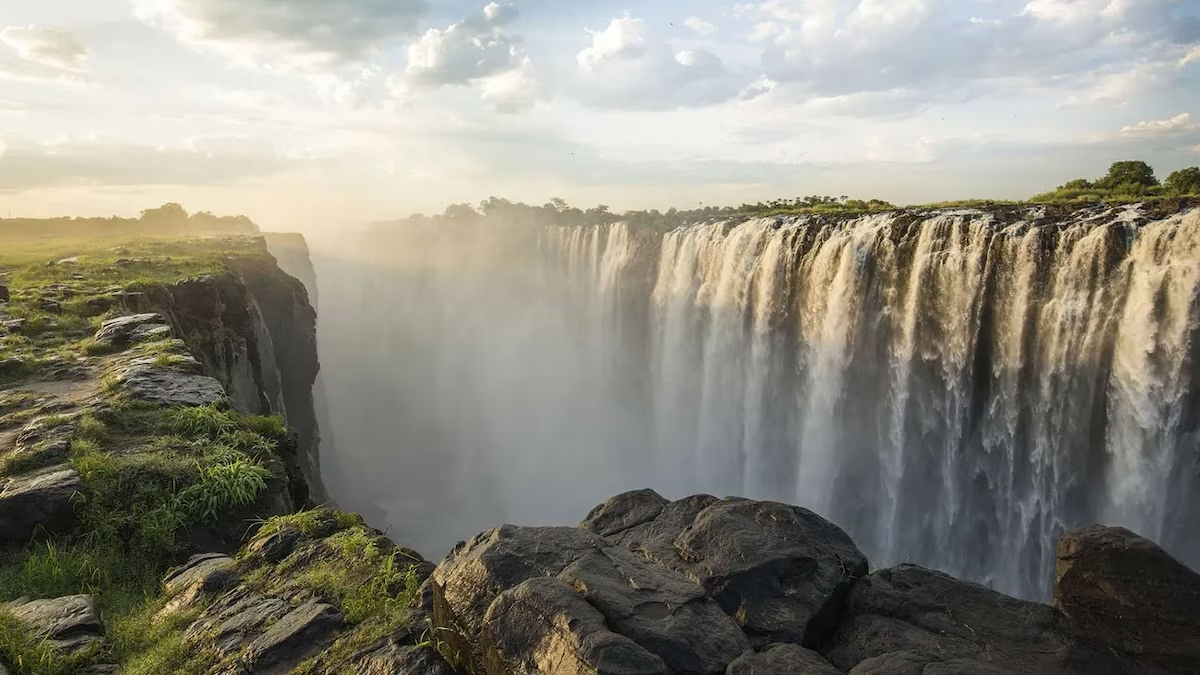
The quieter side of one of the world's great waterfalls
Livingstone was built, quite literally, around Victoria Falls: named for the explorer who "discovered" it for Europe in 1855, sitting on the Zambian bank of the Zambezi directly opposite Zimbabwe's more built-up Victoria Falls town. What the town gives you that the other side doesn't is proximity: Mosi-oa-Tunya National Park puts you close enough to the drop to feel the spray on your face year-round and, from mid-August to mid-January, to swim to the literal edge of the falls at Devil's Pool. The town itself is small, unhurried and easy to navigate in a few days, a genuine backpacker and safari hub rather than a resort strip.
What changed in the last decade is less dramatic than Porto or Tbilisi's tourism booms: Livingstone has grown steadily rather than exploded, and it still feels like a town that happens to have a world wonder next door rather than a destination built entirely around one. Riverfront five-star resorts sit a few kilometres from $15 hostel dorms, and both crowds end up at the same bars and rafting put-ins by evening.
The honest complications
Livingstone's tourist infrastructure, while solid, is thinner than Cape Town's or Nairobi's: fewer restaurant options, shorter opening hours, and activity operators that sometimes need advance booking rather than walk-up availability, especially for Devil's Pool in season. The falls themselves are seasonal in a way first-time visitors underestimate: spectacular but obscured by spray at peak flow (roughly March-May), and reduced to a fraction of their width by the late dry season (October-November), when Devil's Pool is easiest to reach but the visual spectacle is smaller. And Livingstone's tourist economy is priced in US dollars for anything activity-related, which catches some travelers off guard after budgeting in Kwacha for everything else.
Three areas, one short taxi ride apart
Livingstone spreads along a single main artery, Mosi-oa-Tunya Road, from the town centre down to the falls themselves, roughly 10 kilometres. Where you base yourself comes down to whether you want to walk to the falls or walk to a restaurant.
The Riverfront & Mosi-oa-Tunya Park
The stretch of Zambezi bank inside and beside Mosi-oa-Tunya National Park holds Livingstone's riverfront resorts, walking distance or a short shuttle from the falls entrance and the Devil's Pool boat departure point. It's the most scenic, most expensive base, with wildlife (zebra, giraffe and antelope roam the resort grounds) as a genuine feature rather than marketing.
Livingstone Town Centre
The compact grid around Mosi-oa-Tunya Road and the old colonial-era buildings holds the museum, the curio market, most restaurants, and both of the town's long-running backpacker hostels. It's a 10 to 15-minute drive from the falls, cheap by taxi or hostel shuttle, and the practical base for anyone not paying resort prices.
Upstream Zambezi Lodges
A handful of lodges, including Tongabezi under the Green Safaris brand, sit upstream of the falls on quieter stretches of river, trading walkability to the falls for privacy and a slower riverside pace. Good for a honeymoon leg or a second Livingstone visit rather than a first efficient one.
From five-star falls views to Africa's classic backpacker scene
Livingstone's hostel scene is one of the best-known in Southern Africa, two properties with genuine institutional reputations, and the riverfront resorts at the top end are priced and positioned to match anywhere on the continent. These picks cover the range.
At the top, The Royal Livingstone Hotel by Anantara sits inside Mosi-oa-Tunya National Park itself, a 15-minute walk from the falls entrance through resident zebra and giraffe, with an infinity-edge feel over the Zambezi and its own private falls access; from roughly $600 a night. A short drive away, the Avani Victoria Falls Resort (formerly Zambezi Sun, from around $250) is the more family-oriented riverfront option, with a large pool and the same easy falls access at a lower price point.
In the upstream, quieter bracket, The David Livingstone Safari Lodge & Spa (from around $200) sits on the Zambezi about 10 minutes from town with riverfront dining and a spa, while Tongabezi, now operated under the Green Safaris brand roughly 20 minutes upstream, is the most exclusive and secluded option, individually designed houses on the riverbank rather than a standard hotel layout.
At the budget end, Jollyboys Backpackers (dorms from about $15, established 1995) and Fawlty Towers (dorms from about $20, established 1996) are the two hostels that built Livingstone's backpacker reputation, both with pools, free or low-cost airport pickup, and free daily shuttles to the falls, close to the museum, market and banks in the town centre.
Zambian classics, Indian favourites, and a lot of grilled Zambezi fish
Livingstone's dining scene is small but genuinely varied for a town its size, running from market kantembas serving nshima for a couple of dollars to riverfront fine dining at the resorts. Most restaurants close by around 10pm, so plan dinner accordingly.
Cafe Zambezi
Livingstone's most-recommended spot for traditional Zambian cooking, with game meats, goat and grilled Mosi-oa-Tunya catfish alongside nshima and the local relishes. The place to try the food Zambians actually eat, rather than a hotel-buffet version of it.
The Golden Leaf
Livingstone's standout for Indian and broader Asian cooking, consistently the top-rated kitchen in town for anyone wanting a break from grills and nshima.
Olga's - The Italian Corner
A long-running Italian spot with wood-fired pizza and pasta, run as a training restaurant supporting a local vocational school, popular with both visitors and Livingstone's expat community.
Kubu Cafe
The best coffee and tea selection in town in a relaxed garden setting, good for breakfast before an early falls visit or a slow afternoon between activities.
The falls, the water, and the bridge between two countries
Everything in Livingstone orbits the Zambezi in one way or another. A few activities need booking a day or more ahead in peak season, especially Devil's Pool, and this chapter walks through the town roughly the way a good two or three days would.
Mosi-oa-Tunya National Park and the falls
Entry to the Zambian side of Victoria Falls, inside Mosi-oa-Tunya National Park, costs around $20 for international visitors, payable in USD or Kwacha at the main gate. The path leads across the Knife-Edge Bridge, permanently drenched in spray with the gorge dropping away on both sides, the single best free vantage point on the Zambian side. Bring a dry bag or poncho; you will get soaked. The park itself, small but genuine, also holds white rhino under guard, giraffe, zebra and antelope, worth an hour's walk or short game drive beyond the falls viewpoints.
Devil's Pool and Livingstone Island
The activity Livingstone is uniquely known for: a natural rock pool right at the lip of the falls, safe to swim in roughly mid-August to mid-January when the Zambezi's flow drops low enough. Trips run via boat to Livingstone Island with Green Safaris (the operator formerly known as Tongabezi Safaris), several departures daily in season, priced from around $120 for a shorter morning "breezer" up to $190-210 for a full lunch or high tea package. Book at least a day ahead in peak season (Aug-Oct); outside the swimmable window the same boats run scenic Livingstone Island tours without the pool.
Adventure on the water and the bridge
Full-day white water rafting on the Zambezi's Grade 3-5 rapids below the falls runs from about $140 per person with Livingstone-based operators including Livingstone's Adventure and Bundu Adventures; half-day trips run $110-140. Swimming under the falls, a calmer alternative in the pools below the main drop, costs around $70. On the Victoria Falls Bridge itself, spanning the gorge between Zambia and Zimbabwe, the bungee jump (111 metres, booked through Shearwater on the Zimbabwe side but reachable from Livingstone with a transfer) costs $194 per person, with a bridge swing and zipline as lower-intensity alternatives.
Cruises, the museum and the market
A Zambezi sunset cruise is the classic lower-key evening, from about $75 with operators like the African Queen; a full sunset river safari with drinks and snacks runs closer to $110. The Livingstone Museum in town, Zambia's oldest and largest, covers the country's history, ethnography and a David Livingstone collection, a good rainy-hour or midday-heat option. The Mukuni curio market near the falls and the town's central craft stalls are the places to buy carvings, textiles and jewellery directly from makers; bargaining is expected and good-natured.
One, two or three days, planned around the falls
Two to three full days covers Livingstone properly, including one big-ticket activity; even one well-planned day delivers the falls and a taste of the river.
- Morning
Mosi-oa-Tunya park and the falls. Arrive early for softer light and thinner crowds, cross the Knife-Edge Bridge, expect to get wet.
- Midday
Lunch in town. Nshima and relish at a market kantemba, or Cafe Zambezi for a fuller sit-down version of the same food.
- Afternoon
One activity. Swimming under the falls, a shorter rafting trip, or the museum and curio market if you'd rather stay dry.
- Sunset
Zambezi sunset cruise. The easy, low-effort way to close the day on the river.
- Day 1
The one-day route: Mosi-oa-Tunya park, lunch in town, an afternoon activity, sunset cruise.
- Day 2 morning
Devil's Pool or full-day rafting. Book Devil's Pool ahead if you're visiting mid-August to mid-January; otherwise a full white water day on the Zambezi.
- Day 2 evening
Dinner in town. The Golden Leaf for Indian, or Olga's for pizza, both an easy walk or short taxi from most town-centre stays.
- Days 1-2
The two-day route above, at a slightly gentler pace.
- Day 3, option A
Cross to Zimbabwe. Walk the Victoria Falls Bridge on the KAZA univisa for the wider panoramic view from the Zimbabwe side, and the bungee jump if you're doing it.
- Day 3, option B
Chobe National Park day trip. Cross into Botswana for a river safari among some of Africa's largest elephant herds, back in Livingstone by evening.
Small enough to walk, spread out enough to want a taxi after dark
Harry Mwanga Nkumbula International Airport (LVI) sits about 7 km from town, with direct flights from Johannesburg, Lusaka (55 minutes with Proflight Zambia or Zambia Airways) and a growing number of regional routes. A taxi into town runs $10-15, and most hostels and hotels offer free or low-cost pickup if you arrange it in advance. From Lusaka by road, the drive is 6 to 7 hours on a paved but occasionally rough route.
Within Livingstone, taxis are the practical way to move between the town centre, the riverfront hotels and the falls, roughly $5-10 for most in-town trips and a bit more out to the park. Many hostels and hotels run free shuttles to the falls once or twice daily; ask at check-in. Walking works fine inside the town centre grid during the day, but the road out to the falls and riverfront has no real pedestrian infrastructure, so use a taxi after dark.
Best time to visit and the falls' seasonal flow
Livingstone has a dry, warm climate May to October and a hotter, wetter one November to April. June to August is coolest and most comfortable for activities; September to October is hot but still dry, and the window when the falls' water level drops enough for Devil's Pool to open (from mid-August). March to May brings the falls to peak flow and maximum spray, spectacular but visually obscured at the viewpoints; by October and November the flow can drop enough to reduce parts of the falls to a trickle, though Devil's Pool access is at its easiest.
Cheap to sleep, activities are where the budget goes
Livingstone's accommodation and food are inexpensive by international standards; the main cost driver is activities, which are priced in USD and add up fast if you do more than one or two big-ticket items.
- Hostel dorm $15-20
- Market meals and kantembas $5-10
- Mosi-oa-Tunya park entry $20
- Walking, hostel shuttles, occasional taxi
- Boutique or riverfront hotel $150-250
- Restaurant meals $8-20
- One paid activity most days
- Taxis and hotel transfers
- Royal Livingstone or equivalent $600+
- Devil's Pool with lunch, private transfers
- Bungee, rafting and a helicopter flight
- Fine dining at the resorts
One of Zambia's safest towns, with a short list to know
Livingstone is low-risk for visitors, consistent with Zambia's overall Level 1 (exercise normal precautions) rating from the US State Department. Violent crime against tourists is rare, and the town's economy depends heavily on repeat and word-of-mouth tourism, which keeps most operators and guides reliable. Livingstone is also a reasonable choice for solo travellers: the hostel scene makes it easy to pair up for activities, and hotel and hostel staff are used to independent guests of every kind.
The practical things that catch visitors: opportunistic theft around the market and busy tourist areas, so keep valuables secured and bags closed; informal taxi and currency exchange overcharging, best avoided by agreeing fares before getting in and using bank ATMs rather than street changers; and wildlife awareness, since Mosi-oa-Tunya park and some riverfront hotel grounds have genuinely unfenced animals, so follow staff guidance, especially after dark. Emergency numbers are the national ones: police 999, ambulance 991, fire 993.
Two countries and a national park, all within reach
Livingstone's position at the meeting point of Zambia, Zimbabwe and Botswana makes it an unusually good base for cross-border day trips, all doable on the KAZA univisa or a separate day pass.
Victoria Falls, Zimbabwe side
The wider, more panoramic view of the falls, roughly two-thirds of the total frontage, is on the Zimbabwe side, a walk across the Victoria Falls Bridge from Livingstone. The KAZA univisa ($50) covers both countries on multiple entries, so most visitors treat it as a half-day add-on rather than a separate trip.
Chobe National Park, Botswana
A day trip across the Kazungula border brings you to Chobe National Park, home to one of Africa's largest elephant concentrations along the Chobe River. Full-day tours from Livingstone typically include the border crossing, a river cruise and a game drive, back by evening.
South Luangwa or Lower Zambezi
Not a true day trip given the flight times via Lusaka, but worth planning as a short add-on: both national parks are reachable by domestic flight for travelers who want to pair Livingstone's falls-and-adventure focus with a proper walking or river safari. Full detail on both parks is in the Zambia country guide.
Livingstone FAQ
Is Livingstone safe for tourists?
Yes. Livingstone is one of Zambia's safest towns for visitors; violent crime against tourists is rare. The main concerns are opportunistic theft in busy areas like the market and taxi overcharging, both manageable with normal city awareness.
How many days do I need in Livingstone?
Two to three full days covers it well: one for the falls and Mosi-oa-Tunya park, one for an adrenaline or water activity like rafting or Devil's Pool, and a third for a day trip to Zimbabwe's side of the falls or Chobe National Park in Botswana.
How much does Livingstone cost per day?
Budget travellers manage on $35-55 a day with hostels and market meals; mid-range runs $150-300 including a riverfront hotel and a couple of paid activities. Individual activities like rafting or Devil's Pool cost extra on top of any daily budget.
When can you swim in Devil's Pool?
Roughly mid-August to mid-January, when the Zambezi's water level drops low enough for the natural rock pool at the edge of the falls to be safe to swim in. Outside this window the flow is too strong and the pool closes.
Is Livingstone or Victoria Falls town better to stay in?
Livingstone (Zambia side) is quieter, cheaper and closer to Devil's Pool; Victoria Falls town (Zimbabwe side) has more restaurants and a livelier tourist strip with the wider panoramic falls view. Many visitors base in one and day-trip to the other on the KAZA univisa.
How do I get from Livingstone airport to town?
Harry Mwanga Nkumbula International Airport (LVI) is about 7 km from town; a taxi runs $10-15, and most hostels and hotels offer free or low-cost airport pickup if arranged in advance.
What is the best area to stay in Livingstone?
The Zambezi riverfront inside or beside Mosi-oa-Tunya National Park for falls-view hotels and walkable access to Devil's Pool boats; Livingstone town centre along Mosi-oa-Tunya Road for budget hostels, restaurants and the museum, a short taxi from the falls.
Do I need a visa to visit Livingstone?
Most nationalities need either Zambia's standard visa (free for many, $50 on arrival for others) or the KAZA univisa ($50), which also covers a day trip across the bridge into Zimbabwe. See the full Zambia guide for details.
Is Livingstone walkable?
The town centre is small and walkable in the day, but the falls entrance, riverfront hotels and activity operators are spread out enough that taxis or hotel shuttles are worth using, especially after dark.
Can I see Victoria Falls from both Zambia and Zimbabwe in one trip?
Yes, easily. The KAZA univisa ($50) covers both countries on multiple entries, so most visitors walk across the Victoria Falls Bridge and see the wider Zimbabwe panorama the same day or the next.
What Stays With You
Livingstone doesn't try to out-glamour the falls, and that restraint is the town's real appeal. You get the same natural wonder as the busier side of the border, closer to the water and with a fraction of the crowds, and a town that still runs at the pace of a place that existed before the tourists arrived. The spray on your face at the Knife-Edge Bridge, a plate of nshima and grilled catfish at a market stall that cost less than a coffee back home, the specific vertigo of standing waist-deep in Devil's Pool with a hundred-metre drop an arm's length away: none of it needed staging.
Go for the falls. Stay because the version of Victoria Falls you get from the Zambian side, quieter, closer, and paired with some of Africa's best walking safaris a short flight away, is the one that's harder to forget.