
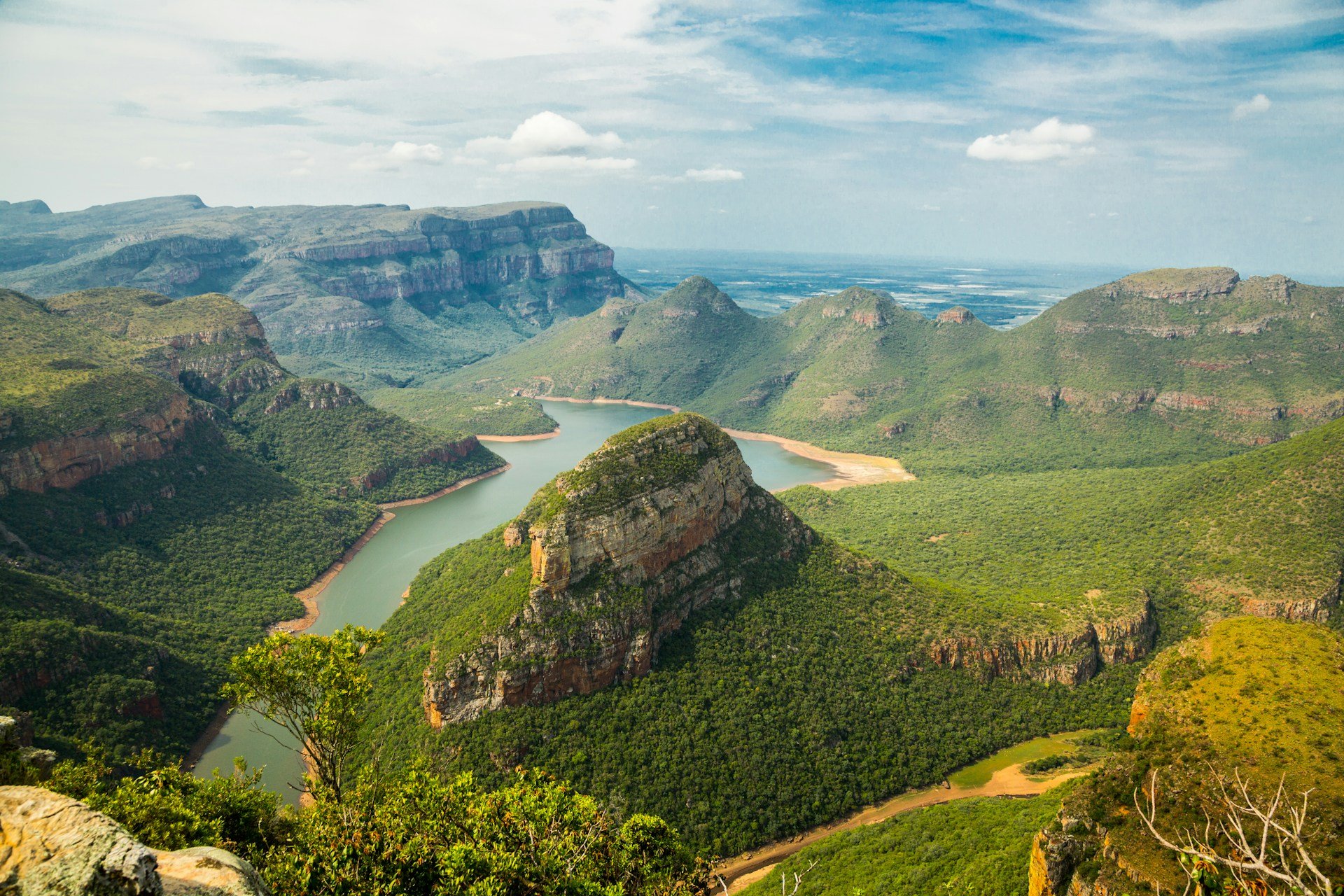
What You're Actually Getting Into
South Africa is not one trip, it's several, stitched together by distance and a shared history that is still being reckoned with. A Cape Town week feels like a European coastal city with better light and cheaper wine. A Kruger safari feels like nothing else on the continent's tourist circuit outside East Africa. A Garden Route drive feels like California's Highway 1 with penguins. Most first-time visitors are surprised by how developed the tourist infrastructure is: paved highways, reliable car rental, fast wifi, English everywhere, and a currency that makes nearly everything feel like a discount.
The other half of the honest picture is that South Africa carries real, well-documented crime and inequality problems, a legacy of apartheid that ended just over three decades ago and that the country is still working through. This guide doesn't minimize that, and it doesn't let it dominate the conversation either: millions of tourists visit every year, stick to the well-established circuit, and have no safety incident at all. The skill is knowing which parts of the honest picture apply to a traveler on the standard route, and which don't.
The honest complications
South Africa is large: Cape Town to Kruger is roughly the distance from London to Rome, and the Garden Route drive between them adds days, not hours. This is not a country you improvise casually without a car or a plan. Eskom, the state power utility, spent the early 2020s inflicting rolling blackouts (load shedding) on the whole country; that crisis has eased substantially and Cape Town's tourist areas run on largely independent backup systems regardless, but it's a recent enough memory that older guides still warn about it as an active problem. And the crime statistics, when read without context, are genuinely alarming: South Africa has one of the world's highest murder rates. Almost none of it touches the tourist circuit, which is concentrated in specific under-resourced areas most visitors never see, but it's worth understanding why the country's safety reputation and the lived experience of a Cape Town or Kruger holiday can diverge so sharply.
A History Worth Knowing
South Africa's modern story runs from Dutch and British colonization through nearly half a century of legally enforced racial segregation, apartheid, to Nelson Mandela's release from prison in 1990 and the country's first fully democratic election in 1994. Understanding this isn't optional background for a visitor: it's the context for the townships you'll see from the highway, the museums the country has built to reckon with its own past, and the "Rainbow Nation" language South Africans use, sometimes hopefully, sometimes wearily, about what came after.
- 1652
Dutch colonization begins. The Dutch East India Company establishes a supply station at the Cape, the start of European settlement.
- 1910
Union of South Africa. British colonies and Boer republics merge; political power remains almost entirely white.
- 1948
Apartheid becomes law. The National Party formalizes racial segregation into a comprehensive legal system covering where people could live, work and travel.
- 1964–1990
Mandela imprisoned. 27 years, 18 of them on Robben Island off Cape Town, for opposing apartheid through the African National Congress.
- 1990–1994
The transition. Mandela's release, negotiations, and the first democratic election on 27 April 1994, which Mandela's ANC wins.
- 2024–present
Government of National Unity. No single party wins a majority in 2024 for the first time since 1994; a multi-party coalition, including the ANC and the Democratic Alliance, now governs.
Read the full history: colonization, apartheid, Mandela and the Rainbow Nation
The Dutch East India Company's 1652 outpost at the Cape, meant only as a supply station for ships rounding Africa, grew into permanent settler colonies. British rule followed from the early 1800s, and conflict between British colonizers and Dutch-descended Boer settlers culminated in the Boer Wars, before the two combined into the Union of South Africa in 1910, a state built on near-total exclusion of the Black majority from political power.
Apartheid, formalized in 1948, went far beyond informal segregation: the Group Areas Act dictated where each racial group could live, the Population Registration Act classified every citizen by race, and pass laws controlled Black South Africans' movement. Forced removals uprooted entire communities, including Cape Town's District Six and Bo-Kaap. Resistance, led by the African National Congress and figures including Nelson Mandela, Oliver Tambo and Steve Biko, was met with escalating state violence, including the 1960 Sharpeville massacre and the 1976 Soweto uprising, in which police killed student protesters.
Mandela was imprisoned in 1964 and spent 18 of his 27 years at Robben Island, now a museum and UNESCO World Heritage Site reachable by ferry from Cape Town's V&A Waterfront. International sanctions, internal resistance and economic pressure eventually forced President F.W. de Klerk to lift the ban on the ANC and release Mandela in February 1990. Four years of negotiation followed, culminating in the country's first election open to all races on 27 April 1994. Mandela served as president until 1999 and became a global symbol of reconciliation over retribution, notably through the Truth and Reconciliation Commission, which offered amnesty in exchange for full public disclosure of apartheid-era crimes rather than prosecuting them.
The Rainbow Nation today. Archbishop Desmond Tutu coined the phrase to describe the aspiration of a multiracial, multicultural democracy. The reality three decades on is more complicated: deep economic inequality persists largely along the racial lines apartheid drew, and it shapes almost everything a visitor sees, from housing patterns visible on the drive from the airport to the demographics of who works in tourism versus who owns the businesses. The 2024 election, in which the ANC lost its parliamentary majority for the first time since 1994 and entered a coalition government, is widely read as voters expressing frustration with unfinished promises on inequality, crime and infrastructure.
Top Destinations
South Africa divides into five travel zones that rarely overlap on a single short trip: Cape Town and the Winelands, the Kruger safari circuit, the Garden Route connecting them by road, Durban and KwaZulu-Natal on the Indian Ocean coast, and Johannesburg with the Highveld interior. Distances are real: this is a country the size of France and Germany combined. Most visitors pick two zones and connect them by a short domestic flight rather than attempting all five.
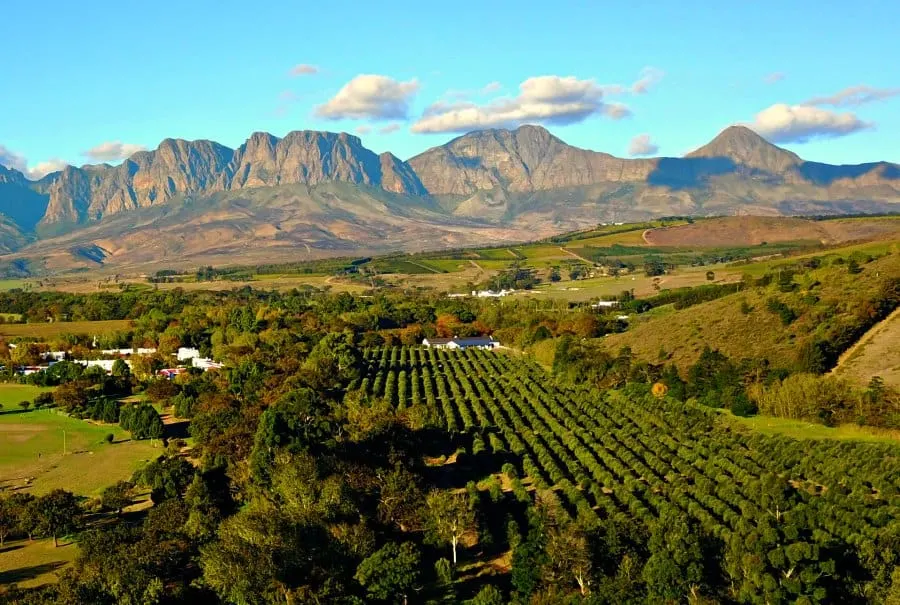
Cape Town, the Mother City
Cape Town is consistently rated among the world's most beautiful cities, and the geography does the heavy lifting: Table Mountain rises straight out of the city center, the Atlantic and False Bay coastlines bracket it on two sides, and the Winelands begin within an hour's drive. A full guide to the city, its neighborhoods, hotels, restaurants and a detailed itinerary, is linked from this page; the short version is that three to four days covers Table Mountain, the V&A Waterfront, Robben Island and Bo-Kaap, and a Winelands day trip to Stellenbosch and Franschhoek is close to mandatory.
Kruger National Park
Kruger is one of Africa's largest and most accessible game reserves, roughly the size of Israel, with a well-developed network of paved and gravel roads that makes a self-drive safari genuinely realistic, alongside private lodges on its unfenced western border for a guided, all-inclusive experience. Entry costs 440 rand (about $27) per adult per day for international visitors, plus a per-vehicle conservation fee, and gates open at 5:30am October to March and 6am the rest of the year. Most experienced safari planners recommend three to four nights, six to eight game drives, to reliably see the Big Five (lion, leopard, elephant, buffalo, rhino) across different times of day. The dry winter months, May to September, concentrate animals at waterholes and thin out the bush for better sightings; the wet summer brings newborn animals and dramatic afternoon storms but denser vegetation.
The Garden Route
A roughly 200-kilometer coastal stretch from Mossel Bay to Storms River, threaded together by the N2 highway, that most visitors drive over three to five days between Cape Town and Port Elizabeth. Wilderness has quiet lagoons and a birdwatcher's reputation; Knysna is known for its dramatic sandstone lagoon heads and oyster culture; Plettenberg Bay pairs beaches with the Robberg Nature Reserve's seal colony; and Tsitsikamma National Park, with its towering indigenous forest and coastal cliffs, is the anchor for adventure activities including some of the world's highest bungee jumps and the multi-day Otter Trail, the country's oldest hiking route. This is a driving trip more than a checklist of towns: budget real time for the road itself.
Durban & the Drakensberg
South Africa's third-largest city sits on the warm Indian Ocean, with a subtropical climate, the country's largest population of Indian heritage residents (and correspondingly excellent curry), and the Golden Mile beachfront promenade. Inland, the Drakensberg range, a UNESCO World Heritage Site straddling the border with Lesotho, has the country's most dramatic hiking and climbing outside the Cape, with peaks over 3,000 meters and San rock art sites thousands of years old. This zone sees far fewer international visitors than Cape Town or Kruger, which is part of its appeal for travelers on a second or third trip.
Johannesburg & the Highveld
Johannesburg is South Africa's largest city and its economic engine, and most visitors pass through OR Tambo International Airport, the country's main air hub, without stopping. That's a missed opportunity for travelers with an extra day: the Apartheid Museum is one of the most thorough and affecting museums on the subject anywhere, Soweto's history as the heart of the anti-apartheid struggle (including Mandela's former home) is best understood with a guided tour, and Constitution Hill, a former prison turned home of South Africa's Constitutional Court, ties the country's past directly to its democratic present. The Gautrain rail link makes central Johannesburg and Pretoria, the administrative capital 50 kilometers north, straightforward to combine.
Beyond the main circuit
With extra time, these reward the detour more than a rushed extra day in Cape Town would.
Hermanus whale watching
Southern right whales breed in Walker Bay June through December, with land-based sightings so close that Hermanus employs an official "whale crier" to announce them. September and October are peak season.
Golden Gate Highlands
Sandstone cliffs in shades of gold and red, San rock art, and hiking that sees a fraction of Kruger's crowds. A genuine off-circuit park most first-time visitors never hear about.
Namaqualand wildflowers
For about six weeks in August and September, the semi-desert Northern Cape erupts into one of the world's great wildflower displays. A specific, narrow window that rewards planning around it.
Culture & Etiquette
South Africa has 11 official languages, Zulu, Xhosa, Afrikaans, English, Sepedi, Tswana, Sotho, Tsonga, Swati, Venda and Ndebele, and English, while a first language for a minority, functions as the common language of business, signage and tourism nationwide. The concept of ubuntu, roughly "I am because we are," a philosophy of shared humanity and community, is genuinely embedded in everyday South African social life rather than being a tourist-brochure abstraction, and it shows up in the warmth and directness with which South Africans across every background tend to engage with visitors.
Do
- Tip in cash. 10-15% at restaurants, 10-20 rand for parking guards and gas station attendants (a normal part of the economy, not a scam), and 10-15% for safari guides and trackers, ideally in a dedicated tip box or envelope.
- Greet before you ask. A "hello, how are you" before a question, whether to a shopkeeper, guide or hotel staff, lands far better than jumping straight to the request; it's a widely shared social norm across South African cultures.
- Ask before photographing people, especially in townships. Township tours run by local guides who grew up there are the respectful way to see them, not a self-driven detour.
- Engage with the history honestly. South Africans, across race and background, are generally direct and open about discussing apartheid and its ongoing effects with visitors who ask in good faith.
- Carry some cash for tips and small vendors, though cards are accepted almost everywhere in tourist areas, including for surprisingly small amounts.
Don't
- Drive into a township or unfamiliar area unguided to "see the real South Africa." Go with a local guide who has relationships there; it's safer and the experience is dramatically better.
- Assume Cape Town represents the whole country. Cape Town is unusually developed, coastal and cosmopolitan relative to much of South Africa; treating it as representative misreads the country.
- Flash valuables in cities. Keep phones and cameras low-key on city streets, particularly around Johannesburg's CBD and Cape Town's train station area.
- Underestimate driving distances. The country's scale surprises first-time visitors; Cape Town to Kruger by road is a multi-day undertaking, not a day trip.
- Use the word "coloured" carelessly. In South Africa it's a specific, official demographic category (referring to a distinct mixed-heritage community, especially in the Western Cape) rather than the dated and offensive term it is elsewhere; used respectfully and in the local context it is not a slur, but visitors should understand it before using it themselves.
Deeper culture: braai culture, the 11 languages and load shedding etiquette
The braai. More than a barbecue, the braai is a genuine social institution: National Braai Day falls on 24 September (Heritage Day), and being invited to one is being invited into someone's actual social life, not a tourist performance.
Multilingual by design. Signage, government services and the constitution itself operate across all 11 official languages. A South African moving between English, Afrikaans and a home language, sometimes mid-sentence, in a single conversation is completely normal and not performed for visitors.
Load shedding, if it returns. South Africa went through a severe rolling-blackout crisis in the early 2020s that has eased substantially through 2026, but locals still organize daily life around the possibility. If a schedule is posted or mentioned, it's a real planning tool, not smalltalk; most hotels and restaurants in tourist areas have backup power regardless.
Food & Drink
South African food reflects the country's layered history: Cape Malay spice traditions from enslaved people brought from Indonesia and Southeast Asia by Dutch colonizers, British influence, Indian flavors concentrated around Durban, and an indigenous braai (barbecue) culture that cuts across every community. The Cape Winelands, meanwhile, produce serious wine at prices that make a good bottle a rounding error rather than a splurge.
Braai & Boerewors R100-250
The South African barbecue, built around boerewors (a coiled, spiced sausage), lamb chops and steak over an open wood or charcoal fire. A genuine social institution, not just a cooking method; National Braai Day is 24 September.
Bobotie R120-180
Cape Malay spiced minced meat, usually beef or lamb, baked with a golden egg custard topping, dried fruit and curry spices, served with yellow rice. The closest thing South Africa has to a national dish.
Cape Winelands wine R80-200/tasting
Stellenbosch and Franschhoek, both under an hour from Cape Town, have produced wine since the 1600s. Chenin Blanc and Pinotage (a South African-bred red grape) are the signature pours; tastings at most estates run R80-200.
Biltong & Droëwors R150-300/kg
Air-dried, vinegar-and-spice-cured meat, similar to jerky but distinct in texture and flavor. Sold everywhere from petrol stations to farm stalls; a genuine national obsession and an easy, well-loved souvenir.
Bunny Chow R60-100
A hollowed-out half or quarter loaf of white bread filled with curry, invented by Durban's Indian community. Best eaten in Durban itself, where it originated and remains a daily lunch staple.
Cape seafood & snoek R150-300
Snoek, a firm, oily local fish, is traditionally braaied with apricot jam glaze. Cape Town's harbors also supply excellent line fish, crayfish and oysters at a fraction of European prices.
When to Go & Itineraries
There is no single best month for all of South Africa at once, and that's the first planning decision to make honestly. Cape Town and the Winelands peak in the southern hemisphere summer, November to March: warm, dry, and busy with domestic holidaymakers over the December-January school break, when prices spike accordingly. Kruger safari is at its best in the dry winter, May to September, when thin vegetation and waterhole concentration make animals far easier to spot. A trip combining both zones has to pick a season that compromises on one of them, or split the difference in the April-May or September-October shoulder windows.
All four seasons compared, with temperatures
| Season | Cape Town | Kruger | Notes |
|---|---|---|---|
| Nov-Mar (summer) | Best: 18-28°C, dry | Wet, lush, newborn animals, denser bush | Cape Town peak prices & crowds, especially Dec-Jan |
| Apr-May (autumn) | Good, cooling | Improving toward dry season | Strong shoulder-season compromise for both zones |
| Jun-Aug (winter) | Cool, rainy: 8-18°C | Best safari: dry, thin bush, waterhole sightings | Cape Town's rainy season; Kruger at its peak |
| Sep-Oct (spring) | Improving, windy | Still strong, warming up | Whale watching at Hermanus peaks Sep-Oct |
Year-round averages: Cape Town 12-26°C depending on season, Kruger 12-32°C with a much bigger summer-winter swing, Johannesburg's Highveld altitude keeps it cooler and prone to afternoon summer thunderstorms, Durban stays warm and humid nearly year-round.
Itineraries
Two weeks is the realistic minimum to combine Cape Town, the Winelands and a proper Kruger safari without feeling rushed. A one-week trip should pick one zone, not attempt both. Three weeks adds the Garden Route drive between Cape Town and the Eastern Cape.
- Days 1-4
Cape Town. Table Mountain, the V&A Waterfront, Robben Island, Bo-Kaap and District Six, with a full day in Stellenbosch and Franschhoek. See the full Cape Town city guide for a day-by-day breakdown.
- Days 5-7
Short safari add-on. Fly to a private reserve bordering Kruger (Sabi Sands or similar) for two nights and four game drives, or extend Cape Town with Cape Point and a Hermanus day trip in whale season instead.
- Days 1-4
Cape Town & Winelands. The city circuit plus Stellenbosch and Franschhoek, with a day trip to Cape Point and Boulders Beach.
- Days 5-6
Hermanus. Two nights on the whale coast (in season) or straight through to the safari leg.
- Days 7-8
Fly to Kruger. Domestic flight from Cape Town to Skukuza or Kruger Mpumalanga International, roughly two hours.
- Days 9-12
Kruger safari. Four nights, six to eight game drives, split between self-drive in the park and a private lodge if budget allows.
- Days 13-14
Johannesburg. The Apartheid Museum and a guided Soweto tour before an international departure from OR Tambo.
- Days 1-5
Cape Town & Winelands extended. Add a second Winelands day (Constantia's older estates) and more time in Bo-Kaap and Woodstock.
- Days 6-10
The Garden Route. Self-drive from Cape Town through Hermanus, Wilderness, Knysna, Plettenberg Bay and Tsitsikamma.
- Days 11-12
Port Elizabeth to Kruger. Fly onward from the Eastern Cape rather than backtracking to Cape Town.
- Days 13-17
Kruger safari, extended. Five nights, mixing self-drive days with at least one private-reserve stay for guided night drives.
- Days 18-21
Johannesburg & the Drakensberg. The Apartheid Museum, Soweto, and either the Drakensberg or Pretoria before departure.
Getting there & around
Three airports matter: Cape Town International (CPT), OR Tambo International in Johannesburg (JNB, the main long-haul hub), and King Shaka International in Durban (DUR). Domestic flights between them, and onward to Kruger's Skukuza or Kruger Mpumalanga International airports, run frequently on airlines including FlySafair, Airlink and CemAir. A rental car is the standard way to see the Winelands, the Garden Route and self-drive Kruger; South Africa drives on the left, and an International Driving Permit alongside your home license is recommended though not always strictly enforced for short tourist stays.
All transport options: Gautrain, Baz Bus, Uber and domestic flights
| Option | Price | Notes |
|---|---|---|
| Domestic flights | R800-2,500 | Cape Town-Johannesburg roughly 2 hrs; book ahead for better fares on FlySafair, Airlink. |
| Rental car | R400-900/day | The default for the Winelands, Garden Route and self-drive Kruger; drives on the left. |
| Gautrain (Johannesburg/Pretoria) | R25-190 | Fast, safe rail link connecting OR Tambo, Sandton, Johannesburg CBD and Pretoria. |
| Uber & Bolt | R50-250 | Widely used and generally considered safer than hailing a minibus taxi or unmarked cab. |
| Baz Bus | Route-dependent | Hop-on-hop-off backpacker bus network linking Cape Town, the Garden Route, Durban and Johannesburg. |
Practical prep: a local SIM (Vodacom or MTN, available at the airport) or an eSIM before landing covers the whole trip cheaply; coverage is strong even in Kruger's rest camps. Standard travel insurance should specifically cover medical evacuation given the country's distances. GetTransfer offers fixed-price airport pickups if you'd rather not navigate a first Uber pickup point on arrival.
Where to stay
Cape Town, City Bowl & Waterfront
The default base for a first visit: walkable to Table Mountain's cable car, the V&A Waterfront and most restaurants. See the full Cape Town city guide for specific hotel picks by neighborhood and budget.
Kruger private lodges
Bordering reserves like Sabi Sands and Timbavati offer unfenced, guided game drives with rates that typically include meals, drinks and two drives a day. Kruger's own rest camps (Skukuza, Satara) are the self-drive, budget-friendly alternative from around R1,200/night.
Winelands estate stays
Stellenbosch and Franschhoek both have working wine estates with guest accommodation, waking up among vineyards with a tasting room a short walk away.
Garden Route towns
Knysna and Plettenberg Bay have the widest range of guesthouses and B&Bs along the route; book ahead in the December-January South African summer holidays, when domestic tourism fills the coast.
Budget Planning
South Africa is excellent value for Western visitors thanks to a favorable exchange rate, roughly 16-17 rand to the US dollar through 2026, though Kruger safari lodges and Cape Town's top hotels can push comfortable-tier spending well past budget destinations elsewhere in Africa. The biggest single cost variable is safari style: self-drive Kruger with rest-camp accommodation is dramatically cheaper than an all-inclusive private lodge.
- Hostel or budget guesthouse
- Self-catering & casual meals
- Self-drive Kruger, rest-camp stays
- Uber & occasional rental car
- 3-star hotel or boutique guesthouse
- Restaurant meals, Winelands lunches
- Rental car throughout
- A few days at a mid-range safari lodge
- 5-star Cape Town or Waterfront hotels
- All-inclusive private safari lodges
- Fine dining & premium wine estates
- Domestic flights over long drives
Quick reference prices: coffee, wine, entry fees
| Coffee (flat white) | R25-40 |
| Winelands tasting | R80-200 |
| Restaurant meal (mid) | R150-300 |
| Kruger international entry | R440/day |
| Robben Island tour | ~R825 (~€42.50) |
| Table Mountain cable car | Check official site, seasonal |
| Rental car (economy) | R400-700/day |
| Domestic flight, Cape Town-Johannesburg | R800-2,500 |
Prices reflect August 2026 research and drift over time, especially around the December-January domestic holiday peak. Treat them as a planning baseline, not a quote.
Visa & Entry
South Africa has a permissive visa regime for most Western passports: US, UK, EU, Australian and Canadian citizens enter visa-free for up to 90 days. Two details catch people out. First, your passport needs at least 30 days of validity remaining beyond your intended departure date, and South African immigration rules call for at least two blank visa pages. Second, from 1 July 2026 all travelers must submit an online traveler declaration before entering or leaving by air, land, sea or rail; check the South African Department of Home Affairs site for the current process rather than a third-party paid visa site.
✓ Passport validity
At least 30 days beyond your departure date, plus two blank visa pages. Older guidance cited longer windows; confirm current rules before you fly.
✓ Yellow fever certificate
Required only if arriving from, or transiting through, a country South Africa classifies as yellow fever risk. Not required for direct travel from Europe, North America, Australia or most of Asia.
✓ Online traveler declaration
Mandatory from 1 July 2026 for all entries and exits, air, land, sea or rail. Complete it through official Home Affairs channels before travel.
✓ Proof of accommodation & funds
Not always checked, but keep a printed or digital booking confirmation and evidence of sufficient funds handy at immigration.
| South Africa | Namibia | |
|---|---|---|
| Trip style | Multi-region: city, wine country and safari in one trip | A single, sweeping self-drive circuit |
| Safari | Kruger, dense wildlife, easy self-drive or luxury lodges | Etosha, sparser but starkly scenic; self-drive dominant |
| Cities & coast | Cape Town, one of the world's most complete city breaks | Windhoek is a functional stopover, not a destination |
| Crowds | Well-developed tourist infrastructure, busier in peak season | Vast distances, some of the emptiest roads on the continent |
| Budget | $80-100/day budget tier, more variance at the top end | Comparable budget tier, car rental costs dominate |
An Honest Safety Chapter
The US State Department rates South Africa Level 2, Exercise Increased Caution, citing crime, and it's worth taking that seriously without overreacting to it. South Africa has one of the world's highest recorded crime rates, but it is heavily concentrated in specific under-resourced urban areas that the standard tourist circuit, Cape Town's City Bowl and Waterfront, the Winelands, Kruger's lodges, the Garden Route towns, does not pass through. Millions of visitors a year stick to that circuit and have no incident at all. The real risks for a typical visitor are opportunistic theft, not violent confrontation, and road safety, given the country's genuinely elevated traffic fatality rate.
Petty theft
Phone snatching, car break-ins and pickpocketing are the realistic risk in tourist areas: crowded markets, city center streets, and cars left visibly loaded with luggage. Keep valuables out of sight and don't leave bags on café tables.
Carjacking & night driving
Rare on the tourist circuit but concentrated on isolated roads and around city outskirts after dark. Avoid driving between cities at night, keep doors locked and windows up in city traffic, and don't stop for staged breakdowns.
Traffic safety
Traffic fatality rates are significantly higher than in the US or UK, driven by speeding, drunk driving and minibus taxi behavior. Drive defensively, especially at dusk when wildlife and pedestrians are harder to see on rural roads.
Two more things worth knowing: townships and load shedding's tail end
Townships. Areas like Soweto (Johannesburg) or Khayelitsha (Cape Town) are not safe for unguided visits, but a reputable, locally-run guided tour is genuinely one of the most worthwhile things a visitor can do in South Africa, offering real historical and social context that a beach or a game drive can't.
Load shedding. Eskom went more than a year without scheduled outages through mid-2026, a dramatic turnaround from the severe rolling blackouts of the early 2020s, though the utility itself cautions the grid remains a work in progress and stage 2-6 cuts could theoretically return in a bad winter. Most hotels and tourist-facing businesses run backup power regardless, so this rarely affects a visitor directly even when it happens.
Solo women travelers
South Africa requires more deliberate planning for solo women than many destinations: external safety indices rate it notably lower here than the country's overall tourist-circuit safety would suggest, largely reflecting the same crime concentration described above rather than risk specific to well-run tourist areas. Cape Town, the Winelands, Kruger's lodges and the Garden Route are all manageable solo with standard precautions: use Uber rather than hailing taxis, avoid solo hikes on Table Mountain (go with a group or a guided trail), and book accommodation with strong recent reviews. Full detail on our Solo Woman Explorer pages.
Emergency numbers
Embassies and family travel
Most embassies are concentrated in Pretoria (the administrative capital), with consulates in Cape Town and Johannesburg. The US Consulate General in Cape Town and the UK Consulate-General are both in the city center; check your embassy's site for the current address before you travel, as consular offices do relocate.
Family travel: South Africa works well for families who stick to the established circuit: Kruger's private lodges often run dedicated kids' programs and family-friendly game drives, Cape Town's Two Oceans Aquarium and Boulders Beach penguin colony are easy wins with children, and self-drive gives families control over pacing that a packed group tour doesn't. The same road-safety and township cautions above apply with extra weight when children are along.
South Africa FAQ
Is South Africa safe to visit?
The well-trodden tourist circuit, Cape Town's tourist areas, the Winelands, Kruger's lodges and the Garden Route towns, is generally safe with normal city awareness. The US State Department rates the country Level 2, Exercise Increased Caution, mainly for crime concentrated in specific urban areas after dark and on isolated roads, not the sights visitors actually go to.
Do I need a visa for South Africa?
Citizens of the US, UK, EU, Australia and Canada can enter visa-free for up to 90 days. Your passport needs at least 30 days of validity beyond your departure date and, per South African immigration rules, at least two blank visa pages.
How much does a trip to South Africa cost?
Budget travelers manage on roughly $80-100 a day (about R1,300-1,600), mid-range on $150-250. Kruger safari lodges and Cape Town's top hotels can push comfortable-tier spending well past $300 a day.
When is the best time to visit South Africa?
It depends what you're there for. Cape Town and the Winelands peak November to March, the southern hemisphere summer. Kruger safari is best in the dry winter months, May to September, when animals gather at waterholes and bush is thin. There is no single best month for all of South Africa at once.
How many days do you need in South Africa?
Two weeks covers Cape Town, the Winelands and a Kruger safari without rushing. Three weeks adds the Garden Route drive between Cape Town and Port Elizabeth. A one-week trip should pick either Cape Town or Kruger, not both.
Is it safe to self-drive in South Africa?
Yes on the main tourist routes, Garden Route, Winelands, Kruger's paved roads, with normal precautions: avoid driving after dark outside cities, keep doors locked and windows up in city traffic, and don't stop for staged breakdowns on quiet roads. Traffic accident rates are higher than in the US or UK, so drive defensively.
What is South Africa's capital?
South Africa has three capitals: Pretoria is the administrative capital and seat of government, Cape Town is the legislative capital where parliament sits, and Bloemfontein is the judicial capital, seat of the Supreme Court of Appeal.
Is load shedding still a problem in South Africa?
Not currently. Eskom, the state power utility, went more than a year without any scheduled load shedding through mid-2026 after a severe crisis in the early 2020s. Outages are not the routine disruption they were, though the grid remains a work in progress.
What language is spoken in South Africa?
South Africa has 11 official languages, including Zulu, Xhosa, Afrikaans and English. English is the language of business, signage and tourism nationwide, so visitors get by comfortably without any other language.
Do I need a yellow fever certificate for South Africa?
Only if you're arriving from, or have transited through, a country South Africa classifies as yellow fever risk. Travelers arriving directly from Europe, North America, Australia or most of Asia do not need one.
Is South Africa good for a safari and a city trip in one visit?
Yes, this is the country's signature strength. Cape Town and Kruger are roughly a two-hour flight apart, and combining a few days of city and wine country with a few days of safari is the classic South Africa itinerary.
What Stays With You
South Africa doesn't ask you to ignore its harder parts to enjoy its best ones, and that's part of what makes a trip here different from an easier, simpler destination. The cable car up Table Mountain and the drive through Soweto both belong to the same country, and neither cancels the other out. Most visitors leave having seen a wine estate that rivals Europe's best, a safari that delivers on every promise, and a museum or guided township tour that changes how they think about the twentieth century.
Go with two weeks if you can find them, connect Cape Town to Kruger by air rather than trying to drive the whole country, and don't let the honest safety chapter above talk you out of a trip that consistently ranks among travelers' best.