
What You're Actually Getting Into
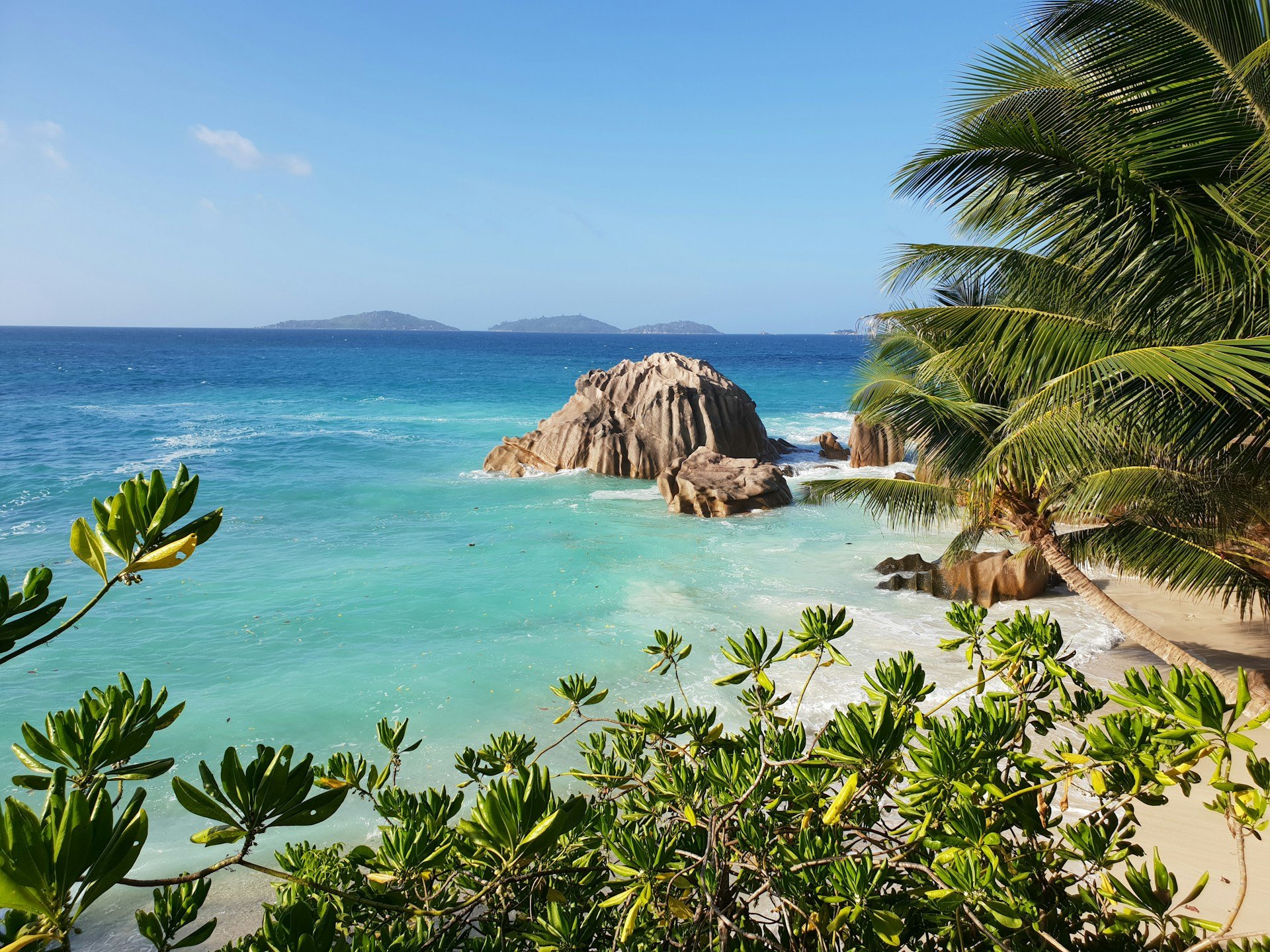
Seychelles is 115 islands scattered across roughly 1.3 million square kilometres of the western Indian Ocean, but the country splits cleanly in practice: a handful of granite "inner islands", Mahé, Praslin and La Digue, where about 98% of the population actually lives and where essentially all of the tourism infrastructure sits, and a scatter of remote coral "outer islands" hundreds of kilometres further out, reachable mainly by scientific expedition or serious live-aboard charter rather than casual holiday planning. Nobody lived here at all before European sailors arrived; the French claimed the islands in 1756 and the population that exists today, a close mix of African, French, Indian and Chinese ancestry, is entirely a product of the plantation economy and the migration that followed.
The tourism industry the country runs on skews heavily toward five-star, all-inclusive resorts, and the marketing has done its job: Seychelles reads internationally as the most exclusive Indian Ocean fantasy, well beyond Mauritius or the Maldives. That reputation is not entirely earned by the actual cost of visiting. Guesthouses and self-catering apartments exist alongside the resorts, especially around Beau Vallon on Mahé, and a genuinely independent, mid-range trip is possible if you're willing to island-hop by ferry and small plane instead of a private yacht transfer.
The honest complications
Seychelles is more expensive than mainland Africa or Southeast Asia by a wide margin, because almost everything, from imported food to building materials to fuel, arrives by ship or plane. Moving between islands adds real cost and logistics on top of that: a Mahé-Praslin flight or ferry, then a further boat to La Digue, each with its own schedule to plan around. Most beaches offer little natural shade, so sun protection is not optional, and a 2026 CDC health notice flags chikungunya, a mosquito-borne illness, as a real if manageable risk worth taking mosquito repellent seriously for. None of this makes Seychelles a hard trip; it just means the postcard version undersells the planning it actually takes.
A History Worth Knowing
Seychelles has no precolonial history in the usual sense, because the islands had no permanent population before the 18th century. What followed is a short, compressed story: French settlement and slavery, a British takeover during the Napoleonic Wars, a peaceful path to independence, an almost immediate coup, and then one of the more successful democratic transitions and environmental-policy stories in the Indian Ocean.
- 1756
French claim. France formally claims the islands, naming them for Jean Moreau de Séchelles, Louis XV's finance minister; permanent settlement follows in the 1770s with enslaved labour brought from Madagascar and East Africa to run spice and cotton plantations.
- 1814
Ceded to Britain. The Treaty of Paris, ending the Napoleonic Wars, formally cedes Seychelles to Britain, though French language, Catholicism and the Creole culture that had already formed remain dominant.
- 1903
Own crown colony. Seychelles is separated from Mauritius, which had administered it since 1810, and becomes a distinct British Crown Colony.
- 1976
Independence. Declared 29 June, with a coalition government led by President James Mancham and Prime Minister France-Albert René.
- 1977
Coup d'état. René overthrows Mancham on 5 June while Mancham is abroad, and installs a one-party socialist state under a new 1979 constitution.
- 1991-1993
Return to democracy. Facing internal and international pressure, René opens the constitution to a multiparty vote; a new constitution passes in 1993, and Seychelles has held competitive, peaceful elections ever since.
Read the full history: plantation society, the coup years, and the environmental turn
The plantation society the French built between the 1770s and 1810 was small in absolute numbers, Seychelles never approached the scale of Mauritius's sugar economy, but it set the demographic pattern that still defines the country: a population descended overwhelmingly from enslaved Malagasy and East African labourers, French planter families, and later Indian and Chinese traders, all speaking Seselwa, the French-derived Creole that remains the mother tongue of the great majority of Seychellois today.
France-Albert René's 1977 coup and the one-party socialist state that followed lasted until the early 1990s, a period marked by periodic coup attempts against René himself, a close relationship with Cold War-era socialist states, and limited political freedoms. The 1991-1993 transition to multiparty democracy was comparatively peaceful by regional standards, and Seychelles has since built a reputation as one of Africa's more stable and prosperous democracies, helped considerably by tourism revenue and, more recently, offshore financial services.
The environmental turn. A landmark 2018 debt-for-nature swap, in which international conservation groups helped refinance Seychelles' national debt in exchange for binding marine protection commitments, placed roughly 30% of the country's ocean territory under some form of protection, one of the most ambitious ocean conservation programmes of any nation by proportion of territorial waters. It's the policy background behind why marine parks, turtle nesting beaches and coco de mer harvesting are all strictly regulated today rather than treated as tourism afterthoughts.
Top Destinations
Nearly every Seychelles itinerary is built around the three granite inner islands: Mahé, the largest and the arrival point for almost everyone; Praslin, a short flight or ferry away and home to the country's signature natural attraction; and La Digue, smaller again and reachable only by boat. The remote coral outer islands exist, and Aldabra in particular is genuinely extraordinary, but they belong to a different, far more expensive kind of trip than the one most visitors are planning.
Mahé, the arrival island
Mahé is where every international flight lands and where roughly 90% of Seychellois live, and it's small enough, about 27km end to end, that a rental car covers most of it in a day. Beau Vallon, on the sheltered northwest coast, is the country's main tourist hub and gets its own dedicated Beau Vallon city guide with hotels, restaurants and a full day-trip plan. Victoria, the capital 10-15 minutes away, is small enough to see in half a day: the Sir Selwyn Selwyn-Clarke Market, busiest and most photogenic on Saturday mornings, the ornate Sri Navasakthi Vinayagar Temple, and the miniature clock tower modelled on London's Little Ben are the core of a walking loop.
The Vallée de Mai & Anse Lazio
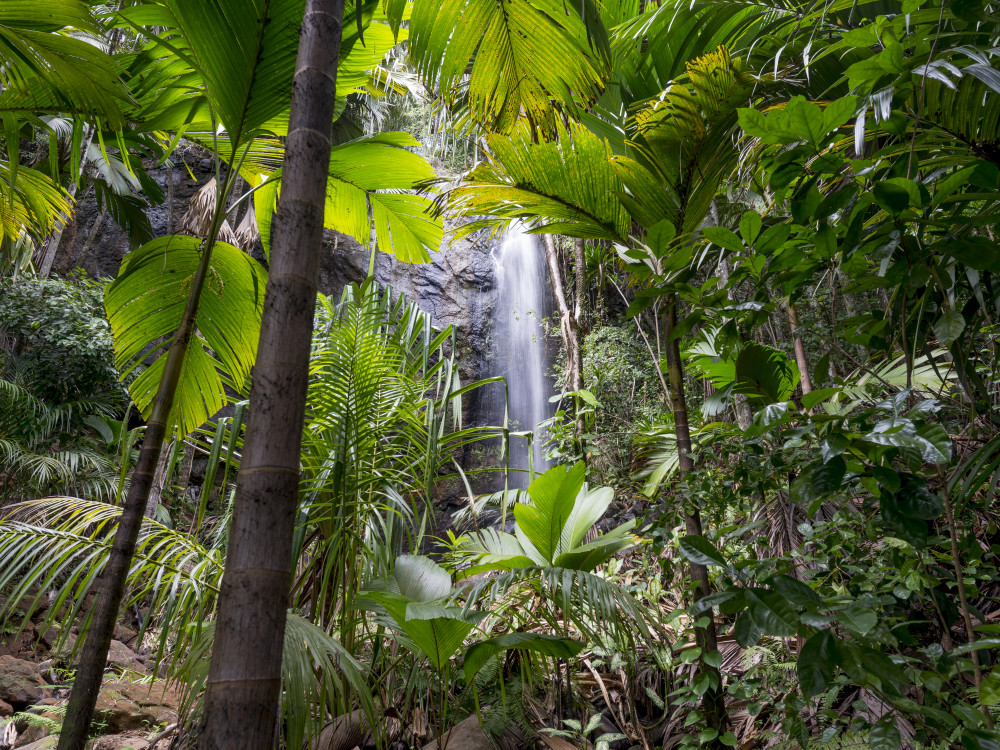
Praslin, a 15-minute flight or roughly one-hour boat crossing from Mahé, holds Seychelles' single most important natural site: the Vallée de Mai, a UNESCO World Heritage Site and one of only two places on earth where the coco de mer palm grows wild, its seed the heaviest of any plant on the planet. Anse Lazio, regularly ranked among the world's best beaches, has soft white sand framed by granite boulders and calm, clear water, while Anse Georgette, reached through the grounds of a resort or by boat, is quieter again. Curieuse Island, a short boat ride offshore, is a nature reserve with a resident population of Aldabra giant tortoises you can walk among.
Anse Source d'Argent & life without cars
La Digue, a further hour by boat from Praslin, is small enough and flat enough that bicycles and ox-carts, rather than cars, remain the normal way to get around. Anse Source d'Argent, with its house-sized pink granite boulders and shallow turquoise water, is one of the most photographed beaches on earth and genuinely lives up to the images. L'Union Estate, a former coconut and vanilla plantation, combines a working copra mill, a giant tortoise pen and the island's old plantation house in one walkable stop, and is also the entry point to Anse Source d'Argent.
Aldabra Atoll, and why it's not a casual day trip
Aldabra, a UNESCO World Heritage Site roughly 1,150km southwest of Mahé, is the world's second-largest raised coral atoll and home to more than 100,000 Aldabra giant tortoises, the largest such population on earth. It is genuinely extraordinary and genuinely not accessible to most visitors: reaching it means a multi-day live-aboard expedition or a research-permit visit, priced and scheduled well outside a normal holiday. Most travelers see Aldabra-species giant tortoises instead at Curieuse Island off Praslin or L'Union Estate on La Digue, both realistic day trips that deliver the same animal without the expedition-scale logistics.
Culture & Etiquette
Seychellois Creole, known locally as Seselwa, is the mother tongue of the large majority of the population and one of three official languages alongside English and French, a legacy of the country's back-and-forth colonial history. Culturally, Seychelles feels distinct from mainland Africa despite its African Union membership: a small, closely mixed Creole society whose identity is built as much around the ocean and conservation as around any single ethnic tradition.
Do
- Greet with "Bonzour." The Creole greeting is understood everywhere and appreciated as an effort, even though English gets you through almost any interaction.
- Respect marine park and reserve rules. Ste Anne Marine National Park, the Vallée de Mai and Curieuse Island all have specific, enforced regulations on touching wildlife, coral and vegetation.
- Buy coco de mer only from licensed, numbered sellers. Every legal nut carries an official export permit and seal; this is the only way to legally take one home.
- Carry cash outside resorts. Small guesthouses, market stalls and many taxis expect rupees, not cards.
- Ask before photographing people, particularly at the Victoria market and in residential areas.
Don't
- Touch or remove coral, shells or marine life in protected areas; Seychelles enforces its marine parks more strictly than many Indian Ocean destinations.
- Disturb nesting turtles or their eggs. Several beaches are active nesting sites and disturbance is a genuine legal offence, not just a courtesy.
- Try to export an unlicensed coco de mer nut. Doing so is illegal and confiscation at the airport is routine.
- Assume mainland African travel norms apply. Seychelles' Creole culture, cost structure and infrastructure are closer to a small Indian Ocean nation than to East or Southern Africa.
- Walk Victoria's streets alone late at night; the capital empties out after dark and this is when most reported petty crime occurs.
Deeper culture: moutya, Creole cuisine roots, and island time
Moutya. A traditional dance and drumming style with roots in the songs enslaved plantation workers sang, historically a vehicle for coded protest and commentary that plantation owners could not fully understand. It survives today as a genuine cultural performance rather than a purely tourist re-enactment, most visible at cultural events and some resort evenings.
Creole cuisine's layered roots. Seychellois food blends French technique, African staples, Indian spicing and Chinese stir-fry methods, a direct reflection of who arrived and when; it is discussed in full in the Food chapter below.
Island time. Service outside resorts runs on a genuinely slower rhythm than European or North American visitors may expect; building slack into schedules, especially around inter-island ferries and small guesthouses, avoids most frustration.
Food & Drink
Seychellois Creole cooking is built around fish, rice and coconut, with French technique, Indian spice and Chinese stir-fry methods layered on top by the traders and labourers who shaped the population. "Diri ek pwason", rice and fish, is the everyday staple, and the best versions are often at unassuming Creole takeaways rather than resort restaurants.
Kari Ourite SCR100-150
Octopus curry simmered in coconut milk with turmeric and local spices, one of the defining Creole dishes and a near-universal menu fixture from guesthouses to resorts.
Grilled Fish & Rice SCR100-200
Whatever came off the boat that morning, red snapper or job fish most often, grilled simply and served with rice, salad and a chilli sauce called "sat sat." The default lunch across the islands.
Fruit Bat Curry
A genuinely distinctive Seychellois specialty: fruit bat stewed in a rich curry sauce, more often found at family gatherings and a handful of local restaurants than on standard tourist menus, worth trying at least once for the curious.
Tec-Tec Soup
A light broth made from tiny clams gathered on sandy beaches at low tide, delicately flavoured and found mostly at family-run Creole restaurants rather than resort buffets.
Ladob
Ripe banana or sweet potato slow-cooked in coconut milk, sugar and a hint of vanilla or nutmeg, served as a dessert or, less sweetened, alongside a savoury meal.
"Millionaire's Salad"
Palm heart salad, named for the labour-intensive harvest that kills the palm to extract a single heart. A genuine delicacy and, for that reason, one of the pricier items on any menu that carries it.
When to Go & Itineraries
April-May and October-November, the calm transition windows between the two trade wind seasons, give the best diving and snorkelling visibility and the lowest rainfall. The brisker southeast trades (May to September) bring cooler, windier conditions good for hiking and sailing but rougher seas on east-facing beaches; the northwest trades (October to March) bring warmer, more humid weather with heavier rain in December and January. Seychelles sits well outside the main Indian Ocean cyclone belt, a genuine advantage over Mauritius or Madagascar at the same latitude.
All seasons compared, with temperatures
| Season | Verdict | Temps | Notes |
|---|---|---|---|
| Apr-May & Oct-Nov | Best | 25-30°C | Calm transition between trade winds, best diving visibility, lowest rain |
| May-Sep | Good | 24-29°C | Southeast trades: cooler, windier, good for hiking and sailing, some seaweed on east coasts |
| Oct-Mar | Good, wetter | 26-31°C | Northwest trades: warmer, more humid, heaviest rain in Dec-Jan |
Temperatures stay within a narrow 24-31°C band year-round; Seychelles lies outside the main Indian Ocean cyclone belt, unlike Mauritius or Madagascar to the south.
Itineraries
A week covers Mahé plus a day trip to Praslin and La Digue comfortably. Ten to fourteen days lets you slow down, add an overnight on Praslin, and fit in Curieuse Island without feeling rushed.
- Day 1
Beau Vallon. Settle in, swim, sunset at the beach bars.
- Day 2
Victoria and Morne Seychellois. Half-day in the capital, an afternoon hike or drive through the national park.
- Days 3-4
Ste Anne Marine Park boat trip, then a slower final day back in Beau Vallon.
- Days 1-3
Mahé and Beau Vallon, the four-day route above, condensed.
- Days 4-5
Praslin. Vallée de Mai in the morning before the heat, Anse Lazio in the afternoon.
- Days 6-7
La Digue. Anse Source d'Argent and L'Union Estate by bicycle, back to Mahé for departure.
- Days 1-4
Mahé extended. Add a second Morne Seychellois trailhead and a slower pace around Beau Vallon.
- Days 5-7
Praslin, unhurried. Vallée de Mai, Anse Lazio, Anse Georgette, and a full day on Curieuse Island with the tortoises.
- Days 8-10+
La Digue at a slow pace, bicycling the full island rather than just Anse Source d'Argent, with time added back on Mahé before departure.
Getting there & around
Seychelles International Airport (SEZ) on Mahé is the only international gateway. Ethiopian Airlines (via Addis Ababa), Kenya Airways (via Nairobi) and IndiGo (from Mumbai) are the main long-haul connections from Africa and Asia; European links include Discover Airlines, with Condor from Frankfurt and Edelweiss from Zurich added seasonally, and Turkish Airlines from Istanbul. Between islands, Air Seychelles flies Mahé to Praslin every 30-60 minutes (about 15 minutes in the air, roughly €160-280 return), and ferries and organised day tours cover Mahé, Praslin and La Digue, typically as a full-day combined excursion with lunch included.
Getting around Mahé: buses, taxis and car rental
| Option | Price | Notes |
|---|---|---|
| Public bus | Low, flat fare | Extensive coverage on Mahé; cheapest way around, multi-day passes available. |
| Taxis | SCR500-600 airport to Beau Vallon | No meters; fares are government zone-based. Agree the price before getting in, or use a local taxi app. |
| Car rental | From about €35-50/day | Avis, Europcar and local agencies at the airport. Drive on the left; minimum age 21 with a valid national or international licence; roads are narrow and hilly. |
| Inter-island flight (Air Seychelles) | €160-280 return | Mahé-Praslin only; no airport on La Digue. Frequent, roughly every 30-60 minutes in the day. |
Budget Planning
Seychelles costs meaningfully more than mainland Africa or Southeast Asia, since almost everything sold here is imported. That said, the resort-only reputation oversells the true floor: guesthouses, self-catering rooms and Creole takeaways bring a genuine budget trip within reach, especially based around Beau Vallon.
- Guesthouse or self-catering room, $60-100
- Creole takeaway meals, SCR100-150
- Public bus around Mahé
- Free beaches, one paid snorkelling trip
- 3-4 star hotel
- Restaurant meals, $15-30/person
- Rental car, €35-50/day
- One inter-island day trip (Praslin/La Digue)
- Five-star beachfront resort
- Private tours and boat charters
- Inter-island flights over ferries
- Multi-day dive packages
Quick reference prices: coffee, taxis, snorkelling
| Coffee (espresso) | ~SCR40 ($3) |
| Creole takeaway plate | SCR100-150 ($7-10) |
| Bottled water, 5L | ~SCR25 |
| Taxi, Beau Vallon to Victoria | SCR150-200 |
| Taxi, airport to Beau Vallon | SCR500-600 ($35-42) |
| Ste Anne Marine Park boat trip | ~$50/person |
| Guided full-day Praslin & La Digue tour | ~€280/person incl. lunch |
| Rental car | €35-50/day |
Prices reflect August 2026 research and drift over time, especially resort accommodation in peak season. Treat them as a planning baseline, not a quote.
Visa & Entry
Seychelles is one of a small number of countries that grants visa-free access to citizens of every nation on earth. Every visitor still needs an Electronic Travel Authorisation (ETA) approved before departure (standard processing is €10 within 24 hours, with faster paid tiers available), and a Visitor's Permit is then issued free of charge on arrival, initially valid for up to three months and extendable, for a fee, to a total of twelve.
✓ Electronic Travel Authorisation
Apply and get approval before you fly; standard processing is around €10 within 24 hours, with faster paid options available.
✓ Return or onward ticket
May be requested at check-in or on arrival.
✓ Proof of accommodation
A confirmed booking for your full stay; required as part of the ETA and Visitor's Permit process.
✓ Sufficient funds
Immigration can ask for proof you can cover your stay; keep a card statement or similar handy.
| Seychelles | Mauritius | |
|---|---|---|
| Daily budget | $100-120 gets by; genuinely pricier | 30-50% cheaper for a comparable trip |
| Character | Untouched, eco-conscious, low-key | Livelier, more developed, more to do |
| Wildlife | Giant tortoises, coco de mer found nowhere else at this scale | Less distinctive endemic wildlife |
| Families | Good, but fewer organised kids' activities | Easier with a wider range of activities |
| Cyclones | Outside the main cyclone belt | Cyclone season Nov-Apr |
Safety, Solo Women & Family
Seychelles is safe for tourists: the US State Department rates it Level 1, Exercise Normal Precautions, its lowest advisory tier, and violent crime against visitors is rare. The real, current risks are opportunistic: beach theft, pickpocketing and purse snatching concentrated in Victoria, Beau Vallon and around ferry terminals, plus a 2026 CDC health notice for chikungunya, a mosquito-borne illness, worth taking seriously with repellent and covering up at dawn and dusk.
Beach & petty theft
Don't leave bags, phones or wallets unattended on the beach while swimming. Use your hotel safe rather than carrying valuables around town.
Mosquito-borne illness
A 2026 CDC Level 2 health notice flags chikungunya. Use repellent, especially at dawn and dusk, and cover up in the evenings.
Ocean currents
Currents can be unpredictable away from sheltered bays like Beau Vallon. Swim at beaches with other people present and heed any posted warnings.
Regional health infrastructure and Victoria after dark
Outer-island and Praslin/La Digue medical care. Praslin, La Digue and the outer islands have limited medical infrastructure; serious injuries or illness typically require transfer to Mahé's main hospital. Standard travel insurance with medical evacuation cover is a sensible precaution for any inter-island trip.
Victoria at night. The capital's streets largely empty out after dark, and walking alone at night there is discouraged; this is when most reported petty crime occurs. Beau Vallon's beach road stays busier into the evening but the same basic caution applies after dark.
Solo women travelers
Seychelles is generally a comfortable destination for solo women, with the main practical concern being the same petty theft, rather than harassment, that affects all visitors. Standard precautions apply: keep valuables secured, avoid walking alone in Victoria after dark, and use registered taxis or agreed fares rather than unmarked vehicles late at night.
Emergency numbers
Emergency numbers are reported with some inconsistency across sources for Seychelles; 999 and 151 are the most consistently cited for police and ambulance. If in doubt, ask your hotel or guesthouse to make the call.
Family travel
Seychelles works well for families: Beau Vallon's sheltered lagoon is calm and shallow enough for young swimmers, Curieuse Island's giant tortoises and Ste Anne Marine Park's snorkelling are both memorable and low-effort, and L'Union Estate on La Digue combines a tortoise pen with an easy walk to the beach. Mosquito precautions are worth taking seriously with young children given the current chikungunya health notice.
Seychelles FAQ
Is Seychelles safe to visit?
Yes. The US State Department rates Seychelles Level 1, Exercise Normal Precautions, its lowest advisory tier. The real risks are opportunistic beach theft and pickpocketing, not violent crime, plus a 2026 CDC health notice for chikungunya, a mosquito-borne illness, worth taking seriously with repellent.
Do I need a visa for Seychelles?
No visa is required for any nationality, but every visitor needs an Electronic Travel Authorisation (ETA) approved before departure, plus a free Visitor's Permit issued on arrival, initially valid for up to three months.
How expensive is Seychelles?
Genuinely pricier than mainland Africa or Southeast Asia since almost everything is imported. Budget travelers manage on $100-120 a day using guesthouses and Creole takeaways; mid-range runs $180-250; five-star resorts push past $400.
What is the best time to visit Seychelles?
April-May and October-November, the calm windows between the two trade wind seasons, give the best diving and snorkelling visibility and the least rain. Seychelles sits outside the main Indian Ocean cyclone belt, unlike Mauritius or Madagascar.
Where should I stay in Seychelles as a first-time visitor?
Beau Vallon on Mahé is the practical first-time base: the country's densest concentration of hotels, dive centres and restaurants, a sheltered swimming beach, and 10-15 minutes from the airport and the capital, Victoria.
How many days do you need in Seychelles?
A week covers Mahé plus a day trip to Praslin and La Digue comfortably. Ten to fourteen days lets you add an overnight on Praslin, Curieuse Island, and a slower pace without constantly repacking.
What language do people speak in Seychelles?
Seychellois Creole (Seselwa) is the mother tongue of most residents. English and French are also official languages; English dominates government and tourism signage, so getting by without any Creole is easy.
What currency does Seychelles use?
The Seychelles Rupee (SCR). Cards are widely accepted at hotels and larger restaurants, but small guesthouses, market stalls and taxis often expect cash, so carry rupees withdrawn from a bank ATM.
Can I get to Praslin and La Digue easily from Mahé?
Yes. Air Seychelles flies Mahé to Praslin every 30-60 minutes (about 15 minutes in the air), and ferries and organised day tours run from Mahé to both Praslin and La Digue, typically as a full-day combined trip.
What is the coco de mer?
An endemic palm whose seed is the largest in the plant kingdom, growing wild only in the Vallée de Mai on Praslin and on neighbouring Curieuse Island. Exporting an unlicensed nut is illegal; buy only from officially numbered, licensed sellers.
Is Seychelles good for families with kids?
Yes, particularly Beau Vallon's sheltered lagoon, Curieuse Island's giant tortoises, and the Ste Anne Marine National Park's snorkelling. Mosquito precautions for chikungunya are worth taking seriously with young children.
Is Seychelles part of Africa?
Geographically and politically yes, an island nation of the African Union in the western Indian Ocean, roughly 1,500 km east of mainland Africa, though its Creole culture and small, closely mixed population feel distinct from the African mainland.
What Stays With You
Seychelles earns its reputation honestly: granite boulders stacked into shapes no resort marketing team could invent, a beach at Anse Source d'Argent that photographs exactly the way it looks in person, and a palm seed so improbable that early European sailors who found them washed up in the Maldives, thousands of kilometres from any known Seychelles island, assumed they grew on the ocean floor. None of that requires a private-island budget to see for yourself.
Base yourself at Beau Vallon, eat at least one meal from a Creole takeaway instead of a resort buffet, and use the money you save to get yourself out to Praslin and La Digue, where the country's best-known sights actually are.