
Ethiopia's Capital Doesn't Wait for the Rest of the Country
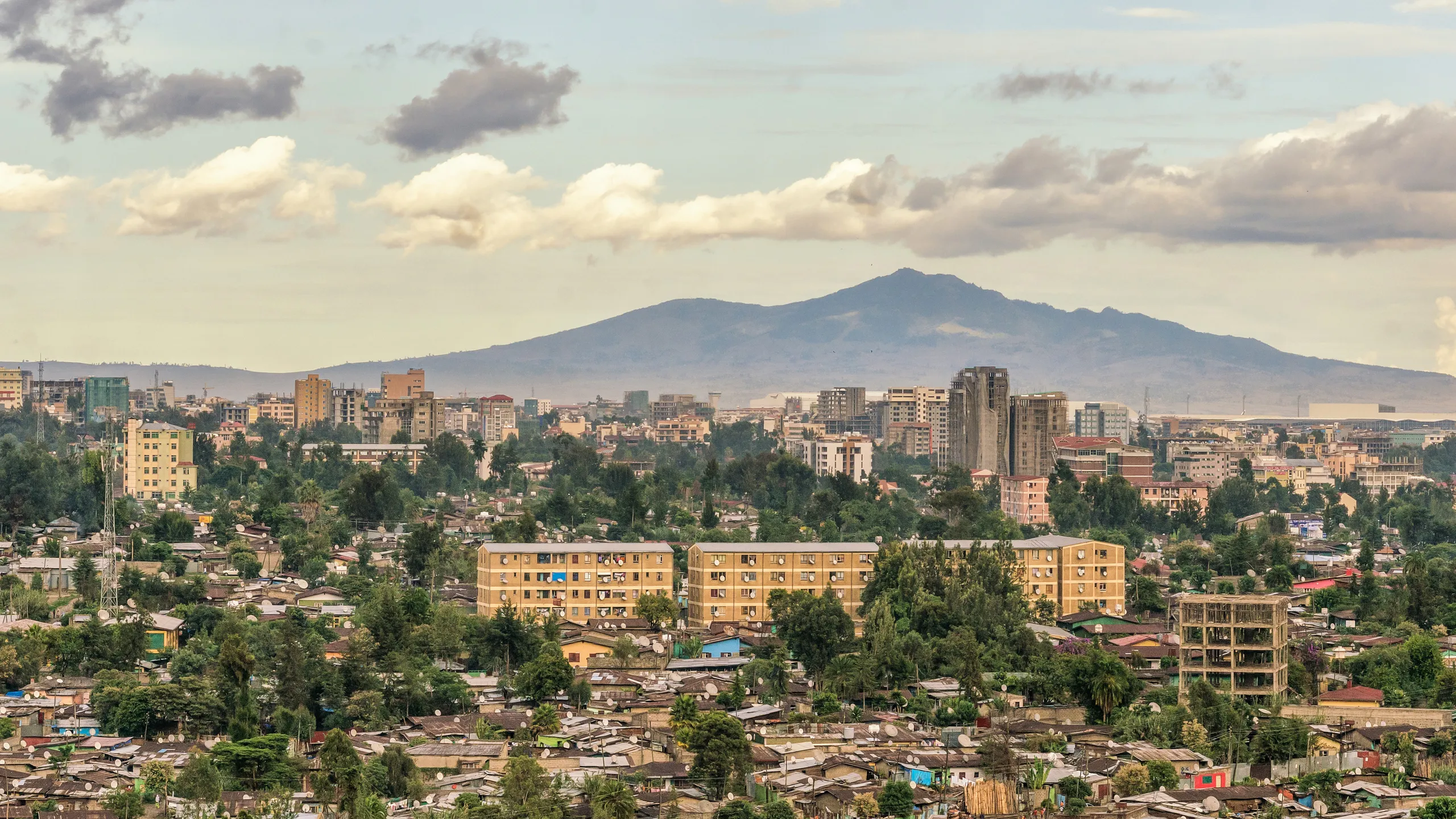
Addis Ababa, "New Flower" in Amharic, was founded in 1886 by Emperor Menelik II and Empress Taytu Betul and has grown into one of the highest and fastest-changing capitals on earth: cranes over half-built towers, a light rail system that arrived here before most of East Africa, and a diplomatic weight, as headquarters of the African Union and the UN Economic Commission for Africa, that punches well above the city's profile in most Western coverage. It sits at roughly 2,355 metres, cool enough that some visitors need a day to adjust and warm enough, most of the year, that a light jacket in the evening is all the elevation demands.
The city rewards a slower first day than its energy suggests: the National Museum's ground floor holds a cast of "Lucy," one of the most important hominin fossils ever found, while two streets over a coffee vendor is roasting the day's beans over charcoal exactly the way it's been done for centuries. Addis Ababa is not a stand-in for the Ethiopia most guidebooks describe; it's genuinely its own destination, and right now, given the country's wider safety picture, the one this guide can recommend without reservation.
The honest complications
Addis Ababa is a big, sprawling, occasionally chaotic city: traffic is heavy and only loosely governed by lane markings, sidewalks are uneven or absent on some streets, and construction dust is a constant on the main boulevards. English is common in hotels and tourist-facing businesses but drops off quickly elsewhere, so a translation app or a hotel-arranged guide smooths out a first visit considerably. And while the city itself is rated stable, it exists inside a country under a wider Level 3 travel advisory, covered in full in our Ethiopia country guide, which is worth reading before you finalize any plans that extend beyond the capital.
Four Districts, One Very Spread-Out City
Addis Ababa sprawls further than its population suggests, and traffic makes distance matter more than it looks on a map. Most visitors end up choosing between four areas, each with a distinct character and a different relationship to the airport.
Bole
Bole is Addis Ababa's most international district, home to Bole International Airport, the city's highest concentration of restaurants, bars and mid-to-upscale hotels, and the Edna Mall and Friendship Center shopping complexes. It's the easiest base for a short trip: everything is close to the airport, English is more widely spoken, and evenings have real energy. It's also the least "local" of the four, in the way any airport district tends to be.
Kazanchis
Kazanchis sits between the old downtown and Bole, home to the UN Economic Commission for Africa (UNECA) headquarters and a concentration of business hotels, including the Hyatt Regency near Meskel Square. It's a genuinely central choice: walkable to Meskel Square's Meskel and Timkat festival grounds, close to the National Museum, and a short ride from both Piazza and Bole.
Piazza
Piazza, also called Arada, is Addis Ababa's oldest commercial district, shaped by Italian-era architecture from the 1936-1941 occupation and still home to the city's classic coffee houses, including the original Tomoca Coffee roastery on Wavel Street, roasting and serving since 1953. Mornings here, espresso in hand among Italianate facades, are one of the city's most distinctive experiences, and it borders Merkato at its western edge.
Sarbet
South of Bole, Sarbet is a quieter, more residential district favored by embassies and long-term expats, with upscale apartment-style stays and a slower pace than Bole or Kazanchis. It's a reasonable choice for a longer stay or families wanting distance from the busiest streets, at the cost of being slightly further from the main sights.
From the AU's Preferred Address to a $5 Dorm Bed
Addis Ababa's hotel scene spans genuine five-star properties favored by diplomats and conference delegations down to a small but growing backpacker scene. These four picks cover the useful range, from full luxury to a bed that costs less than the taxi from the airport.
At the top, Sheraton Addis, a Luxury Collection Hotel sets the standard for the city: palatial grounds, two outdoor pools, a full-service spa and the kind of impeccable service that's made it the default address for visiting heads of state, from around $220 a night. In Kazanchis, Hyatt Regency Addis Ababa (from around $150) is the strongest choice for a central, business-friendly stay, a short walk from Meskel Square with multiple restaurants on site.
In the value bracket, Jupiter International Hotel Bole (from around $80) is a well-regarded four-star property in Bole with a free airport shuttle and breakfast buffet included, consistently rated among the city's best-value mid-range stays. For an airport-focused trip, Ethiopian Skylight Hotel, within walking distance of Bole International Airport with a 24-hour shuttle, suits late arrivals or early departures. And at the budget end, Mad Vervet Hostel is currently the most affordable dorm bed in the city, from around $5 a night.
Injera, Coffee Ceremonies and a Cultural Dinner Show
Addis Ababa's food scene ranges from communal injera platters eaten by hand to some of the most theatrical dinner experiences in East Africa, all built around the country's fasting-day vegetarian tradition and its status as coffee's country of origin.
Yod Abyssinia
Ethiopia's best-known cultural restaurant, with an over-40-dish traditional menu and roughly three hours of live Ethiopian music and dance covering the country's major regional styles, plus a genuine coffee ceremony performed tableside. It's touristy in the sense that it's designed for visitors, and it's also the real thing: locals bring out-of-town family here too.
Tomoca Coffee
The original Tomoca roastery on Wavel Street has been roasting Arabica from Kaffa, coffee's birthplace, since 1953, and remains the gold standard of Ethiopian coffee with two decades of expansion since. Order a macchiato at the standing bar the way locals do, in and out in five minutes, or ask for the full seated coffee ceremony.
Habesha 2000 Restaurant
A long-running traditional restaurant with nightly live music, serving doro wat, kitfo and tibs in a setting geared toward a full evening rather than a quick meal. A reliable second choice alongside Yod Abyssinia for a first cultural dinner in the city.
Lucy, a Cathedral, a Market the Size of a Neighborhood
Addis Ababa's sights lean toward museums and living history rather than checklist monuments, and most of the essentials sit within a few Ride app trips of each other in Kazanchis, Piazza and central Addis.
Lucy and the National Museum
The National Museum of Ethiopia holds a cast of "Lucy" (Dinkinesh in Amharic), the 3.2-million-year-old Australopithecus afarensis skeleton that reshaped understanding of early human ancestry; the original bones are kept secured and displayed only occasionally. Beyond Lucy, the museum's upper floors hold Aksumite artifacts, imperial regalia and a strong contemporary Ethiopian art collection, and the whole visit takes about 90 minutes. Entry costs roughly $5.
Holy Trinity Cathedral
Holy Trinity Cathedral (Kidist Selassie), the burial place of Emperor Haile Selassie and Empress Menen Asfaw, combines Ethiopian, European and Gothic influences in a striking domed exterior, with hand-painted ceilings, carved wooden altars and stained glass depicting biblical and national history inside. It remains one of the country's most important Orthodox churches and an active place of worship, so dress modestly and move quietly during services.
Unity Park & the Grand Palace
Unity Park, inside the Grand Palace compound, is one of the city's newest major attractions, combining restored imperial buildings, cultural houses representing Ethiopia's regions, landscaped gardens and a wildlife section. It's a half-day visit on its own and a useful introduction to the country's regional diversity before or after a Merkato visit.
Merkato
Merkato, said to be one of the largest open-air markets in Africa, sprawls across a chaotic grid of streets in western Addis Ababa selling spices, textiles, coffee, electronics and just about everything else. It's genuinely overwhelming on a first visit; going with a local guide or a hotel-arranged driver for the first trip, keeping bags closed and in front of you, and treating it as a sensory experience rather than a shopping list makes it far more enjoyable.
Mount Entoto
Mount Entoto, on the city's northern edge, offers panoramic views over Addis Ababa's full sprawl, historic churches from Menelik II's original 1880s settlement, and Entoto Natural Park's eucalyptus forest trails, a genuine change of pace from the city below. A popular half-day trip, especially at sunset.
Red Terror Martyrs' Memorial Museum
The Red Terror Martyrs' Memorial Museum documents the Derg regime's 1977-1978 campaign against political opponents, with photographs, personal effects and testimony from survivors. It's a heavy visit and a necessary one for understanding the more recent layers of the history covered in our Ethiopia country guide.
One, Two or Three Days in the Capital
Three days covers Addis Ababa's essentials at an easy pace; even a single well-planned day hits the highlights. Given the wider country's current access picture, these itineraries assume the trip stays within Addis Ababa and its immediate surroundings.
- Morning
National Museum. See Lucy and the Aksumite collection first, before the mid-morning tour-group crowds.
- Midday
Piazza & Tomoca Coffee. Walk the Italian-era streets and stop at the original Tomoca roastery for a macchiato at the standing bar.
- Afternoon
Holy Trinity Cathedral & Unity Park. The cathedral's interior, then the Grand Palace grounds at Unity Park.
- Evening
Cultural dinner at Yod Abyssinia. A full evening of injera, coffee ceremony and live music.
- Day 1
The one-day route: National Museum, Piazza and Tomoca, Holy Trinity Cathedral, Unity Park, dinner at Yod Abyssinia.
- Day 2 morning
Merkato. Go with a guide or driver for the first visit; budget two to three hours.
- Day 2 afternoon
Mount Entoto. The panoramic viewpoint and Entoto Natural Park's trails, best in the late afternoon light.
- Day 2 evening
Habesha 2000 Restaurant. A second traditional dinner with live music, in Bole or Kazanchis depending on your base.
- Days 1-2
The two-day route above, at a gentler pace.
- Day 3
Bishoftu day trip. The crater lakes an hour from the city, covered in full in the day trips chapter below.
Ride Apps First, Everything Else Second
Addis Ababa's traffic is heavy and only loosely lane-disciplined, and its sidewalks are inconsistent, so ride-hailing apps are the default way to move around rather than walking long distances or hailing a taxi on the street. From Bole International Airport, use the Ride or Feres apps, an official taxi with the fare agreed first, or a hotel shuttle; download and set up both apps before you land, since comparing estimates between them is standard practice locally.
Addis Ababa's Light Rail, East Africa's first, covers two lines through the city center but does not serve Bole Airport directly, the nearest station is a couple of kilometers away and impractical with luggage. It's a useful, cheap option for point-to-point trips within the city center once you're settled in, though most visitors end up relying on Ride for door-to-door convenience.
Best time to visit and the altitude adjustment
October through January is the sweet spot: clear skies right after the kiremt rains end, with mild highland temperatures of roughly 10-24°C. February through May stays good, warming toward the shorter belg rains in March and April. June through September is the main rainy season, with frequent afternoon downpours and cooler days.
Altitude. At around 2,355 metres, some visitors notice mild breathlessness, fatigue or a slight headache for the first day or two, similar to a moderate mountain town. Pace your first day, especially the Merkato and Entoto legs, and stay well hydrated; it rarely requires more than that for a stay confined to the city.
Cheap Outside the Hotels, International Inside Them
Addis Ababa is inexpensive for local food, transport and markets, and noticeably less so for upscale hotels and restaurants, which can approach prices comparable to a mid-tier Western city. The birr has been volatile since the 2024 exchange rate float, so budget in dollars where you can rather than relying on a fixed birr figure.
- Hostel dorm or guesthouse $5-30
- Local injera meals $2-4
- Ride app trips $1.50-4
- Free viewpoints, low-cost museum entry
- Mid-range hotel with breakfast $50-100
- Restaurant meals $8-20
- Ride app across the city
- Cultural dinner show, museum entries
- Sheraton Addis or equivalent $220+
- Fine dining and hotel bars
- Private driver for the day
- Bishoftu resort day pass
Stable, With Normal City-Level Precautions
The US State Department's current advisory describes Addis Ababa's security situation as stable, a meaningfully different picture from the conflict-affected regions covered in detail in our Ethiopia country guide. Within the city, the concerns are the ordinary ones for a large capital: petty theft in crowded places, traffic, and reduced visibility after dark, not the armed conflict that applies elsewhere in the country.
Petty theft
Pickpocketing and bag-snatching happen in crowded spots, particularly Merkato and busy minibus stations. Keep bags closed and in front of you, and avoid displaying phones or cash unnecessarily.
Traffic & walking after dark
Sidewalks are inconsistent and drivers don't reliably yield to pedestrians. Avoid walking alone after dark, especially outside the well-lit main streets of Bole and Kazanchis; use Ride instead.
Immigration status
Ethiopia enforces exit bans for unresolved immigration issues, covered in full in the country guide's safety chapter. Keep your visa status unambiguous and don't overstay without addressing it.
Merkato deserves a specific note: reports on pickpocket risk there are mixed, with some visitors reporting no more trouble than anywhere else in the city and others flagging it as a hotspot given the sheer crowd density. Treat it like any dense, unfamiliar market anywhere in the world, watch your belongings, keep valuables minimal, and go with a guide or driver on your first visit, rather than as a uniquely dangerous place.
Solo women travelers
Addis Ababa is generally manageable for solo women who take standard city precautions: avoid walking alone after dark, use Ride or Feres rather than hailing a taxi on the street, and dress modestly at religious sites. Street harassment exists but isn't considered a major flashpoint in the way it is in some other capitals; the bigger practical issues are traffic and uneven sidewalks rather than personal safety specifically. Full general guidance is on our Solo Woman Explorer pages.
Emergency numbers
Bishoftu's Crater Lakes, an Hour From the City
Given the wider access picture covered in our Ethiopia country guide, this chapter features one clearly workable day trip rather than a longer list. Other traditional day-trip options exist further out, but current regional advisories make them worth checking carefully before booking rather than treating as a default.
Bishoftu (Debre Zeit)
Bishoftu, still commonly called by its older name Debre Zeit, sits about 45-65 kilometers southeast of Addis Ababa and is built around five volcanic crater lakes: Bishoftu, Hora, Babogaya, Kuriftu and Chelekleka. It's a well-established weekend escape for Addis Ababa residents and a straightforward organized day trip, with operators running regular departures for birdwatching on Lake Hora, boat rides, and an afternoon at Kuriftu Resort & Spa Bishoftu, a lakefront resort with pools, a spa and East Africa's largest resort water park, open to day visitors for a pass. Go with an established tour operator rather than alone on a first visit, and don't walk the Lake Hora footpath solo.
Addis Ababa FAQ
Is Addis Ababa safe for tourists?
The US State Department describes Addis Ababa's security situation as stable, distinct from the conflict-affected regions elsewhere in Ethiopia. Normal city precautions apply: avoid walking alone after dark, watch belongings in crowded markets like Merkato, and use Ride or Feres rather than street taxis.
How many days do I need in Addis Ababa?
Three days covers the city well: one for the National Museum, Holy Trinity Cathedral and Piazza, one for Unity Park and Entoto, and one for Merkato and a coffee ceremony. A fourth day fits the Bishoftu crater lakes day trip.
How much does Addis Ababa cost per day?
Budget travelers manage on $20-30 a day with guesthouses and local food; mid-range runs $50-90. Addis Ababa's upscale hotels and restaurants can approach prices comparable to a mid-tier Western city.
When is the best time to visit Addis Ababa?
October through January is best: clear skies right after the main rains, with mild highland temperatures. June through September is the kiremt rainy season with frequent afternoon downpours.
How do I get from Bole Airport to the centre?
Use the Ride or Feres ride-hailing apps, an official taxi with the fare agreed first, or a hotel shuttle. The Addis Ababa Light Rail does not serve Bole Airport directly, so it isn't a practical option with luggage.
What is the best area to stay in Addis Ababa?
Bole for airport convenience, restaurants and nightlife; Kazanchis for a central, business-district location between downtown and Bole; Sarbet for a quieter, embassy-district pace. All three work well for first-time visitors.
Do I need to speak Amharic in Addis Ababa?
No. English is common in hotels, airlines and the tourism trade, though less so outside those settings. A few Amharic words, ameseginalehu (thank you) and selam (hello), are genuinely appreciated.
Is the altitude in Addis Ababa a problem?
At around 2,355 metres, some visitors notice mild breathlessness or fatigue for the first day or two, similar to a moderate mountain town. It rarely requires more than pacing yourself and staying hydrated, but it's worth knowing about before a packed first day.
Is Merkato safe to visit?
Merkato is one of Africa's largest markets and generally fine to visit with normal precautions: keep bags closed and in front of you, go with a guide or local contact for a first visit, and avoid flashing valuables. Reports vary on whether pickpocket risk there exceeds the rest of the city.
What is the Ride app and do I need it?
Ride is Ethiopia's leading ride-hailing app, with Feres as the main alternative. Both are the easiest, safest way to get around Addis Ababa and worth downloading and setting up before you land.
What Stays With You
Addis Ababa doesn't perform for visitors the way a city built entirely around tourism might. The African Union motorcade passes a market stall selling roasted beans by the kilo; a coffee ceremony that takes forty-five minutes to complete happens in a hotel lobby exactly as it would in a family home. The city gets on with being a highland capital of a country with one of the deepest histories on the continent, and lets you walk through the middle of it.
Watch the sun set from Entoto on your last evening, order one more macchiato at Tomoca on the way to the airport, and remember that this is one city in a country with a great deal more to it, most of it, for now, waiting for calmer conditions.