
What You're Actually Getting Into
Kenya is where the word "safari", Swahili for journey, became a global tourism category, and it earned that position honestly: the Maasai Mara, Amboseli and Lake Nakuru between them cover the full cast of African wildlife within a few hours of one another, connected by a domestic flight network built specifically for this purpose. This is not a country you discover slowly. Most trips are structured, guided, and organized around game drives at dawn and dusk, which means the honest first thing to know is that Kenya rewards a plan more than it rewards wandering.
It is also a country of genuine range beyond the safari circuit that first-timers routinely skip because the itinerary runs out of days. The Swahili coast at Diani, Watamu and Lamu is a different Kenya entirely: centuries of Arab, Persian and Indian trade left coral-stone towns, dhow sailing culture and a cuisine built on coconut and spice, all with some of the best beaches on the Indian Ocean. Nairobi itself, a capital with wild rhino and lion inside its city limits at Nairobi National Park, is worth more than the one overnight layover most people give it.
The honest complications
Wildlife viewing is genuinely excellent but not guaranteed on any single game drive; a good guide and at least two to three days in a park matter more than luck. Safaris are not a budget travel style: park fees, guiding and the logistics of moving between remote camps push daily costs well above typical backpacker rates even at the "budget" end. Nairobi traffic is a real constraint on planning, a short-looking drive across the city can eat ninety minutes at rush hour. And the US State Department's Level 4 areas, the Somali border counties, the northern border strip, and specific Nairobi neighborhoods, are genuinely worth avoiding; they sit well outside any standard tourist route, which is exactly why the overall Level 2 rating for the country is not a contradiction.
A History Worth Knowing
Kenya's Rift Valley is one of the sites where paleoanthropologists, most famously the Leakey family, found some of the oldest human ancestor fossils on earth, giving Kenya a serious claim to being where humanity itself began. The country's modern story runs from British colonization and the 1950s Mau Mau uprising, through independence under Jomo Kenyatta in 1963, decades of one-party rule, and a hard transition to multiparty democracy that is still, in places, a work in progress.
- 1888-1920
Colonization. The Imperial British East Africa Company, then direct British rule, dispossesses Kikuyu, Maasai and other communities of prime highland farmland for European settlers.
- 1952-1960
Mau Mau uprising. A Kikuyu-led armed rebellion against colonial rule and land seizure. Britain declares a state of emergency; tens of thousands of Kenyans are detained.
- 1963
Independence. Kenya becomes independent on 12 December under founding president Jomo Kenyatta.
- 1978-2002
Daniel arap Moi era. Decades of one-party rule under Kenyatta's successor, ending with multiparty elections and a peaceful transfer of power in 2002.
- 2007-2008
Post-election violence. Disputed elections trigger ethnic clashes that kill over 1,000 people, a national trauma that drove major constitutional reform.
- 2010-present
New constitution. Devolves significant power to 47 new counties and reforms the judiciary; William Ruto is the current president, elected in 2022.
Read the full history: the Rift Valley, the Mau Mau and devolution
Fossil finds by Louis and Mary Leakey and later Richard Leakey at sites like Olduvai Gorge (just over the border in Tanzania) and Koobi Fora in northern Kenya place early hominin activity in this region back more than two million years, part of why East Africa is often called the cradle of humankind.
The Mau Mau uprising was Kenya's defining anti-colonial struggle: a mostly Kikuyu guerrilla movement fighting British seizure of the fertile central highlands. British forces' response, including mass detention camps whose conditions were the subject of a 2013 UK government compensation settlement to elderly survivors, is one of the more thoroughly documented atrocities of late British colonialism. Jomo Kenyatta, later independent Kenya's first president, was imprisoned by the British for alleged Mau Mau leadership despite disputed evidence of direct involvement.
After independence, Kenyatta and then Daniel arap Moi (president 1978-2002) ran a functionally one-party state for most of three decades. International and domestic pressure forced multiparty elections in 1992; Moi held on until 2002, when Mwai Kibaki won Kenya's first genuine opposition transfer of power.
The 2007-2008 post-election violence, following a disputed Kibaki re-election, killed more than 1,000 people in ethnic clashes and displaced hundreds of thousands, a rupture serious enough that it triggered International Criminal Court cases against several senior politicians (later dropped for lack of evidence) and drove the 2010 constitutional overhaul that devolved substantial power and budget to 47 county governments, a structural change still reshaping Kenyan politics today.
Top Destinations
Kenya splits naturally into three zones that rarely overlap on a single trip: the safari circuit radiating out from Nairobi, the capital itself, and the Swahili coast. Most visitors spend the bulk of their time in the first zone; the honest recommendation is to budget at least a few days for one of the other two rather than treating Kenya as wall-to-wall game drives.
The Maasai Mara
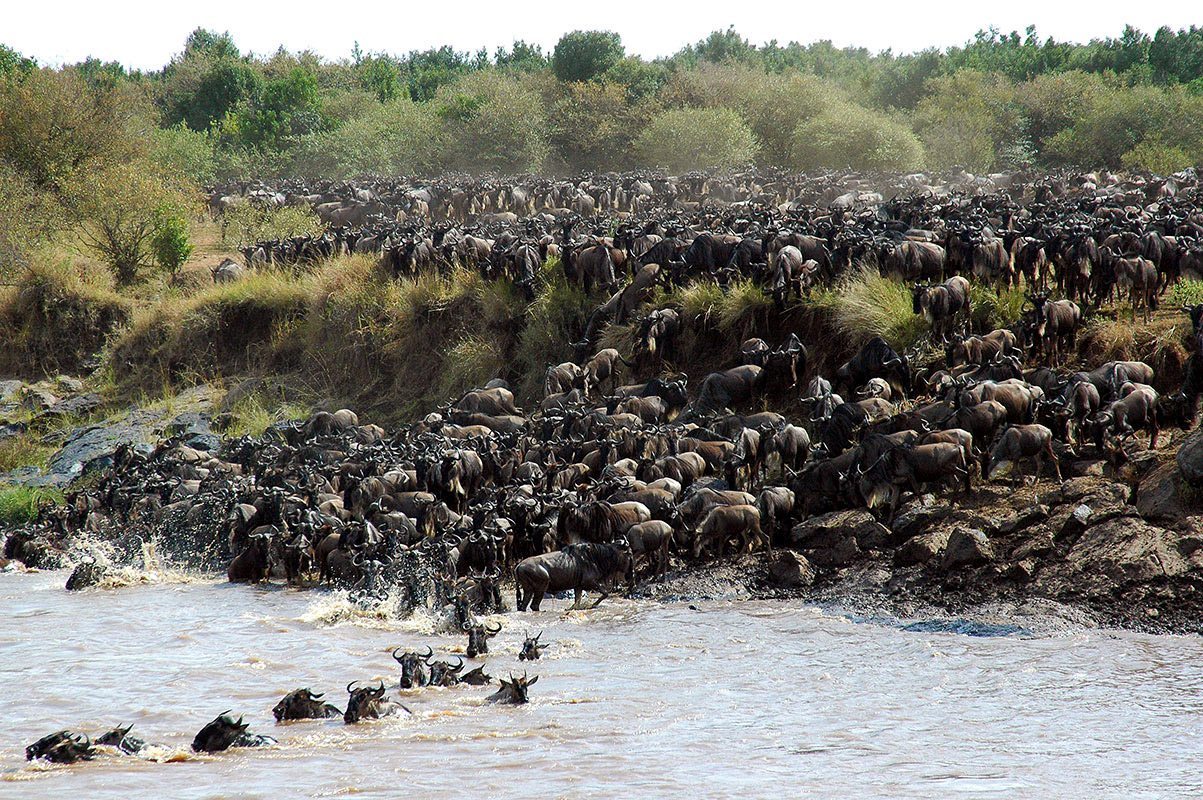
Kenya's flagship reserve, the northern extension of Tanzania's Serengeti ecosystem, is the single most reliable place on earth to see lion, leopard, cheetah, elephant and buffalo, the so-called Big Five, in a few days. The Great Migration, roughly two million wildebeest and zebra following the rains, is typically in the Mara from July to October, with the crocodile-filled Mara River crossings usually concentrated in August and September. Outside migration season the resident wildlife, predator density in particular, is still exceptional. Access is either a 5 to 6 hour drive from Nairobi or a 45-minute scheduled flight from Wilson Airport to one of several small Mara airstrips, which most lodges arrange directly.
Amboseli, elephants beneath Kilimanjaro
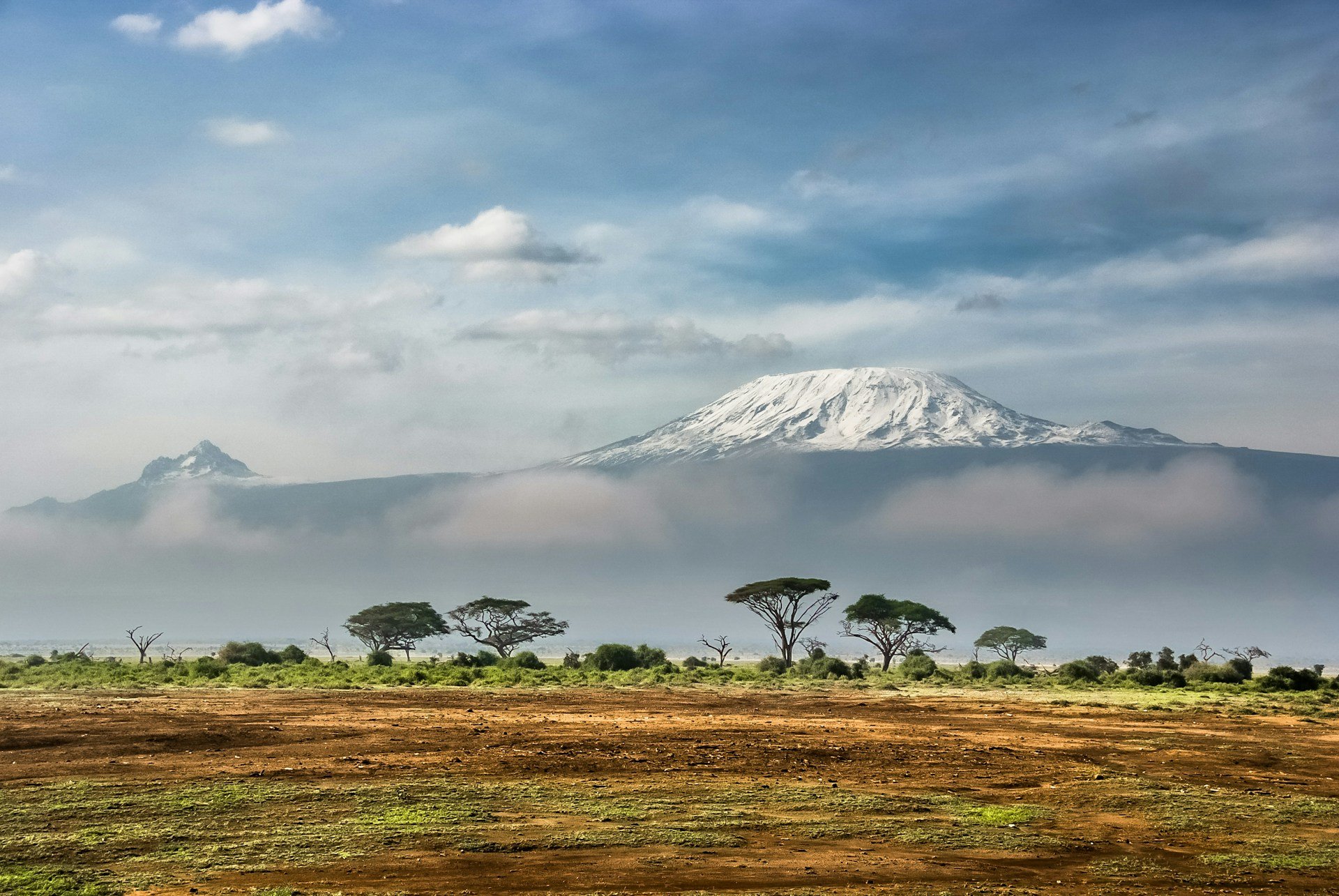
Amboseli National Park is famous for one specific photograph: large elephant herds walking across open plains with Mount Kilimanjaro, across the border in Tanzania, rising behind them on a clear morning. The park has one of Africa's best-studied elephant populations, some individuals tracked for decades, and the flat, relatively open terrain makes sightings easier than in denser bush parks. About 4 hours by road from Nairobi, or a short scheduled flight.
Lake Nakuru, flamingos and rhino
Lake Nakuru National Park, roughly 3 hours from Nairobi in the Rift Valley, is a fenced sanctuary built specifically to protect both black and white rhino, making it one of the most reliable places in Kenya to see them at close range. The lake itself periodically hosts enormous flocks of lesser flamingos, though numbers fluctuate year to year with water levels, so treat the pink-lake photos as a possibility rather than a guarantee.
Diani Beach
A 10-kilometer stretch of white sand and coral reef about 35 kilometers south of Mombasa, consistently ranked among Africa's best beaches. Diani is the developed, resort-and-watersports end of the Kenyan coast: kitesurfing, snorkeling, deep-sea fishing and dolphin spotting, backed by coastal forest home to Sykes' monkeys and colobus. Reached via a short domestic flight from Nairobi to Ukunda airstrip, or the SGR train to Mombasa followed by a road transfer.
Lamu, the Swahili old town
Lamu Old Town, a UNESCO World Heritage Site, is the best-preserved Swahili settlement on the East African coast: narrow stone streets with no cars, carved wooden doors, dhow sailing, and a slower rhythm than anywhere else in Kenya. Shela Beach nearby is the quieter, more upscale base. Reached by a roughly 1.5-hour flight from Nairobi to Manda Airport, then a short boat transfer, since there's no road bridge to the island.
Nairobi, the safari capital
Most itineraries treat Nairobi as a transit point between the airport and the bush, which undersells a capital that has wild lion, rhino and giraffe inside a national park a 20-minute drive from downtown skyscrapers. Read our full Nairobi city guide for neighborhoods, hotels, food and a realistic one-to-two day plan that fits around a safari departure.
Mount Kenya
Africa's second-highest peak at 5,199 meters and a UNESCO World Heritage Site, Mount Kenya offers multi-day treks to Point Lenana (4,985m, no technical climbing required) through five distinct vegetation zones, from rainforest to alpine moorland to glaciers near the summit. Most treks run 4 to 5 days via the Sirimon or Chogoria routes, arranged through licensed operators out of Nanyuki or Naro Moru.
Hell's Gate & Lake Naivasha
The one true day trip from Nairobi: Hell's Gate National Park, about 90 minutes northwest near Lake Naivasha, is one of the only parks in Kenya where you can walk or cycle among zebra, giraffe and buffalo without a vehicle, since there are no resident lion. Its dramatic gorge and Fischer's Tower rock formation reportedly helped inspire scenery for The Lion King.
Beyond the standard circuit
The zones above cover a first or second trip well. With extra days or a specific interest, these reward the detour.
Lake Turkana
The world's largest permanent desert lake, a UNESCO site known as the Jade Sea for its color and its fossil-rich shores. Remote, hot and logistically demanding: a trip for travelers with extra time and a specialist operator, not a standard add-on.
Lake Naivasha
A freshwater lake ringed by flower farms and hippo pods, with boat trips to Crescent Island for walking safaris among giraffe and zebra. Often paired with Hell's Gate as a single day out from Nairobi.
Kakamega Forest
Kenya's only remaining tropical rainforest fragment, an outlier of the great Congo Basin forest system, with birdlife found nowhere else in the country. A genuine detour, far off the standard safari route.
| Kenya | Tanzania | |
|---|---|---|
| Migration access | Mara river crossings, Aug-Sep | Serengeti, same herds, different months of the circuit |
| Infrastructure | Denser lodge and flight network, easier to combine parks | Fewer but often larger, more remote parks |
| Beach add-on | Diani and Lamu on the mainland coast | Zanzibar, a short flight from most safari circuits |
| Visa | eTA online, ~$32.50 single entry | Separate visa process |
| Combining both | Common: fly between the Mara and northern Tanzania on a short hop; the ecosystem is one continuous circuit split by a border | |
Culture & Etiquette
Kenya is home to more than 40 ethnic groups, the Kikuyu, Luhya, Luo, Kalenjin, Kamba and Maasai among the largest, each with distinct languages and traditions alongside a shared national identity built on Swahili and English. The concept of harambee, communal self-help and pulling together, is a genuine cultural value formalized enough that it's the country's official motto. Greetings matter more than in many Western cultures: a rushed hello without asking after someone's family or wellbeing can read as brusque.
Do
- Greet properly before getting to business. "Habari?" (how are things?) or "Jambo" as a simple hello, then a moment of small talk, is the expected rhythm even in brief interactions.
- Tip your safari guide and camp staff. Not automatically included in the package price; $15-20 per day for a guide and a smaller amount for camp staff is the informal standard, ask your operator for current guidance.
- Ask before photographing people, particularly in Maasai communities near the parks, where photos are often offered as a paid, curated cultural visit rather than a candid moment.
- Dress modestly on the coast, especially away from resort grounds; Lamu and the Swahili coast are predominantly Muslim and appreciate covered shoulders and knees.
- Learn a few Swahili words. Jambo (hello), asante (thank you), karibu (welcome). Small effort, warmly received.
Don't
- Treat a Maasai village visit as a zoo exhibit. These are almost always paid, arranged cultural experiences; engage with genuine curiosity rather than as a photo backdrop.
- Assume matatus and shared transport are the fastest safari logistics. They are not built for park access; safaris run on lodge-arranged vehicles or domestic flights.
- Walk around cities with your phone out or visible jewelry. Standard urban theft risk applies in Nairobi and Mombasa exactly as it would in any major city.
- Wear camouflage-patterned clothing. It's associated with the military and police in Kenya and best avoided by visitors, even on safari.
- Expect punctuality to work the way it does at home. "Kenyan time" runs looser than Western scheduling norms; build slack into transfers and meeting times.
Deeper culture: the Maasai, Swahili coast heritage and harambee
The Maasai. A semi-nomadic pastoralist people whose distinctive red shuka cloth, beadwork and cattle-centered culture have become, somewhat unfairly, the global visual shorthand for "African tribe." Maasai communities live across southern Kenya and northern Tanzania, and many now work directly in tourism, as guides, in cultural manyatta visits, and increasingly as conservancy landowners who lease grazing land to safari operators, a shift that has given some Maasai communities real economic leverage over how tourism operates on their land.
Swahili coast culture. A distinct Bantu-Arab-Persian-Indian fusion built over a thousand years of Indian Ocean trade: Swahili as both a language and an identity, coral-stone architecture, carved doors, dhow sailing, and a cuisine layered with coconut, cardamom and cloves. Lamu preserves this most completely of any Kenyan town.
Harambee. Kiswahili for "all pull together," the concept of communal self-help and fundraising, formalized as Kenya's national motto at independence. It shows up practically in community fundraising events for medical bills, school fees or building projects, still a genuine social institution rather than a historical relic.
Food & Drink
Kenyan food outside the coast is built around grilled meat, maize staples and hearty stews; the coast adds an entirely different register of coconut, spice and seafood shaped by centuries of Indian Ocean trade. Kenya is also a serious coffee and tea producer, though ironically much of the best export-grade coffee is easier to find abroad than in an average Kenyan cafe.
Nyama Choma KES 600-1,500/kg
Grilled meat, usually goat or beef, is close to Kenya's national dish and a genuine social ritual: ordered by the kilo, grilled over charcoal, and shared. Carnivore Restaurant on Langata Road is the famous, tourist-oriented version; Ashaki Grill in Kilimani is a more local, better-value take.
Ugali & Sukuma Wiki
Ugali, a firm maize-flour staple similar to polenta, is the base of most everyday meals, eaten by hand alongside sukuma wiki (sautéed collard greens, literally "push the week," a nod to how far it stretches a budget) and a meat or bean stew.
Swahili coast dishes KES 400-900
Coconut-based curries, biryani and pilau rice dishes, and fresh seafood grilled or in coconut sauce, distinct from anything found inland. Best eaten in Mombasa, Lamu or Diani, where the tradition is centuries deep.
Chapati & Mandazi
Chapati, a flaky flatbread with South Asian roots via Indian migration to East Africa, appears at nearly every meal. Mandazi, a lightly sweet fried dough, is the everyday breakfast pastry, best fresh and warm from a roadside stall.
Kenyan Coffee & Tea
Kenya is one of the world's top tea exporters and produces some of the most sought-after specialty coffee, grown at altitude in the central highlands. Ironically, chai (spiced milk tea) is the everyday drink far more than coffee for most Kenyans.
Tusker Beer KES 250-450
Kenya's best-known lager, brewed since 1922, is the default beer on menus nationwide and a genuine piece of national identity, its name and elephant logo referencing an early brewery founder killed by a wild elephant.
When to Go & Itineraries
June through October and January through February are the two dry-season windows and the best wildlife viewing overall, with the Mara river crossings concentrated in August and September specifically. April, May and November bring the long and short rains: cheaper, quieter, and still good for wildlife away from the Mara's crossing crowds, but with a real risk of impassable roads in the worst of it.
All seasons compared, with what to expect
| Season | Verdict | Weather | Prices & crowds |
|---|---|---|---|
| Jun-Oct | Best | Dry, cool mornings 10-15°C, warm days | Peak prices Jul-Sep, book 6-12 months ahead for the Mara |
| Jan-Feb | Very good | Dry, hot, calving season on the plains | Second peak, slightly less crowded than July-Sep |
| Mar-May | Cheapest, riskier | Long rains, heaviest in April | Lowest prices, some roads impassable, lush green scenery |
| Nov-Dec | Good value | Short rains, brief afternoon showers | Lower prices, green landscapes, good birdwatching |
Nairobi sits at altitude (1,795m) and stays mild year-round, 12-25°C. The coast is hot and humid year-round, 24-32°C. The Mara and highlands are noticeably cooler at night than the plains further north.
Itineraries
A week covers Nairobi plus a proper Maasai Mara safari without feeling rushed. Two weeks adds either Amboseli or the coast; three weeks does both properly.
- Days 1-2
Nairobi. David Sheldrick Wildlife Trust, the Giraffe Centre, Nairobi National Park, settle in before the flight to the bush.
- Days 3-6
Maasai Mara. Fly from Wilson Airport, three full days of game drives, a Maasai village visit if it interests you.
- Day 7
Return & departure. Fly back to Nairobi with time for a last meal in Westlands or Karen before an evening flight out.
- Days 1-2
Nairobi, as above.
- Days 3-6
Maasai Mara, as above.
- Days 7-9
Amboseli. Fly or drive, two to three nights for the Kilimanjaro backdrop and elephant herds.
- Days 10-14
Diani Beach. Fly Nairobi to Ukunda, four to five days to decompress: watersports, reef snorkeling, and genuinely doing nothing.
- Days 1-3
Nairobi extended. Add the National Museum, Bomas of Kenya, and a Hell's Gate/Lake Naivasha day trip.
- Days 4-7
Maasai Mara, four full days for a proper migration-season stay if timed for July-September.
- Days 8-10
Lake Nakuru & Amboseli, combined as a Rift Valley loop by road or a short internal flight sequence.
- Days 11-15
Mount Kenya trek to Point Lenana via the Sirimon or Chogoria route, for travelers who want a physical counterpoint to the game drives.
- Days 16-21
The coast, slow. A few days in Lamu's old town, then Diani for the final stretch.
Getting there & around
Jomo Kenyatta International Airport (JKIA) outside Nairobi is the country's main gateway, with direct flights from London, most of Europe, the Middle East and connections via those hubs from North America; it's also East Africa's busiest airport and is currently mid-expansion to handle growth beyond its original capacity. Wilson Airport, a separate, smaller Nairobi airfield, is where nearly all safari and coast connections depart on small aircraft. Most travelers book their internal flights through their safari or tour operator rather than independently.
All transport options with prices: SGR train, matatus, car hire
| Option | Price | Notes |
|---|---|---|
| SGR train, Nairobi-Mombasa | KES 1,000 economy / 3,000 first class | The Madaraka Express, about 5 hours, a comfortable alternative to the road route to the coast. |
| Domestic safari flights | Varies, usually bundled | Wilson Airport to bush airstrips on Safarilink or AirKenya; most operators include this in the safari price. |
| Matatus (city & intercity) | KES 50-200 typical urban fare | Privately run minibuses, extensive but not built for tourist logistics; fine for short city hops with local guidance. |
| Uber, Bolt & Little Cab | KES 300-500+ typical city ride | The safe, standard way to move around Nairobi and Mombasa; fares rose roughly 50% in late 2025 under new government rules. |
| Self-drive rental car | From ~$40-70/day | Workable for Nairobi and the Rift Valley; most safari parks are better done with a guided vehicle rather than self-drive. |
Practical prep: buy a Safaricom or Airtel SIM at the airport for reliable coverage across most of the safari circuit, though remote camps often rely on their own satellite or radio links. Malaria prophylaxis is recommended for most of the country outside Nairobi and the highlands; talk to a travel clinic before you go. Pack neutral-colored clothing for game drives (khaki, olive, tan) since bright colors and camouflage patterns are both best avoided, for different reasons.
Where to stay
Budget safari camps
Mobile tented camps and public campsites within or near the parks, usually with shared facilities and simpler meals. Genuinely good wildlife access for a fraction of lodge prices; book through an established operator rather than independently.
Mid-range safari lodges
Permanent lodges and larger tented camps with en-suite bathrooms, full board and guided game drives included. The standard choice for most first-time safari travelers, with real variation in location quality within the price band.
Luxury conservancy camps
Small, high-end camps on private conservancies bordering the main reserves, often with exclusive traversing rights, walking safaris and night drives not permitted in the national reserves themselves.
Nairobi hotels
A different budget category entirely from safari lodging, with options from hostels to five-star. Full neighborhood-by-neighborhood picks are in our Nairobi city guide.
Budget Planning
Kenya has an unusual budget structure: city and coastal travel can be genuinely affordable, but a safari, the reason most people come, is a serious line item with a floor set by park fees and logistics rather than by how cheaply you're willing to travel. Plan the safari days and the non-safari days as separate budgets.
- Hostel or budget guesthouse
- Local meals, matatu transport
- Free or low-cost city attractions
- No safari days included
- Full-board lodge or tented camp
- Guided game drives included
- Park fees typically included
- Domestic flight often bundled
- Private conservancy camps
- Walking safaris, night drives
- Exclusive traversing rights
- Peak-season pricing, Jul-Sep
Quick reference prices: park fees, transport, food
| Maasai Mara National Reserve fee | ~$70-100/day (varies by county-run vs. national) |
| Nyama choma, per kilo | KES 600-1,500 |
| Sit-down restaurant lunch, Nairobi | KES 800-1,500 |
| Tusker beer | KES 250-450 |
| SGR train, Nairobi-Mombasa (economy) | KES 1,000 |
| Budget camping safari, per person/day | $220-330 |
| Kenya eTA, single entry | $32.50 |
| Nairobi to Westlands, Uber/Bolt | KES 300-500 |
Prices reflect July 2026 research and drift over time, especially safari rates in peak migration months. Treat them as a planning baseline, not a quote.
Visa & Entry
Kenya moved from a visa-on-arrival system to a mandatory Electronic Travel Authorization (eTA) for nearly all visitors, applied for online before departure rather than at the border. Apply at least 72 hours ahead at the official etakenya.go.ke, not a third-party site charging a markup for the same service. UK citizens specifically need the eTA mandatory from 25 February 2026 onward; US citizens pay $32.50 for a single-entry eTA or can buy a 5-year multiple-entry version for $185, worth it for repeat visitors.
✓ Valid passport
At least 6 months validity from date of entry, with at least one blank page. Keep a digital copy accessible.
✓ eTA approval
Apply online at etakenya.go.ke at least 72 hours before departure; airlines can deny boarding without it.
✓ Yellow fever certificate
Only required if arriving from, or transiting more than 12 hours through, a yellow fever-endemic country. Not required for direct flights from the US, UK or most of Europe.
✓ Return/onward ticket
May be requested at immigration; have proof of onward travel or your full itinerary accessible.
Safety, Solo Women & Family
Kenya is rated Level 2, Exercise Increased Caution, by the US State Department, the same tier as many popular European and Latin American destinations. The areas rated Level 4, Do Not Travel, are specific: the Kenya-Somalia border counties (Garissa, Wajir, Mandera), Tana River County and coastal areas north of Malindi due to terrorism and kidnapping risk, West Pokot and western Turkana due to banditry, and parts of Marsabit and Turkana within 50 kilometers of the Ethiopian border. None of these sit on any standard safari or coastal tourist route.
Urban crime
Petty theft and occasional armed robbery occur in Nairobi and Mombasa, concentrated in specific areas and worse after dark. Use ride-hailing apps at night rather than walking or hailing taxis on the street.
Road safety
Traffic accidents are a more statistically likely risk to visitors than crime. Avoid night driving on rural roads, and let your safari operator or a reputable driver handle long transfers.
On safari
Always stay inside the vehicle or with your guide during game drives and walks; wildlife is unpredictable and guides are trained to read animal behavior that visitors can't.
Two more things worth knowing: the northern regions and Nairobi's specific risk areas
Northern and border counties. Beyond the Level 4 areas listed above, some other northern regions carry elevated advisories short of "do not travel" due to periodic inter-communal or cross-border tension. These areas hold little standard tourism infrastructure and are not part of any typical itinerary.
Nairobi specifically. The neighborhoods of Eastleigh and Kibera carry a Level 3, Reconsider Travel, designation for crime and kidnapping risk. Neither is on a standard tourist route; if you have a specific reason to visit, go with a knowledgeable local guide rather than independently. Full detail in our Nairobi city guide.
Solo women travelers
Organized safaris are a genuinely comfortable way for solo women to travel in Kenya: guides and camp staff are used to solo travelers, group game drives are common, and the structured nature of a safari itinerary removes most of the logistics-related risk of independent travel. In Nairobi and Mombasa, standard city precautions apply: dress modestly outside resort grounds, avoid walking alone after dark, and use Uber, Bolt or Little Cab rather than unmarked taxis. The coast's resort areas, Diani in particular, are well set up for solo travelers with an established tourism infrastructure. Full detail on our Solo Woman Explorer pages.
Emergency numbers
Embassies in Nairobi and safari medical evacuation
Most embassies are in the Gigiri and Westlands areas of Nairobi. AMREF Flying Doctors (+254-20-699-2299) runs East Africa's main air ambulance and medical evacuation service and is worth confirming your travel insurance covers, since remote safari camps can be hours from the nearest hospital by road.
- USA
- +254-20-363-6000
- UK
- +254-20-282-9000
- Germany
- +254-20-426-2100
- France
- +254-20-277-8000
- Netherlands
- +254-20-428-1000
- Canada
- +254-20-366-3000
- Australia
- +254-20-427-7100
Safari medical prep: confirm your travel insurance includes medical evacuation coverage specifically, and carry a printed copy of the policy; camp WiFi and phone signal can be unreliable enough that pulling up a digital policy isn't guaranteed.
Family travel & pets
Kenya works well for families with some planning: many camps and lodges welcome children with family tent setups and shorter, adapted game drives, and most operators set a minimum age around 5-6 for standard game drives due to the length of drives and malaria risk considerations. Nairobi's Giraffe Centre and David Sheldrick Wildlife Trust are specifically built for young visitors and require no long drive to reach.
Malaria, vaccines and family-specific safari planning
Malaria. A real consideration for family trips; most of Kenya outside Nairobi and the highest-altitude highlands carries malaria risk, and prophylaxis recommendations differ for young children. Talk to a travel clinic or pediatrician well before departure, not the week before.
Family-friendly camps. Look specifically for operators and lodges that advertise family accommodations and kids' programs rather than assuming any safari camp will accommodate young children; some higher-end camps set a minimum age of 12 or higher.
Pets. Bringing pets to Kenya requires an import permit from the Directorate of Veterinary Services, a valid rabies certificate, and a health certificate issued shortly before travel. Not a common or easy option for a short trip; most visitors don't attempt it.
Kenya FAQ
Is Kenya safe to visit?
Yes, for the areas travelers actually visit. Kenya is rated Level 2, Exercise Increased Caution, by the US State Department. Nairobi, the safari circuit and the main coastal resorts are visited by hundreds of thousands of tourists a year without incident; the advisory's Level 4 areas are specific border and northern regions well off any standard itinerary.
Do I need a visa for Kenya?
Nearly everyone needs an Electronic Travel Authorization (eTA) applied for online before departure, not a visa on arrival. Apply at the official etakenya.go.ke at least 72 hours ahead; US citizens pay $32.50 for a single entry or can buy a 5-year multiple-entry eTA for $185.
Do I need a yellow fever vaccine for Kenya?
Only if you are arriving from, or have transited more than 12 hours through, a country where yellow fever is endemic, in which case a certificate is mandatory at the border. If flying directly from the US, UK or most of Europe it is not required for entry, though it may still be medically recommended; check with a travel clinic before you go.
When is the best time to visit Kenya for safari?
June to October and January to February are the classic dry-season windows with the best wildlife viewing. The Great Migration river crossings in the Maasai Mara typically peak July to September. April and May are the cheapest months but bring heavy rains that can close some park roads.
How many days do you need in Kenya?
A week covers Nairobi plus one proper safari circuit like the Maasai Mara. Two weeks adds Amboseli or Lake Nakuru and a few days on the coast at Diani or Lamu.
What is the Great Migration and when can I see it?
Around two million wildebeest and zebra circling the Serengeti-Mara ecosystem in search of grazing. They are typically in Kenya's Maasai Mara from around July to October, with the dramatic Mara River crossings concentrated in August and September, though exact timing shifts with the rains each year.
Is Nairobi safe?
The areas tourists actually use, Westlands, Kilimani, Karen and the CBD by day, are fine with normal city awareness. Avoid Eastleigh and Kibera, avoid walking after dark, and use Uber, Bolt or Little Cab rather than hailing taxis or matatus at night.
How much does a Kenya safari cost?
A budget camping safari runs roughly $220-330 per person per day depending on season. Mid-range lodge safaris run $350-600 per person per day, and luxury camps can exceed $1,500 per person per night in peak season. Prices typically include park fees, guiding, meals and game drives.
What language is spoken in Kenya?
Swahili and English are both official languages, and nearly everyone in the tourism industry speaks fluent English. Over 40 ethnic groups also speak their own languages, including Kikuyu, Luo, Luhya, Kalenjin and Maasai.
Is Kenya safe for solo female travelers?
Generally yes on organized safaris and in tourist areas, where guides and lodge staff are used to solo travelers. In cities, dress modestly outside resorts, avoid walking alone after dark, and use ride-hailing apps rather than unmarked taxis.
Is Kenya good for families with kids?
Yes. Many camps and lodges welcome children with family tents and shorter game drives, Nairobi's Giraffe Centre and David Sheldrick Wildlife Trust are built for young visitors, and most safari operators offer family-friendly itineraries with age minimums around 5-6 for game drives.
Can I combine Kenya with Tanzania?
Yes, and many travelers do, since the Maasai Mara and the Serengeti are the same ecosystem split by a border. Overland crossings exist but are slow; most people fly between Nairobi or the Mara and northern Tanzania on a short charter or scheduled hop.
What Stays With You
Every traveler who has watched a wildebeest herd hesitate on a riverbank, weighing the crocodiles against the grass, understands why this country invented an entire industry around the word for journey. Kenya's landscapes do the work that a hundred nature documentaries tried to compress into an hour: the scale is larger, the light is better, and the animals are not performing for a camera crew.
But the country that stays with you is bigger than the safari. It's the elephant orphan taking its bottle at Sheldrick, the carved door in a Lamu alley with no cars, the harambee fundraiser at a Nairobi church on a Sunday. Go for the wildlife. Stay curious about everything the itinerary tries to rush you past.