
What You're Actually Getting Into
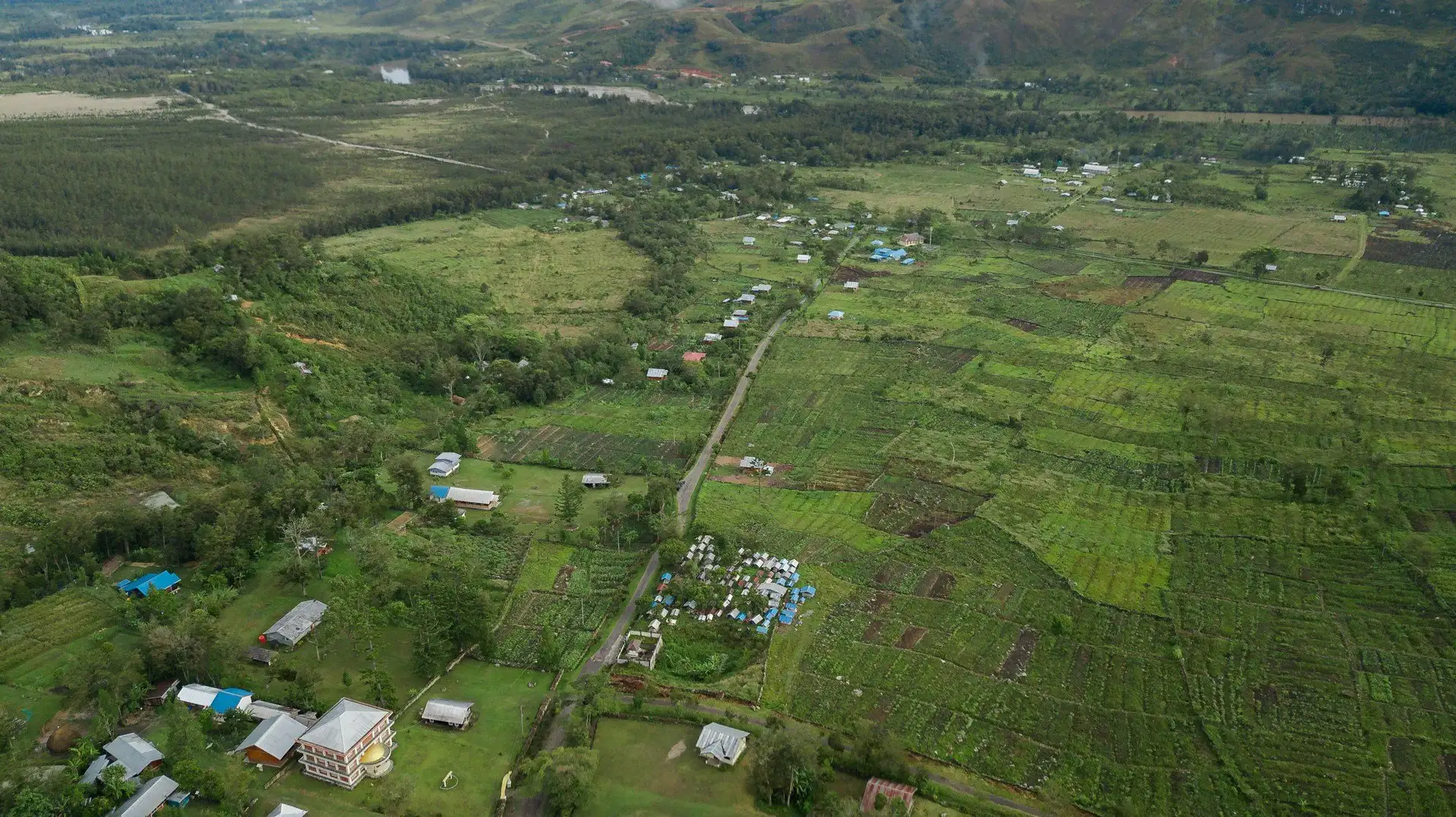
Guyana is the only English-speaking country on mainland South America, a fact that surprises most people who assume it belongs to the Spanish- or Portuguese-speaking rest of the continent. It doesn't, culturally: Guyana is a full member of the Caribbean Community (CARICOM), was British Guiana until 1966, and feels far closer in temperament to Trinidad or Barbados than to Brazil or Venezuela next door, even though nearly ninety percent of its land is unbroken Amazonian rainforest and savannah that almost nobody visits.
Two things are reshaping the country as you read this. The first is oil: a 2015 offshore discovery in the Stabroek Block turned Guyana, within a decade, into one of the fastest-growing economies on earth, and Georgetown's skyline is visibly catching up, with international hotel brands breaking ground faster than the city can absorb them. The second is a live territorial dispute with Venezuela over the Essequibo region, roughly two-thirds of Guyana's landmass, now being argued in front of the International Court of Justice. Neither of these is a reason to skip the country. Both are reasons to arrive informed rather than assuming this is a beach-and-rum Caribbean island with better wildlife.
The honest complications
Guyana is not an easy independent-travel country. The interior, where the best of it lives, Kaieteur Falls, the Rupununi savannah, Iwokrama's rainforest, is barely connected to Georgetown by road; getting there means a small chartered plane, a pre-booked lodge, and a plan made weeks in advance, not a rental car and a sense of adventure. Crime is a real, current concern in Georgetown specifically, not a historical footnote: the US State Department currently rates the country Level 3, Reconsider Travel, for crime. None of this makes Guyana a bad idea. It makes it a country that rewards travelers who do their homework and rarely rewards those who wing it.
A History Worth Knowing
Guyana's history is a story told through who was brought there and why. Dutch traders arrived in the 17th century and built the drainage canals that still define the coast; Britain took formal control in 1814 and consolidated the territory as British Guiana in 1831. What followed shaped the country's population more than any other single fact: sugar plantations worked first by enslaved Africans, then, after abolition in 1834, by indentured laborers brought from India, with smaller numbers from China and Portugal. Independence came on 26 May 1966, and the ethnic-political fault line drawn in the colonial era, roughly Indo-Guyanese and Afro-Guyanese, has shaped Guyanese politics ever since.
- 17th-18th c.
Dutch rule. Dutch traders and planters establish the colony and dig the canal system that still drains coastal Georgetown, much of which sits below sea level.
- 1814-1831
British Guiana. Britain formalizes control and merges the Dutch colonies of Demerara, Essequibo and Berbice into a single territory.
- 1834-1917
Abolition and indenture. Slavery ends in 1834; Britain replaces plantation labor with indentured workers from India starting in 1838, plus smaller numbers from China and Portugal, permanently reshaping the population.
- 1966
Independence. British Guiana becomes Guyana on 26 May. The PPP-PNC split between Cheddi Jagan and Forbes Burnham, drawn largely along Indo- and Afro-Guyanese lines, defines the following decades of politics.
- 1970
Republic. Guyana becomes a republic within the Commonwealth; the anniversary is celebrated every 23 February as Mashramani.
- 2015-present
The oil era. ExxonMobil discovers oil in the offshore Stabroek Block, triggering some of the fastest GDP growth of any economy in the world and a visible construction boom in Georgetown.
Read more: the Essequibo dispute and the oil boom in detail
The Essequibo dispute. Venezuela claims the Essequibo region, the area west of the Essequibo River that makes up about two-thirds of Guyana's total land area, a claim dating back to 19th-century boundary arbitration that Venezuela has never fully accepted. Guyana brought the case to the International Court of Justice in 2019; Venezuela filed its response in 2025, and the ICJ opened hearings on the merits in May 2026. This is an active legal and diplomatic dispute, not a resolved one, and it is worth understanding before you go, even though it plays out almost entirely at the border and in The Hague rather than in Georgetown.
The oil boom. The Stabroek Block sits roughly 120 miles offshore and is operated by ExxonMobil Guyana alongside Chevron and CNOOC Petroleum Guyana. Production has scaled up rapidly since the first oil in 2019, and Guyana posted real GDP growth above 15 percent in both 2025 and projected 2026, driven almost entirely by oil and gas, which now accounts for the large majority of the economy. For visitors, the practical effect is a Georgetown hotel scene in the middle of a genuine construction boom, several international chains opening rooms in 2026 and more due through 2028, and a cost of living rising faster than the rest of the Caribbean.
Top Destinations
Guyana splits into two very different countries stacked on top of each other: a narrow, populated coastal strip anchored by Georgetown, and a vast, sparsely populated interior of rainforest and savannah that makes up nearly ninety percent of the landmass and has almost no road connection to the coast. Most visitors see Georgetown plus one interior region; seeing two interior regions in a single trip requires real time and a real budget.
Kaieteur Falls
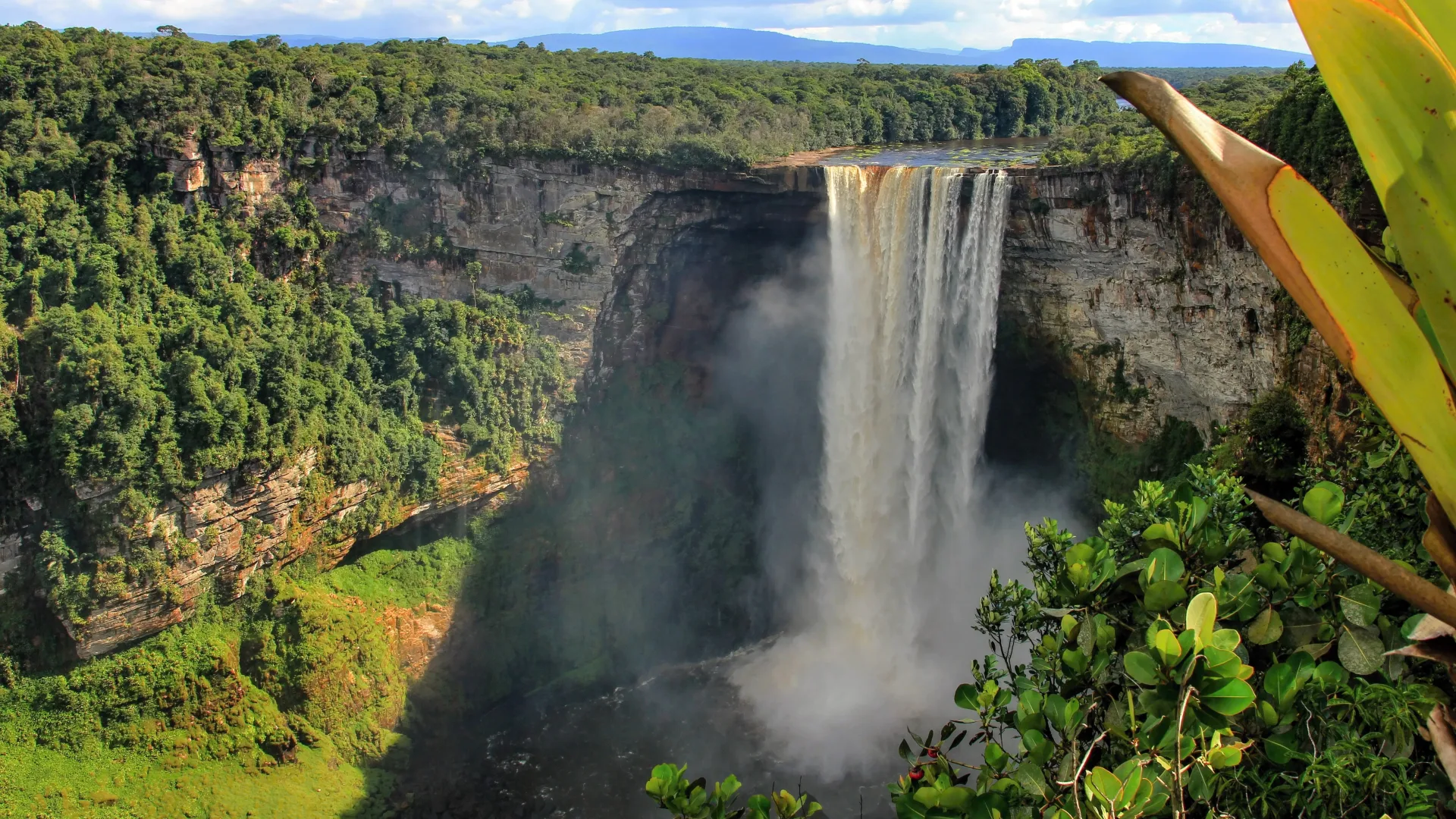
Kaieteur Falls drops 226 metres in a single sheet on the Potaro River inside Kaieteur National Park, and is generally credited as the world's most powerful single-drop waterfall when height and water volume are combined, a specific record rather than a claim to being the world's tallest or highest-volume fall outright. Almost everyone sees it on a half-day flight from Georgetown's Ogle Airport (not the international airport), which lands you at a small airstrip a short walk from the viewpoints, with a guide, for roughly two hours on the ground. There is no realistic road route; the falls sit inside protected rainforest with no permanent settlement nearby.
Iwokrama Forest
South of Kaieteur, the Iwokrama Forest is a nearly 4,000-square-kilometre reserve and research station straddling the transition between rainforest and savannah, reached by charter flight to the Fairview airstrip or as a stop on the overland route to the Rupununi. The Iwokrama River Lodge sits on the Essequibo River and is the standard base for canopy walkway visits and river trips in search of black caiman and the elusive harpy eagle.
The savannah lodges
The Rupununi is Guyana's savannah region near the Brazilian border, open grassland dotted with termite mounds and gallery forest along the rivers, and the best place in the country to see wildlife: giant river otters, giant anteaters, capybara, and, with real luck, jaguar. Karanambu Lodge on the Rupununi River, founded by the conservationist Diane McTurk, is the historic base for giant otter research and sightings. Rewa Eco-Lodge, community-owned at the meeting of the Rewa and Rupununi rivers, and the Amerindian community of Surama both run their own lodges and guiding, putting tourism revenue directly into the villages that host it.
Georgetown, the garden capital
Georgetown is a low-rise city of colonial wooden architecture, Dutch-era drainage canals and a long Atlantic seawall, sitting mostly below sea level and protected by exactly the kind of engineering that gives it its slightly precarious, waterlogged charm. It's covered in full in our dedicated Georgetown city guide, and it's the base for nearly every interior trip, since almost all charter flights and lodge transfers start there.
Shell Beach
A roughly 90-mile stretch of remote Atlantic coast in Guyana's northwest, Shell Beach is one of the Caribbean region's most important nesting sites for sea turtles, with leatherback, green, hawksbill and olive ridley turtles all coming ashore. Nesting season runs March through August, peaking in the wetter months. This is not a day trip: there's no road or electricity, and visits mean multiple nights in open-sided research-camp shelters reached by private boat from the coastal town of Charity, arranged through a conservation-focused tour operator well in advance.
Culture & Etiquette
Guyana is the most religiously and ethnically layered country in the English-speaking Caribbean world: Hindu and Muslim traditions from Indo-Guyanese heritage sit alongside Christian denominations tracing back to both African and European roots, plus the distinct spiritual traditions of Guyana's Indigenous peoples. The country marks 14 gazetted public holidays across three major religious calendars in a given year, and treats that plurality as a point of pride rather than friction.
Do
- Time a trip around a festival if you can. Diwali and Phagwah (Holi) are celebrated nationally, not just within Hindu communities, and Mashramani on 23 February, marking the 1970 republic, is Guyana's biggest street carnival.
- Talk cricket. It is a genuine national passion, and Georgetown's Bourda Ground is a real piece of West Indies cricket history, worth knowing about even if you don't follow the sport closely.
- Greet people directly and unhurriedly. Guyanese social interaction, especially outside Georgetown, tends to be warm and conversational rather than transactional.
- Carry small GYD notes. USD cash is widely accepted informally, but local currency is expected for minibuses, markets and small vendors.
- Dress modestly at religious sites of any faith, and ask before photographing people, especially in Indigenous communities in the interior.
Don't
- Assume Guyana is culturally Latin American. It is English-speaking, CARICOM-member, cricket-playing Caribbean, despite sitting on the South American mainland and bordering Brazil and Venezuela.
- Wing the interior. Turning up in the Rupununi or at Kaieteur without a pre-arranged flight and lodge booking simply doesn't work; there's no tourist infrastructure to improvise with.
- Assume the coast and the interior are ethnically or culturally uniform. Indigenous nations in the Rupununi and the north-west have distinct languages and traditions from the Indo- and Afro-Guyanese communities of the coast.
- Walk unfamiliar Georgetown streets after dark without a plan; see the safety chapter for specifics.
- Expect fast, cheap domestic transport. Interior flights and vehicles are scarce and need real lead time, not a same-week booking.
Deeper culture: cricket at Bourda, the indenture legacy, and Guyanese Creole
Bourda Cricket Ground. Home of the Georgetown Cricket Club, founded in 1858, one of the oldest cricket clubs in the Caribbean. Bourda is cited as the first Test cricket venue on the South American mainland and the only Test venue in the world below sea level, and it hosted the West Indies' first-ever Test match win, a 289-run victory over England in 1930. It has hosted 30 Test matches in total and remains a working ground and a legitimate heritage stop.
The indenture legacy. After the abolition of slavery in 1834, British planters brought indentured laborers from India starting in 1838, along with smaller numbers from China and Portugal, to keep the sugar plantations running. That single policy decision is the direct root of Guyana's Indo-Guyanese population, its Hindu and Muslim communities, and its distinct Chinese-Guyanese food tradition, all still visible in the country today.
Guyanese Creole. English is the sole official language, but everyday speech runs through Guyanese Creole (Creolese), an English-based creole with West African, Indian and Dutch influences. Visitors will have no trouble with standard English in tourist contexts, but Creolese is the language of home and street life.
Food & Drink
Guyanese food reads like the country's population history on a plate: African, Indian, Amerindian, Chinese and Portuguese influences all still distinct rather than blended into something generic, and rarely found outside Guyana and its diaspora communities.
Pepperpot
The national dish: meat, traditionally including cow heel, slow-cooked for hours in cassareep, a dark, preserved cassava-root reduction that gives the stew its distinctive flavor and lets it keep for days without spoiling. Traditionally the centerpiece of Christmas and New Year meals, served with bread.
Cook-Up Rice & Metemgee
Cook-up rice is a one-pot dish of rice, coconut milk, pigeon peas or black-eyed peas and meat or fish, the everyday comfort food of the coast. Metemgee, an Afro-Guyanese ground-provisions stew of cassava, eddoe, plantain and yam simmered in coconut milk with dumplings, is its heartier cousin.
Curry, Roti & Chinese-Guyanese Food
Dhalpuri roti with curried chicken or goat reflects the Indo-Guyanese majority and is Georgetown's defining street food. Guyanese "chow mein" and other Chinese-Guyanese dishes descend from 19th-century Chinese indentured laborers, a genuinely distinct fusion cuisine rather than a version of mainland Chinese food.
When to Go & Itineraries
Guyana is tropical and humid year-round with two rainy seasons, roughly December to January and again from May through August, and correspondingly drier stretches from February to April and September to November that make the most comfortable windows for travel, including for accessing the interior when trails and rivers are more predictable. Kaieteur Falls, notably, is at its most dramatic in the wetter months when water volume is highest, a genuine trade-off against drier, easier interior travel conditions.
Itineraries
Guyana rewards a longer stay than its size suggests, purely because of interior logistics: getting anywhere beyond Georgetown takes real transit time, so a rushed itinerary mostly means time in airports and vehicles.
- Days 1-2
Georgetown. Stabroek Market by day, St. George's Cathedral, the Seawall, Botanical Gardens. Full detail in our Georgetown city guide.
- Day 3
Kaieteur Falls. Half-day flight from Ogle Airport, roughly two hours at the falls, back to Georgetown by afternoon.
- Day 4
Departure or a second, easier day around Georgetown.
- Days 1-2
Georgetown. As above.
- Day 3
Kaieteur Falls day flight, or combined with an onward charter into the interior the same day to save a transfer.
- Days 4-7
Iwokrama or the Rupununi. Fly or charter to Iwokrama River Lodge for the canopy walkway and river wildlife, or on to Karanambu, Rewa or Surama in the savannah for otters, birdlife and community-guided walks.
- Days 1-2
Georgetown in full, unrushed.
- Day 3
Kaieteur Falls en route into the interior.
- Days 4-6
Iwokrama Forest. Canopy walkway, night river trips for caiman, a full attempt at the harpy eagle.
- Days 7-11
The Rupununi savannah. Karanambu for giant otters, then Rewa or Surama for community-led wildlife walks and river time.
- Day 12
Fly back to Georgetown for departure, with a buffer day built in given how weather-dependent small-plane schedules can be.
Getting there & around
Cheddi Jagan International Airport (GEO), about 25 miles south of Georgetown at Timehri, is the country's main gateway. Caribbean Airlines and American Airlines are the most commonly cited direct options from North America, with connections available via other Caribbean and European carriers; flight frequency to Georgetown is lower than to most Caribbean capitals, so book two to three months ahead rather than assuming last-minute availability. Interior travel runs through Ogle Airport in Georgetown (not GEO), using scheduled or chartered small planes; charters typically need a minimum group size and only depart once full, so solo travelers may need to join a scheduled flight or wait for a group to fill.
Practical prep for the interior
Book interior flights and lodges as far ahead as your schedule allows, ideally months, not weeks: seats and rooms are genuinely limited rather than artificially scarce. Bring cash in small denominations for the interior, since card acceptance drops off fast outside Georgetown. A basic malaria prophylaxis conversation with a travel clinic is worth having before an interior trip, and download offline maps before you go since signal disappears entirely away from the coast.
Budget Planning
Guyana is not a cheap Caribbean-style budget destination, and the ongoing oil boom is pushing Georgetown prices up further and faster than most of the region. The biggest single costs on any real itinerary are interior charter flights and lodge stays, not day-to-day food and transport.
- Georgetown guesthouse
- Local roti shops & markets
- Minibuses within the city
- Excludes interior flights
- Mid-range Georgetown hotel
- Restaurant meals
- Taxis, agreed fares
- One interior lodge night factored in
- International-brand hotels
- Private charter flights
- Premium interior lodges
- Guided wildlife trips
Figures reflect September 2026 research into current Guyana travel-cost estimates and drift over time, especially as the oil-driven hotel boom continues. Treat them as a planning baseline, not a quote, and confirm interior flight and lodge pricing directly with operators before booking.
Visa & Entry
Citizens of the US, UK, Canada, the EU and Australia typically enter Guyana visa-free for short tourist stays, commonly cited as up to 30 days. Entry rules are exactly the kind of detail that shifts without much notice, so confirm current terms directly with Guyana's immigration authorities before you fly, rather than relying on a paid third-party "e-visa" site that charges for something that may be free.
✓ Valid passport
At least 6 months' validity from date of entry is the standard requirement travelers report.
✓ Onward/return ticket
May be requested at immigration on arrival.
✓ Proof of funds
Occasionally requested; carrying evidence of accommodation bookings is a reasonable precaution.
✓ Yellow fever (conditional)
Not required arriving directly from the US, UK, Europe, Canada or Australia; it is required if arriving from certain other countries. Check current requirements before you fly.
| Guyana | Suriname | |
|---|---|---|
| Colonial background | British Guiana; English-speaking, CARICOM member | Dutch colony; Dutch remains the official language |
| Interior draw | Kaieteur Falls, the Rupununi savannah wildlife | Central Suriname Nature Reserve, similarly roadless rainforest |
| Access | Charter flights the norm for the interior | Similarly reliant on small planes and river transport |
| Current headline issue | Essequibo territorial dispute with Venezuela | No comparable active territorial dispute |
| English speakers | Native, sole official language | Limited outside tourism operators |
Safety, Solo Women & Family
Address this directly: the US State Department currently rates Guyana Level 3, Reconsider Travel, citing crime, an advisory last updated in August 2026. This is not a war-zone or civil-unrest rating; the crime in question is overwhelmingly opportunistic, theft, pickpocketing, occasional robbery, concentrated in specific parts of Georgetown, rather than organized violence targeting tourists. It is, however, a real and current advisory, not a formality, and it should shape how you plan the trip rather than something to skim past.
Georgetown after dark
Certain neighborhoods, including Tiger Bay, Sofia, Albouystown and Agricola, are consistently flagged as higher-risk, along with the National Park area and the Seawall at night. Use agreed-fare taxis after dark rather than walking, even for short distances.
Markets by day
Stabroek Market is Georgetown's most recognizable landmark and also one of the areas flagged for petty theft. Visit in daylight, keep bags zipped and in front of you, and skip the flashy valuables, standard advice for any busy market rather than a reason to avoid it outright.
The Essequibo border
The Guyana-Venezuela border is separately flagged as insecure by US authorities, a diplomatic and border-region issue tied to the Essequibo dispute rather than a Georgetown safety concern. It is not a place tourists have any reason to be near.
What this Level 3 rating does and doesn't mean
Level 3 sits below Level 4 (Do Not Travel) on the US scale, and it's a rating Guyana shares with a number of destinations that see regular, uneventful tourism, including several other Caribbean and Latin American capitals. It means: take real precautions, particularly around night travel and cash handling, rather than treating Georgetown like a typical low-crime Caribbean beach town. It does not mean interior lodges, which are small, closely supervised operations with no meaningful crime history reported, carry the same profile as the capital.
Solo women travelers
Guyana has less published solo-female-travel data than more established Caribbean and South American destinations, but the core advice mirrors the general safety picture: the interior lodges, which run small, guided groups with a fixed daily structure, are considerably lower-risk than independent Georgetown exploration after dark. In the city, the same after-dark precautions apply regardless of gender: agreed-fare taxis rather than walking, and avoiding the specific neighborhoods flagged above at night.
Emergency numbers
Embassies in Georgetown
The US Embassy is at 100 Young and Duke Streets, Kingston, Georgetown (+592-225-4900); its after-hours emergency line is +592-225-4126. The British High Commission is at 44 Main Street, Georgetown (+592-226-5881). The Canadian High Commission is at High and Young Streets, Georgetown (+592-227-2081). Australia does not maintain an embassy in Guyana; Australian citizens should consult Smartraveller for the nearest regional mission.
Family travel
Guyana works better for families drawn specifically to wildlife and nature than for a conventional beach-and-pool trip, since there isn't one on offer here. The Rupununi lodges and Iwokrama, with their guided, structured days, tend to suit older children well; Georgetown's Botanical Gardens and National Park, both with resident manatees, are an easy, low-key option for a family day in the city.
Guyana FAQ
Is Guyana safe to visit?
The US State Department rates Guyana Level 3, Reconsider Travel, due to crime, mostly opportunistic theft and robbery rather than organized violence against tourists. Georgetown needs normal city caution after dark; the interior lodges are calm and closely supervised.
What is Kaieteur Falls and how do you get there?
Kaieteur Falls is a 226-metre single-drop waterfall on the Potaro River, credited as the world's most powerful single-drop fall by combined height and volume. It's reached by small plane from Ogle Airport near Georgetown, usually as a half-day trip.
Do I need a visa for Guyana?
Citizens of the US, UK, Canada, the EU and Australia typically enter visa-free for short tourist stays. Rules shift, so confirm current terms with Guyana's immigration authorities rather than a paid third-party e-visa site.
What is the Essequibo dispute and does it affect tourists?
Venezuela claims the Essequibo region, about two-thirds of Guyana's landmass, in a case now before the International Court of Justice. It is a border and diplomatic issue, not a Georgetown safety issue; the frontier zone itself is where caution applies.
How many days do you need in Guyana?
Four days covers Georgetown and a Kaieteur Falls day trip. A week to ten days adds the Rupununi savannah or Iwokrama forest, which need charter flights or a long overland drive to reach.
How expensive is Guyana?
Budget travelers manage on roughly $65 a day outside flights, mid-range around $125. The oil boom is pushing up Georgetown hotel prices; interior lodges and charter flights are the biggest single costs on any itinerary.
What caused the Guyana oil boom?
ExxonMobil's 2015 discovery of oil in the offshore Stabroek Block. Production has grown fast since 2019 and the economy has posted some of the highest growth rates in the world, visibly reshaping Georgetown's skyline and hotel scene.
Is Guyana in the Caribbean or South America?
Geographically it's on the South American mainland, bordering Brazil, Venezuela and Suriname, but it's a full CARICOM member and culturally, historically and politically part of the Caribbean rather than Latin America.
What language do people speak in Guyana?
English is the sole official language, the only English-speaking country on mainland South America. Guyanese Creole is the everyday spoken vernacular; Indigenous languages persist in interior communities.
Can you visit the Rupununi savannah independently?
Technically yes by a 12 to 15 hour overland drive to Lethem, but almost everyone flies via a scheduled or chartered small plane and pre-books lodges, since vehicles and guides in the interior are genuinely scarce and cannot be arranged on arrival.
What food is Guyana known for?
Pepperpot, a dark cassareep-based meat stew traditionally eaten at Christmas, alongside cook-up rice, curry and roti from the Indo-Guyanese community, and a distinct Chinese-Guyanese cuisine descended from 19th-century indentured laborers.
What Stays With You
Guyana does not make itself easy to visit, and that is exactly why so few people have. The plane banking over unbroken rainforest canopy toward a waterfall almost nobody back home has heard of. A giant otter surfacing beside a wooden dugout on the Rupununi River while a guide who grew up in that exact village explains what you're looking at. A pepperpot recipe unchanged since indenture ships first reached Georgetown's harbor, served in a house built when this was still British Guiana.
The oil money is arriving fast, and it will change this place, probably faster than most of its neighbors. Go see the version of Guyana that got here first.