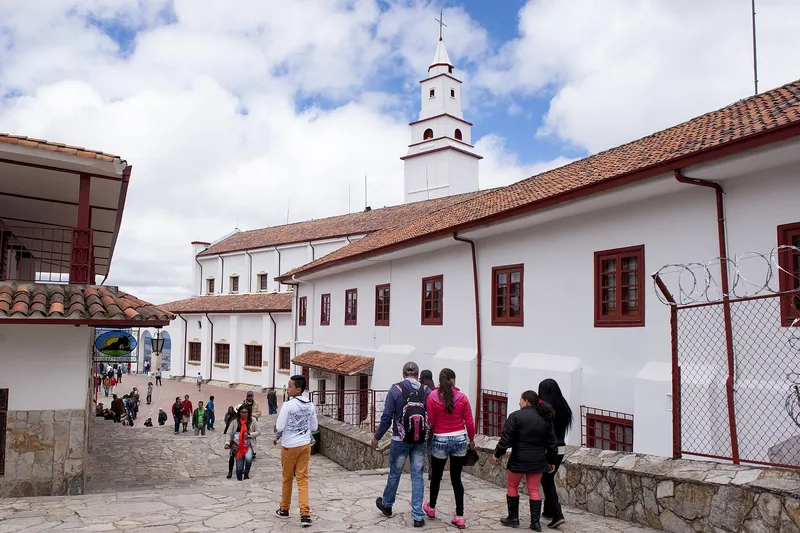
Mountain sanctuary
Monserrate
A sanctuary on a peak above the city, reached by cable car, funicular or a walking trail.
Book a Monserrate ticket
Updated November 2026 · Fact-checked
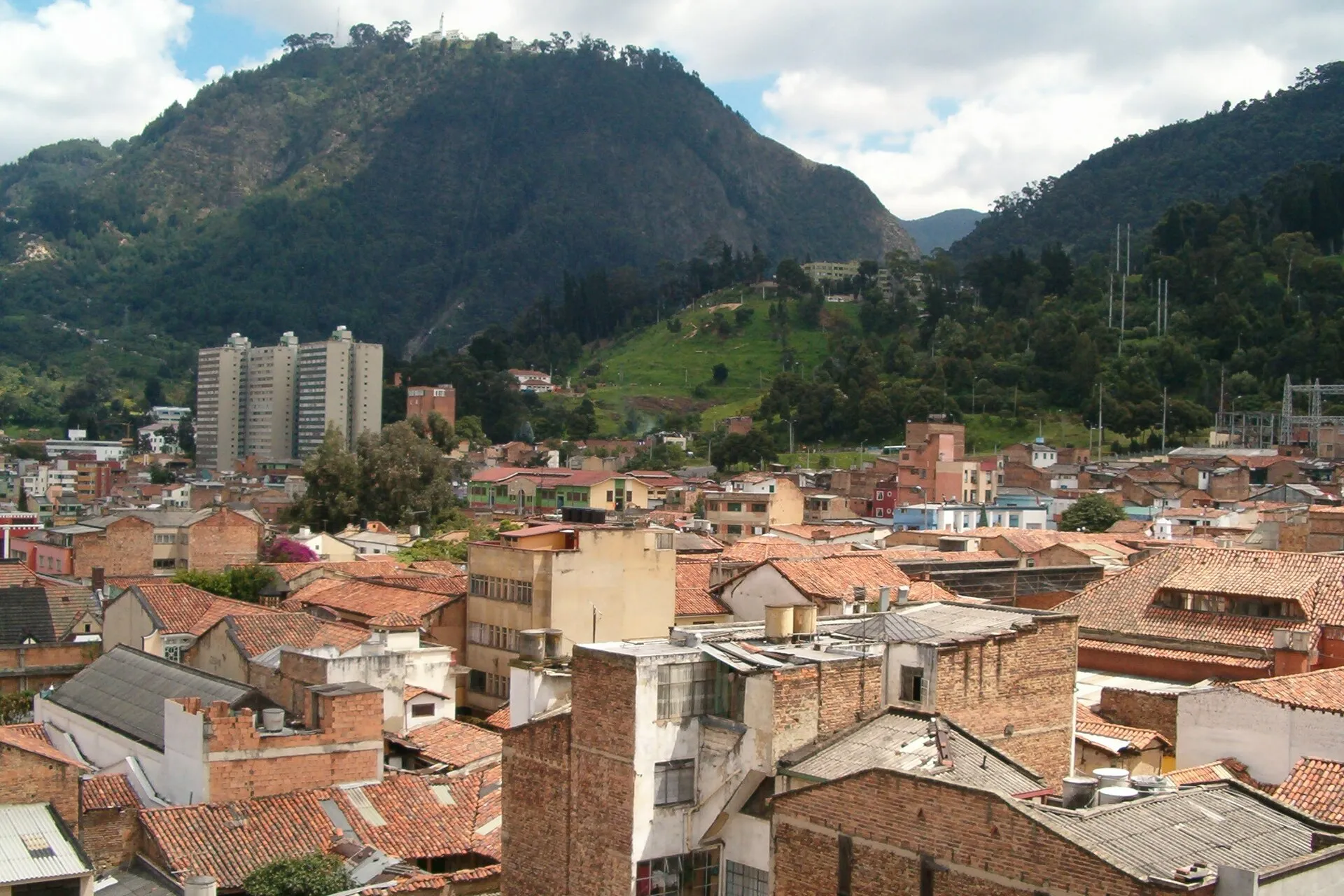
Terracotta roofs stepping up towards a church on a mountaintop. A free museum in a colonial mansion, a soup that has been on the menu near the cathedral for generations, and a thin-air climate that keeps the evenings cool. Bogotá is a capital that rewards a slow first day, a careful eye on your phone and a plan that leaves room for the hills.
 BOGOTÁ · 4.7°N 74.1°W
Bogotá lies on the Eastern Cordillera of the Andes, and Canada's travel advice puts the city at 2,600 metres above sea level. The climate follows the height: the Bogotá city government, quoting IDEAM, gives an annual average of 13.1 °C, daytime highs between 18 and 20 °C and early-morning lows between 8 and 10 °C. This is a city for a jacket and an umbrella, with the colonial centre of La Candelaria, two major museums and a mountain sanctuary within reach on a single visit.
Colombia's tourism ministry counts the traffic: according to MinCIT figures reported by NTN24, Bogotá recorded about 12.5 million international migratory movements in 2025, a figure that includes arrivals and departures. Giving the city two or three days of its own pays back, especially if you shape the days around altitude, weather and the Sunday calendar described below. The Colombia guide covers entry rules and the rest of the country, and the Colombia scam guide goes into detail on the risks mentioned here.
Altitude is real. Canada's advisory warns that high-altitude illness can be serious at Bogotá's 2,600 metres. Take the first afternoon slowly, drink water and think twice before the steep walk up Monserrate on day one.
Street crime is the main safety issue. The UK FCDO says street crime is a problem in major cities including Bogotá and that British nationals have been robbed at gunpoint in the Candelaria area. The safety chapter below sets out what both governments advise.
Weather and the news both need a glance. The city government, quoting IDEAM, says the dry season lasts only four months, January, February, July and August, so rain is likely whenever you come. Canada's advisory also reports that a magnitude 7.4 earthquake struck Colombia on 10 August 2026 and that damage was reported in several cities, Bogotá among them, with aftershocks possible. Check the latest advice before you travel.
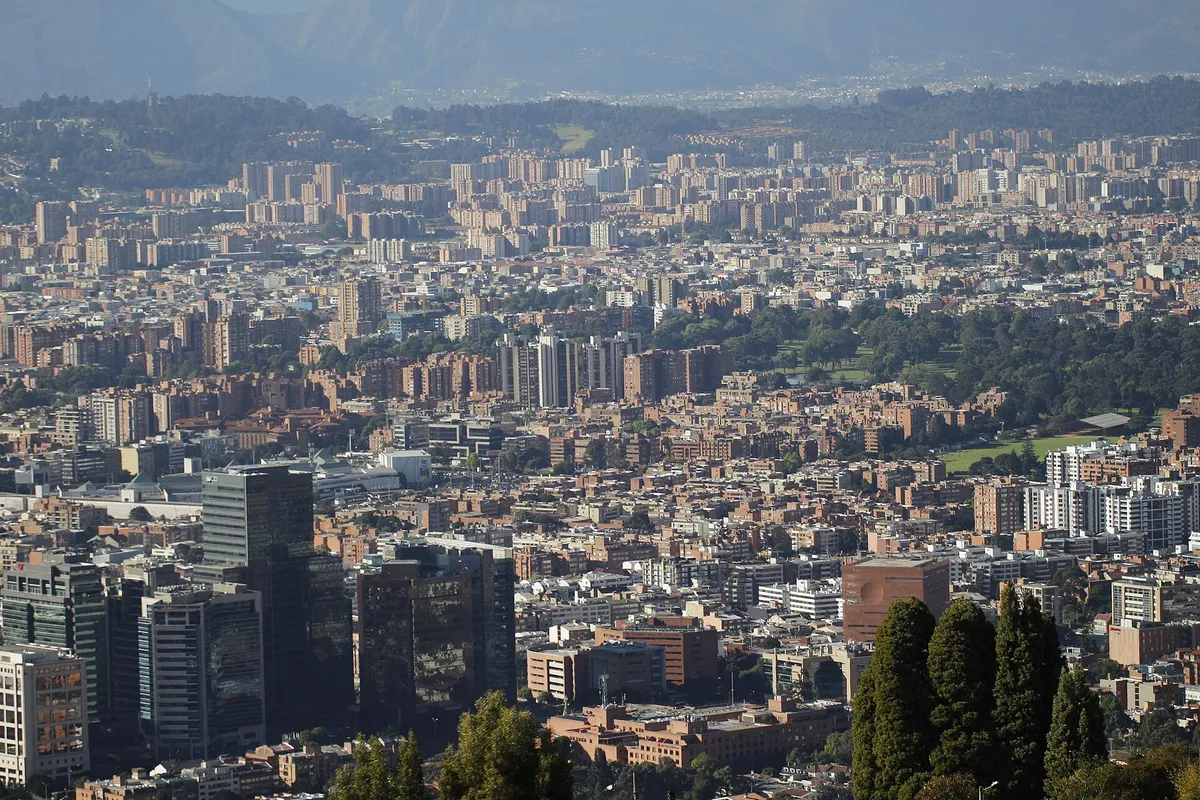
Bogotá is a very large city, but a first visit really revolves around three districts: the historic centre in La Candelaria, the restaurant and hotel streets of Chapinero, and the old village of Usaquén in the north. Where you sleep decides how much you walk, and after dark it also decides how careful you need to be.
Bogotá's old town holds the Plaza de Bolívar, the city's main square, and the colonial mansion that houses the free Botero Museum. The Museo del Oro stands nearby on Parque Santander. It is the most atmospheric place to stay and the easiest for museums, and it is also the area where the UK FCDO reports armed robberies of British visitors. Our own scam guide describes the historic centre as beautiful by day and risky after dark, with phone snatching and fake plainclothes police among the documented problems. Walk it in daylight, carry little and take an app car back to your hotel in the evening.
North of the centre, Chapinero is where many mid-range and business hotels sit, and the Zona T area is its restaurant and nightlife core. The Atlas Guide scam guide groups Chapinero, the Zona Rosa and Usaquén among the modern, walkable and relatively safe northern neighbourhoods, while also listing the Zona Rosa and Parque 93 as places where scopolamine drink-spiking has been reported. Go out in company, watch your glass and never accept a drink you did not see poured.
Usaquén was a separate municipality until 1954, when it was annexed into Bogotá. Its old core still has Spanish colonial architecture, including the Santa Bárbara church, built in 1665. On Sundays the Bogotá city government lists a flea market here, known for crafts and snacks, and many visitors combine it with lunch in the restaurants around the plaza. It is a quieter base than the centre, with a longer ride to the museums.
These nine places were each checked on Booking.com and have guest ratings of 8.5 or higher from at least 500 reviews. They cover the three areas above and a spread of budgets. We do not print nightly prices because they change daily, so check current rates for your dates.
In La Candelaria, Hotel De La Opera is the five-star option, with an indoor pool and spa, and guests rate it 8.5 from over 700 reviews. Camelia by Masaya Collection is a four-star hotel that guests rate 9+, and Candelaria House Boutique, an adults-only four-star, is also rated 9+ by guests. For a dorm or simple room, Granada Hostel has a terrace, a shared kitchen and a guest rating of 8.8 from over 1,800 reviews.
For a practical, budget-friendly base, ibis Bogota Museo in the Centro Internacional district is a three-star with a restaurant and bar and a guest rating of 8.5 from nearly 4,000 reviews. In Chapinero, Terrazas is an aparthotel that guests rate 8.8 from over 2,500 reviews, and Hotel Estelar Suites Jones is a four-star with a fitness centre and a guest rating of 8.9 from over 1,500 reviews.
In Usaquén, Sonesta Hotel Bogotá is a five-star that guests rate 9+ from over 1,400 reviews, with a fitness centre and on-site parking. Suites 109 GH Usaquén, a four-star with a garden and terrace, is rated 9 by guests from over 900 reviews.
Bogotá cooks for a cool climate: thick soups, tamales, hot chocolate and fresh fruit from markets. The best way in is to eat a few classics in the old centre and then follow the restaurants north.
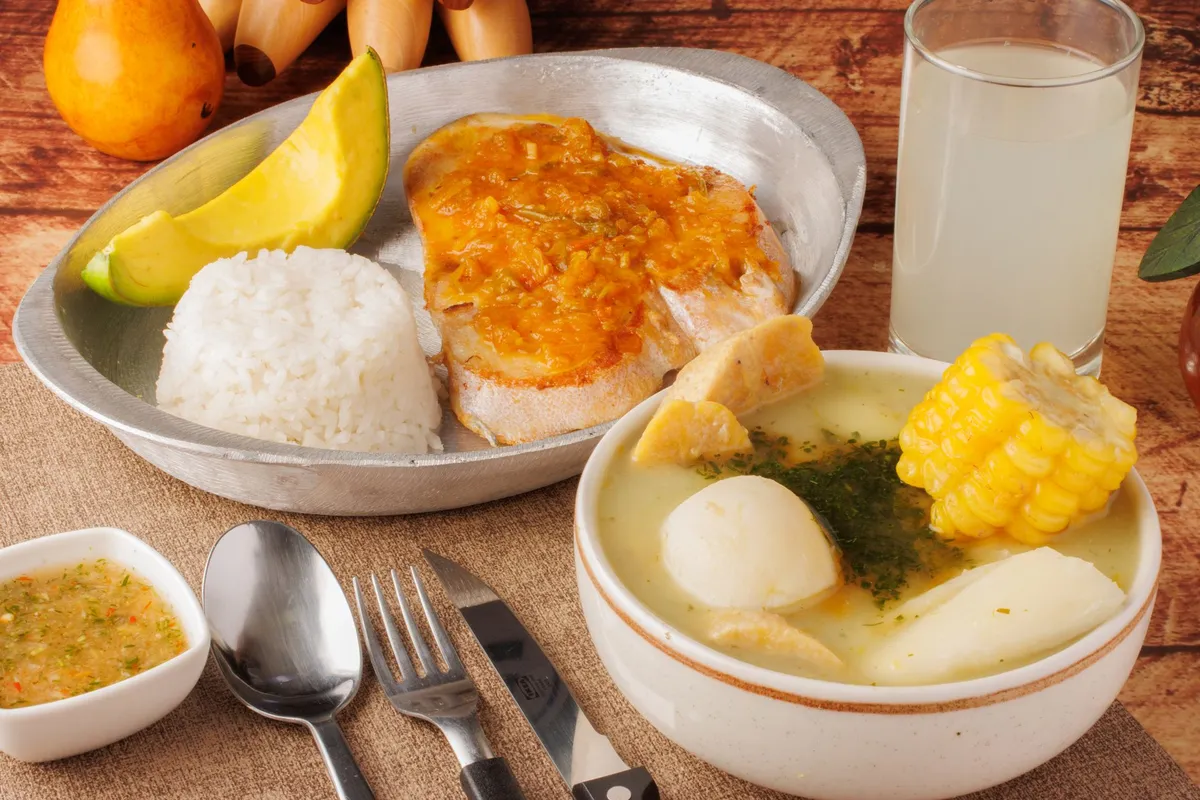
Bogotá's ajiaco is made with chicken, three varieties of potato and guascas, a local herb, and it can be served with capers, avocado, corn on the cob or cream. It suits the climate, so order it for lunch on a grey day.
Portafolio describes La Puerta Falsa as a small stand founded on 16 July 1816 and calls it the oldest food establishment in Colombia still operating. It stands on Calle 11, a few metres from the Plaza de Bolívar, and its menu includes ajiaco, tamal, chocolate, almojábana and changua. The name comes from the false doors on the north side of the cathedral. It is a quick, atmospheric stop, best done by day on your Candelaria walk.
Radio Nacional calls the Plaza de Paloquemao the country's largest flower collection centre, and it also sells fruit, vegetables, meat, fish, dairy and grains. Guided visitors taste exotic fruit, and the market's own restaurants serve dishes such as lechona. It is a morning outing, and a small-group food tour with 12 or more tastings and a game of tejo (about 4 hours, guests rate it 4.9 from over 580 reviews) is an easy way to taste several dishes in one go.
Bogotá's big sights cluster in La Candelaria, with Monserrate as the one outing that takes you above the city. Museum opening days change, so confirm them on the day you plan to go.
A sanctuary on a peak above the city, reached by cable car, funicular or a walking trail.
Book a Monserrate ticket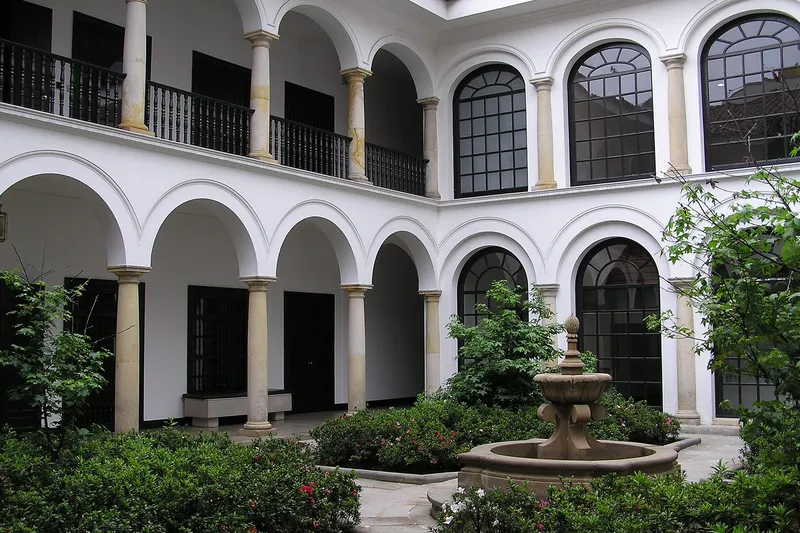
A colonial mansion holding 208 artworks donated by Fernando Botero, including works by Picasso, Dalí and Monet.
Book a city tour with Botero and gold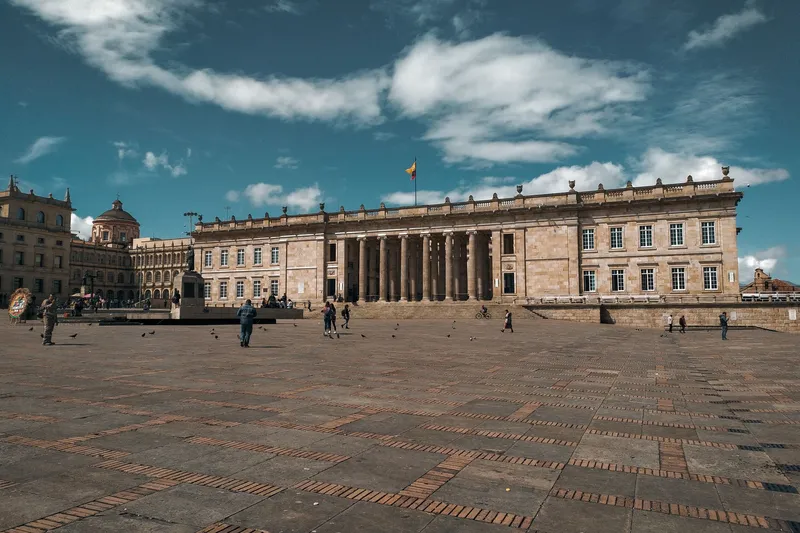
The cathedral, National Capitol, Palace of Justice and Liévano Palace frame a square declared a national monument in 1995.
Book a Candelaria walking tour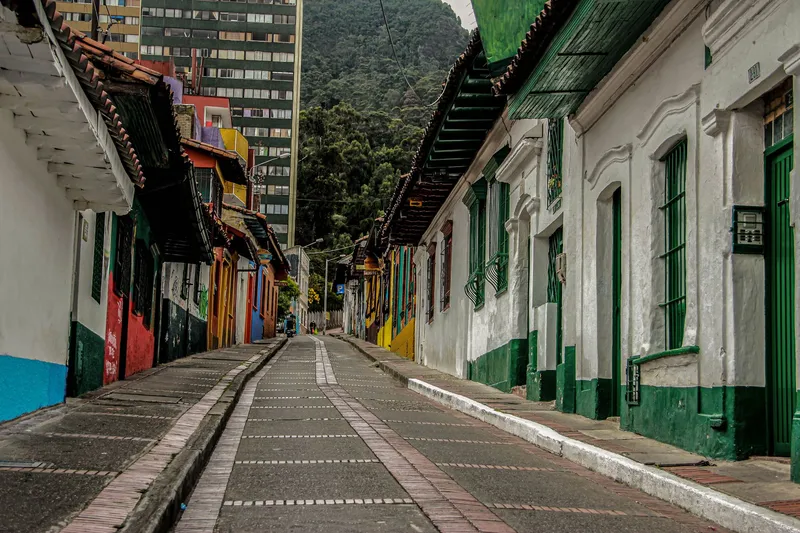
Colonial houses and narrow lanes around the main square, best explored in daylight.
Start on the Plaza de Bolívar, where the Primary Cathedral (completed in 1823) faces the National Capitol, with the Palace of Justice and the Liévano Palace, the city hall, on the other sides. The square holds the first public monument in Bogotá, the statue of Simón Bolívar, placed in 1846. From there the colonial lanes of La Candelaria run uphill towards the hills. A guided walking tour of La Candelaria is a sensible way to see the district with a local guide, and guests rate it 4.8 from over 1,500 reviews.
The Museo del Oro, at Parque Santander, was established in 1939 and holds about 55,000 gold pieces, with roughly 6,000 on display. Its centrepiece is the Muisca raft found at Pasca in 1969, which depicts the ceremony behind the El Dorado legend. The museum charges admission, except on Sundays. The Botero Museum is free: it has been open to the public without charge since 1 November 2000 and sits in a colonial mansion on Calle 11, with 123 works by Fernando Botero and 85 by other artists from his private collection.
Monserrate rises above 3,100 metres, well over the city's own altitude, so go slowly and listen to your body. You can ride a cable car or a funicular, and there is also a walking trail whose opening hours vary, so check them before you go. If you want help, a private city tour with Monserrate, the Gold Museum and the Botero Museum covers all three in one 5 to 7 hour day, and guests rate it 4.8 from over 750 reviews.
On Sundays and public holidays the city closes main roads to cars for the Ciclovía, which the city government says runs from 7:00 a.m. to 2:00 p.m. on 138.24 km of linked roads. A guided bicycle tour of about 4.5 hours, rated 4.9 by guests from nearly 2,500 reviews, passes fruit markets, the historic centre and a coffee factory. The same day, the Museo del Oro waives its admission and Usaquén holds its flea market.
For a first overview, a Bogotá city tour with Monserrate, gold and Botero museums is one option, and the food tour with tejo covers the table side of the city. Tour prices vary by group size and season, so check current rates before you book.
The routes below keep the centre for daylight, save the north for evenings and ease you into the height. If one of your days is a Sunday, use it for the Museo del Oro, the Ciclovía and Usaquén.
Plaza de Bolívar and La Puerta Falsa. The square, the cathedral and the Capitol, then tamal and chocolate on Calle 11.
Botero Museum. A free stop in a colonial mansion, with works by Botero, Picasso and Dalí.
Museo del Oro. The Muisca raft and the El Dorado story, at Parque Santander.
Dinner in Chapinero or the Zona T. Take an app car from the centre rather than walking.
The one-day route: Plaza de Bolívar, La Puerta Falsa, the Botero Museum and the Museo del Oro, then dinner in the north.
Monserrate. Cable car or funicular up, with time to adjust to the height above 3,100 m.
Paloquemao or a bicycle tour. Fruit and flowers at the market, or a guided ride through the centre.
Usaquén. Dinner around the old plaza, or lunch there if your second day is a Sunday.
The two-day route above, with a Sunday for the Ciclovía, the free Museo del Oro entry and the Usaquén flea market if your dates allow.
Zipaquirá Salt Cathedral. A church carved about 200 metres underground, reached on a guided day tour with hotel pickup.
Lake Guatavita. The lake behind the El Dorado legend, often combined with Zipaquirá in one long day.
Bogotá's rapid-transit backbone is TransMilenio. The city government confirmed a unified fare of COP 3,550 from 14 January 2026 for the TransMilenio trunk lines, the TransMiZonal buses and TransMiCable. TransMilenio's own site lists operating hours of 4:00 to 23:00 Monday to Friday, 5:00 to 23:00 on Saturday and 5:00 to 22:00 on Sundays and holidays, subject to change, and promotes the TransMiApp for planning trips.
From El Dorado airport (BOG), the Bogotá city government lists the dual K86-M86 route to Portal El Dorado and the trunk stations, and a TuLlave card personalisation point at entrance 4 on the second floor. That information dates from 2022, so check the current route in the TransMiApp. For a door-to-door ride, use a ride-hailing app such as Uber, inDrive, Cabify or DiDi, ordered through your hotel or your phone.
Do not hail taxis on the street. The UK FCDO says so directly and reports express kidnappings, assaults and robberies in unlicensed taxis, and Canada says express kidnappings and assaults often occur in unlicensed taxis and advises reputable companies arranged through a hotel or a ride-sharing app. The FCDO also reports armed robbery on buses, and our scam guide names TransMilenio as a phone-snatching hotspot, so keep your phone inside a pocket near the doors.
The Bogotá city government, quoting IDEAM, says the dry season is only four months long: January, February, July and August. April is the rainiest month and January the driest, so a light waterproof is useful all year, along with layers for mornings and evenings that can fall to 8 to 10 °C.
Practical prep: an eSIM before landing means a working phone for maps and ride-hailing apps from the moment you arrive.
We have not put a daily budget on Bogotá, because we could not source a reliable figure. What can be sourced is below: transport is cheap, two of the city's top sights cost little or nothing, and accommodation and tours are where spending varies.
Canada asks travellers to exercise a high degree of caution in Colombia because of high levels of crime, and its page does not list Bogotá among the areas to avoid. The UK FCDO advises against all but essential travel to parts of Colombia, and says street crime is a problem in major cities including Bogotá. The practical result: you can visit, but take the precautions below seriously.
The FCDO reports that British nationals have been robbed at gunpoint in the Candelaria area and that criminals impersonate police in Bogotá. It also warns about express kidnappings, often involving people posing as taxi drivers, and about scopolamine, a drug that temporarily incapacitates victims, so never leave food or drinks unattended and never accept anything from strangers. Canada also lists Bogotá among larger cities where drugging incidents occur. Both governments advise against hailing street taxis. Avoid protests, strikes and demonstrations, which the FCDO says can turn violent and close roads. Display no valuables and carry minimal cash.
Dial 123 for emergency assistance, as listed by Canada. Canada also notes that high-altitude illness can be serious at Bogotá's 2,600 metres, and that aftershocks are possible after the 10 August 2026 earthquake. For the full list of scams, from fake police to phone snatching, read the Colombia scam guide, and for entry rules see the Colombia guide.
The highlands around Bogotá are easy to reach on guided tours with hotel pickup, which also avoids the street-taxi problem described above. Zipaquirá and Lake Guatavita are the classic pair.
The cathedral is built inside a halite mountain at Zipaquirá, about 200 metres underground, and the current church opened on 16 December 1995. It has three naves, 14 Stations of the Cross and carvings made of salt. A group tour with pickup takes about 9 hours, and guests rate it 4.8 from over 2,100 reviews.
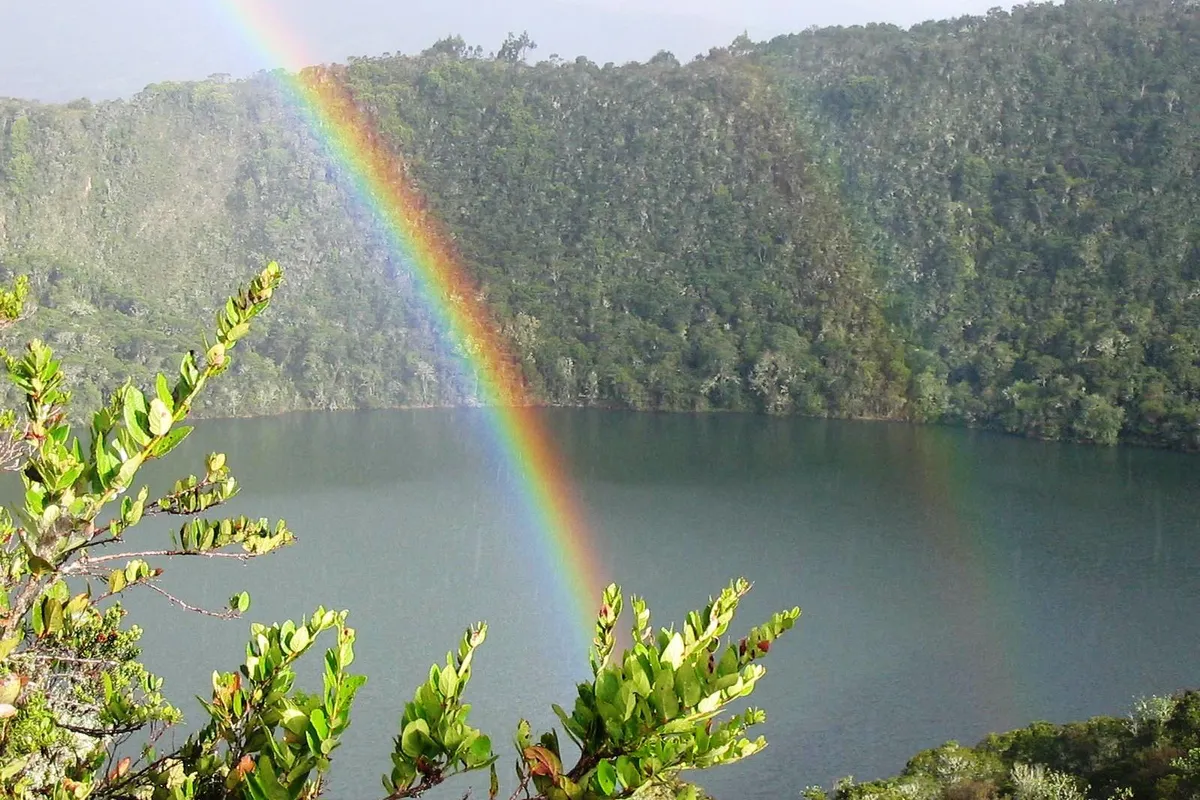
The lake, at about 3,000 metres in the municipality of Sesquilé, inspired the El Dorado legend: the Muisca ruler is said to have covered himself in gold dust and crossed the lake on a reed raft. You can pair it with Zipaquirá on a 12-hour tour of Zipaquirá and Lake Guatavita that guests rate 4.8 from over 1,100 reviews. Visiting the Museo del Oro first makes the legend easier to follow.
If you want a coffee farm without leaving the Bogotá area, a 9-hour small-group tour of a coffee farm and Tequendama Falls includes pickup and is rated 4.6 by guests from over 230 reviews. For the wider Coffee Region, see the Colombia guide.
Street crime is a real problem in Bogotá. The UK FCDO says British nationals have been robbed at gunpoint in the Candelaria area and warns of drink spiking with scopolamine, and Canada advises a high degree of caution across Colombia. Use ride-hailing apps instead of street taxis, keep valuables out of sight and call 123 in an emergency.
Two full days cover La Candelaria, the Botero Museum, the Museo del Oro and Monserrate. A third day works well for a day trip to the Zipaquirá Salt Cathedral or Lake Guatavita.
TransMilenio, the bus rapid transit network, charges a unified fare of COP 3,550 since 14 January 2026, shared with TransMiZonal buses and TransMiCable. For late evenings or luggage, order a ride through an app such as Uber, inDrive, Cabify or DiDi rather than hailing a taxi on the street.
According to IDEAM, quoted by the Bogotá city government, the dry season lasts only four months: January, February, July and August. April is the rainiest month and January the driest. Pack a rain jacket whatever the month.
Bogotá sits about 2,600 metres above sea level and Canada's advisory warns that altitude illness can be serious. Take the first day easily, drink water and go slowly on the walking trail to Monserrate, which rises above 3,100 metres.
The K86-M86 TransMilenio route links the airport with Portal El Dorado and the trunk stations, paid with a TuLlave card sold at the airport. For a door-to-door ride, order an app car and avoid unlicensed street taxis, which the UK and Canadian advisories link to express kidnappings.
La Candelaria for museums and colonial streets, though it is best avoided on foot after dark. Chapinero and the Zona T for restaurants and nightlife, and Usaquén for a calmer base with a Sunday flea market.
The Botero Museum in La Candelaria is free. The Museo del Oro charges admission except on Sundays, so plan it for a Sunday if you want to save.
The UK FCDO says not to hail taxis on the street, and Canada warns that express kidnappings and assaults often occur in unlicensed taxis. Book through your hotel or a ride-hailing app instead.
Yes. The Zipaquirá Salt Cathedral lies about 49 km north of the city and Lake Guatavita about 57 km to the northeast. Guided tours with hotel pickup cover both, either separately or in one long day.
Bogotá asks a little more of a visitor than most capitals: a slower first day, a jacket in the bag, an app instead of a wave at the curb. In return it gives you a free museum in a colonial courtyard, a gold raft that explains a legend, and a hilltop view of a city that stretches further than you expected.
Take the cable car up Monserrate once the morning cloud lifts, and look back over the roofs of La Candelaria to where you started.