
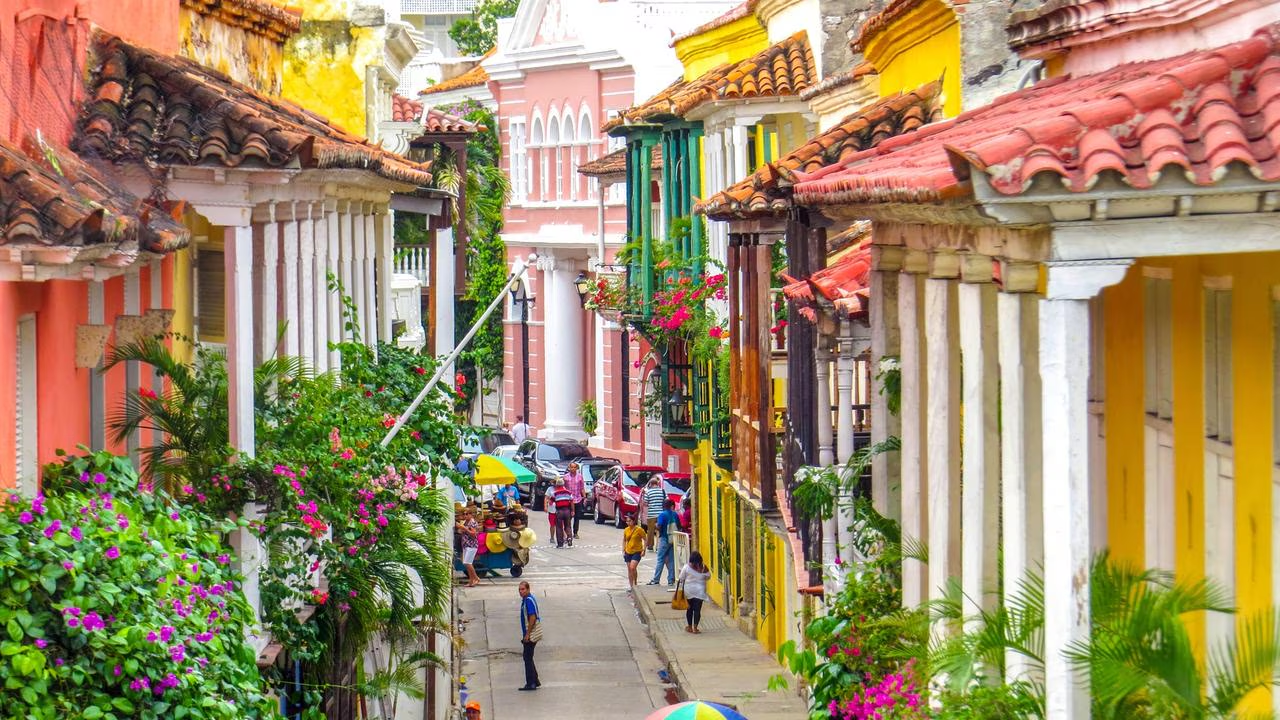
The Caribbean's best-preserved colonial city plays it completely straight
Cartagena's Walled City is a UNESCO World Heritage Site for a specific reason: rather than being restored after decay, it simply never stopped being lived in, fought over and rebuilt behind the same 16th-century ramparts. Balconies dripping with bougainvillea sit over doorways with hand-carved knockers that once signaled a family's profession; the fortifications that repelled Admiral Vernon's 1741 siege, the largest amphibious assault in history before D-Day, still ring the old town almost intact. It is genuinely beautiful without needing to try, and the heat and salt air are part of the experience rather than an inconvenience to plan around.
What changed in the last fifteen years is that international tourism discovered it properly. Cartagena went from a cruise-ship stopover to one of South America's most-visited cities, and the tourist infrastructure, English-speaking tour operators, boutique hotels in converted mansions, a genuine fine-dining scene, is now excellent. But walk two blocks into Getsemaní on a weekday afternoon and you're in a neighbourhood where kids still play street football against the same walls the guidebooks photograph at dusk.
The honest complications
Cartagena is hot and humid essentially year-round, 30-34°C with high humidity even in the "dry" season, and this shapes every plan more than any single attraction does; pace your days around it or the city will do it for you. It is also, by a wide margin, the most expensive city in Colombia: a walled-city hotel room or a tourist-zone dinner runs Bogotá-and-a-half prices for Cartagena-specific quality. Street vendors and unlicensed tour touts around the main plazas and the clock tower can be persistent, and taxi drivers routinely quote foreigners double the local rate since meters aren't consistently used. None of this makes Cartagena unsafe; it makes it a city where a little planning (agreed fares, InDriver instead of street taxis, a photographed menu before ordering) removes most of the friction.
Three neighbourhoods, one very different price tag each
Cartagena's tourist zone is compact: the Walled City (Centro and San Diego), Getsemaní just outside its walls, and Bocagrande, a beach peninsula a short taxi ride south. Where you base yourself comes down almost entirely to budget and how much nightlife noise you can sleep through.
Walled City (Centro & San Diego)
The Cartagena of the postcards: balconied mansions, church towers and plazas inside the original fortifications, with the greatest concentration of top restaurants and rooftop bars. San Diego, its quieter northern half, has slightly fewer crowds and more intimate hotels than Centro. Staying here means walking distance to everything historic, at the highest prices in the country.
Getsemaní
Just outside the walls, Getsemaní has gone from working-class barrio to the city's most talked-about neighbourhood in under a decade: street art covering entire blocks, the city's most creative kitchens, and hostels and boutique hotels running 30-50% cheaper than equivalent Walled City properties. For most first-time visitors this is the sweet spot, full atmosphere, real restaurant scene, a 10-15 minute walk to everything in Centro.
Bocagrande
A peninsula south of the Walled City lined with high-rise hotels and apartment towers, Colombia's answer to Miami Beach in miniature. The beach itself is serviceable rather than spectacular, better sand is a boat ride away on the Rosario Islands, but Bocagrande suits travellers who want air conditioning, a pool and a calmer pace over historic atmosphere.
From converted colonial mansions to Getsemaní's hostel scene
Cartagena's top hotels are almost all converted colonial houses inside the Walled City, which is a large part of why they cost what they cost; the mid-range and hostel scene in Getsemaní is where the value actually is. These picks cover every budget.
At the top, Casa San Agustín in the Walled City occupies three joined 17th-century mansions around a courtyard pool, with a well-regarded restaurant, Alma, and is consistently ranked the city's best boutique property, from about $400 a night. Sofitel Legend Santa Clara, a former 17th-century convent, is arguably the most beautiful hotel in the city, with cloistered courtyards and a pool where the convent's orchard once stood, from about $350.
In the boutique bracket, Hotel Casa Del Gobernador (from $180) has just twelve rooms inside a restored colonial house steps from the main plazas, while Amarla Boutique Hotel (from $150) is a seven-suite property with a rooftop pool that feels closer to staying in a private house than a hotel. Hotel Capellán (from $110), near the clock tower, is a newer, more affordable entry into the same boutique category.
At the budget end in Getsemaní, Santuario Getsemaní Hostel (from $15) has acoustically isolated dorm cubicles and free breakfast, and Viajero Cartagena (from $18) adds a pool and an on-site restaurant, both a short walk from the Walled City gates.
Arepa de huevo, ceviche and a fine-dining scene that punches above its weight
Cartagena's food scene splits cleanly into two tiers: excellent, cheap Caribbean street food that most tourists walk past, and a genuinely serious fine-dining scene led by Getsemaní kitchens that rank on Latin America's best-restaurant lists. Both are worth your time, and the good news is neither requires much money by international standards.
Arepa de huevo
The Caribbean coast's defining street food: a deep-fried corn arepa with a raw egg cracked into the dough and cooked through inside it. Found at stalls throughout Getsemaní and, more authentically and cheaply, at the sprawling Bazurto Market a short taxi ride from the centre. Eat it hot, straight from the fryer.
Fine dining
Celele, ranked among Latin America's 50 best restaurants, and Carmen both run contemporary tasting menus built on Caribbean-coast ingredients that rarely appear together outside this region. Reservations 1-3 weeks ahead are standard in high season (December-April, July).
Seafood & casual
La Cevichería, a no-frills spot that Anthony Bourdain once visited, does the city's best ceviche. Sierpe in Getsemaní has a relaxed patio and standout grilled octopus, and La Cocina de Pepina serves costeño home cooking, coconut rice, fried fish, patacones, at honest prices.
Coffee
Época, attached to the Hotel Casa del Arzobispado, pours some of the city's best specialty coffee, Chemex and French press options included, in a courtyard worth lingering in during the midday heat.
A fortress city built for wandering, with one essential boat trip
Cartagena rewards slow mornings and late afternoons more than a packed schedule, since the midday heat makes anything strenuous unpleasant. A few sights and the Rosario Islands day trip need advance booking; this chapter walks through the city roughly the way a good three days would.
The Walled City on foot
Start at the Torre del Reloj (Clock Tower), the main gate into the old town, then wander without much of a plan through Centro and San Diego's plazas: Plaza Santo Domingo, anchored by South America's oldest church, and Plaza de los Coches, the old slave-trading square, both ring with street performers and vendors by early evening. The Palacio de la Inquisición, the former Spanish Inquisition headquarters, is now a museum covering the city's colonial and Inquisition-era history for around $6-8 entry. Watch for the bracelet "gift" scam near the busiest plazas: politely decline anything a stranger tries to tie onto your wrist.
Castillo San Felipe de Barajas
The fortress that saved Cartagena from Admiral Vernon's 1741 siege, built up over two centuries on a hill just outside the walls, with tunnels, ramparts and views back over the old town. Entry runs roughly $6-10; go in the morning or late afternoon to avoid both the crowds and the worst of the heat, and budget 1.5-2 hours including the tunnels.
Getsemaní's street art
Calle del Pescado and the surrounding blocks of Getsemaní are covered in murals and street art documenting Afro-Colombian and local history, best appreciated slowly on foot in late afternoon light when the neighbourhood's plazas fill with people setting up for the evening. Plaza de la Trinidad is the social heart, food carts, drinks and a crowd most nights.
The Rosario Islands
An archipelago of small islands roughly 45 minutes offshore by boat, with the clear water Cartagena's own city beaches don't really offer. Boats leave from Muelle de la Bodeguita dock just outside the Walled City, generally by 8-9am and back by 4-5pm. Two very different experiences are on offer: lively catamaran or "party boat" tours with music and drinks included, or a quieter day pass at a beach club on Isla Grande or Barú for those who want the water and the snorkeling without the soundtrack. Book the version that matches what you actually want from the day, since the two are not interchangeable.
One, two or three days, planned around the heat
Three full days covers Cartagena properly, including the Rosario Islands; even one well-planned day delivers the essentials. Mornings and late afternoons are for walking; midday is for a pool, a courtyard cafe, or the Rosario Islands boat, where the ocean breeze makes the heat bearable.
- Morning
The Walled City. Torre del Reloj, Plaza Santo Domingo and Plaza de los Coches, coffee at Época, then the Palacio de la Inquisición before the midday heat sets in.
- Midday
Castillo San Felipe. Go while the morning light is still soft; budget 1.5-2 hours for the tunnels and ramparts.
- Afternoon
Getsemaní. Street art on Calle del Pescado, an arepa de huevo from a stall, a rest in the shade before evening.
- Evening
Dinner in Getsemaní. Sierpe or La Cocina de Pepina, then Plaza de la Trinidad for the evening crowd.
- Day 1
The one-day route: Walled City, Castillo San Felipe, Getsemaní street art, dinner at Sierpe.
- Day 2 morning
La Cevichería for an early lunch, then a slow walk back through San Diego's quieter plazas.
- Day 2 afternoon
Bocagrande beach or a Walled City courtyard hotel pool, whichever matches your energy after a hot morning.
- Day 2 evening
A tasting menu at Celele or Carmen, booked at least a week ahead.
- Days 1-2
The two-day route above, at a gentler pace.
- Day 3
Rosario Islands. Boat from Muelle de la Bodeguita by 8-9am, a full day on the water, back by late afternoon. Pick the beach-club version over the party boat if you want to actually relax.
Compact, walkable, and genuinely hot
Cartagena's tourist zone is small enough to walk end to end in 30-40 minutes, but the Caribbean heat and humidity, not distance, are the real obstacle. Rafael Núñez International Airport (CTG) sits about 6 km from the Walled City; an official taxi from the airport kiosk costs roughly 20,000-25,000 COP ($5-7) and takes 15-25 minutes, while a pre-booked fixed-price transfer avoids any haggling on arrival.
Inside the city, InDriver and Cabify are the preferred way to move between the Walled City, Getsemaní and Bocagrande: both quote a price before you accept, unlike street taxis, which routinely charge foreigners double the local rate since meters aren't consistently used or trusted. A short ride across the tourist zone runs $2-5. Walking is fine and often faster for anything inside the walls, just not at midday in peak heat, when a five-minute InDriver ride beats a slow, sweaty ten-minute walk.
Best time to visit and the two festival weeks to know about
Cartagena's dry season runs December to April, with the lowest rainfall and humidity from January to mid-March; expect sunny days around 29-32°C. May to November is wetter, with October the rainiest month by a clear margin. It is hot and humid essentially year-round regardless of season, so the real planning variable is rain, not temperature.
The Hay Festival, a major international literary festival, takes over the city for four days in late January and draws writers and artists from across Latin America. Independence Day week, centred on 11 November, brings the Cartagena Carnival: parades, concerts and fireworks marking the city's 1811 declaration of independence. Both weeks mean higher prices and fuller hotels; plan around them deliberately, either to catch one or to avoid it.
Colombia's most expensive city, still affordable by international standards
Cartagena costs noticeably more than Medellín, Bogotá or the Coffee Region, particularly for Walled City accommodation and tourist-zone dining. The main cost trap is eating and drinking inside the Walled City's most photogenic blocks, where prices run well above Getsemaní for comparable food.
- Hostel dorm in Getsemaní $15-25
- Set lunches & street food $10-20
- InDriver rides across the tourist zone
- Free plazas plus one paid sight
- Boutique hotel, Getsemaní or San Diego $70-150
- Restaurant meals $25-50
- InDriver plus a Rosario Islands day trip
- Castillo San Felipe, Palacio de la Inquisición
- Casa San Agustín or Sofitel Santa Clara $350+
- Tasting menus at Celele or Carmen
- Private Rosario Islands boat charter
- A private guide for the Walled City and fortress
Genuinely safe by day, sensible after dark
The Walled City and Getsemaní are safe for tourists with normal city awareness; the streets stay busy well into the evening, and a visible tourist and police presence covers the main plazas. The risks that actually catch visitors are petty theft, taxi overcharging, and the beach-vendor and bracelet scams covered above, not violent crime.
The one specific risk worth taking seriously, in Cartagena as in Bogotá and Medellín, is scopolamine, a colorless, tasteless drug used to incapacitate victims for robbery, disproportionately delivered through dating apps and nightlife encounters; the US Embassy has specifically warned travelers about it. Don't accept drinks, food or cigarettes from people you've just met, including dates arranged online, and watch your own drink being poured at bars. After dark, Getsemaní's back streets thin out later in the evening; stick to streets with people on them, or take a short InDriver ride rather than walking the last few blocks alone. Emergency number is the national 123 from any phone.
Beyond the islands: a mud volcano and a hidden colonial town
Cartagena's position on the Caribbean coast makes it a workable base for a couple of genuinely different day trips beyond the Rosario Islands, plus one worthwhile overnight for travelers with extra time.
Volcán del Totumo
A small mud volcano roughly 90 minutes from Cartagena where visitors float in warm, mineral mud before rinsing off in a nearby lagoon. Genuinely strange and popular for exactly that reason; go with a tour that includes transport rather than attempting it independently.
Playa Blanca, Barú
A long white-sand beach on the Barú peninsula, technically an island separated from the mainland by a canal, reachable by boat or a longer road-and-ferry combination. Busier and more built up than the Rosario Islands but with genuinely better sand than anything inside Cartagena itself.
Mompox
A UNESCO-listed colonial river town on the Magdalena, isolated enough by shifting river channels that its 17th and 18th-century architecture survived almost untouched. Too far for a comfortable day trip; worth an overnight for travelers with a few extra days who want a quieter version of what Cartagena's Walled City offers.
Cartagena FAQ
Is Cartagena safe for tourists?
The Walled City and Getsemaní are generally safe by day and evening with normal city awareness; the main risks are petty theft and taxi overcharging, not violent crime. Use InDriver or Cabify rather than street taxis, and take a car rather than walking alone late at night.
How many days do I need in Cartagena?
Three days covers it well: one for the Walled City and Castillo San Felipe, one for Getsemaní and its food scene, one for a Rosario Islands day trip. Two days works if you skip the islands; add a fourth for Playa Blanca or the Volcán del Totumo mud volcano.
How much does Cartagena cost per day?
Budget travellers manage on $35-55 a day with hostels and set lunches; mid-range runs $80-140. Cartagena is the most expensive city in Colombia, noticeably pricier than Medellín or Bogotá for equivalent quality.
When is the best time to visit Cartagena?
December to April is the dry season and the best window: sunny, hot and the lowest rainfall. October is the wettest month. It's hot and humid year-round regardless of season, so the real variable is rain, not temperature.
What is the best area to stay in Cartagena?
Getsemaní for most first-timers: 30-50% cheaper than the Walled City, better restaurants and nightlife, and everything worth seeing within a 10-15 minute walk. The Walled City itself for atmosphere and a splurge stay. Bocagrande for a quieter beach-adjacent base.
How do I get from Cartagena airport to the centre?
Rafael Núñez Airport (CTG) is about 6 km from the Walled City. An official taxi from the airport kiosk costs roughly 20,000-25,000 COP (about $5-7) and takes 15-25 minutes; InDriver or Cabify offer a fixed quoted price before you ride.
Is Cartagena walkable?
The Walled City and Getsemaní are compact and walkable, but the heat and humidity are the real obstacle, not distance. Plan walking for morning or late afternoon, and use a short InDriver ride rather than walking at midday in peak heat.
Do I need to speak Spanish in Cartagena?
Not in Walled City hotels and tour operations, where English is common, but Spanish helps considerably with taxis, Getsemaní's local restaurants and anywhere outside the main tourist blocks.
Is the Rosario Islands day trip worth it?
Yes, for clear water and a break from the city's heat and crowds, though the party-boat version and the calmer beach-club version are very different experiences; pick based on what you actually want from the day before booking.
Is Cartagena expensive compared to the rest of Colombia?
Yes, it is consistently the most expensive city in the country for accommodation and tourist-facing restaurants. Getsemaní and set-lunch spots outside the main tourist blocks bring costs down significantly.
What Stays With You
Cartagena does not need to dress up for visitors; the city was already dressed the day the Spanish finished the walls. Kids playing football against fortifications built to survive a 1741 siege, the smell of an arepa de huevo frying at a stall that's been there longer than most of its customers have been alive, the exact shade the Walled City's balconies turn twenty minutes before the sun actually sets: none of it was staged, which is why it photographs the way it does and feels even better in person.
Watch the light change over Plaza Santo Domingo on your last evening, order one more arepa de huevo from whichever stall has the longest local queue, and understand why this city never had to reinvent itself to get noticed.