
What You're Actually Getting Into
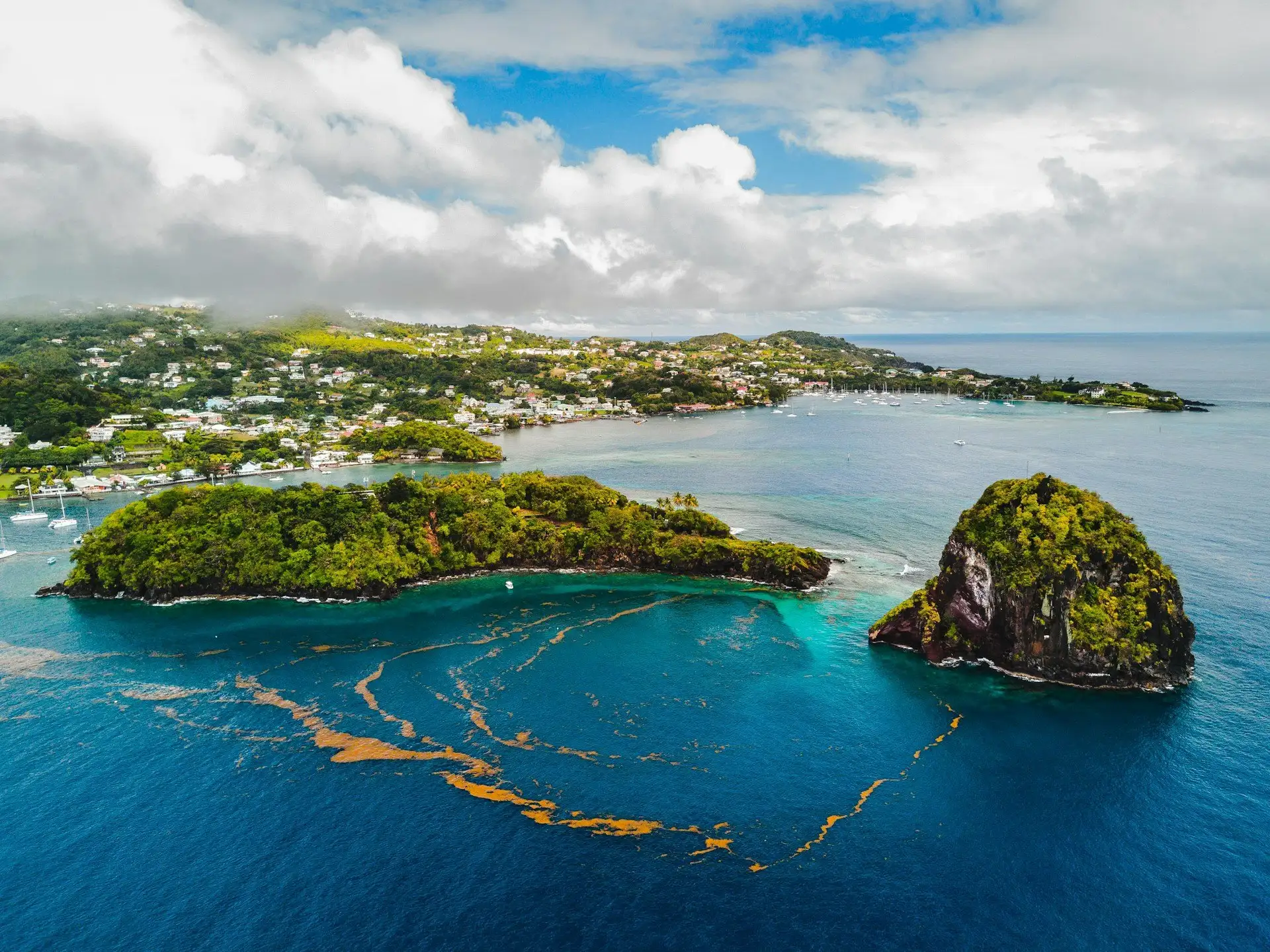
Saint Vincent and the Grenadines is not one destination, it's a chain of them: the volcanic mainland of Saint Vincent, and then Bequia, Mustique, Canouan, Mayreau, Union Island and two dozen smaller cays trailing south toward Grenada. There is no highway system connecting the country to itself, only ferries, small planes and private boats, and the itinerary you build depends entirely on which of those you're willing to use. This is the country sailors mean when they talk about "the Grenadines" as its own category of Caribbean travel, distinct from the all-inclusive-resort islands further north.
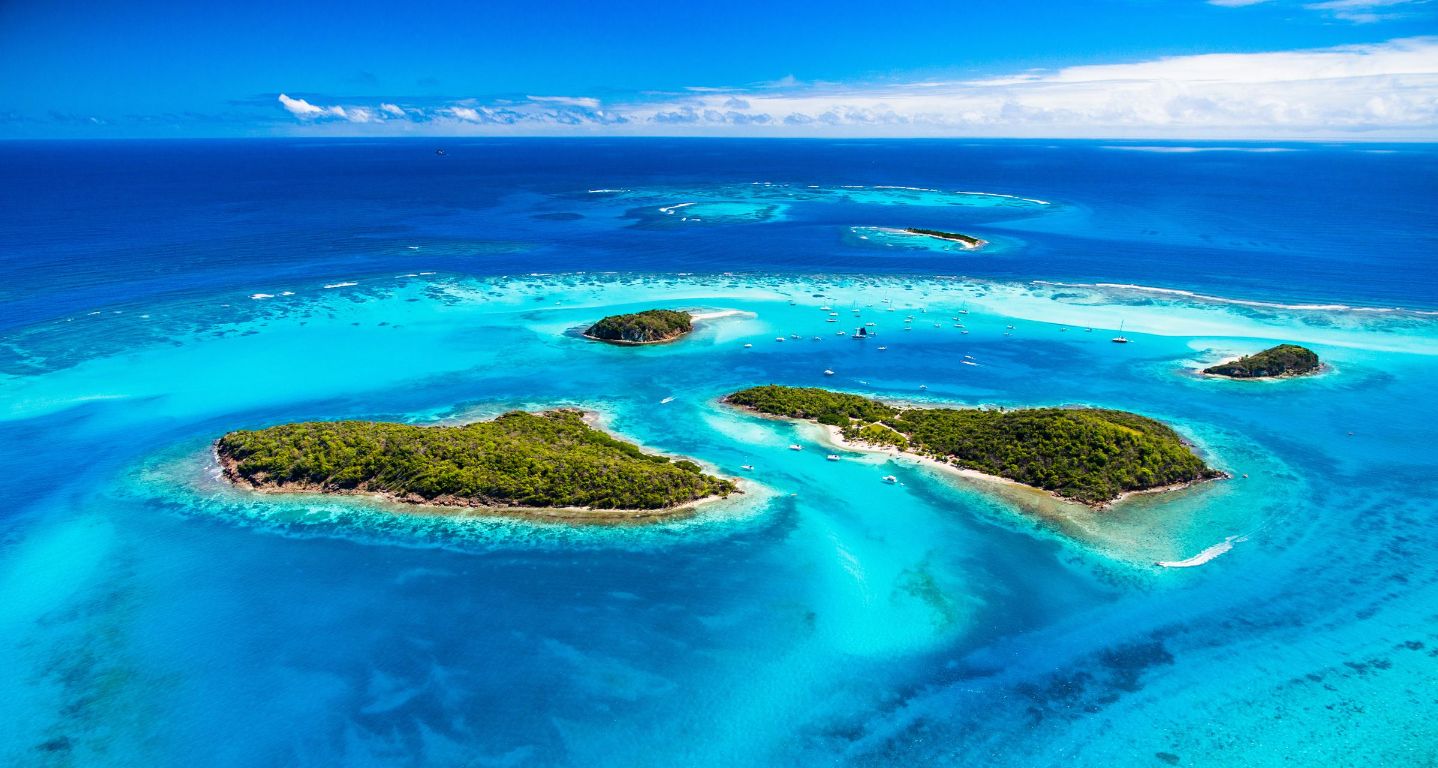
The trade-off for that inconvenience is a Caribbean that has not been flattened into a single resort strip. Bequia still has a working boatyard and a model-boat shop that has operated for over 60 years. The Tobago Cays have no hotels, no bars, no permanent structures at all, just five uninhabited islets and a reef that keeps the water unnaturally clear. Mustique, at the other extreme, is one of the most exclusive private islands on Earth and still lets day-trippers walk its one public beach. None of it reads like a brochure because none of it was built to.
The honest complications
Getting between islands runs on ferry timetables that change with the season and occasionally with the weather; missing the last boat back to Bequia means an unplanned night on St Vincent. Argyle International Airport, opened in 2017, has still not attracted the volume of direct international flights the country hoped for, so most visitors connect through Barbados, Miami or another Caribbean hub. Prices are higher than backpacker-friendly parts of the Caribbean: this is a boat-and-boutique-hotel economy, not a hostel circuit, and a bare-bones budget trip here costs meaningfully more than the same trip in, say, the Dominican Republic. And Saint Vincent's own La Soufrière volcano erupted as recently as 2021, displacing thousands; it is currently quiet and monitored, but it is a live reminder that this is genuinely volcanic terrain, not a metaphor.
A History Worth Knowing
Saint Vincent has one of the more remarkable resistance stories in Caribbean colonial history. The island's indigenous Kalinago (Carib) population mixed with shipwrecked and escaped West African slaves to form the Garifuna, or "Black Caribs," who fought the British to a standstill for decades before losing the Second Carib War in 1797. Independence from Britain didn't arrive until 1979, among the last of the Windward Islands to get it.
- Pre-1700s
The Garifuna form. Shipwrecked and escaped West African slaves intermix with the indigenous Kalinago (Carib) population, producing a distinct Black Carib culture the British called the Garifuna.
- 1795-1797
The Second Carib War. Chief Joseph Chatoyer leads Garifuna resistance against British colonization; he is killed in an ambush and the war ends in March 1797 with the Caribs' defeat.
- 1797
Exile to Roatán. Britain rounds up over 5,000 Garifuna, detains them on the islet of Balliceaux, and deports the survivors to Roatán off Honduras, seeding the Garifuna communities of Central America today.
- 1902 & 1979
Soufrière erupts, then independence. A major 1902 eruption of La Soufrière kills around 1,600 people. Saint Vincent and the Grenadines gains full independence from the UK on 27 October 1979 under Prime Minister Milton Cato.
- 2020-2021
Soufrière erupts again. A months-long eruptive sequence forces the evacuation of roughly 20,000 people from the island's northern "red zone"; no lives are lost, largely due to the evacuation.
- 2002 & today
Chatoyer honored. Chief Joseph Chatoyer is declared the country's first National Hero in 2002. Tourism today centers on Bequia's sailing culture, the Tobago Cays marine park, and the mainland's volcano and rainforest interior.
Read the full history: the Garifuna, the exile, and two eruptions
Saint Vincent's Garifuna history is one of the few sustained, multi-generational indigenous and Afro-Caribbean resistance movements in the region to actually defeat European military expeditions repeatedly before eventual defeat. The First Carib War (1769-1773) ended in a treaty that ceded some land but left Garifuna autonomy largely intact. The Second Carib War (1795-1797), fought with French Revolutionary support against the British, ended differently: Chief Joseph Chatoyer, the paramount chief and today the country's first National Hero, was killed in an early-morning ambush, and organized resistance collapsed within months.
What followed was one of the most brutal deportations in Caribbean colonial history. The British rounded up more than 5,000 Garifuna men, women and children, held them in appalling conditions on the tiny islet of Balliceaux, where roughly half died of disease and starvation before the ships even sailed, then deported the roughly 2,000 survivors to Roatán, an island off the coast of Honduras, in 1797. Their descendants spread along the Central American coast and today form Garifuna communities in Honduras, Belize, Guatemala and Nicaragua, a diaspora with a direct, documented origin on this specific island.
Saint Vincent remained a British colony, part of the Windward Islands administration, gaining internal self-government in 1969 and full independence on 27 October 1979 under Milton Cato of the Saint Vincent Labour Party. La Soufrière, the volcano that dominates the island's north, has erupted twice in the country's modern history with major human cost: the 1902 eruption killed around 1,600 people (one day before the even more catastrophic Mount Pelée eruption on Martinique, which killed over 27,000), and a 2020-2021 eruptive sequence forced the evacuation of about 20,000 people, destroyed farmland and homes in the northern "red zone," and took years to recover from economically, though the evacuation itself prevented loss of life.
Top Destinations
The country splits naturally into three zones: the volcanic mainland of Saint Vincent, the accessible northern Grenadines built around Bequia, and the more remote southern Grenadines toward Union Island and the Tobago Cays. Distance is short, boat schedules are the real constraint. A week covers the mainland and Bequia well; ten days to two weeks lets you push south to the Tobago Cays and Mustique.
Kingstown, the working capital
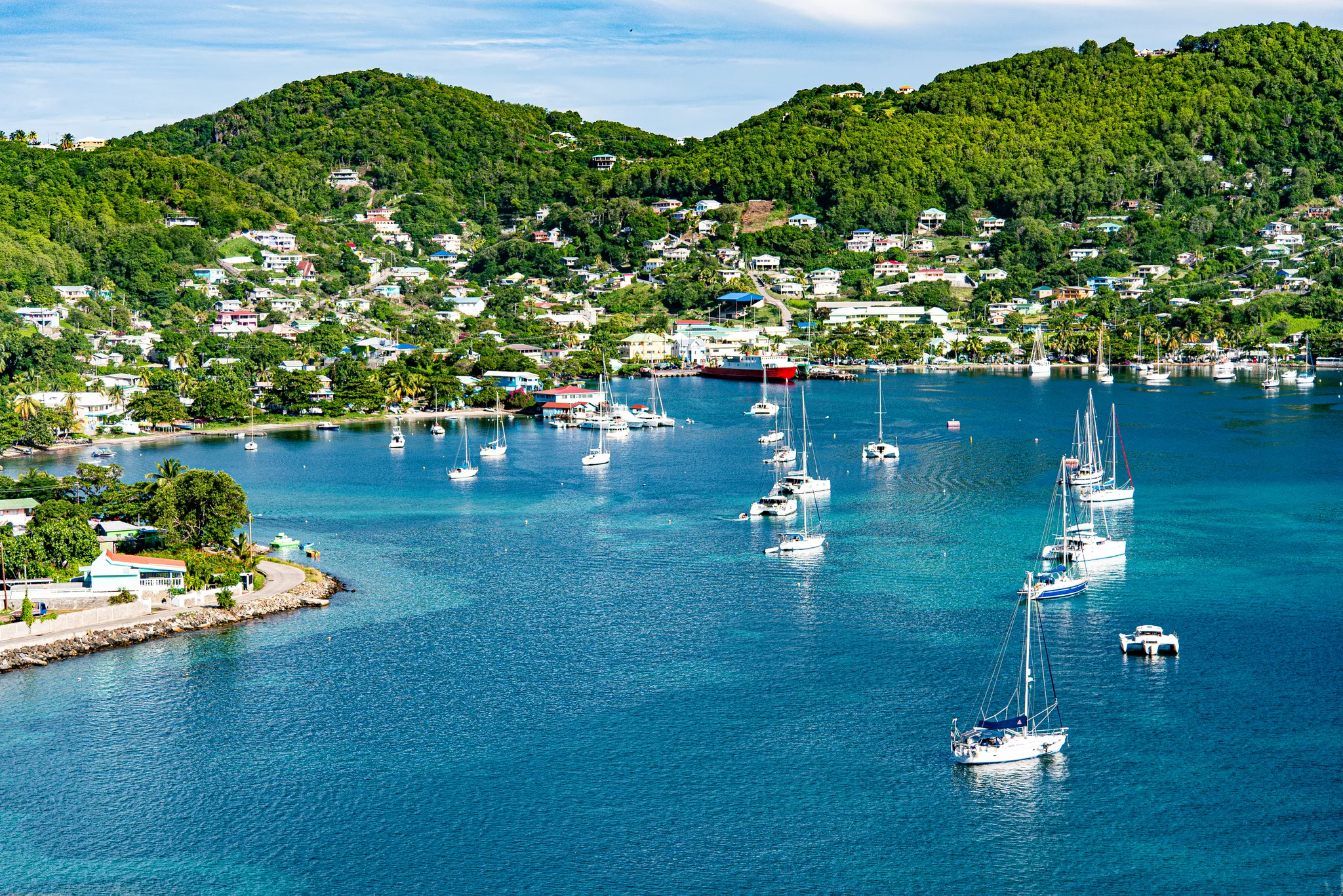
Kingstown is a real Eastern Caribbean port city, not a cruise-ship stage set: cobbled backstreets, church spires, and a Saturday market where dasheen, golden apples and fresh turmeric fill covered stalls that tourism brochures don't quite capture. Fort Charlotte, built in 1806 on a ridge above the harbor, has the best panoramic view in the city; its cannons famously face inland, aimed historically at the Garifuna resistance rather than seaborne attack. St. George's Cathedral, an Anglican church with detailed stained glass, and the Botanic Gardens, founded in 1765 and the oldest in the Western Hemisphere, round out a half-day in the city; the Gardens still hold a breadfruit tree descended from the stock Captain William Bligh brought in 1793, three years after the Bounty mutiny scuttled his first attempt.
Bequia, the sailing island
Nine miles and roughly an hour by ferry from Kingstown, Bequia is the most accessible and best-set-up of the Grenadines for a first visit, with its own light-aircraft airstrip and a proper town, Port Elizabeth, on Admiralty Bay. The full Bequia guide covers neighborhoods, hotels, food and a day-by-day itinerary. In short: Princess Margaret Beach and Lower Bay are the two best swimming beaches, the Old Hegg Turtle Sanctuary and the Sargeant Brothers Model Boat Shop are the two things worth a special trip for, and the island is the easiest launch point for a Tobago Cays day sail.
Tobago Cays, Mayreau & Union Island
The southern Grenadines are where the water gets genuinely unreal. The Tobago Cays, a marine park of five uninhabited islets ringed by Horseshoe Reef, has no hotels, no restaurants and no roads: day boats from Bequia, Canouan or Union Island anchor for snorkeling among green sea turtles and a beach picnic, then leave before dark. Mayreau, the smallest inhabited Grenadine, has one village, one hilltop church view over the Tobago Cays, and Salt Whistle Bay, regularly ranked among the best beaches in the Caribbean. Union Island is the southern transport hub, with its own small airport and ferry connections onward to Grenada's Carriacou.
Mustique & Canouan
Mustique is a privately managed island of roughly 90 villas, famous as a discreet retreat for royalty and celebrities since the 1960s, with a single hotel, the Cotton House, and one public beach, Macaroni Beach, that day-trippers can visit by boat charter or the small airstrip. It isn't a budget stop, but a lunch reservation and an afternoon on Macaroni Beach is achievable without owning a villa there. Canouan sits a rung down in exclusivity: a handful of luxury resorts, a Jim Fazio golf course, and a reef considered among the best diving in the southern Grenadines, with more accessible day-visit options than Mustique.
Hidden gems beyond the main circuit
The zones above cover a first or second trip well. With extra days or a boat charter, these reward the detour.
Falls of Baleine
A freshwater waterfall on the island's remote northern tip, reachable only by boat, tumbling from the volcanic hills into a shallow pool you can swim in. Most visits are a half-day boat tour from Kingstown.
La Soufrière hike
An 8km, roughly 1,000m-elevation trail to the crater rim of the volcano that erupted in 2021. A serious 4-6 hour round trip on muddy volcanic terrain, best started before 6am with a local guide.
Quiet southern beaches
Where Bequia's day-trippers thin out: Friendship Bay's calmer surf and fewer crowds than Princess Margaret Beach, with a couple of small hotels rather than beach bars.
Culture & Etiquette
Vincentian culture runs on the same easygoing, church-and-cricket-and-family rhythm as most of the English-speaking Caribbean, with a maritime streak that runs deeper than most: Bequia's boatbuilding and whaling traditions are living heritage, not museum pieces. English is the official language, but everyday conversation runs in Vincentian Creole English, which moves fast and drops consonants in ways that take a few days to tune your ear to.
Do
- Greet before you ask anything. Walking straight into a "good morning" shop, ferry counter or market stall without a greeting first reads as rude across the English-speaking Caribbean, this country included.
- Dress modestly off the beach. Swimwear is for the beach and pool only; cover up to walk through Kingstown or Port Elizabeth.
- Confirm your return ferry time. Schedules shift seasonally and island-hop plans built around a single evening ferry back to Bequia or St Vincent need a buffer.
- Carry cash (EC dollars). Smaller guesthouses, water taxis and beach bars in the Grenadines are cash-first; ATMs are reliable in Kingstown and Port Elizabeth, thinner elsewhere.
- Tip 10% where service isn't already included. Many restaurants add a service charge automatically; check the bill before tipping twice.
Don't
- Wear camouflage clothing. It is restricted to military and police use by law in Saint Vincent and the Grenadines, as in several Caribbean nations; visitors wearing it, including children, have had it confiscated.
- Assume every island runs on the same schedule. Ferries to Mustique, Canouan and Union Island are far less frequent than the Bequia route; check specific timetables rather than assuming a daily service.
- Photograph people, especially fishermen and market vendors, without asking first. A friendly request is almost always granted; skipping it isn't.
- Expect fast wifi or 24-hour errands on the smaller islands. Mayreau and the Tobago Cays in particular run on generator power and limited connectivity.
- Underestimate the sun on a boat day. Reflected glare off the water in the Tobago Cays burns faster than a beach day; reapply sunscreen more than feels necessary.
Deeper culture: Vincy Mas, the whaling tradition, and Garifuna heritage today
Vincy Mas. The national carnival, held in late June and early July rather than pre-Lent like Trinidad's, is the country's biggest cultural event: soca competitions, costumed masquerade bands and a Mardi Gras-style final parade through Kingstown.
Bequia's whaling tradition. Bequia holds one of the world's few remaining Indigenous subsistence whaling permits under the International Whaling Commission, allowing local whalers to take a strictly limited number of humpback whales most years using traditional hand-thrown harpoons from open sailboats, a direct continuation of 19th-century Yankee whaling techniques taught to Bequians by visiting American and Scottish whalers. It is a legal, culturally significant and internationally debated practice; travelers researching it will find strong opinions on both sides.
Garifuna heritage today. Saint Vincent is increasingly recognized, including by UNESCO, as the ancestral homeland of the Garifuna people now settled across Honduras, Belize, Guatemala and Nicaragua. Balliceaux, the small islet where thousands of Garifuna were held before their 1797 deportation, is treated as a site of pilgrimage by diaspora visitors, though it has no tourist infrastructure.
Food & Drink
Vincentian food centers on what the sea and the volcanic soil actually produce: reef and pelagic fish, breadfruit in a dozen preparations, and root vegetables like dasheen and eddoes that rarely make it onto a tourist menu with an English translation. It's simpler and less internationally styled than Trinidadian or Jamaican food, and better for it if you go looking for the real thing rather than a resort buffet.
Roasted Breadfruit & Jackfish $8-15
The official national dish: breadfruit roasted whole over coals until the skin chars, served alongside fried jackfish (a small pelagic fish, not the large tropical jackfruit). Found at local restaurants and Friday-night fish fries more reliably than at hotel restaurants.
Callaloo Soup $5-10
A thick, dark green soup of dasheen (taro) leaves, coconut milk, okra and often crab or pig tail, close cousin to versions found across the Eastern Caribbean. A proper bowl is a meal, not a starter.
Hairoun Beer & Rum $3-6
Hairoun, brewed on Saint Vincent (the name is the pre-colonial indigenous name for the island itself), is the everyday beer. Sunset Rum, a local overproof spirit, is stronger and more of a special-occasion pour than a session drink.
Curried Conch $12-20
Conch, pounded tender and simmered in a curry sauce with onions and peppers, is a Grenadines specialty, especially on Bequia, where De Reef at Lower Bay does a well-known version.
Friday Fish Fry
Weekly informal grilled-fish gatherings happen in villages across the mainland and Grenadines, plastic tables, cold Hairoun, whatever the boats brought in that day. Ask locally; there's no single fixed location.
Golden Apple & Local Fruit
Golden apple (a tart, mango-adjacent fruit unrelated to actual apples), soursop and guava turn up in juices and at market stalls; a fresh-squeezed golden apple juice is one of the better $2 experiences in the country.
When to Go & Itineraries
December through April is the dry season and the safest weather window: little rain, steady trade winds for sailing, and no hurricane risk. May, June and November are shoulder months, still fairly dry with lower prices. July through October is hurricane season, peaking August to October; the country sits at the southern edge of the hurricane belt, which reduces but does not remove the risk, as Hurricane Beryl's direct hit on the southern Grenadines in July 2024 demonstrated.
All four seasons compared, with temperatures
| Season | Verdict | Temps | Prices & crowds |
|---|---|---|---|
| Dec-Apr | Best | 25-30°C, low humidity | Peak prices Dec-Jan, quieter and cheaper Feb-Apr |
| May-Jun & Nov | Good | 26-30°C, rising humidity | Lower prices, still mostly dry |
| Jul-Oct | Hurricane season | 27-31°C, humid | Lowest prices; monitor storm forecasts, especially Aug-Oct |
Kingstown stays within a narrow 24-31°C band year-round; the Grenadines run a degree or two warmer with more consistent trade-wind breeze than the mainland.
Itineraries
Five days covers Saint Vincent and Bequia at a reasonable pace. Eight days adds a proper Tobago Cays sailing day and time to slow down. Twelve days lets you push all the way south to Union Island and Mayreau, or add Mustique.
- Days 1-2
Saint Vincent. Land at Argyle, Kingstown's Fort Charlotte and Botanic Gardens, a half-day boat trip to the Falls of Baleine or a Mesopotamia Valley drive.
- Days 3-5
Bequia. Morning ferry from Kingstown, two full days between Princess Margaret Beach, the Old Hegg Turtle Sanctuary and Port Elizabeth, return ferry or flight out on day 5.
- Days 1-2
Saint Vincent. Kingstown, Botanic Gardens, and for fit hikers the La Soufrière crater trail on day 2.
- Days 3-5
Bequia base. Ferry over, settle in, swimming at Princess Margaret Beach and a visit to the Old Hegg Turtle Sanctuary, one evening at Mac's Pizzeria for sunset over Admiralty Bay.
- Days 6-7
Tobago Cays sailing day. A full-day schooner or catamaran trip from Bequia to the Tobago Cays and Mayreau, snorkeling with turtles, a beach lunch, back by evening.
- Day 8
Depart. Ferry back to Kingstown for the flight out, or fly directly from Bequia's airstrip if your route allows it.
- Days 1-3
Saint Vincent extended. Kingstown, the La Soufrière hike, and the Falls of Baleine or Mesopotamia Valley.
- Days 4-6
Bequia. Full days at Princess Margaret Beach and Lower Bay, the turtle sanctuary, the Sargeant Brothers model boat shop.
- Days 7-9
South to Union Island & Mayreau. Ferry further south, a night on Union Island, Salt Whistle Bay on Mayreau, and a full Tobago Cays day from the southern side of the chain.
- Days 10-12
Mustique or Canouan. A splurge finish: a villa or Cotton House stay on Mustique, or a resort night on Canouan, before flying home from Union Island, Canouan or back via St Vincent.
Getting there & around
Argyle International Airport (SVD) on Saint Vincent is the country's main international gateway, with American Airlines flying direct from Miami and connections available via Barbados (Grantley Adams International), San Juan, and other regional hubs on Caribbean Airlines and interCaribbean Airways. Once you're on the ground, the country runs on boats: ferries link St Vincent, Bequia, Canouan, Mayreau and Union Island multiple times a day on the main Bequia route and a few times a week further south, and small planes (SVG Air, Mustique Airways) cover Mustique and other islands without reliable ferry service.
All transport options with prices: ferries, water taxis, flights, rental cars
| Option | Price | Notes |
|---|---|---|
| Kingstown-Bequia ferry | EC$30/~$11 one way | Bequia Express and Bequia Fast Ferries; about 1 hour, multiple daily departures. |
| Ferries further south | EC$30-60/~$11-22 | To Canouan, Mayreau and Union Island; a few scheduled runs a week rather than daily, check current timetables. |
| Inter-island flights | $80-200 | SVG Air and Mustique Airways connect Mustique, Canouan and Union Island by small plane. |
| Water taxis on Bequia | EC$10-20/~$4-7 | Short hops around Admiralty Bay and to beaches without road access. |
| Rental car, Saint Vincent | $45-70/day | A local visitor's driving permit ($40, purchased on arrival) is required in addition to your home license. |
Practical prep: download an offline map before island-hopping; signal is patchy in the southern Grenadines and non-existent on the Tobago Cays. Buy a local SIM at Argyle Airport or arrange an eSIM before landing. Standard travel insurance is worth having given the hurricane-season exposure if you're traveling June through November.
Where to stay
Bequia, the best first base
Boutique hotels and guesthouses around Port Elizabeth and the southern beaches; the full Bequia guide covers specific properties by neighborhood and budget.
Kingstown & mainland
A mix of business hotels near the capital and a scattering of eco-lodges toward the volcano and the Mesopotamia Valley; useful for the airport arrival night or a hiking base.
Mustique & Canouan villas
Private villa rentals on Mustique and resort stays on Canouan sit at the luxury end of the entire Caribbean; book through the Mustique Company or resort direct rather than general booking sites for villa stays.
Live-aboard sailing charters
Bareboat and crewed yacht charters, based out of St Vincent or Bequia, are a genuinely different way to see the chain: wake up in a different bay each morning rather than commuting between islands by ferry.
Budget Planning
This is not a backpacker-cheap Caribbean destination. There's no hostel network and few dorm beds; the economy runs on boutique guesthouses, small hotels and boat charters, and imported goods carry the cost of getting them onto an island by boat. Budget accordingly, and expect the Grenadines specifically to run higher than mainland St Vincent.
- Guesthouse room $60-90
- Local restaurant meals $8-15
- Ferries over rental cars or flights
- Free beaches, one paid activity every other day
- Boutique hotel $150-250
- Restaurant meals $20-40/person
- A Tobago Cays day sail every few days
- Occasional water taxi or rental jeep
- Bequia Beach Hotel or equivalent, $240+
- Private charter days
- A Mustique or Canouan finish
- Fine dining and premium rum
Quick reference prices: ferries, meals, entry fees
| Kingstown-Bequia ferry, one way | EC$30 / ~$11 |
| Local restaurant meal | $8-15 |
| Restaurant meal, mid-range | $20-40 |
| Hairoun beer | $3-4 |
| Tobago Cays day sail (Friendship Rose) | ~$150/adult, all-inclusive |
| Guesthouse, Bequia | $60-90/night |
| Boutique hotel, Bequia | $150-240/night |
| Rental car, Saint Vincent | $45-70/day |
| Visitor's driving permit | $40, one-time |
Prices reflect September 2026 research and drift over time, especially accommodation on Mustique and Canouan in peak season. Treat them as a planning baseline, not a quote.
Visa & Entry
Saint Vincent and the Grenadines has an easy entry policy for most Western travelers: US, UK, EU/Schengen and Canadian citizens enter visa-free for up to 30 days with a valid passport, evidence of onward travel and proof of accommodation. Rules do shift, so confirm current requirements with the Ministry of Foreign Affairs or your carrier before flying rather than relying solely on this page.
✓ Valid passport
Valid for the duration of your stay; airlines commonly require at least 6 months validity from arrival even though the country's own rule is less strict.
✓ Onward or return ticket
Immigration can ask to see proof you're leaving; an open-jaw or one-way ticket without a documented onward plan can cause delays at the airport.
✓ Accommodation address
Have your first night's booking confirmation and address ready at immigration, whether it's a hotel, guesthouse or charter yacht marina.
✓ 30-day stay, extendable
Extensions beyond 30 days are handled through the Immigration Department in Kingstown; apply before your initial period expires.
| Saint Vincent & the Grenadines | Grenada | |
|---|---|---|
| Island character | 32 islands, ferry-and-boat-dependent, sailing-culture identity | One larger main island plus Carriacou and Petite Martinique |
| Best-known draw | Tobago Cays marine park, uninhabited and untouched | Grand Anse Beach and the "Spice Isle" nutmeg plantations |
| Daily budget | $90-130 gets by; pricier than mainland Caribbean norms | Broadly similar, slightly more resort infrastructure to choose from |
| Getting around | Ferries and small planes only, no inter-island roads | Easier: a real road network on the main island itself |
| Volcano risk | La Soufrière, active, erupted 2021, currently quiet | Kick 'em Jenny, an active submarine volcano offshore, no land risk |
Safety, Solo Women & Family
Saint Vincent and the Grenadines rates Level 1, Exercise Normal Precautions, the US State Department's lowest advisory level, most recently reaffirmed in July 2026. Violent crime against tourists is uncommon, the Grenadines specifically feel safe for solo travelers of any gender, and the main practical risks are unsecured belongings and hurricane-season weather rather than crime.
Petty theft
Crimes of opportunity, unattended bags on beaches, unlocked rental cars, valuables left visible in accommodation, are the most common issue. Secure valuables and lock rental cars even for short stops.
Hurricane season
June through November, peaking August to October. Canouan, Mayreau, Union Island and Petit Saint Vincent took direct Hurricane Beryl damage in July 2024; monitor forecasts and have a flexible return plan if traveling in this window.
Boat and water safety
Use licensed ferry operators and reputable charter companies; life jackets should be offered on every organized boat trip. Currents around the Tobago Cays reef can be stronger than the calm surface suggests.
Two more things worth knowing: La Soufrière and remote-island logistics
La Soufrière volcano. Quiet and monitored as of 2026 with no eruptive activity since the 2020-2021 sequence ended, but capable of reactivating. Check current status with the UWI Seismic Research Centre before attempting the crater hike, and follow any exclusion-zone guidance issued by Vincentian authorities without exception.
Remote-island logistics. Medical facilities on the smaller Grenadines are minimal to nonexistent; a serious injury on Mayreau or the Tobago Cays means evacuation to Kingstown or further afield. Comprehensive travel insurance with medical evacuation coverage is a genuinely good idea for any Grenadines sailing itinerary, not just a formality.
Solo women travelers
The country rates well for solo women (7.6/10 on our scale), particularly on Bequia, where the small-town scale and tourism-dependent economy make harassment rare and locals generally protective of visitors. Kingstown at night deserves the same normal urban caution as any Caribbean capital; the Grenadines' smaller islands are noticeably more relaxed after dark. Practically: use licensed taxis after dark in Kingstown, keep valuables secured on beach days, and confirm return ferry times rather than relying on a late departure that may not run. Full detail on our Solo Woman Explorer pages.
Emergency numbers
Hospitals and getting help in the Grenadines
Milton Cato Memorial Hospital in Kingstown is the country's main hospital and the only facility for serious cases; smaller clinics exist on Bequia and a few other islands but handle routine care only. For anything beyond minor injury in the outer Grenadines, expect evacuation to Kingstown or, for the most serious cases, onward to Barbados or Martinique. The Coast Guard (784-457-4586) is the right first call for any at-sea emergency.
Family travel & pets
Bequia in particular is an easy, low-stress family destination (8.2/10): Princess Margaret Beach and Lower Bay both have calm, shallow swimming water, the Old Hegg Turtle Sanctuary is genuinely engaging for kids, and the island's small scale means nothing is ever a long walk. The mainland's volcano hike and boat-only waterfalls suit older kids and teenagers better than toddlers. Bring reef-safe sunscreen and water shoes for the Tobago Cays, where the sand gives way to reef rock in places.
Bringing pets, and kids on boat days
Pets: entry requires an import permit from the Ministry of Agriculture obtained in advance, a valid rabies vaccination certificate, and a veterinary health certificate issued shortly before travel. Given the country's island geography and boat-dependent transport, traveling with a pet through the outer Grenadines specifically is impractical for most visitors; it's more manageable if your trip stays on Saint Vincent or Bequia.
Kids on boat days: life jackets should be non-negotiable on any charter, and reef shoes help on the Tobago Cays' mixed sand-and-rock entry points. Most day-sail operators are used to families and will adjust snorkeling stops for younger swimmers if asked in advance.
Saint Vincent and the Grenadines FAQ
Is Saint Vincent and the Grenadines safe to visit?
Yes. The US State Department rates it Level 1, Exercise Normal Precautions, its lowest advisory level. Violent crime against tourists is rare; the real risks are petty theft and unsecured valuables, not violence.
Do I need a visa for Saint Vincent and the Grenadines?
Most Western passport holders, including the US, UK, EU/Schengen and Canada, enter visa-free for up to 30 days with a valid passport, an onward ticket and proof of accommodation.
What is the best island to stay on in Saint Vincent and the Grenadines?
Bequia, nine miles south of the mainland, is the best base for a first visit: affordable, easy to reach by ferry, walkable, and close enough to day-trip to the Tobago Cays and the other Grenadines.
How do you get around Saint Vincent and the Grenadines?
Inter-island ferries connect St Vincent, Bequia, Canouan, Mayreau and Union Island several times a day on the main routes. Small planes reach Mustique and other islands without ferry service. There is no bridge or road network between islands.
Is La Soufrière volcano safe to visit?
As of 2026, La Soufrière has shown no eruptive activity since the 2020-2021 eruption ended, and monitoring shows low seismicity. It remains capable of reactivating, so check with the UWI Seismic Research Centre before hiking.
How much does a trip to Saint Vincent and the Grenadines cost?
Budget travelers manage on $90-130 a day, mid-range on $200-320. It is pricier than mainland Caribbean budget destinations because the Grenadines run on boat access and imported goods rather than a backpacker circuit.
What is the Tobago Cays?
A marine park of five uninhabited islets and a horseshoe reef in the southern Grenadines, reachable by day boat from Bequia, Canouan or Union Island, known for turquoise water, sea turtles and no permanent buildings.
When is hurricane season in Saint Vincent and the Grenadines?
June through November, peaking August to October. The country sits at the southern edge of the hurricane belt, which lowers but does not eliminate the risk. December through April is the dry season and the safest weather window.
Is Saint Vincent and the Grenadines good for sailing?
It is one of the best sailing grounds in the Caribbean: a tight chain of islands with short hops, reliable trade winds, and Bequia's centuries-old boatbuilding culture. Bareboat and crewed charters are widely available.
What language is spoken in Saint Vincent and the Grenadines?
English is the official language. Vincentian Creole English is spoken day to day and can be hard to follow at speed, but standard English is understood everywhere tourists go.
Is Saint Vincent and the Grenadines good for families with kids?
Yes, especially Bequia: calm swimming beaches, the Old Hegg Turtle Sanctuary, and a small-island pace that suits younger children. The mainland's volcano hike and boat-only waterfalls suit older kids and teenagers better.
What Stays With You
Every traveler who makes it to the Tobago Cays asks the same question: how is this still empty? No hotel chain got here first, no beach club claimed a stretch of sand, nothing stands between the reef and the five uninhabited islets it surrounds except the boats that come for the day and leave before dark. That absence, the sheer lack of anything built, is the whole point, and it's a increasingly rare thing to find anywhere in the Caribbean.
The country asks more of you than a direct flight to a resort would: a ferry schedule to plan around, a boat day that depends on the weather, an itinerary built in island-sized pieces rather than one continuous trip. Show up willing to work with that, and Bequia's boatbuilders and the Tobago Cays' empty beaches give back more than the inconvenience costs.