
What You're Actually Getting Into
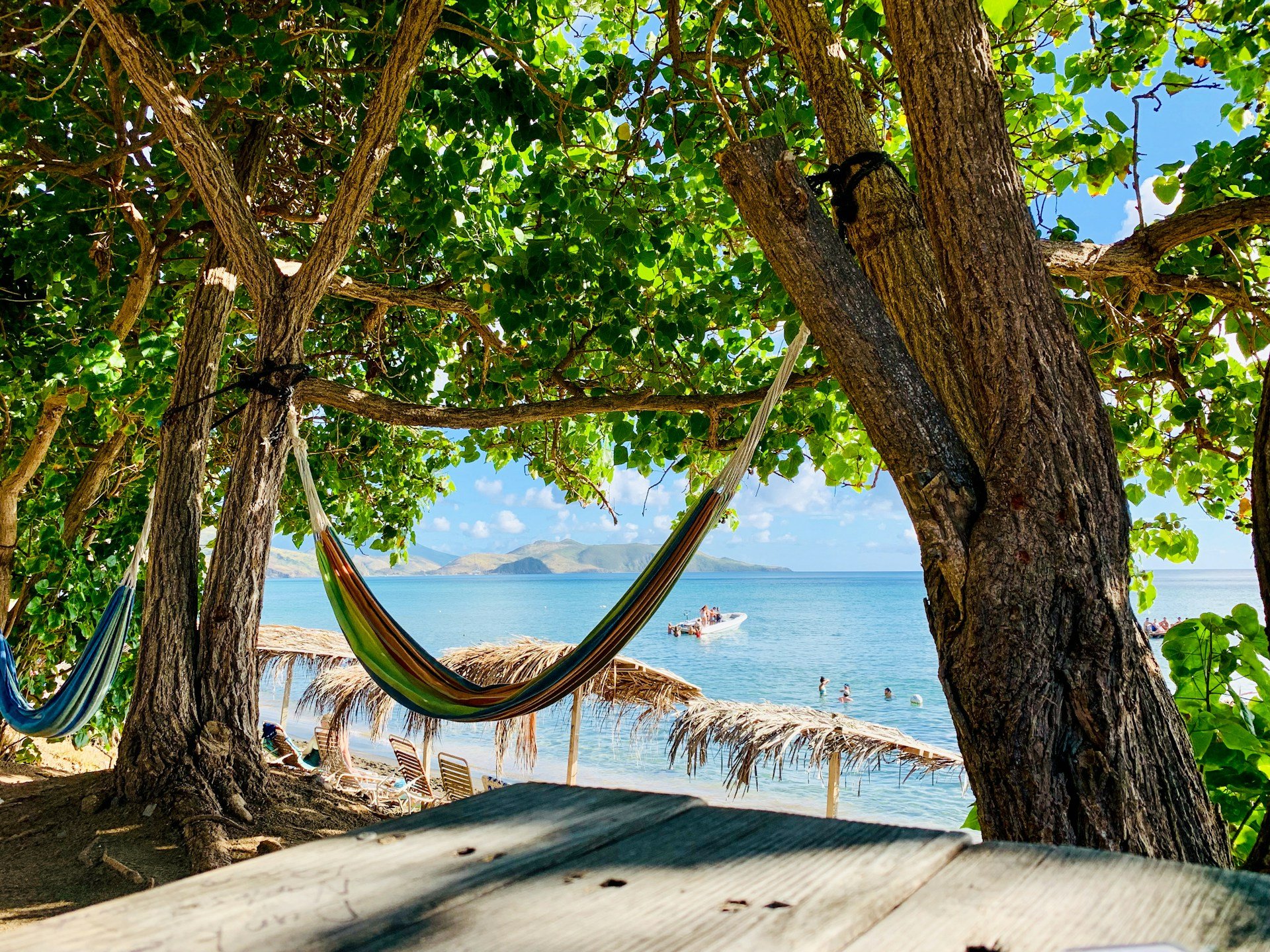
Saint Kitts and Nevis is the smallest sovereign state in the Americas, both by population (around 54,000) and by area (261 square kilometers, roughly the size of Bristol), and it doesn't try to hide it. This is not a mega-resort destination with fourteen beaches to choose between: it's two volcanic islands separated by a two-mile channel called The Narrows, one of them home to a genuine UNESCO fortress and a hikeable volcano, the other basically one quiet road ringing a smaller, greener cone. Cruise ships call at Basseterre in numbers that can make Port Zante feel like a different country for a few hours a day, but step ten minutes inland or ten minutes down the coast and the crowds thin out fast.
It is also not a cheap destination, and the guide won't pretend otherwise. Sugar money built plantation houses that are now boutique inns charging accordingly, resorts on the Southeast Peninsula run at Caribbean-resort prices, and even a rental car requires visitors to buy a separate temporary local driving permit on top of their own license. What you get for the price: a fortress with real historical weight rather than a rebuilt facade, a volcano hike that ends at an actual sulfur-venting crater, a 30-mile narrow-gauge railway built for sugar cane and repurposed for rum punch, and a second island a short ferry ride away that most similarly sized Caribbean nations simply don't have.
The honest complications
There is no public bus service to Frigate Bay or the Southeast Peninsula, which is where most of the beach hotels sit, so getting between your resort and downtown Basseterre means a taxi (fixed rates, not metered, expect roughly $26-28 for up to four people) or a rental car. Renting requires a temporary Kittitian driving permit, about EC$62.50 (roughly $24) for three months, purchased locally on top of your home license: an extra step and cost that catches first-timers off guard. The 2025 homicide statistics look alarming on paper, a rate of 13.6 per 100,000, but context matters: the figure is a sharp improvement on 2023 and 2024, the violence involved is almost entirely gang-related and concentrated away from tourist areas, and the US State Department still rates the country Level 1, its safest tier. None of this is a reason to skip the islands. It's a reason to budget realistically and book a taxi transfer for your first ride in.
A History Worth Knowing
St Kitts was the first permanent English colony in the West Indies, settled in 1623 by Sir Thomas Warner at what is now Old Road Town, which earned it the nickname "the Mother Colony." French settlers arrived two years later under Pierre Belain d'Esnambuc, and for nearly a century the two powers split the island between them, fighting over it repeatedly until Britain took full control in 1713. Sugar, and the enslaved labor that produced it, defined both islands from the 1650s onward: Nevis in particular grew rich enough to earn the nickname "Queen of the Caribbees." Independence from Britain came on 19 September 1983, ending 360 years of colonial rule, with Kennedy Simmonds as the country's first prime minister.
- 1623
The Mother Colony. Thomas Warner lands at Old Road Town and establishes the first permanent English settlement in the West Indies.
- 1625-1713
Anglo-French partition. French settlers arrive under d'Esnambuc; the island is repeatedly divided and fought over until the 1713 Treaty of Utrecht cements British control.
- 1650s
Sugar takes over. Cane replaces earlier crops as the economic engine of both islands, built entirely on enslaved African labor; Nevis becomes one of the richest sugar colonies in the Caribbean.
- c. 1755
Alexander Hamilton is born in Charlestown, Nevis, before later moving to the American colonies where he became a US Founding Father.
- 1834
Emancipation ends slavery across the British Caribbean, reshaping the plantation economy that both islands had depended on.
- 1983
Independence. Saint Kitts and Nevis becomes a sovereign nation on 19 September, with Kennedy Simmonds as first prime minister; the same year the country launches the world's first citizenship-by-investment program.
Read the full history: Warner's landing, the sugar economy, and modern St Kitts
Before European contact, the islands were inhabited by the Kalinago (Carib) people, who called St Kitts "Liamuiga," the fertile land, a name the island's volcano still carries. Warner's 1623 landing at Old Road Town gave England its first Caribbean foothold, and the island's strategic position made it a template other English and French colonies copied. The joint Anglo-French occupation was uneasy from the start: both sides needed to cooperate against the Kalinago and against Spanish raids, but fought each other repeatedly over the following decades, with the island changing hands more than once before the 1713 Treaty of Utrecht settled British control for good.
Sugar arrived as the dominant crop in the 1650s and remade both islands completely: forests cleared for cane fields, an economy built entirely on the forced labor of enslaved Africans transported across the Atlantic, and immense wealth flowing to plantation owners while the enslaved population that actually worked the land was denied any share of it. Brimstone Hill Fortress, now the country's premier historic site, was built substantially with enslaved labor over more than a century to defend that sugar wealth, and its scale is a direct physical record of how much value the islands generated for the colonial economy. Nevis became wealthy enough in this period to be called "Queen of the Caribbees," attracting planters and merchants whose Georgian-era houses on the island are now boutique inns.
Emancipation in 1834 ended slavery but not the plantation economy's grip on the islands, which continued to depend on sugar, now grown with paid but poorly compensated labor, well into the 20th century. St Kitts operated a government-run sugar industry into the 2000s; the state sugar company finally closed in 2005, ending an unbroken 350-year run as the backbone of the economy and prompting the pivot toward tourism and financial services that defines the country today. Independence in 1983 came after decades of gradual constitutional autonomy, and Nevis, wary of being permanently subordinate to the larger island, negotiated the right to secede by referendum into the country's constitution, a provision it has since tested (in a 1998 vote that fell short of the required two-thirds) but not exercised.
Top Destinations
Saint Kitts and Nevis divides naturally into four zones: Basseterre and the Southeast Peninsula where most visitors sleep, the fortress and west coast, the rainforest interior around the volcano, and Nevis itself, a genuinely separate trip disguised as a day excursion. St Kitts alone is drivable end to end in under an hour, so distance is never really the constraint: ferry timing and how many days you're willing to give Nevis are.
Basseterre, the capital
Basseterre is small enough to see on foot in an afternoon: the fountain-centered Independence Square, once a slave market and now the city's civic heart; The Circus, a mini roundabout modeled on Piccadilly Circus with a Victorian clock tower called the Berkeley Memorial; and the National Museum of Saint Kitts, housed in the 1894 Treasury Building. It gets a full read in our dedicated Basseterre city guide, which covers where to stay, eat and spend a day or two properly.
Brimstone Hill Fortress National Park
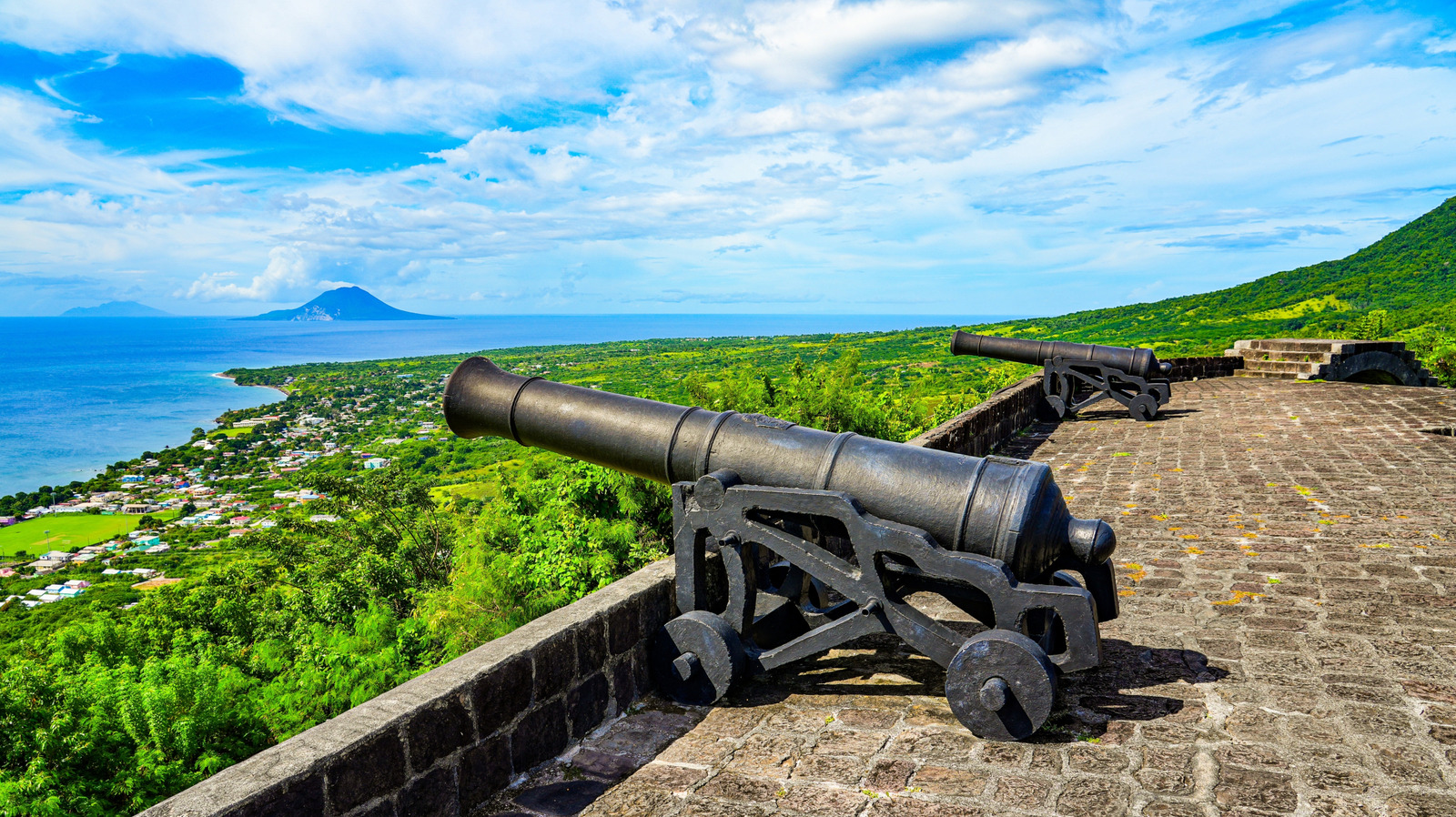
A UNESCO World Heritage Site since 1999, Brimstone Hill is a 17th- and 18th-century fortress complex built into a 230-meter volcanic outcrop on the west coast, with cannon still positioned along ramparts that once commanded the entire Caribbean approach. It's open daily 9:30am to 5:30pm, entry is $10 for adults and $5 for children, and the views alone, across to Statia, Saba and St Barths on a clear day, justify the climb even before the history does.
Romney Manor & Old Road Town
Romney Manor, a 17th-century former sugar and tobacco estate a few minutes from Brimstone Hill, is now home to Caribelle Batik, where Kittitian artists demonstrate the Indonesian batik dyeing technique on-site and sell the results; the grounds hold a Saman tree estimated at 400 years old. Old Road Town itself, a few minutes further south, is where Thomas Warner made English landfall in 1623, marked today by petroglyphs the Kalinago left on Bloody Point rock nearby.
Mount Liamuiga
St Kitts' highest point at 1,156 meters, Mount Liamuiga is a dormant volcano whose Kalinago name means "fertile land." Guided hikes, Greg's Safaris is the established operator, run around six hours: an open-top truck into the village of St Paul's, then on foot through rainforest and cloud forest to a crater rim roughly 300 meters deep with visible sulfur vents and a small pool at the bottom. Views from the top stretch to Statia, Saba, St Barths and Nevis. Guides typically include fresh fruit and refreshments; go in closed shoes with a rain layer, since the upper forest gets wet even on dry-season days.
St. Kitts Scenic Railway & the plantation inns
The Scenic Railway repurposes the old sugar-cane transport line into a roughly 2-hour rail circuit (with a bus link to close the loop), running along the coast and past Brimstone Hill with rum punch and other drinks served on board. Deeper in the rainforest, former plantation houses have become some of the country's most distinctive stays: Ottley's Plantation Inn, a 17th-century estate on the northeast coast with a spring-fed pool set into the ruins of the original sugar mill, and Belle Mont Farm, a design-forward property on a working organic farm designed by architect Bill Bensley.
Charlestown & Nevis Peak
Nevis is a single ring road around one green volcanic cone, and it feels like it: quieter, slower, and short on the cruise-day bustle that hits Basseterre. Charlestown, the capital, holds the Museum of Nevis History, built on the site of Alexander Hamilton's birthplace (he was born here around 1755 before his family later moved to the Danish Virgin Islands and then New York), with a small exhibit on his early life alongside the island's broader colonial history. Nevis Peak itself is a steeper, less-developed hike than Liamuiga, best attempted with a local guide. The island's volcanic hot springs and quieter beaches round out a day trip that many visitors wish they'd budgeted two days for instead of one.
Culture & Etiquette
Kittitian and Nevisian culture runs on the same warm, unhurried, church-and-family-centered rhythm found across the English-speaking Caribbean, inflected with a distinct local Creole in everyday speech even though English is the sole official language. Greet people before asking them anything, whether that's a shopkeeper, a taxi driver or a stranger on the street: skipping straight to a question without a "good morning" first reads as brusque here in a way it might not elsewhere.
Do
- Say good morning or good afternoon first. A greeting before any request, even a simple direction-asking, is basic courtesy here and its absence is noticed.
- Dress for church on Sundays if you're anywhere near one; Sunday morning service is still a significant weekly institution across both islands.
- Carry small EC$ bills. Minibuses, market stalls and small vendors run on cash, and change for a large bill isn't always available.
- Ask before photographing people, particularly in local neighborhoods away from the cruise-focused parts of Basseterre.
- Time a visit around Sugar Mas if you can: the national Carnival runs early December to 2 January, unusually scheduled around Christmas and New Year rather than before Lent as in most of the Caribbean.
Don't
- Wear camouflage-pattern clothing. It's restricted to the military and police by law across St Kitts and Nevis, as in several other Caribbean nations, and can be confiscated at customs.
- Expect a public bus to Frigate Bay or the Southeast Peninsula. Local minibus routes serve the rest of the island but skip the main tourist strip entirely; budget for a taxi or rental car instead.
- Assume US dollars work everywhere. Hotels and tour operators take them, but you'll get EC$ change, and small vendors, minibuses and market stalls are effectively EC$ only.
- Drive without the local permit. A foreign license alone isn't valid for driving; visitors need a temporary Kittitian permit, purchased locally, on top of it.
- Confuse the pace of Nevis for St Kitts. Nevis genuinely runs slower and has far less infrastructure; go expecting quiet, not convenience.
Deeper culture: Sugar Mas, the CBI program, and the sugar industry's long shadow
Sugar Mas. The national Carnival, running from early December through 2 January, is one of the few Caribbean carnivals timed to Christmas and New Year rather than the pre-Lenten calendar most islands follow. Expect soca competitions, masquerade bands, and street parades (J'ouvert and the Grand Parade among them) culminating on New Year's Day and 2 January.
Citizenship by investment. Saint Kitts and Nevis launched the world's first citizenship-by-investment program in 1984, and it remains a meaningful part of the national economy: it's not something visitors will encounter directly, but it's part of why the country has the infrastructure, and in places the prices, of a wealthier nation despite its tiny population.
The sugar industry's afterlife. St Kitts ran a government sugar operation until 2005, later than almost anywhere else in the Caribbean, and the pivot away from it, toward tourism, offshore finance and citizenship-by-investment, happened within living memory for much of the working population. The old cane railway, the plantation-house hotels, and Brimstone Hill's scale are all direct physical legacies of that 350-year sugar economy and the enslaved and later poorly paid labor that built it.
Food & Drink
Kittitian and Nevisian food is Caribbean Creole built around salted and fresh fish, breadfruit, plantain and root vegetables, with a national dish that only became official in 2003 after a public poll. The best of it is at roadside stalls and no-frills local spots rather than resort restaurants, and a full plate rarely runs past $15.
Stewed Saltfish & Coconut Dumplings
The official national dish since a 2003 poll: saltfish stewed with spices, served alongside spicy plantains, seasoned breadfruit and coconut dumplings. It replaced goat water in that vote, though goat water hasn't gone anywhere.
Goat Water
The former national dish and still the weekend and festival favorite: a hearty goat stew (the name comes from its water base rather than stock) with breadfruit, papaya and dumplings, seasoned with local herbs and hot pepper.
Pelau
A one-pot dish of rice, pigeon peas and chicken cooked in coconut milk with local spices, common at family gatherings and casual local restaurants alike.
Conch
Served curried, in fritters, or stewed. A staple across both islands and one of the more distinctly local seafood orders on a menu otherwise full of imported fish.
Ting & local beer
Ting, a grapefruit soda made across the Eastern Caribbean, is the default non-alcoholic order; Carib and Skol lager cover the beer side at most bars and beach shacks.
Breadfruit & plantain
The default starchy sides at almost any local meal, roasted, fried or boiled, and worth ordering even as a standalone snack from a roadside stall.
When to Go & Itineraries
February through April is the driest, most reliable stretch of weather and also the busiest and most expensive. May and December are the better-value shoulder months: still warm, noticeably quieter, with lower hotel rates. June through November is the official Atlantic hurricane season, with real storm risk concentrated in September and October; a direct hit in any given year is statistically unlikely but travel insurance covering storm disruption is a sensible add for that window.
Weather through the year, month by month
| Period | Verdict | Notes |
|---|---|---|
| Feb-Apr | Best | Driest weather, warm mid-to-high 20s°C, also peak prices and crowds |
| May & Dec | Good value | Still warm and mostly dry, noticeably fewer visitors, lower rates |
| Jun-Nov | Hurricane season | Wettest and most humid months; real storm risk mainly Sep-Oct |
| Jan | Good | Warm and pleasant but overlaps with Sugar Mas crowds and holiday pricing |
Year-round highs sit around 27-32°C with little seasonal swing; the real variable is rainfall and storm risk, not temperature.
Itineraries
Five days is the sweet spot for covering both islands without rushing. Three or four days works if you commit to one island and skip the other, which is a completely reasonable choice given the ferry logistics.
- Day 1
Basseterre. Independence Square, The Circus, the National Museum, settle in on the Southeast Peninsula by evening.
- Day 2
Brimstone Hill & Romney Manor. The fortress in the morning before the heat builds, Caribelle Batik and Old Road Town on the way back.
- Day 3-4
Beach days. Rotate between Cockleshell, South Friars and Frigate Bay, with the Timothy Hill Overlook as a five-minute stop between them.
- Day 1
Basseterre & settle in. The city center, then the Southeast Peninsula for the evening.
- Day 2
Brimstone Hill, Romney Manor & Old Road Town. The full west-coast history circuit.
- Day 3
Mount Liamuiga. The guided crater hike, a full-day commitment; recover with a beach afternoon if the schedule allows.
- Day 4
Beach day. Cockleshell or South Friars Bay, or the Scenic Railway if you'd rather stay seated.
- Day 5
Nevis. Morning ferry to Charlestown, the Museum of Nevis History, lunch, afternoon ferry back.
- Days 1-2
Basseterre & Brimstone Hill, as above, at a gentler pace with time for the Scenic Railway.
- Day 3
Mount Liamuiga hike, with a plantation-inn lunch at Ottley's or Belle Mont Farm nearby.
- Days 4-5
Nevis, overnight. Charlestown, the Museum of Nevis History, a Nevis Peak attempt with a local guide, and at least one quiet beach afternoon before the ferry back.
- Days 6-7
Beaches & a catamaran day. Cockleshell, South Friars and a half- or full-day sail-and-snorkel trip across The Narrows.
Getting there & around
Robert L. Bradshaw International Airport (SKB) sits a few minutes from Basseterre and handles around a dozen daily departures to 20 destinations, with American, United, JetBlue, Delta, Caribbean Airlines, Air Canada and British Airways among the carriers serving it, alongside regional operators Sunrise Airways, Winair, Cape Air and InterCaribbean Airways. A taxi from the airport (fixed rates, not metered) runs roughly $26-28 to Frigate Bay for up to four people. There is no bus service to the Southeast Peninsula, so plan on taxis or a rental car for the length of your stay if you're based there.
All transport options: minibuses, ferries, rental cars
| Option | Price | Notes |
|---|---|---|
| Local minibuses | EC$3-7/ride | Five main routes out of Basseterre toward Sandy Point, Capesterre, St Peter's, Molyneux and Saddlers; no route serves Frigate Bay or the Southeast Peninsula. Cash only, flag down anywhere on the route. |
| Taxis | ~$26-28 to Frigate Bay | Fixed rates set by the St Kitts Taxi Commission, not metered; larger groups pay a per-person rate instead. |
| Nevis passenger ferry | $10-15 one way | Basseterre to Charlestown, 25-45 minutes; schedule shifts with holidays and weather, check the current timetable. |
| Car ferry | ~EC$525 | Connects Major's Bay (St Kitts) with Cades Bay and Charlestown (Nevis) for travelers bringing a vehicle across. |
| Rental car | $40-90/day | Plus a required temporary local driving permit (~EC$62.50/3 months) purchased locally, and typically a mandatory ~$10/day collision waiver. |
Driving: St Kitts and Nevis drives on the left. Roads are generally in good condition on the main coastal loop but narrow and steep inland, particularly toward the volcano trailheads.
Where to stay
Southeast Peninsula resorts
Frigate Bay is the main resort strip and the most convenient base for beaches and Basseterre alike. Marriott's St Kitts Beach Club and the Royal St Kitts Hotel anchor the golf-and-beach end of the market; Sugar Bay Club Suites & Hotel and Timothy Beach Resort sit closer to the sand at a more moderate price.
Plantation inns
The country's most distinctive stays: Ottley's Plantation Inn, a 17th-century estate on the northeast coast with a spring-fed pool inside the ruins of the original sugar mill, and Belle Mont Farm, a design-forward property on a working organic farm on the volcano's slopes.
Basseterre & near-town options
Bird Rock Beach Hotel pairs marina access with a more moderate rate close to town, and Basseterre itself has the cheapest hotel rooms on the island, generally the right base for a short city-focused stay rather than a beach one.
Nevis
Nevis runs quieter and smaller across the board; Charlestown and the ring road around it hold most of the island's guesthouses and small hotels, worth booking ahead if you're staying overnight rather than day-tripping.
Budget Planning
Saint Kitts and Nevis runs on resort-driven Eastern Caribbean pricing, not backpacker pricing: this isn't a destination where costs collapse if you're willing to rough it, since even the cheapest hotel rooms in Basseterre start around $70-90 a night and taxis are fixed at Caribbean-resort rates.
- Basseterre guesthouse or budget hotel room
- Local minibuses & roadside food
- Free beaches, self-guided sights
- Skip the rental car and permit fee
- Frigate Bay resort or 3-star hotel
- Restaurant meals $15-30/person
- Taxis or a rental car with permit
- Brimstone Hill entry & the Nevis ferry
- Plantation inn or beachfront suite
- Guided Liamuiga hike & catamaran day
- Fine dining, private transfers
- Nevis overnight at a boutique inn
Quick reference prices: food, ferries, entry fees
| Roadside meal or local lunch | $8-15 |
| Restaurant dinner (mid-range) | $15-30/person |
| Taxi, airport to Frigate Bay | ~$26-28 (up to 4 people) |
| Local minibus ride | EC$3-7 |
| Nevis ferry, one way | $10-15 |
| Brimstone Hill Fortress entry | $10 adult / $5 child |
| Rental car | $40-90/day + permit & waiver |
| Guided Mount Liamuiga hike | ~$90-120/person |
| Scenic Railway tour | ~$90-155/person |
Prices reflect September 2026 research and drift over time, especially resort accommodation in the Feb-Apr high season. Treat them as a planning baseline, not a quote.
Visa & Entry
Most visitors, including US, Canadian, UK and EU citizens, don't need a traditional visa, but since 26 May 2025 all air travelers, visa-exempt or not, must complete an eTA (Electronic Travel Authorization) and Electronic Travel Declaration before boarding. A single-entry eTA costs USD 17 and covers stays of up to 90 days; apply 24 to 72 hours before departure through the official channel rather than a third-party site charging a markup for the same free-to-process government fee.
✓ Valid passport
At least six months' validity is the safest standard to travel with, even though the formal minimum is less; airlines may deny boarding without it.
✓ eTA before you fly
Apply online 24-72 hours before departure; $17 per person, single entry, valid for a 90-day stay.
✓ Return or onward ticket
May be requested at check-in or immigration; have proof of onward travel ready.
✓ Accommodation address
Keep your first night's hotel or rental address on hand for immigration and the eTA application itself.
| Saint Kitts and Nevis | Antigua and Barbuda | |
|---|---|---|
| Signature draw | A UNESCO fortress and a volcano hike | 365 beaches, one for every day of the year |
| Island structure | Two islands, a short public ferry apart | Two islands, but Barbuda needs a charter or ferry and far less infrastructure |
| Getting around | Taxis or a rental car with a local permit; no bus to the resort strip | Similar resort-and-taxi pattern, slightly better bus coverage |
| Budget feel | Resort pricing throughout, not a backpacker island | Comparable resort pricing, with a wider spread of all-inclusive options |
| Pace | Basseterre is lively on cruise days, Nevis is genuinely quiet | English Harbour has more sailing-scene buzz year-round |
Safety, Solo Women & Family
Saint Kitts and Nevis is safe for tourists. The US State Department rates it Level 1, exercise normal precautions, its safest tier, and the violence that does make headlines is almost entirely gang-related and concentrated well away from tourist areas. The 2025 homicide rate fell to 13.6 per 100,000, a sharp improvement on 59.8 in 2024 and 66.4 in 2023, though as with any small-population country a handful of incidents can swing the per-capita rate significantly, so treat the headline number with that context rather than at face value.
Petty theft
Pickpocketing and purse snatching occur in busy tourist areas, particularly around the cruise terminal and market days in Basseterre. Keep bags closed and don't leave valuables visible in a parked rental car.
Unlicensed taxis
Stick to licensed taxis with official markings, especially from the airport and cruise terminal, and confirm the fixed fare before getting in.
Hurricane season
June to November carries real, if statistically modest, storm risk, concentrated in September and October. Travel insurance that covers weather cancellations is worth it if visiting in that window.
One more thing worth knowing: downtown Basseterre at night
Downtown Basseterre empties out after dark outside the main restaurant strips, in the way many small Caribbean capitals do. It isn't considered dangerous in the way some larger regional cities are, but walking alone through quiet, poorly lit streets late at night isn't recommended; take a taxi back to your hotel after an evening out rather than walking, particularly for solo travelers.
Solo women travelers
Saint Kitts and Nevis is a reasonable choice for solo women, particularly in the tourist-oriented areas of Basseterre, Frigate Bay and the Southeast Peninsula, where street harassment isn't a major reported issue and the resort infrastructure is well used to independent travelers. The same general precautions that apply in most Caribbean capitals apply here: use licensed taxis rather than unmarked cars after dark, keep valuables out of sight, and avoid walking alone through quiet downtown streets late at night. Full detail on our Solo Woman Explorer pages.
Emergency numbers
Healthcare and the Nevis ferry emergency note
The JNF Hospital in Basseterre is the country's main public hospital; for anything beyond routine care, travel insurance that covers medical evacuation is worth having given the limited scale of local facilities. All 911 calls placed from Nevis route through the same federal emergency line based on St Kitts, so it's worth also noting the direct number of your accommodation or tour operator on Nevis in case a local contact can respond faster.
Family travel & pets
Saint Kitts and Nevis works well for families: calm, shallow beaches at Cockleshell and South Friars Bay suit younger kids, the Scenic Railway and the Caribelle Batik demonstration at Romney Manor hold children's interest without much walking, and the Southeast Peninsula resorts are built around family stays with pools and kids' programming. Older kids and teens who can manage a few hours of walking get more out of Brimstone Hill and the easier stretches of the Mount Liamuiga trail, though the full crater hike is a better fit for confident, fit teenagers than for young children.
Saint Kitts and Nevis FAQ
Is Saint Kitts and Nevis safe to visit?
Yes. The US State Department rates it Level 1, exercise normal precautions, the same tier as Canada or the UK. The 2025 homicide rate fell sharply to 13.6 per 100,000, down from 59.8 in 2024, and the violence that does occur is overwhelmingly gang-related, not directed at tourists. Petty theft in busy areas is the main practical risk for visitors.
Do I need a visa for Saint Kitts and Nevis?
Most visitors, including US, Canadian, UK and EU citizens, don't need a traditional visa but must complete an eTA before flying, in place since May 2025. It costs USD 17, covers a single entry of up to 90 days, and should be applied for 24-72 hours before departure.
What currency does Saint Kitts and Nevis use?
The Eastern Caribbean dollar (EC$ or XCD), pegged at EC$2.70 to US$1 since 1976. US dollars are widely accepted in hotels, tours and restaurants, but change often comes back in EC$, and taxis, minibuses and market stalls are effectively EC$ cash only.
When is the best time to visit Saint Kitts and Nevis?
February through April: the driest stretch of the year, outside the June-to-November hurricane season, though also the most expensive and crowded. May and December are good shoulder options with fewer crowds and lower prices.
How do I get to Nevis from St Kitts?
A passenger ferry runs between Basseterre and Charlestown, Nevis in 25-45 minutes for about $10-15 one way; car ferries also connect Major's Bay on St Kitts with Cades Bay and Charlestown on Nevis. Schedules shift with holidays and weather, so check the current timetable before you go.
How many days do you need in Saint Kitts and Nevis?
Five days covers both islands at a reasonable pace: two or three on St Kitts for Brimstone Hill, the volcano or the beaches, and one or two on Nevis. A long weekend of three or four days works if you pick one island and stay put.
Is Saint Kitts and Nevis expensive?
Yes, by Caribbean standards. It isn't a backpacker destination: resort-driven pricing means a comfortable trip runs $200-300 a day even in the mid-range, and the cheapest hotel rooms in Basseterre start around $70-90 a night.
What language is spoken in Saint Kitts and Nevis?
English is the sole official language, spoken with a distinct Kittitian Creole inflection in everyday conversation. There's no language barrier for English-speaking visitors.
Is Saint Kitts and Nevis at risk during hurricane season?
The official season runs June to November, with real storm risk concentrated in September and October. A direct hit in any given year is statistically unlikely, but travel insurance that covers storm cancellations is worth having if you're visiting in that window.
Should I stay on St Kitts or Nevis?
St Kitts for the fortress, the volcano hike, the Scenic Railway and more restaurant choice in and around Basseterre. Nevis for a quieter, single-resort-road pace, Nevis Peak, and Charlestown's Alexander Hamilton connection. Most first-timers base on St Kitts and take Nevis as a day trip.
Is Saint Kitts and Nevis good for families?
Yes. Calm, shallow beaches like Cockleshell and South Friars work well for younger kids, the Scenic Railway and the Romney Manor batik demonstration hold children's attention, and resorts on the Southeast Peninsula are set up for family stays.
Is Saint Kitts and Nevis safe for solo female travelers?
Generally yes in the tourist zones of Basseterre, Frigate Bay and the Southeast Peninsula, with normal city-level awareness. Use licensed taxis rather than unmarked cars, and avoid walking alone in downtown Basseterre late at night, as in most Caribbean capitals.
What Stays With You
Most Caribbean itineraries are built around picking the best beach and staying there. Saint Kitts and Nevis makes that the least interesting choice on the table: a morning on the ramparts of a fortress that took generations of forced labor to build, a hike into a volcano's own sulfur-smelling crater by lunchtime, a slow ferry crossing to an island so much quieter than the one you just left that it resets your sense of pace entirely. None of it is packaged the way a bigger destination would package it. The fortress is still just a fortress, the crater is still just a hole in a mountain with steam coming out of it, and Nevis is still just a road around a hill with more goats on it than cars.
Go for the history you can put your hand on, stay for the ferry ride that makes a country this small feel like it has two very different chapters instead of one.