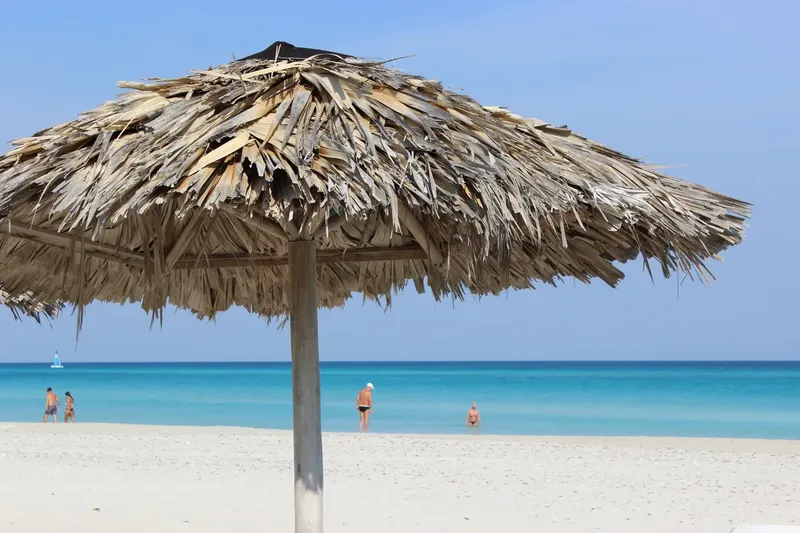
Sand and sea
Varadero Beach
The sand strip the tourism board calls the most beautiful of Cuban beaches, best in calm mornings and at sunset.

Updated November 2026 · Fact-checked
A thin finger of land pushed out into the Straits of Florida, almost all of it beach. Varadero is where Cuba built its resort industry, and in 2026 it is also where the island's tourism crisis is easiest to see: a beach that is still extraordinary, hotels that have closed and reopened, and parks that feel half asleep. It is worth knowing exactly what you are signing up for before you go.
 VARADERO · 23.2°N 81.3°W
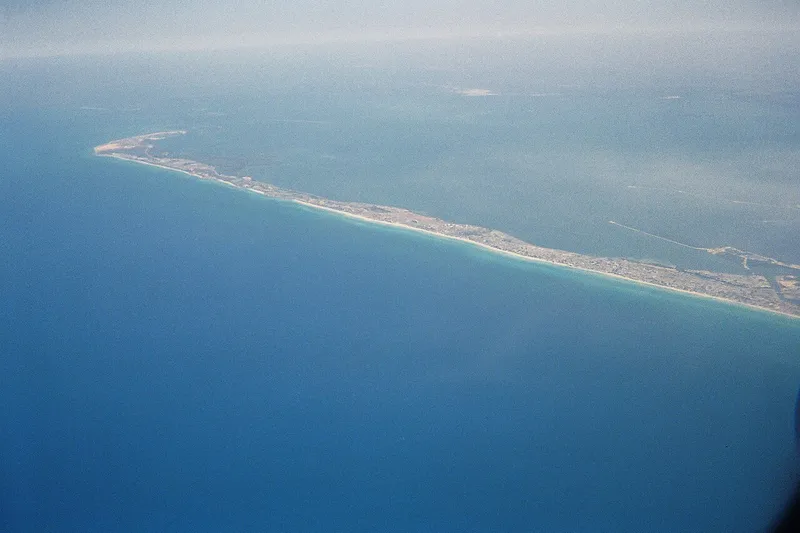
Varadero sits on the Hicacos Peninsula in Matanzas Province. Wikipedia describes the peninsula as reaching more than 20 kilometers northeast from the mainland and being only 1.2 kilometers wide at its widest, and Cuba's own tourism board calls the beach the most beautiful in the country. It is about 140 km east of Havana, which makes it a two-hour drive from the capital.
Varadero is Cuba's biggest hotel zone. An ONEI-based tally reported by Travel and Tour World on 30 September 2026 puts it at about 22,814 hotel rooms, against about 14,895 in Havana, although that is inventory and not rooms in use. The town itself is young: it was founded on 5 December 1887, when ten families from Cárdenas received permission to build holiday homes, after earlier centuries in which the peninsula served as a dry dock (a varadero) and a source of salt that kept the Spanish fleet supplied until the mines closed in 1961.
Tourism to Cuba has fallen sharply. The national statistics office ONEI counted 1,477,892 international visitors from January to October 2025, 20% fewer than a year earlier, and CiberCuba reported in May 2026 that arrivals fell 55.8% in January to April 2026 compared with the same months of 2025. Prime Minister Manuel Marrero told the National Assembly on 29 July 2026 that 73% of hotel facilities were closed and that about 25,000 hotel workers were out of work. Meliá, Iberostar and other international chains have stopped operating in Cuba, so a hotel you saw in an older guide may no longer exist.
A May 2026 YouTube visit to Varadero described in CiberCuba found the beach still extraordinary but nearly empty, with a boulevard of fewer than 50 people on a Saturday and broken rides at Parque Josone. The UK advises against all but essential travel to Cuba (updated 25 September 2026), and Canada advises avoiding non-essential travel (updated 5 October 2026). Read the safety chapter, the Cuba country guide and the Cuba scams guide before you book anything.
Varadero is a single strip, so the choice of area is really a choice of how far along it you want to be. Wikipedia notes that the town is laid out on three longitudinal avenues crossed by 69 cross streets, which is why addresses read like “Avenida 1 between Calle 56 and 58”.
The built-up part of the peninsula is the town, where the numbered streets run. The Viazul bus station is downtown on Calle 36, Parque Josone is on Avenida 1 between Calle 56 and 58, and two of the restaurants in this guide, Salsa Suárez and Varadero 60, are on Calle 31 and Calle 60. A July 2026 guide places the casas particulares in town, which puts you within reach of restaurants without a hotel buffet.
Most of the resorts are strung out along the beach, and the Autopista Sur, the peninsula's 19.4 km main road, is how you reach them. This is the part of Varadero built for package tourism, and it is also the part where the hotel closures of 2026 matter most, so check each property before you commit.
Cuba's tourism board lists Marina Gaviota International at Autopista Sur y Final, the starting point for the boat excursions. Near the peninsula's eastern tip are the Du Pont mansion Xanadú and, on Cayo Libertad, the adults-only Playa Luxury Varadero that Gaviota announced would reopen on 23 October 2026.
The tip of the peninsula, Punta Hicacos, is the northernmost point of Cuba and is protected as Hicacos Point Natural Park, a 3.12 square kilometer reserve established in 1974. It is the one stretch of Varadero with trails instead of sunbeds.
We cannot give you a ranked list with prices this time. A Booking.com search for Varadero hotels returned no properties when we checked on 10 November 2026, and the hotel situation has changed month by month. What follows is what we could confirm from news reports, with the date of each, so treat every name as a lead to verify and not as a booking recommendation.
In late May 2026 the Canadian chain Blue Diamond reopened three Varadero resorts, according to 14ymedio: the five-star Royalton Hicacos Varadero on 22 May, and Resonance Musique and Resonance Blu Varadero on 25 May. Royalton Hicacos is adults-only (18+), Resonance Blu is a four-star adults-only hotel with direct beach access, and Resonance Musique is built for groups and families with a 900-seat theater. A later report from August 2026 says EFE counted Blue Diamond among the chains that had stopped operating in Cuba, so confirm with the hotel directly.
The Gaviota group announced that its 85-room, adults-only Playa Luxury Varadero at Cayo Libertad would reopen on 23 October 2026 as part of its 2026–2027 high-season plan, and we could not confirm that it did. The former Meliá Marina Varadero was relaunched as Domina Marina Varadero, now under Gaviota ownership and Domina management, according to a December 2025 report.
The alternative is a casa particular in town. One July 2026 guide lists private rooms at around US$25 to US$50 a night; that is a guide's figure and not a quote, so ask the host for the current rate and what is included.
Outside the all-inclusive buffets, eating in Varadero means the private restaurants known as paladares in the town, plus a few state-run places inside parks and marinas. Shortages affect kitchens too: Canada warns that food and water supplies at resorts can be hit, so menus may be shorter than the listings suggest.
Dante serves Italian food in the house that José Iturrioz built beside the lagoon in 1938, according to Prensa Latina. It is inside Parque Josone, so it fits naturally into a morning in the park.
Salsa Suárez is a paladar on Calle 31 between 1st and 3rd Avenue. Spinach.guide lists it open daily from noon to 11 pm with a Google rating of 4.5 from 447 reviews, and a 2020 review described a very large menu with sushi, tapas, criollo food, steak and seafood, plus vegan, vegetarian and gluten-free options.
Varadero 60 is a paladar with 1960s decor and live music, known for pork dishes and paella. Wanderlog shows a Tripadvisor rating of 4.5 from 1,691 reviews, and some diners mention mixed opinions about the band and cigar smoke indoors.
Varadero's main attraction is the sand and the sea, and the rest of the list is short and mostly outdoors. Cuba's tourism board lists nautical activities, golf, nature tours and excursions among the things to do, and the sights below are the ones with sources behind them. Together they take in the beach, the narrow Hicacos Peninsula and two places a short drive west.
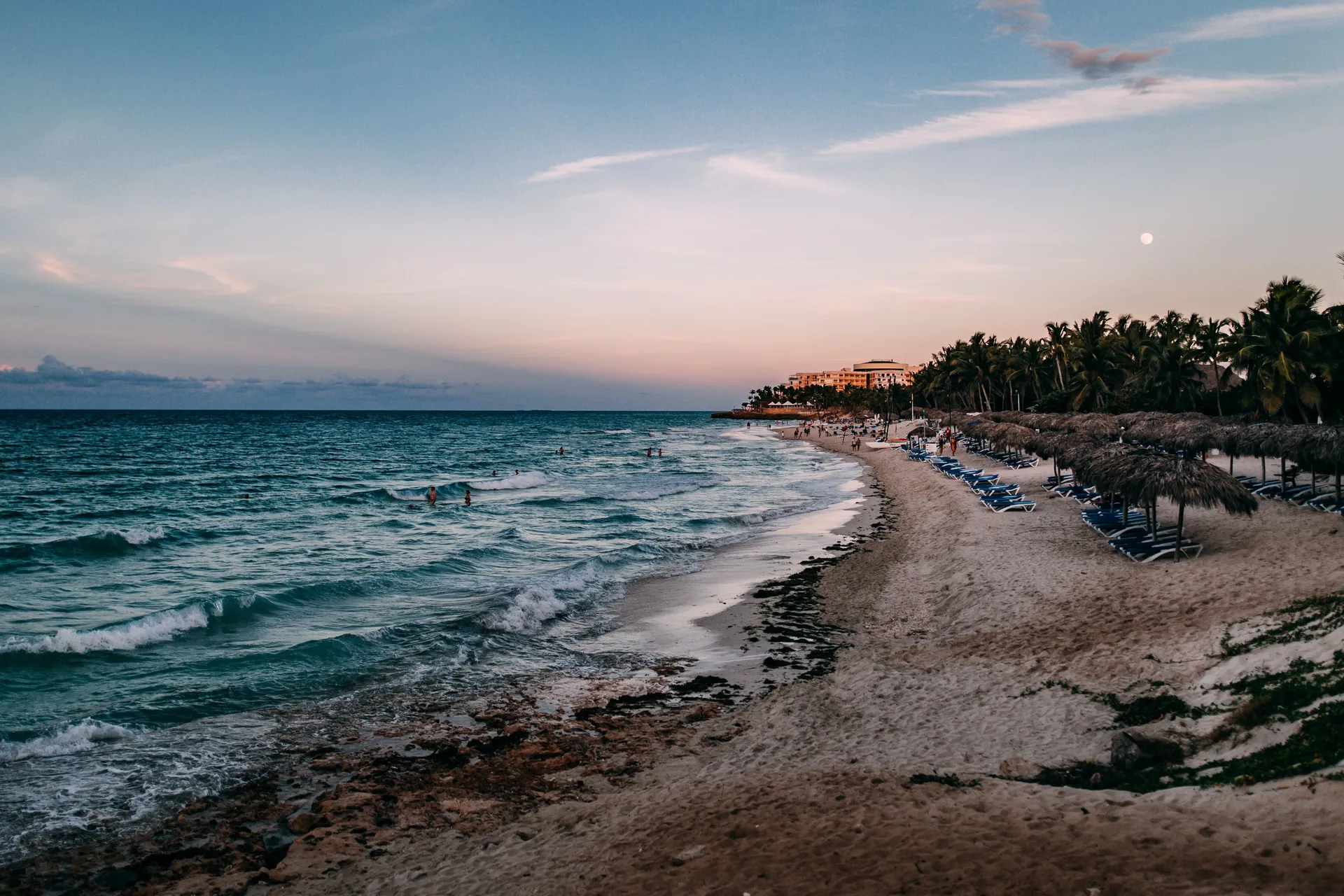
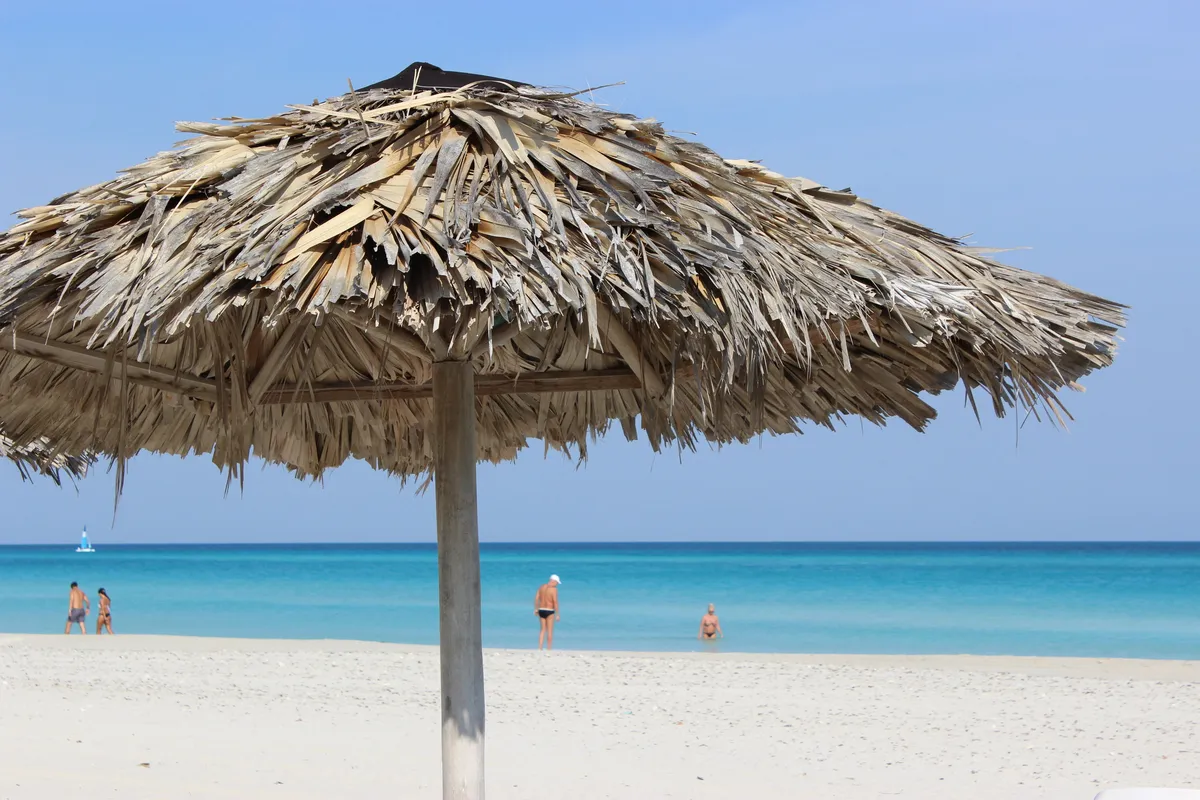
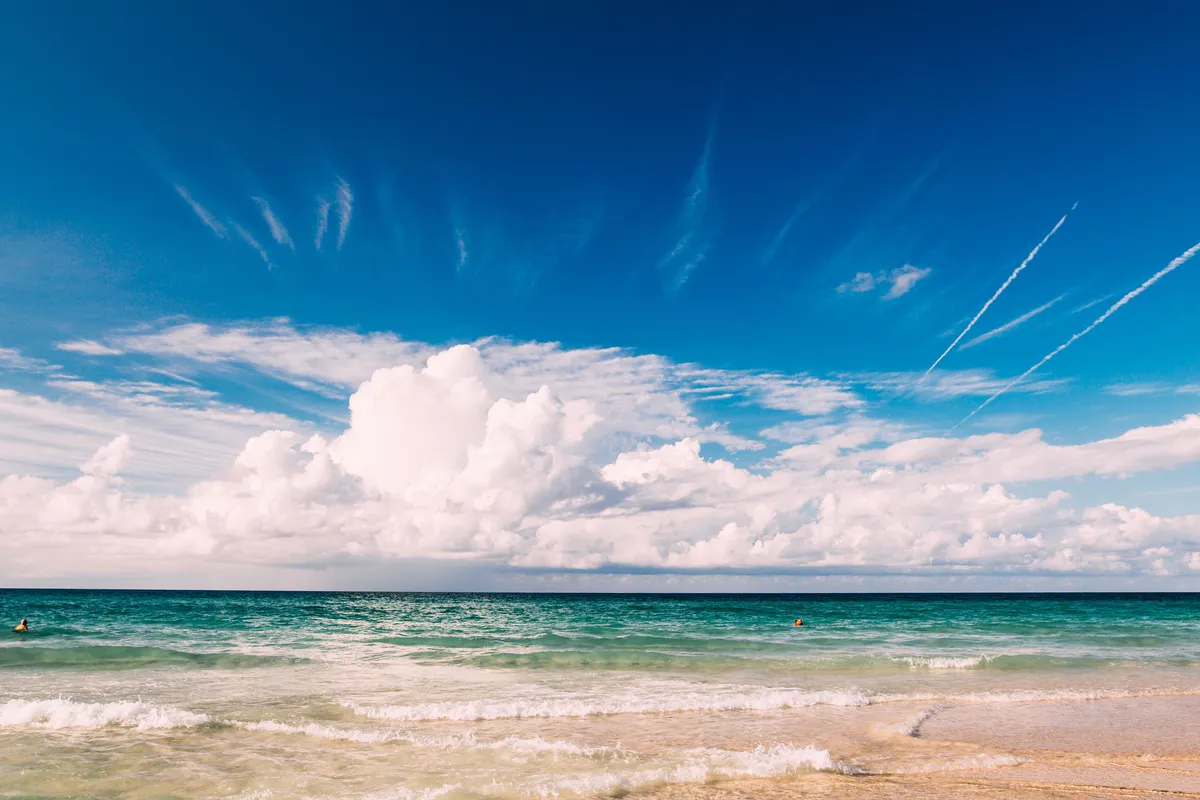
The sand strip the tourism board calls the most beautiful of Cuban beaches, best in calm mornings and at sunset.
At the peninsula's tip, Hicacos Point Natural Park has hiking trails, the La Calavera salt-works ruins and the Ambrosio Cave.
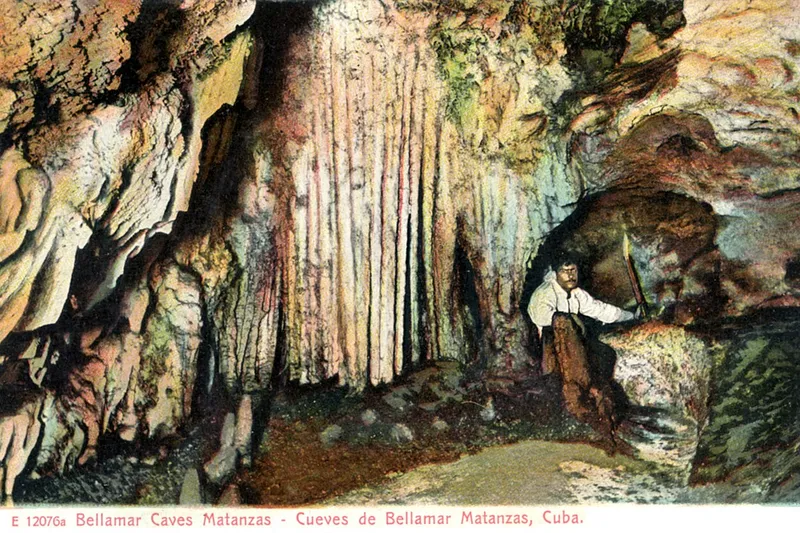
A National Monument cave system in Matanzas, a day trip west of Varadero.
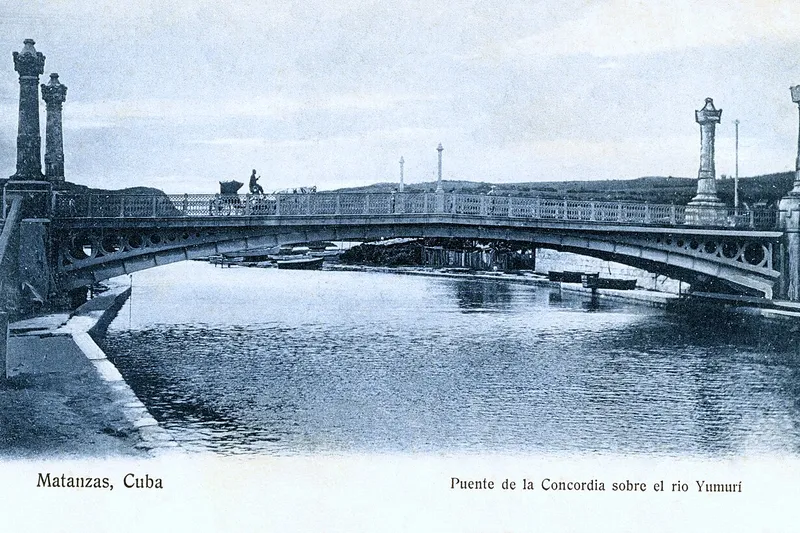
A historic center known as the City of Bridges and the Athens of Cuba, with more in the day-trips chapter.
The tourism board calls Varadero “the most beautiful of Cuban beaches” and gives the sand strip an average width of 24 yards. Canada notes that Cuban beaches often lack lifeguards and that rip currents and marine hazards are common, so swim where other people are and take the flags seriously. Sunsets and calm mornings are the best light; the May 2026 visit described by CiberCuba found the sand almost empty, which suits swimming and not much else.
Parque Josone (Parque Retiro Josone) is a nine-hectare park in the center of Varadero. The name is formed from the first letters of José and Onelia, the owner and his wife, according to Prensa Latina, and the Wikipedia article dates the park to 1942. Varadero Guide lists free entry, a lake with rowing and pedal boats, a swimming pool, a mini-golf course and several restaurants, and says the park is open from 9 am to midnight. It reports the pool at US$3, pedal boats at US$5 an hour and the little train at US$1, though CiberCuba found the train broken and the pool dirty in May 2026.
At the peninsula's tip, the 3.12 square kilometer Hicacos Point Natural Park has hiking trails, the salt-works ruins of La Calavera, Mangón Lake and the Ambrosio Cave, which holds around 47 pre-Columbian symbols and paintings according to Wikipedia. Wikipedia also lists the Cueva de los Musulmanes on a second trail. Opening hours and tickets are not published in the sources we found, so ask at your hotel or casa.
Xanadú is the mansion that Irénée du Pont de Nemours built, at a reported cost of US$338,000. It was seized after 1959 and renamed “Las Américas” in 1963 (Wikipedia). A July 2026 guide describes it as a restaurant and golf clubhouse with ocean views next to Varadero's 18-hole golf course; confirm that it is open before you go.
The tourism board calls the Cayo Blanco excursion its star trip, with snorkeling, a beach stop, lunch and sailing, and says the diving area extends for more than 40 miles including the nearby keys. It also lists snorkeling with a guide at Coral Beach and Saturn Cave and fishing trips along the north coast of the peninsula. Boats leave from Marina Gaviota, and fuel shortages mean schedules can change, so book through your hotel or casa host and confirm the day before.
Thirty-two kilometers west of Varadero, the city of Matanzas has a National Monument cave system, the Bellamar Caves, and a historic center that Wikipedia and the tourism board describe as the “City of Bridges” and “Athens of Cuba”. See the day-trips chapter for what else is there.
Varadero is a place to slow down, and two days cover the beach, the park and the reserve. These routes use the hop-on bus described in the next chapter and assume each venue is open when you arrive, which in 2026 is worth confirming.
The beach. Swim early, while the water is calm and the sand is empty.
Parque Josone. Walk the lake and have lunch at Dante.
Hicacos Point. Take the hop-on bus toward the eastern end and walk a trail to the Ambrosio Cave.
Dinner in town. Varadero 60 or Salsa Suárez, after checking they are open.
The one-day route: beach, Parque Josone, Hicacos Point and dinner in town.
Matanzas. Go west 32 km for the Bellamar Caves and the city center.
Back on the sand. A last swim or a walk past Xanadú and the golf course.
The two-day route above, at an easier pace.
Cayo Blanco. A boat trip from Marina Gaviota with snorkeling and a beach stop; confirm that it runs.
Bay of Pigs. The Zapata Peninsula wetland is about two hours from Varadero.
Juan Gualberto Gómez Airport (VRA) is about 15 km from downtown Varadero, and hotels are 15 to 25 km away, a trip of 25 to 50 minutes, according to Varadero Guide. Taxis wait at the terminal at US$25 to US$40 one way depending on the hotel, and you should always agree the fare first. There is no bus station at the airport; the Viazul station is downtown on Calle 36.
Flights are the weak link in 2026. Canada reports that all Canadian airlines have suspended service to Cuba and that international flights may be limited on short notice, and the UK says several airlines have suspended flights. Wikipedia notes that TUI ended its Amsterdam and Brussels flights to Varadero in 2024 and that Condor announced the end of its Frankfurt route in 2025. Confirm your airline, and travel insurance that covers Cuba, before you pay for anything else.
From Havana, Varadero is about 140 km along the road east, roughly two hours by car. Viazul buses and taxis run the route; we could not confirm a current timetable or fare, so check viazul.com. Inside Varadero, a hop-on bus loops through 46 stops from 9:30 am to 9:00 pm, with a one-day ticket listed at US$5 and a bus about every half hour. Taxis inside town are roughly US$5 to US$10 one way, and meters are rarely switched on, so negotiate first. Bici-taxis are not officially allowed to carry tourists, though they often do. For the entry rules, including the e-visa and the D'Viajeros form, see the Cuba guide.
November to April is the best window in our Cuba guide. Hurricane season runs from early June to the end of November, and Canada warns that storms can intensify quickly and disrupt services. Hurricane Irma hit Varadero as a Category 5 storm on 8 September 2017, according to Wikipedia.
Practical prep: Canada warns that Cuban networks are poor and that some phones may not work, so check with your provider before you fly. An eSIM bought before you travel is one option to compare, and offline maps and your hotel address saved on your phone help when the network is down.
We do not quote a daily budget for Varadero because we could not source one that is current. The figures below are the ones we found, each from a guide or listing and not from a price list, so treat them as a starting point and confirm on arrival.
Two governments are firm. The UK advises against all but essential travel to Cuba (page updated 25 September 2026) and Canada advises avoiding non-essential travel (updated 5 October 2026), both citing shortages of fuel, electricity, food, water and medicine that could worsen during hurricane season. The UK adds that opportunistic crime is rising but remains lower than in the UK. We could not open the US State Department advisory in this check, so read it yourself before you book.
For a beach holiday the practical risks are these. Canada lists petty theft in tourist areas, markets, buses and beaches, theft from hotel rooms, and sexual assaults on Canadian women including at beach resorts, so keep valuables in the room safe and do not leave bags unattended on the sand. It says power outages can last more than 24 hours and that generators at large hotels and resorts may be limited by fuel shortages, healthcare is limited and medical bills must be paid in cash in US dollars, and you may be asked to show medical insurance on entry. Use officially marked taxis, agree fares beforehand, and carry the medicines you need, since many are hard to find. All anti-government demonstrations are illegal, so avoid them. Canada says overcharging and scams are common, so read the Cuba scams guide too.
Varadero sits in the middle of Matanzas Province, and the tourism board lists the province's cities, wetlands and cays as the natural excursions. Fuel shortages make independent travel slow, so check how you will get back before you set out.
Matanzas is 102 km east of Havana and 32 km west of Varadero. Wikipedia lists the Sauto Theatre, opened in 1863 and a National Monument, a Pharmaceutical Museum established in 1882, and 17 bridges across its three rivers. The tourism board also lists a Slave Route Museum, which it calls unique in Latin America. The Bellamar Caves nearby are a National Monument too.
The ten families who founded Varadero in 1887 came from Cárdenas, which the tourism board calls the “Flag City”, with bicycle and carriage monuments. It is the nearest ordinary Cuban town to the resort.
The tourism board describes the Zapata Peninsula as the largest wetland in the Caribbean, about two hours from Varadero. A July 2026 guide adds shore diving at Playa Girón and swimming at the Cueva de los Peces cenote, and a crocodile farm in the wetland.
Havana is the obvious pairing for a beach stay, and it is far enough that most people stay overnight. See our Havana guide for the city.
Violent crime against visitors is rare, but the wider situation is difficult. The UK advises against all but essential travel to Cuba and Canada advises avoiding non-essential travel, citing fuel, electricity, food and medicine shortages. Canada also lists petty theft on beaches and from hotel rooms, so keep valuables locked away.
Yes, but on a reduced scale. Cuba's prime minister told the National Assembly in July 2026 that 73% of hotel facilities were closed, and Canada reports that Canadian airlines have suspended service to Cuba. Some Varadero hotels have reopened, so confirm that your hotel and your flight are operating before you pay.
Varadero is about 140 km east of Havana, roughly a two-hour drive. Viazul buses stop at the downtown terminal on Calle 36, and taxis and transfers also run the route. We could not confirm a current bus timetable or fare, so check viazul.com before you travel.
Juan Gualberto Gómez Airport (VRA) is about 15 km from downtown Varadero, and hotels are 15 to 25 km away, a trip of 25 to 50 minutes. Taxis wait outside the terminal at US$25 to US$40 one way according to Varadero Guide. Agree the fare first.
Plan on cash. The UK says international Visa and Mastercard cards are no longer accepted in Cuba, and Canada says they stopped working from 6 June 2026. Bring enough US dollars or euros for the whole stay, and exchange money only at banks, airport bureaus, major hotels or official exchange offices.
November to April is the best window in our Cuba guide, with the driest and most comfortable weather. Hurricane season runs from early June to the end of November, and Canada warns that storms can intensify quickly and disrupt services.
Not in every one. The US State Department's Cuba Restricted List, republished on 6 February 2025, names many Varadero hotels, and direct financial transactions with listed entities are generally prohibited for US persons. Ordinary tourism is also barred under US law. Check the current list and our Cuba guide first.
Parque Josone has free entry and a lake, Hicacos Point Natural Park has trails and the Ambrosio Cave with its pre-Columbian drawings, and the Du Pont mansion Xanadú sits at the eastern end. Boat trips run to Cayo Blanco, and Matanzas, with the Bellamar Caves and Sauto Theatre, is 32 km west.
A hop-on bus loops through 46 stops from 9:30 am to 9:00 pm with a one-day ticket listed at US$5. Taxis inside Varadero are roughly US$5 to US$10 one way and meters are rarely switched on, so negotiate before you get in.
Varadero is Cuba's biggest beach resort, with the most hotel rooms of any Cuban destination, so it suits a beach stay rather than a culture trip. Pair it with Havana, which is about two hours away, if you want architecture, music and street life.
Varadero was built to be easy, and in 2026 it is neither easy nor crowded. The sea is as clear as the tourism board promises and the sand is as wide, but the reliable parts of a resort holiday, the flights, the buffet and the power, are exactly what is in doubt.
Go with cash, a confirmed flight and a hotel that has answered your email, and the beach will do the rest. If any of those three is missing, wait for a calmer season.