National park
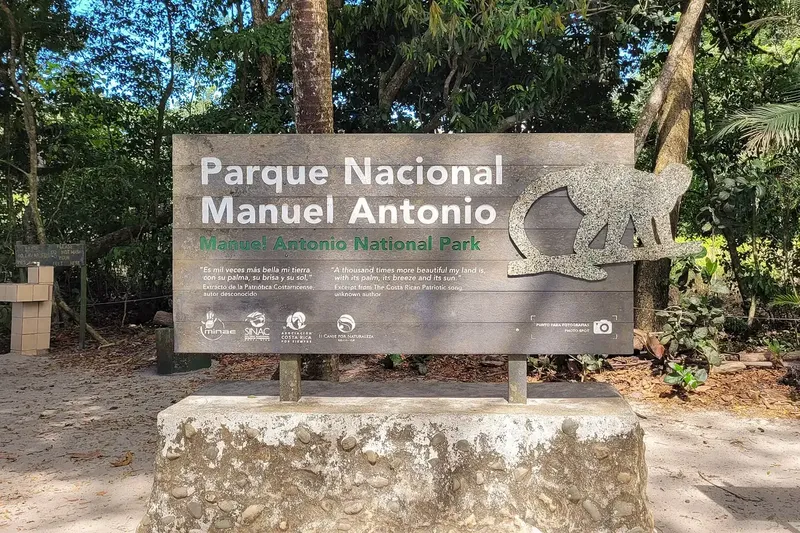
Manuel Antonio National Park
Rainforest trails and four beaches, open Wednesday to Monday and closed on Tuesdays.
Book a guided park hike
Updated November 2026 · Fact-checked
A capuchin monkey eyeing your lunch. A sloth the size of a backpack, hanging in a tree you walked under twice. A white-sand cove that drops straight out of the rainforest. Manuel Antonio packs more of what people come to Costa Rica for into a few square kilometres than almost anywhere, and it rewards the visitors who book the park ticket first and everything else second.
 MANUEL ANTONIO · 9.4°N 84.1°W
Manuel Antonio is a stretch of Pacific coast just south of Quepos, about 157 km from San José, where steep rainforest drops straight onto white-sand coves. The national park, created in 1972, is the most popular of Costa Rica's 30 national parks, with almost 4.4 million visits between 2012 and 2022 according to figures SINAC gave to El Financiero. Around it, a hillside road of hotels, restaurants and viewpoints has grown into one of the country's busiest tourist strips.
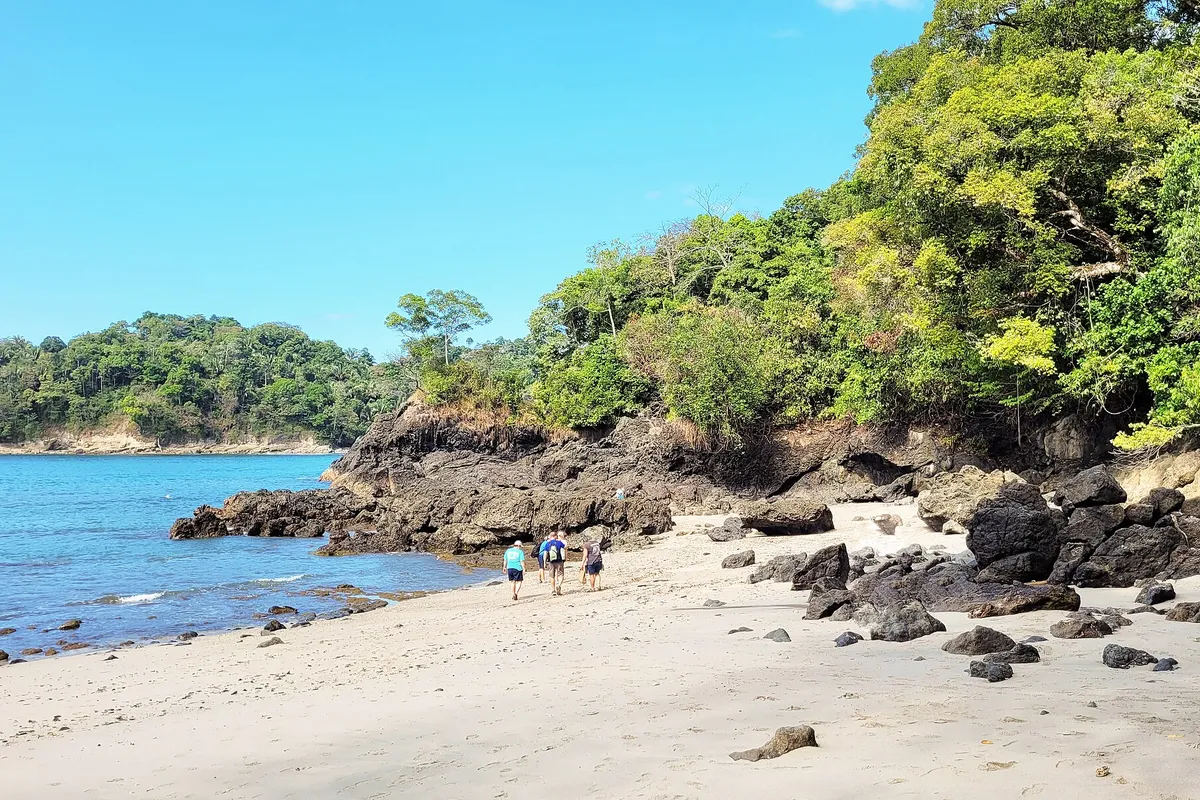
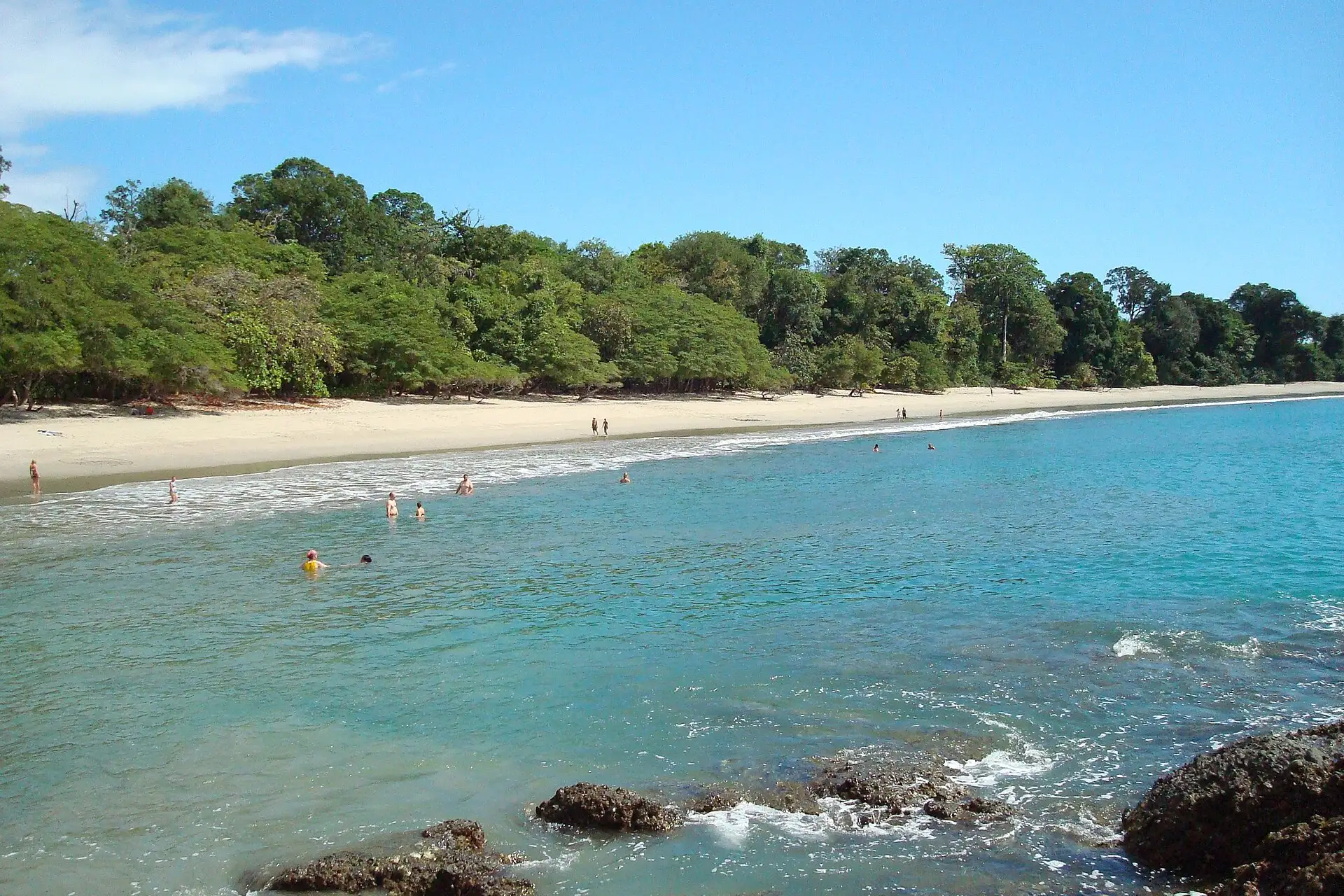
What draws people is how much fits into a small area. The park protects 109 mammal species and 184 bird species, both of Costa Rica's sloth species, and three of its four monkey species: the mantled howler, the Central American squirrel monkey and the white-faced capuchin. Four beaches lie inside the park, two of them (Manuel Antonio and Espadilla Sur) with tidal pools that suit snorkelling. Outside the gate, the same coast offers mangrove boat tours, kayaking, zip lines and river rafting within about 30 minutes.
You cannot just turn up at the park. Tickets are sold online only through SINAC, there are no walk-up sales, and a daily cap means dry-season days can sell out two or three days ahead. The park is also closed on Tuesdays. Plan the park first and the rest of the trip around it.
The area is touristy and prices near the park gate run well above those in Quepos. Capuchin monkeys steal food, which is why outside food is banned in the park. Canada names Manuel Antonio and Quepos among Pacific coast areas of particular concern for theft, rip currents are common, and the sea can be dangerous. None of it is a reason to skip the place, but it is a reason to plan.
Manuel Antonio is not a town with a centre so much as a road that climbs from Quepos, over a ridge and down to the park gate and beach. Where you sleep decides whether you walk to the sand or ride to it.
The road ends at the park gate and the long public beach, with restaurants, souvenir stalls and a handful of hotels within a few minutes' walk. It is the most convenient base if you plan to be at the park when it opens, and the most crowded. Meals close to the gate cost noticeably more than the same dish a few kilometres back toward Quepos.
Between Quepos and the beach, the road climbs through forest with hotels perched on the slope, from boutique stays near the 1.5 km mark out of Quepos to larger resorts further along, such as Parador at Punta Quepos. You pay for views and a pool, and you trade away walkability. A local bus runs along the road to the park entrance.
The working town just outside the park holds the bus terminal, supermarkets and the Marina Pez Vela, a waterfront cluster of restaurants and shops. Rooms and meals cost less here, and a local bus connects it to the park entrance for about $1.50. Budget travellers and anyone arriving by bus often start here.
Manuel Antonio's rooms run from hostel beds in Quepos to adults-only luxury above the sea. Every hotel below came back from a Booking.com search for a February 2027 midweek night, so prices are high-season ranges; expect less in the rainy months.
Prices below are rough February midweek averages for a double room, so check current rates for your dates. At the top, Parador Nature Resort and Spa is a 5-star resort at Punta Quepos that guests rate 9.3 from nearly 1,000 reviews (around $350 to $450 a night), and Makanda by The Sea is an adults-only 5-star on the main road about 3 km from Quepos with a spa and infinity pool (well above $800 a night in the dry season, rated 9+ by guests). In the boutique bracket, ECOTICA Boutique Hotel & Spa (around $330 to $390) has a spa and pool and a 9.0 rating from nearly 400 reviews.
In the mid-range, Hotel Plaza Yara (around $170 to $200) is rated 9.5 by guests from nearly 900 reviews, and Tico Tico Villas is an adults-only aparthotel with a pool (around $140 to $160, rated 9+ from nearly 400 reviews). Hotel Naoz (around $125 to $145) is a 3-star in Manuel Antonio village that guests rate close to 9 from over 500 reviews.
For the beach end, El Faro Containers Beach Hotel (around $150 to $170) sits about 50 metres from the park entrance, with a pool and more than 3,000 reviews, and Hotel Manuel Antonio (around $165 to $180) is a beachfront 3-star at the end of the road. On a tight budget, hostels in the Quepos and Manuel Antonio area, among them Manuel Antonio Hostel and Hostel Plinio, list rooms from around $45 to $65 a night in February.
Eating in Manuel Antonio is mostly about the view. The best-known restaurants are terraces above the sea, the cheapest meals are in Quepos, and a handful of small places do something more interesting than rice and chicken. Prices below come from restaurant guides and can change, so treat them as a guide.
El Avión is built around an old cargo plane on the hillside road toward Quepos, with mains of roughly $13 to $36 and strong sunset views; guides advise arriving well before sunset, and reviewers are split on the food, so many go mainly for a cocktail in the plane. Café Agua Azul, a small walk-in place in a strip mall on the main road, serves seafood, tacos and pizza with ocean views at roughly $9 to $19 a main and is a favourite with several guides.
Emilio's Café, behind Plaza Vista, does breakfasts of roughly $5 to $12 with ocean views, plus desserts and baked goods. El Patio de Café Milagro is a coffee-roasting cafe and bistro near Quepos with breakfasts of around $7 and lunches of around $9. Manuel Antonio Falafel Bar is a small Middle Eastern spot on the main road with mains of around $9 to $12.50 and plenty of vegetarian dishes.
Árbol is the area's fine-dining address, on the grounds of Makanda by the Sea, with a seasonal multi-course menu of roughly $35 to $50; it is adults only and guides advise booking about a week ahead in high season. Z Gastro Bar at Marina Pez Vela in Quepos serves upscale seafood at roughly $20 to $35 a main.
Spend your first morning in the national park, because tickets are the one thing that can derail the trip. After that, the area splits into water (mangroves, catamarans, kayaks, rafting) and forest (zip lines, night walks, horseback rides).
Rainforest trails and four beaches, open Wednesday to Monday and closed on Tuesdays.
Book a guided park hike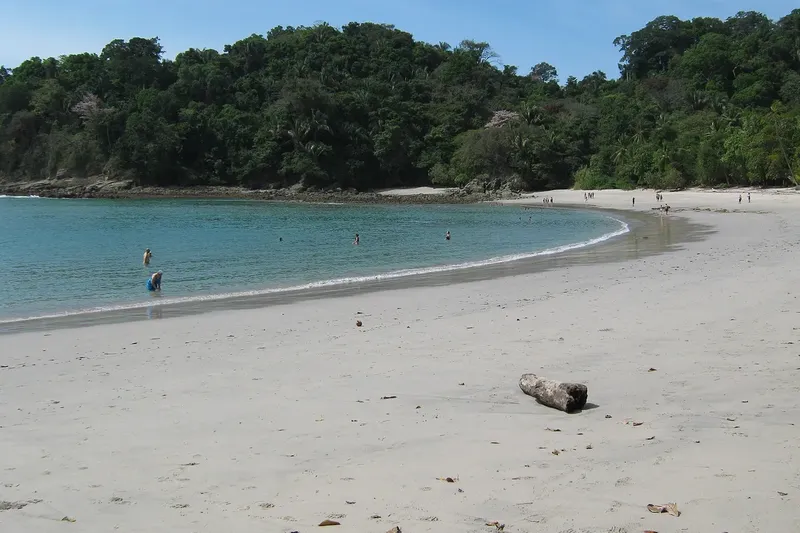
A sheltered bay inside the park with tidal pools for snorkelling, and the first beach to fill up.
Book a kayak and snorkel tour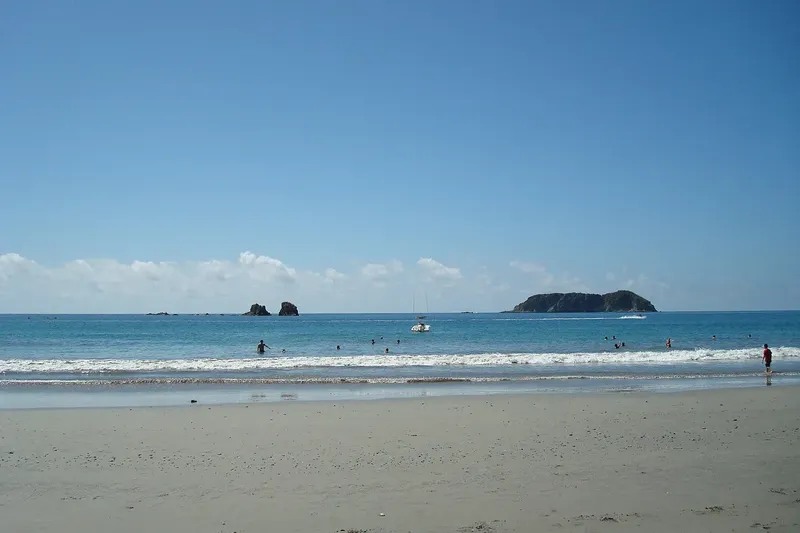
The long beach beside the park road, with more waves than the park bays and no guarantee of a lifeguard.
Book a catamaran cruise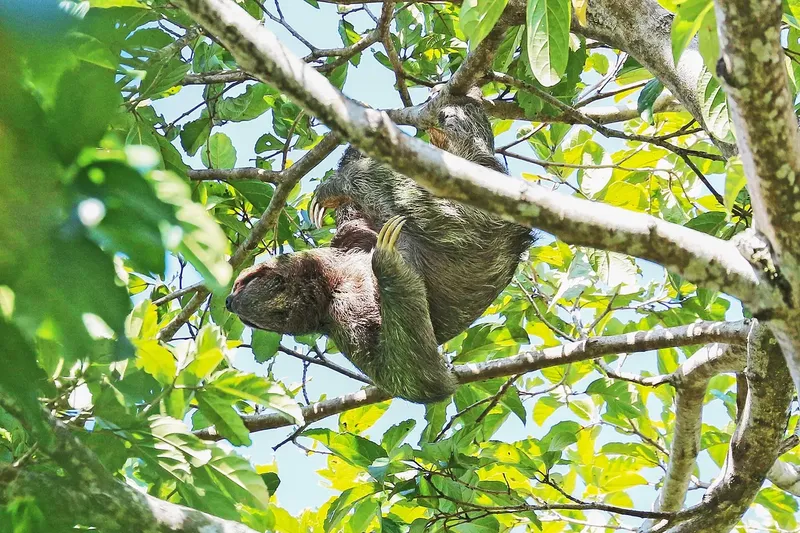
Two sloth species and three monkey species live in the park, and a guide with a scope finds far more than you will alone.
Book a night wildlife walkThe park is open Wednesday to Monday from 7 am to 4 pm and closed on Tuesdays, and the beaches close at about 3 pm. Adults pay $16 plus 13% tax (about $18.08), children 2 to 12 pay $5 plus tax and under-2s enter free. Tickets are sold only online through the official SINAC site, so buy as soon as your dates are fixed, select the foreigner rate unless you are a resident, and bring your passport and the confirmation on your phone. The daily limit is set by the park, and in the dry season tickets can sell out days ahead; if you strike out, a guided tour has its own allotment. Outside food is banned, so use the lockers or leave it in the hotel, and do not feed the monkeys. Certified guides at the entrance charge around $25 to $40 per person, and the Punta Catedral loop and the waterfall trail are the usual walks.
The coast is as good from the water as from the trail. A two-hour mangrove boat tour from about 10 minutes out of Manuel Antonio has guests rating it close to 5 from 200+ reviews, a mangrove kayak tour of about 2 hours is rated 4.9 from over 370 reviews, and the Damas Island mangrove tour with lunch takes about 4 hours and has more than 440 reviews. Expect to pay around $50 to $70 a person for the shorter ones. For the open sea, a sea-kayak and snorkel trip to Biesanz Beach lasts about 3.5 hours, and the catamaran cruise with a meal runs about 4 hours with a sunset finish and around 190 reviews.
A night walking tour with a naturalist guide (2 to 2.5 hours) is rated 4.9 from more than 330 reviews and finds the nocturnal animals the day trails miss. For adrenaline, a zip-line canopy tour with a butterfly garden is rated 4.9 from about 60 reviews, and a horseback ride to the Shaman waterfalls takes about 5 hours and is a bestseller with good reviews. Tour prices vary by season and group size, so check current rates before you book.
Fix your park day first, avoid Tuesday, and book the ticket. Everything else bends around it.
The national park at 7 am. Walk the trails with a guide while the animals are active and the air is cooler.
Beach time. Swim at the park beach before it closes at about 3 pm, keeping to calm water and watching for rip currents.
Late lunch. Eat in Quepos or on the hillside road rather than at the gate.
Sunset. A terrace such as El Avión or Café Agua Azul, arriving early for a good table.
The one-day route: park at opening, beach, a late lunch and sunset on the hillside.
Mangroves. A boat or kayak tour through the Quepos mangroves, which usually starts early.
Canopy or beach. A zip-line tour, or a free afternoon on Playa Espadilla.
Night walk or dinner. A guided night walk, or a seafood dinner at Marina Pez Vela in Quepos.
The two-day route above, at a gentler pace.
On the water. A catamaran cruise with a snorkel stop and a sunset finish.
River or horse. A horseback ride to the Shaman waterfalls, or a day on the nearby Naranjo or Savegre rivers.
Manuel Antonio is on Costa Rica's Pacific coast, about 157 km from San José, and the drive takes roughly 3 to 4 hours depending on traffic. Tracopa runs buses from its San José terminal for around $9 to $12, with travel times of about 3.5 to 5 hours reported, and shared shuttles and private transfers also serve the route. Quepos has a small airport (XQP) listed with flights from San José; check current airlines and schedules before you plan around it.
Once there, a local bus runs from Quepos along the hillside road to the park entrance for about $1.50, and taxis fill the gaps. If you drive, park at one of the private lots next to the entrance (about 4,000 colones in cash was reported) and ignore anyone who claims their lot is the only official one. Never leave valuables in a parked car. Colones are the local currency, and US dollars are widely accepted in tourist areas, though change often comes back in colones at a poor rate.
December to April is the dry season and the busiest. May and November offer good weather with fewer crowds, and September and October have the heaviest rain. In the rainy season, go to the park early because showers usually arrive around 2 or 3 pm. Pack reef-safe sunscreen, a light rain jacket and shoes that handle wet trails.
Practical prep: an eSIM before landing saves the airport queue, and phone signal near the park entrance is unreliable, so screenshot your ticket confirmation.
Manuel Antonio is one of Costa Rica's pricier corners, and the bracket you pick for your room does most of the work. The figures below are nightly room ranges from February 2027 searches, plus what the park, guides and meals cost.
Costa Rica carries a Level 2 "Exercise Increased Caution" advisory from the US, and Canada advises a high degree of caution because of crime. Canada specifically lists Manuel Antonio national park and Quepos among Pacific coast areas of particular concern for theft, including from rental cars in hotel, restaurant, national park and beach parking lots. Violent crime against visitors is not the usual problem here; theft and the sea are.
The UK says rip currents are very common and lifeguards are often absent, and Canada reports several drownings a year with very few warning signs on beaches. Ask local staff before you swim, do not leave bags unattended on the sand, and keep nothing in a parked car. The UK also notes that crocodiles are regularly seen along stretches of the Pacific coast. Emergency number is 911 from any phone. For more on theft, rental cars and fake listings, read our Costa Rica scams guide.
Most of what is worth doing around Manuel Antonio is a short ride away, and many tours include hotel pickup.
A Class III-IV rafting tour on the Naranjo River is listed about 30 minutes from Manuel Antonio, running from May to mid-December for ages 12 and up. A slower Savegre River float tour runs all year for ages 4 and up, with kingfishers, iguanas and monkeys along the banks. Both are new listings without reviews yet, so read recent feedback before booking.
The horseback ride to the Shaman waterfalls picks you up at your hotel and rides from the town of Londres, a few miles from Manuel Antonio, and has guests rating it close to 5 from dozens of reviews.
For a quieter walk than the national park, the Hacienda Barú private reserve tour takes about 3 hours through rainforest where sloths, monkeys and toucans are seen. It is a new listing without reviews yet.
No. The park is closed on Tuesdays and otherwise opens from 7 am to 4 pm, with the beaches closing earlier, at about 3 pm. Tickets are sold online only, so book before you arrive.
Adults pay $16 plus 13% tax, about $18.08. Children aged 2 to 12 pay $5 plus tax and under-2s are free. Costa Rican residents pay less. Check the current price on the official SINAC ticket site before you book.
Mostly yes, with petty theft and the sea as the real risks. Canada advises a high degree of caution in Costa Rica and names Manuel Antonio and Quepos for theft, especially from parked cars. Rip currents are common and most beaches have no lifeguards.
Two nights is a good minimum: one morning in the park, one day for a boat, kayak or zipline trip, and sunset on the hillside. Three nights lets you add rafting or a waterfall ride and keeps a buffer if the park tickets are sold out.
By road it takes roughly 3 to 4 hours, depending on traffic. Tracopa runs buses from its San José terminal for around $9 to $12, and shared shuttles and private transfers are also available. From Quepos a local bus runs to the park entrance for about $1.50.
December to April is the dry season and the busiest. May and November are quieter with usually good weather, while September and October have the heaviest rain. In the rainy season, go early because showers often arrive in the early afternoon.
You do not need one, but a certified guide with a spotting scope finds sloths and other wildlife you would walk past. Group guides at the entrance charge around $25 to $40 a person. Guided tours also have their own ticket allotment, which helps when general tickets are sold out.
Near the park entrance and beach for walkability, on the hillside road between Quepos and the park for ocean views and pools, or in Quepos for the cheapest rooms and the marina. Most hillside hotels need a short bus, taxi or car ride to the beach.
Yes, if you want wildlife and beaches in one compact place. It is Costa Rica's most-visited national park for good reason, but plan ahead for tickets and expect crowds in the dry season.
Yes, but with care. The UK and Canada both warn that rip currents are common on Costa Rica's beaches and that lifeguards are rare. Ask your hotel or the park staff where it is safe to swim that day and follow any signs.
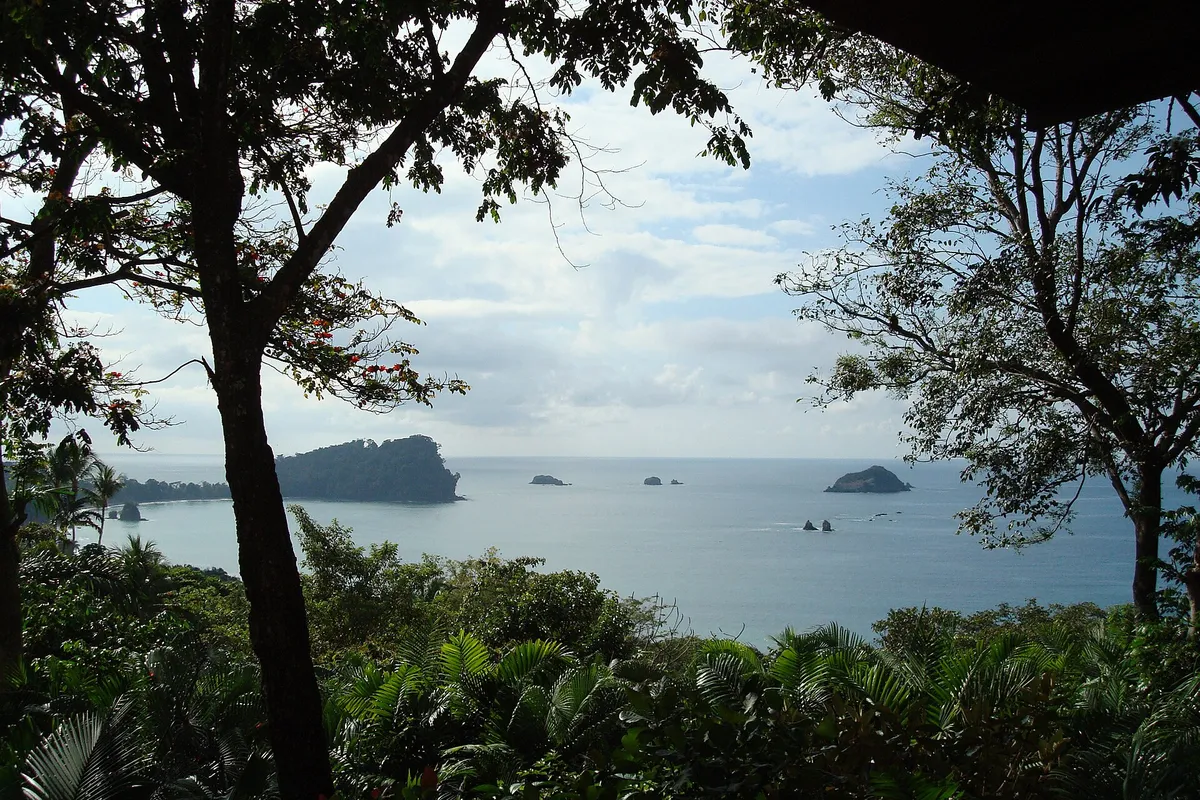
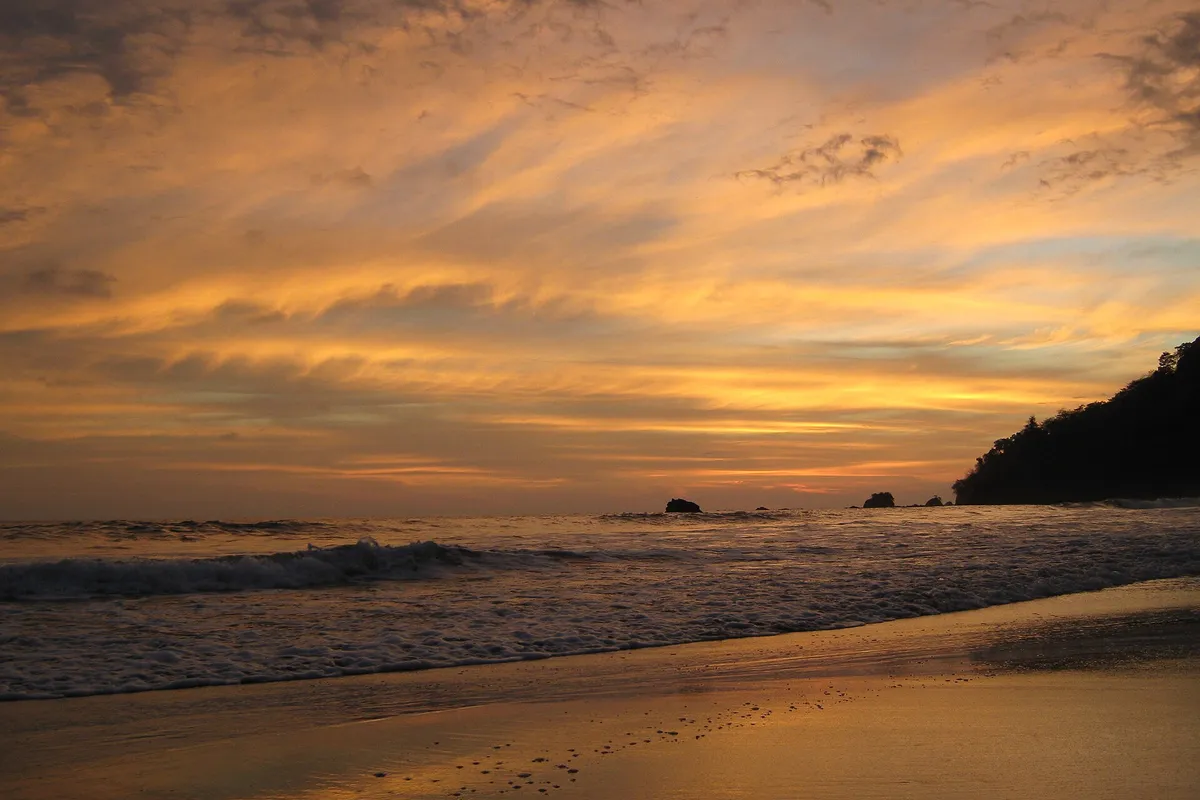
Manuel Antonio is busy, a little overpriced and still worth every bit of planning. What stays is small: a sloth you spot only because the guide pointed, the sound of howler monkeys before the park opens, the light going orange over the islets from a hillside table.
Book the ticket early, be at the gate at 7 am, and stay for the sunset on the hillside road, once the day-trippers have headed back toward San José.