
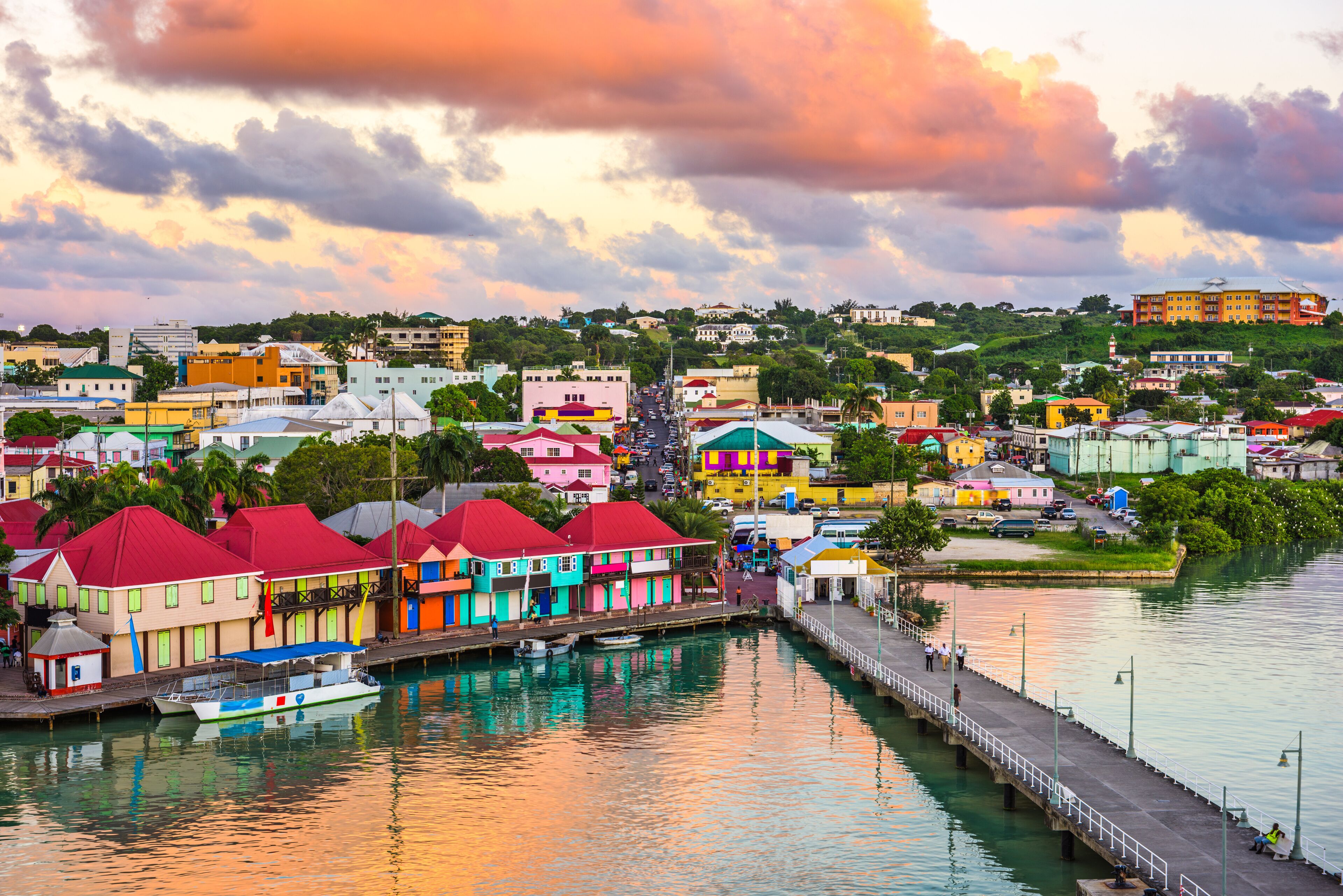
A working capital, not a resort strip
St. John's sits on a natural harbour on Antigua's northwest coast, and it looks and functions like what it is: the country's seat of government, its main port, and the only place on the island with a genuine downtown. It isn't trying to be a beach resort, the beaches are a short taxi ride away, and that's exactly what makes it a useful base. You can walk to the market, the cathedral and both duty-free quays, then be on sand at Dickenson Bay within fifteen minutes.
Up to four cruise ships dock here on a busy winter day, and Heritage Quay in particular can feel like an airport departure lounge between about 10am and 4pm. Time your downtown wandering around that window, or embrace it, since the shopping is genuinely good, and St. John's turns back into an unhurried small Caribbean city the moment the ships pull out in the late afternoon.
The honest complications
St. John's is not a nightlife town and doesn't pretend to be; if you want beach bars and evening entertainment, that's Dickenson Bay or English Harbour, not downtown. Cruise-day crowds at Heritage Quay can be intense, and a handful of streets near the market and bus stations feel rougher after dark, nothing dangerous by normal standards, just not somewhere to wander aimlessly late at night. And because this is a working port rather than a resort, the tourist infrastructure (English-speaking staff, fixed pricing, polished storefronts) thins out fast once you're a few blocks from the quays.
Four areas, one small city
St. John's itself is compact enough to walk end to end in twenty minutes. The real neighbourhood decision is how close you want to be to the beach versus the market.
Downtown & the Quays
Heritage Quay and Redcliffe Quay anchor the waterfront: duty-free shopping, the cathedral a few blocks up the hill, and the Friday-Saturday market on the southern edge. This is where most of what you came to see actually is, and it's the most practical base if you don't want to rely on taxis for everything.
Fort James & the Point
A short drive northwest of downtown, Fort James is both a small 18th-century fort with cannons still facing the harbour mouth and the closest real beach to the city centre. Fewer resorts, fewer crowds, and a genuinely good sunset spot without leaving greater St. John's.
Dickenson Bay
Antigua's best-known tourist beach: calm, shallow, lined with hotels, restaurants and watersports operators. It functions as St. John's beach neighbourhood even though it's technically a separate strip of coast, and most visitors split their stay between here and downtown.
Gray's Farm & Cedar Grove
Inland, residential districts with genuine local character and some of the cheapest guesthouse rates near the capital. Fewer restaurants and no beach access on foot, but a realistic, non-touristy slice of how Antiguans actually live, and a short bus or taxi ride from everything downtown.
From beachfront resorts to downtown guesthouses
There's no real hostel scene in and around St. John's, this is a resort-economy country rather than a backpacker circuit, but the range still runs from simple downtown guesthouses to full all-inclusive properties a short drive up the coast.
At the top end, Hermitage Bay is an all-inclusive luxury property on its own secluded cove west of the city, with a spa, fine dining and one of the most private settings on this stretch of coast. Closer to St. John's on the Dickenson Bay side, Galley Bay Resort & Spa in Five Islands Village is all-inclusive with four restaurants and a full spa, and Blue Waters Resort & Spa at Soldier's Bay has three pools and direct beach access.
For a more moderate beachfront stay, Tranquility Bay Antigua sits directly on the sand with straightforward watersports access and a noticeably lower price point than the resorts further up the coast. And for travellers who'd rather be downtown near the market and quays than out on the beach strip, Gray's Farm and Cedar Grove hold St. John's cheapest guesthouse rates, best found and booked directly rather than through the international chains, which barely operate in the city centre itself.
Saltfish, rum and a market worth planning around
St. John's food scene rewards leaving the cruise-terminal cafes and walking a few blocks inland. The city's best-known kitchens serve Antigua's national dishes in genuinely old buildings rather than purpose-built tourist restaurants, and the weekend market is one of the best food experiences in the country, not an afterthought.
Hemingway's Caribbean Cafe
Housed in a West Indian wooden building from the 1800s with a wraparound veranda overlooking central St. John's, this is the city's best-known spot for proper Antiguan cooking: saltfish fricassee, local lobster flambéed in Cavalier rum, curry shrimp and okra gumbo, and roasted jerk pork with pineapple relish. Consistently one of the highest-rated restaurants in the city and busy enough that a reservation helps at dinner.
Roti King
A busy, no-frills spot serving generous roti and sea moss, the local drink, at prices well below the tourist restaurants. Full of locals at lunchtime, which is the best sign a kitchen is doing something right.
Beachlimerz & Alligators Bar and Restaurant
Beachlimerz is a funky beach cafe serving traditional Antiguan food (try the shark fritters and fish curry) with live music some evenings; Alligators is known specifically for its jerk wings. Both are casual, easygoing alternatives to the more formal downtown restaurants.
A small capital that rewards a slow half-day
St. John's core sights fit comfortably into a day, leaving the rest of your time for the beaches and English Harbour beyond it. This chapter walks through the city roughly the way a good day would.
The quays and downtown
Heritage Quay, opened in 1988 and connected directly to the cruise port, is the largest duty-free shopping complex in the city, around fifty shops selling jewellery, liquor and souvenirs. Redcliffe Quay, a short walk away, has more character: it was originally a slave-trading compound until emancipation in 1834, and today holds the largest collection of historic buildings in the city, now home to art galleries, boutiques and the primary concentration of artisans in the country. Give Redcliffe the extra fifteen minutes; it's the more interesting of the two even without buying anything.
St. John's Cathedral
The Anglican Cathedral of St. John the Divine has been rebuilt twice after earthquake damage, and the current stone structure, completed in the 19th century with two distinctive baroque towers, is visible from the harbour as ships approach. It's a short walk uphill from the quays and worth the climb for the view back down over the rooftops alone.
Antigua and Barbuda Museum
Housed in the old Court House building near the centre, the museum covers the islands' Amerindian history, the sugar and slavery era, and the road to independence in a compact, easy-to-digest space. A good primer before heading out to Betty's Hope or Nelson's Dockyard.
Fort James & the beach
A short taxi ride from downtown, Fort James still has its 18th-century cannons facing the harbour entrance, and the beach beside it is the closest genuine swimming spot to the city centre, quieter than Dickenson Bay a little further north.
One, two or three days, planned street by street
One full day covers St. John's properly; three days lets you add the country's two headline day trips, Nelson's Dockyard and Barbuda, without rushing either.
- Morning
Downtown before the ships fill up. St. John's Cathedral, the Antigua and Barbuda Museum, and a coffee near Redcliffe Quay.
- Midday
Lunch and the quays. Roti King or a market stall if it's Friday or Saturday, then browse Redcliffe and Heritage Quay.
- Afternoon
Fort James. A short taxi to the fort and its beach once the cruise crowds thin out downtown.
- Evening
Dinner at Hemingway's. Saltfish fricassee and rum-flambéed lobster on the veranda.
- Day 1
The one-day route: cathedral, museum, market, quays, Fort James, dinner at Hemingway's.
- Day 2 morning
Nelson's Dockyard. Taxi or rental car to English Harbour, an hour or so exploring the restored Georgian dockyard buildings.
- Day 2 afternoon
Dickenson Bay. A proper beach afternoon with watersports before heading back toward town.
- Day 2 evening
Shirley Heights, if it's Thursday or Sunday. The sunset barbecue and steel-band session above English Harbour.
- Days 1-2
The two-day route above, at a gentler pace.
- Day 3, option A
Barbuda. The early Barbuda Express ferry, the Frigate Bird Sanctuary boat tour, Pink Sand Beach and a lobster lunch, afternoon ferry back.
- Day 3, option B
The east coast. Betty's Hope in the morning, Devil's Bridge and Half Moon Bay in the afternoon, by rental car or taxi.
Walkable downtown, taxi-and-bus everywhere else
St. John's centre is small enough to cover on foot in an unhurried morning. V.C. Bird International Airport (ANU) is about 15 minutes from downtown; a taxi runs roughly $12-20 for up to four passengers, agreed before you get in since taxis don't run meters. Beyond downtown, minibuses from the West Bus Station reach Dickenson Bay, Jolly Harbour, Darkwood Beach and English Harbour for EC$2.25-5 depending on distance, though they leave when full rather than on a fixed schedule, so build in extra time.
A rental car makes sense if you want to reach Betty's Hope, Devil's Bridge or Half Moon Bay independently: it requires a temporary local driving permit (about $20, from the Transport Board, rental agencies or police stations, valid three months), and driving is on the left. For a single beach day or the Nelson's Dockyard run, a taxi or the bus is simpler and cheaper than renting.
Best time to visit and cruise-ship timing
December through April is Antigua's dry season and the best window weather-wise, also the busiest for cruise arrivals. Up to four ships can dock on a single winter day, which makes Heritage Quay genuinely crowded between roughly 10am and 4pm; visiting the quays early morning or after 4pm avoids the worst of it. Hurricane season runs June through November, with the highest risk mid-August to mid-October.
Cheaper than the resort coast, still not a budget city
St. John's itself is noticeably more affordable than the beachfront resorts north of the city, since you're paying for a guesthouse room rather than an all-inclusive package. A 15% tax (ABST) applies to restaurant bills, worth remembering when reading a menu price.
- Downtown or Gray's Farm guesthouse $50-80
- Market and local restaurant meals $10-18
- Minibuses to the beach
- Free sights: cathedral, quays, Fort James
- Dickenson Bay hotel or boutique stay
- Restaurant meals $20-35/person
- Taxis or a rental car
- One tour: Dockyard, snorkel or sanctuary
- All-inclusive resort (Hermitage Bay tier)
- Fine dining and premium rum
- Private tours or a Barbuda charter
- Sailing or diving add-ons
Low risk, with the usual capital-city caveats
St. John's sits inside a country rated Level 1, Exercise Normal Precautions, by the US State Department, its lowest advisory tier. Violent crime against visitors is rare. The things that actually catch visitors out are commercial rather than dangerous: unlicensed taxi drivers renegotiating an agreed fare on arrival, and timeshare pressure pitches near the cruise terminal and Heritage Quay offering a "free gift" that leads into a long sales presentation.
Pickpocketing and bag snatching happen in crowded spots, mainly around the market and quays on the busiest cruise days, and pick up further around Carnival in late July. A handful of streets near the bus stations feel rougher after dark; nothing dangerous by normal standards, just not somewhere to wander without purpose late at night. Emergency numbers are the same nationwide: 911 or 999, either reaches police, fire and ambulance dispatch.
Everything on the island is a day trip from here
Antigua is small enough that St. John's works as a base for the whole country, and Barbuda is close enough for a genuinely full day out. Three trips are worth planning around.
Nelson's Dockyard & Shirley Heights
The UNESCO-listed Georgian naval dockyard at English Harbour, still a working yacht marina, plus the Shirley Heights lookout above it for the best view in the country and, on Thursday or Sunday, a sunset barbecue and steel-band party. Easily combined into one half-day trip by taxi, bus or rental car.
Betty's Hope & the East Coast
The restored sugar plantation at Betty's Hope, the natural limestone arch and blowholes at Devil's Bridge, and the wide Atlantic swell of Half Moon Bay all sit within a loop on Antigua's less-visited east side. Public transport is thin out here, so a rental car or a booked tour is the practical way to see all three in a day.
Barbuda
The Barbuda Express leaves St John's early morning and returns mid-afternoon, giving enough time for the Frigate Bird Sanctuary boat tour, a stretch on Pink Sand Beach, and a lobster lunch before heading back. It's a long day rather than a relaxed one; an overnight in Codrington is the better option if you want to actually unwind on Barbuda rather than tick it off.
St. John's FAQ
Is St. John's safe for tourists?
Yes. Violent crime against visitors is rare; the main concerns are unlicensed taxi drivers renegotiating fares and timeshare pressure pitches near the cruise terminal. Standard city awareness after dark is all you need.
How many days do I need in St. John's?
One full day covers downtown and a beach afternoon. Three days lets you add Nelson's Dockyard, Shirley Heights and either a snorkel trip or the Barbuda ferry.
How much does St. John's cost per day?
Budget travellers manage on $90-130 a day with a guesthouse and local food; mid-range runs $150-260. St. John's itself is cheaper than the beachfront resorts north of town.
When is the best time to visit St. John's?
December through April: dry, warm and outside hurricane season. Cruise ships dock most heavily in winter, so visit the quays early morning or late afternoon to dodge the crowds.
How do I get from the airport to St. John's?
V.C. Bird International Airport is about 15 minutes from downtown. A taxi costs roughly $12-20 for up to four people; agree the fare before you get in, since taxis don't run meters.
What is the best area to stay near St. John's?
Downtown for budget guesthouses and walkability to the quays and market; Dickenson Bay, a short taxi ride north, for a proper resort beach with restaurants and watersports.
Do I need a car in St. John's?
No. Downtown is walkable, taxis and minibuses cover the beaches and English Harbour cheaply, and a rental car mainly pays off if you want to explore the east coast or Betty's Hope independently.
How do I get to Barbuda from St. John's?
The Barbuda Express ferry departs St John's early morning (around 6:30 or 7:30am), takes about 90 minutes, and returns mid-afternoon. Round trip runs roughly $100.
Is St. John's walkable?
The downtown core is compact and walkable, flat rather than hilly. Dickenson Bay and English Harbour are short taxi or bus rides rather than walking distance.
What Stays With You
St. John's doesn't try to be the reason you came to Antigua, and that's exactly why it works as a base. The city gets on with being a port and a capital: the market fills up on Friday morning whether or not a cruise ship is in, the cathedral's towers have stood through two rebuilds, and Redcliffe Quay's converted slave-compound buildings now hold art galleries run by people who grew up two streets away. None of it was built for a photograph, which is part of why the whole island feels reachable once you've spent a day here.
Have your last dinner at Hemingway's, on the veranda, and watch the harbour lights come on over a city that was never trying to be anyone's postcard.