
What You're Actually Getting Into
Greece is one of the most photographed countries on earth, and the strange thing is that most of the photographs undersell it. The caldera view from Oia really does look like that at sunset. The water off Naxos or Crete really is that transparent. And the ruins are not curated museum pieces behind glass: the Acropolis sits in the middle of a working modern city, and you can walk the same stones the ancient Athenians walked. What the photographs don't show is a country of roughly six thousand islands and islets, only around two hundred and thirty of them inhabited, which means the famous handful (Santorini, Mykonos) get overwhelmed in July and August while dozens of equally beautiful islands sit quietly under-visited an hour's ferry ride away.
Greece is also not uniformly expensive. Santorini and Mykonos run 40 to 60 percent above equivalent quality on Naxos, Paros, Crete or the mainland, largely because of demand rather than any real difference in what you get. A taverna lunch away from the postcard islands still costs what a taverna lunch cost a decade ago: modest, generous, and better than the view suggests it should be for the price.
The honest complications
Ferries get cancelled. The meltemi, a strong seasonal wind that picks up in July and August, regularly grounds high-speed catamarans and delays conventional ferries, sometimes for a day or more; build slack into any island-hopping itinerary and never book a tight connection to a flight home. Santorini and Mykonos in peak season are genuinely crowded, with cruise-ship day-trippers stacking the caldera path in Oia by mid-morning. Summer heat is a real hazard, not a mild inconvenience: heatwaves above 40°C are increasingly common, wildfire risk is elevated most summers, and sunstroke sends more tourists to Greek hospitals each year than crime does. None of this makes Greece a bad choice. It makes the shoulder season and the less-famous islands a better one for anyone who isn't fixed on a specific Instagram shot.
A History Worth Knowing
Greece did not exist as a unified state for most of its own history. Classical Greece was a collection of independent city-states, Athens and Sparta chief among them, that shared a language and religion but fought each other as often as outsiders. Nearly four centuries of Ottoman rule followed the fall of Byzantium, ended by a war of independence that began in 1821 and is still marked every March 25. The short version of how the country you're visiting got here.
- c. 800 BCE
The city-states rise. Athens, Sparta, Corinth and others develop independently; Athens experiments with the world's first democracy around 508 BCE.
- 336-323 BCE
Alexander the Great. Macedonian king who spreads Greek language and culture from Egypt to India, beginning the Hellenistic era.
- 15th century-1821
Ottoman rule. Nearly four centuries of Ottoman control following the fall of Constantinople in 1453, with the Greek Orthodox Church preserving language and identity through the period.
- 1821-1832
War of Independence. Revolt begins 25 March 1821; the naval Battle of Navarino in 1827 breaks Ottoman power at sea; independence recognized by the Treaty of Constantinople in 1832.
- 1941-1949
Occupation and civil war. Brutal Axis occupation in WWII causes a devastating famine, followed by a civil war between 1946 and 1949 that shaped Greek politics for decades.
- 1981-present
EU membership and recovery. Greece joins the European Community in 1981, adopts the euro in 2001, endures a severe debt crisis from 2009 to 2018, and rebuilds around a tourism-driven economy.
Read the full history: the Golden Age, Byzantium, Ottoman rule and the debt crisis
The Classical period, roughly the 5th and 4th centuries BCE, produced Athenian democracy, the philosophy of Socrates, Plato and Aristotle, and the Parthenon itself, built under the statesman Pericles after the Persian Wars. It was also an era of near-constant conflict between Greek city-states, most destructively the Peloponnesian War between Athens and Sparta (431-404 BCE), which exhausted both and left the city-states vulnerable to Macedonian conquest under Philip II and then his son Alexander the Great, whose brief empire spread Greek culture across the known world before fracturing after his death in 323 BCE.
Greece then became part of the Roman world, and after Rome's split, the Eastern Roman, or Byzantine, Empire, centered on Constantinople, preserved Greek language, Orthodox Christianity and classical learning for another thousand years. When Constantinople fell to the Ottomans in 1453, Ottoman rule spread across almost all of present-day Greece and lasted, with regional variation, into the 19th century. The Greek Orthodox Church functioned as the institution that held Greek identity together through this period, which is part of why Orthodoxy remains so central to Greek self-understanding today.
The War of Independence, beginning in 1821, was a brutal and prolonged conflict, romanticized abroad (Lord Byron died supporting it at Missolonghi in 1824) but genuinely devastating at home. European intervention, particularly the destruction of the Ottoman-Egyptian fleet at the Battle of Navarino in 1827, tipped the balance, and Greek independence was internationally recognized by the Treaty of Constantinople in 1832, with a Bavarian prince installed as King Otto I of a new, considerably smaller Greek kingdom than the one nationalists had imagined.
The 20th century was rough. Greece fought in the Balkan Wars and WWI, then suffered the 1922 Asia Minor catastrophe, a catastrophic military defeat in Anatolia followed by a forced population exchange with Turkey that brought over a million Greek refugees from Asia Minor into a country unprepared to absorb them. Axis occupation during WWII brought brutal reprisals and a famine that killed an estimated 300,000 people, followed almost immediately by a civil war (1946-1949) between government and communist forces that left lasting political scars. A military junta ruled from 1967 to 1974, ending after its disastrous handling of a crisis in Cyprus, after which democracy was restored, a process Greeks call the metapolitefsi.
The debt crisis. Greece joined the European Community in 1981 and adopted the euro in 2001. From 2009, the country faced a sovereign debt crisis of a severity almost without modern precedent for a developed economy: years of austerity, a bank-deposit freeze and capital controls in 2015, and a bailout package overseen by the EU, ECB and IMF. The economy has since stabilized and tourism, already Greece's largest industry, has become the engine of the recovery, with visitor numbers now well above pre-crisis levels.
Top Destinations
Greece divides into Athens and Attica, the Cyclades island group most people picture when they think "Greek islands," Crete (large enough to be its own trip), the Peloponnese and Delphi on the mainland, and the north, where Meteora's cliff-top monasteries sit hours from anywhere else on this list. Nobody sees all of it in one trip. A week covers Athens and one island well; three weeks starts to do the country justice.
Athens, the ancient capital that never stopped being a city
Athens is not a museum piece; it is a sprawling, chaotic, genuinely lived-in capital of about 3.1 million people with the Acropolis rising out of the middle of it. The Acropolis and Parthenon (€20 summer entry, €10 winter) still work as intended: they are visible from most of the city and impressive up close in a way photographs undersell. The Acropolis Museum below it houses what the Parthenon marbles that stayed in Greece actually look like, and the old Plaka district at the foot of the rock is touristy but genuinely pretty, with the Ancient Agora, where Socrates actually taught, a short walk away. Most first-time visitors give Athens one rushed day before the ferry; two to three days is the better call. See our full Athens city guide for neighborhoods, food and a complete itinerary.
Santorini, Mykonos, Naxos & Paros
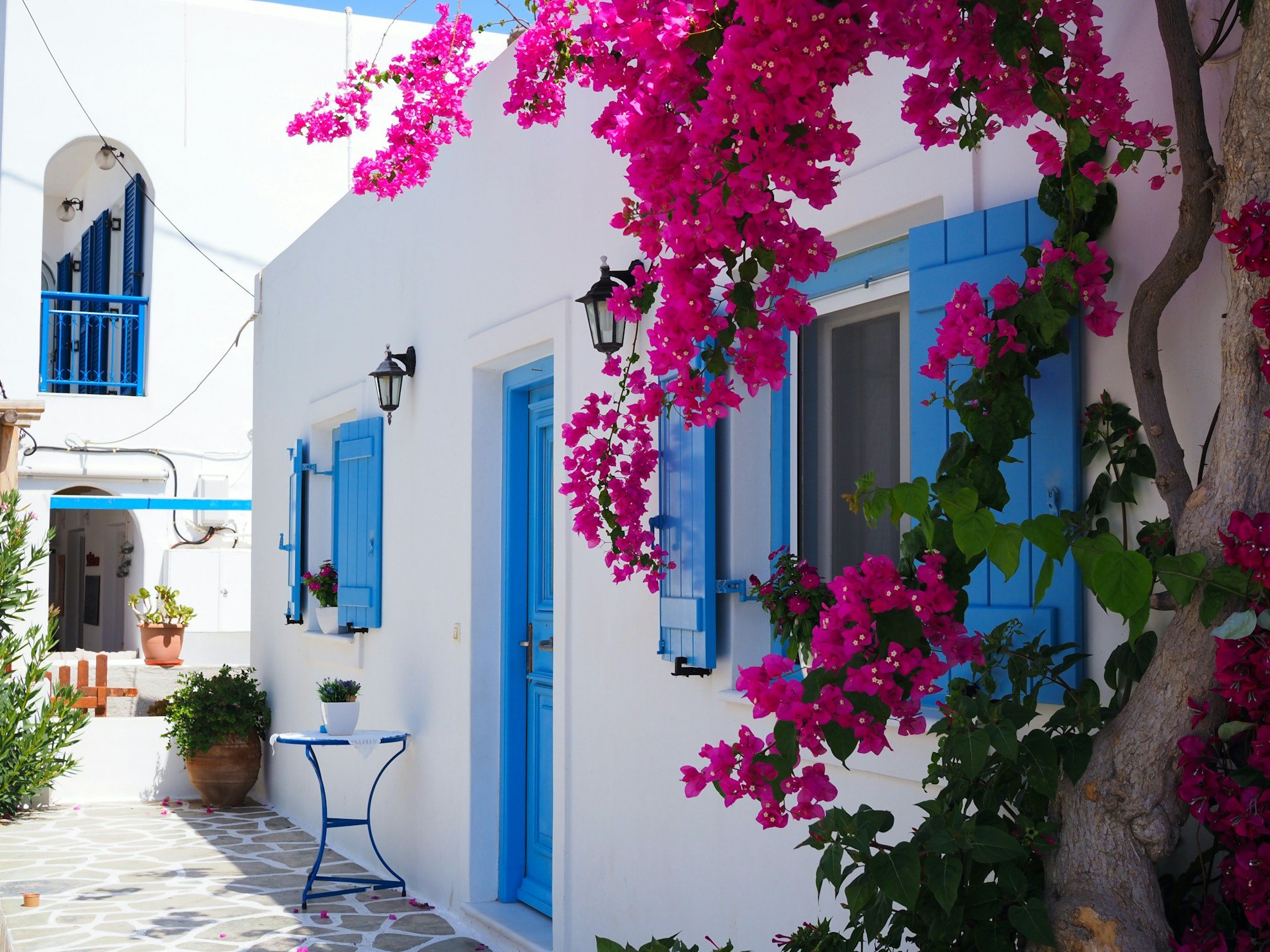
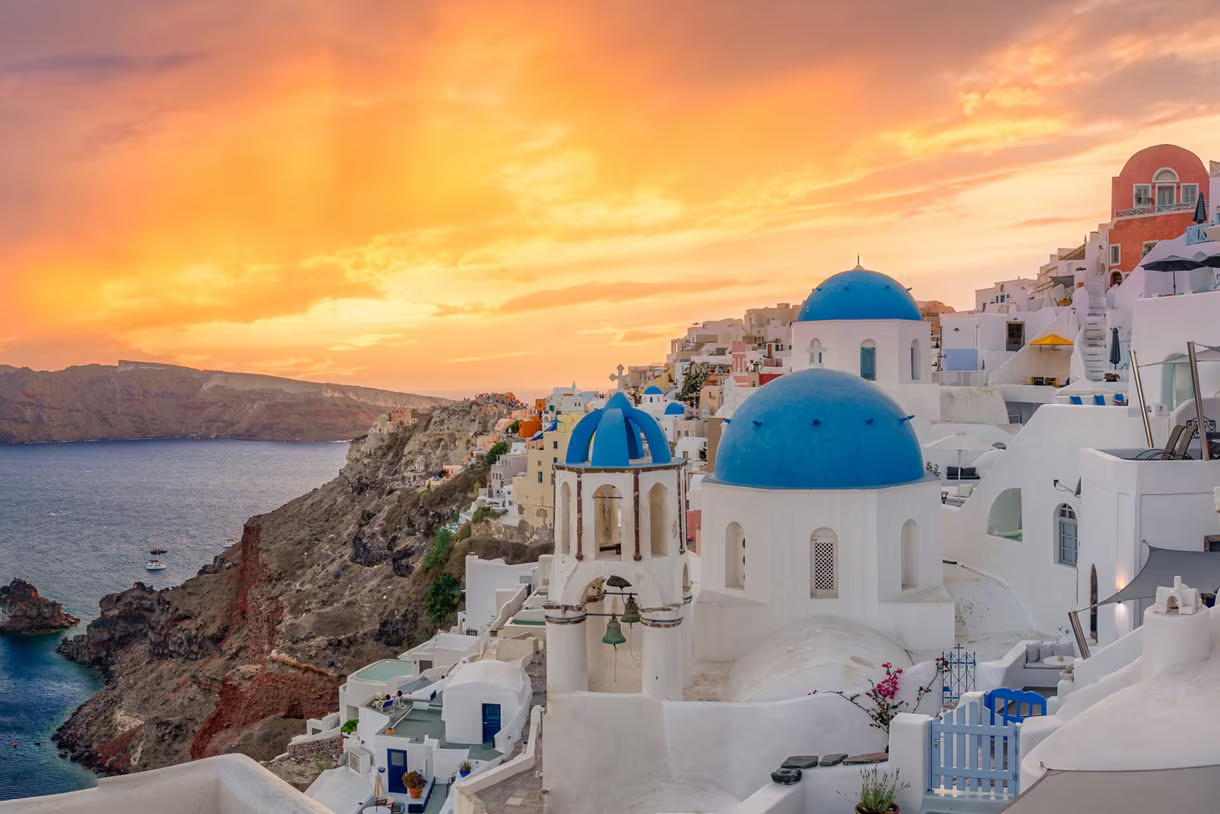
The Cyclades are the islands of the postcards: whitewashed cube houses, blue-domed churches, the Aegean in every direction. Santorini has the single most dramatic view in Greece, the caldera left by a Bronze Age volcanic eruption, best seen from Oia at sunset or, better, at sunrise before the cruise-ship crowds arrive. Mykonos pairs beach clubs and Little Venice's waterfront tavernas with the most expensive prices and liveliest nightlife in the group. Naxos is consistently rated the best all-round value: long sandy beaches, a real year-round population rather than a resort-only economy, and prices well below its more famous neighbors. Paros, especially the harbor town of Naoussa, splits the difference: postcard looks without Mykonos pricing. Ferries connect all four from Piraeus, Athens's port, with high-speed catamarans cutting travel time considerably over conventional ferries.
Crete, a country's worth of island
Crete is Greece's largest island and big enough to be a complete trip on its own without a single ferry transfer. Chania's old Venetian harbor, with its lighthouse and waterfront restaurants, is the most photogenic base in the west; Heraklion, the capital, is the gateway to Knossos, the restored Bronze Age Minoan palace that is Crete's must-see ancient site. The Samaria Gorge, one of Europe's longest, is a full-day hike through a national park down to the Libyan Sea. Crete's beaches range from the pink sand at Elafonissi to the lagoon at Balos, and the island's food culture, built on its own olive oil, wine and mountain herbs, is considered among the best in Greece by Greeks themselves.
Nafplio, Mycenae, Epidaurus & Delphi
The Peloponnese is the mainland peninsula most first-timers skip and most repeat visitors regret skipping. Nafplio, Greece's first capital after independence, is a genuinely elegant seaside town with a Venetian old quarter, a fraction of the crowds of the islands. Nearby, Mycenae's Lion Gate and Cyclopean walls mark the seat of Agamemnon's Bronze Age kingdom, and the ancient theatre at Epidaurus has such precise acoustics that a coin dropped at the center of the stage is audible from the top row, 60 meters up. Further west, Delphi, perched on the slopes of Mount Parnassus, was the ancient world's most important oracle and religious sanctuary; the Temple of Apollo and the site museum are worth a full morning. A rental car or an organized day tour from Athens covers Mycenae, Epidaurus and Nafplio together (2 to 2.5 hours from Athens); Delphi is a separate excursion.
Meteora & Thessaloniki
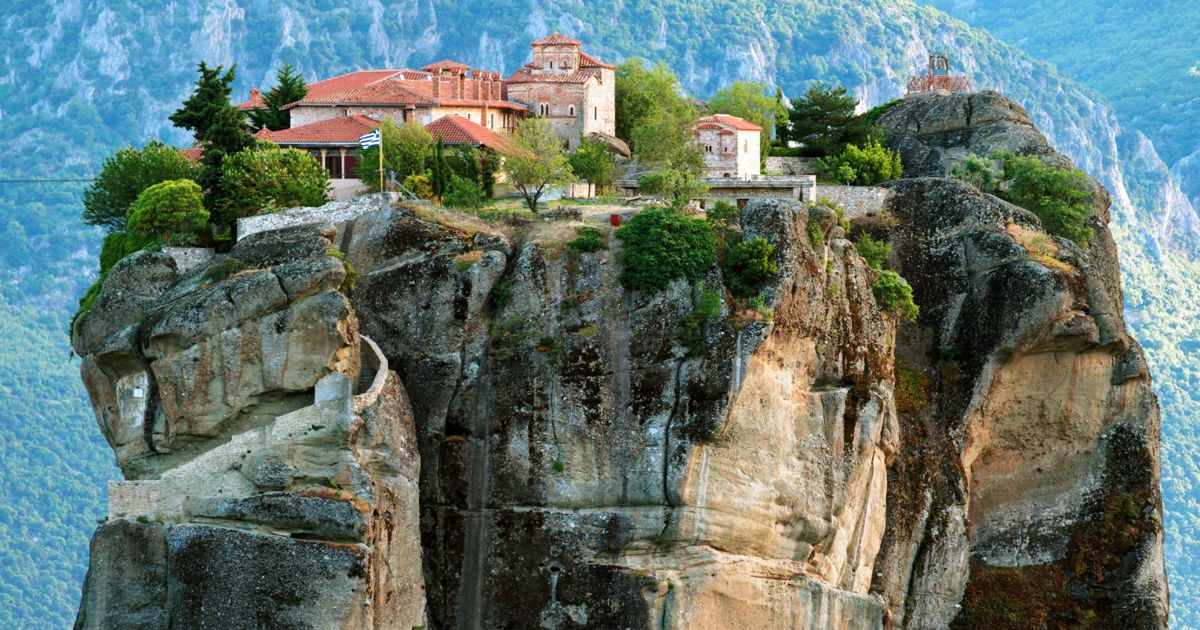
Meteora is one of the strangest and most beautiful sights in Greece: six active Greek Orthodox monasteries built directly onto the summits of sheer sandstone pillars, some reachable only by steps cut into the rock. It is roughly 350km and 3.5 to 5 hours from Athens each way (the direct rail line has been closed since 2023 storm damage and is not expected back before 2027), which makes it a long 13-14 hour round-trip day tour or, better, an overnight in the nearby town of Kalambaka to see the rock pillars at sunset and sunrise without the day-trip rush. Thessaloniki, Greece's second city, has its own distinct character: a genuine Byzantine and Ottoman layered history, a lively food and bar scene built around a large student population, and far fewer international tourists than Athens.
Hidden gems beyond the main circuit
The zones above cover a first or second trip well. With extra days, these are real, less-visited places that reward the detour without the Santorini-level crowds.
Milos
A volcanic island best known for Sarakiniko, a stretch of coast so eroded into white pumice that it looks lunar rather than Mediterranean. Far quieter than Santorini, one island over.
Monemvasia
A fortified medieval town on a rock islet connected to the mainland by a single causeway, sometimes called the Gibraltar of the East. Byzantine churches and stone lanes with almost no cars.
Zagorochoria & the Vikos Gorge
Stone-built villages scattered through the Pindus mountains around Vikos Gorge, one of the deepest gorges in the world relative to its width. Greece's best hiking, and almost no tourists.
Symi
A steep-sided harbor lined with pastel neoclassical mansions, a short ferry from Rhodes. One of the prettiest harbors in Greece and far less developed than Rhodes Town.
Pelion Peninsula
Forested mountain villages with slate-roofed mansions above the Aegean, mixing hiking trails with pebble beaches. A summer and ski destination Greeks visit and outsiders mostly skip.
Samothraki
A mountainous, forested island known for waterfalls and natural rock pools rather than beaches, and for the Sanctuary of the Great Gods where the Winged Victory statue was found.
Culture & Etiquette
Filoxenia, literally "friend to a stranger," is the Greek concept of hospitality toward guests, and it shows up constantly in small ways: an extra plate of fruit after a meal, a taverna owner who insists on refilling your glass. The Greek Orthodox Church remains genuinely central to daily and civic life, far more than most Western European countries' relationship to their historic churches, and Orthodox Easter is a bigger deal on the calendar than Christmas. Life runs on a different rhythm too: many shops and businesses close for a few hours in the early afternoon and reopen into the evening, especially outside Athens.
Do
- Learn a few Greek words. Efharisto (thank you), kalimera (good morning), yassas (hello/goodbye, formal). Even a mangled attempt is appreciated.
- Dress modestly at churches and monasteries. Shoulders and knees covered; Meteora's monasteries enforce this strictly and provide wrap skirts if needed.
- Accept hospitality. A free dessert, a shot of raki after dinner, an insistence on one more coffee: these are genuine gestures, not upsells.
- Respect the afternoon quiet hours, roughly 2 to 5pm in residential areas, when many Greeks nap or rest. Avoid loud noise near apartments during this window.
- Tip by rounding up or adding 5-10% at restaurants; service is not automatically included and tipping isn't obligatory but is appreciated.
Don't
- Rush a meal. Greek dining is built around lingering and shared plates; a fast, transactional approach to a taverna table reads as odd to locals.
- Assume every island runs on the same rhythm. Small islands can feel genuinely shut down outside June-September; some hotels and restaurants close entirely for winter.
- Photograph religious services or funerals without asking. Church interiors are usually fine to photograph respectfully outside of active services.
- Expect strict punctuality. Greek time runs looser than Northern European time, especially outside business contexts; build slack into plans involving locals.
- Wear beach clothes away from the beach. Bare torsos and swimwear in town centers or churches read as disrespectful, even in resort areas.
Deeper culture: name days, the evil eye, and Greek music
Name days. Many Greeks celebrate their name day (the feast day of the saint they're named after) as much as or more than their birthday, with open houses and visiting friends. If invited to one, bringing a small gift is customary.
The evil eye (mati). A folk belief that envy or excessive admiration can bring bad luck, warded off with blue-eye charms sold everywhere as jewelry and keychains. Genuinely part of everyday superstition rather than purely a tourist souvenir.
Rebetiko and bouzouki. Rebetiko, a genre with roots among the 1920s Asia Minor refugee communities, and the bouzouki, its signature stringed instrument, remain a living part of Greek nightlife, especially in dedicated live-music tavernas rather than tourist "Zorba" shows.
Siga siga. "Slowly, slowly": a genuine cultural value around not rushing, most visible on the islands, that occasionally frustrates visitors used to faster service and stricter schedules but is worth adjusting to rather than fighting.
Food & Drink
Greek food outside tourist-menu restaurants is built on olive oil, fresh vegetables, grilled meat and fish, and simple preparation that lets good ingredients do the work. The best meals are often the least photogenic: a plate of horiatiki salad and grilled fish at a family taverna, eaten slowly, with the bill arriving only when you ask for it.
Souvlaki & Gyros €3.50-5
Grilled skewered meat (souvlaki) or spit-roasted meat shaved into a pita (gyros) with tomato, onion, tzatziki and fries, wrapped and eaten standing up. Greece's essential street food; prices climb toward €7 in the most touristy squares.
Moussaka & Taverna Classics
Layered eggplant, spiced ground meat and béchamel, baked until set. Alongside it, expect stuffed vegetables (gemista), fried zucchini, and grilled fish sold by weight at seaside tavernas.
Ouzo, Tsipouro & Greek Wine
Ouzo, an anise-flavored spirit, and tsipouro, a stronger grape-pomace brandy, are both traditionally served with a spread of small meze plates rather than alone. Assyrtiko, the crisp white grape grown in Santorini's volcanic soil, is Greece's best-known wine export.
Horiatiki (Greek Salad)
Tomato, cucumber, onion, olives and a slab of feta under olive oil, no lettuce. The version you actually get in Greece, simpler and better than the export version most visitors know.
Seafood by the Kilo
Fresh fish at seaside tavernas is typically priced per kilo and weighed at the table before cooking; always confirm the per-kilo price and weight in front of you to avoid the "surprise bill" version of this dish.
Baklava & Loukoumades
Baklava (honeyed phyllo and nuts) and loukoumades (fried dough balls in honey syrup) are the two sweets worth prioritizing over the rest of the dessert menu.
When to Go & Itineraries
May, June, September and October are the best months: warm enough to swim, without July and August's heat, crowds and peak pricing. July and August are Greece at its most crowded and most expensive, especially on Santorini and Mykonos, though also when every ferry route and beach bar is running at full capacity. Winter is quiet and mild on the mainland but many island hotels, restaurants and even ferry routes shut down entirely from November to March.
All four seasons compared, with temperatures
| Season | Verdict | Temps | Prices & crowds |
|---|---|---|---|
| May-Jun & Sep-Oct | Best | 22-29°C | Mid prices, manageable crowds, everything open |
| Jul-Aug | Good (hot & crowded) | 30-38°C, heatwaves common | Peak prices, heaviest crowds on Santorini & Mykonos |
| Mar-Apr | Good | 15-21°C | Low prices; some island businesses still closed |
| Nov-Feb | Quiet | 8-15°C | Cheapest; most smaller islands largely shut down |
Athens averages around 18°C year-round; the islands run a few degrees warmer in summer and rarely drop below 8-10°C even in January.
Itineraries
Seven days covers Athens and one island comfortably. Two weeks adds the Peloponnese or a second island. Three weeks starts to do the mainland's ancient sites, Crete and multiple Cyclades islands justice without feeling rushed.
- Days 1-2
Athens. The Acropolis and Acropolis Museum, the Ancient Agora, Plaka, and an evening trip to Cape Sounion for sunset.
- Days 3-4
Ferry to Naxos or Paros. High-speed catamaran from Piraeus (3.5-5 hours); settle in, beach time, a sunset in the old town.
- Days 5-7
Santorini. Ferry or short flight from Naxos; Oia at sunrise before the crowds, the caldera villages, a wine tasting at an Assyrtiko vineyard, and the flight home from Santorini airport (JTR) or back via Athens.
- Days 1-3
Athens extended. Full Acropolis and Plaka days, the National Archaeological Museum, and a day trip to Mycenae, Epidaurus and Nafplio.
- Days 4-5
Delphi. Rental car or organized tour from Athens; the Temple of Apollo, the sanctuary and the archaeological museum, overnighting in Delphi or nearby Arachova.
- Days 6-9
Naxos or Paros. Ferry from Piraeus or a connection near Delphi; beach time, island villages, day trip to a smaller neighboring island.
- Days 10-14
Santorini & Mykonos. Island-hop between the two by ferry, splitting time between Santorini's caldera and Mykonos's beach clubs and Little Venice before flying home.
- Days 1-3
Athens. Full exploration plus a day trip to Cape Sounion.
- Days 4-7
Peloponnese loop. Nafplio, Mycenae, Epidaurus, and on to Delphi via the Corinth Canal, by rental car.
- Days 8-9
Meteora. Drive or organized transfer north; two nights in Kalambaka to see the monasteries at sunset and sunrise without rushing.
- Days 10-14
Crete. Fly or ferry to Chania; the Venetian harbor, Samaria Gorge, Knossos near Heraklion, and the west coast beaches.
- Days 15-21
Cyclades finale. Santorini, Naxos and Paros or Mykonos, island-hopping by ferry, ending on whichever island has the best flight connections home.
Getting there & around
Athens International Airport (ATH) is the main gateway, with direct flights from most European and many North American hubs; several islands (Santorini/JTR, Mykonos/JMK, Heraklion/HER, Chania/CHQ, Rhodes/RHO) also get direct seasonal flights from Europe in summer. Domestic connections run on Aegean Airlines, Olympic Air and the budget carrier SkyExpress. Ferries from Piraeus, Athens's port (about 40 minutes from Syntagma by metro), connect the mainland to virtually every inhabited island; high-speed catamarans cost more but cut hours off conventional ferry times.
Ferries, driving and island transport in detail
| Route | Price | Notes |
|---|---|---|
| Piraeus-Aegina | from ~€9.50 | 30 min, the cheapest and closest Saronic island. |
| Piraeus-Paros/Naxos/Mykonos | ~€33 | 4-5 hrs conventional, faster by high-speed catamaran. |
| Piraeus-Santorini | ~€40-70 | 5-8 hrs conventional, ~4.5 hrs high-speed. |
| Piraeus metro (Line 1/3) | €1.20 | ~40 min from Syntagma to the port. |
Driving: a rental car is genuinely useful on the mainland, in the Peloponnese, and on Crete, where distances are real and public transport is limited. On smaller Cycladic islands most visitors get by with buses, scooters or ATVs; parking in old town centers is often impossible anyway. Non-EU license holders may need an International Driving Permit alongside their home license; check requirements before arrival.
Practical prep: a Greek SIM or an eSIM before landing covers the mainland and larger islands well; coverage on remote hiking trails and smaller islands can be patchy. Book high-speed ferries and any Santorini or Mykonos accommodation months ahead for July and August, when both sell out.
Where to stay
Athens hotels
Plaka and Koukaki are the two best-located neighborhoods, walkable to the Acropolis with a genuine mix of boutique hotels and hostels. See our Athens guide for specific picks.
Santorini cave hotels
Caldera-facing cave-style suites carved into the cliffside in Oia and Imerovigli command the highest prices in Greece, especially for a sunset-facing terrace. Book 3-6 months ahead for summer.
Naxos & Paros family rooms
Family-run domatia (rooms) and small hotels near the beaches, considerably cheaper than equivalent Santorini or Mykonos properties for a similar sea-view standard.
Chania & Crete harbor stays
Converted Venetian and Ottoman-era townhouses around Chania's old harbor offer character accommodation at a fraction of Cycladic caldera pricing.
Budget Planning
Greece is mid-priced by Western European standards, and the biggest lever on your budget isn't which category of trip you plan but which islands you pick. Santorini and Mykonos run 40-60% above equivalent quality on Naxos, Paros, Crete or the mainland; the food, ferries and archaeological sites cost roughly the same wherever you are.
- Hostel dorm or budget domatio €18-40
- Souvlaki & taverna meals €10-20
- Conventional ferries, buses
- Free sites, one paid archaeological site
- 3-star hotel or Cyclades sea-view room
- Restaurant meals €35-50/day
- High-speed ferries, some domestic flights
- Paid museums & a guided day tour
- Santorini caldera suite or boutique hotel
- Fine dining & wine tastings
- Private drivers, domestic flights
- Guided tours at every major site
Quick reference prices: souvlaki, coffee, sites, ferries
| Souvlaki/gyros wrap | €3.50-5 |
| Coffee (freddo/frappé) | €2.50-4 |
| Taverna meal, mid-range | €12-20 |
| Acropolis entry (summer/winter) | €20 / €10 |
| 7-site Athens combo ticket | €30 |
| Meteora, per monastery | €5 |
| Athens metro single ride | €1.20 |
| Piraeus-Aegina ferry | ~€9.50 one way |
| Piraeus-Santorini high-speed ferry | €40-70 one way |
Prices reflect August 2026 research and drift over time, especially island accommodation in peak season and ferry fares. Treat them as a planning baseline, not a quote.
Visa & Entry
Greece has been a Schengen Area member since 2000: US, UK, Canadian, Australian and New Zealand citizens enter visa-free for up to 90 days in any rolling 180-day period, shared across all Schengen countries, not exclusive to Greece. From late 2026, visa-exempt visitors will also need ETIAS, a low-cost pre-travel authorization, and the Entry/Exit System (EES) now records biometric data at Schengen external borders. Rules do change; Greece's Ministry of Foreign Affairs is the authoritative source, not third-party paid "e-visa" sites.
✓ Valid passport
Issued within the past 10 years and valid at least 3 months beyond your planned departure from the Schengen Area.
✓ ETIAS from late 2026
A €20 pre-travel authorization for visa-exempt nationalities; not required as of August 2026, but expected to roll out in Q4 2026.
✓ Proof of onward travel & funds
May be requested at the border; keep a return or onward ticket and evidence of sufficient funds accessible.
✓ Schengen 90/180 tracking
Time in Greece counts against the same 90-day Schengen allowance as France, Italy, Germany and 23 other member states.
| Greece | Turkey | |
|---|---|---|
| Daily budget | €50-80 budget, more on Santorini/Mykonos | Roughly 30-60% cheaper across food and lodging |
| Islands & beaches | The world-famous Cyclades and the Ionian | The Turquoise Coast: fewer icons, far fewer crowds |
| Ancient sites | Classical Greek: the Acropolis, Delphi, Mycenae | Greco-Roman and Byzantine layered: Ephesus, Troy |
| Crowds | Santorini & Mykonos overwhelmed July-August | Comparable coastline, noticeably less crowded |
| Schengen | Yes, counts against your 90 days | No, doesn't touch the Schengen clock |
Safety, Solo Women & Family
Greece carries a Level 1 "Exercise Normal Precautions" rating from the US State Department, its lowest risk category, alongside countries like Switzerland and Japan. Violent crime against tourists is rare. The problems that actually affect trips are heat, road accidents, ferry delays and petty theft in crowded tourist spots, not crime in the way most visitors imagine it.
Heat & sun
Summer heatwaves above 40°C are increasingly common and send more tourists to Greek hospitals each year than crime does. Carry water, avoid midday sun on hikes and archaeological sites, and take heat warnings seriously.
Ferries & roads
Ferry cancellations from the meltemi wind and road accidents, especially on rented scooters and ATVs on the islands, are the two most common trip disruptions. Wear a helmet and check ferry status before relying on a tight connection.
Petty theft
Pickpocketing occurs around Athens's Monastiraki flea market, crowded metro lines and busy ferry terminals. Keep bags closed and in front of you in dense crowds.
Two more things worth knowing: demonstrations and wildfire risk
Demonstrations. Large protests, most often centered on Syntagma Square in Athens, occur with little notice and can disrupt metro service, transport and traffic for hours. They are directed at the Greek government, not tourists, but it's sensible to avoid the immediate area and check local news if one is underway.
Wildfires. Summer wildfire risk is elevated most years, particularly in Attica and on some islands during hot, dry, windy stretches. Follow local authority guidance immediately if a fire warning is issued near where you're staying.
The 3 scams to actually know about
Greece is not a high-scam destination for a Mediterranean tourism hub, but a handful of patterns catch uninformed visitors every summer. Knowing them going in avoids nearly all of it. The full country list lives on our Greece travel alerts page.
Taxi overcharging
Unofficial or unmetered taxis, especially from Athens airport, quote inflated flat fares well above the official rate. Insist on the meter or a pre-agreed fixed rate, and use ride apps like Beat where available.
The bread-and-water charge
Charging for bread or water you didn't order has been illegal in Greece since 2013. You can refuse to pay any unrequested charge on the bill; check it line by line at tourist-facing tavernas.
The friendly-stranger bar scam
A friendly local suggests "one great bar nearby," where drinks arrive unordered and the bill runs into hundreds of euros. Never follow a stranger to an unfamiliar venue, in Athens or on the islands.
Solo women travelers
Greece rates well for solo women (8.7/10 on our scale), with low rates of violent crime against tourists and a culture where hosts and taverna owners tend to look out for solo guests rather than ignore them. The main nuisance is occasional catcalling in resort nightlife strips, more a low-level irritation than a safety concern. Practically: use licensed taxis or ride apps late at night, keep a charged phone on island hikes and gorge trails like Samaria, and the same common sense that applies to any Mediterranean tourist destination applies here. Full detail on our Solo Woman Explorer pages.
Emergency numbers
More: coast guard and island medical planning
112 is the EU-standard number, free from any phone including without a SIM card, and operators answer in Greek, English and French. The Hellenic Coast Guard, reachable on 108, handles maritime emergencies, relevant if you're on a boat trip or ferry. Smaller islands often have only a small health center rather than a full hospital; for anything serious, medical evacuation to Athens is standard practice, so travel insurance that explicitly covers this is worth checking before an island-heavy trip.
Family travel & pets
Greece is an easy family destination (8.4/10): shallow, calm beaches on islands like Naxos and Crete suit young kids, ancient sites like the Acropolis and Knossos work as history lessons that don't feel like lectures, and Greek culture is broadly warm toward children in restaurants and public spaces. The main planning wrinkle is island-hopping: ferries can be uncomfortable for toddlers prone to seasickness, and connections don't always run daily outside peak season, so build slack into any multi-island family itinerary.
Kids at archaeological sites, and bringing pets
Archaeological sites with children: the Acropolis's uneven, slippery marble paths are manageable for most kids over 6 with sturdy shoes; a stroller is impractical on site. Knossos on Crete, with its reconstructed frescoes and columns, tends to land better with younger children than the more abstract ruins at Delphi or Mycenae.
Pets: EU pet passport holders can enter with dogs, cats and ferrets given valid rabies vaccination and microchip. Non-EU visitors need an EU health certificate issued by an accredited vet within the required pre-travel window. Greece is broadly dog-friendly outdoors, less consistently so inside restaurants; ferries generally allow pets in carriers or on a leash in designated areas.
Greece FAQ
Is Greece safe to visit?
Yes. Greece carries a Level 1 Exercise Normal Precautions rating from the US State Department, the lowest risk category. The real risks are heat, road accidents, ferry delays and petty theft in crowded tourist spots, not violent crime.
Do I need a visa for Greece?
Citizens of the US, UK, Canada, Australia and New Zealand can enter visa-free for up to 90 days in any 180-day period. Greece is in the Schengen Area, so this 90-day allowance is shared with all other Schengen countries, not exclusive to Greece.
How much does a trip to Greece cost?
Budget travelers manage on €50-80 a day using hostels, ferries and taverna meals. Mid-range runs €100-150 a day. Santorini and Mykonos cost 40-60% more than equivalent quality on Naxos, Paros, Crete or the mainland.
When is the best time to visit Greece?
May, June, September and October: warm weather, manageable crowds and lower prices than peak summer. July and August are hot, crowded and the most expensive, especially on Santorini and Mykonos.
How many days do you need in Greece?
Seven days covers Athens plus one island well. Two weeks adds the Peloponnese or a second island. Three weeks allows Crete, the Cyclades and the mainland's ancient sites without rushing.
Which Greek island should I visit first?
Santorini for the classic caldera views, Naxos for the best overall value and fewer crowds, or Crete if you want one island that covers beaches, mountains, food and history without ferry hopping.
Is Athens worth visiting or should I go straight to the islands?
Athens is worth two to three days: the Acropolis, the Acropolis Museum and the old Plaka district are genuinely rewarding, not just a layover before the ferry. Most first-time itineraries combine a few days in Athens with island time.
Do I need a car in Greece?
On the mainland, Crete and larger islands, a rental car opens up villages and beaches that buses miss. On smaller Cycladic islands, buses, ATVs or scooters usually cover everything and parking in old towns is difficult anyway.
Is Greece part of the EU and Schengen?
Yes to both. Greece joined the EU in 1981 and has been in the Schengen Area since 2000, so standard Schengen entry and 90-day rules apply.
What language is spoken in Greece?
Greek. English is widely spoken in Athens, on the islands and anywhere tourism is significant; it's less common in small mainland villages, though still manageable with patience and a translation app.
Is Greece safe for solo female travelers?
Yes, Greece rates consistently well for solo women, with low rates of violent crime against tourists. Occasional catcalling in resort nightlife areas is the main nuisance rather than any real threat.
Is Greece good for families with kids?
Yes. Shallow beaches on islands like Naxos and Crete, kid-friendly ancient sites, and a culture that welcomes children everywhere make Greece an easy family destination, though island-hopping with very young children adds ferry logistics to plan around.
What Stays With You
Every traveler who visits Greece has a moment where the postcard and the reality line up exactly, and it still surprises them. The caldera at sunset really does look like that. The water really is that clear. What the postcards miss is everything around those moments: the taverna owner who wouldn't let you leave without a free plate of watermelon, the Acropolis lit up at night from a rooftop bar three streets back from the tourist menus, the gorge or monastery or island nobody told you about that turned out to be the best day of the trip.
Go for the islands everyone told you about. Stay long enough to find the ones nobody did.