

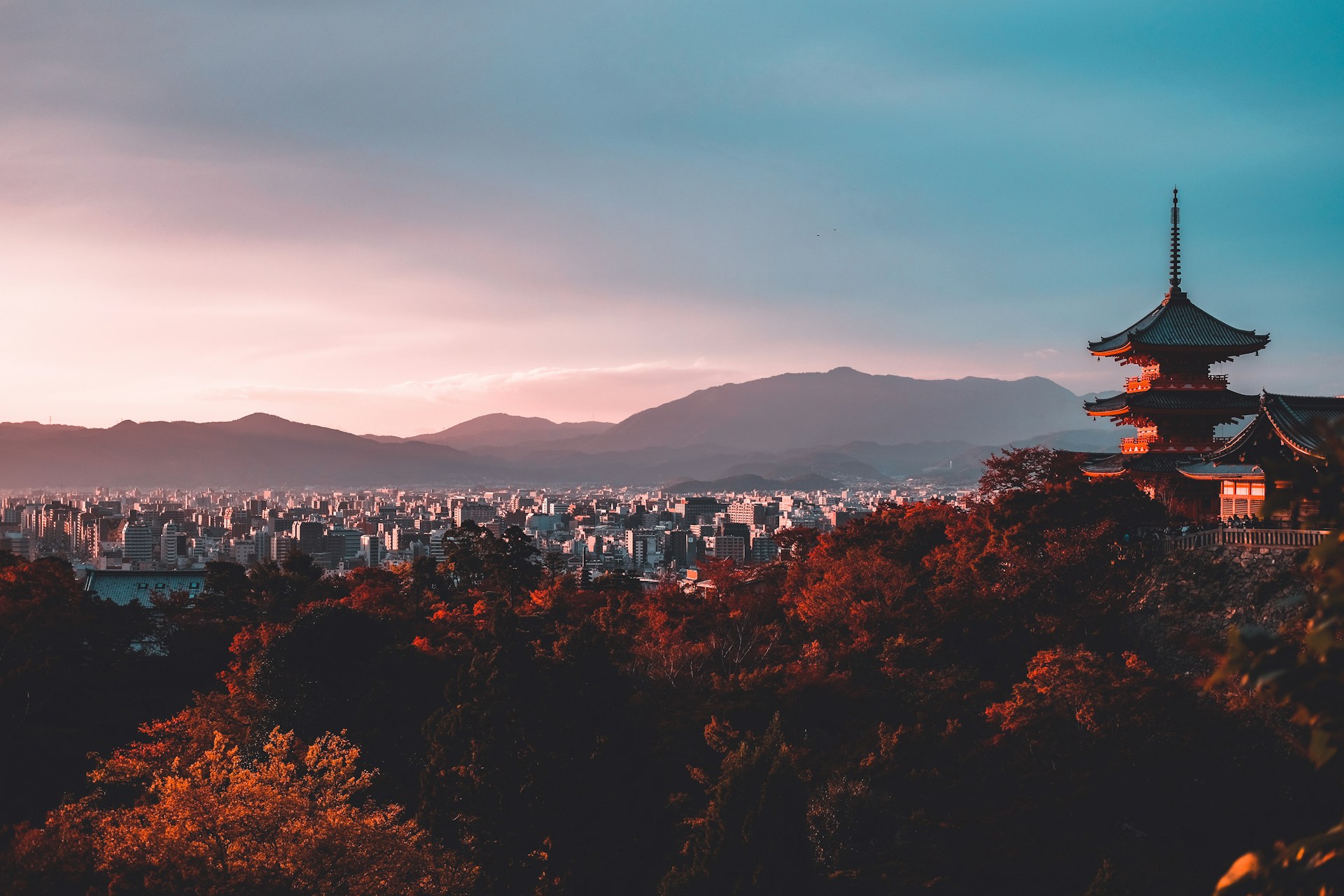
Tokyo vs Kyoto at a glance
Eight rounds, scored honestly. Kyoto takes sights and day trips; Tokyo takes nightlife, cost and transport; the rest are close. Select a category to jump to the full comparison.
| Category | TokyoKyoto |
|---|---|
| The eight rounds | |
| SightsOver two thousand temples against Senso-ji and neon | Kyoto wins, clearly |
| Food & drinkRamen and yakitori against kaiseki and yudofu | Different strengths |
| NightlifeGolden Gai and izakaya against lantern-lit Pontocho | Tokyo wins, clearly |
| CostCheaper business hotels and food, dearer hostel beds | Tokyo wins, narrowly |
| Getting aroundA 13-line subway against crowded Kyoto buses | Tokyo wins, narrowly |
| WeatherSame spring and autumn sweet spots | Tie |
| SafetyBoth among the safest cities anywhere | Both very safe |
| Day tripsFour trips of 20 to 60 minutes against one to two hours | Kyoto wins, narrowly |
| Best for | |
| Nightlife and izakaya eveningsGolden Gai, Shinjuku and Yurakucho yakitori. | Tokyo |
| Temples, gardens and traditional JapanOver two thousand temples and shrines and seventeen UNESCO sites. | Kyoto |
| Food variety at every budgetFrom a ¥120 onigiri to a sushi omakase. | Tokyo |
| OverallKyoto for classic sights, Tokyo for nights and value | It depends |
What you're really choosing between
Tokyo and Kyoto are in the same country and a bullet train apart, but one is a hyper-modern capital and the other a city of temples and tradition.
A 14-million-person capital that drops you in at the deep end
Tokyo is 23 wards, roughly 60 neighbourhoods and around 200,000 restaurants, and it is both the quietest and the loudest city you have visited depending on where you stand. The subway runs to the second and violence against tourists barely registers, but cash is still common in smaller places and hubs like Shinjuku station are labyrinths.
A thousand years of capital, still legible on the ground
Kyoto was Japan's imperial capital from 794 until 1868 and has over two thousand temples and shrines, seventeen UNESCO World Heritage sites and streets of wooden machiya townhouses, in a real city of 1.4 million. Its tourism boom has meant a rising accommodation tax, a Gion photography ban and crowded buses, so it rewards a plan.
Key facts side by side
| Fact | 🗼 Tokyo | ⛩️ Kyoto |
|---|---|---|
| Country | Japan | Japan |
| Currency | Yen (¥) | Yen (¥) |
| Main airports | Narita (NRT) and Haneda (HND) | Kansai International (KIX), via Osaka |
| Population | About 14 million | About 1.4 million |
| Atlas safety score | 9.5 / 10 | 9.3 / 10 |
| Best months | Spring and autumn, not August | Late Apr–Jun and late Sep–Oct for fewer crowds |
| Tap water | Safe to drink | Safe to drink |
| Emergency | 110 police, 119 ambulance and fire | 110 police, 119 ambulance and fire |
Facts as listed in the Atlas city guides to Tokyo and Kyoto.
Round 1 of 8
Landmarks and sights
Kyoto wins, clearly
Kyoto packs a thousand years of imperial capital into temples and gardens; Tokyo offers shrines, crossings and neon. For classic sights, Kyoto wins.
 🗼 Tokyo
Senso-ji, Meiji Shrine and a skyline that never stops
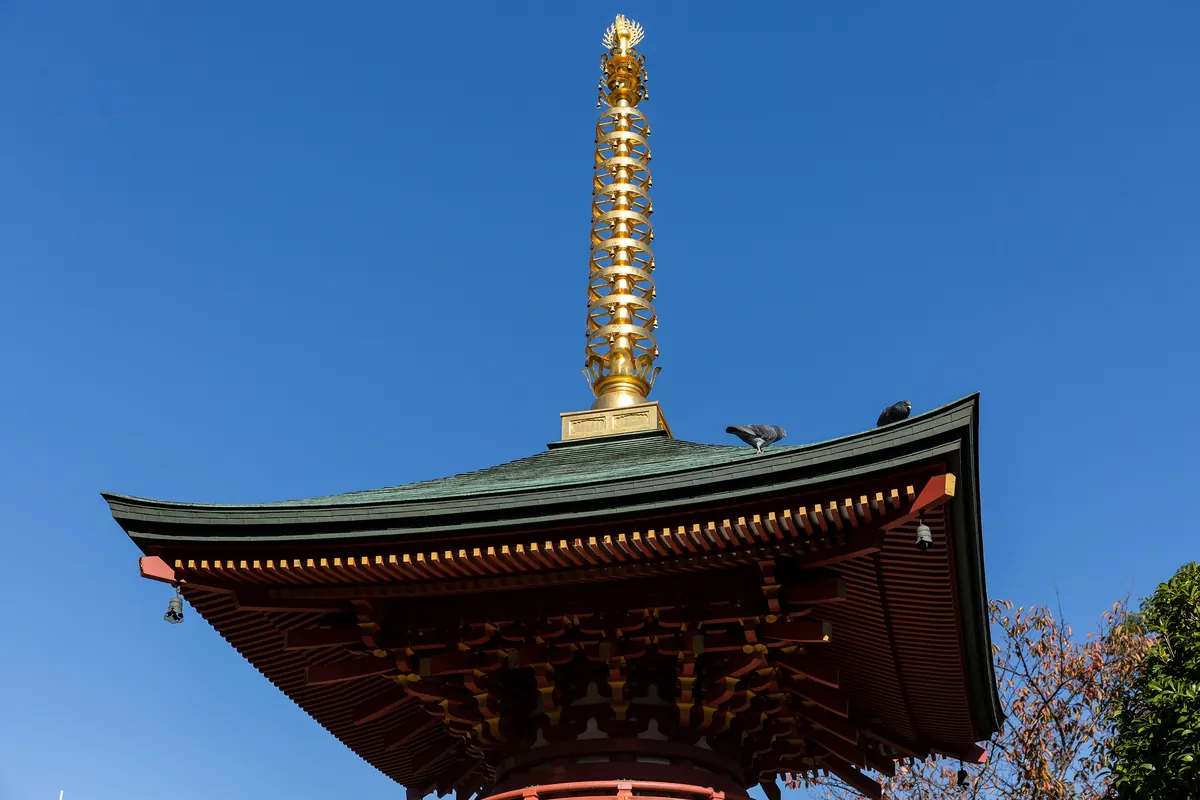
Senso-ji in Asakusa is Tokyo's oldest temple and costs nothing to enter; go at 6am before the tour groups. Meiji Shrine, in a forested approach beside Harajuku, is free too, and Shibuya Crossing, the world's busiest pedestrian crossing, peaks around 7-9pm on weekdays. TeamLab Planets in Toyosu is ¥3,200 and sells out weeks ahead.
- Don't miss
- Senso-ji, Meiji Shrine, Shibuya Crossing
 ⛩️ Kyoto
Over two thousand temples and shrines, seventeen UNESCO sites
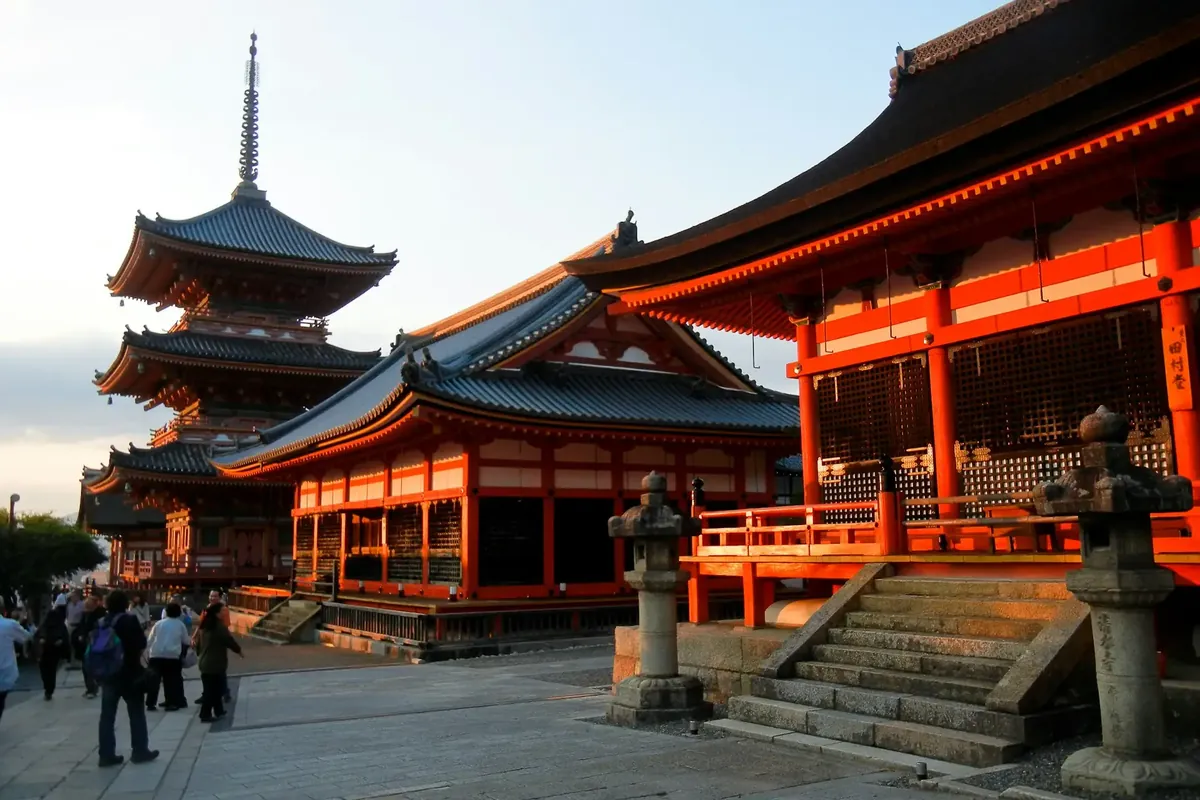
Kyoto was Japan's imperial capital from 794 until 1868 and carries it everywhere. Fushimi Inari and the Arashiyama bamboo grove are free and open around the clock, Kiyomizu-dera and Kinkaku-ji cost ¥500, and Nijo Castle with its nightingale floors is ¥800-1,300. The lower Fushimi Inari gates and the bamboo grove are overwhelmed from about 9am, so go at dawn.
- Don't miss
- Fushimi Inari, Kiyomizu-dera, Arashiyama
Round 2 of 8
Food and drink
Different strengths
Tokyo's range from a ¥120 onigiri to a sushi omakase, against Kyoto's kaiseki, yudofu and matcha. Two different food cultures, both excellent.
 🗼 Tokyo
Ramen, yakitori and everything in between
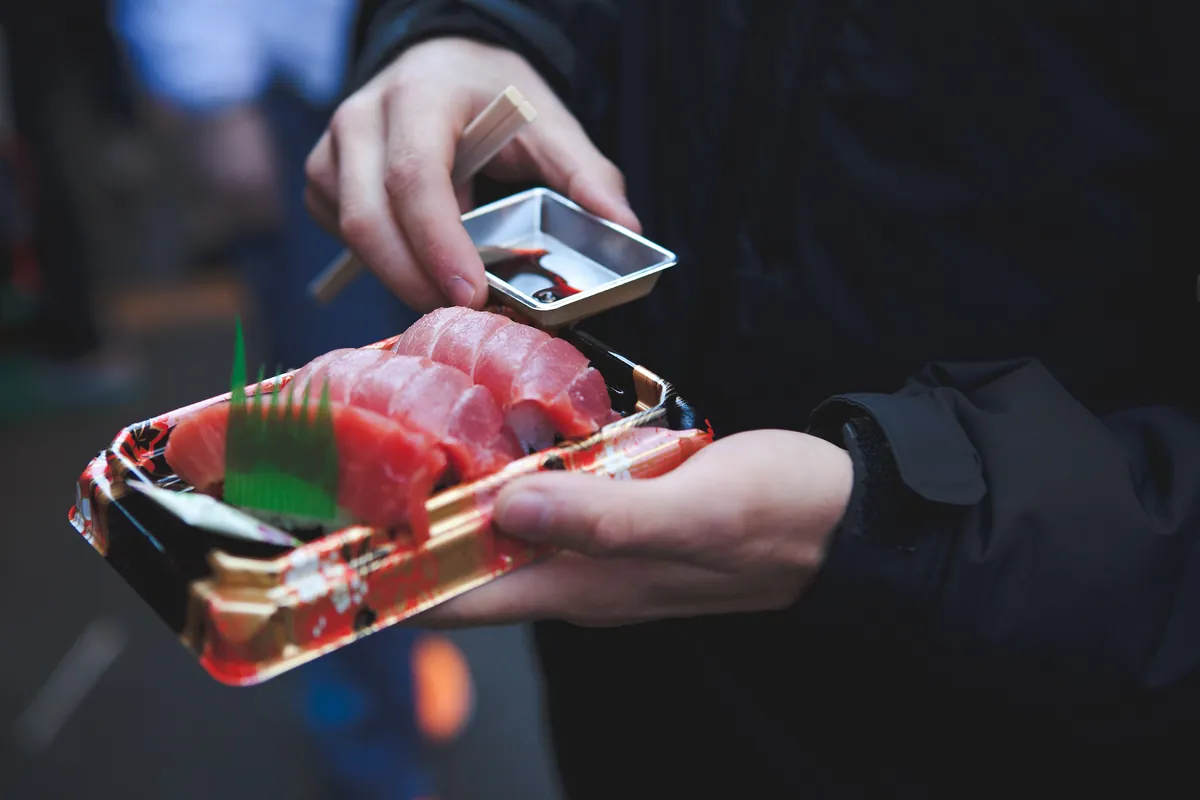
Tokyo eats well at every price: ramen at ¥700-1,200, yakitori at ¥120-280 a skewer under the Yurakucho tracks, conveyor-belt sushi at a tenth of counter prices, and convenience-store onigiri at ¥120. The Tsukiji outer market still sells fresh sashimi and tamagoyaki from 5am; bring cash.
- Must try
- Ramen, yakitori, Tsukiji sashimi
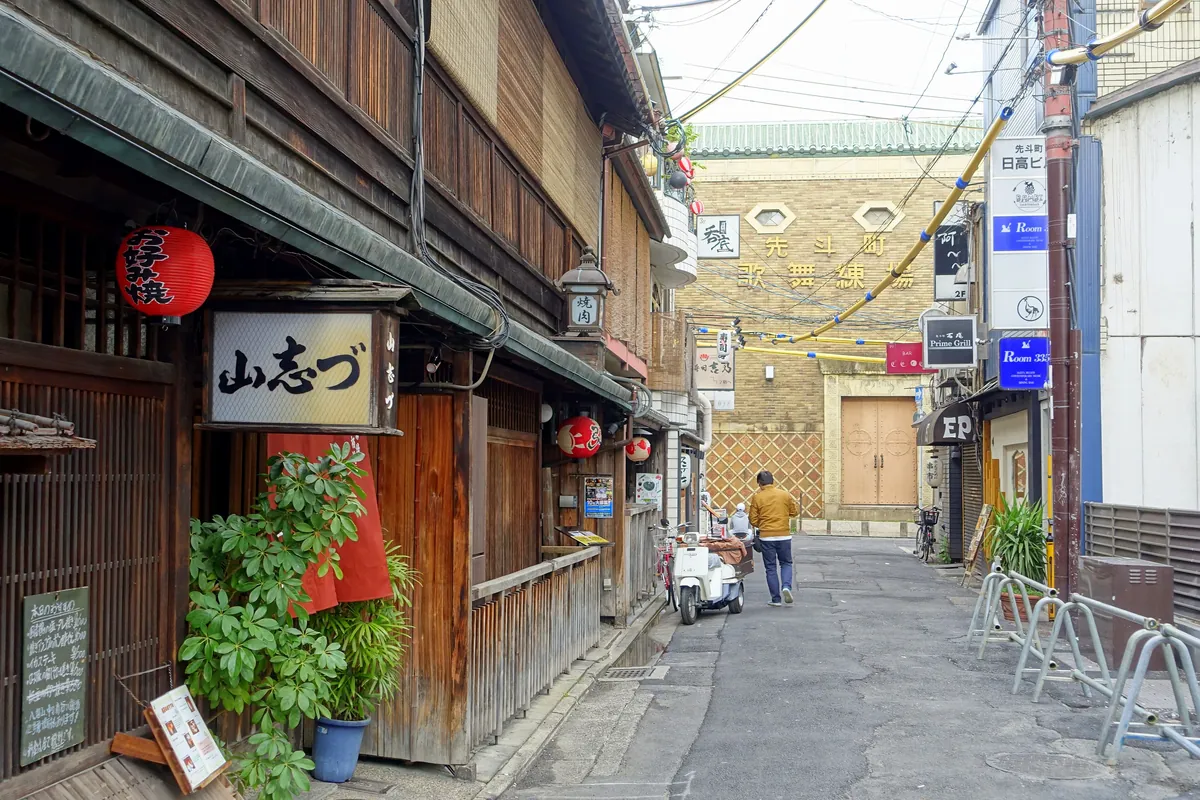 ⛩️ Kyoto
Kaiseki, yudofu and matcha, refined over centuries
Kyoto cooking grew up around an imperial court and Zen temples: yudofu simmered tofu at ¥2,500-6,000, kaiseki at ¥15,000-40,000+, and snacks at 400-year-old Nishiki Market at ¥300-800 an item. Lunch sets around Higashiyama and Arashiyama are usually better value than dinner.
- Must try
- Yudofu, kaiseki, Nishiki Market
Round 3 of 8
Nightlife
Tokyo wins, clearly
Tokyo's bar alleys, izakaya and neon against Kyoto's lanterns and teahouses at dusk. For a big night out, Tokyo wins.
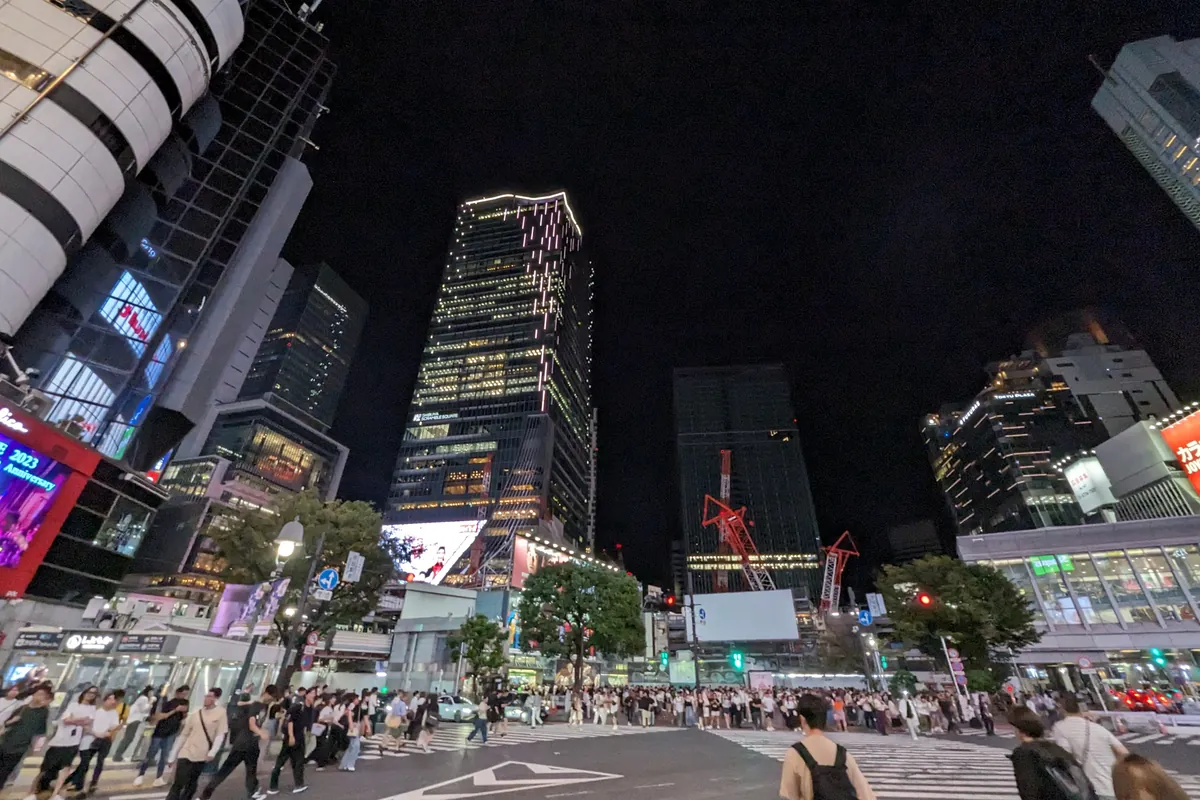 🗼 Tokyo
Golden Gai, izakaya and the last train
Shinjuku on a Friday night feels like five cities stacked on top of each other, with Golden Gai's tiny bar alley at its heart. An izakaya evening of shared dishes and highballs runs about ¥2,000-4,000 in total. Some Roppongi bars have overcharged tourists, so agree prices before ordering.
- Go-to spots
- Golden Gai, Yurakucho, Shibuya
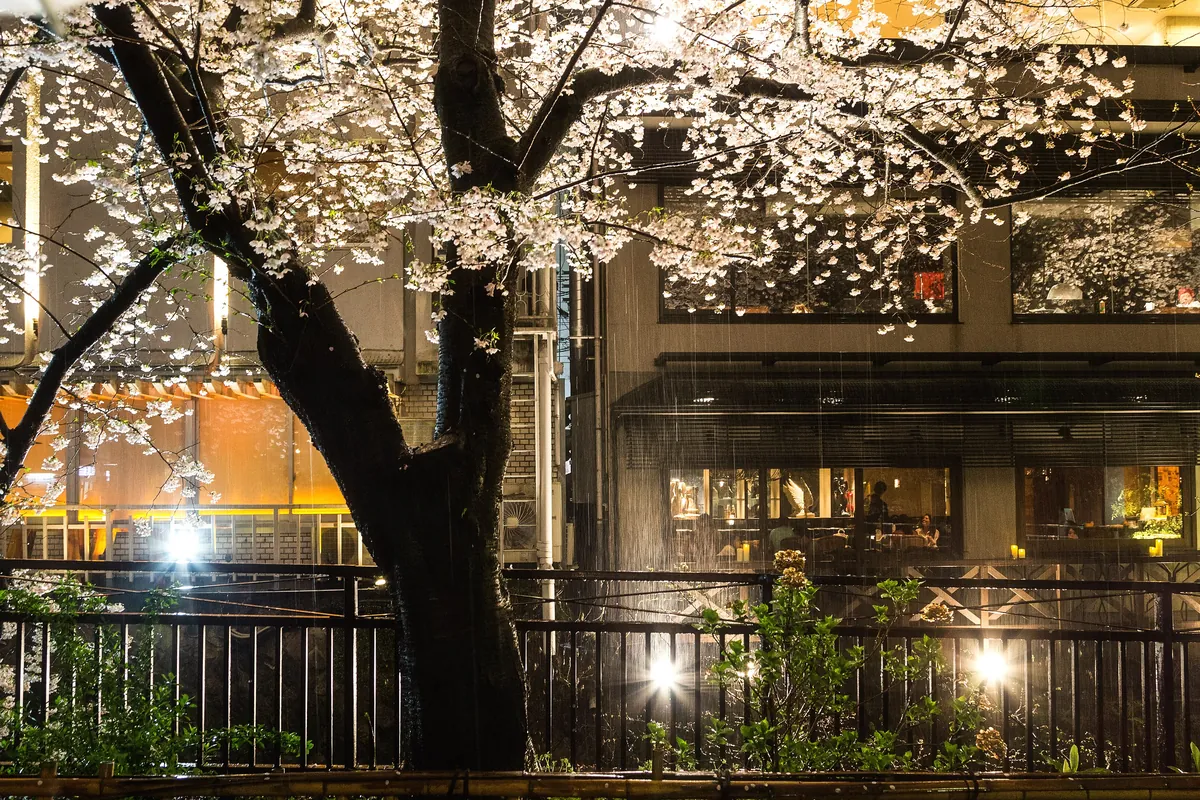 ⛩️ Kyoto
Lantern-lit dinners and dusk in Gion
Kyoto's evening is about atmosphere more than volume: dinner in a Pontocho alley, then dusk along Hanami-koji when the teahouses light their lanterns. Photographing anyone on Gion's marked private side streets has carried a ¥10,000 fine since April 2024.
- Go-to spots
- Pontocho, Hanami-koji, Gion
Round 4 of 8
Which is cheaper, Tokyo or Kyoto?
Tokyo wins, narrowly
Tokyo is slightly cheaper at mid-range, Kyoto is cheaper only for hostel beds, and Kyoto's accommodation tax adds to the gap.
| Typical cost | 🗼 Tokyo | ⛩️ Kyoto |
|---|---|---|
| Hostel dorm or capsule bed | ¥3,000–6,000 | ¥2,000–4,000 |
| Business or boutique hotel, per night | ¥10,000–18,000 | ¥15,000–30,000 |
| Luxury hotel, from per night | ¥55,000 | ¥100,000 |
| Food, budget day | ¥1,500–2,500 | ¥2,000–3,500 |
| Food, mid-range day | ¥3,500–6,000 | ¥5,000–9,000 |
| Local transport, per day | ¥600–1,200 | ¥1,100 (bus and subway day pass) |
Typical 2026 prices in yen as listed in the Atlas guides to Tokyo and Kyoto. The guides state budgets in different currencies (Tokyo in US dollars, Kyoto in yen), so only the yen rows are compared. Kyoto's accommodation tax rises in March 2026 from ¥200 a night at budget properties to ¥10,000 at stays of ¥100,000 or more.
Bottom line: Tokyo's mid-range business hotels are the best value in the comparison, while Kyoto's hostels are the cheapest beds. The main cost trap in both is the top end: Tokyo's Michelin counters and Kyoto's ryokan and kaiseki dinners.
Round 5 of 8
Getting around
Tokyo wins, narrowly
Tokyo's transit is the most efficient you will use but huge; Kyoto is flatter but leans on crowded buses. Tokyo edges it.
The most efficient public transport you will ever use
Get a Suica or Pasmo IC card on arrival. The Tokyo Metro and Toei subway run 13 lines at ¥170-320 a trip, and the JR Yamanote loop at ¥150-200 links Shinjuku, Shibuya, Akihabara and Tokyo Station. From Haneda the monorail or Keikyu Line takes 30-40 minutes for ¥500-650; the Narita Express to Shinjuku takes about 90 minutes for ¥3,070-4,070. Shinjuku Station has 200 exits, so screenshot yours.
- Good to know
- Suica or Pasmo card, Haneda is easier than Narita
Flat downtown, hilly temples and no all-day bus pass
The Haruka limited express links Kansai International to Kyoto Station in about 75 minutes (around ¥3,600). The one-day bus pass was discontinued in March 2024; the replacement combined bus and subway day pass is ¥1,100, and eastern-temple buses run standing-room-only in peak season. Taxis start at roughly ¥600-700. Higashiyama's lanes involve real stone steps and slopes.
- Good to know
- Bus and subway day pass ¥1,100, use the subway
Round 6 of 8
When to go: Tokyo and Kyoto
Tie
Both peak in spring and autumn, and both are crowded then. Pick the season, not the city.
Spring and autumn, and not August
Cherry blossom in late March to early April and autumn foliage in November are why the city is so popular then; book accommodation three to six months ahead or pay double. July and August are hot and humid enough to be exhausting.
- Best months
- Late March to April, November
Hotter and more humid than Tokyo in summer, colder in winter
Kyoto's inland basin makes summer heavier and winter colder than Tokyo. Late March to early April and November are the most crowded, highest-priced weeks; late April to June and late September to October have comparable weather and far fewer crowds. Gion Matsuri runs through July, with float processions on 17 and 24 July.
- Best months
- Late April to June, late September to October
Round 7 of 8
Which is safer for tourists, Tokyo or Kyoto?
Both very safe
Both are among the safest cities in the world, at 9.5 for Tokyo and 9.3 for Kyoto on the Atlas scale. The risks are small and specific.
Pickpockets, Roppongi bars and earthquakes
Violent crime against tourists is statistically negligible. Pickpocketing has risen in crowded spots like Asakusa and Harajuku, so keep your bag in front on the subway. Groping (chikan) on crowded trains does occur; women-only carriages run in rush hour. Japan is seismically active, so know your hotel's emergency procedure. Police 110, ambulance and fire 119.
- Watch for
- Crowded trains, Roppongi bar bills
Pickpockets, heat and the Gion photo rule
Violent crime against tourists is a non-issue and lost items routinely turn up at the nearest koban. Pickpocketing is concentrated in Nishiki Market and the lower Fushimi Inari approach, heatstroke is a real risk in July and August (especially on the uphill walk to Kiyomizu-dera), and the Gion photography rule carries a ¥10,000 fine. Police 110, fire and ambulance 119.
- Watch for
- Nishiki Market, July heat, Gion photo rule
Round 8 of 8
Day trips
Kyoto wins, narrowly
Kyoto's trips are 20 to 60 minutes away and cheap; Tokyo's are one to two hours. Kyoto has the shorter hops.
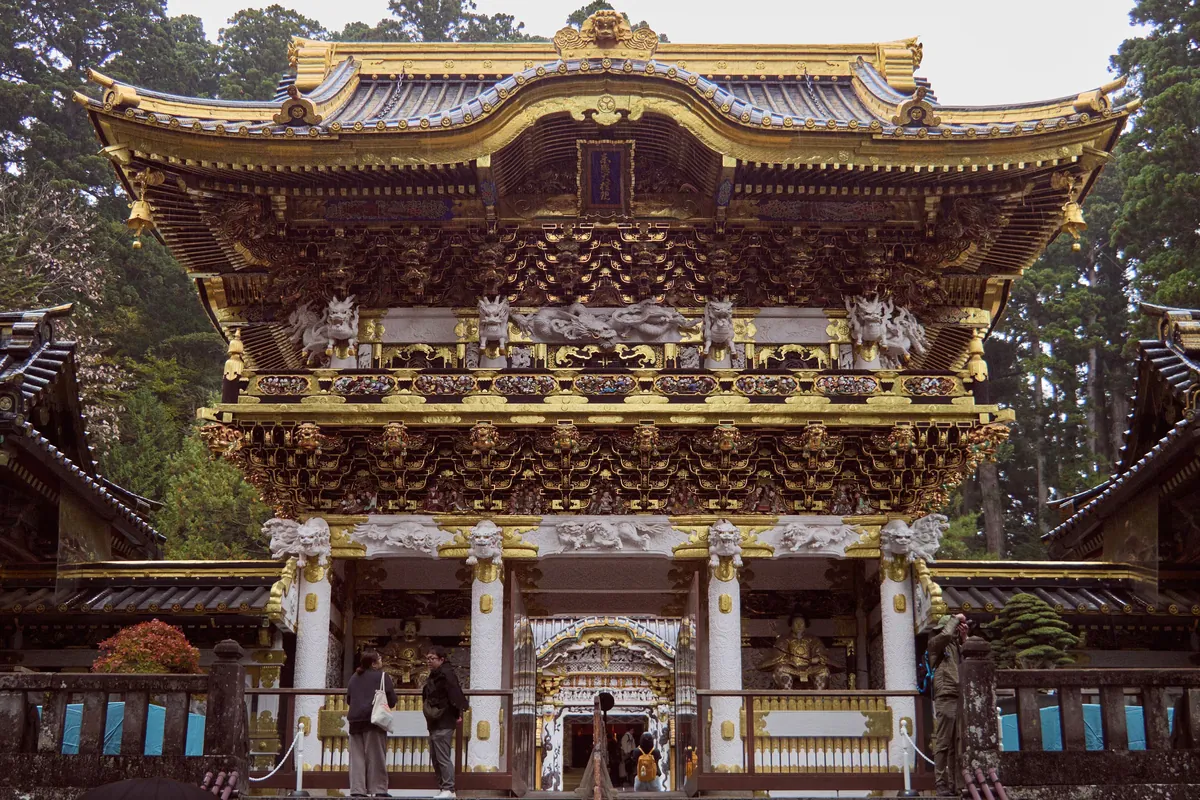 🗼 Tokyo
Nikko, Kamakura and Hakone
Kamakura is about an hour from Shinjuku (¥940 return) with a 13-metre bronze Buddha and temple trails. Hakone is about 1.5 hours (¥2,470 return) for Mount Fuji views on clear days, and Nikko is about 2 hours from Asakusa (¥2,720 return) with the elaborate Edo-era Tosho-gu shrines.
- Go-to trips
- Kamakura, Hakone, Nikko
 ⛩️ Kyoto
Nara, Osaka, Uji and Himeji
Uji, the matcha town with Byodo-in, is 20 minutes by JR (about ¥240 one way). Osaka is 30 minutes (about ¥580), Nara with its free-roaming deer and the Todai-ji Buddha is 45 minutes (about ¥720), and Himeji Castle is an hour by Shinkansen (about ¥5,000 one way).
- Go-to trips
- Nara, Osaka, Uji, Himeji
Which is better for specific trips?
Kyoto for temples, kaiseki and a short classic-Japan trip. Tokyo for nights out, food range and a big modern city.
Nightlife and izakaya evenings
Tokyo
Golden Gai, Shinjuku and Yurakucho yakitori.
Temples, gardens and traditional Japan
Kyoto
Over two thousand temples and shrines and seventeen UNESCO sites.
Food variety at every budget
Tokyo
From a ¥120 onigiri to a sushi omakase.
Kaiseki, yudofu and matcha
Kyoto
The home of kaiseki, with Uji matcha 20 minutes away.
Short trip focused on classic Japan
Kyoto
Smaller, slower and walkable, the easier single choice.
A big, modern city
Tokyo
23 wards, a 13-line subway and constant change.
Easy day trips
Kyoto
Uji, Osaka and Nara are 20 to 45 minutes away.
Hostel travellers
Kyoto
Dorm beds from about ¥2,000.
Can you combine Tokyo and Kyoto in one trip?
Yes, and most travellers do. Three days in each works well, with a Shinkansen ride of about 2 hours 15 minutes (around ¥14,000 one way) between them.
Tokyo: days 1 to 3
- Day 1
Senso-ji at dawn and Tsukiji. Senso-ji around 6am before the tour groups, then sashimi and tamagoyaki at the Tsukiji outer market (bring cash).
- Day 2
Meiji Shrine, Harajuku and Shibuya. Walk the forested approach to Meiji Shrine, cut through Yoyogi Park to Takeshita Street, then watch Shibuya Crossing at night from above before walking through it.
- Day 3
Kamakura or TeamLab Planets. About an hour to Kamakura for the bronze Buddha, or book TeamLab Planets in Toyosu weeks ahead; finish with izakaya in Shinjuku.
Kyoto: days 4 to 6
- Day 4
Fushimi Inari at dawn, then Higashiyama. Up to the Yotsutsuji viewpoint and back in about 90 minutes, then Kiyomizu-dera at opening, down through Sannen-zaka and Ninen-zaka, and Gion and Pontocho at dusk.
- Day 5
Arashiyama, Kinkaku-ji and Nijo Castle. The bamboo grove before 8am, Tenryu-ji's garden, then the Golden Pavilion and the nightingale floors, with a yudofu dinner.
- Day 6
Nara or Uji. Nara's deer park and Todai-ji about 45 minutes by JR, or matcha and Byodo-in in Uji, about 20 minutes away.
When to go: Spring and autumn suit both cities; late April to June and late September to October are quieter in Kyoto than the cherry blossom and November peaks.
Verdict: Tokyo or Kyoto?
There is no single overall winner. Kyoto wins sights and day trips, Tokyo wins nightlife, cost and transport, and your priorities decide the rest.
Choose Tokyo if…
Tokyo, for energy, nights and range
The right choice for a first trip built around a huge modern city, food at every price and a big night out.
- Nightlife and bar alleys are a priority
- A big modern city with endless neighbourhoods
- The widest food range, from ¥120 onigiri to omakase
- An efficient 13-line subway network
- Mid-range business hotels at ¥10,000-18,000
- Day trips to Kamakura, Hakone or Nikko
Choose Kyoto if…
Kyoto, for temples and tradition
The right choice for a shorter trip focused on classic Japan, with temples, gardens and kaiseki on the list.
- Temples, gardens and tea houses are the point
- A short trip focused on classic Japan
- Kaiseki, yudofu and matcha
- Dawn at Fushimi Inari and the bamboo grove
- Short, cheap day trips to Nara, Osaka and Uji
- Hostel beds from about ¥2,000
Weigh it for your own trip
Select everything that matters to you.
Pick what matters on this trip and the needle will move.
Tokyo vs Kyoto: frequently asked questions
Is Tokyo or Kyoto better for first-time visitors?
Both show a different Japan. Kyoto is smaller and slower, built around over two thousand temples and shrines, and the easier single choice for a short trip focused on classic Japan. Tokyo is bigger, faster and more contemporary, with the widest range of food, nightlife and day trips. Most first trips pair them, about 2 hours 15 minutes apart by Shinkansen.
Is Tokyo or Kyoto cheaper?
Tokyo, narrowly, on the Atlas guide figures. A business hotel room is ¥10,000-18,000 in Tokyo against ¥15,000-30,000 for a Kyoto boutique or business hotel, and a budget food day is ¥1,500-2,500 against ¥2,000-3,500. Kyoto is cheaper only for hostel beds (¥2,000-4,000 against ¥3,000-6,000 for a Tokyo capsule or dorm). Kyoto also adds an accommodation tax that rises from March 2026 to as much as ¥10,000 a night at stays of ¥100,000 or more.
Which has better food, Tokyo or Kyoto?
Different strengths. Tokyo has ramen at ¥700-1,200, yakitori at ¥120-280 a skewer and conveyor-belt sushi, plus fine dining at the other end. Kyoto is the home of kaiseki (¥15,000-40,000+), yudofu (¥2,500-6,000) and matcha, with Nishiki Market snacks at ¥300-800 an item.
Which is better for nightlife, Tokyo or Kyoto?
Tokyo. Shinjuku on a Friday night is described as five cities stacked on top of each other, Golden Gai is a tiny bar alley, and izakaya evenings cost about ¥2,000-4,000. Kyoto's evenings centre on dinner in lantern-lit Pontocho and dusk along Hanami-koji in Gion.
When is the best time to visit Tokyo and Kyoto?
Spring and autumn for both. Cherry blossom runs from late March to early April and autumn colour peaks in November, but those are the most crowded and expensive weeks. In Kyoto, late April to June and late September to October offer comparable weather with fewer crowds. Avoid August in Tokyo, and expect Kyoto to be hotter and more humid in summer.
Is Tokyo or Kyoto safer?
Both are among the safest cities in the world, scored 9.5 for Tokyo and 9.3 for Kyoto on the Atlas safety scale. Violent crime against tourists is extremely rare in both. Watch for pickpockets in crowded spots (Asakusa and Harajuku in Tokyo, Nishiki Market and the Fushimi Inari approach in Kyoto) and agree prices first in Roppongi bars.
Can you visit Kyoto as a day trip from Tokyo?
It is doable by Shinkansen, about 2 hours 15 minutes each way for around ¥14,000 one way, but the Tokyo guide notes you will wish you had stayed two nights, and the Kyoto guide recommends three full days to cover the city.
Do you need a JR Pass for Tokyo and Kyoto?
Not for Tokyo itself: a Suica or Pasmo IC card covers every train and subway line in the city. A JR Pass only makes financial sense with significant Shinkansen travel between several cities, so check the numbers against your route before you buy one.
Do you need to speak Japanese in Tokyo or Kyoto?
No. Both cities have English signage at major stations, airports and tourist sights, and translation apps handle menus. Carry some cash, because many smaller restaurants, shrines and shops only take it.
There's no wrong answer here
Tokyo and Kyoto are compared so often because they are the two poles of a Japan trip. Pick on what you want: Kyoto's temples, kaiseki and short day trips, or Tokyo's nightlife, food range and efficiency. Or, like most travellers, do both.