Singapore vs Hong Kong — Polished vs Raw
Same latitude of ambition, different personalities entirely.
Singapore
Singapore is the world's most deliberate city — a planned, multiracial city-state that turned a small equatorial island into one of Asia's wealthiest and most efficient countries in 60 years. Marina Bay Sands and the Supertrees of Gardens by the Bay give it the most photographed skyline in Southeast Asia. The hawker centres — government-run food courts where Singapore's Chinese, Malay, Indian, and Peranakan traditions cook side by side — are the soul of the city and a UNESCO Intangible Cultural Heritage. It's clean, safe, well-connected, and genuinely diverse in ways that feel lived-in rather than curated.
Hong Kong
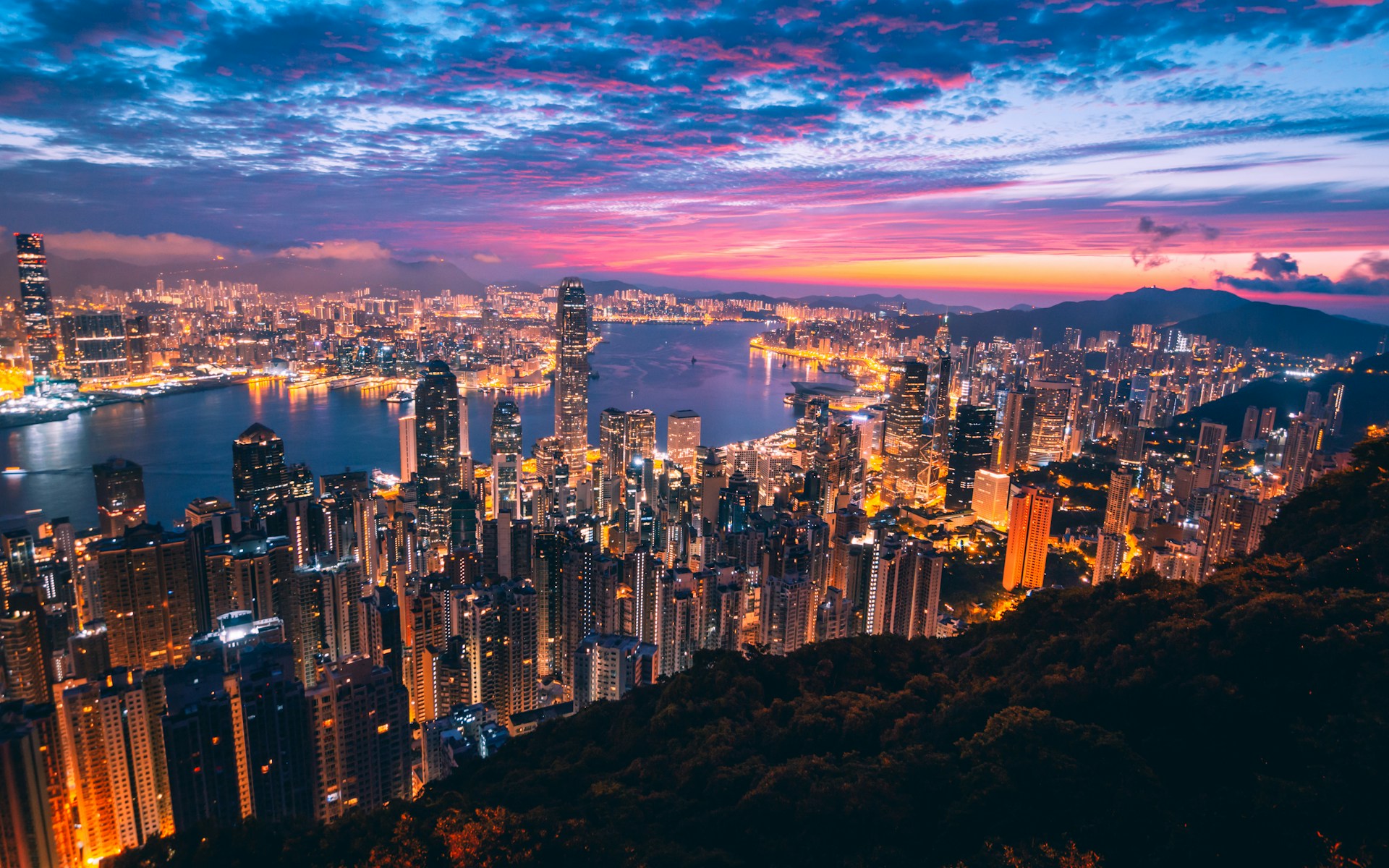
Hong Kong is one of the world's great urban spectacles — 7 million people crammed between Victoria Harbour and steep forested peaks, living at a density and energy that few cities match. The harbour skyline, viewed from Tsim Sha Tsui at dusk during the nightly Symphony of Lights, is genuinely breathtaking. The MTR connects Central, Kowloon, and the New Territories with extraordinary efficiency. The dim sum tradition is without equal. And despite the political changes of recent years, the city's food, shopping, hiking, and raw urban energy remain unmistakably world-class.
Quick Facts
Skyline & City Experience
Two of the world's most dramatic urban skylines — and they're different in almost every way.
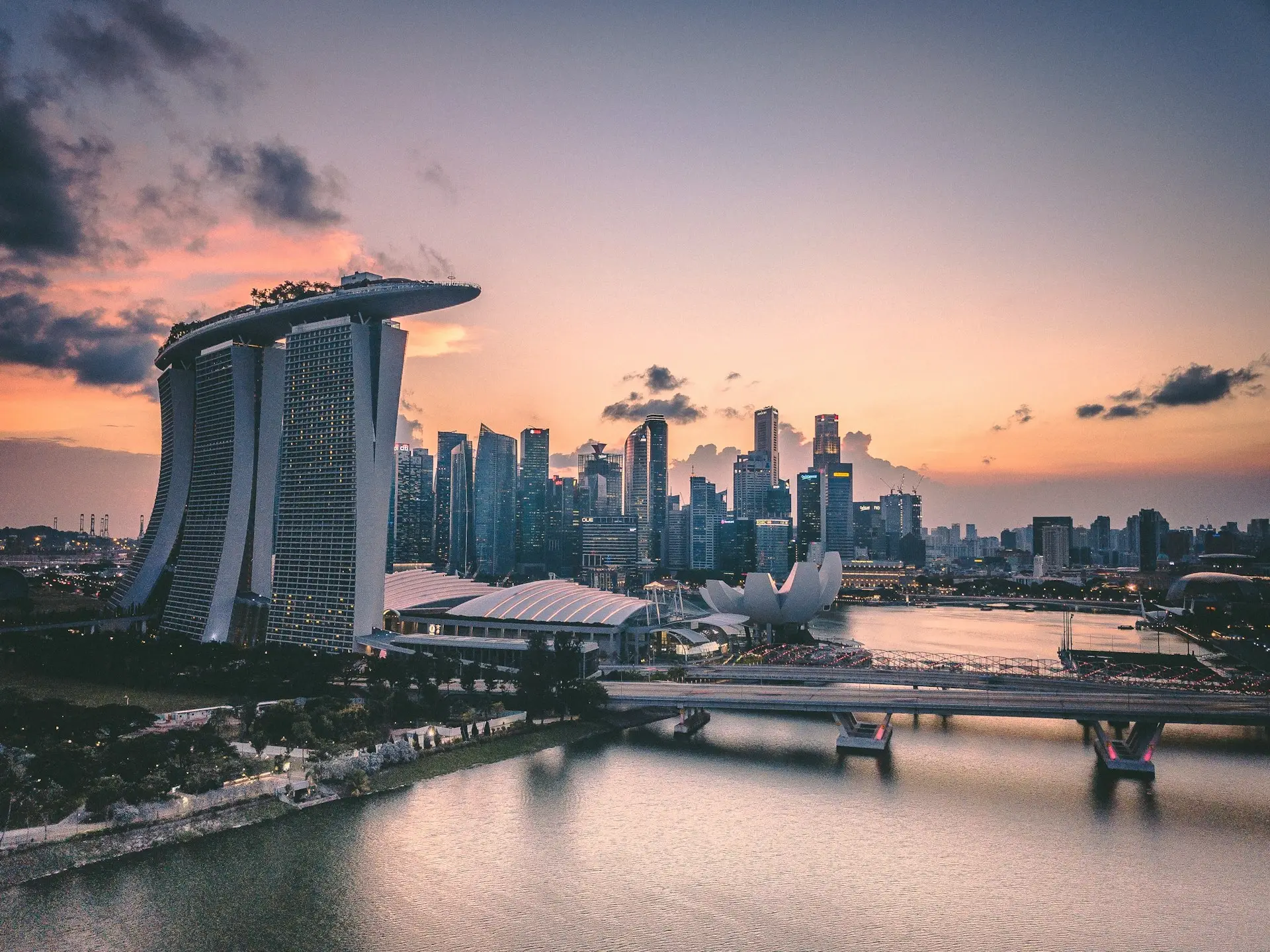
Marina Bay Sands, the Supertrees, and the world's most photographed waterfront
Singapore's Marina Bay precinct is one of the world's great pieces of urban planning — the Marina Bay Sands hotel's rooftop infinity pool cantilevered 200m above the city, the alien-organic Supertrees of Gardens by the Bay lit up at night, and the Esplanade's durian-shell performing arts centre all clustered around a reflective harbour in the tropics. The nightly Garden Rhapsody light show at the Supertrees is free. The city's ethnic neighbourhoods — Chinatown's temple quarter, Little India's flower garlands and gold shops, Kampong Glam's Sultan Mosque and Arab Street — give Singapore a cultural texture that the gleaming CBD belies.
🏆 Winner — planned skyline drama & waterfront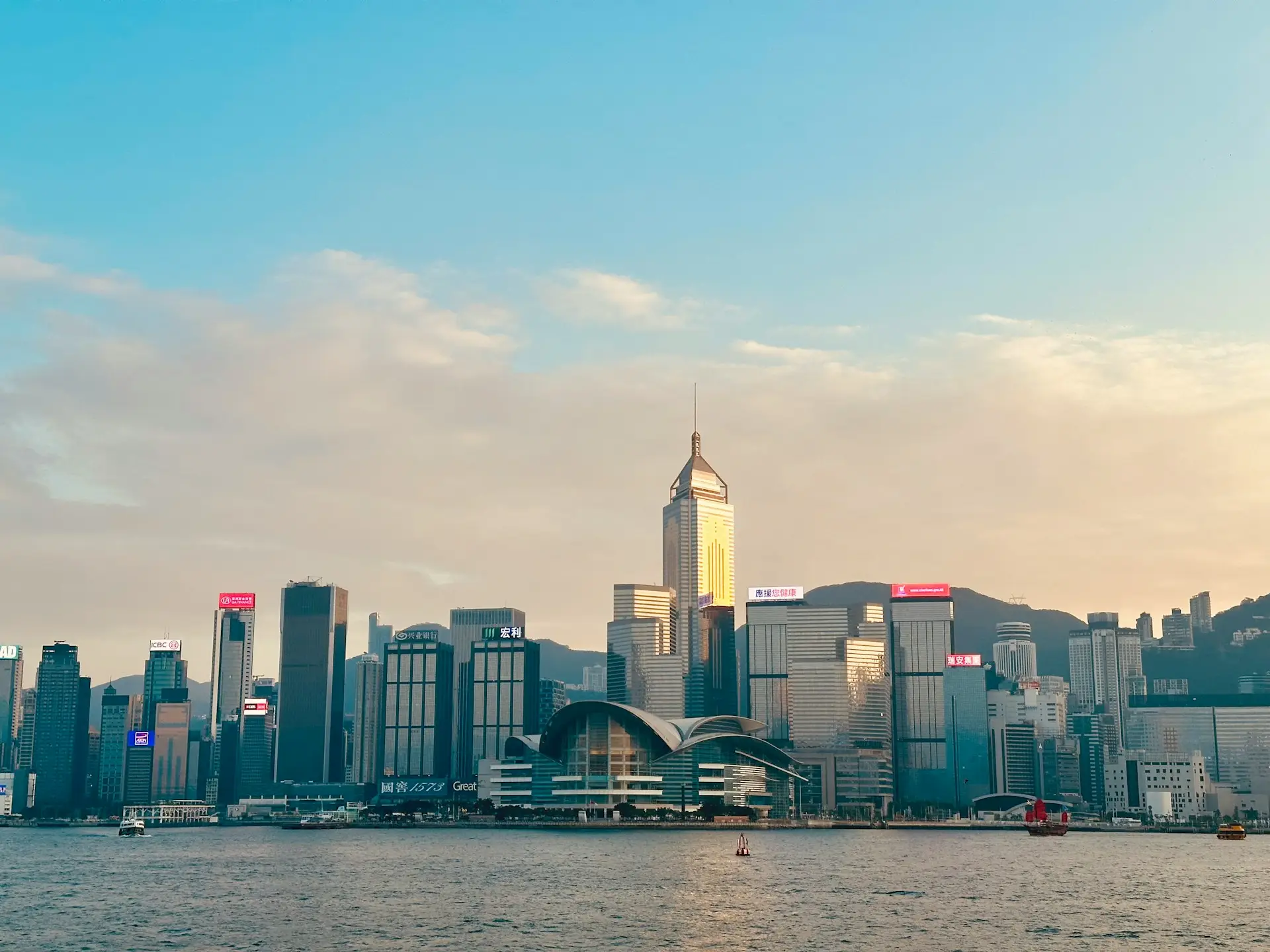
Victoria Harbour, the Peak Tram, and a skyline that grew organically for 150 years
Hong Kong's skyline is raw where Singapore's is designed — a wall of skyscrapers packed onto the northern shore of Hong Kong Island, rising in overlapping layers from the harbour to the forested Peak, the whole thing reflected in Victoria Harbour at night in a display that earned the city the name "Pearl of the Orient." The Symphony of Lights show choreographs lasers and lights across 44 buildings every night at 8pm. The Peak Tram — a funicular climbing to 396m above the city since 1888 — gives the most dramatic urban viewpoint in Asia. The Star Ferry crossing from Tsim Sha Tsui to Central for HKD 3 (€0.35) is one of the world's great cheap travel experiences.
🏆 Winner — organic skyline drama & harbour experienceHonest call: Both skylines are genuinely world-class and too close to split. Singapore's is more deliberate and photogenic at eye level. Hong Kong's is more dramatic and awe-inspiring in the aggregate. Consider this round a tie decided by personal taste.
Food
The debate that has no clean winner — and is better enjoyed with a plate in front of you.
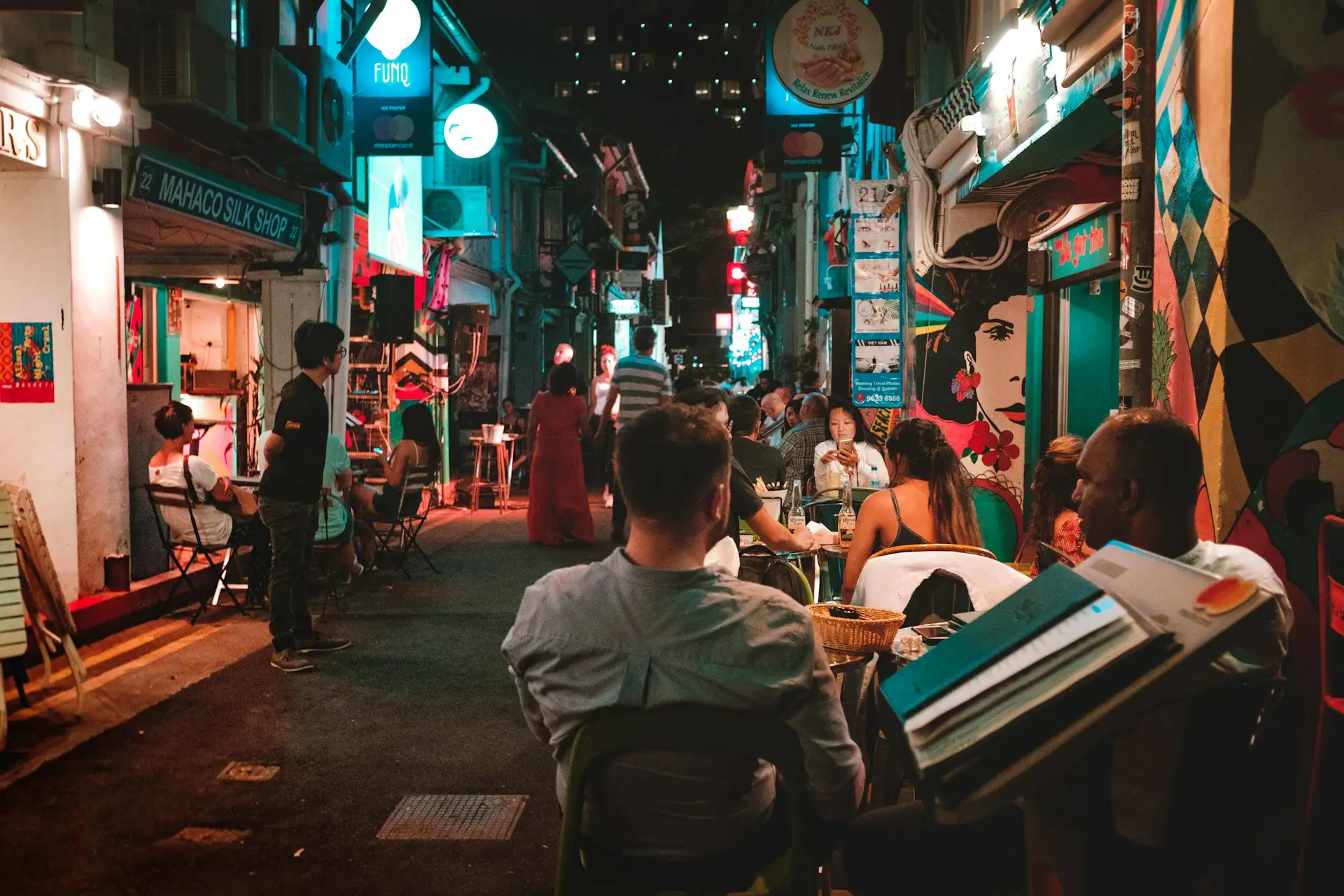
Hawker centres — UNESCO-listed, four food cultures for SGD 5 a plate
Singapore's hawker centres are one of the world's great democratic food institutions — government-built open-air food courts where Chinese, Malay, Indian, and Peranakan stalls operate side by side, producing some of Asia's best food at prices that shame most Western street food. Hainanese chicken rice (at Tian Tian or Boon Tong Kee), char kway teow (stir-fried flat rice noodles with Chinese sausage and egg in a wok-charred sauce), laksa (coconut curry noodle soup), roti prata with fish curry, and nasi lemak (coconut rice with sambal, anchovies, and egg) are all stall food costing SGD 4–8 (~€3–5). The Maxwell Food Centre, Lau Pa Sat, and Old Airport Road hawker centre are the classics. In 2016, Singapore became the first city in the world to award a Michelin star to a hawker stall (Hawker Chan's soy sauce chicken). Singapore's food diversity is unmatched in Asia at the budget end.
🏆 Winner — food diversity & value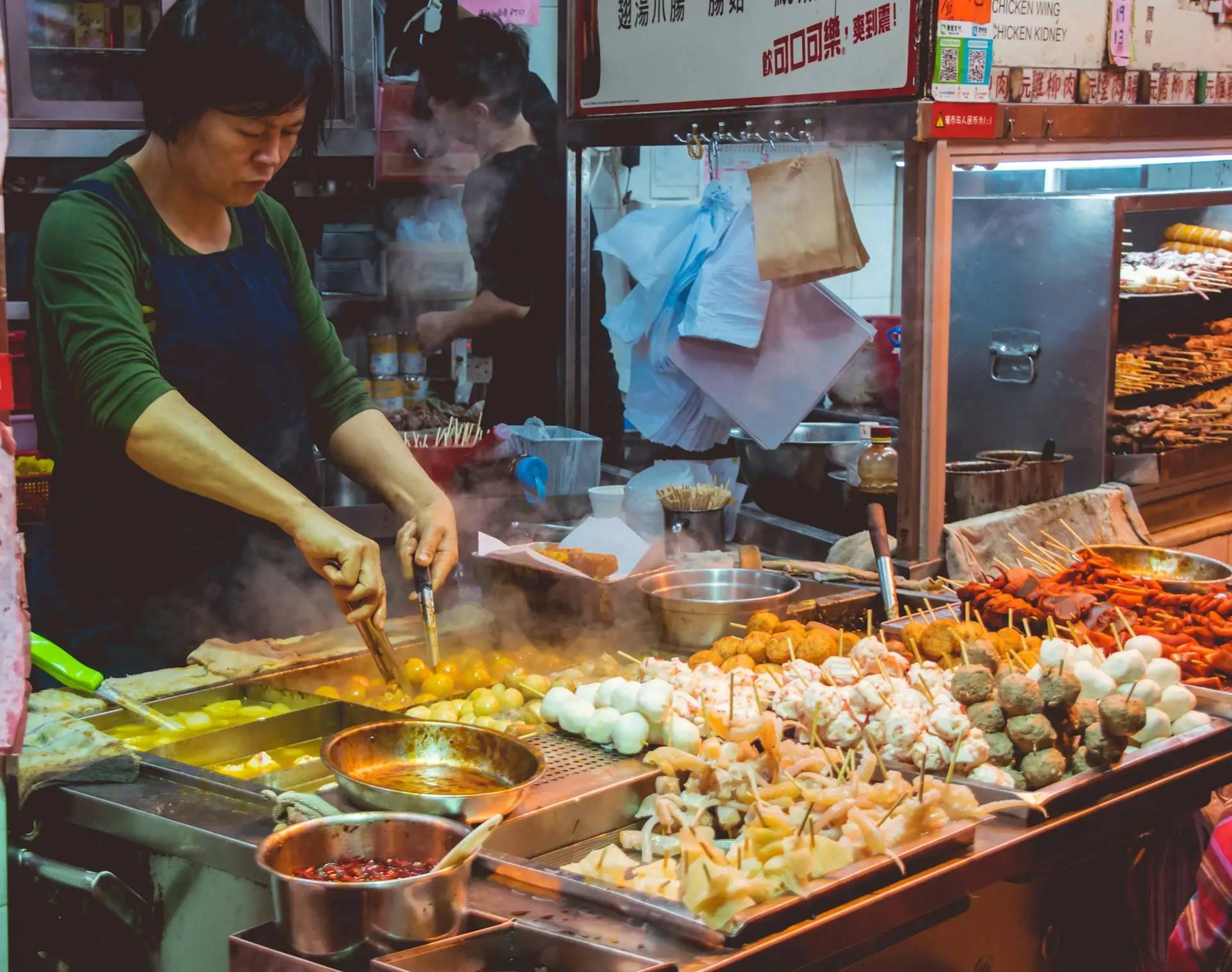
Dim sum, roast goose, and wonton noodles — Cantonese cooking at its peak
Hong Kong's food culture is narrower in range than Singapore's but deeper in specific categories. Cantonese dim sum — the yum cha tradition of ordering small dishes from trolleys while drinking tea — is the world's finest breakfast ritual when done properly at an old-school dai pai dong or a traditional teahouse like Lin Heung or Luk Yu. Har gow (prawn dumplings), siu mai (pork and prawn), cheung fun (silky rice noodle rolls), and egg tarts are benchmarks of technique. Roast goose from Yung Kee in Central or Kam's Roast is another category Hong Kong owns. Wonton noodles in a clear pork-shrimp broth from a street-level noodle shop is one of Asia's great cheap lunches. Hong Kong also has an excellent international restaurant scene in Central and Soho that rivals Singapore's.
🏆 Winner — Cantonese cuisine specificallyNightlife
Hong Kong has more energy after dark. Singapore has better settings.
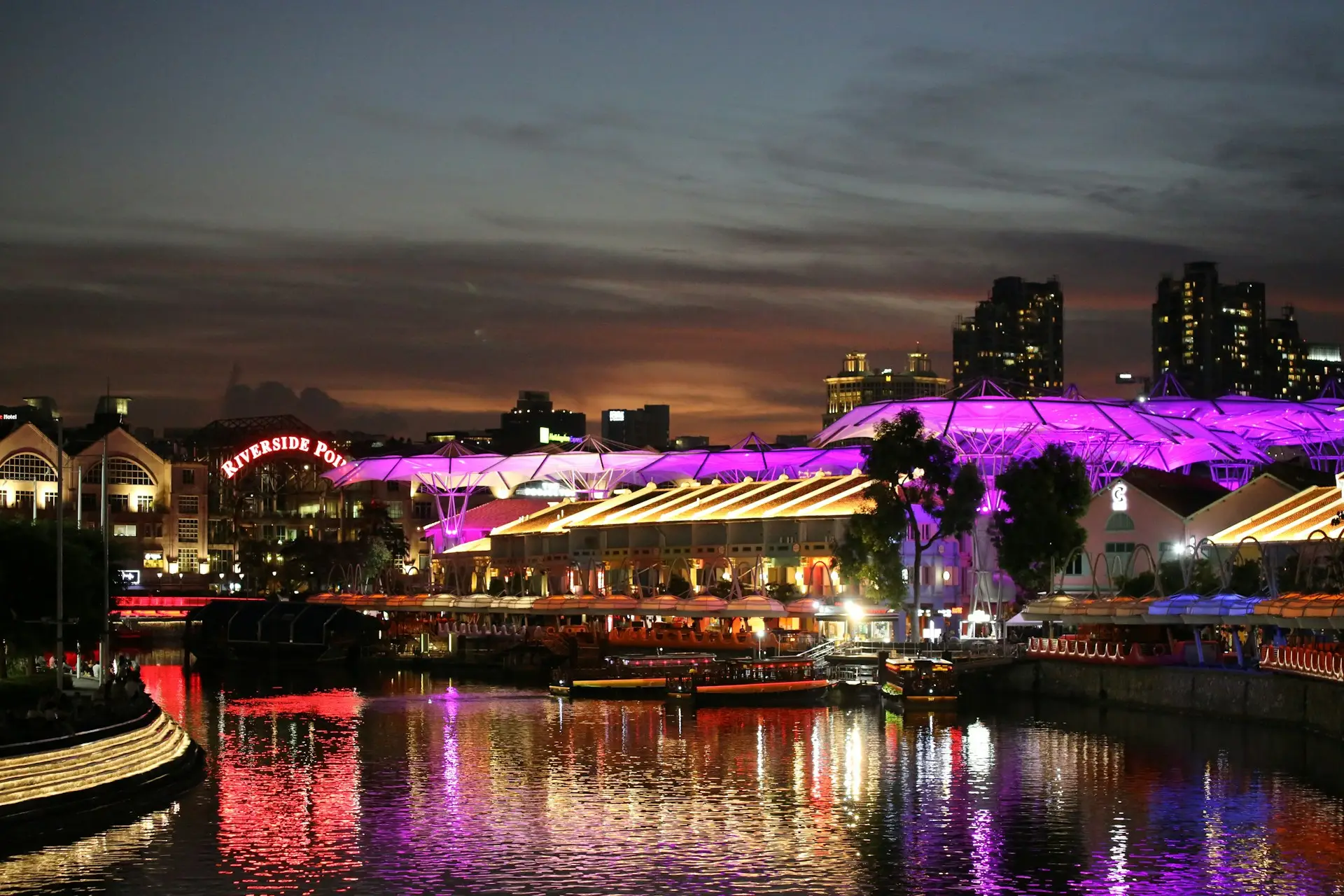
Rooftop bars, Clarke Quay, and world-class nightclub settings
Singapore's nightlife is polished and scenic. Rooftop bars — 1-Altitude, LeVeL33 (a craft brewery 33 floors above Marina Bay), the Lantern bar at Fullerton Bay — offer some of the world's most spectacular skyline-drinking settings. Clarke Quay's riverfront bars are tourist-heavy but lively on weekends. Tanjong Beach Club on Sentosa is a genuine beach club in the city. Zouk, Singapore's most famous nightclub, relocated to Clarke Quay and still draws international DJs. The trade-off: Singapore enforces last-call earlier than Hong Kong, the overall late-night energy is more restrained, and prices for drinks are high even by Asian standards.
World-class settings — quieter late-night energy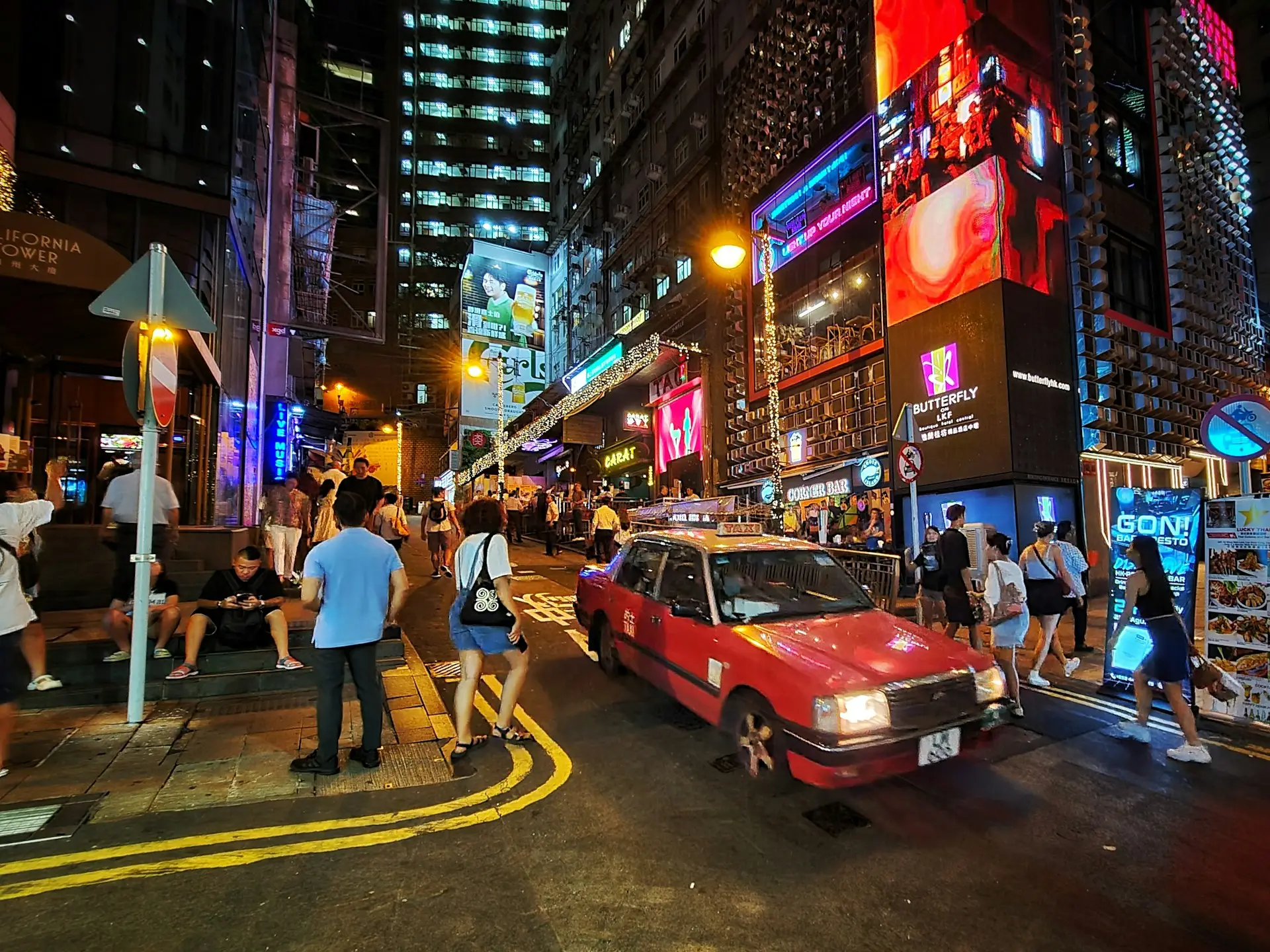
Lan Kwai Fong, Wanchai, and a city that drinks late on a steep hill
Hong Kong's nightlife is among Asia's best for sheer energy. Lan Kwai Fong (LKF) in Central — a cluster of bars and clubs on a steep pedestrian street — is one of Asia's most famous nightlife districts, running loudly until 4–5am on weekends. Wanchai adds live music bars, jazz venues, and a grittier edge. Soho (South of Hollywood Road) is excellent for cocktail bars — The Old Man, which won Asia's Best Bar, is in Hong Kong. The rooftop bars of the Upper House and Sevva offer harbour views to rival Singapore's. Hong Kong's nightlife runs later, louder, and at a higher energy level than Singapore's — the city simply doesn't sleep in the same way.
🏆 Winner — nightlife energy & late-night varietyNature & Outdoors
Hong Kong's country parks are one of the world's great urban surprises. Singapore's green spaces are beautifully designed.
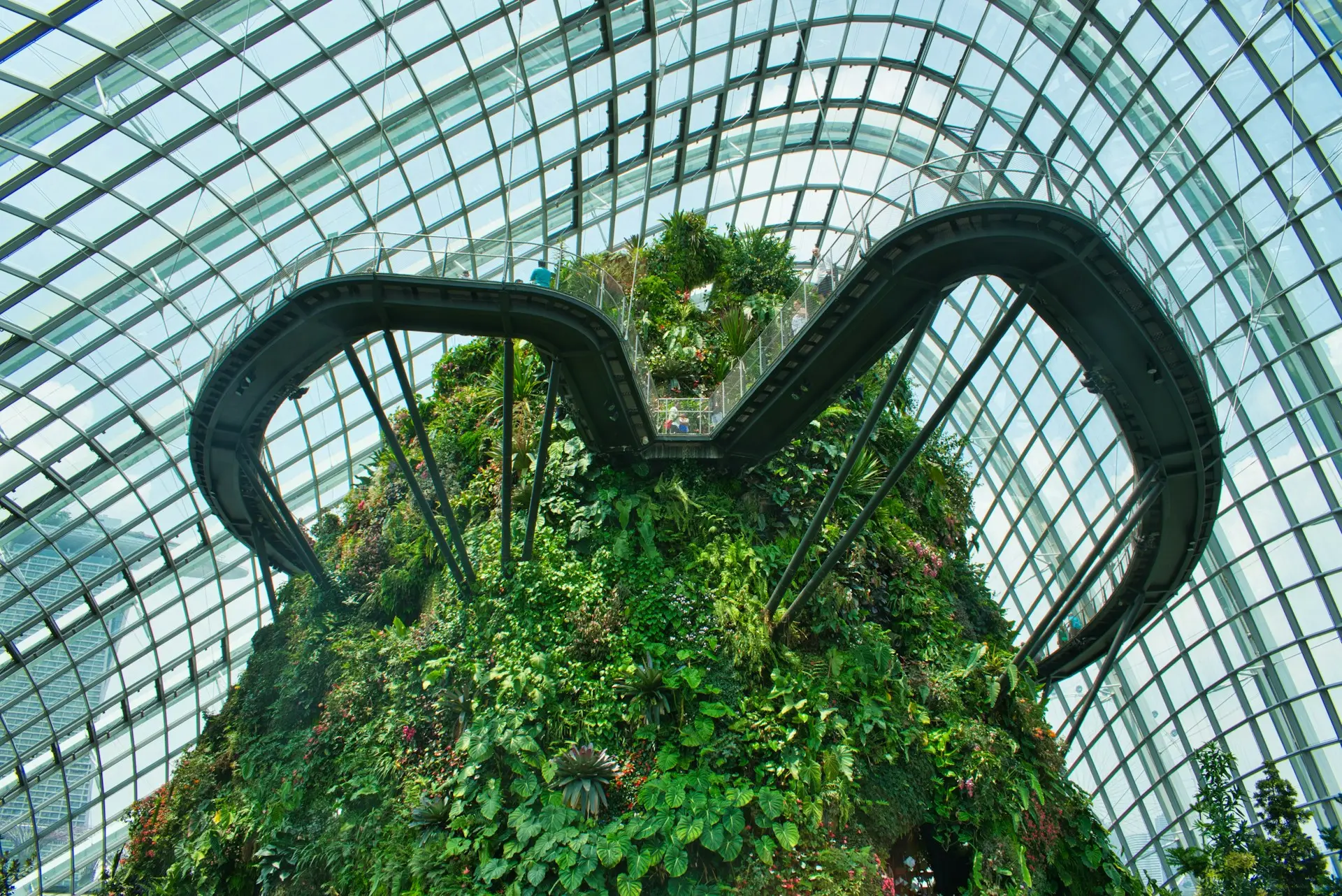
Gardens by the Bay, the Southern Ridges, and Bukit Timah rainforest
Singapore is the "City in a Garden" — a title it takes seriously. Gardens by the Bay covers 101 hectares on reclaimed Marina Bay land, with the Cloud Forest dome (a 35m indoor waterfall and tropical mountain ecosystem), the Flower Dome (the world's largest glass greenhouse), and the 18 Supertrees (vertical gardens up to 16 storeys tall connected by a sky walkway). The Southern Ridges is a 10km walking trail connecting parks across the southern hills with harbour views. Bukit Timah Nature Reserve preserves a patch of primary rainforest within the city limits. Singapore's green spaces are designed with exceptional quality — though the city's small size limits hiking to gentle trails rather than serious mountain terrain.
Beautifully designed green spaces — limited terrain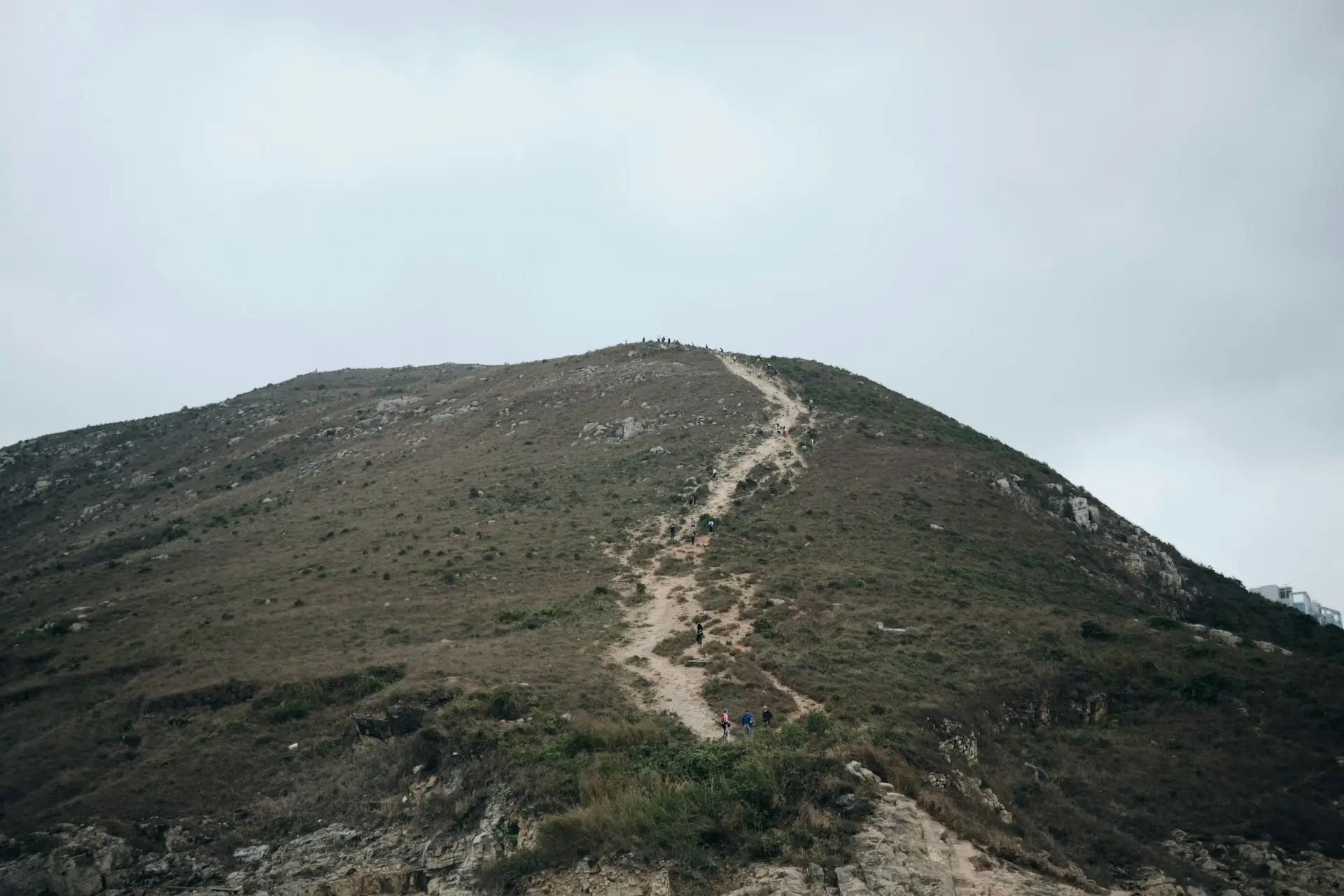
Dragon's Back, Lantau Peak, and 40% country park — hiking from the MTR
Hong Kong's country parks are one of the world's great urban surprises — over 40% of the territory is protected and forested, accessible within 30 minutes of Central by MTR and bus. Dragon's Back on Hong Kong Island (rated Asia's best urban hike by Time magazine) follows a ridgeline with views over the South China Sea on one side and Kowloon's towers on the other. Lantau Peak (934m) above the Po Lin Monastery and the Big Buddha is a challenging day hike rewarded with views across the Pearl River Delta. The 100km MacLehose Trail traverses the New Territories across 10 stages. Sai Kung Country Park offers sea kayaking and relatively empty beaches. Hong Kong's hiking is genuinely world-class for a city of its density — a fact that surprises almost every first-time visitor.
🏆 Winner — hiking & nature (40% country parks)Culture & Neighbourhoods
Singapore's multiculturalism is its defining character. Hong Kong's Cantonese identity is deep and distinct.
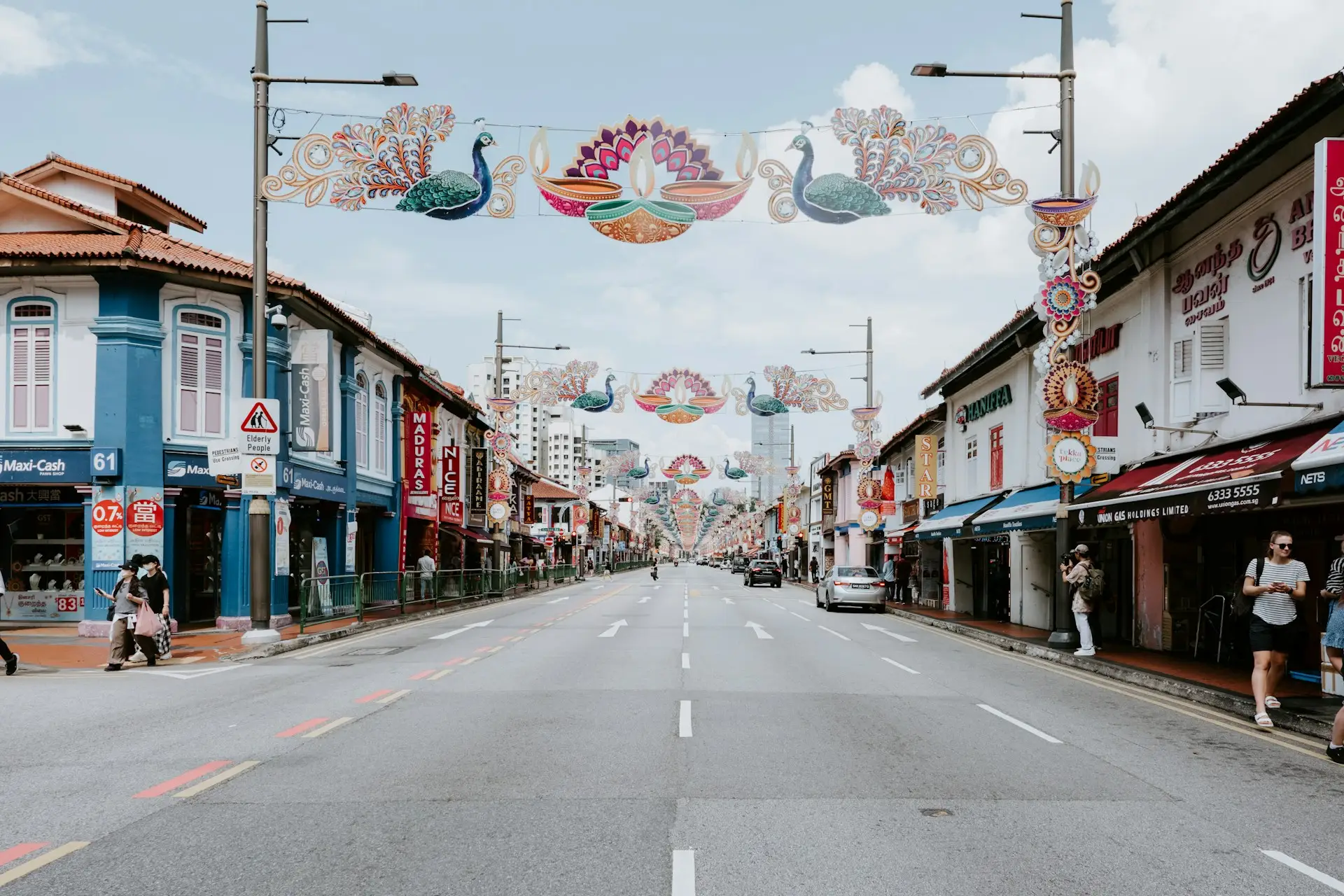
Chinatown, Little India, and Kampong Glam — three cultures in one city
Singapore's four official ethnic communities — Chinese (75%), Malay (15%), Indian (7%), and Eurasian — each maintain distinct neighbourhoods, languages, and traditions within a few square kilometres. Little India around Serangoon Road is one of the most vibrant Indian urban spaces outside the subcontinent: flower garlands, gold jewellery shops, South Indian banana-leaf restaurants, and the Sri Veeramakaliamman Temple. Kampong Glam's Sultan Mosque and the halal eateries of Arab Street represent the Malay Muslim community. Chinatown holds clan associations, traditional medicine shops, and the Buddha Tooth Relic Temple. The Peranakan culture — a hybrid Chinese-Malay tradition producing the distinctive Nyonya cuisine and beaded-shoe craft — is found most authentically in Katong. Singapore's multiculturalism is genuine and adds extraordinary cultural depth to a small city.
🏆 Winner — multicultural depth & neighbourhood variety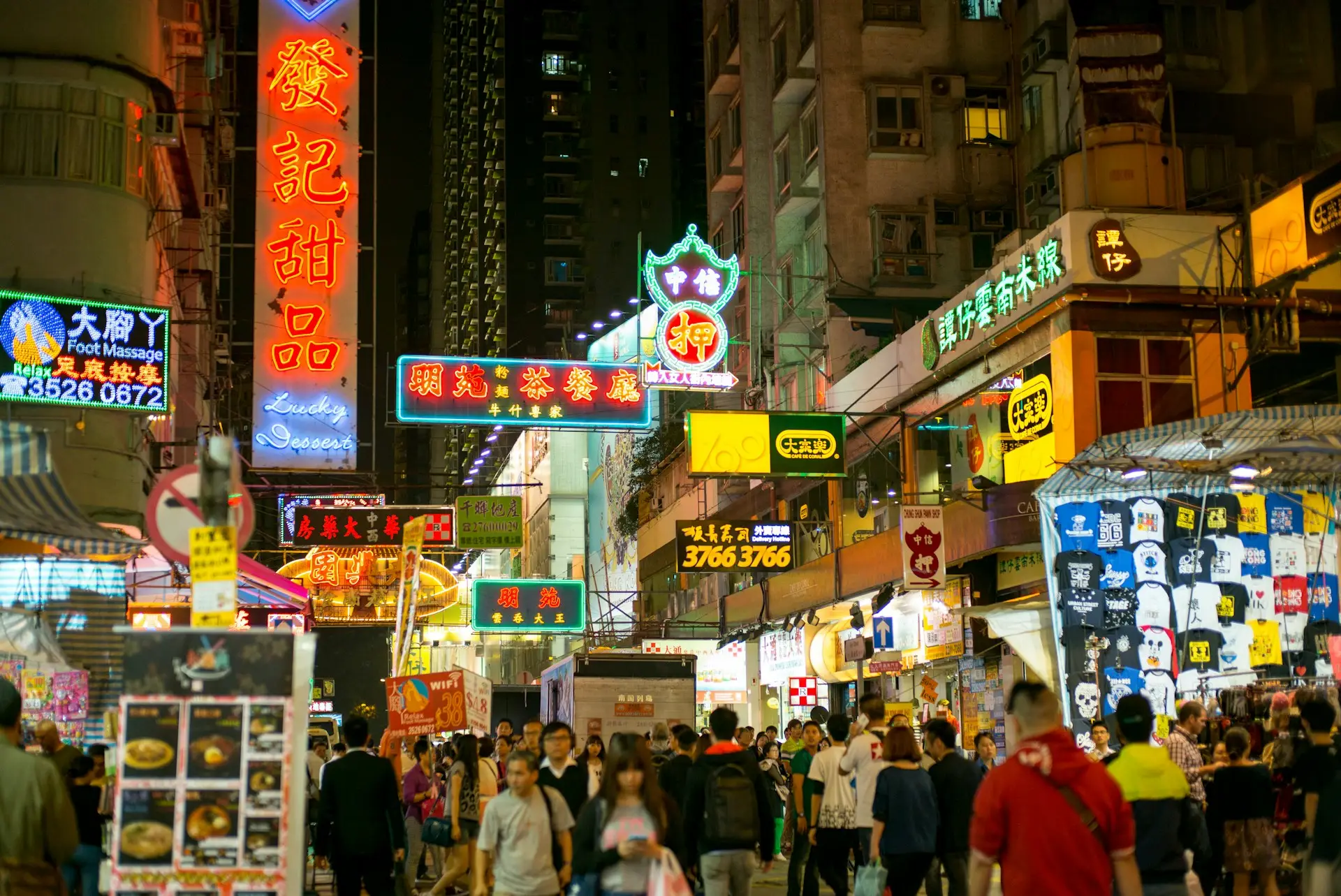
Mong Kok, the tram, and a Cantonese city culture unlike anywhere else
Hong Kong has a distinct Cantonese cultural identity — a specific combination of East-West pragmatism, intense commercial energy, and deep food culture shaped by its unique history as a British colony with a Chinese majority. Mong Kok on Kowloon is one of the world's most densely populated urban areas — a grid of street markets (Ladies' Market, Goldfish Market, Flower Market, Bird Garden) operating at extraordinary human density. The double-decker trams running across Hong Kong Island's northern shore since 1904 are an urban institution. The Man Mo Temple on Hollywood Road, one of Hong Kong's oldest, burns incense coils year-round in a haze of smoke and tradition. The Temple Street Night Market in Yau Ma Tei adds fortune tellers and Cantonese opera performers. Hong Kong's culture is less diverse than Singapore's but more distinctive.
Distinctive Cantonese identity — less multicultural rangeCost of Travel
Both cities are expensive — broadly similar, with different extremes at budget and luxury ends.
| Category | 🦁 Singapore | 🏙️ Hong Kong | Better Value |
|---|---|---|---|
| Budget hostel | SGD 35–60/night (~€24–42) | HKD 150–350/night (~€18–42) | 🏙️ HK (marginally) |
| Mid-range hotel | SGD 200–400/night (~€140–280) | HKD 800–1,800/night (~€95–215) | 🏙️ Hong Kong |
| Hawker / street meal | SGD 4–8 (~€3–5.50) | HKD 30–60 (~€3.50–7) | 🦁 Singapore (slightly) |
| Mid-range restaurant | SGD 40–80/person (~€28–56) | HKD 200–400/person (~€24–48) | 🏙️ Hong Kong |
| Beer at a bar | SGD 12–18 (~€8–13) | HKD 50–80 (~€6–10) | 🏙️ Hong Kong |
| Public transport (single) | SGD 1.20–2.50 (~€0.85–1.75) | HKD 4–10 (~€0.50–1.20) | 🏙️ HK (Star Ferry HKD 3) |
| Alcohol regulations | Alcohol banned after 10:30pm in public | No restrictions | 🏙️ Hong Kong |
Singapore or Hong Kong — Which Should You Choose?
Singapore is the right choice when ease matters, when food diversity is the priority, when travelling with families, or when using the city as a gateway to Southeast Asia.
- Hawker centre food culture is the primary draw
- Families with children — clean, safe, easy to navigate
- Gardens by the Bay is a bucket-list item
- Using Singapore as a Southeast Asia hub
- First Asia trip — English everywhere, zero friction
- The multicultural neighbourhood experience
Hong Kong is the right choice when Cantonese food is the goal, when hiking from an urban base appeals, when late-night energy matters, or when using the city as an East Asia gateway.
- Dim sum and Cantonese roast are the food goal
- Urban hiking — Dragon's Back, Lantau Peak
- Nightlife energy — LKF, Wanchai, Soho
- Victoria Harbour and the Peak Tram are must-dos
- East Asia gateway — Tokyo, Seoul, Taipei nearby
- Budget is a consideration — hotels are cheaper