
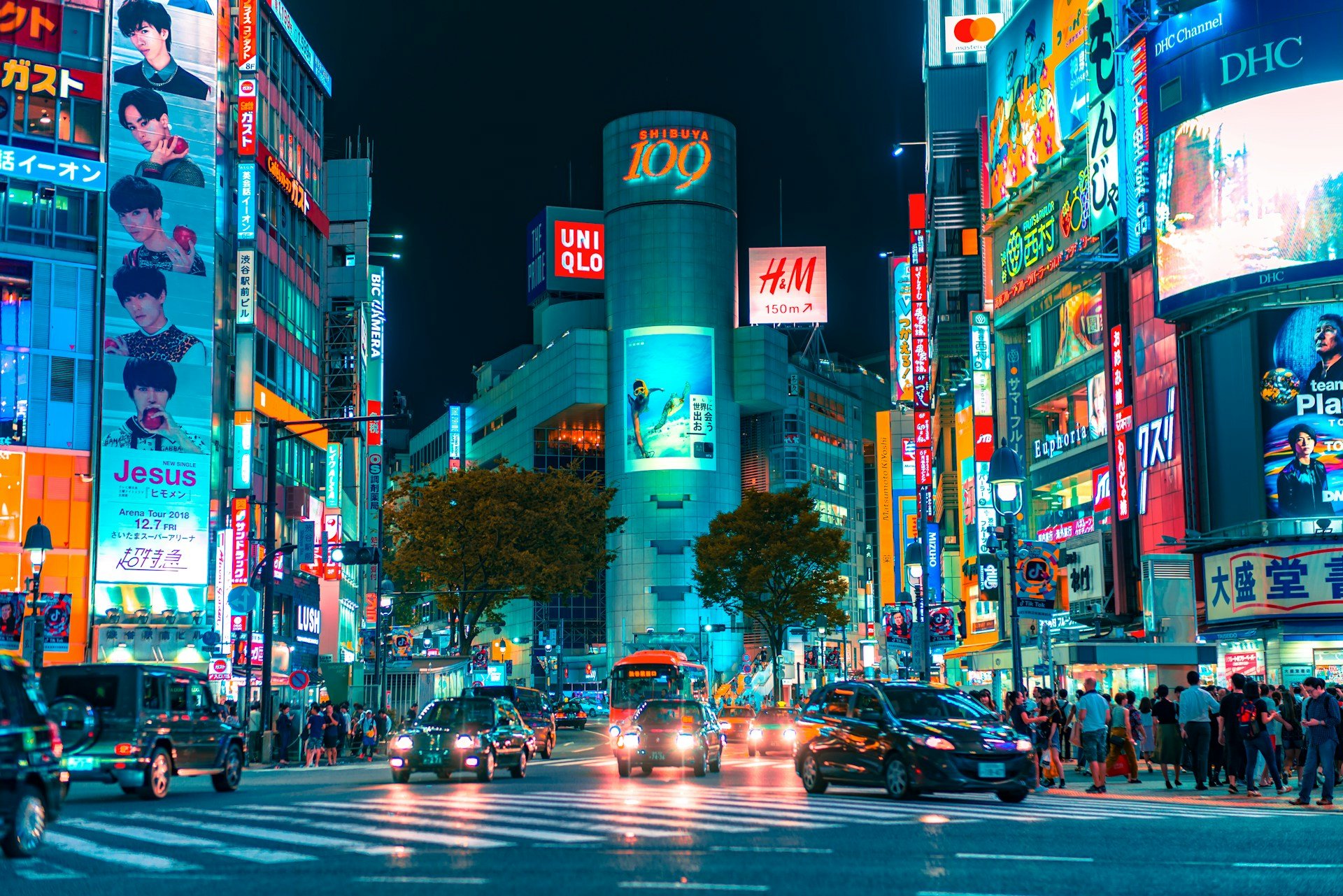

Japan vs South Korea at a glance
Eleven rounds, scored honestly. Japan takes heritage and nature by a distance; South Korea takes cost and nightlife just as clearly. Food and pop culture are two of travel's great unresolved debates. Select a category to jump to the full comparison.
| Category | JapanSouth Korea |
|---|---|
| The eleven rounds | |
| FoodMichelin-starred refinement vs communal BBQ energy | A genuine tie |
| CitiesTokyo's layers vs Seoul's compact energy | Different strengths |
| Heritage1,600 temples and shrines in Kyoto alone | Japan, emphatically |
| CostRoughly 20 to 30% cheaper across the board | South Korea, clearly |
| NatureMt Fuji and Hokkaido vs Jeju's volcanic coast | Japan, narrowly |
| Pop cultureAnime and manga vs K-pop and K-drama | A genuine tie |
| NightlifeSeoul runs until dawn on three distinct scenes | South Korea, clearly |
| Getting aroundNo $340 rail pass needed to get around comfortably | South Korea, narrowly |
| WeatherNear-identical seasonal patterns | A genuine tie |
| SafetyBoth top-5 globally, different natural risks | Draw |
| FamiliesEffortless logistics vs modern theme-park infrastructure | Split decision |
| Best for | |
| First-time East Asia visitorsThe widest single-country range available | Japan |
| K-pop and K-drama fansFan cafes, SMTOWN, BTS murals in Itaewon | South Korea |
| SkiersNiseko's powder is legendary | Japan |
| OverallNo outright winner; it comes down to priorities | Depends on your priorities |
Ancient precision vs modern energy
They share a sea, a deep history of cultural exchange and a mutual intensity that has produced two of the world's most distinctive travel experiences. The traveller who returns from Japan and the traveller who returns from South Korea have had fundamentally different journeys.
One of the world's most complete travel destinations
Tokyo is simultaneously the world's greatest megacity and its most orderly; Kyoto preserves 1,600 Buddhist temples and Shinto shrines in a living city; Hiroshima carries the weight of history with quiet dignity; Hokkaido offers wilderness and some of the world's finest powder skiing. Japan rewards patience and return visits, and holds more Michelin stars than any country on earth.
One of the most remarkable cultural transformations in modern history
A country that was one of the world's poorest in 1950 now exports its pop music, cinema, food, beauty products and television dramas to every corner of the globe. Seoul is a 24-hour metropolis of neon-lit street food alleys, ancient palaces and nightlife that doesn't begin until midnight, and it's also cheaper and easier to navigate in a shorter time than Japan.
Key facts side by side
| Fact | 🇯🇵 Japan | 🇰🇷 South Korea |
|---|---|---|
| Mid-range daily budget | $80–140 per person | $60–100 per person |
| Best season | Mar–May & Oct–Nov | Apr–May & Sep–Nov |
| Main airports | Narita (NRT), Haneda (HND), Kansai (KIX) | Seoul Incheon (ICN), world's top-rated |
| Getting around | Shinkansen bullet train, world-class | Seoul metro + KTX, cheap and fast |
| Rail pass, 7 days / 5 days | JR Pass, ~$340 | Korail Pass, ~$100 (5-day) |
| Signature experience | Kyoto temples, cherry blossoms, Mt Fuji | Korean BBQ, Seoul palaces, the DMZ, Jeju |
| Visa, most Western passports | None, 90 days visa-free | 90 days visa-free + K-ETA (~$10) |
| Currency | Japanese Yen (¥) | Korean Won (₩) |
Typical 2026 prices excluding international flights. Both are GMT+9.
Round 1 of 11
Food and eating culture
A genuine tie
One of travel's great unsettled debates. Japan wins on refinement and depth; South Korea wins on communal energy and value.
 🇯🇵 Japan
The most Michelin stars on earth, and the best convenience stores
Japan holds more Michelin stars than France, and at every price level the precision is staggering. Omakase sushi at a ten-seat counter is among the world's finest dining experiences, but Japan also excels at democratic food: tonkotsu ramen from a Fukuoka stall, a Lawson onigiri at 2am, both genuinely delicious. Regional variation is enormous, from Osaka's street food to Kyoto's kaiseki.
- Must eat
- Omakase sushi, tonkotsu ramen, Osaka street food
 🇰🇷 South Korea
Korean BBQ, street food and one of the world's most communal eating cultures
Korean food is visceral, social and extraordinarily varied. Korean BBQ, pork belly or short ribs sizzling at your table, wrapped in perilla leaves with kimchi and soju, is one of the world's great communal dining rituals, $15 to $25 per person including drinks. Street food in Gwangjang Market is outstanding and very cheap.
- Must eat
- Korean BBQ, tteokbokki, Gwangjang Market street food
Honest verdict: A genuine tie, two of the world's great food cultures, incomparable rather than rankable. Japan wins on refinement and technical depth; South Korea wins on social energy, boldness of flavour and value.
Round 2 of 11
Tokyo or Seoul?
Different strengths
Tokyo has more layers to explore; Seoul is more compact and its nightlife wins decisively. Most serious East Asia travellers eventually visit both.
Larger, more varied, with world-class day trips
Distinct neighbourhoods, Shibuya, Shinjuku, Asakusa, Yanaka, Shimokitazawa, each offer a different city entirely, and the day trips available, Nikko's baroque shrines, Kamakura's coastal temples, Hakone's Mt Fuji views, are world-class. For a single-city trip, Tokyo has more to explore over a week.
More compact, superb shopping, an electric cultural scene
Seoul is easier to navigate in a shorter stay, has outstanding nightlife across Hongdae, Itaewon and Gangnam, and the Korean cultural scene, fan cafes, SMTOWN, K-beauty flagship stores, is genuinely electric. Five UNESCO-listed Joseon palaces sit within a modern megacity.
Round 3 of 11
Temples, palaces and heritage
Japan wins, emphatically
Both have extraordinary ancient heritage, but Japan's scale is simply unmatched.
 🇯🇵 Japan
1,600 temples and shrines in a single living city
Kyoto alone contains 1,600 Buddhist temples and Shinto shrines, 400 traditional gardens and 17 UNESCO World Heritage Sites within a city still inhabited by 1.4 million people. Fushimi Inari's 10,000 vermillion torii gates and Nara's sacred deer wandering among 8th-century temples round out an extraordinary depth.
- Don't miss
- Fushimi Inari, Kyoto's temple district, Nara
 🇰🇷 South Korea
Five grand palaces and a Silla-era capital
Seoul's five Joseon-era palaces are beautifully restored, and Bukchon Hanok Village's preserved traditional houses are atmospheric. Gyeongju, once the Silla kingdom capital, has an extraordinary concentration of royal tombs and Buddhist art. Excellent, but it cannot match Japan's sheer volume, much of Seoul's heritage was rebuilt after the Korean War.
- Don't miss
- Gyeongbokgung, Bukchon Hanok Village, Gyeongju
Round 4 of 11
Which is cheaper, Japan or South Korea?
South Korea wins, clearly
South Korea is meaningfully cheaper, roughly 20 to 30% less than Japan across nearly every category.
| Typical cost | 🇯🇵 Japan | 🇰🇷 South Korea |
|---|---|---|
| Budget hostel | $25–50 | $20–40 |
| Mid-range hotel | $80–180 | $60–130 |
| Signature dinner (sushi / BBQ) | $30–80+, omakase far more | $15–25 including drinks |
| Beer or soju | $5–8 (konbini), $8–15 (bar) | $2–4 (shop), $4–8 (bar) |
| City metro trip | $2–4 | $1–2 |
| Intercity bullet train | $30–120 (Shinkansen) | $20–60 (KTX) |
| Rail pass | JR Pass, ~$340 (7-day) | Korail Pass, ~$100 (5-day) |
Typical 2026 prices in USD, excluding international flights.
The biggest gap: the signature dining experience. A full Korean BBQ dinner with soju for two runs $30–50; equivalent Japanese omakase sushi for two starts at $100 and can reach $500 or more. Both are cheaper than Western Europe and more expensive than Southeast Asia.
Round 5 of 11
Nature and landscapes
Japan wins, narrowly
Japan's geographic variety gives it an edge, though Jeju keeps South Korea genuinely competitive.
 🇯🇵 Japan
Mt Fuji, cherry blossoms, powder skiing and the wild north
Mount Fuji is one of the world's most recognisable mountains, and viewing it from Lake Kawaguchi with cherry blossoms is one of travel's iconic images. Hokkaido offers wild national parks and legendary powder skiing at Niseko, and the Japanese Alps provide serious alpine hiking.
- Don't miss
- Mt Fuji, Niseko, the Japanese Alps
 🇰🇷 South Korea
Jeju Island and Korea's dramatic mountain parks
Jeju, a UNESCO Triple Crown island, offers volcanic craters, lava tube caves and Hallasan, a 45-minute flight from Seoul. Seoraksan's granite peaks in autumn foliage and Bukhansan rising from Seoul's suburbs round out excellent, if smaller-scale, nature than Japan's.
- Don't miss
- Jeju Island, Seoraksan National Park
Round 6 of 11
Pop culture and modern identity
A genuine tie
Both countries have exported their pop culture globally, but in very different directions.
 🇯🇵 Japan
Anime, manga, Nintendo, decades of global export
Anime and manga are genuinely global art forms; Nintendo and Studio Ghibli have shaped childhoods worldwide. Akihabara is a sensory overload of anime merchandise, Harajuku's Takeshita Street is the heartland of outlandish street fashion, and teamLab's immersive digital art is extraordinary.
- Go-to areas
- Akihabara, Harajuku, Shimokitazawa
 🇰🇷 South Korea
K-pop, K-drama, K-beauty: the fastest cultural export in history
In less than two decades, South Korea went from regional entertainment market to the source of global chart-topping music, Oscar-winning cinema and globally consumed television. In Seoul, fan cafes in Hongdae and BTS murals in Itaewon make the experience immersive and accessible.
- Go-to areas
- Hongdae, Itaewon, Gangnam
Round 7 of 11
Nightlife
South Korea wins, clearly
Seoul is one of the world's great nightlife cities. Tokyo's is extraordinary but more intimate.
 🇯🇵 Japan
Golden Gai, izakayas, an intimate bar culture
Shinjuku's Golden Gai, around 200 tiny bars each seating 6 to 8 people, is one of the world's great drinking experiences. The izakaya culture is genuinely social. Club culture exists but isn't the primary reason people visit Tokyo.
- Go-to areas
- Golden Gai, Shibuya, Shimokitazawa
 🇰🇷 South Korea
Three distinct zones, running until dawn
Hongdae's indie clubs run electric until 6am, Itaewon is international and LGBTQ+ friendly, and Gangnam's upscale clubs regularly appear in global rankings. Jjimjilbang, 24-hour Korean spa-saunas, provide the perfect 4am recovery option.
- Go-to areas
- Hongdae, Itaewon, Gangnam
Round 8 of 11
Getting around
South Korea wins, narrowly
Both have excellent rail networks. South Korea's costs less and needs a smaller upfront commitment.
The Shinkansen, engineering perfection at a real price
The Shinkansen connects Tokyo, Kyoto, Osaka and Hiroshima at up to 320km/h with legendary punctuality. The JR Pass, around $340 for 7 days after its October 2023 increase, only pays off with significant intercity travel; for a Tokyo-only trip, individual tickets can be cheaper.
Cheap, comprehensive, and no big fixed pass needed
The Seoul metro is cheap, fast and English-friendly, and a rechargeable T-money card covers all public transport, no pass required. The KTX bullet train connects Seoul to Busan in 2h20 for around $50, and the Korail Pass, roughly $100 for 5 days, is only worth it for a multi-city itinerary.
Round 9 of 11
When to go: the best time for Japan and South Korea
A genuine tie
Both share remarkably similar climate patterns. Seoul's winters run colder and its spring carries yellow dust; Tokyo's summer is more humid.
Same golden windows: late March to early May for cherry blossoms, and October to November for autumn foliage, fewer crowds and cooler, drier air. Avoid July to August in both, hot and humid, with Korea's jangma summer monsoon concentrated in July.
Round 10 of 11
Is Japan or South Korea safer for tourists?
A draw
Both are among the world's top 5 safest countries. The real risks in each are natural rather than human.
🇯🇵 Japan: what to watch
- Earthquakes happen frequently; familiarise yourself with hotel evacuation procedures and the JMA early warning system.
- Typhoon season (August to October) can disrupt travel plans.
- Street crime and scams are minimal; lost wallets are routinely returned with cash intact.
- Tap water is safe nationwide.
🇰🇷 South Korea: what to watch
- Air pollution from Asian dust storms (hwangsa) and fine particulates, worst in spring (March–May); check daily readings and consider a KF94 mask.
- North Korea tensions occasionally make headlines but rarely affect day-to-day travel.
- Street crime is very low; Seoul is safe to walk at any hour and the metro is well-policed.
- Tap water is generally safe, though many locals prefer filtered or bottled.
In both countries, tourist scams are minimal; the genuine planning considerations are natural hazards, not crime.
Round 11 of 11
Family travel
Split decision
Japan wins on effortless logistics and exceptional safety; South Korea wins on modern theme-park infrastructure.
Exceptional safety, spotless cities, gentle culture shock
Japan's extraordinarily low crime rate and orderly public spaces make it one of the easiest countries in Asia for family travel. Convenience stores solve most food emergencies, and the Shinkansen makes multi-stop trips with kids straightforward. The catch is queues at major sights and a moderate language barrier.
Modern infrastructure and theme parks built for families
Everland and Lotte World near Seoul are major, well-run theme parks, and the compact city layout means less transit time between activities. Korean BBQ's interactive, help-yourself format tends to entertain kids more than a formal Japanese dinner, though spicier default flavours need checking for younger palates.
Which is better for specific trips?
Japan for first-time East Asia visitors, skiers and Renaissance-of-tradition seekers. South Korea for K-pop fans, budget travellers and nightlife seekers.
First-time East Asia visitors
Japan
The widest single-country range: ancient temples, a megacity, mountains and moving history.
K-pop & K-drama fans
South Korea
Fan cafes, SMTOWN, BTS murals in Itaewon, no other country delivers the Korean Wave in person like this.
Skiers
Japan
Niseko's legendary powder snow is a genuine bucket-list winter destination.
Budget-conscious travellers
South Korea
Consistently 20–30% cheaper across accommodation, food and transport.
Nightlife seekers
South Korea
Seoul's Hongdae, Itaewon and Gangnam run until dawn on three distinct scenes.
High-end food travellers
Japan
The world's deepest concentration of Michelin-starred, technically precise dining.
Shorter trips
South Korea
More compact and navigable, Seoul alone rewards a focused 5 to 7 day visit.
Solo travellers wanting calm
Japan
Exceptional safety and a culture that respects personal space suit the introvert solo traveller.
Can you combine Japan and South Korea in one trip?
Yes, and it's one of East Asia's best multi-destination itineraries. Flights between Tokyo and Seoul take about 2.5 hours and can cost $50 to $100 one-way.
Japan: days 1 to 9
- Days 1–5
Tokyo. Shibuya and Harajuku, Asakusa's Senso-ji, a day trip to Nikko or Kamakura, and an evening in Shinjuku's Golden Gai.
- Days 6–9
Kyoto and Osaka. Shinkansen from Tokyo (2h15). Fushimi Inari at dusk, Arashiyama at dawn, and a day trip to Osaka for Dotonbori street food or Nara's deer park.
South Korea: days 10 to 16
- Day 10
Fly Osaka to Seoul. Kansai (KIX) to Incheon (ICN), around 2 hours. AREX train into the city.
- Days 11–14
Seoul. Gyeongbokgung and Bukchon Hanok Village, a DMZ day trip (book ahead), Hongdae's K-pop culture, and Korean BBQ.
- Days 15–16
Busan or Jeju. KTX to Busan (2h20) for Haeundae beach and Jagalchi Market, or fly to Jeju (45 min) for volcanic landscapes and Hallasan.
When to go: late April to mid-May, post-sakura, pre-summer heat, or mid-October to mid-November, autumn foliage in both countries, are the two best windows. Both require a K-ETA for South Korea entry (~$10, apply online ahead).
Verdict: Japan or South Korea?
There's no single overall winner. The honest answer is that both are essential, and your primary motivation decides everything.
Choose Japan if…
Japan, for depth and heritage
The right choice for a first East Asia trip, for travellers who want the full range of ancient and modern, and for anyone drawn by food precision, natural variety or the depth of Japanese aesthetics.
- First trip to East Asia, Japan gives the widest range
- Kyoto temples and Shinto shrines are on the bucket list
- Cherry blossom season is the specific draw
- Mt Fuji, skiing in Hokkaido, or the Japanese Alps
- High-end Japanese food culture, omakase, kaiseki
- Anime, manga, Studio Ghibli, Japanese subcultures
Choose South Korea if…
South Korea, for energy and value
The right choice when budget matters, K-pop or Korean culture is the specific draw, Seoul's nightlife is a priority, or you've already done Japan and want the contrast.
- Budget is a consideration, Korea is 20 to 30% cheaper
- K-pop, K-drama or Korean beauty culture is the draw
- Nightlife matters, Seoul is one of the world's best
- Korean BBQ and communal food culture appeal
- A shorter trip, Korea is more compact and navigable
- The DMZ is on your itinerary, unlike anything else
Weigh it for your own trip
Select everything that matters to you.
Pick what matters on this trip and the needle will move.
Japan vs South Korea: frequently asked questions
Is Japan or South Korea better for food?
A genuine tie at the highest level. Japan wins on refinement and depth: the most Michelin stars of any country, extraordinary range from convenience store onigiri to multi-course kaiseki. South Korea wins on communal energy and value: Korean BBQ with soju and unlimited banchan side dishes costs $15 to $25 per person. Both are world-class and incomparable rather than rankable.
Which is cheaper, Japan or South Korea?
South Korea is meaningfully cheaper, roughly 20 to 30 percent less than Japan overall. The Seoul metro runs $1 to $2 per trip against Tokyo's $2 to $4, a Korean BBQ dinner runs $15 to $25 against Japanese sushi at $30 to $80 or more, and the JR Pass (~$340 for 7 days) has no cheap Korean equivalent, the Korail Pass runs closer to $100 for 5 days.
Do I need separate visas for Japan and South Korea on a combined trip?
For most Western nationalities, both countries are visa-free for stays up to 90 days. Japan needs no advance authorisation. South Korea requires a K-ETA, around $10, applied for online before travel. Neither requires an embassy visit.
Is Tokyo or Seoul better to visit?
Tokyo is larger and more varied with deeper day-trip options, Nikko, Kamakura, Hakone. Seoul is more compact, has world-class nightlife and an electric contemporary cultural scene. Both deserve at least 5 nights, and most serious East Asia travellers eventually visit both.
Is Japan or South Korea safer for tourists?
Both are among the world's top 5 safest countries with very low crime against tourists. Japan's main risk is natural, earthquakes and typhoons. South Korea's main risk is also natural, spring air pollution from Asian dust storms (hwangsa). Neither has significant tourist scam issues.
What is the best time to visit Japan and South Korea?
Both share similar optimal windows. Spring, late March to early May, for cherry blossoms. Autumn, October to November, for red maple foliage and fewer crowds. Avoid July to August, hot and humid with Korea's summer monsoon.
Do I need a JR Pass for Japan?
The JR Pass, around $340 for 7 days, is worth it only for significant intercity travel, Tokyo, Kyoto and Hiroshima at minimum. For Tokyo-only trips, individual tickets can be cheaper, do the math first. South Korea's Korail Pass runs around $100 for 5 days.
Can you combine Japan and South Korea in one trip?
Yes, it's one of East Asia's most popular circuits. Flights between Tokyo and Seoul take about 2.5 hours and can cost $50 to $100 one-way. The classic route: Tokyo (5-6 nights), Kyoto and Osaka (3-4 nights), fly to Seoul (4-5 nights), then Busan or Jeju (2 nights). Allow 14 to 18 days.
There's no wrong answer here
Japan and South Korea are compared so often because both are extraordinary, just built on opposite relationships with tradition. Pick on what you want from this trip: the depth of Japan's heritage and food, or the energy of South Korea's present-day cultural wave. Better still, do both, they're a 2.5-hour flight apart.