
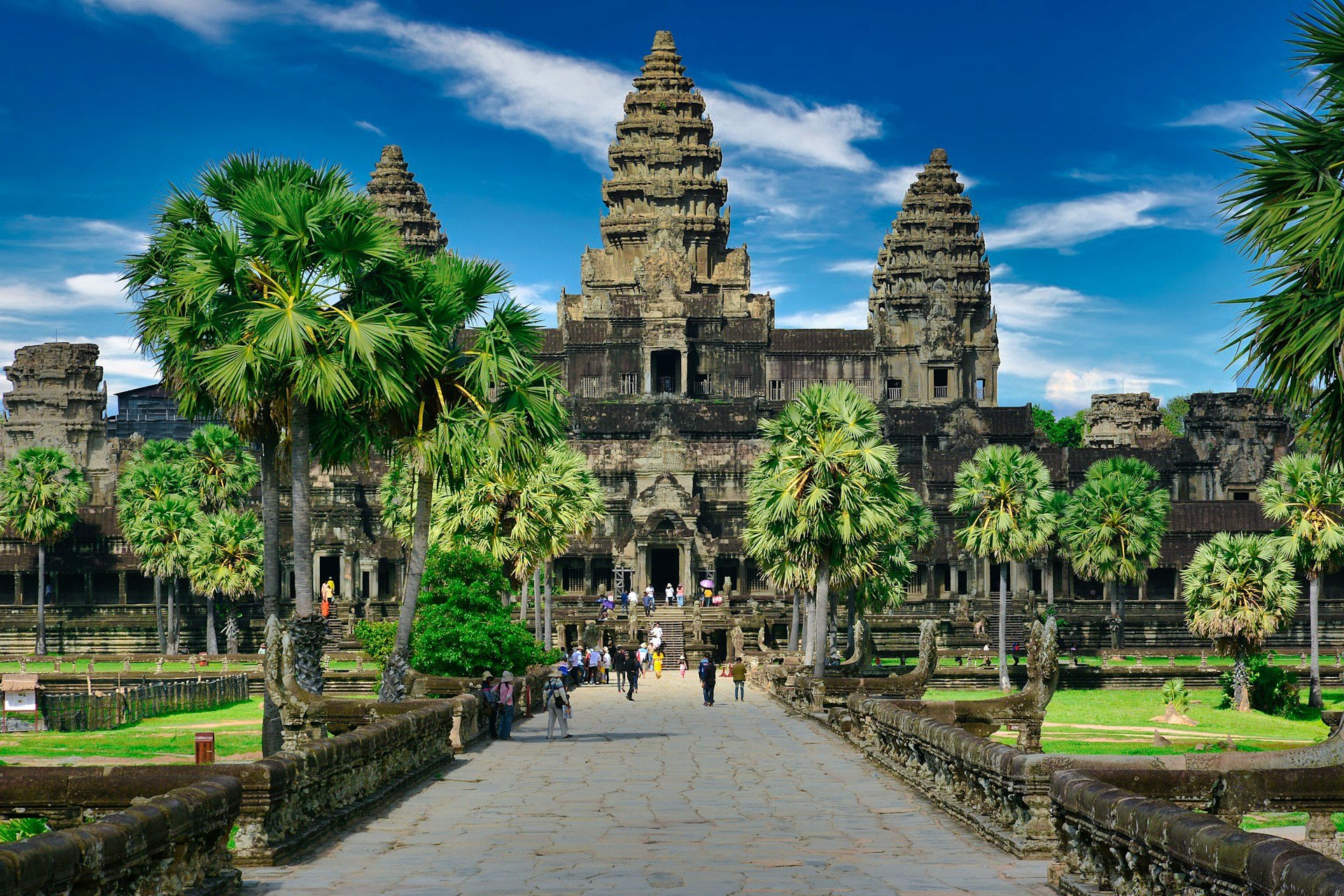
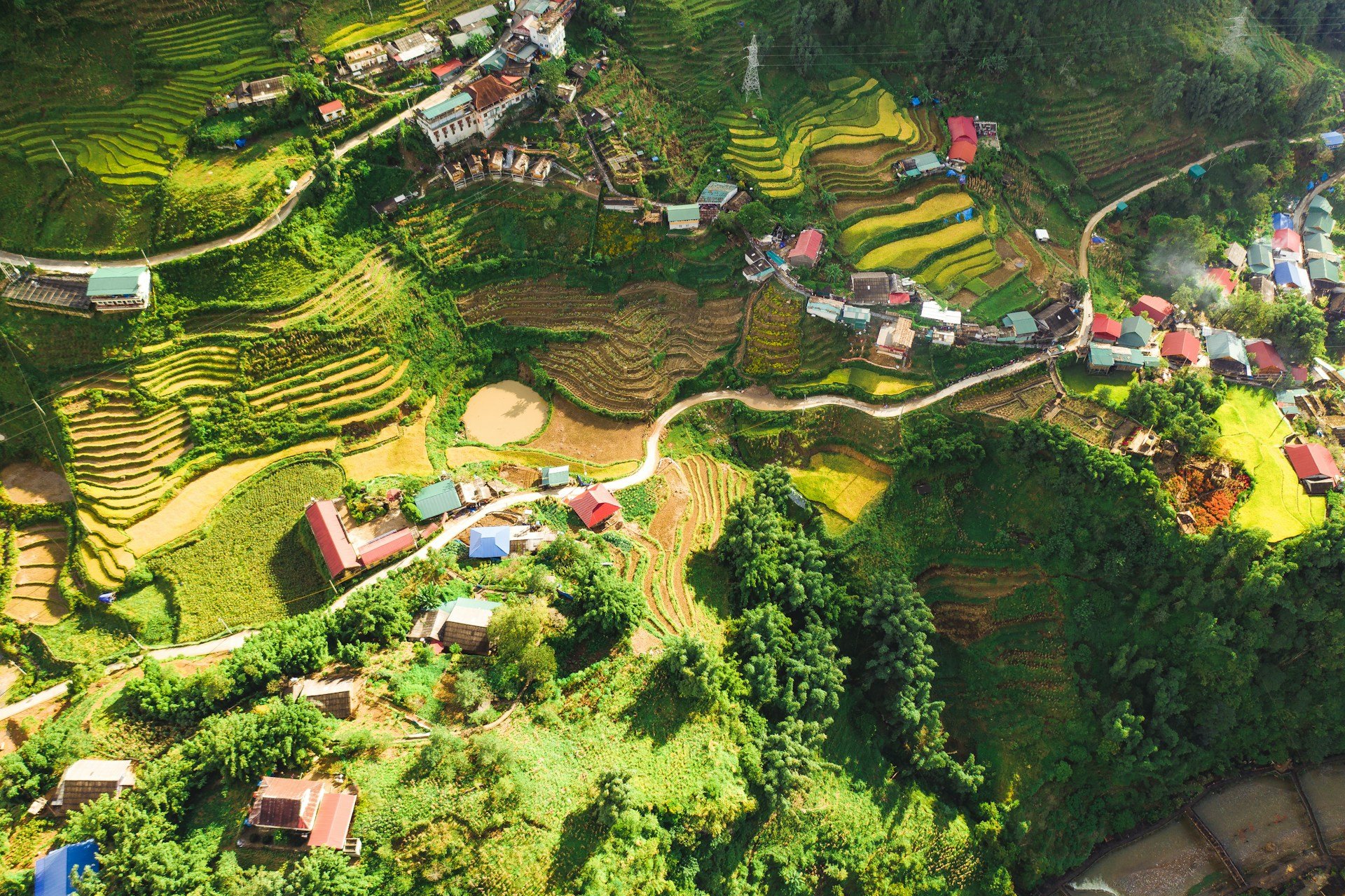
Cambodia vs Laos at a glance
Eight rounds and three traveller types. Cambodia wins on temples, history and value; Laos wins on atmosphere, the river and safety. Select a category to jump to the details.
| Category | CambodiaLaos |
|---|---|
| The eight rounds | |
| Temples & heritageNothing in the region compares with Angkor | Cambodia, clearly |
| Atmosphere & townsLuang Prabang is in a league of its own | Laos, clearly |
| Cost & valueA little cheaper day to day, despite the Angkor pass | Cambodia, narrowly |
| River & natureThe slow boat, Kuang Si and the 4,000 Islands | Laos, narrowly |
| FoodKhmer amok vs Lao laap and sticky rice | Draw |
| Getting there & aroundNew airports vs the new railway | Draw |
| Best time & seasonsSame seasons; November to February suits both | Draw |
| SafetyVery low crime and no border conflict zone | Laos, narrowly |
| Best for | |
| First trip to Southeast AsiaHeadline sights, easy logistics, lots of English | Cambodia |
| Slow travelRiver days, quiet towns, no rush | Laos, clearly |
| Arriving overland from ThailandThe Thai-Cambodian land border is closed | Laos, clearly |
| OverallAngkor decides it for most people | Depends on your priorities |
Ancient kingdoms and the Mekong
Both countries are cheap, welcoming and less crowded than Thailand or Vietnam. The difference is scale and pace: Cambodia delivers big sights and heavy history, Laos a quieter rhythm.
One extraordinary achievement, one deep wound
Angkor, the capital of the Khmer Empire, is reason enough to go: a park of hundreds of temples around Angkor Wat, the largest religious monument ever built. But Cambodia is also the country of the Khmer Rouge, and facing that history at Phnom Penh's Tuol Sleng Genocide Museum and the Choeung Ek memorial is one of the most important experiences in Southeast Asia. Add the Tonle Sap lake, the pepper town of Kampot and islands like Koh Rong, and Cambodia rewards anyone who looks beyond Angkor.
Southeast Asia's quiet, landlocked secret
Laos is the least visited country on the mainland circuit, and for many travellers the most rewarding. Luang Prabang, a UNESCO World Heritage town of gilded temples and French colonial shophouses on a peninsula between two rivers, is the highlight, and the silent dawn alms round stays with people for years. Around it: limestone karsts at Vang Vieng, the turquoise pools of Kuang Si, and the river islands of the far south. The pace is slow in a way that is becoming rare.
Key facts side by side
| Fact | 🇰🇭 Cambodia | 🇱🇦 Laos |
|---|---|---|
| Mid-range daily budget | $30–60 | $35–70 |
| Dry season | November to April | November to April |
| Best months | November to February | November to February |
| Main airports | Techo International (KTI) for Phnom Penh, Siem Reap-Angkor (SAI) | Vientiane (VTE), Luang Prabang (LPQ) |
| Must-see | Angkor Archaeological Park | Luang Prabang and the Mekong |
| Entry, most Western passports | e-Visa, about $36 | Visa on arrival or e-Visa, roughly $40–50 depending on passport |
| Signature cost | Angkor pass: $37 (1 day), $62 (3 days), $72 (7 days) | Mekong slow boat: usually $30–50 for both days |
| Currency | Riel, with US dollars used everywhere | Lao kip; dollars and baht only in some places |
| Language | Khmer; English common in tourist areas | Lao; less English outside the main towns |
| Getting around | Tuk-tuk, Grab, PassApp, buses | Railway, minibus, songthaew, slow boat |
| Time zone | UTC+7 | UTC+7 |
Apply for Cambodia's e-Visa only at the official evisa.gov.kh, and buy Angkor passes only from Angkor Enterprise; lookalike sites overcharge. More in our Cambodia and Laos guides.
Round 1 of 8
Is Cambodia or Laos better for temples?
Cambodia wins, clearly
Cambodia, by a vast margin. Angkor is one of the world's great archaeological sites, spread over some 400 square kilometres. Laos has beautiful, living temples, but nothing on that scale.
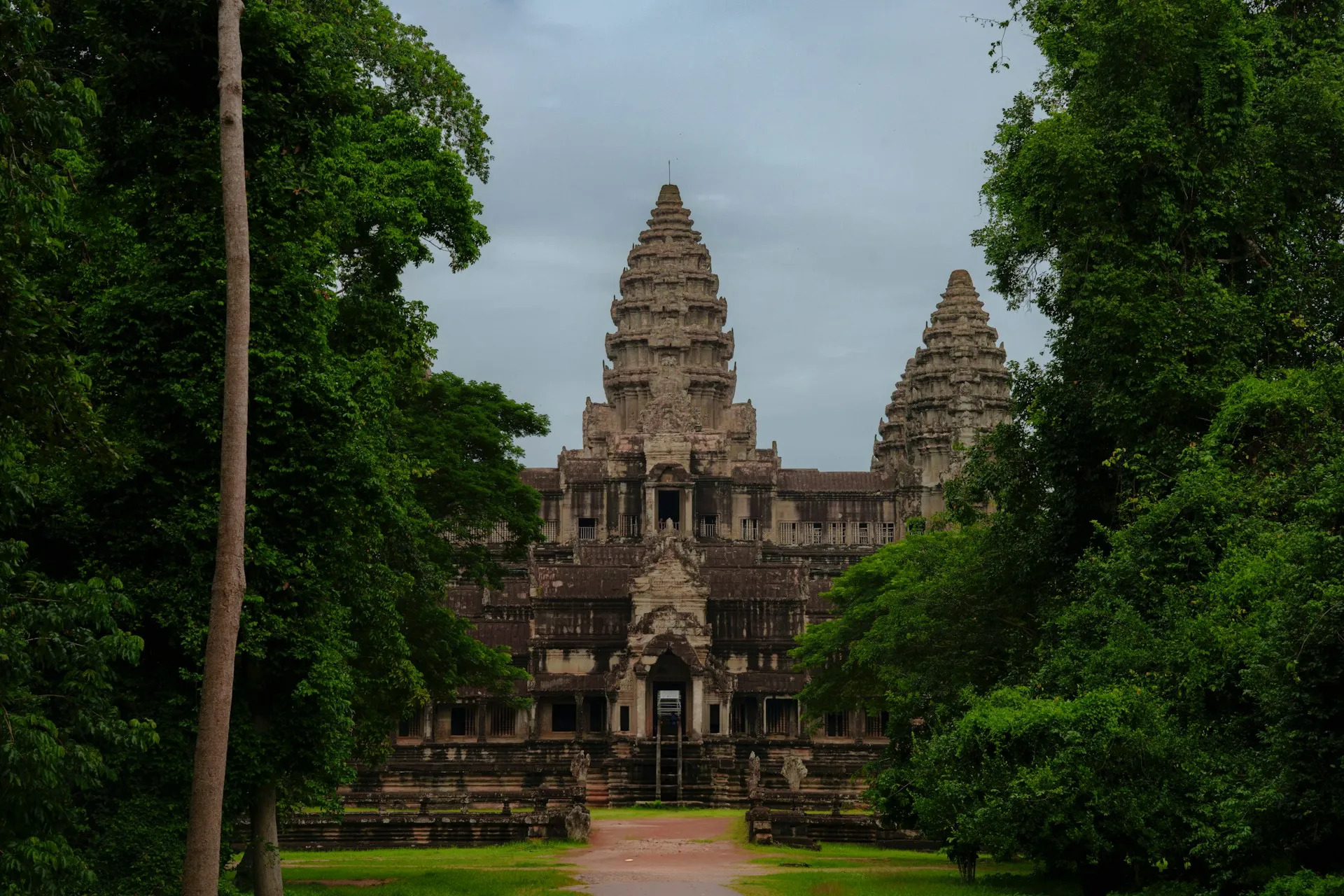 🇰🇭 Cambodia
Angkor: the greatest temple complex ever built
Built in the early 12th century under King Suryavarman II, Angkor Wat is the world's largest religious monument, with bas-relief galleries running for hundreds of metres. It is only the start. Ta Prohm, where giant tree roots grip the stonework, and the Bayon, with its serene stone faces on every tower, are just as memorable, and Banteay Srei's pink sandstone carvings are the finest in the park. Three days barely scratches the surface.
- Don't miss
- Angkor Wat at sunrise, Bayon, Ta Prohm, Banteay Srei
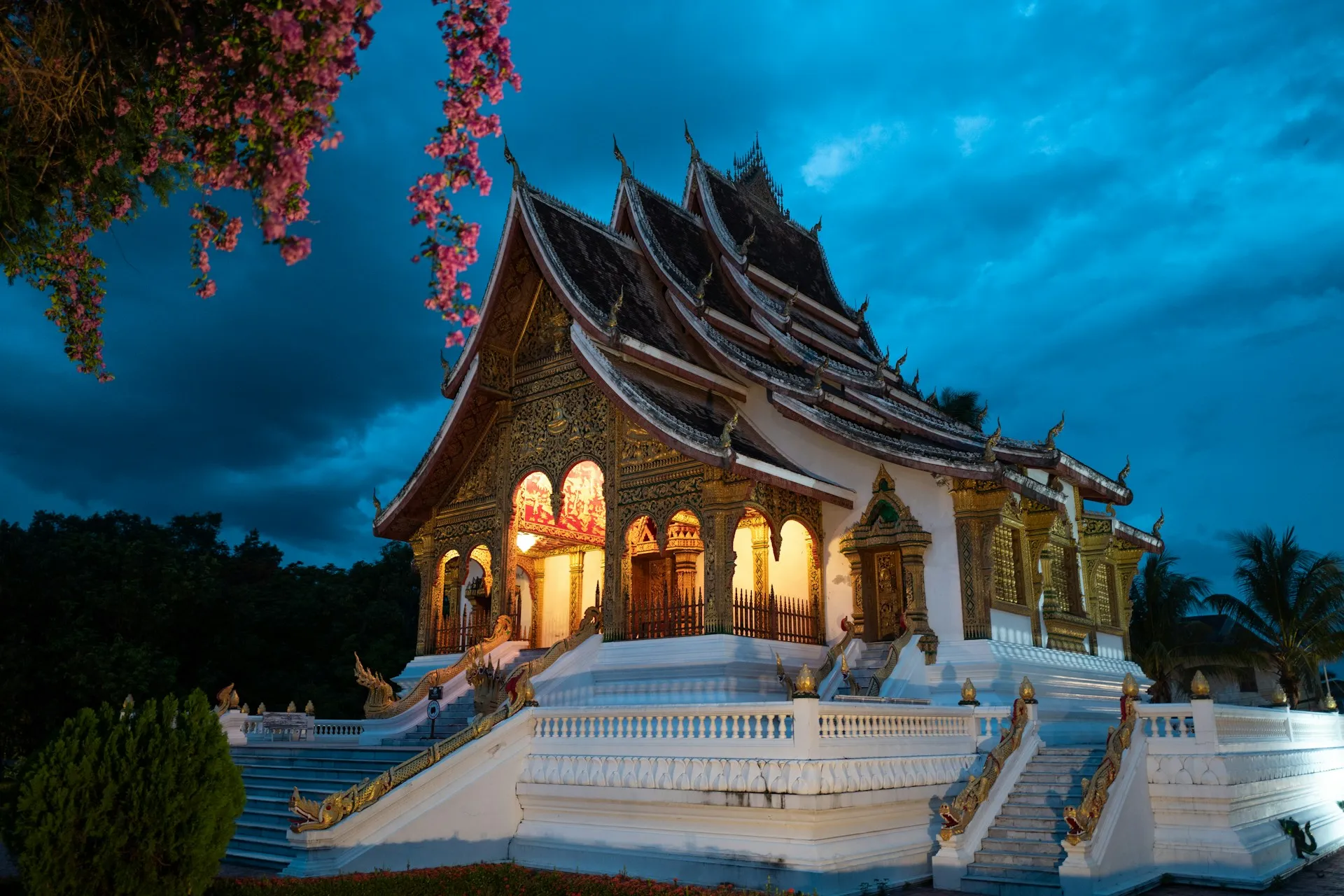 🇱🇦 Laos
Laos: intimate, gilded and still in daily use
Lao temples are working monasteries rather than ruins, woven into daily life. Luang Prabang has more than thirty, led by Wat Xieng Thong, with its low sweeping roofs and glittering tree-of-life mosaic, one of the most beautiful buildings in Southeast Asia. In Vientiane, the golden stupa of That Luang is the country's most sacred monument, and in the south the pre-Angkorian ruins of Wat Phou are a UNESCO site of their own.
- Don't miss
- Wat Xieng Thong, That Luang, Wat Phou
Round 2 of 8
Which has the better atmosphere and towns?
Laos wins, clearly
Laos, thanks to Luang Prabang. Few towns in Asia are as beautiful or as calm. Cambodia's cities have more energy and depth, but Siem Reap is polished for tourists and Phnom Penh is busy and demanding.
 🇰🇭 Cambodia
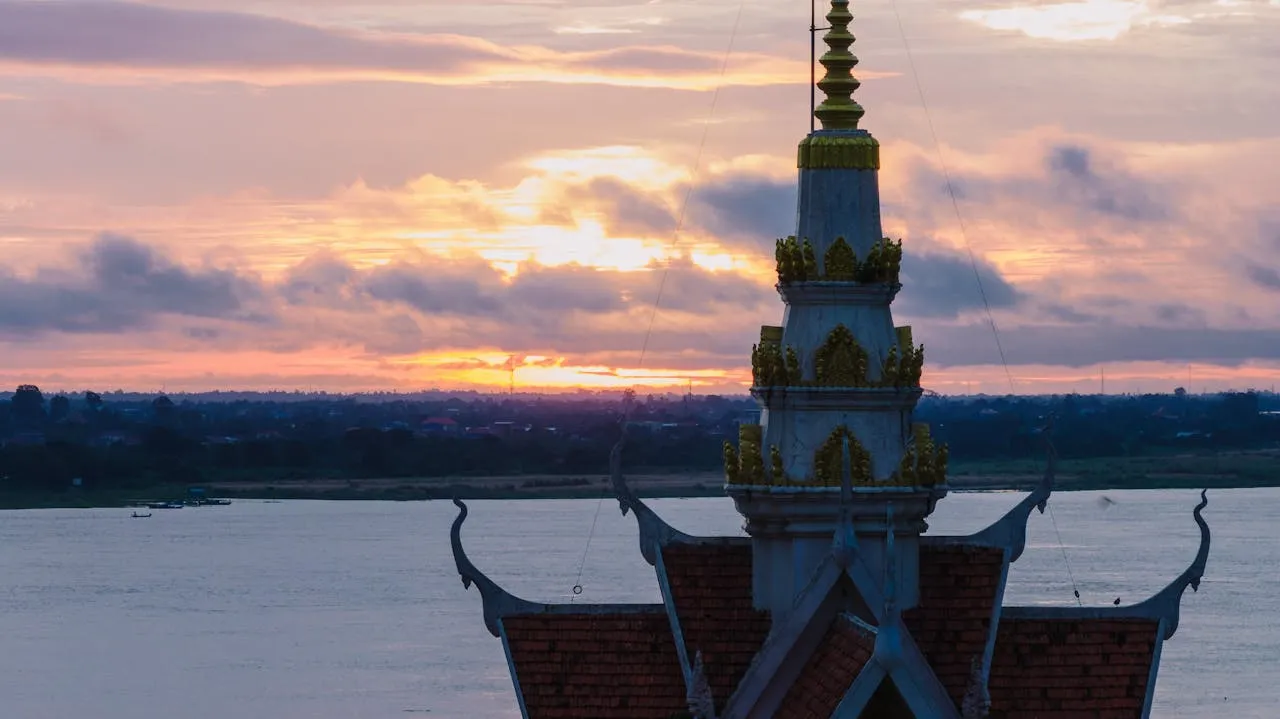
Cambodia: polished Siem Reap, complex Phnom Penh
Siem Reap has grown into a comfortable, well-organised base for Angkor, with night markets, good restaurants and the bars of Pub Street. Phnom Penh is more interesting: a real city with a French colonial riverfront, the Royal Palace, a growing arts and food scene and the sobering Khmer Rouge sites. Stay somewhere historic like Raffles Hotel Le Royal in the capital or Raffles Grand Hotel d'Angkor in Siem Reap.
 🇱🇦 Laos
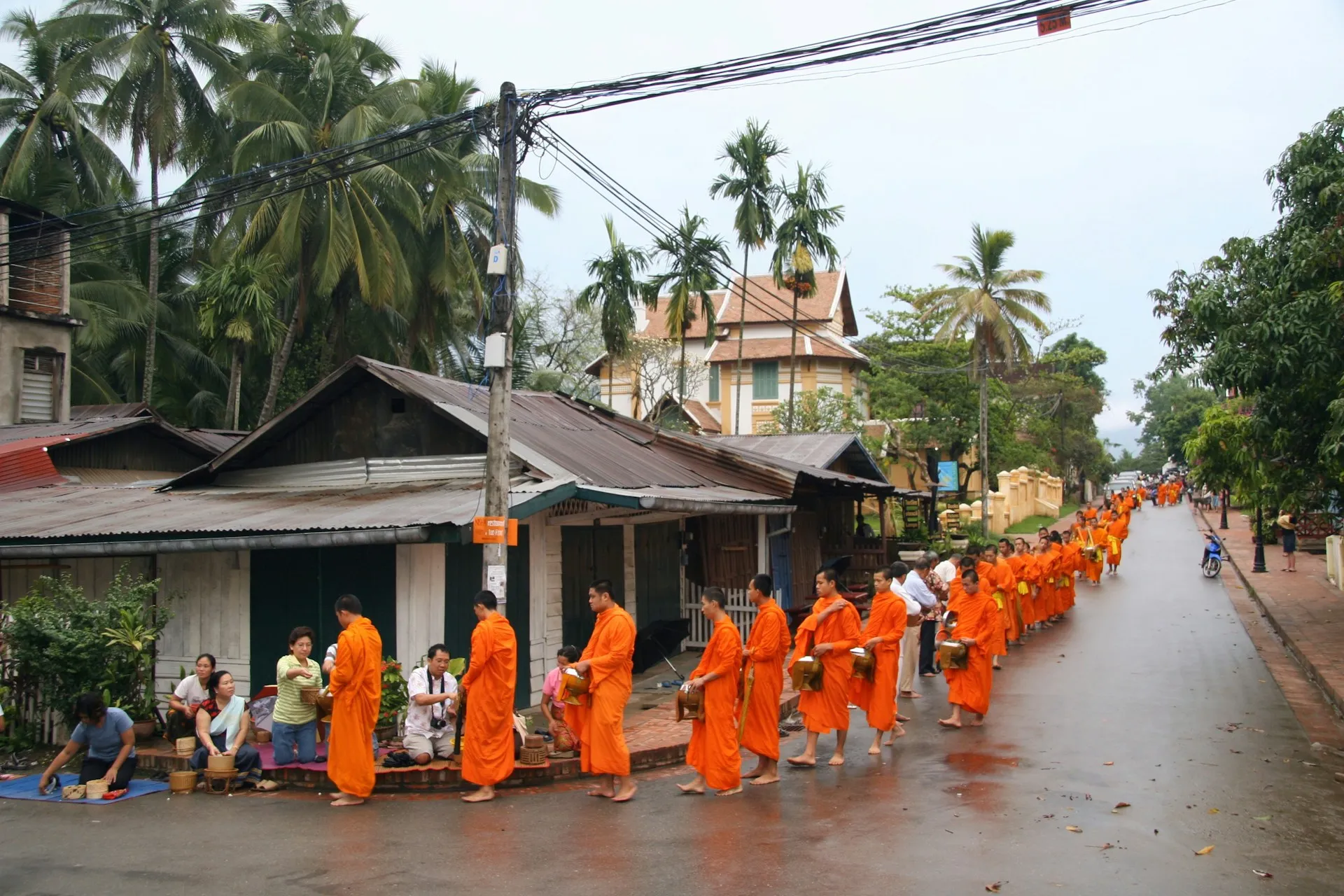
Laos: Luang Prabang, perhaps the region's loveliest town
On a peninsula where the Nam Khan meets the Mekong, Luang Prabang's temples and colonial shophouses are protected by its UNESCO listing, which has kept high-rise development away. Each dawn, lines of monks walk the streets collecting sticky rice in the tak bat alms round; watch quietly from a distance. Evenings bring the night market and some of Laos's best restaurants. Stay at Satri House, Amantaka or Rosewood Luang Prabang.
Round 3 of 8
Which is cheaper, Cambodia or Laos?
Cambodia wins, narrowly
Cambodia, slightly. Rooms, meals and transport are a little cheaper, and dollars make budgeting easy. The Angkor pass is a big fixed cost, while Laos's signature experience, the slow boat, is excellent value. Both are among the cheapest countries in Asia.
| Typical cost | 🇰🇭 Cambodia | 🇱🇦 Laos |
|---|---|---|
| Budget guesthouse | $8–20 | $12–25 |
| Mid-range hotel | $25–60 | $35–80 |
| Local meal | $2–5 | $3–7 |
| Local beer | $0.50–1.50 | $1–2.50 |
| Tuk-tuk for a day | $15–25Angkor temple circuit | $15–25 |
| Signature experience | $623-day Angkor pass | $30–50Two-day slow boat |
| Domestic flight | $60–120 | $90–150 |
| Mid-range daily budget | $30–60 | $35–70 |
Typical 2026 prices in US dollars. Laos prices move with the exchange rate of the kip, so carry some cash in kip and check current rates.
Round 4 of 8
River life and nature: the Mekong, Tonle Sap and beyond
Laos wins, narrowly
Laos makes the river the journey itself. The slow boat, the karsts of Vang Vieng, Kuang Si's pools and the 4,000 Islands give it the edge. Cambodia's answer, the Tonle Sap and its floating villages, is unique but a single excursion rather than a trip.
 🇰🇭 Cambodia
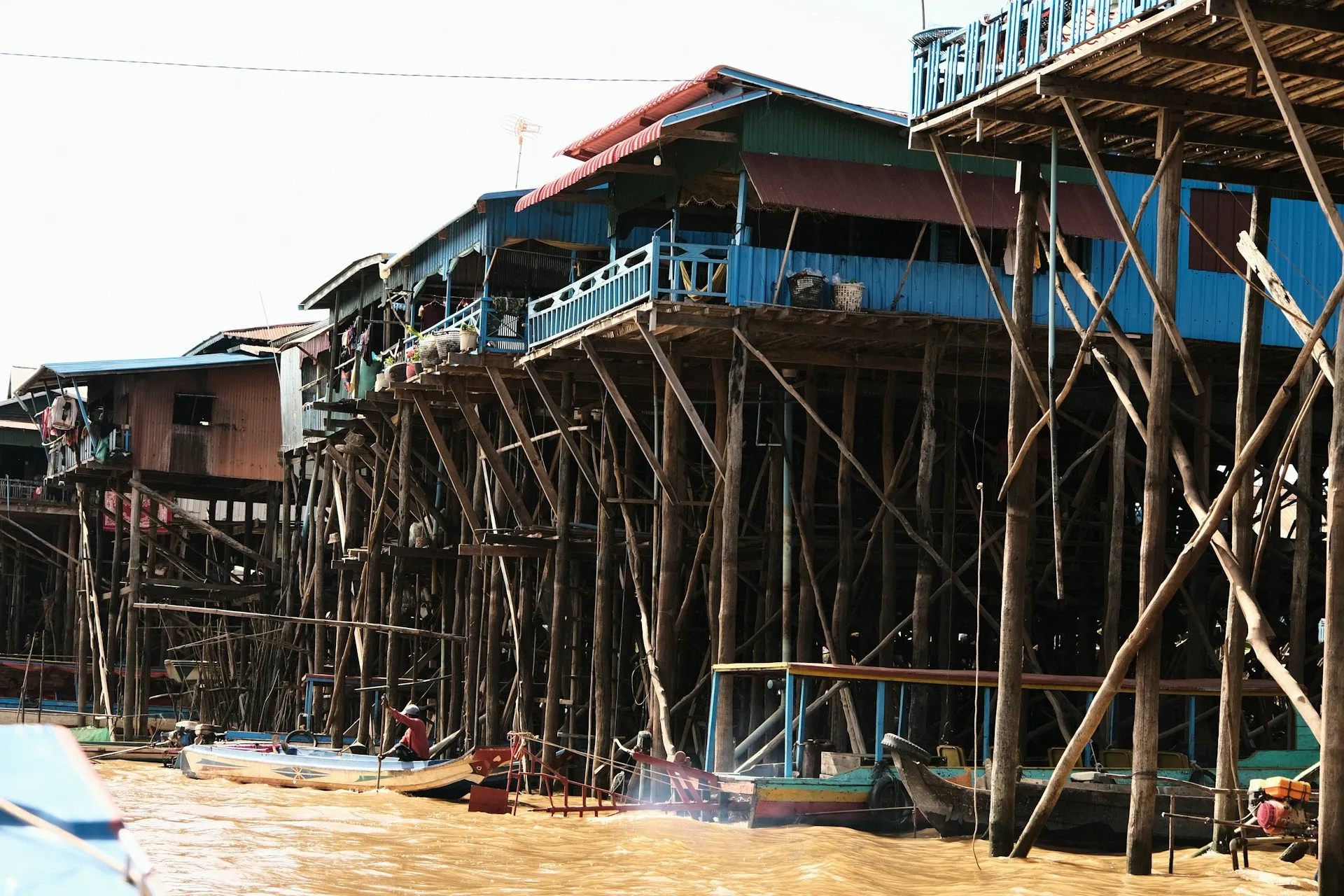
Cambodia: the lake that reverses its flow
Southeast Asia's largest freshwater lake swells hugely in the wet season as the Mekong pushes water back up the Tonle Sap river. Around it are villages of stilt houses and floating homes, schools and shops that rise and fall with the water. Choose a responsible tour to Kampong Phluk or Kampong Khleang rather than the heavily commercialised Chong Kneas. For more nature, head to Kampot's pepper farms, the Cardamom Mountains or the beaches of Koh Rong.
- Best time
- September to November, at high water
 🇱🇦 Laos
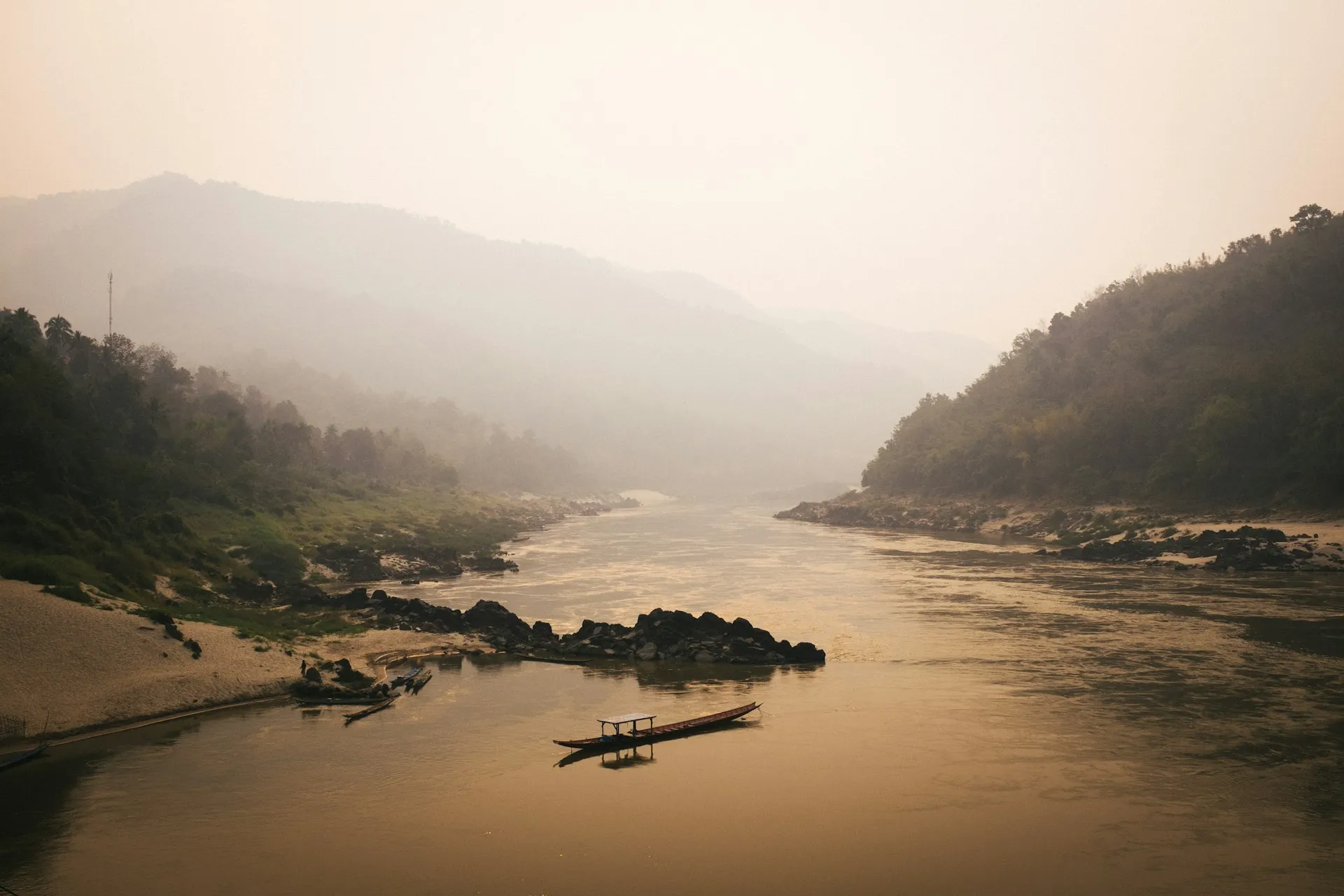
Laos: two days on the Mekong, and much more
The slow boat between Huay Xai on the Thai border and Luang Prabang takes two days, with a night in Pak Beng, drifting past forested hills and villages reachable only by river. Beyond it are the kayaking and caves of Vang Vieng, the turquoise tiers of Kuang Si waterfall and, in the far south, the 4,000 Islands, where the Mekong braids around hundreds of islets and rare Irrawaddy dolphins are occasionally seen.
- Don't miss
- Slow boat, Kuang Si, Pak Ou caves, Don Det
Round 5 of 8
Which has better food, Cambodia or Laos?
A draw
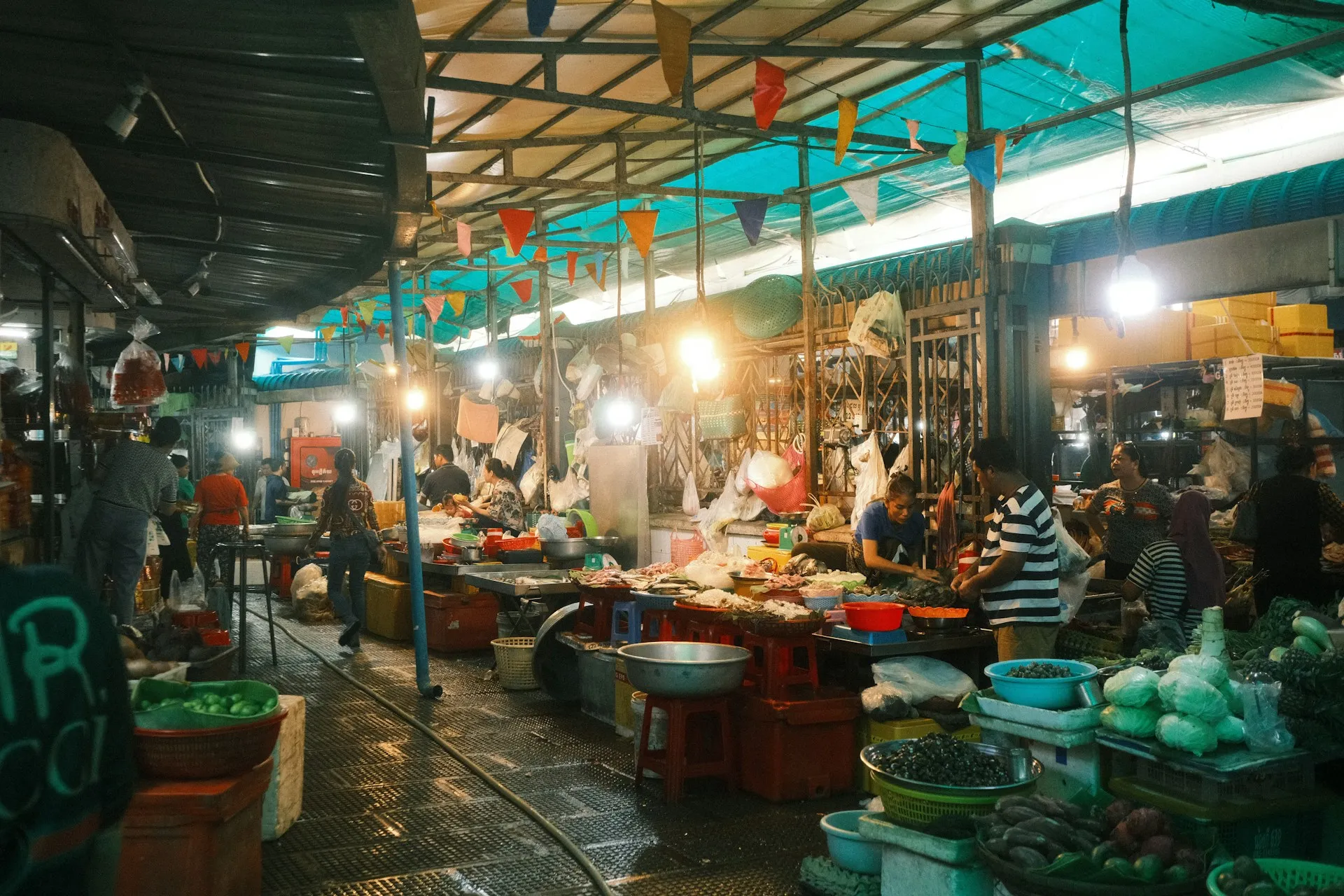
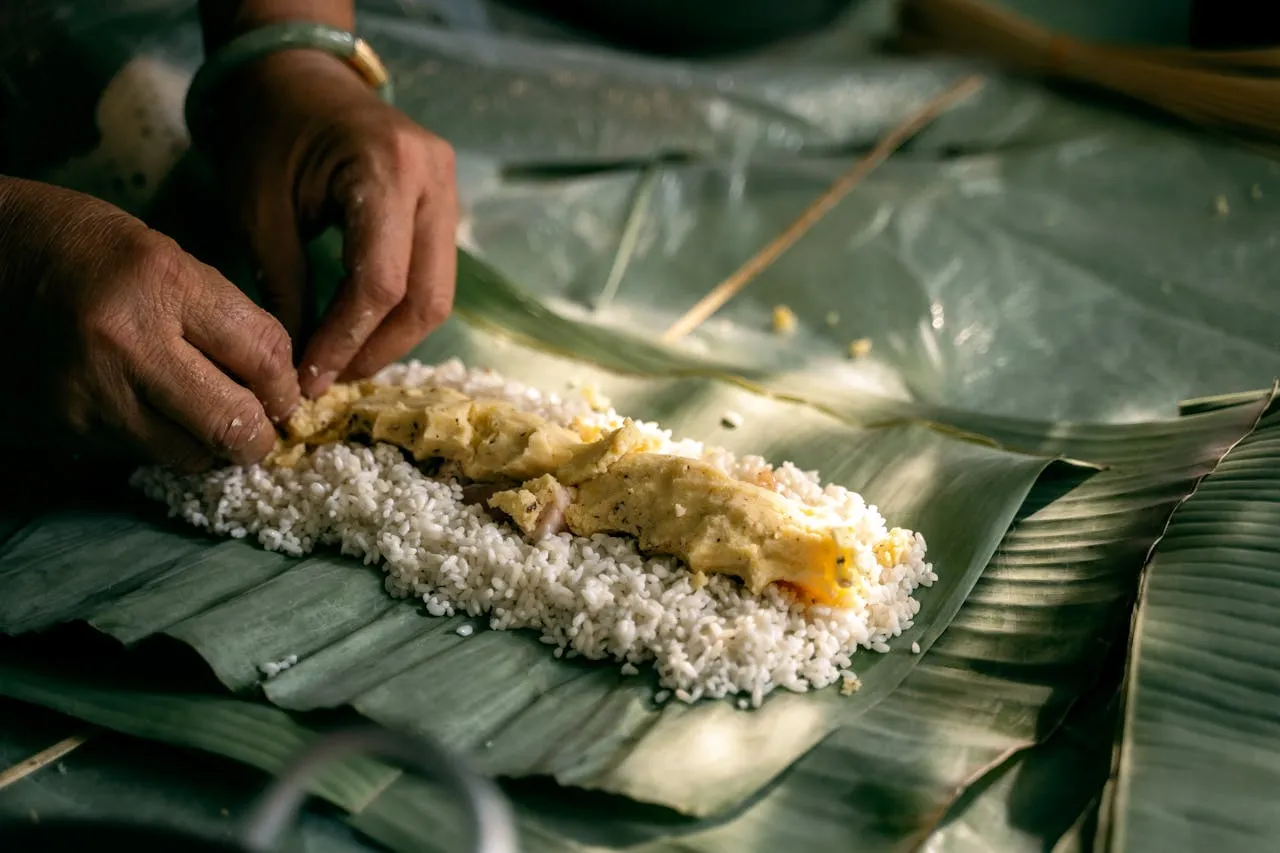
Two underrated cuisines, and a genuine draw. Khmer food is gentle and fragrant; Lao food is herb-heavy, sour and fiery. Cambodia has the bigger restaurant scene, while Laos's cooking feels less adapted for visitors.
 🇰🇭 Cambodia
Cambodia: fragrant Khmer cooking
Khmer cooking is built on kroeung, a paste of lemongrass, galangal, turmeric and makrut lime, and is milder than Thai. Try fish amok, the coconut curry steamed in banana leaf; lok lak, peppery stir-fried beef with a lime and Kampot pepper dip; and num banh chok, rice noodles in green fish curry, for breakfast. Phnom Penh's scene includes training restaurants such as Romdeng, which support young people from difficult backgrounds.
- Must eat
- Fish amok, lok lak, num banh chok
 🇱🇦 Laos
Laos: sticky rice, laap and bold herbs
Sticky rice, eaten by hand from a woven basket, is the centre of every meal. The national dish is laap, minced meat or fish with toasted rice powder, lime, herbs and chilli; pair it with tam mak hoong, the fiery Lao papaya salad, and jaew bong, Luang Prabang's sweet-hot chilli paste. Luang Prabang has an excellent restaurant scene, though choice thins out quickly in smaller towns.
- Must eat
- Laap, tam mak hoong, jaew bong
Round 6 of 8
Getting there and getting around
A draw
Both have improved a lot. Cambodia has two new international airports and flat, easy roads. Laos has a modern railway through its main tourist corridor and an open land border with Thailand, which Cambodia currently lacks.
New airports, but fly in
Siem Reap-Angkor International (SAI) opened in 2023, about an hour from town, and Techo International (KTI) replaced Phnom Penh's old airport in September 2025, about 20 km south of the city. Buses and minivans link Siem Reap and Phnom Penh in five to six hours, and ride-hailing apps make tuk-tuks easy. The land border with Thailand has been closed since mid-2025, so plan to arrive by air.
Fast by train, slow everywhere else
The Laos-China railway links Vientiane, Vang Vieng and Luang Prabang, cutting a long, winding road trip to about two hours end to end. Book ahead through the official LCR Ticket app or at stations, as trains sell out. Away from the line, mountain roads are slow, but the Friendship Bridges and the slow boat make entering from Thailand easy.
Round 7 of 8
When is the best time to visit Cambodia and Laos?
A draw
November to February is best for both. The two share a dry season from November to April and a wet season from May to October. March and April are the hottest months, and in northern Laos they bring haze from field burning.
Cambodia or Laos, month by month
| Month | 🇰🇭 Cambodia | 🇱🇦 Laos | Pick |
|---|---|---|---|
| January | BestDry, busy at Angkor | BestCool mornings in the north | Both |
| February | Best | GoodHaze can start late in the month | Cambodia |
| March | GoodGetting very hot | MixedBurning-season haze in the north | Cambodia |
| April | MixedHottest month; Khmer New Year | MixedHot and hazy; Lao New Year | Both |
| May | MixedRains begin | MixedRains clear the haze | Both |
| June | WetGreen and quiet | Wet | Both |
| July | Wet | WetAmong the wettest months | Cambodia |
| August | Wet | WetWettest month | Cambodia |
| September | WetWettest month; moats full | WetRains easing | Laos |
| October | WetTonle Sap at its fullest | MixedRains ending; lush landscapes | Laos |
| November | GoodWater Festival in Phnom Penh | BestClear skies, green hills | Both |
| December | BestPeak season, book early | BestCold nights in the mountains | Both |
Smart move: for a combined trip, go between November and February. Angkor sunrises are at their best, Luang Prabang is clear and fresh, and the slow boat runs smoothly. December and January are the busiest and priciest weeks. Pack a warm layer for northern Laos, where early mornings can feel close to 10°C.
Round 8 of 8
Is Cambodia or Laos safer for tourists?
Laos wins, narrowly
Both are safe in the main tourist areas, and Laos is calmer still. Petty crime is rare in Laos. In Cambodia, the tourist areas, including Phnom Penh, Siem Reap and Angkor, are away from the Thai border zone that governments advise against visiting.
🇰🇭 Cambodia: what to watch
- The Thai border zone: after armed clashes that began in 2025, the US advises against all travel within 50 km of the border and the UK within 20 km. Remote sites such as Preah Vihear temple fall inside; check current advice before visiting Koh Ker or the far northwest.
- Bag snatching from motorbikes happens in Phnom Penh. Carry bags on the side away from the road and use ride-hailing apps at night.
- Landmines and unexploded ordnance remain in rural areas. Stay on marked paths outside towns.
🇱🇦 Laos: what to watch
- Unexploded ordnance: Laos is the most heavily bombed country per person in history, and a large share of the bombs never exploded. Tourist areas are cleared; never leave marked paths in the countryside.
- River and road risks: choose reputable operators for tubing and kayaking in Vang Vieng, and avoid mountain roads after dark.
- Drug laws are strict, and offers in party areas can be set-ups. Say no.
Before you go: check your government's current advice for Cambodia, confirm your insurance covers the areas you plan to visit, and read our travel scams guide and vaccine requirements guide. Tap water isn't safe to drink in either country.
Cambodia and Laos pros and cons
The honest upsides and downsides, in one place.
🇰🇭 Cambodia
Pros
- Angkor, one of the world's great archaeological sites
- Slightly cheaper, and dollars make budgeting easy
- English widely spoken in tourist areas
- Phnom Penh has real cultural and historical depth
- Tonle Sap villages, Kampot and the islands add variety
- Two new international airports
Cons
- The Angkor pass is a significant fixed cost
- Siem Reap can feel geared to tourists
- The Khmer Rouge history is emotionally heavy
- Land border with Thailand closed; border zone off-limits
- Very hot from March to May
🇱🇦 Laos
Pros
- Luang Prabang is one of Asia's loveliest towns
- The Mekong slow boat and the 4,000 Islands
- One of Southeast Asia's safest countries
- Far fewer tourists than its neighbours
- The railway makes the north quick and easy
- Easy overland connections with Thailand
Cons
- No headline sight on Angkor's scale
- A little more expensive than Cambodia
- Less English outside the main towns
- Burning-season haze in the north in March and April
- Vientiane is pleasant but forgettable
Which is better for first-timers, backpackers and slow travellers?
Cambodia for first trips, short trips, history and temples. Laos for slow travel, nature, and anyone coming overland from Thailand.
First trip to Southeast Asia
Cambodia
A world-class headline sight, lots of English, dollars accepted and simple routes between Siem Reap and Phnom Penh.
History and temples
Cambodia
From the Khmer Empire at Angkor to the Khmer Rouge sites in Phnom Penh, few countries tell their story so powerfully.
A short trip of 5 to 7 days
Cambodia
Three days at Angkor and two in Phnom Penh deliver more impact in a week than Laos can.
Slow travellers
Laos
Two days on the river, hammocks in the 4,000 Islands and dawn in Luang Prabang are made for taking your time.
Nature and outdoor fans
Laos
Kayaking and caves in Vang Vieng, Kuang Si's pools, and the waterfalls and coffee farms of the Bolaven Plateau.
Arriving from Thailand
Laos
The slow boat and the Friendship Bridges are open, while the Thai-Cambodian land border is closed.
Backpackers and solo travellers
Either
Cambodia has the busier hostel scene; Laos suits solo travellers who want calm. Both are very safe for solo women in tourist areas.
Food lovers
Either
Phnom Penh for restaurants and Khmer classics, Luang Prabang for Lao markets and cooking classes.
Photographers
Either
Angkor at sunrise is unbeatable for monuments; Luang Prabang and the Mekong win for everyday life and landscapes.
Can you combine Cambodia and Laos in one trip?
Yes, they make a natural pairing. In 16 days you can see Angkor and Phnom Penh, ride the railway through Laos to Luang Prabang, and finish on the slow boat to Thailand. Start in Cambodia for the big sights, then slow down in Laos.
Cambodia: days 1 to 6
- Days 1–4
Siem Reap and Angkor. Fly into Siem Reap-Angkor International (SAI). Buy a 3-day pass ($62, valid on any three days within a week) and spread your visits over several sunrises: Angkor Wat, Angkor Thom and the Bayon on day one; Ta Prohm, Banteay Srei and Preah Khan on day two; outer temples or favourites on day three. Save an afternoon for a Tonle Sap village such as Kampong Phluk.
- Days 5–6
Phnom Penh. Bus or fly to the capital. Visit Tuol Sleng Genocide Museum and the Choeung Ek memorial, then walk the riverfront and the Royal Palace. Eat Khmer food at Romdeng.
Laos: days 7 to 16
- Days 7–8
Vientiane. Fly from Phnom Penh (KTI) to Vientiane (VTE); check current schedules, as some routes connect via Pakse or Bangkok. See That Luang, Patuxai and the COPE Visitor Centre on unexploded ordnance, then watch sunset from the Mekong riverfront.
- Days 9–10
Vang Vieng. About an hour north by train. Kayak the Nam Song, explore the caves, swim at the Blue Lagoon, or take a sunrise balloon over the karsts.
- Days 11–14
Luang Prabang. Another hour by train. Rise early once for the alms round, visit Wat Xieng Thong and the Royal Palace Museum, swim at Kuang Si, and take a boat to the Pak Ou caves. Stay at Satri House or Rosewood Luang Prabang.
- Days 15–16
Slow boat to Thailand. Take the two-day boat upriver to Huay Xai, with a night in Pak Beng, then cross to Chiang Khong and fly home from Chiang Rai or Chiang Mai. Short on time? Fly home from Luang Prabang instead.
When to do it: November to February. Avoid March and April if you can (heat in Cambodia, haze in northern Laos) and the heaviest rains from June to September. Coming from the south instead? The Stung Treng border crossing links Cambodia with Laos's 4,000 Islands overland.
Verdict: should you choose Cambodia or Laos?
Ask yourself one question: do you need to see Angkor? If yes, choose Cambodia. If you've already been, or temples aren't the draw, choose Laos for its atmosphere, river journeys and calm. With two to three weeks, do both.
For temples and history
Choose Cambodia if…
You want high-impact sights, even on a short trip.
- Angkor is on your bucket list
- This is your first trip to Southeast Asia
- Your budget is tight
- You want to understand 20th-century history
- You only have 5 to 7 days
For atmosphere and slowness
Choose Laos if…
You want calm, authenticity and time on the river.
- You've already seen Angkor
- Luang Prabang's atmosphere is the draw
- You want the Mekong slow boat
- You prefer quiet, off-the-beaten-path travel
- You're travelling overland from Thailand
Weigh it for your own trip
Select everything that matters to you.
Pick what matters on this trip and the needle will move.
Cambodia vs Laos: frequently asked questions
Which is better, Cambodia or Laos?
It mostly depends on Angkor. If you want to see Angkor Wat, choose Cambodia: it is also slightly cheaper, with more English spoken and an easy Siem Reap to Phnom Penh route, so it suits a first trip. Choose Laos for atmosphere, Luang Prabang, the Mekong slow boat and a slower, quieter pace. They are neighbours with the same dry season, November to April, so two to three weeks covers both.
How do you travel between Laos and Cambodia?
Flying is easiest: Cambodia Airways has flown direct between Phnom Penh and Vientiane since January 2026, and other routes connect via Bangkok or Hanoi. Overland, the only international crossing is Nong Nok Khiene (Laos) to Trapeang Kriel (Cambodia), about 150 km south of Pakse near the 4,000 Islands, with onward buses to Stung Treng and Phnom Penh. Don't plan to cross via Thailand: the Thai-Cambodian land border has been closed since mid-2025.
Which is cheaper, Cambodia or Laos?
Cambodia, slightly. A mid-range day costs about $30–60 in Cambodia and $35–70 in Laos, and rooms, meals and transport are all a little cheaper. The Angkor pass ($37 for one day, $62 for three, $72 for seven) is a big fixed cost, while the two-day Mekong slow boat in Laos usually costs $30–50. Both are among the cheapest countries in Asia.
Is Cambodia or Laos better for temples?
Cambodia, by a vast margin. Angkor Wat is the largest religious monument ever built, at the heart of an archaeological park covering around 400 square kilometres. Laos has beautiful, living temples, especially Wat Xieng Thong in Luang Prabang and That Luang in Vientiane, but nothing on Angkor's scale. If temples are your main reason to travel, choose Cambodia.
Can you combine Cambodia and Laos in one trip?
Yes. A classic 16-day route spends four days at Angkor and two in Phnom Penh, then flies to Vientiane, takes the railway to Vang Vieng and Luang Prabang, and finishes on the two-day slow boat to the Thai border. Allow at least 14 days to do both justice.
What is the best time to visit Cambodia and Laos?
November to February is best for both: dry, sunny and not too hot. Both have a dry season from November to April and a wet season from May to October. March and April are the hottest months and bring burning-season haze to northern Laos. December and January are the busiest and most expensive weeks.
Do I need a visa for Cambodia and Laos?
Most Western visitors need a visa for both. Cambodia's e-Visa costs about $36; apply only through the official government site. Laos offers a visa on arrival at major airports and land borders, or an e-Visa, costing roughly $40–50 depending on your passport. Check the current rules for your nationality before you travel.
Is Cambodia or Laos safer for tourists?
Both are safe in the main tourist areas, and Laos has a slight edge, with very little petty crime. In Cambodia, watch for bag snatching in Phnom Penh, and avoid the Thai border zone, where governments advise against travel after armed clashes; Phnom Penh, Siem Reap and Angkor are well away from it. In rural areas of both countries, stay on marked paths because of unexploded ordnance.
Two neighbours, two very different trips
Cambodia gives you the scale of Angkor and a history that demands your attention. Laos gives you the Mekong, Luang Prabang's dawns and time to breathe. Neither will disappoint, and together they make one of Southeast Asia's best journeys.