
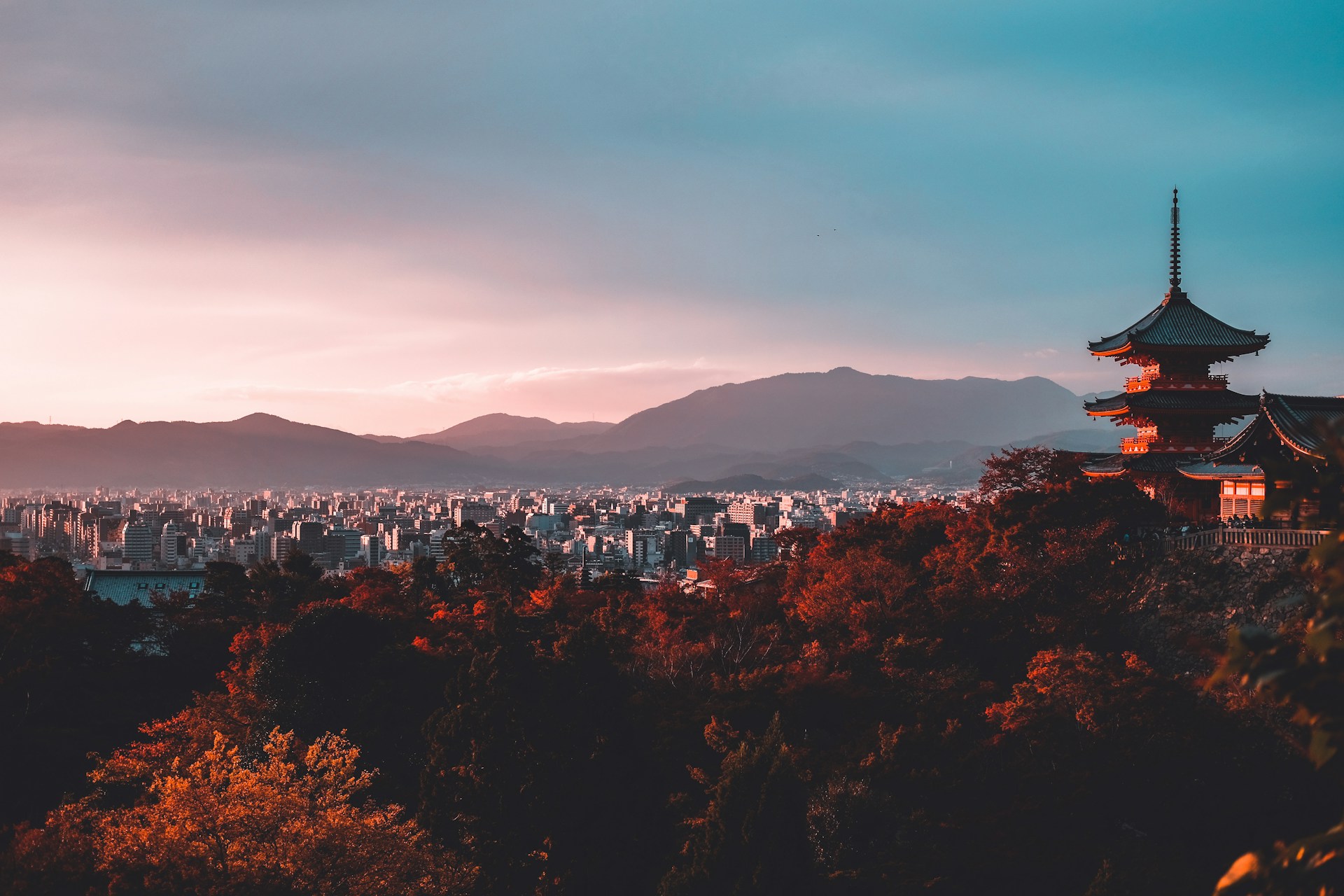
A thousand years of capital, still legible on the ground
Kyoto was Japan's imperial capital from 794 until 1868, and unlike most cities that carry that kind of history as a plaque on one old building, Kyoto carries it everywhere: over two thousand temples and shrines, seventeen UNESCO World Heritage sites, and entire streets where the wooden machiya townhouses look close to how they did a century ago. It's also a real city of 1.4 million people with a university, a busy downtown shopping district, and a food scene that has nothing to prove to Tokyo's.
What's changed in the last few years is how many people know this. Kyoto absorbed a tourism boom that its narrow lanes and city bus network were never built for, and the city's 2026 response is direct: the accommodation tax rises again in March, the geisha photography ban on Gion's private streets carries real fines, and the old tourist-friendly one-day bus pass is gone for good, replaced by a combined bus and subway pass meant to push visitors onto the less crowded subway. None of it makes Kyoto harder to enjoy, but it rewards a bit of planning around where the crowds actually are.
The honest complications
Fushimi Inari's lower gates and the Arashiyama bamboo grove are genuinely overwhelmed from around 9am to late afternoon; both are free and open around the clock, so an early or late visit is a real solution, not just advice. City buses toward the eastern temples run standing-room-only in peak season, and the discontinued one-day bus pass means most visitors now need the subway more than guidebooks used to suggest. Central Kyoto is flat, but the temple districts of Higashiyama involve real stone steps and slopes, and Kiyomizu-dera's approach is one long uphill shopping street. None of this changes the fact that Kyoto delivers what it promises; it just rewards arriving with a plan.
Five districts, each a different Kyoto
Kyoto's grid layout, inherited from its original Heian-era city plan, makes it more legible than most Japanese cities. Where you base yourself comes down to how much temple-district atmosphere you want outside your front door versus how much you want easy access to trains and buses.
Kyoto Station & Shimogyo
The area around Kyoto Station is not the most atmospheric part of the city, but it's the most practical: every bus route, the subway, and the Shinkansen all radiate from here, and the station building itself, a vast glass-and-steel structure with a rooftop garden, is worth a look. For a first visit, this is the base that makes the whole city reachable without a transfer.
Higashiyama
The eastern hills hold Kyoto's densest concentration of historic sights: Kiyomizu-dera's wooden stage, the preserved stone lanes of Sannen-zaka and Ninen-zaka, and Yasaka Shrine at the district's northern edge. Beautiful at dawn before the tour groups arrive, genuinely crowded by mid-morning.
Gion & Pontocho
Gion is Kyoto's famous geisha (geiko in the local dialect) and maiko district, centred on Hanami-koji street and its teahouses. Since April 2024, photographing anyone on the marked private residential side streets carries a ¥10,000 fine, introduced after years of tourists chasing performers for photos; Hanami-koji itself and the willow-lined Shirakawa canal remain fine for photography. Pontocho, the narrow lantern-lit alley across the river, is the atmospheric choice for dinner.
Arashiyama
On the city's western edge, Arashiyama pairs the famous bamboo grove with the Togetsu-kyo bridge over the Katsura River and Tenryu-ji, a UNESCO-listed Zen temple with one of Kyoto's finest gardens. Best experienced early morning or after 4pm, when the day-trip crowds thin out.
Downtown & Nishiki
The Kawaramachi and Shijo area is Kyoto's modern commercial centre, department stores and covered shopping arcades, with Nishiki Market, "Kyoto's Kitchen," running through the middle of it: a 400-year-old, roughly 130-stall covered arcade that's the best single place in the city to eat your way through regional specialties.
From centuries-old ryokan to Kyoto Station hostels
Kyoto's accommodation scene runs from some of Japan's most storied ryokan to a strong hostel and business-hotel scene near the station. Kyoto's lodging tax rises again from March 2026, making the city's highest tax bracket in Japan for premium stays, worth factoring into a luxury budget specifically.
At the top, The Ritz-Carlton, Kyoto, set on the Kamogawa River, has held a Forbes Travel Guide Five-Star rating for nine consecutive years and blends contemporary luxury with traditional Japanese design, from about ¥150,000 a night. For a genuine ryokan experience, Hoshinoya Kyoto, reachable only by a short private boat up the Hozugawa River in Arashiyama, runs mornings of meditation and calligraphy around multi-course kaiseki dinners served in-room, from about ¥100,000, while Tawaraya, run by the same family since the 1700s and widely regarded as Kyoto's gold-standard ryokan, requires booking nine to twelve months ahead.
In the boutique bracket, Ace Hotel Kyoto (from about ¥35,000) occupies a landmarked 1926 telephone exchange building reworked by architect Kengo Kuma, with several restaurants, a gallery and gardens folded into the historic shell, a genuinely interesting stay rather than just a well-located one.
At the budget end, Piece Hostel Kyoto (from about ¥3,500), a short walk from Kyoto Station with a ground-floor café-bar, and K's House Kyoto (from about ¥2,000), ten minutes from the station with a big shared kitchen and rooftop terrace, are two of the most consistently well-reviewed hostels in the city and a big part of why Kyoto's hostel scene punches above its weight.
Yudofu, kaiseki and matcha, refined over centuries
Kyoto's cuisine developed for an imperial court and a dense concentration of Zen temples, and it shows: refined, seasonal, and built around ingredients like tofu, yuba (tofu skin) and locally grown vegetables rather than the meat- and seafood-heavy cooking of coastal Japan. It's also, at the market and convenience-food end, an easy, affordable city to eat well in.
Yudofu
Simmered tofu served simple, in a light kombu broth with dipping sauces, developed as monastery food and still Kyoto's signature dish. Yudofu Sagano near Tenryu-ji serves a set built around Saga tofu in a Sukiya-style building overlooking a Japanese garden, while Shoraian, by the Togetsu-kyo bridge, serves its yudofu kaiseki in rooms looking straight out over the river and the Arashiyama hills.
Kaiseki
Kyoto is where kaiseki, Japan's formal multi-course haute cuisine, reached its most refined form. Kikunoi Honten in Gion, a century-old restaurant under chef Yoshihiro Murata, is one of the city's most consistently celebrated addresses; book weeks ahead.
Nishiki Market
"Kyoto's Kitchen," a 400-year-old covered arcade of roughly 130 stalls, is the single best way to sample the city's specialties in one walk: tako tamago (a whole baby octopus skewered around a quail egg), fresh yuba, pickles, and matcha sweets. The market's own guidance asks visitors to eat beside the stall rather than while walking, so budget the time to actually stop.
Matcha & sweets
Kyoto sits next to Uji, Japan's most famous matcha-growing region, and the city's tea culture runs from formal tea ceremonies to matcha soft-serve sold at temple gift counters. Worth a stop in Higashiyama or on the Uji day trip rather than skipped as a tourist cliché.
Temples, torii gates, and timing that actually matters
Kyoto's major sights are genuinely excellent and genuinely crowded; the single biggest lever a visitor has is timing, since the two most-photographed spots in the city are both free and open around the clock.
Fushimi Inari, at dawn or after dark
Fushimi Inari Taisha, the mountainside shrine with thousands of vermillion torii gates forming an unbroken tunnel up the hill, is free, open 24 hours, and consistently named alongside Arashiyama and Shibuya Crossing as one of Japan's most overtouristed spots. The lower gates near the entrance are shoulder-to-shoulder from around 9am through the afternoon; arriving at dawn or after sunset, when the gates are lit and nearly empty, is the actual way to experience it rather than a queue. The full loop to the summit and back takes 2 to 3 hours; most visitors comfortably stop at the Yotsutsuji viewpoint, about 30-40 minutes up, for the views over the city.
Higashiyama on foot
Kiyomizu-dera, a wooden temple with a stage jutting out over the hillside on wooden pillars without a single nail, is Kyoto's most visited temple (entry around ¥500) and best seen at opening time. The walk down through Sannen-zaka and Ninen-zaka, preserved stone-paved lanes lined with traditional shops, connects to Yasaka Shrine and the edge of Gion, making a single morning route that covers the district's highlights.
Arashiyama's bamboo grove and river
The bamboo grove is free, open 24 hours, and genuinely magical for the roughly 15 minutes it takes to walk through, on the condition you go before 8am or after 5pm; by mid-morning it is a slow-moving queue rather than a forest walk. Combine it with Tenryu-ji's UNESCO-listed garden next door and a walk along the Katsura River past the Togetsu-kyo bridge.
Kinkaku-ji & Nijo Castle
Kinkaku-ji, the Golden Pavilion, a Zen temple pavilion covered in gold leaf and reflected in its own pond, is one of Kyoto's most photographed sights (entry ¥500) and worth the trip despite the crowds, which move quickly since the temple building itself isn't enterable. Nijo Castle, the shogun's Kyoto residence with its famous "nightingale floors" that chirp underfoot as a built-in security measure, gives a different, more feudal-history angle on the city (entry ¥800-1,300 depending on which buildings are open).
Gion in the evening
The best time to experience Gion is dusk, when the teahouses light their lanterns along Hanami-koji and, if you're lucky and patient rather than pursuing, a geiko or maiko might be glimpsed moving between appointments. Photograph only on public streets, never chase or block anyone for a photo, and consider a proper geisha performance booking through your hotel or a scheduled show as the respectful way to actually see the art form up close.
One, two or three days, planned around the crowds
Three full days covers Kyoto's essentials properly; even one well-planned, early-starting day delivers the highlights. These routes are sequenced to hit the most crowd-sensitive sights, Fushimi Inari and the bamboo grove, before the day-trip buses arrive.
- Early morning
Fushimi Inari at dawn. The torii tunnels nearly empty; up to the Yotsutsuji viewpoint and back, about 90 minutes round trip.
- Late morning
Higashiyama. Kiyomizu-dera at opening, down through Sannen-zaka and Ninen-zaka to Yasaka Shrine.
- Afternoon
Nishiki Market lunch. Work through the stalls, then a walk through downtown Kyoto.
- Evening
Gion & Pontocho. Dusk along Hanami-koji, dinner in a Pontocho alley restaurant.
- Day 1
The one-day route: Fushimi Inari at dawn, Higashiyama, Nishiki Market, Gion at dusk.
- Day 2 morning
Arashiyama early. The bamboo grove before 8am, then Tenryu-ji's garden and the Togetsu-kyo bridge.
- Day 2 afternoon
Kinkaku-ji & Nijo Castle. The Golden Pavilion, then the shogun's nightingale floors.
- Day 2 evening
Yudofu dinner in Arashiyama or Higashiyama. A slower, temple-district close to the trip.
- Days 1-2
The two-day route above, at a slightly gentler pace.
- Day 3, option A
Nara. The deer park and Todai-ji's giant bronze Buddha, about 45 minutes by JR from Kyoto Station.
- Day 3, option B
Uji. Matcha country and the Byodo-in temple on the ¥10 coin, about 20 minutes by JR from Kyoto.
Flat downtown, hilly temple districts, no more all-day bus pass
Kansai International Airport (KIX) is the main gateway, connected to Kyoto Station in about 75 minutes by the direct Haruka limited express (around ¥3,600) or roughly 90 minutes via Osaka. From Tokyo, the Shinkansen bullet train takes about 2 hours 15 minutes for around ¥14,000 one way. Within the city, load a Suica or Pasmo IC card onto your phone or as a physical card, tap-and-go on buses, the subway and most trains, and top up at any station machine or convenience store.
Kyoto discontinued its tourist-favourite one-day bus pass in March 2024 specifically because it was worsening bus overcrowding; the current alternative is a combined bus and subway one-day pass at ¥1,100, which nudges visitors toward the less-crowded subway for cross-town trips and buses for the last mile to specific temples. Taxis are plentiful and metered fairly (roughly ¥600-700 flag-fall, more for longer trips), a reasonable option late at night or with luggage.
Best time to visit and the two big festivals
Kyoto's inland basin setting makes it hotter and more humid than Tokyo in summer and colder in winter. Late March to early April (cherry blossoms) and November (autumn colour) are extraordinary but the most crowded, highest-priced weeks of the year; book accommodation months ahead for either. Late April to June and late September to October offer comparable weather with meaningfully smaller crowds.
Gion Matsuri, throughout July, is Kyoto's largest festival, with elaborate float processions on 17 and 24 July drawing huge crowds; a spectacle worth planning around, either to attend or to avoid the accommodation crunch. Jidai Matsuri on 22 October is a costumed historical procession through the city, smaller and easier to watch comfortably.
Cheaper than Tokyo, with a rising accommodation tax
Kyoto runs slightly cheaper than Tokyo for food and comparable for transport, but its accommodation tax is about to become the highest in Japan. From March 2026, the per-night tax scales from ¥200 at budget properties up to ¥10,000 a night at stays of ¥100,000 or more, a jump aimed squarely at funding infrastructure and crowd management rather than at budget travellers.
- Hostel dorm ¥2,000-4,000
- Nishiki Market & convenience store meals ¥2,000-3,500
- Bus/subway day pass ¥1,100
- Free Fushimi Inari & bamboo grove, plus one paid temple
- Boutique hotel or business hotel ¥15,000-30,000
- Restaurant meals ¥5,000-9,000
- IC card transport plus occasional taxi
- A kaiseki lunch, temple entries, a tea ceremony
- The Ritz-Carlton or a top ryokan ¥100,000+
- Kaiseki dinner tasting menus
- Private guides and temple access
- Higher accommodation tax bracket from March 2026
One of the world's safest cities, with a short, specific list
Kyoto rates 9.3/10 on our safety scale. Violent crime against tourists is essentially a non-issue, the city is safe to walk at night including around the station and Gion, and lost items routinely turn up at the nearest koban police box. Kyoto is also excellent for solo female travellers: harassment is rare and the temple districts and downtown core feel comfortable alone at any reasonable hour.
The short list that actually applies: pickpocketing, concentrated in Nishiki Market and the crowded lower approach to Fushimi Inari, so keep bags zipped and to the front; heatstroke in July and August humidity, especially on the uphill walk to Kiyomizu-dera, so carry water and time strenuous walking for morning; and the Gion photography rule, a legal and etiquette issue rather than a safety one, but one that carries a real ¥10,000 fine if ignored on marked private streets. Emergency numbers are the nationwide 110 (police) and 119 (fire/ambulance), and the JNTO Japan Visitor Hotline (050-3816-2787) runs 24 hours in English for any travel emergency.
Nara, Osaka and Uji are all under an hour away
Kyoto's position in the middle of the Kansai rail network makes it an excellent base for day trips in every direction, all reachable without a rental car.
Nara
Japan's capital before Kyoto, Nara's biggest draw is Nara Park, home to over a thousand famously bold, bowing sika deer that roam freely and will headbutt for the deer crackers sold at park stalls. Todai-ji temple houses a 15-metre bronze Buddha, one of the largest in the world, inside one of the largest wooden buildings on Earth.
Osaka
Half an hour away and a completely different city in tone: louder, cheaper, built around eating. Dotonbori's canal-side food stalls and Osaka Castle's grounds are the standard combination for a half or full day.
Uji
The heart of Japan's matcha industry and the setting for the final chapters of The Tale of Genji, with tea houses, matcha sweets shops, and the Byodo-in temple, the building depicted on the ¥10 coin, on the riverbank.
Himeji
Japan's best-preserved original castle, an elegant white five-story fortress that survived WWII bombing and earthquakes intact, a straightforward Shinkansen trip from Kyoto for a full day.
Kyoto FAQ
Is Kyoto safe for tourists?
Kyoto is one of the safest cities in the world. Violent crime against tourists is extremely rare; the main concerns are pickpocketing in crowded spots like Nishiki Market and the Fushimi Inari approach. Standard city awareness is all you need.
How many days do I need in Kyoto?
Three full days covers the city well: one for Higashiyama's temples and Gion, one for Fushimi Inari and the south, one for Arashiyama and the west. A fourth day fits Nara or Uji and is worth adding.
How much does Kyoto cost per day?
Budget travellers manage on ¥9,000-13,000 a day with hostels and casual meals; mid-range runs ¥22,000-35,000. Kyoto's accommodation tax rises again in March 2026, adding a small but real cost at every price tier.
When is the best time to visit Kyoto?
Late March to early April for cherry blossoms and November for autumn colour are stunning but the most crowded and expensive weeks of the year. May-June and late September-October offer comparable weather with far fewer crowds.
Is Kyoto or Tokyo better for a first trip?
They show different sides of Japan and pair well together. Kyoto is smaller, slower and built around a thousand years of temples and traditional culture; Tokyo is bigger, faster and more contemporary. For a short trip focused on classic Japan, Kyoto is the easier single choice.
How do I get from Kyoto to Osaka or Tokyo?
Osaka is about 30 minutes by JR Special Rapid train from Kyoto Station, around ¥580. Tokyo is about 2 hours 15 minutes by Shinkansen bullet train, from roughly ¥14,000 one way.
What is the best area to stay in Kyoto?
Kyoto Station and Shimogyo for first-timers: central, well connected to buses, subway and the Shinkansen, and quieter at night. Gion and Higashiyama for the most atmospheric, temple-adjacent setting but expect tourist pricing and crowds by day.
Do I need to speak Japanese in Kyoto?
No. English signage is extensive at the station, major temples and hotels, and translation apps handle the rest. A few polite words, arigato (thank you), sumimasen (excuse me), are genuinely appreciated.
Is Kyoto walkable?
Central Kyoto is flat and walkable, but Higashiyama's temple lanes involve stone steps and slopes, and Fushimi Inari's full summit hike takes 2-3 hours round trip. Comfortable shoes matter more than in most cities.
What is the Gion photography rule?
Since April 2024, photographing anyone, including geisha and maiko, on Gion's marked private residential streets carries a ¥10,000 fine. Public streets like Hanami-koji remain fine for photos, but asking permission before photographing individuals is good practice everywhere.
What Stays With You
Kyoto doesn't need to try. The city has been the reference point for Japanese aesthetics for over a thousand years, and it shows in details nobody staged for a visitor: the specific quiet of a temple garden two streets back from Kiyomizu-dera's crowds, the sound of wooden geta sandals on stone in Gion at dusk, a bowl of yudofu that tastes like almost nothing and somehow like exactly the right thing. None of it is a performance. It's simply what centuries of refinement, applied without interruption, looks like when you finally see it in person.
Go to Fushimi Inari before the city wakes up. Watch the light come up through a thousand gates with almost nobody else there, and understand immediately why people build entire trips around this one city.