
Japan spring vs fall at a glance
Eleven rounds, scored honestly. Spring takes the bucket-list sakura moment and festival culture; fall takes weather, value and manageable crowds just as clearly. Scenery and food are two of travel's great unresolved debates. Select a category to jump to the full comparison.
| Category | SpringFall |
|---|---|
| The eleven rounds | |
| SceneryPink and white for 10 days vs crimson and gold for a month | A genuine tie |
| WeatherJapan's clearest, most reliable season | Fall, clearly |
| Crowds & bookingA three to four week window spreads visitors out | Fall, more manageable |
| CostSakura peak prices spike sharply | Fall, narrowly |
| Festivals & cultureHanami is Japan's most participatory tradition | Spring, emphatically |
| FoodTwo completely different, equally excellent seasonal menus | A genuine tie |
| NightlifeOutdoor hanami parties vs cosy harvest izakaya | Spring, narrowly |
| Things to doDifferent landmark spots, comparable depth | A genuine tie |
| Getting aroundLess pressure on Shinkansen seats and ryokan bookings | Fall, narrowly |
| Safety & healthHay fever season vs the typhoon season tail | Draw |
| FamiliesMagical blossoms vs calmer, cooler comfort | Split decision |
| Best for | |
| First-time visitorsThe single most iconic Japan experience | Spring |
| Budget travellersLower prices and shorter booking lead times | Fall |
| Serious hikersCool, dry conditions and clear mountain views | Fall |
| OverallNo outright winner, it comes down to priorities | Depends on your priorities |
Two seasons, one extraordinary country
Japan is one of the few countries where the seasons are the destination. The cherry blossoms and the autumn maples aren't incidental backdrops, they're the reason people plan trips years in advance and return to the same temple garden in both seasons just to understand the difference.
Sakura season, and the philosophy of mono no aware
The sakura cherry blossom is Japan's most powerful cultural symbol, carrying centuries of philosophical weight around mono no aware, the bittersweet beauty of transience. Blooms last only 7 to 10 days at full peak, which is both their tragedy and the source of their hold over the Japanese imagination. The entire country mobilises for hanami, flower-viewing parties, and foreigners are welcomed into the celebration fully.
Koyo season, quieter, longer, arguably more sophisticated
Where sakura is pink and white and brief, koyo is crimson and gold, building over three to four weeks as the maples change incrementally. Tofuku-ji temple's sea of maple trees, Eikan-do's flame-red corridor, Nikko's UNESCO complex buried in colour, autumn Japan is cooler and clearer than spring too, with October and November bringing some of the year's finest weather.
Key facts side by side
| Fact | 🌸 Spring | 🍁 Fall |
|---|---|---|
| Peak window | Late March to early May (regional) | Mid-October to late November (regional) |
| Full colour duration | 7–10 days per location | 3–4 weeks per location |
| Tokyo avg. temperature | 12–22°C across the season | 13–19°C across the season |
| Booking lead time | 6–12 months for popular ryokan | 3–6 months generally sufficient |
| Signature event | Hanami cherry-blossom picnics | Jidai Matsuri, temple illuminations |
| Domestic holiday overlap | Golden Week (late Apr–early May) | None major |
| Visa, most Western passports | None, up to 90 days | None, up to 90 days |
| Currency | Japanese Yen (¥) | Japanese Yen (¥) |
Typical 2026 prices and dates; check the Japan Meteorological Corporation's annual sakura and koyo forecasts closer to travel for precise timing.
Round 1 of 11
Scenery
A genuine tie
Pink and white vs crimson and gold, two completely different relationships with beauty. Spring wins for singular emotional impact; fall wins for colour richness and a three times longer window.
 🌸 Spring
The world's most emotionally charged spectacle, for 10 days
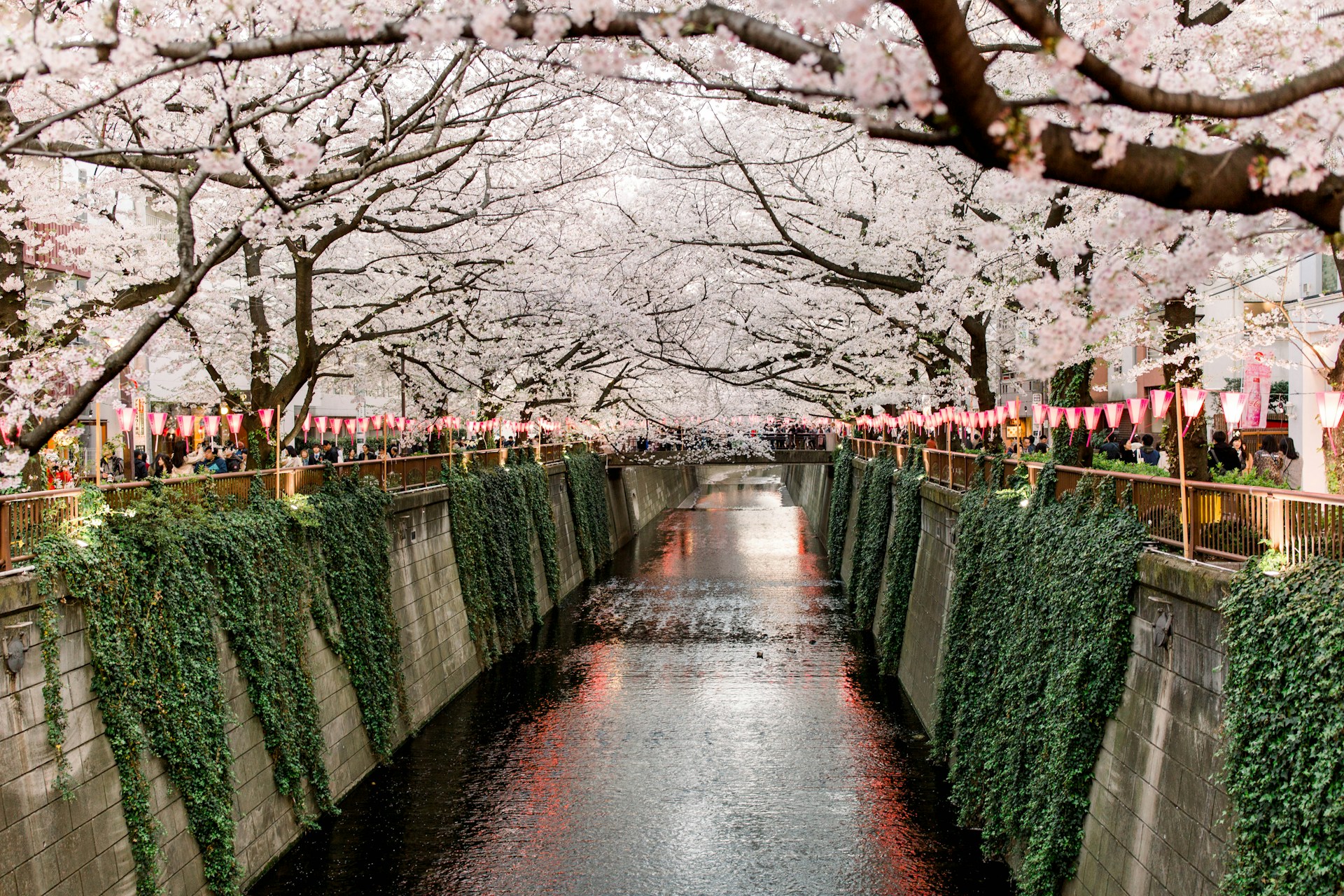
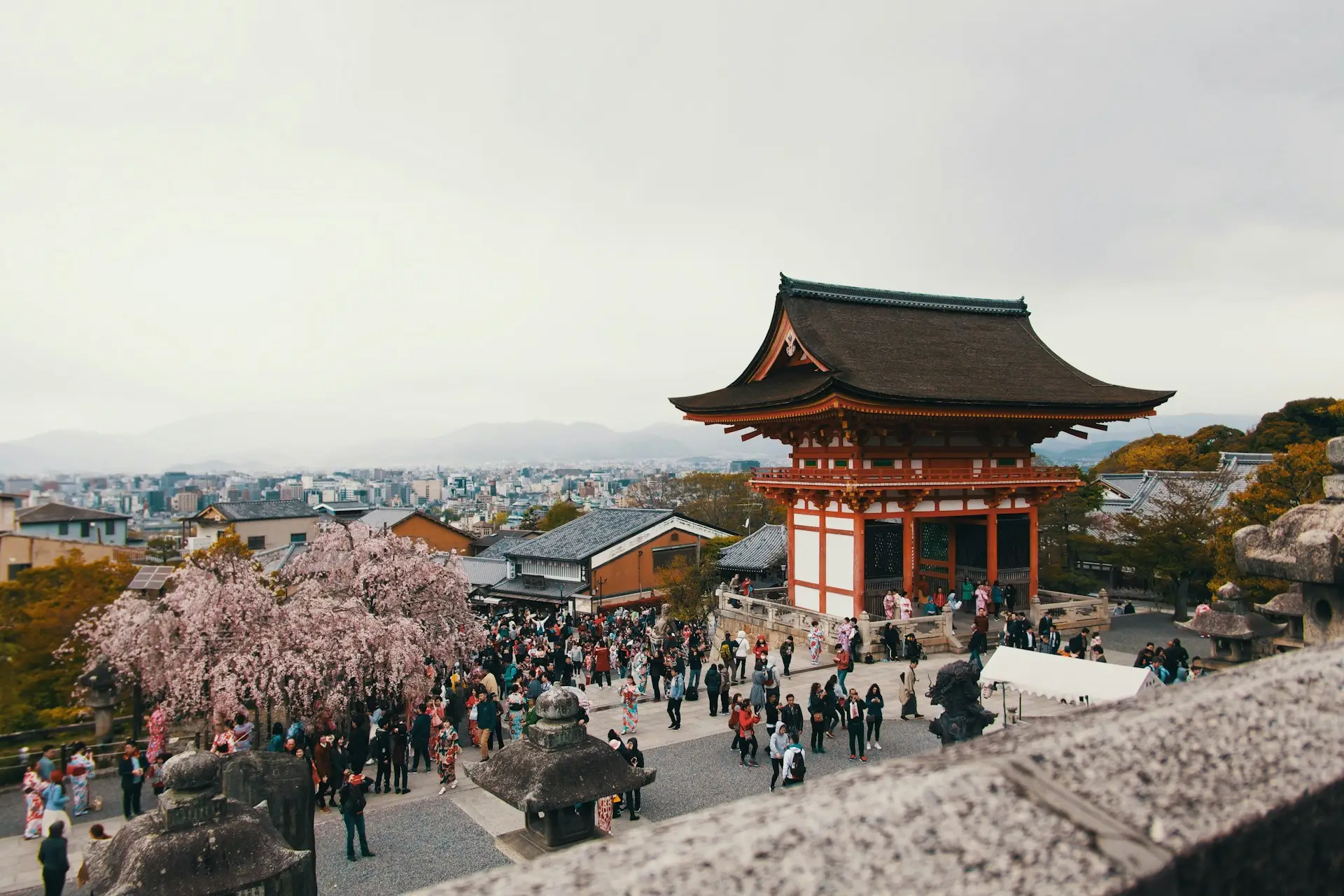
No other flower carries the cultural weight the sakura carries in Japan. Maruyama Park's illuminated weeping cherry tree at night, reflected in the pond below with hanami revellers surrounding it, has no equivalent. Petals fall like snow, covering the ground in drifts of pink, and the entire effect is heightened by the awareness of its brevity.
- Don't miss
- Maruyama Park, the Philosopher's Path, Yoshino Mountain
 🍁 Fall
Crimson and gold for three weeks, colour that deepens daily
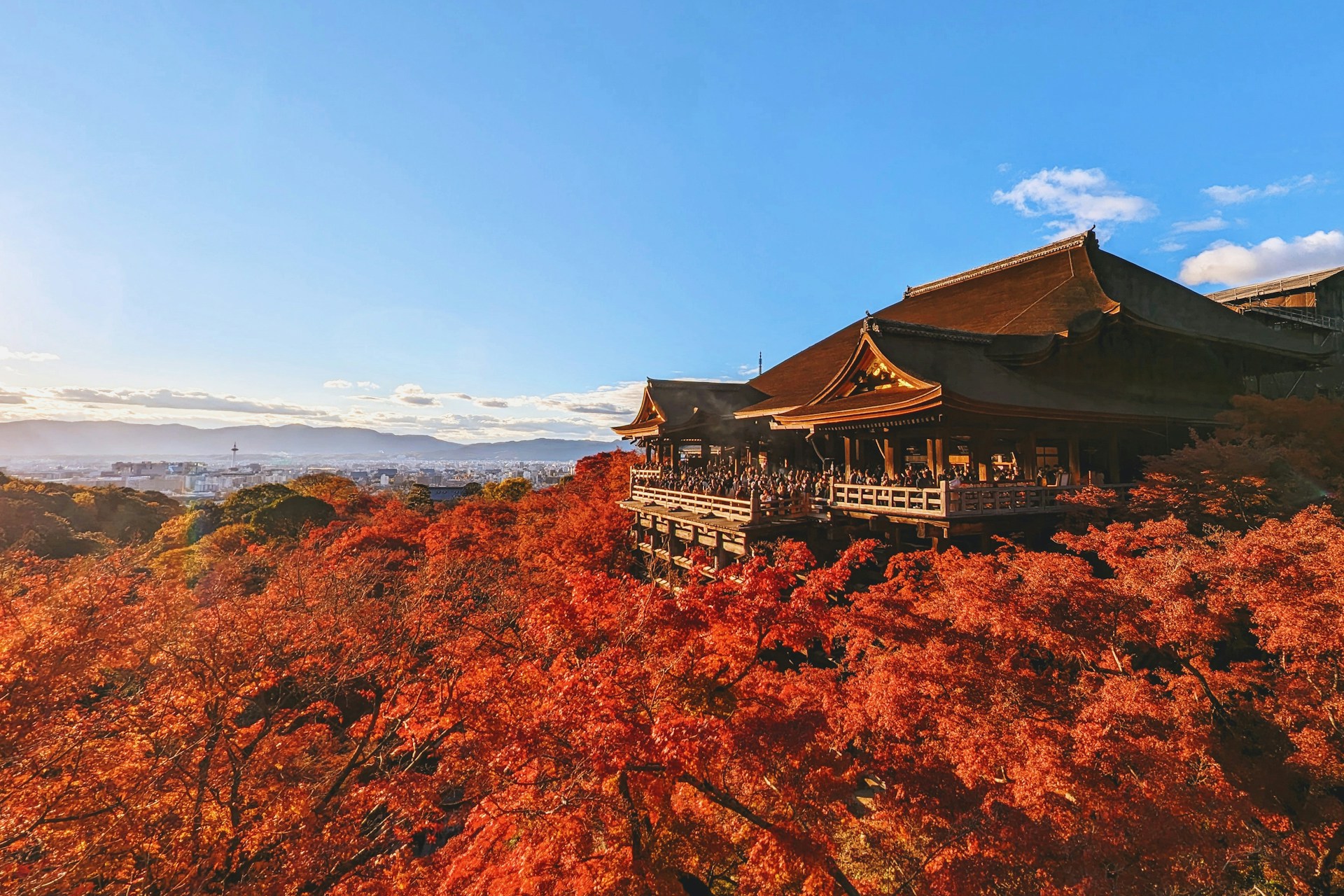
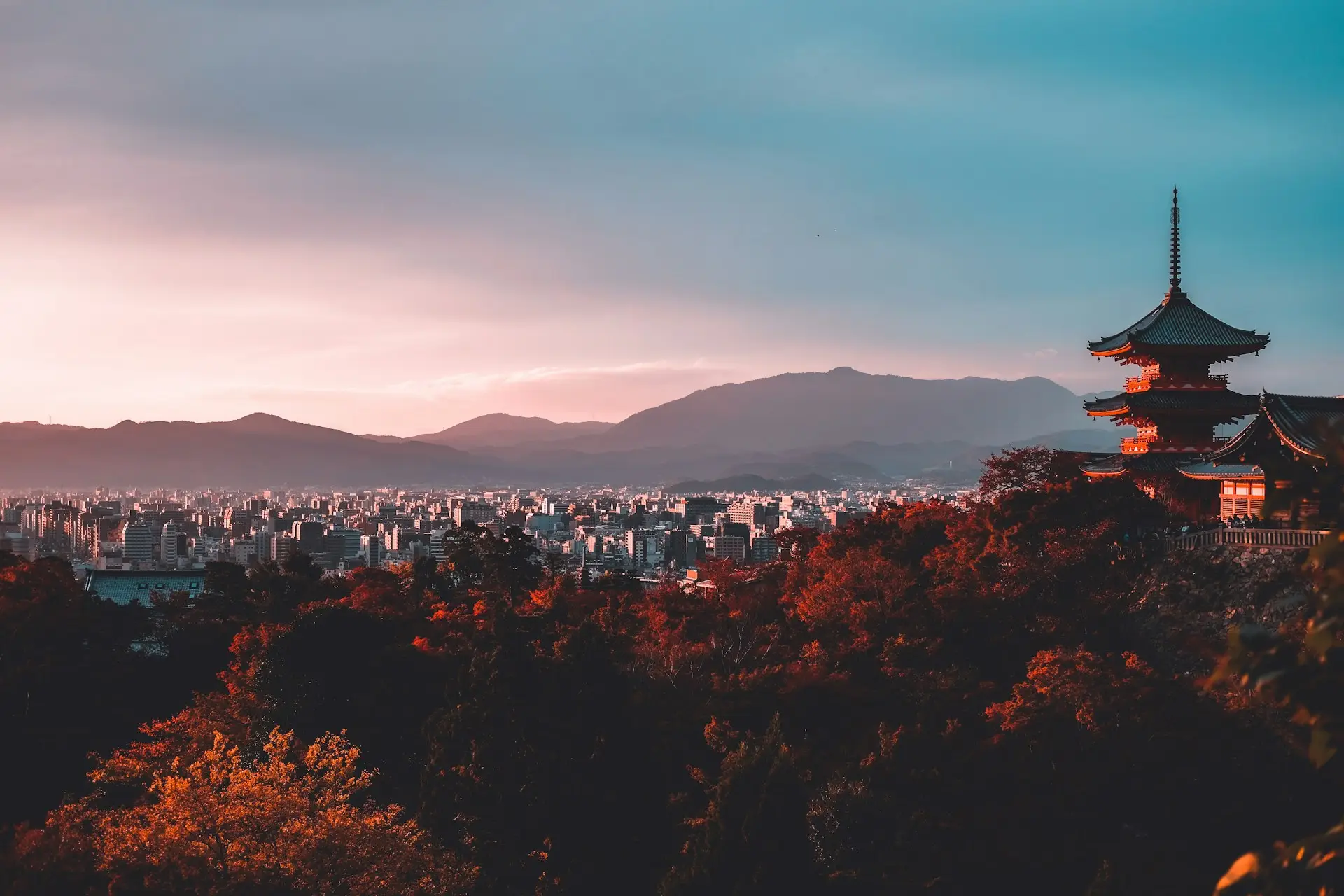
The Japanese maple turns a particularly deep, saturated crimson, vivid rather than muted. Tofuku-ji temple, seen from the bridge above, presents a sea of deep red maple canopy as far as the eye can see. Eikan-do's corridor of crimson maples and Korankei gorge's entirely red canyon walls make autumn Japan richer and more varied in colour, and it lasts three times as long as sakura.
- Don't miss
- Tofuku-ji, Eikan-do, Korankei Gorge
Honest verdict: A genuine tie, two different aesthetic experiences at the same extraordinary level. Most travellers who have done both say they're incomparable rather than rankable.
Round 2 of 11
Weather
Fall wins, clearly
Both seasons are mild and generally pleasant. Fall is Japan's clearest, most reliable season, spring is warmer earlier but more changeable.
| Month | Avg. temp (Tokyo) | Avg. rain days | Notes |
|---|---|---|---|
| 🌸 March | 12°C | 10–12 days | Sakura beginning in the south |
| 🌸 April | 17°C | 12–14 days | Peak sakura Tokyo/Kyoto, showers possible |
| 🌸 May | 22°C | 10–12 days | Sakura ended, excellent weather |
| 🍁 October | 19°C | 8–10 days | Best weather of the year |
| 🍁 November | 13°C | 6–8 days | Peak koyo, the least rainy month |
Why fall wins: October and November bring cool, dry, clear conditions with a higher frequency of blue-sky days than spring, and the cold, dry air intensifies maple colours. Spring's only caution is variability, the same weather systems that create forecast uncertainty can delay or accelerate the bloom.
Round 3 of 11
Crowds and booking lead time
Fall wins, more manageable
Both seasons attract Japan's peak visitor numbers. Spring requires more aggressive advance planning, and its shorter window compresses crowds harder.
 🌸 Spring
The most congested window in Japan's tourism calendar
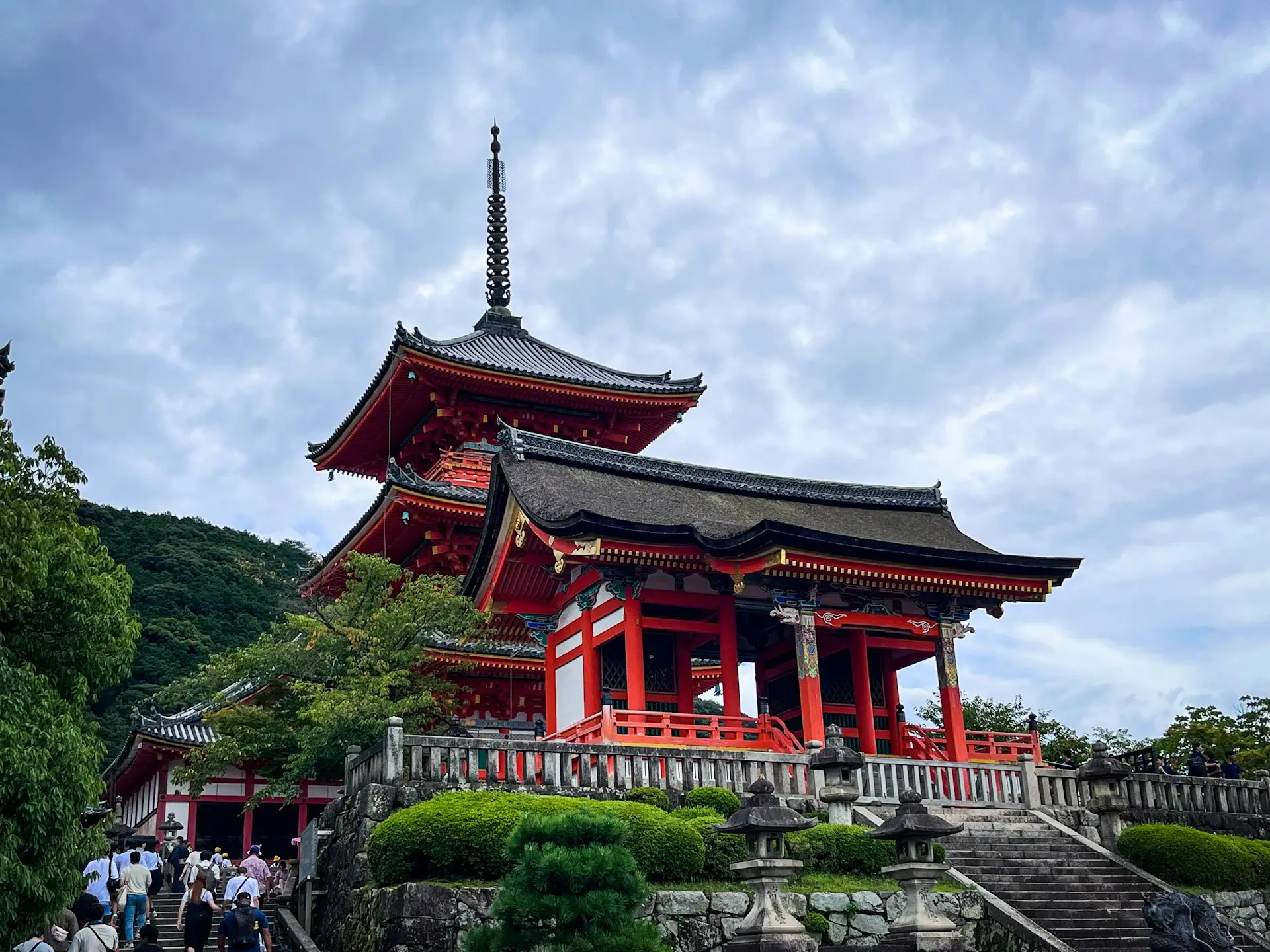
International visitors timed specifically for sakura, domestic hanami-goers, and Golden Week national holidays immediately after create the year's most congested window. Popular viewpoints can be genuinely overwhelming at peak bloom. Popular ryokan and hotels book out 6 to 12 months in advance, and prices spike sharply.
- Book by
- 6–12 months ahead for peak-week ryokan
 🍁 Fall
Busy but navigable, and the window is three times longer
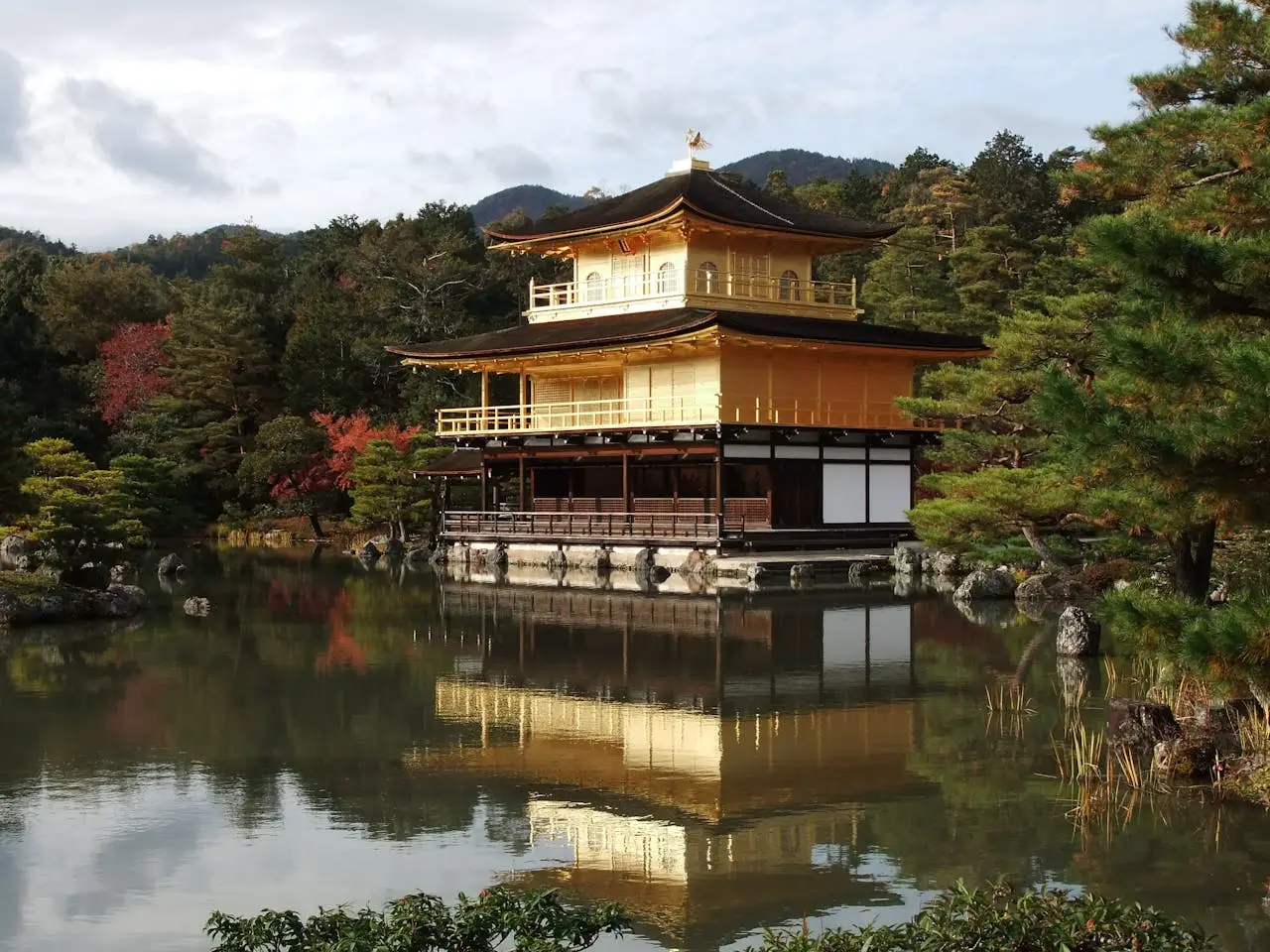
Autumn Japan is also busy, but the colour window spreads visitors more evenly, there's no equivalent to Golden Week compressed into the season, and crowds skew toward experienced repeat travellers. Popular ryokan in November Kyoto need booking 3 to 6 months ahead rather than 6 to 12.
- Book by
- 3–6 months ahead for peak-week ryokan
In both seasons: visiting popular spots before 8am, Tofuku-ji or the Philosopher's Path at 7am, transforms the experience from overwhelming to serene.
Round 4 of 11
Which is cheaper, spring or fall?
Fall wins, narrowly
Both seasons carry premium pricing, but spring is more expensive and harder to book at peak sakura.
| Category | 🌸 Spring (peak sakura) | 🍁 Fall (peak koyo) |
|---|---|---|
| Ryokan, Kyoto | ¥30,000–80,000+/night, often sold out | ¥22,000–60,000/night, high but bookable |
| Mid-range hotel, Tokyo | ¥18,000–35,000/night at peak bloom | ¥14,000–28,000/night |
| Bullet train, Tokyo–Kyoto | ¥13,320, fixed price | ¥13,320, fixed price |
| JR Pass, 14-day | ~¥50,000, same price year-round | ~¥50,000, same price year-round |
| Best-value month | Late March, pre-peak, or May | October, pre-peak koyo |
| Flights to Japan | Premium pricing late Mar–Apr | Generally lower than spring peak |
The shoulder-season strategy: late March before full sakura bloom offers 70 to 80 percent of the blossom experience at significantly lower prices. October, with early mountain foliage, perfect weather and pre-koyo crowd levels, is arguably the single best value month in Japan's tourism calendar.
Round 5 of 11
Festivals and cultural events
Spring wins, emphatically
Hanami culture is unmatched, one of Japan's most beloved traditions. Autumn brings its own excellent, but different, calendar.
 🌸 Spring
Hanami, a national ritual you're invited to join
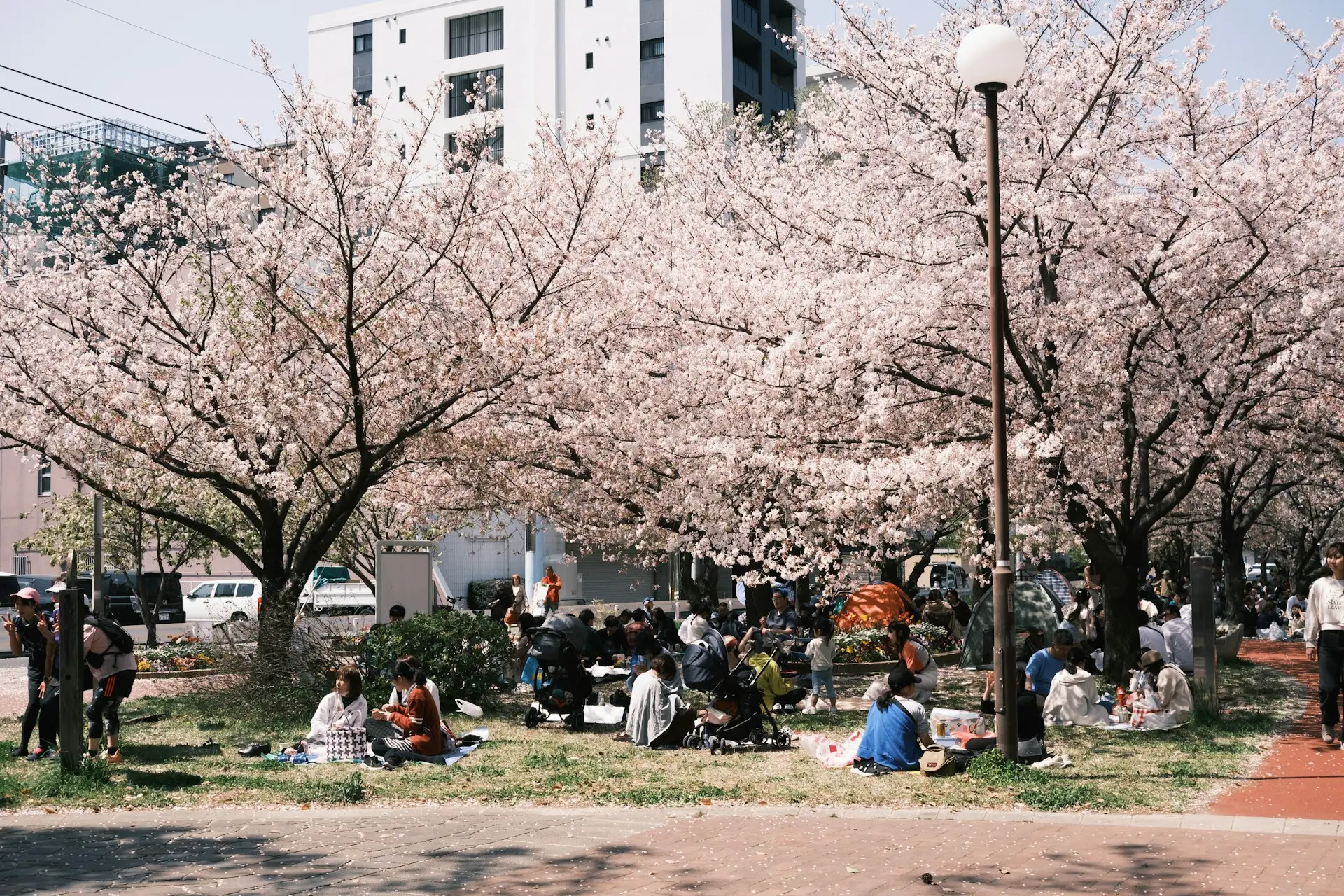
Hanami is not a tourist activity, it's a national ritual documented since the Nara period. Every park, riverbank and moat becomes a picnic ground, with every stratum of Japanese society spreading tarpaulins to eat, drink and appreciate the fleeting beauty together. Foreigners are warmly included. Golden Week adds a festival energy to the entire country immediately after peak bloom.
- Signature event
- Hanami picnics, Nikko Tosho-gu Grand Spring Festival
 🍁 Fall
The Jidai Matsuri and temple illuminations
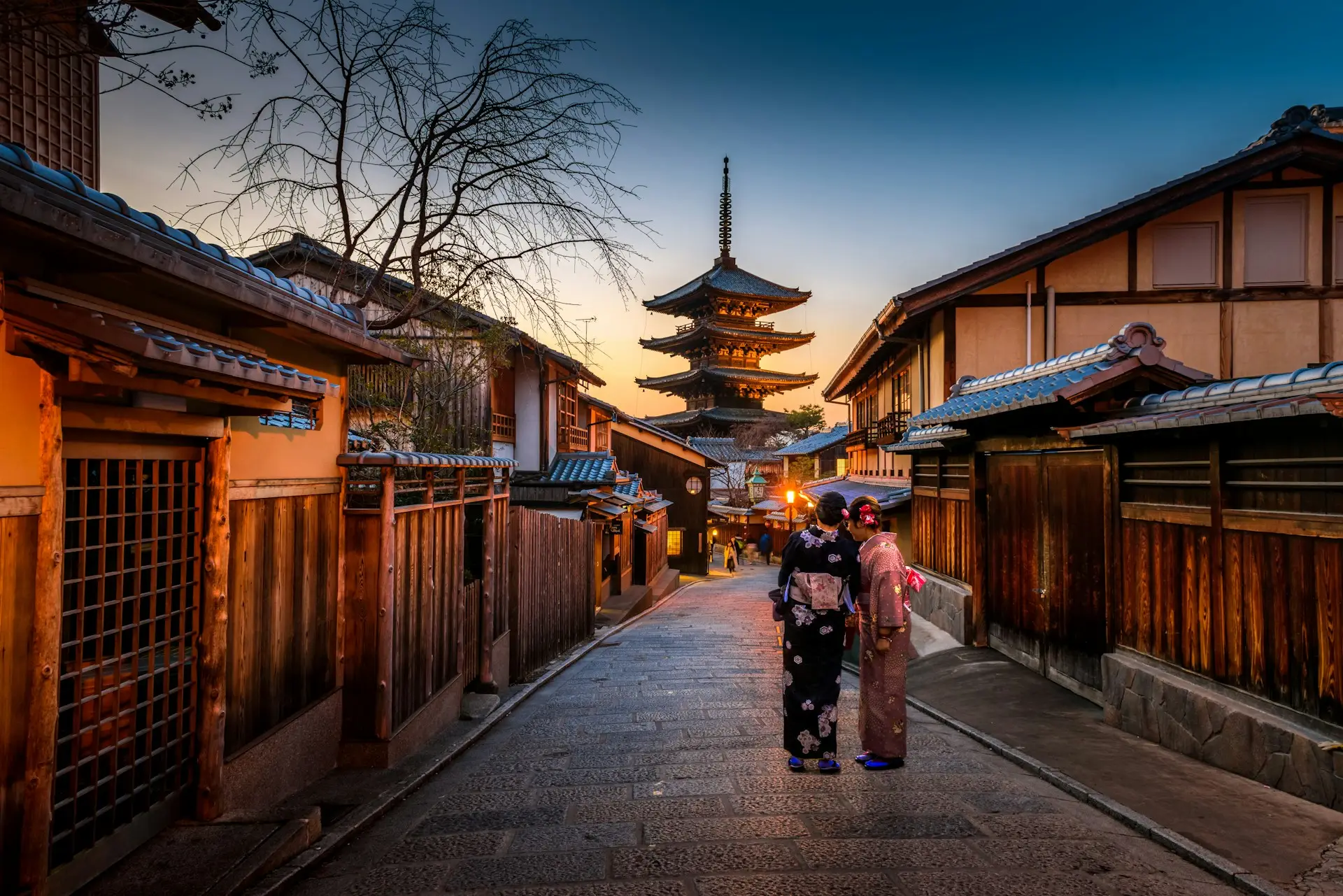
Kyoto's Jidai Matsuri on October 22nd is a 2km procession of 2,000 participants in historically accurate costume spanning every era of Japanese history. Temple illuminations, nighttime light-ups of autumn foliage at Kiyomizu-dera and Eikan-do, create some of Japan's most atmospheric evenings. Harvest food culture adds a seasonal dimension spring doesn't offer.
- Signature event
- Jidai Matsuri, Kyoto temple illuminations
Round 6 of 11
Food and seasonal eating
A genuine tie
Japanese cuisine is built around shun, seasonality, so the menu genuinely changes. Two completely different, equally excellent food seasons.
Sakura mochi, bamboo shoots and the first catch
Sakura mochi (pink rice cake wrapped in a pickled cherry leaf) and hanami dango (tricolour rice dumplings) appear everywhere during bloom season. Fresh bamboo shoots (takenoko) are a prized spring vegetable, and sawara (Spanish mackerel) is at its best. Convenience stores and department store basements run limited-edition sakura-flavoured everything, from lattes to KitKats.
- Must try
- Sakura mochi, hanami dango, takenoko gohan
Matsutake, sanma and the year's new rice
Matsutake mushrooms, some of the world's most expensive, are autumn's signature luxury ingredient, often grilled simply to let their aroma dominate. Sanma (Pacific saury), grilled whole with grated daikon, is a beloved autumn staple, and shinmai, the season's freshly harvested rice, is noticeably sweeter. Chestnut and sweet potato desserts fill every bakery and konbini shelf.
- Must try
- Grilled matsutake, sanma, kuri (chestnut) desserts
Honest verdict: Neither season outranks the other on food, they're simply different menus built around what's genuinely in season. Repeat visitors often say trying both is part of the appeal of coming back.
Round 7 of 11
Nightlife
Spring wins, narrowly
Japan's core nightlife, izakaya bars, karaoke, small standing bars, runs year-round unchanged. The seasonal difference is entirely about mood and setting.
Yozakura, night-time cherry blossom drinking under lanterns
Yozakura, illuminated night-time cherry blossom viewing, turns hanami into an evening event: paper lanterns strung through the trees at Maruyama Park and Nakameguro canal, sake and beer flowing, and Tokyo's usually reserved after-work drinking culture spilling out onto riverbanks and park benches in a rare burst of public, outdoor, cross-generational celebration.
- Go-to spots
- Nakameguro canal, Maruyama Park at night
Cosier, cooler, and built around the harvest
As evenings cool, izakaya lean into warming seasonal sake pairings, freshly pressed shinshu (new sake) starts arriving from November, and yakitori and nabe hot-pot dishes suit the crisper air. It's a more intimate, indoor experience than spring's outdoor hanami parties, excellent in its own way, just quieter.
- Go-to spots
- Shinjuku's Omoide Yokocho, Kyoto's Pontocho alley
Round 8 of 11
Things to do and the best spots by season
A genuine tie
The same country, the same temples, but different places reward each season most.
| Spot or activity | 🌸 Spring | 🍁 Fall |
|---|---|---|
| Kyoto icon | Philosopher's Path, 500 Yoshino cherry trees along a canal | Tofuku-ji, a sea of maples viewed from the bridge above |
| Tokyo icon | Chidorigafuchi, rowboats under sakura on the Imperial moat | Shinjuku Gyoen and Meiji Jingu Gaien's ginkgo avenue |
| Day trip from Tokyo | Kawaguchiko, blossoms framing snow-capped Mt Fuji | Nikko, a UNESCO shrine complex buried in gold and crimson |
| Off the beaten path | Hirosaki Castle, Aomori, 2,600 trees, lower crowds | Korankei Gorge, Aichi, 4,000 maples lining a canyon |
| Wild landscape | Yoshino Mountain, 30,000 wild sakura across a hillside | Daisetsuzan, Hokkaido, Japan's first autumn colour |
| Hiking | Mild temperatures, blossoms along lower-elevation trails | Cool, dry air and clear long-range mountain views |
| Onsen (hot springs) | Pleasant, less dramatic contrast with outdoor air | Crisp air makes an outdoor rotenburo feel best |
Honest verdict: Depth and quality are comparable in both seasons, this is really a question of which specific landmarks are on your list. Hikers and onsen lovers get a slight edge in fall thanks to clearer air and crisper evenings.
Round 9 of 11
Getting around
Fall wins, narrowly
Japan's rail network runs identically year-round. The difference is how much pressure the season puts on seats and bookings.
The same excellent network, under more strain
Shinkansen reserved seats on the Tokyo–Kyoto–Osaka corridor sell out days ahead during peak sakura and especially through Golden Week, when domestic travel surges nationwide. JR Pass holders should book seats as early as the reservation window allows, and popular regional buses to spots like Yoshino Mountain or Hirosaki can also fill up.
Easier seat availability and calmer stations
Without a Golden Week-scale domestic surge, Shinkansen seats and regional buses to koyo spots like Nikko or the Japanese Alps are noticeably easier to book, even close to peak week. October travel in particular offers the full rail network at close to off-peak booking ease.
Round 10 of 11
Safety and health considerations
A draw
Japan is exceptionally safe year-round in the usual sense. Each season carries its own minor, manageable seasonal nuisance rather than a real safety risk.
🌸 Spring: what to watch
- Kafunsho (hay fever) from cedar and cypress pollen peaks February to April; sufferers should pack antihistamines.
- Late cold snaps can mean chillier evenings than expected even as daytime warms up.
- Crowd density at peak bloom spots is the main practical hazard, not crime; keep valuables secure in dense crowds.
- Golden Week congestion on trains and at attractions nationwide, late April to early May.
🍁 Fall: what to watch
- Typhoon season's tail end can bring a storm through early October, though risk drops sharply after mid-month.
- Cold evenings in November, especially in Kyoto and the mountains, mean warm layers are essential.
- Bears are more active foraging before hibernation in rural mountain areas; follow posted trail warnings.
- Crowd density at peak koyo spots, the same common-sense precautions as spring apply.
In both seasons, Japan's low crime rate holds, these are seasonal health and comfort notes rather than genuine safety concerns.
Round 11 of 11
Family travel
Split decision
Spring wins on sheer wonder for kids; fall wins on comfort, cost and easier logistics.
Blossoms are magical for children, but crowds and cost bite
Few things capture a child's imagination like pink petals falling like snow, and hanami picnics are an easy, low-key family activity most kids enjoy immediately. The downsides are real: peak-season crowds at major sights test any child's patience, and accommodation costs spike hardest exactly during school holiday windows in many countries.
Cooler, calmer, and kinder to the budget
Comfortable walking temperatures without spring's occasional cold-snap surprise, more manageable crowds, and generally lower prices make fall a practically easier season to travel with kids. Autumn's UK half-term holiday (late October) does add a smaller price bump, but nothing like Golden Week's spring surge.
Which season is better for specific trips?
Spring for first-timers, photographers chasing the iconic shot and festival-goers. Fall for budget travellers, serious hikers and anyone who wants a calmer trip.
First-time Japan visitors
Spring
The single most internationally iconic Japan experience, worth having at least once.
Budget-conscious travellers
Fall
Lower accommodation prices and far shorter booking lead times than peak sakura.
Serious hikers
Fall
Cool, dry conditions and clear long-range mountain views suit multi-day trails best.
Hanami & festival-goers
Spring
Hanami picnic culture and Golden Week's festival energy have no autumn equivalent.
Photographers
Fall
A three to four week colour window and clearer skies give far more shooting days than sakura's 10.
Onsen & ryokan romantics
Spring
Blossom-view ryokan rooms in peak bloom are a genuine bucket-list splurge.
Repeat visitors
Fall
If you've already done spring, autumn rewards a second trip with something equally extraordinary.
Families with young children
Spring
Blossoms and hanami picnics are an easy, universally loved activity for younger kids.
Sample 7-day itineraries for each season
Same country, same cities, different rhythm. Both routes work as a first-time Japan trip; pick the tab for your travel window.
Spring: 7 days chasing the bloom
- Days 1–3
Tokyo. Chidorigafuchi rowboats under the moat's sakura, Shinjuku Gyoen, and an evening hanami picnic in Ueno Park.
- Day 4
Kawaguchiko. Day trip to the Fuji Five Lakes for cherry blossoms framing a snow-capped Mt Fuji.
- Days 5–7
Kyoto. Shinkansen from Tokyo (2h15). The Philosopher's Path, Maruyama Park's illuminated weeping cherry at night, and a day trip to Nara.
Fall: 7 days chasing the colour
- Days 1–2
Tokyo. Shinjuku Gyoen and the Meiji Jingu Gaien ginkgo avenue, plus a Omoide Yokocho izakaya evening.
- Day 3
Nikko. Day trip (2 hours from Tokyo) for the UNESCO shrine complex buried in gold and crimson maple.
- Days 4–7
Kyoto and Nara. Shinkansen from Tokyo (2h15). Tofuku-ji at dawn, Eikan-do's evening illumination, and a day trip to Nara's deer park in full autumn colour.
Either way: a 7-day JR Pass covers most of this route comfortably in both seasons. Book Shinkansen reserved seats as early as possible in spring; fall gives more booking flexibility.
Verdict: spring or fall in Japan?
There's no single overall winner. Most experienced Japan travellers say go in spring for your first visit, fall for your second.
Choose spring if…
Spring, for the sakura bucket-list moment
The right choice when the cherry blossoms are the specific reason for the trip, when hanami picnic culture is what you want to join, and when you can book 6 to 12 months ahead.
- Cherry blossoms are the reason for the trip
- You can book accommodation 6–12 months ahead
- You want to join hanami picnic culture
- This is a first visit to Japan
- You're set on Hirosaki Castle, Yoshino or the Fuji Five Lakes
- You don't mind peak crowds and premium prices
Choose fall if…
Fall, for colour, weather and reliability
The right choice when weather reliability matters, when you want a longer colour window, and when budget and easier bookings are a real consideration.
- Weather reliability is important to you
- You want more time with the colour, 3–4 weeks vs 10 days
- Slightly more manageable crowds and easier bookings
- Kyoto temple illuminations are on the list
- Budget is a real consideration
- You've already done spring and want the other side
Weigh it for your own trip
Select everything that matters to you.
Pick what matters on this trip and the needle will move.
Japan spring vs fall: frequently asked questions
Is Japan better in spring or autumn?
Both seasons are exceptional and most experienced travellers say they're incomparable rather than rankable. Spring, late March to early May, is defined by sakura cherry blossoms, one of the world's most beautiful natural phenomena, lasting 7 to 10 days per location. Autumn, mid-October to late November, offers koyo, crimson and gold maple foliage that transforms temple gardens and mountains over three to four weeks. Spring wins for the singular, fleeting sakura moment; autumn wins for colour duration, weather reliability and slightly lower prices. If forced to choose, most seasoned Japan travellers slightly prefer autumn for its longer window.
When is cherry blossom season in Japan 2026?
Sakura timing varies by location and year. As a general guide for 2026: Tokyo typically peaks late March to early April; Kyoto and Osaka late March to mid-April; Hiroshima early to mid-April; Tohoku mid to late April; Hokkaido late April to early May. Full bloom lasts approximately 7 to 10 days before petals fall. The Japan Meteorological Corporation releases its annual sakura forecast each January, check this closer to your travel date for precise 2026 predictions.
When is autumn foliage season in Japan 2026?
Koyo typically runs mid-October to late November, progressing north to south, the opposite direction to cherry blossoms. Hokkaido peaks first in early to mid-October, the Japanese Alps and Nikko peak mid to late October, and Kyoto and Nara typically peak mid to late November. Unlike sakura, koyo builds gradually over three to four weeks rather than a sudden burst, giving a longer viewing window.
Is spring or autumn more crowded in Japan?
Both are extremely crowded, but spring is marginally worse. The sakura window is shorter and less predictable, drawing more first-time international visitors into a tighter window, and Golden Week (late April to early May) adds a major domestic travel surge immediately after peak bloom. Autumn crowds are serious but spread over a longer colour window. In both seasons, visiting popular spots before 8am transforms the experience.
Is it cheaper to visit Japan in spring or autumn?
Both are premium-priced, but spring is typically more expensive. Hotel prices at peak sakura in Tokyo and Kyoto can be 30 to 60 percent higher than equivalent autumn weeks, and popular ryokan book out 6 to 12 months in advance. Autumn pricing is high but more stable. Visiting just before peak in either season, early April or early November, saves significantly for around 80 to 90 percent of the visual experience.
What is the weather like in Japan in spring vs autumn?
Both offer mild, generally pleasant weather. Spring is changeable, the sakura bloom is sensitive to late cold snaps or early warm spells, and April can bring sudden showers. Average Tokyo temperatures: March 12°C, April 17°C, May 22°C. Autumn is more stable and clearer, October and November bring some of Japan's most reliably sunny weather. Average Tokyo temperatures: October 19°C, November 13°C. Most Japan veterans consider autumn weather slightly superior.
Is the food different in Japan in spring versus autumn?
Japan's food culture is deeply seasonal (shun), so yes. Spring brings sakura mochi, hanami dango, bamboo shoots and the first catch of sawara (Spanish mackerel). Autumn brings matsutake mushrooms, sanma (Pacific saury), sweet potato and chestnut desserts, and the season's new rice harvest. Both are excellent and genuinely different menus, neither outranks the other.
Do I need to book trains and hotels further ahead for spring or autumn in Japan?
Spring requires more aggressive planning. Popular ryokan and hotels in Kyoto and Tokyo during peak sakura, and Shinkansen seats around Golden Week, should be booked 6 to 12 months ahead. Autumn is easier, 3 to 6 months is generally enough for peak koyo weeks in November, and October travel needs even less lead time.
There's no wrong answer here
Spring and fall in Japan are compared so often because both are extraordinary, just built on opposite relationships with beauty. Pick on what you want from this trip: the singular, fleeting sakura moment and the joy of a nationwide celebration, or the longer, calmer, more reliable window of Japan's finest weather. Better still, do both, they reward the same traveller in completely different ways.