
Prague vs Budapest at a glance
Eight rounds, scored honestly. Budapest takes cost and food; Prague takes day trips; the rest are close. Select a category to jump to the full comparison.
| Category | PragueBudapest |
|---|---|
| The eight rounds | |
| SightsA castle-and-bridge core against baths and a Parliament | Different strengths |
| Food & drinkPub classics against market food and Michelin depth | Budapest wins, narrowly |
| NightlifeŽižkov pubs against District VII ruin bars | Different strengths |
| CostCheaper in almost every row, widest on hostels and food | Budapest wins, clearly |
| Getting aroundBoth compact with trams and metro | Different strengths |
| WeatherSame sweet spots, Budapest adds October | Tie |
| SafetyBoth Level 1, pickpockets and known traps | Both safe overall |
| Day tripsThree easy train trips against two | Prague wins, narrowly |
| Best for | |
| First-time visitors wanting a classic old townA dense, walkable core with the Castle, Charles Bridge and Josefov. | Prague |
| Budget-conscious travellersHostel beds from €9-15 and market meals at €3-8. | Budapest |
| Thermal bath fansSzéchenyi and Rudas are open; Gellért is closed until at least 2028. | Budapest |
| OverallValue edges it, Prague keeps the historic core and day trips | Budapest, by a narrow margin |
What you're really choosing between
Prague and Budapest share a region, a Habsburg past and a pub-and-coffeehouse culture, but one is a castle-and-bridge old town and the other a city of baths and ruin bars.
A castle-and-bridge old town that beer built
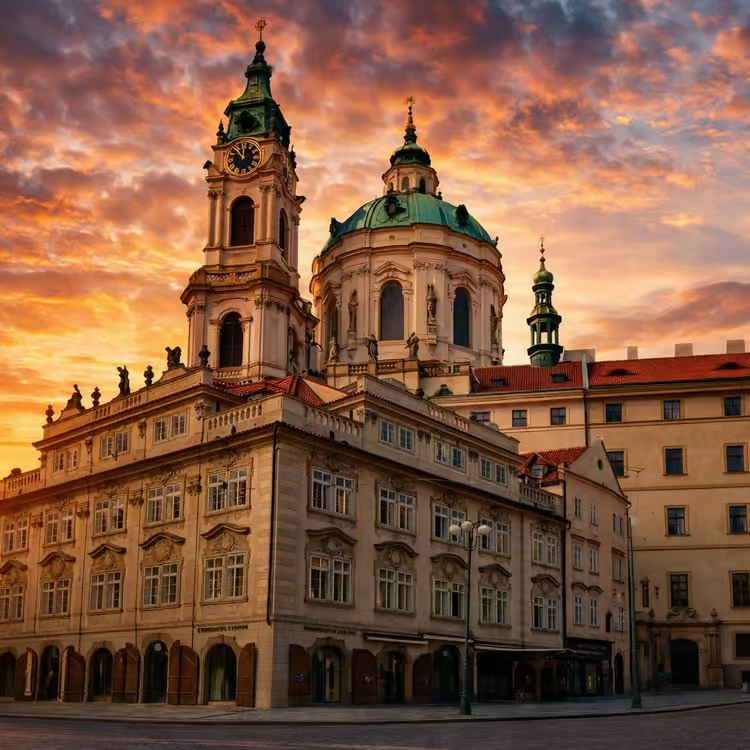
Prague Castle, Charles Bridge and the Astronomical Clock sit in a compact core. It is among Europe's safest capitals and cheaper than Vienna or Paris, but the Old Town Square area is crowded in summer and prices are no longer the bargain they were a decade ago.
A capital that bathes in geology and drinks in ruins
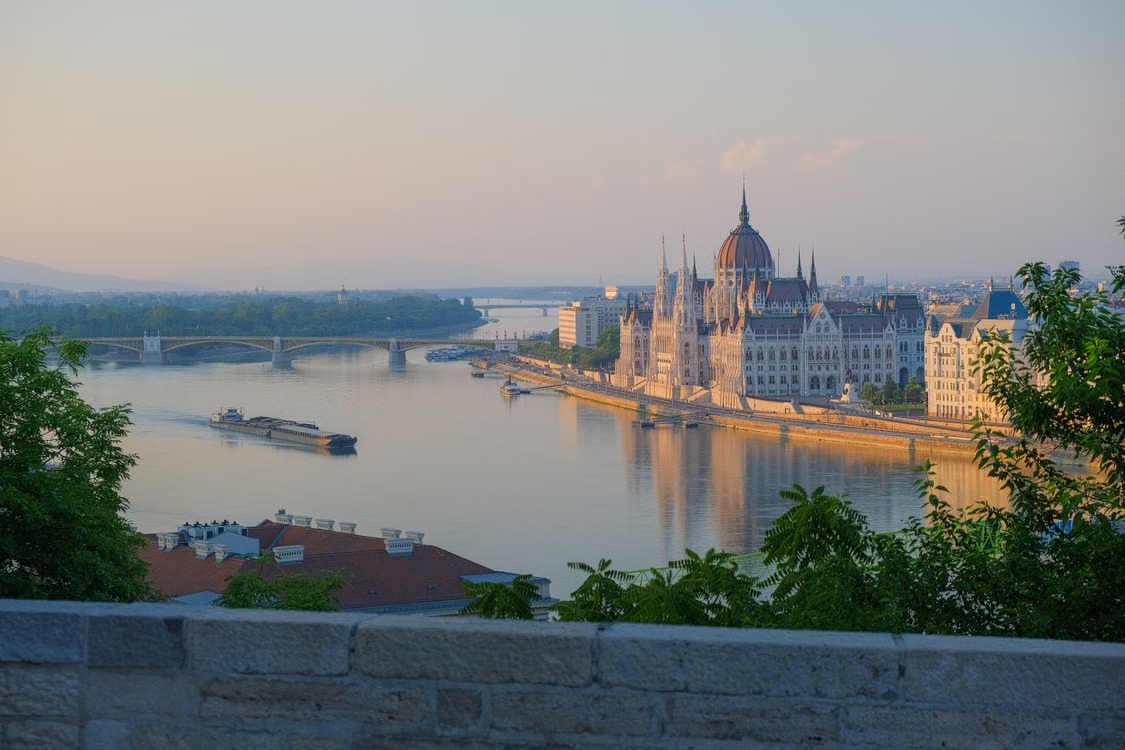
More than 100 natural thermal springs, the Parliament on the Danube, the Great Market Hall and the ruin bars of District VII. It is cheaper than Prague in nearly every row, but the weekend noise in District VII is real, and Gellért Baths is closed until at least 2028.
Key facts side by side
| Fact | 🏰 Prague | ♨️ Budapest |
|---|---|---|
| Country | Czechia | Hungary |
| Currency | Koruna (CZK) | Forint (HUF) |
| Main airport | Václav Havel Airport Prague (PRG) | Ferenc Liszt International (BUD) |
| Budget travel, per day | €40–60 | €35–50 |
| Mid-range, per day | €90–150 | €70–110 |
| Days needed | 3 to 4 full days | 3 to 4 days |
| Best months | May, Jun, Sep | May, Jun, Sep, Oct |
| Power plug | 230V, Type C/E | 230V, Type C/F |
| Tap water | Safe to drink | Safe to drink |
| Emergency | 112 | 112 |
Typical 2026 prices as listed in the Atlas city guides. Neither country uses the euro.
Round 1 of 8
Landmarks and sights
Different strengths
Prague packs a medieval core and a castle into one walkable area; Budapest adds thermal baths and a riverside Parliament. Different strengths, not a clear winner.
A dense, walkable historic core
Prague Castle has been the seat of Czech power since the 9th century, and Charles Bridge, the Astronomical Clock and Josefov sit in a core where you can walk from Romanesque to Gothic to Cubist in twenty minutes. The Castle Main Circuit ticket is 450 CZK and valid for two consecutive days; Charles Bridge, Vyšehrad and the Lennon Wall are free.
- Don't miss
- Prague Castle, Charles Bridge, Josefov
Thermal baths, a Parliament and two banks
Széchenyi Thermal Bath is Europe's largest medicinal bath complex, with spa-day tickets from around €40-46. The Parliament interior is guided-tour only, at about 7,000 HUF for EEA citizens and 14,000 HUF for non-EEA visitors, and the lower terraces of Fisherman's Bastion are free. Gellért Baths is closed for renovation and not expected to reopen before 2028.
- Don't miss
- Széchenyi baths, Parliament, Fisherman's Bastion
Round 2 of 8
Food and drink
Budapest wins, narrowly
Beer-led pub classics against cheap market food and Michelin depth. Budapest edges it on range and price.
Beer first, dumplings close behind
Prague's food culture runs through its pubs. Svíčková costs 180-220 CZK, Pilsner Urquell from the tank 40-60 CZK, and U Kalendů holds a 2026 Michelin Bib Gourmand for unpretentious Czech pub food. The best value is at neighbourhood pubs with a handwritten menu rather than near a major sight.
- Must try
- Svíčková, tank Pilsner Urquell, guláš
Lángos for a few euros, a Michelin tasting menu at the other end
Budapest eats well and, outside a few tourist-square restaurants, cheaply: lángos costs €3-6, a traditional meal €5-12. The city holds seven Michelin-starred restaurants in 2026, including Stand, the only two-star, and the New York Café from 1894 is worth one slow coffee.
- Must try
- Lángos, gulyás, ruin bar dining
Round 3 of 8
Nightlife
Different strengths
A pub crawl through Žižkov against the ruin bars of District VII. Two different kinds of night out, both good.
Pubs, tank beer and the most bars per capita locals will claim
Žižkov is working-class and famously pub-dense, and locals will tell you it has more bars per capita than anywhere else in Europe. Lokál on Dlouhá Street serves tank Pilsner Urquell, and U Fleků has brewed its own dark lager in a building dating to 1499.
- Go-to spots
- Žižkov pubs, Lokál, U Fleků
The ruin bar format was invented here
Szimpla Kert opened in 2002 in a condemned Jewish Quarter building, and the ruin bar format has since been copied worldwide. District VII is now the densest concentration of bars and late-night energy in the city, and loud enough on weekend nights that light sleepers should avoid rooms facing the main streets.
- Go-to spots
- Szimpla Kert, District VII, Mazel Tov
Round 4 of 8
Which is cheaper, Prague or Budapest?
Budapest wins, clearly
Budapest is cheaper in almost every row, with the widest gaps on hostel beds and market food.
| Typical cost | 🏰 Prague | ♨️ Budapest |
|---|---|---|
| Budget travel, per day | €40–60 | €35–50 |
| Mid-range, per day | €90–150 | €70–110 |
| Hostel dorm bed | €18–25 | €9–15 |
| Boutique or 3-4 star hotel | €70–130 | €70–110 |
| Pub lunch or market meal | €10–20 | €3–8 |
| Single public transport ticket | 40 CZK (90 min) | 450 HUF |
| Public transport day pass | ~€5 | ~€7 |
| Comfortable, per day | €250+ | €150+ |
Typical 2026 prices as listed in the Atlas guides to Prague and Budapest. Single-ticket prices are in local currency: koruna (CZK) in Prague, forint (HUF) in Budapest.
Bottom line: Budapest is cheaper in every row except the transport day pass. Hotel prices are the closest match; hostel beds and market food are where Budapest pulls ahead. The main cost trap is the same in both: eating on the main tourist squares.
Round 5 of 8
Getting around
Different strengths
Both are compact, walkable and well served by trams and metro. The real difference is the airport run and the fines.
Flat-ish, tram-led and cheap from the airport
From Václav Havel Airport the Airport Express bus reaches Old Town in about 45 minutes for 100 CZK, and bus 119 plus metro Line A is the cheap route at about 32 CZK. A single ticket is 40 CZK for 90 minutes, a 24-hour pass 120 CZK. Always validate: the on-the-spot fine is 1,000 CZK. Cobblestones are the main physical challenge.
- Good to know
- Validate every ticket, 3 metro lines
Continental Europe's oldest metro and a longer taxi bill
Budapest Ferenc Liszt airport is about 16 km southeast of the centre. The 100E Airport Express takes around 40 minutes for about 2,500 HUF, bus 200E plus the M3 metro costs a standard 500 HUF fare, and an official taxi is 11,000-14,000 HUF (€30-35). A single ticket is 450 HUF and a 24-hour card about 2,500 HUF; unvalidated tickets get an on-the-spot fine.
- Good to know
- M1 metro opened in 1896, validate tickets
Round 6 of 8
When to go: Prague and Budapest
Tie
Both peak in late spring and early autumn. Pick the season, not the city.
May, June and September
Prague has a continental climate with warm summers and cold winters. May, June and September offer long daylight, comfortable temperatures and thinner crowds; July and August are the busiest and hottest around Old Town Square and Charles Bridge. The Christmas markets run through December on Old Town Square and Wenceslas Square.
- Best months
- May, June, September
May to June and September to October
Budapest works in every season because the thermal baths are a year-round draw, but May, June, September and October are most comfortable at 15-23°C. Winter from November to February is cold at 0-6°C and often below freezing at night, with Christmas markets around Vörösmarty tér and St. Stephen's Basilica in December.
- Best months
- May-June, September-October
Round 7 of 8
Which is safer for tourists, Prague or Budapest?
Both safe overall
Both sit at the US State Department's Level 1 rating and violent crime against visitors is rare. The risks are pickpockets and a few well-known tourist traps.
Pickpockets and exchange kiosks
Pickpocketing is concentrated on crowded trams, the metro, and around Old Town Square and Charles Bridge. The classic trap is the currency exchange kiosk near Old Town Square and along Karlova Street advertising "0% commission" with a far worse rate in the fine print. Emergency number 112; the state police line is 158.
- Watch for
- Trams, Old Town Square, exchange kiosks
Pickpockets, bar bills and unlicensed taxis
Pickpocketing is concentrated on crowded trams, at major sights and on international trains toward Vienna and Bratislava. Two other traps: the overpriced bar bill, where a friendly local steers a solo traveller to a bar with no visible prices, and unlicensed taxis at the airport quoting inflated fares. Emergency number 112; police 107.
- Watch for
- Trams, bar bills, airport taxis
Round 8 of 8
Day trips
Prague wins, narrowly
Prague offers three easy trips by train; Budapest offers two. Prague has the wider choice.
Kutná Hora, Český Krumlov and Plzeň
Kutná Hora is about an hour by train for 150-200 CZK return, with the Sedlec Ossuary (entry about 220 CZK). Plzeň, also about an hour for 130-180 CZK return, has the Pilsner Urquell brewery tour. Český Krumlov is about 2.5 hours by direct train for 250-350 CZK return, and makes more sense as an overnight.
- Go-to trips
- Kutná Hora, Plzeň, Český Krumlov
The Danube Bend and Eger
Szentendre and Visegrád on the Danube Bend are 30-40 minutes away by HÉV or bus for €2-8 one way. Eger, Hungary's baroque wine town, is under two hours by train from Keleti station for €8-14 one way, and an overnight lets you enjoy the cellars without rushing the last train back.
- Go-to trips
- Szentendre, Visegrád, Eger
Which is better for specific trips?
Budapest for budget, baths and ruin bars. Prague for the classic old town, beer and easy day trips.
First-time visitors wanting a classic old town
Prague
A dense, walkable core with the Castle, Charles Bridge and Josefov.
Budget-conscious travellers
Budapest
Hostel beds from €9-15 and market meals at €3-8.
Thermal bath fans
Budapest
Széchenyi and Rudas are open; Gellért is closed until at least 2028.
Beer lovers
Prague
Tank Pilsner Urquell at 40-60 CZK in tankovna pubs.
Ruin bars and late nights
Budapest
The ruin bar format started at Szimpla Kert in 2002.
Easy day trips
Prague
Kutná Hora and Plzeň are each about an hour by train.
Fine dining
Budapest
Seven Michelin-starred restaurants in 2026.
Can you combine Prague and Budapest in one trip?
Yes, three days in each works well, plus a travel day between the cities. The Atlas guides do not list train times or fares between them, so check current options before you book.
Prague: days 1 to 3
- Day 1
Charles Bridge at dawn, then the Castle. Walk the bridge before 8am, then be at the Castle Main Circuit at opening. Finish with Malá Strana, Old Town, Josefov and tank beer at Lokál.
- Day 2
Vyšehrad, Petřín and Vinohrady. Free river views at Vyšehrad, the funicular and 1891 tower on Petřín, then dinner at a Vinohrady restaurant with a chalkboard menu.
- Day 3
Kutná Hora. A direct train, about an hour each way, to the Sedlec Ossuary and St. Barbara's Cathedral.
Budapest: days 4 to 6
- Day 4
Parliament, Great Market Hall and the Castle District. Book a Parliament tour, eat lángos at the Great Market Hall, take the funicular to Fisherman's Bastion, then dinner and Szimpla Kert in the Jewish Quarter.
- Day 5
Széchenyi, Margaret Island and New York Café. A morning at Széchenyi Baths, a slow loop around car-free Margaret Island, then coffee at the New York Café.
- Day 6
Danube Bend or House of Terror. Either a day trip to Szentendre and Visegrád, or a slower city day with the House of Terror, Rudas Baths and Andrássy Avenue.
When to go: May, June or September work for both cities, with October as an extra option in Budapest.
Verdict: Prague or Budapest?
Budapest wins overall, but only narrowly, on value, and Prague wins on day trips and the classic old town.
Choose Prague if…
Prague, for the old town and day trips
The right choice for a first Central European city break built around a historic core, beer and easy train trips.
- Historic old town and castle are the priority
- Beer and traditional pub food
- Easy train day trips
- A first visit to Central Europe
- A quieter, more local base in Vinohrady
- Christmas markets on Old Town Square
Overall winner, narrowly: choose Budapest if…
Budapest, for value, baths and nights out
The right choice if budget matters, or if thermal baths, ruin bars and Michelin-level dining are on your list.
- Budget and value matter
- Thermal baths are on your list
- Ruin bars and late nights
- Michelin-level dining at lower prices
- A walkable capital split by the Danube
- Visiting in winter, when baths still work
Weigh it for your own trip
Select everything that matters to you.
Pick what matters on this trip and the needle will move.
Prague vs Budapest: frequently asked questions
Is Prague or Budapest better for first-time visitors?
Prague if you want a classic old town with the Castle and Charles Bridge in a dense walkable core; Budapest if you want thermal baths, ruin bars and lower prices. Both suit three to four days.
Is Prague or Budapest cheaper?
Budapest. Budget travellers manage on €35-50 a day against €40-60 in Prague, mid-range runs €70-110 against €90-150, and hostel dorm beds are €9-15 against €18-25. Prague is cheaper only for the public transport day pass (about €5 against about €7).
Which is better for nightlife, Prague or Budapest?
Different styles. Prague is built around pubs and tank beer, with Žižkov known for its bar density. Budapest has the ruin bars of District VII, which can be loud on weekend nights.
Which has better food, Prague or Budapest?
Budapest edges it on range and price: lángos at €3-6, traditional meals at €5-12 and seven Michelin-starred restaurants in 2026. Prague wins on beer-led pub food, with svíčková at 180-220 CZK and Pilsner Urquell from the tank at 40-60 CZK.
When is the best time to visit Prague and Budapest?
May, June and September for both, plus October in Budapest. July and August are the busiest in Prague, and Budapest winters are cold at 0-6°C but the baths and December Christmas markets stay a draw.
Is Prague or Budapest safer?
Both are rated Level 1 by the US State Department and violent crime against visitors is rare. Watch for pickpockets in both, exchange kiosks near Old Town Square in Prague, and overpriced bar bills and unlicensed airport taxis in Budapest.
How many days do you need in Prague and Budapest?
Three to four days in each. The Atlas guides plan three days in each city, with Kutná Hora as the Prague day trip and Szentendre, Visegrád or the House of Terror as the Budapest third day.
Do Prague and Budapest use the euro?
No. Prague uses the Czech koruna (CZK) and Budapest the Hungarian forint (HUF). Cards are widely accepted in the centres, but carry some cash for small pubs, market stalls and cash-only eateries, and pay in the local currency when a card terminal asks.
There's no wrong answer here
Prague and Budapest are compared so often because both are among the best-value capitals in Central Europe. Pick on what you want from the trip: Prague's old town, beer and day trips, or Budapest's baths, ruin bars and lower prices. Or see both.