Switzerland vs Austria — Iconic vs Complete
Switzerland has the world's most iconic Alpine scenery. Austria has the Alps plus Vienna.
Switzerland
Switzerland is the apotheosis of Alpine travel — a small, perfectly organised country where the trains run to the minute, the mountains are consistently spectacular, and the infrastructure for experiencing them (cogwheel railways, cable cars, panoramic trains) is the finest in the world. The Matterhorn above Zermatt, the Eiger above Grindelwald, the Jungfraujoch at 3,454m, the blue lakes of Lucerne and Geneva, and the chocolate-box villages of Appenzell and Gruyères are all genuine and as beautiful as advertised. The price for all this perfection is steep — Switzerland is consistently one of the world's most expensive countries, and a week here costs more than a fortnight almost anywhere else in Europe.
Austria
Austria is the more complete travel destination — a country that pairs some of the world's finest skiing and Alpine summer hiking with one of Europe's greatest capital cities. Vienna's imperial Baroque grandeur, coffeehouse culture, and world-class music scene (Mozart, Beethoven, Brahms, Mahler, and Strauss all called it home) make it a destination that stands entirely independently of the Alps. Salzburg is compact, beautiful, and deeply musical. Innsbruck, with the Alps rising directly behind the medieval Old Town, is one of Europe's most dramatically situated cities. And throughout, prices are meaningfully lower than Switzerland — a significant advantage for any but the most well-funded traveller.
Quick Facts
Alpine Scenery & Landscapes
Switzerland has the world's most recognisable Alpine icons. Austria's Alps are equally beautiful and quieter.

The Matterhorn, Lauterbrunnen, and panoramic train journeys
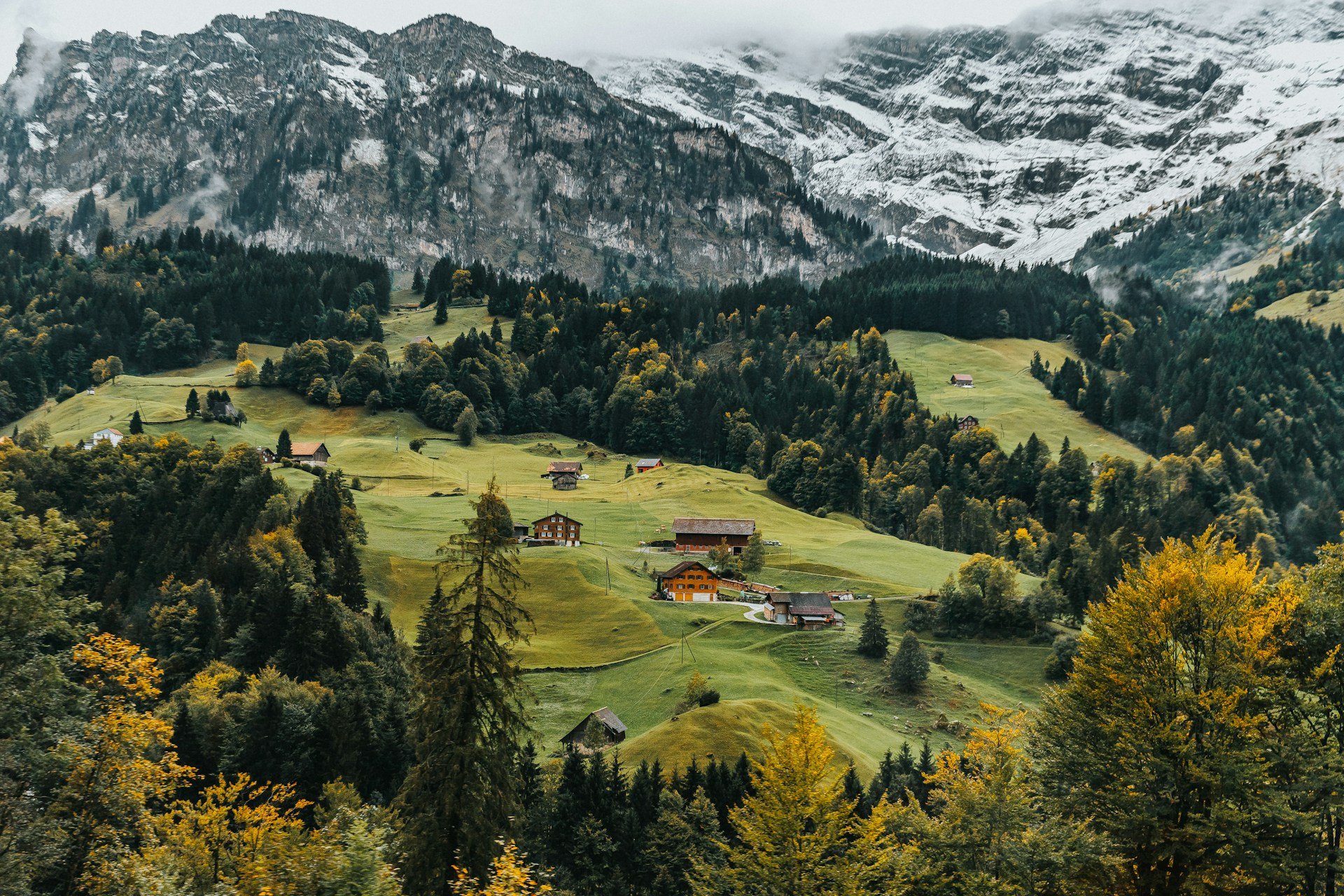
Switzerland's scenery is the most photographed Alpine landscape in the world — and earns the cliché entirely. Lauterbrunnen valley, with 72 waterfalls tumbling down 300m sheer cliff walls, is the landscape that inspired Tolkien's Rivendell. The Eiger's north face above Grindelwald. The Jungfraujoch cogwheel railway arriving at the "Top of Europe" (3,454m) above a field of glaciers. The Glacier Express panoramic train between Zermatt and St Moritz crossing 291 bridges. Lake Lucerne's mirror-still surface framed by the Rigi and Pilatus. The Brienz Rothorn at dawn with no one else present. Switzerland's infrastructure — cable cars, cogwheel trains, mountain railways — makes it possible to reach viewpoints that would require serious mountaineering elsewhere, and the scale of accessible beauty is unmatched.
🏆 Winner — most iconic Alpine scenery
Hallstatt, the Grossglockner road, and the Hohe Tauern national park
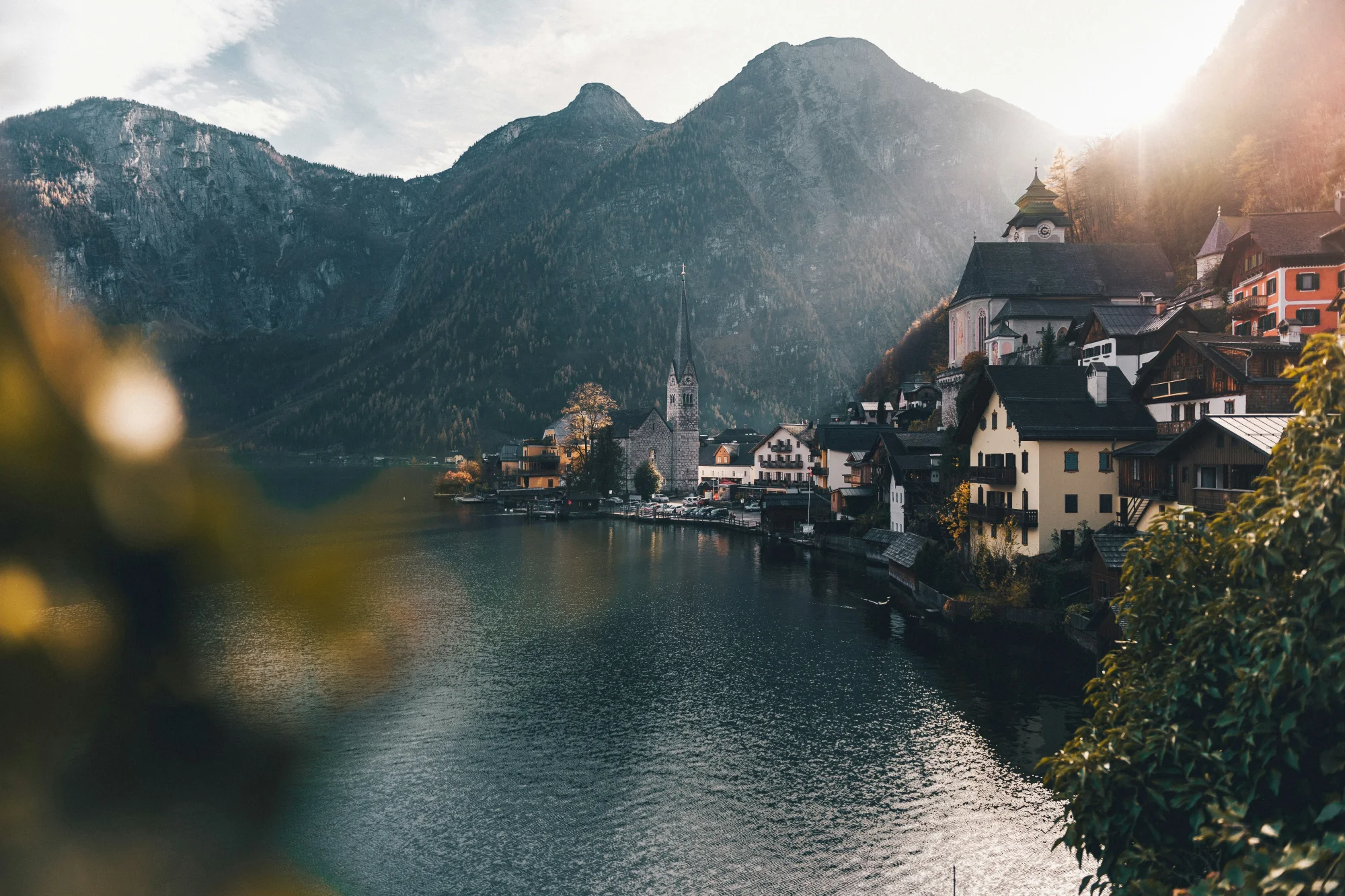
Austria's Alpine scenery is spectacular and, outside of a few Instagram hotspots, significantly less crowded than Switzerland's. Hallstatt — a UNESCO village of pastel-coloured houses reflected in the Hallstättersee, the most photographed village in Austria — is extraordinarily beautiful and has the photographic advantage of being mirrored in lake water. The Grossglockner Hochalpenstrasse is Europe's most dramatic high alpine road: 48km of hairpin curves rising to 2,504m past Austria's highest peak (3,798m) and the Pasterze glacier. The Hohe Tauern National Park (Austria's largest, 1,800 km²) holds 300+ glaciers, 300+ three-thousand-metre peaks, and some of the finest long-distance hiking in the Alps. The Ötztal and Zillertal valleys add glacier hiking and the backstory of Ötzi the ice man. Austria's Alpine scenery rewards slow exploration.
Spectacular and less crowded — fewer iconic peaksSkiing & Winter Sports
Both are world-class ski destinations. Austria offers comparable quality at significantly lower prices.

Zermatt, Verbier, and St Moritz — the world's most prestigious ski resorts
Switzerland holds skiing's most iconic addresses. Zermatt is the benchmark: car-free, 360km of pistes, linked to Cervinia in Italy, reliable high-altitude snow (the Klein Matterhorn at 3,883m is the highest ski point in the Alps), and the Matterhorn over your shoulder on every run. Verbier is the off-piste skier's resort of choice — steep, challenging, and with a lively après-ski scene. St Moritz is skiing's original glamour resort (two Winter Olympics, 1928 and 1948) — the Corviglia and Corvatsch areas offer excellent piste skiing and the Engadin landscape is beautiful even if you don't ski. Swiss resorts consistently have the best snow reliability in the Alps due to their high altitude. The price is eyewatering: lift passes at CHF 80–100/day, accommodation during peak weeks at CHF 300–600/person/night, and restaurant meals at CHF 25–45 for a basic mountain lunch.
🏆 Winner — iconic prestige & snow reliability
Ski Arlberg, Kitzbühel, and Europe's best value world-class skiing
Austria's ski resorts deliver equivalent or better skiing than Switzerland at 30–50% lower prices. The Ski Arlberg — combining St Anton, Lech, Zürs, Stuben, and Warth-Schröcken — is arguably Europe's finest ski area for off-piste terrain and deep snow: 305km of marked pistes plus unlimited off-piste access across the Arlberg range. St Anton's après-ski (the Mooserwirt and Krazy Kanguruh mountain bars) is the most legendary in the Alps. Kitzbühel hosts the Hahnenkamm — the world's most famous downhill race — and combines excellent skiing with a beautiful medieval town. The Zillertal's Mayrhofen, Skicircus Saalbach-Hinterglemm, and Ischgl (duty-free at the Swiss border, outstanding skiing) complete a roster that has no weak entries. Lift passes at €45–65/day make a week's skiing at least €200–400 cheaper per person than equivalent Swiss resorts.
🏆 Winner — ski value (30–50% cheaper)Cities
Vienna is one of Europe's great capitals. Switzerland's cities are excellent but not in the same league.

Zürich, Lucerne, and Basel — wealthy, well-designed, and mountain-adjacent
Switzerland's cities are pleasant and liveable but not primary travel destinations in the way Vienna is. Zürich — regularly rated the world's most liveable city — is prosperous, clean, and has a surprisingly good arts scene (the Kunsthaus, lake swimming in summer), but it is expensive and compact. Lucerne is the most visitworthy Swiss city: the medieval Chapel Bridge, the Lion Monument, and the immediate proximity of Mount Rigi and Pilatus make it the ideal base for first-time Swiss visitors. Basel is excellent for modern art (the Art Basel fair, the Fondation Beyeler). Geneva is international and businesslike. Bern, the federal capital, has a beautiful arcaded Old Town and a good bear park. All are worth a day or two — none justifies a week.
Good cities — not the reason to visit
Vienna, Salzburg, and Innsbruck — imperial grandeur meets Alpine backdrop
Vienna is the decisive advantage Austria holds over Switzerland — one of Europe's greatest cities, full stop. The Ringstrasse boulevard (Baroque Opera, Parliament, Kunsthistorisches Museum, Burgtheater, all within 3km) is one of the world's great urban statements. The coffeehouse tradition — Café Central, Café Hawelka, Café Landtmann — is a Viennese institution: you sit for hours with a Melange (Viennese coffee) and a Strudel and it is entirely acceptable. The Kunsthistorisches Museum holds one of the world's great art collections (Vermeer, Raphael, Rembrandt, Velázquez). The Vienna Philharmonic at the Musikverein is the world's finest orchestra in one of the world's finest concert halls. Salzburg adds compact medieval beauty and the Festspiele (Mozart Festival) every August. Innsbruck has mountains at the end of every street.
🏆 Winner — cities (Vienna is a world-class destination)Culture, Food & Atmosphere
Austria's Gemütlichkeit and imperial culture run deeper. Switzerland offers fondue and precision.

Fondue, Rösti, and four linguistic cultures in one small country
Switzerland's cultural identity is shaped by its four official languages (German, French, Italian, Romansh) and the distinct characters of its cantons — the French-speaking Romandy around Geneva and Lausanne has a different atmosphere entirely from the German-speaking Zürich or the Italian-speaking Ticino. Swiss food is hearty mountain fare: fondue (melted Gruyère and Emmental with crusty bread) and raclette (melted cheese scraped over potatoes) are ritualistic communal meals best eaten in a mountain restaurant after skiing. Rösti (Swiss potato cake), Zürcher Geschnetzeltes (veal in cream sauce), and the extraordinary Swiss chocolate and cheese industries add depth. Switzerland lacks the imperial cultural legacy and museum richness of Vienna, but the mountain culture — the cowbell herding traditions, the Schwingfest wrestling, the Fasnacht carnival of Basel — is genuine and fascinating.
Rich regional culture — less imperial depth than Austria
Wiener Schnitzel, Sachertorte, and the world capital of classical music
Austria's cultural depth is extraordinary for a small country — the Habsburg Empire's centuries of patronage concentrated artistic talent in Vienna to a degree unmatched except by Paris. Mozart was born in Salzburg. Beethoven, Brahms, Schubert, Mahler, and Bruckner all worked in Vienna. The Vienna Philharmonic's New Year's Concert, broadcast to 90 countries, is the world's most-watched orchestral event. The Wiener Schnitzel (veal escalope, breadcrumbed and pan-fried in butter) is one of Europe's great dishes when done properly. The Sachertorte (dense chocolate cake with apricot jam) is Vienna's most famous export. The coffeehouse — a UNESCO Intangible Cultural Heritage — is a social institution where time operates differently and every table is yours for the afternoon. Austrian Gemütlichkeit — the warm, unhurried cosiness of its mountain hospitality — is one of travel's great pleasures.
🏆 Winner — culture, music & culinary depthCost of Travel
Switzerland is expensive in a category of its own. Austria is significantly cheaper at every budget level.
| Category | 🏔️ Switzerland | 🎼 Austria | Better Value |
|---|---|---|---|
| Mid-range hotel | CHF 180–350/night (~€190–370) | €100–200/night | 🎼 Austria |
| Mountain chalet / ski lodge | CHF 200–500/night (peak season) | €80–200/night (peak season) | 🎼 Austria |
| Restaurant dinner (mid-range) | CHF 35–60/person (~€37–63) | €15–30/person | 🎼 Austria |
| Daily ski lift pass | CHF 70–100 (~€74–106) | €45–65 | 🎼 Austria |
| Coffee (café) | CHF 4–6 (~€4.20–6.30) | €2.50–4.00 (Melange) | 🎼 Austria |
| Public transport | CHF 3.80+ per trip (Swiss Travel Pass expensive) | €2.40/trip Vienna; Klimaticket Austria €1,095/year | 🎼 Austria |
| Mountain cable car | CHF 30–80 (Jungfraujoch CHF 211) | €15–40 | 🎼 Austria |
The budget reality: A week's ski holiday in Zermatt for two people (flights, 7 nights accommodation, 6-day lift pass, meals) typically costs €4,000–7,000. The equivalent week in St Anton runs €2,500–4,500. The savings in Austria fund nearly an extra week of travel elsewhere — a meaningful difference for most budgets.
Switzerland or Austria — Which Should You Choose?
Switzerland is the right choice when the iconic Alpine landmarks — the Matterhorn, Jungfraujoch, Lauterbrunnen — are specifically on the list, when budget is not the primary constraint, or when the Swiss rail network's efficiency is part of the appeal.
- The Matterhorn is a bucket-list item
- The Glacier Express or Bernina Express panoramic trains
- Jungfraujoch — the "Top of Europe" is specifically the goal
- Lake Lucerne and the Chapel Bridge
- Budget is not a primary concern
- Swiss precision and infrastructure matter
- Summer hiking with cable car access
Austria is the right choice when value matters, when Vienna is on the itinerary, when world-class skiing at lower prices is the goal, or when you want Alpine scenery plus imperial culture in the same trip.
- Value is a consideration — Austria is 30–50% cheaper
- Vienna is a must — one of Europe's great capitals
- Ski Arlberg or Kitzbühel for world-class skiing
- Salzburg, Mozart, and the Festspiele
- Classical music — Vienna Philharmonic
- Hallstatt and the Austrian lake district
- Gemütlichkeit — warm mountain hospitality