
Croatia vs Montenegro at a glance
Eleven rounds, scored honestly. Montenegro takes cost by a distance, Croatia takes sailing and nightlife just as clearly, and most of the rest is closer than either country's fans would like to admit. Select a category to jump to the full comparison.
| Category | CroatiaMontenegro |
|---|---|
| The eleven rounds | |
| BeachesCroatia's variety against Montenegro's sand | Split decision |
| Cost & valueRoughly 30–40% cheaper across the board | Montenegro, clearly |
| Culture & old townsDubrovnik's scale against Kotor's calm | A genuine tie |
| Nature & national parksPlitvice's fame against Durmitor's variety | A genuine tie |
| Sailing1,200 islands and marinas beat a short coast | Croatia, decisively |
| Things to doDiving and wine vs rafting and lake wildlife | Croatia, narrowly |
| FoodDalmatian seafood vs mountain-cured pršut | Draw |
| NightlifeBig nights on Zrće vs a calmer Budva scene | Split decision |
| WeatherPractically the same Mediterranean climate | A genuine tie |
| Getting aroundNo ferries needed, everything is close | Montenegro, narrowly |
| SafetyBoth very safe; the roads are the real risk | Draw |
| Best for | |
| Budget & value trips30–40% less for equivalent comfort | Montenegro |
| Sailing & island hoppingEurope's finest mainland sailing coast | Croatia |
| First-time Adriatic visitorsEU/Schengen ease and better transport links | Croatia |
| OverallNo outright winner; it comes down to priorities | Depends on your priorities |
The famous coast vs the underrated one
Croatia and Montenegro share the same sea and the same architectural DNA, but they sit at completely different stages of their tourism stories. Neither is "better" outright; they suit different trips.
The coast that has arrived
Game of Thrones tourism, an exploding sailing industry and Dubrovnik's world-famous walled city have made Croatia one of Europe's most visited summer destinations, and the prices have followed. The Dalmatian coast remains genuinely beautiful: 1,200 islands, the medieval old towns of Split and Dubrovnik, Hvar's lavender hills and the turquoise pools of Plitvice. The catch: in peak season it is crowded enough to test even dedicated travellers, and it is no longer cheap.
The Adriatic that Croatia used to be
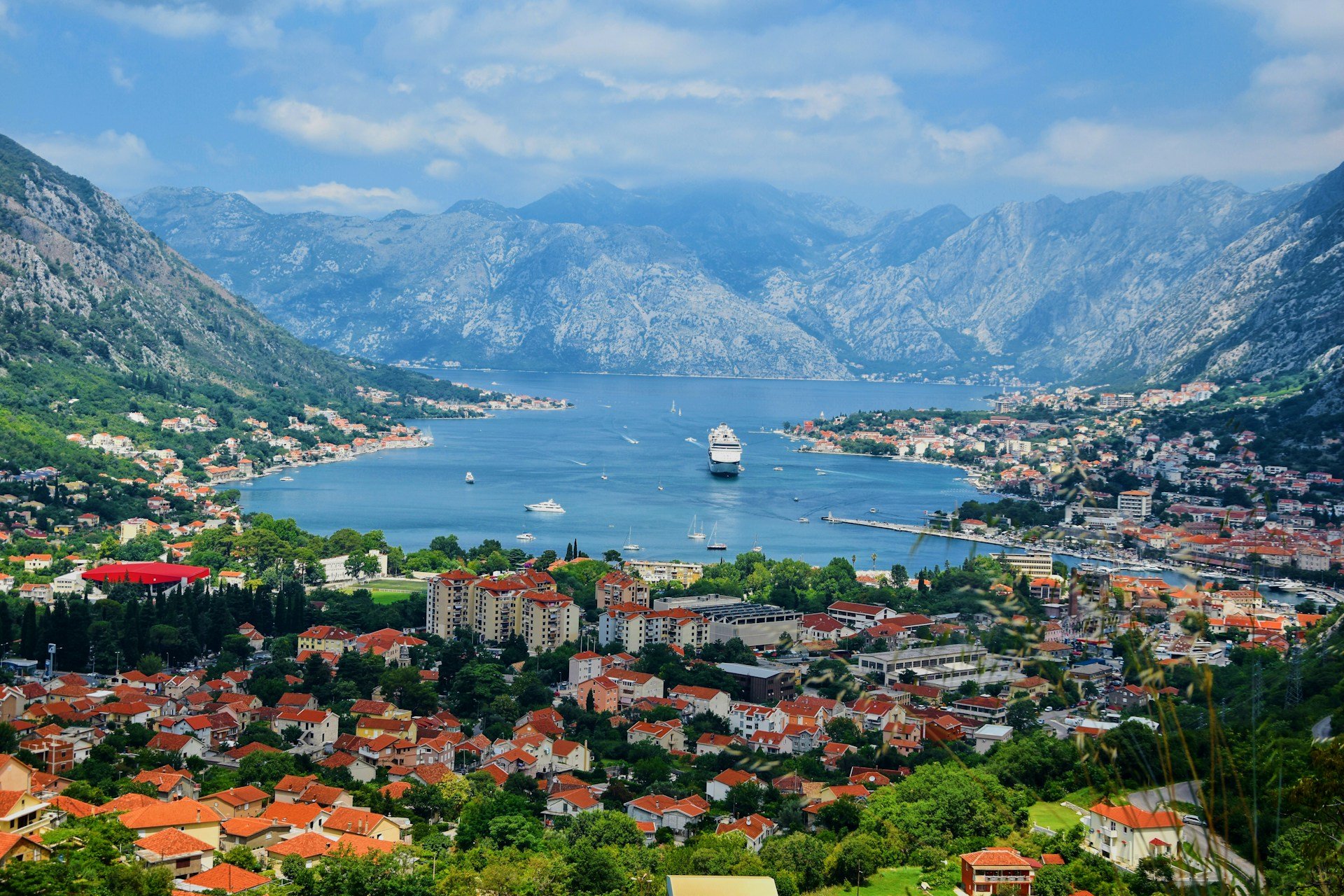
Genuinely dramatic scenery, far fewer crowds, lower prices and the particular pleasure of somewhere most of your friends haven't been yet. The Bay of Kotor, a fjord-like inlet ringed by 1,800-metre mountains with the walled city of Kotor at its innermost point, is one of Europe's most extraordinary landscapes. The country is small enough to drive across in two hours, yet holds walled towns, sandy beaches and mountain national parks. The raw material is extraordinary; the infrastructure is still catching up.
Key facts side by side
| Fact | 🇭🇷 Croatia | 🇲🇪 Montenegro |
|---|---|---|
| Mid-range daily budget | €80–150 per person | €50–100 per person |
| Currency | Euro (€), since 2023 | Euro (€), though not an EU member |
| Best months | June, September, early October | June, September, early October |
| Peak season | July–August, very crowded | July–August, busy but manageable |
| Main airports | Split (SPU), Dubrovnik (DBV) | Tivat (TIV), Podgorica (TGD) |
| EU & Schengen | Yes, both | No, an EU candidate country |
| Visa, most Western passports | None required | None required, 90 days in 180 |
| Islands & coastline | 1,200+ islands (Hvar, Brač, Vis, Korčula) | Short coastline (293km), very few islands |
| Sailing infrastructure | World-class | Minimal by comparison |
| Sandy beaches | Rare; mostly pebble or rock | Yes, rare on the Adriatic |
| Landscape highlights | Plitvice Lakes, Kornati archipelago | Bay of Kotor, Durmitor, Tara Canyon |
Typical 2026 prices in euros, excluding flights. Rates move with the season and exchange rates.
Round 1 of 11
Which has better beaches, Croatia or Montenegro?
A split decision
It depends what "better" means to you. Montenegro wins for sandy beach quality, particularly in the south. Croatia wins for variety, with 1,200 islands offering hidden coves that Montenegro's short coastline cannot match.
 🇭🇷 Croatia
Croatia: extraordinary water, mostly pebble
Croatia's beaches are defined by the Adriatic's exceptional clarity, a vivid turquoise-to-cobalt that makes every cove photogenic, and by a mostly rocky or pebble character that surprises visitors expecting sand. Zlatni Rat on Brač is Croatia's most famous beach and one of the few sandy ones. The hidden coves reachable only by boat on Vis, Hvar and Korčula are genuinely beautiful, and island-hopping gives access to dozens of different beach experiences. The beaches around Dubrovnik itself are unremarkable.
- Best for sand
- Zlatni Rat, Brač (rare exception)
- Best scenery
- Hidden coves on Vis, Hvar, Korčula
 🇲🇪 Montenegro
Montenegro: rare, genuine sand
Montenegro's greatest beach advantage is sand, actual fine sand, particularly in the south. Sveti Stefan is the country's most iconic image: a pink-sand beach curving around a small island joined to the mainland by a causeway, now the exclusive Aman Sveti Stefan resort. Velika Plaža near Ulcinj stretches 13km, the longest beach on the eastern Adriatic, and is almost deserted outside August. The Bay of Kotor's beaches are calmer and flatter than the open Adriatic, good for families and paddling.
- Best for sand
- Sveti Stefan, Velika Plaža, Ulcinj
- Best for families
- Bay of Kotor beaches
Chasing sand specifically? Head to Montenegro. Chasing variety and boat-access coves? Croatia's islands win easily.
Round 2 of 11
Which is cheaper, Croatia or Montenegro?
Montenegro wins, clearly
Montenegro, in almost every category. For equivalent comfort, expect to spend roughly 30–40% less than in Croatia. Croatia has become expensive by Eastern European standards, comparable to Spain or southern France in peak season.
| Typical cost | 🇭🇷 Croatia | 🇲🇪 Montenegro |
|---|---|---|
| Budget hostel / guesthouse | €25–45/night | €15–30/night |
| Mid-range hotel | €100–200/night | €60–120/night |
| Restaurant main course | €12–25 | €8–16 |
| Local beer | €3–5 | €2–3.50 |
| Coffee | €2–3.50 | €1.20–2.50 |
| Ferry or boat trip, per sector | €15–50 | €5–20 |
| Flight connections | Excellent, many budget routes | Limited, fewer airlines |
| Mid-range daily budget | €80–150 | €50–100 |
Typical 2026 prices in euros, excluding flights. Rates move with the season and exchange rates.
The one exception: Montenegro's luxury end. The Aman Sveti Stefan resort and the Porto Montenegro superyacht marina in Tivat are among Europe's most expensive, but that outlier doesn't define everyday travel there.
Round 3 of 11
Culture and old towns: Dubrovnik or Kotor?
A genuine tie
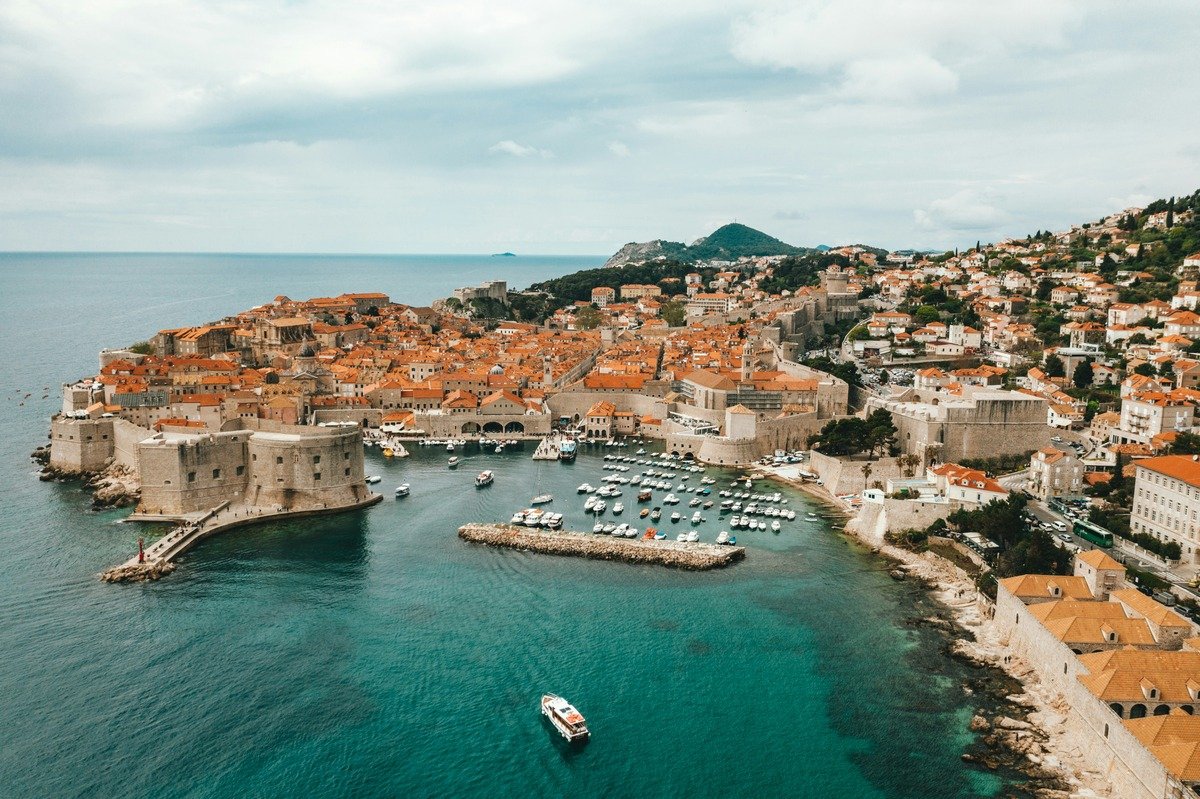
Both are UNESCO-listed medieval masterpieces, but the experience of visiting them is completely different. Dubrovnik wins on scale and fame; Kotor wins on crowds, especially in peak season.
 🇭🇷 Croatia
Dubrovnik: spectacular, and its own victim
Dubrovnik is genuinely one of Europe's great urban sights. The 2km walk atop the medieval city walls, with vertiginous views over terracotta rooftops to the clear Adriatic below, is among Europe's finest urban experiences. The pedestrianised old city is extraordinarily preserved: the marble-paved Stradun, the Rector's Palace, the Franciscan Monastery and its medieval pharmacy. The problem is stark: in July and August, Dubrovnik takes up to 10,000 cruise-ship day-trippers daily on top of its hotel guests. Split's 4th-century Diocletian's Palace is a more lived-in alternative, an actual working city built inside a Roman emperor's retirement palace.
- Don't miss
- City walls walk, Stradun, Diocletian's Palace
 🇲🇪 Montenegro
Kotor: dramatic, intimate, not yet overrun
Kotor is one of the Mediterranean's best-kept secrets: a perfectly preserved medieval walled city at the innermost point of the Bay of Kotor, Europe's southernmost fjord, with the sheer face of Mount Lovćen rising almost vertically to 1,749 metres behind the walls. The compact old town is navigable in a morning, and Kotor in peak season has perhaps a tenth of Dubrovnik's visitor numbers. Beyond the coast, Cetinje, Montenegro's former royal capital, and Ostrog Monastery, built into a sheer cliff face and one of Orthodox Christianity's major pilgrimage sites, add real historical depth inland.
- Don't miss
- St John's Fortress, Cetinje, Ostrog Monastery
If forced to choose one for peak-season travel, Kotor offers the better experience today, purely because Dubrovnik has become a victim of its own success. In June or September, Dubrovnik is back on top.
Round 4 of 11
Nature and national parks
A genuine tie
Both countries pack extraordinary landscapes into a small area. Croatia has the single most famous park; Montenegro has more variety for its size.
 🇭🇷 Croatia
Croatia: Plitvice, possibly Europe's finest park
Plitvice Lakes National Park is a UNESCO World Heritage Site of 16 terraced lakes connected by waterfalls in shades of emerald and turquoise, caused by natural tufa limestone deposits. The 8km board-walked circuit runs directly over the water between falls and is one of Europe's finest day walks. Like Dubrovnik, it suffers from crowds in peak season, timed entry is now mandatory, but outside July and August it remains extraordinary. Krka National Park, where you can swim below the waterfalls, and the 270-island Kornati archipelago round out Croatia's natural portfolio.
- Don't miss
- Plitvice's 8km boardwalk circuit
 🇲🇪 Montenegro
Montenegro: three landscapes in one small country
Montenegro packs an almost implausible variety into 14,000 km², from the Adriatic coast to a high mountain national park in under two hours. Durmitor National Park, a UNESCO-listed massif of glacial lakes and 2,500-metre peaks, is one of the Balkans' finest hiking destinations. The Tara River Canyon, Europe's deepest gorge at 1,300 metres, cuts through it, offering world-class white-water rafting. The drive from Kotor up to the Lovćen summit, with views across the bay and into Albania, is one of Europe's most spectacular mountain roads.
- Don't miss
- Durmitor, Tara Canyon rafting, the Lovćen road
Round 5 of 11
Sailing and island hopping
Croatia wins, decisively
Croatia, without qualification. One of these countries is among Europe's top sailing destinations; the other has a short, marina-light coastline that isn't built for it.
 🇭🇷 Croatia
Croatia: one of Europe's premier sailing coasts
The Dalmatian coast is Europe's finest mainland sailing destination: 1,800km of coastline, 1,200 islands, reliable Adriatic winds (the afternoon maestral is almost guaranteed each summer), hundreds of well-equipped marinas, and a sheltered archipelago that's safe and navigable for intermediate sailors. The classic route from Split through the Pakleni Islands, Hvar and Korčula to Dubrovnik takes 7–14 days. Bareboat charters, skippered gulets and flotilla holidays are all well established. Hvar draws a younger sailing crowd; Vis and Lastovo are the quieter alternatives.
- Classic route
- Split → Hvar → Korčula → Dubrovnik
 🇲🇪 Montenegro
Montenegro: beautiful boat trips, not sailing country
Montenegro isn't a sailing destination the way Croatia is: the coastline is short (293km), there are very few islands, and marina infrastructure, though growing, is far behind Croatia's. The Bay of Kotor is beautiful from the water, boat trips to the island churches of Our Lady of the Rocks and the near-deserted village of Perast are highlights, but it's calm and enclosed rather than open sailing water. Some charter operations now work out of Tivat's upscale Porto Montenegro marina, but for an island-hopping sailing holiday, this isn't the right destination.
- Don't miss
- Our Lady of the Rocks, Perast, by boat
Round 6 of 11
Things to do beyond beaches and old towns
Croatia wins, narrowly
Croatia, on variety. Its islands give it the edge for diving, wine touring and freshwater swimming. Montenegro answers with Europe's best white-water rafting and one of the continent's great wildlife lakes.
| Activity | 🇭🇷 Croatia | 🇲🇪 Montenegro |
|---|---|---|
| Diving & snorkelling | The Blue Cave on Biševo, wrecks off Vis | Limited; mostly coastal snorkelling |
| White-water rafting | Cetina River near Omiš, gentler grade | Tara Canyon, Europe's deepest gorge |
| Wine touring | Pelješac and Korčula, Plavac Mali country | Crmnica region, a smaller Vranac scene |
| Wildlife & boat trips | Kornati archipelago by boat | Skadar Lake, pelicans and water lilies |
| Freshwater swimming | Krka's waterfall pools | Durmitor's Black Lake, colder |
| Cycling | Island routes on Brač and Korčula | Mountain routes around Durmitor |
Round 7 of 11
Which has better food, Croatia or Montenegro?
A genuine draw
Call it even. Both coasts share a Mediterranean seafood tradition, but each brings something distinctive: Croatia's refined Dalmatian and Istrian cooking against Montenegro's hearty, mountain-cured specialities.
 🇭🇷 Croatia
Croatia: Dalmatian seafood and Istrian truffles
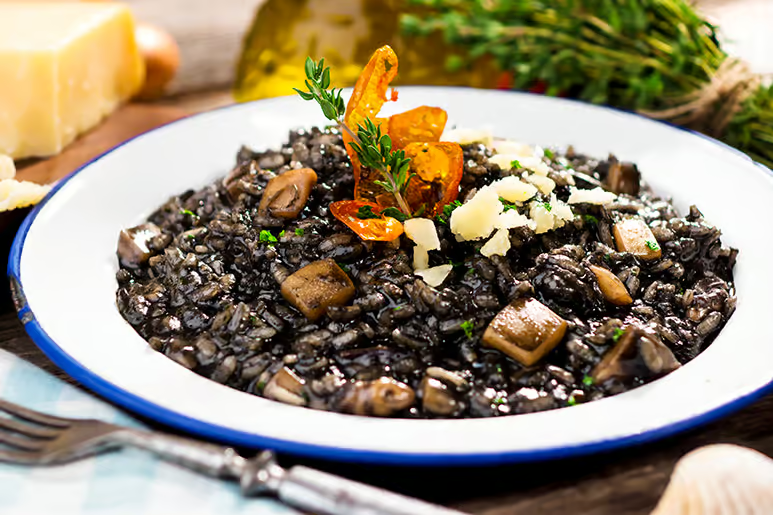
Grilled fish and crni rižot (black risotto, coloured with cuttlefish ink) anchor the Dalmatian coast, alongside pašticada, a slow-braised beef dish saved for celebrations, and peka, meat or octopus cooked for hours under a metal dome buried in embers. Inland, Istria produces some of the world's most highly rated olive oil and serious white truffles. Plavac Mali, Croatia's signature red grape, pairs well with all of it.
- Must eat
- Black risotto, pašticada, peka
 🇲🇪 Montenegro
Montenegro: mountain-cured meats meet the coast
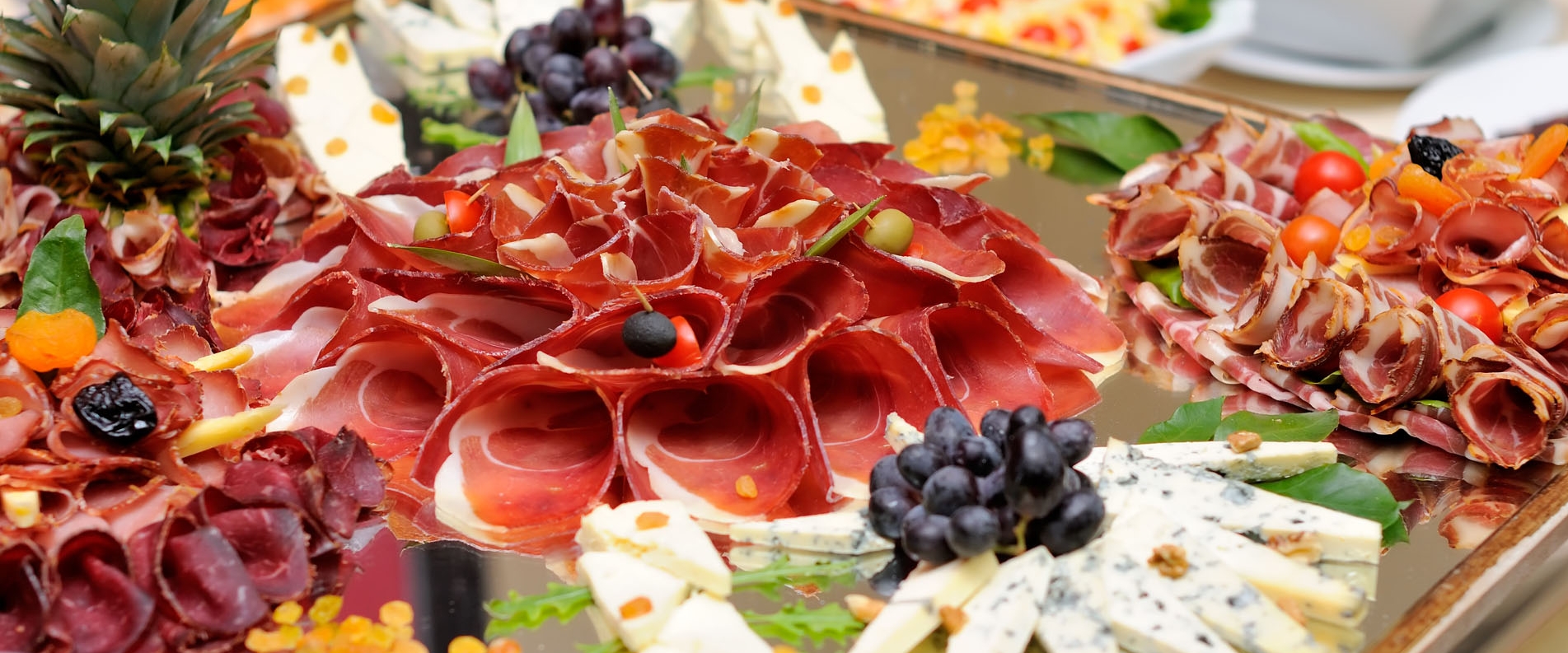
Njeguši, a village on the slopes of Mount Lovćen, gives its name to Montenegro's best-known exports: Njeguški pršut (smoke-cured ham) and a firm, tangy sheep's cheese. Inland cooking leans Balkan, with ćevapi and ražnjići grilled meats, plus kačamak, a rustic cornmeal-and-potato dish. On the coast, seafood is much like Croatia's, and Vranac, the local red grape from the Crmnica wine region, is worth seeking out.
- Must eat
- Njeguški pršut, kačamak, coastal seafood
Round 8 of 11
Nightlife: Zrće Beach or Budva?
Split decision
It depends on the scale you want. Croatia wins for a bigger, more famous scene. Montenegro wins for a smaller, less try-hard night out.
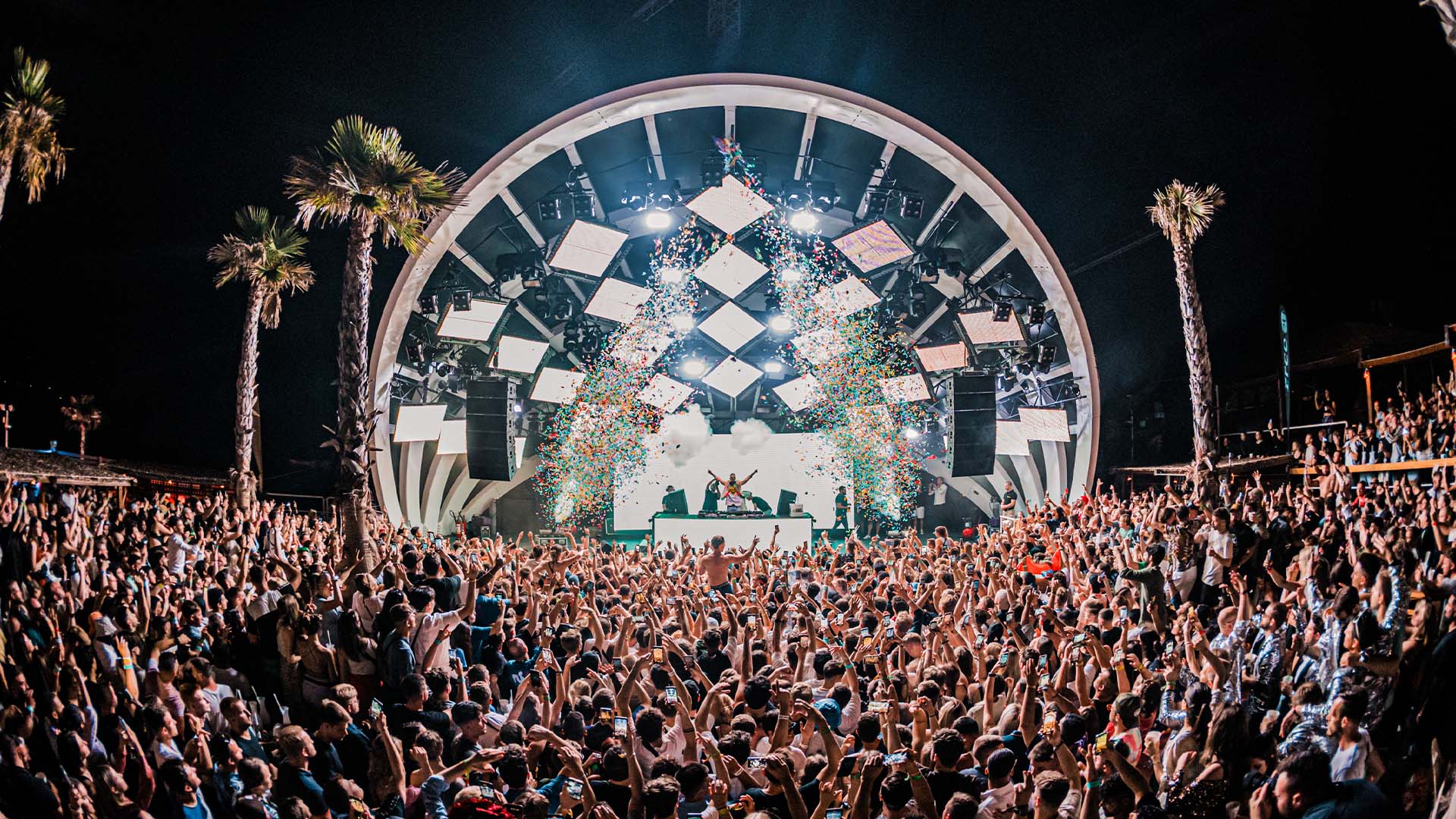 🇭🇷 Croatia
Croatia: Hvar's beach clubs and Zrće's superclubs
Hvar Town runs a glamorous beach-club and yacht-party circuit, with Carpe Diem among its best-known names. For something bigger and louder, Zrće Beach on Pag island has earned the nickname "Croatia's Ibiza": open-air superclubs like Aquarius and Papaya run marathon summer sessions and international festival line-ups. Split's Riva promenade is the easier, lower-key option for a normal night out.
- Go-to areas
- Hvar Town, Zrće Beach (Pag), Split
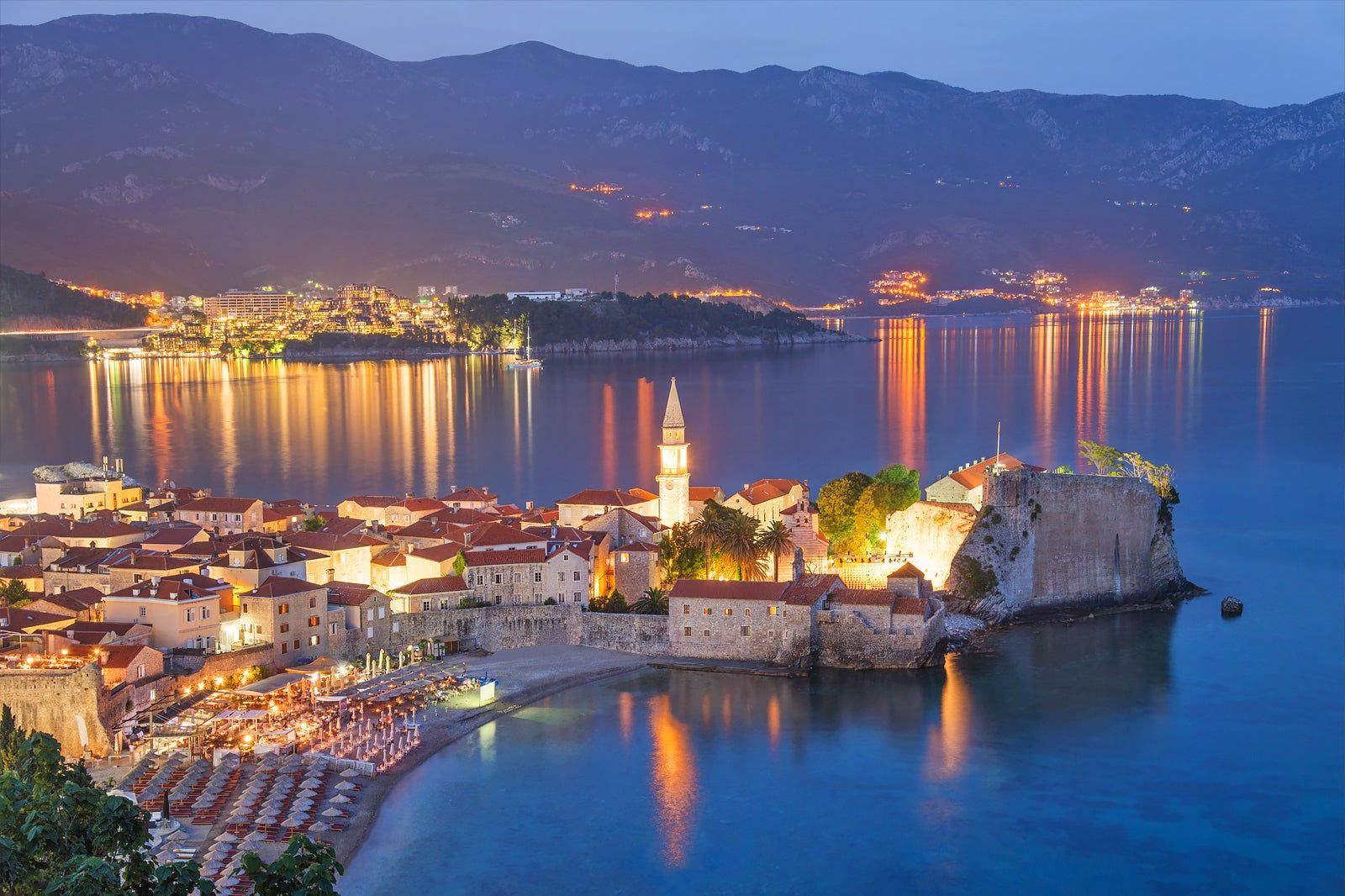 🇲🇪 Montenegro
Montenegro: Budva's old town and Porto Montenegro
Budva's old town is Montenegro's main nightlife hub, dense with bars and open-air venues, including Top Hill, one of the region's larger summer clubs. For something more relaxed and upmarket, the marina bars around Porto Montenegro in Tivat draw a yacht-set crowd without Zrće's scale or noise. It's a smaller scene overall, better suited to an easy evening than a marathon night out.
- Go-to areas
- Budva old town, Porto Montenegro (Tivat)
Round 9 of 11
When to go: the best time for Croatia and Montenegro
A genuine tie
Unlike some comparisons, there's no mirror-image trade-off here. Croatia and Montenegro share virtually the same Mediterranean climate along their neighbouring coastlines: hot, dry summers and mild, wetter winters. The real lever is crowds and prices, not weather. June, September and early October are the sweet spot for both.
Croatia or Montenegro, month by month
| Month | 🇭🇷 Croatia | 🇲🇪 Montenegro | Smarter pick |
|---|---|---|---|
| January | WetCool, quiet | WetRainiest stretch | Either, off-season rates |
| February | Wet | Wet | Either, off-season rates |
| March | MixedImproving | Mixed | Either |
| April | GoodWarming, sea still cool | Good | Either |
| May | GoodSea 18–20°C | Good | Either |
| June | BestWarm, thinner crowds | Best | Either, the sweet spot |
| July | GoodPeak crowds, peak prices | GoodBusy but manageable | Montenegro, lighter crowds |
| August | GoodPeak crowds, peak prices | GoodBusy but manageable | Montenegro, lighter crowds |
| September | BestWarm, quieter, cheaper | Best | Either, the sweet spot |
| October | GoodEarly month is lovely | Good | Either, early in the month |
| November | MixedRains return | WetRains return, harder | Either, expect rain |
| December | WetQuiet, cool | Wet | Either, off-season rates |
A local quirk: the mountains right behind Kotor create one of Europe's wettest microclimates in winter, but this barely touches the coast in summer, when both countries are reliably dry and warm. If crowds bother you more than a euro or two, Montenegro's peak season feels calmer even though the weather is identical to Croatia's.
Round 10 of 11
Getting there and getting around
Montenegro wins, narrowly
Montenegro is simpler on the ground. It's small enough to cross in about two hours with no islands to ferry between, while Croatia's island-heavy coast means planning around ferry schedules and long coastal drives.
Ferries and a rental car
Jadrolinija and faster private catamarans like Krilo connect the islands, but schedules thin out and prices rise in peak season, so book ahead. A rental car is close to essential for reaching smaller coastal towns and vineyards, and the scenic Adriatic Highway gets slow and busy in summer. Split and Dubrovnik airports are the main gateways.
Short drives, one road in and out
Montenegro is small enough to cross in about two hours, and most visitors get around by rental car or bus along the coastal road, no ferries required. Tivat and Podgorica are both close to the coast. The mountain roads up to Lovćen and into Durmitor are spectacular but narrow, and best avoided in fog or snow.
Crossing the border: the crossing near Dubrovnik at Debeli Brijeg typically takes 20–40 minutes by car in summer. Check with your rental company first, cross-border fees often apply.
Round 11 of 11
Is Croatia or Montenegro safer for tourists?
A draw
Both are very safe, with low rates of violent crime against tourists. The real risks in both countries are the roads, not other people.
🇭🇷 Croatia: what to watch
- Coastal road driving is the main hazard. The Adriatic Highway is narrow and winding with sharp drops in places; take it slowly, especially at night.
- Petty theft turns up in the packed lanes of Dubrovnik's old town and at ferry queues in peak season. Keep bags zipped and in front of you.
- Sea life: watch for jellyfish in late summer, and wear reef shoes on pebble and rocky beaches.
- Emergency number: 112 works nationwide, as in every EU country.
🇲🇪 Montenegro: what to watch
- Mountain roads up to Lovćen and into Durmitor are spectacular but narrow, with few barriers in places. Avoid them in poor weather.
- Unregulated taxis: agree a fare before you get in, especially from the airport.
- Hiking preparation: weather changes fast at altitude in Durmitor. Tell someone your route and carry proper gear.
- Not in the EU: arrange travel insurance and know your medical cover before you go. The emergency number is also 112.
In both countries the sensible precautions are the same as anywhere in Southern Europe: watch your belongings in crowds, drive defensively on coastal and mountain roads, and carry a copy of your passport.
Which is better for couples, families and solo travellers?
Croatia for sailors, divers, families wanting infrastructure and first-time Adriatic visitors. Montenegro for budget trips, hikers and travellers chasing lighter crowds. Couples and luxury travellers are well served by either.
Couples & honeymoons
Either
Croatia has Hvar and Dubrovnik's five-star hotels; Montenegro has Sveti Stefan and the drama of Kotor Bay. Both deliver a memorable romantic trip.
Families with young children
Croatia
More established resort infrastructure and calmer, reef-protected bays in Istria and the Kvarner make logistics easier with young kids.
Budget & backpacker travel
Montenegro
Roughly 30–40% cheaper across accommodation, food and transport, with a growing hostel scene around Kotor and Budva.
Sailors & yacht charters
Croatia
1,200 islands, reliable summer winds and hundreds of marinas make this one of Europe's best sailing coasts.
Hikers & mountain lovers
Montenegro
Durmitor National Park, the Tara Canyon and the Lovćen road pack serious mountain drama into a small country.
First-time Adriatic visitors
Croatia
EU and Schengen membership, better flight connections and more established tourist infrastructure make it the easier landing.
Divers & snorkellers
Croatia
The Blue Cave on Biševo and the wrecks off Vis give it a clear edge over Montenegro's more limited diving scene.
Luxury travellers
Either
Croatia has Dubrovnik and Hvar's five-star hotels; Montenegro has the Aman Sveti Stefan resort and the superyacht marina at Porto Montenegro.
Can you combine Croatia and Montenegro in one trip?
Yes, and it's one of Europe's best two-week Adriatic itineraries. The drive from Dubrovnik to Kotor takes about two hours including the border crossing, so allow 12–16 days for both countries to feel unhurried.
Croatia: days 1 to 9
- Days 1–2
Split. Fly in and spend two days exploring the 4th-century Diocletian's Palace, a working old town rather than a museum piece.
- Days 3–4
Hvar. Ferry over for lavender-scented hills, a party-hard reputation and some of the Adriatic's clearest water.
- Days 5–6
Korčula. A quieter, more remote island stop with its own walled old town.
- Days 7–9
Dubrovnik. Walk the city walls early or out of season, and use Dubrovnik as your springboard south.
Montenegro: days 10 to 13
- Day 10
Cross the border. Drive or bus from Dubrovnik to Kotor via Herceg Novi, about two hours including the crossing.
- Days 11–12
Kotor. Climb to St John's Fortress, wander the old town, and take a boat trip to Our Lady of the Rocks and Perast.
- Day 13
Budva or the Lovćen road. Beach time in Budva, or the spectacular mountain drive up to the Lovćen summit, with time allowing a detour north to Durmitor National Park.
When to go: June and September are the sweet spot for both countries: warm enough to swim, far fewer crowds than July–August, and prices 20–30% lower. Many travellers do the route in reverse, flying into Montenegro and out of Split.
Verdict: Croatia or Montenegro?
There's no single overall winner. Croatia is the right first Adriatic trip, built for sailing, island variety and a bigger night out. Montenegro is the right next trip, or the right one if value and lighter crowds matter more than fame.
Choose Croatia if…
Croatia, for islands and sailing
The right choice when island-hopping, sailing and the full Adriatic archipelago experience are priorities, or when this is your first Adriatic trip and you want the widest range of experiences.
- A sailing holiday is the plan, Croatia is Europe's best
- Island hopping across Hvar, Vis, Korčula, Brač
- Plitvice Lakes is a bucket-list priority
- It's your first Adriatic trip
- You want Dubrovnik, ideally in June or September
- You want a bigger night out, Hvar or Zrće Beach
- EU and Schengen travel makes logistics easier for you
Choose Montenegro if…
Montenegro, for drama and value
The right choice when you want comparable Adriatic scenery without Croatia's crowds and prices, or when you've already done Croatia and want the next step.
- You've already done Croatia, this is the natural next stop
- Budget matters, expect 30–40% savings over Croatia
- The Bay of Kotor is the specific draw
- Sandy beaches are a priority
- Mountain hiking appeals, Durmitor and Lovćen
- You want peak-season crowds to stay manageable
- Getting around without ferries appeals to you
Weigh it for your own trip
Select everything that matters to you.
Pick what matters on this trip and the needle will move.
Croatia vs Montenegro: frequently asked questions
Is Croatia or Montenegro better for beaches?
It depends what you mean by better. Montenegro wins for sandy beaches: Sveti Stefan's pink-sand cove and the 13km stretch of Velika Plaža near Ulcinj are genuinely exceptional, and sand is rare on the Adriatic. Croatia wins for variety: 1,200 islands give access to hidden coves and turquoise water that Montenegro's short coastline can't match. Croatia's water clarity is extraordinary throughout, but most of its beaches are pebble or rock rather than sand.
Is Montenegro cheaper than Croatia?
Yes, significantly. Montenegro runs roughly 30–40% cheaper than Croatia across accommodation, restaurants, drinks and activities. A comfortable mid-range day in Montenegro costs about €50–80; the same in Croatia costs €80–150. The exception is Montenegro's luxury end, led by the Aman Sveti Stefan resort, but everyday travel there remains a genuine bargain.
Is Dubrovnik or Kotor better to visit?
Dubrovnik wins on scale and fame: its city walls walk is one of Europe's finest urban experiences. But in July and August, Kotor is the better experience: a fraction of Dubrovnik's crowds, equally beautiful medieval architecture, and the drama of the Bay of Kotor and Mount Lovćen behind it. Visit Dubrovnik in June or September and it reclaims much of its magic.
Which has better food, Croatia or Montenegro?
Call it a draw. Croatia's Dalmatian coast is known for grilled seafood, black risotto, slow-braised pašticada and peka-cooked dishes, with Istrian truffles and olive oil inland. Montenegro answers with Njeguški pršut and cheese from the mountains above Kotor, hearty kačamak, and Balkan grilled meats alongside coastal seafood much like Croatia's. Both make excellent, inexpensive local wine.
Which has better nightlife, Croatia or Montenegro?
Croatia wins for scale, Montenegro for a quieter night out. Hvar Town's beach clubs and Zrće Beach on Pag island, dubbed Croatia's Ibiza, run some of the Adriatic's biggest parties. Montenegro's Budva Old Town is the main hub, with Porto Montenegro in Tivat offering a calmer, upscale marina scene.
When is the best time to visit Croatia and Montenegro?
Both share the same Mediterranean climate and the same best months: June and September, when it's warm enough to swim, crowds are far lighter than July–August, and prices drop 20–30%. Early October is also lovely in both. July and August bring guaranteed sun but the biggest crowds and highest prices, especially in Dubrovnik and the Croatian islands.
Is Croatia or Montenegro safer for tourists?
Both are very safe, with low rates of violent crime against tourists. The real risks in both countries are the roads: narrow, winding coastal and mountain routes rather than other people. Petty theft is a minor risk in Dubrovnik's crowded old town in peak season, and Montenegro's mountain roads and hiking trails call for extra caution in poor weather.
How do you get around Croatia and Montenegro?
Croatia relies on ferries and a rental car: Jadrolinija and private catamarans connect the islands, and a car is close to essential for reaching smaller coastal towns. Montenegro is small enough to cross in about two hours by car or bus, with no islands to ferry between. The border crossing near Dubrovnik typically takes 20–40 minutes in summer.
Can you combine Croatia and Montenegro in one trip?
Yes, it's one of Europe's best two-week Adriatic itineraries. A classic route: fly into Split, island-hop through Hvar and Korčula, travel down the coast to Dubrovnik, cross the border into Montenegro and spend a few nights around Kotor and Budva. The Dubrovnik to Kotor drive takes about two hours including the border crossing. Allow 12–16 days for both countries to feel unhurried.
Do EU citizens need a visa for Montenegro?
No. EU, US, UK, Canadian, Australian and most Western passport holders can stay in Montenegro for up to 90 days in a 180-day period without a visa. Montenegro uses the euro despite not being an EU member, but it isn't in the Schengen zone, so expect a passport check at the Croatian border.
There's no wrong answer here
Croatia and Montenegro are compared so often because both are genuinely excellent, not because one is secretly bad. Pick on what you want from this trip: sailing, island variety and the famous sights, or value, sand and lighter crowds. Better still, do both. The border crossing takes twenty minutes.