
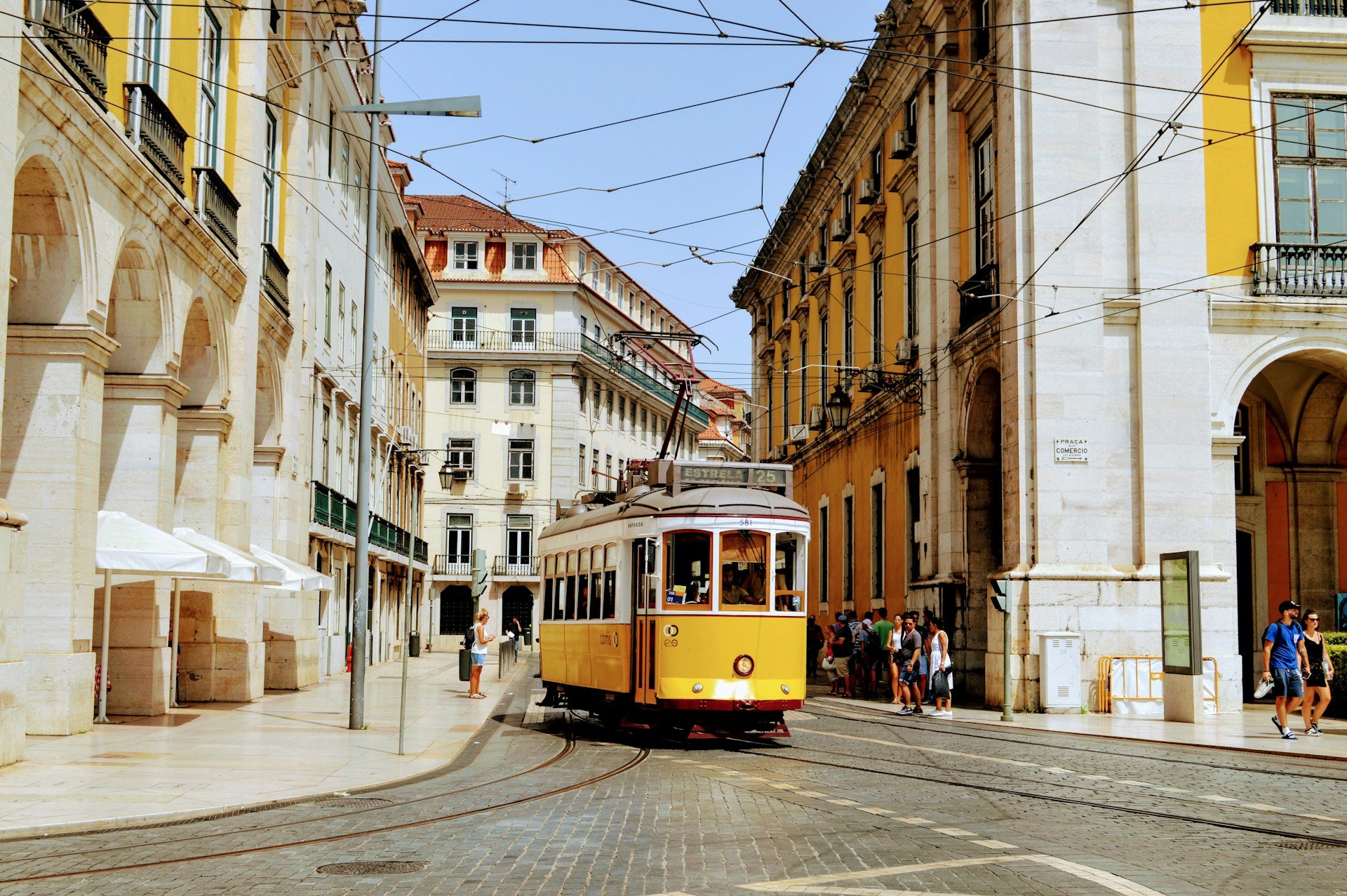
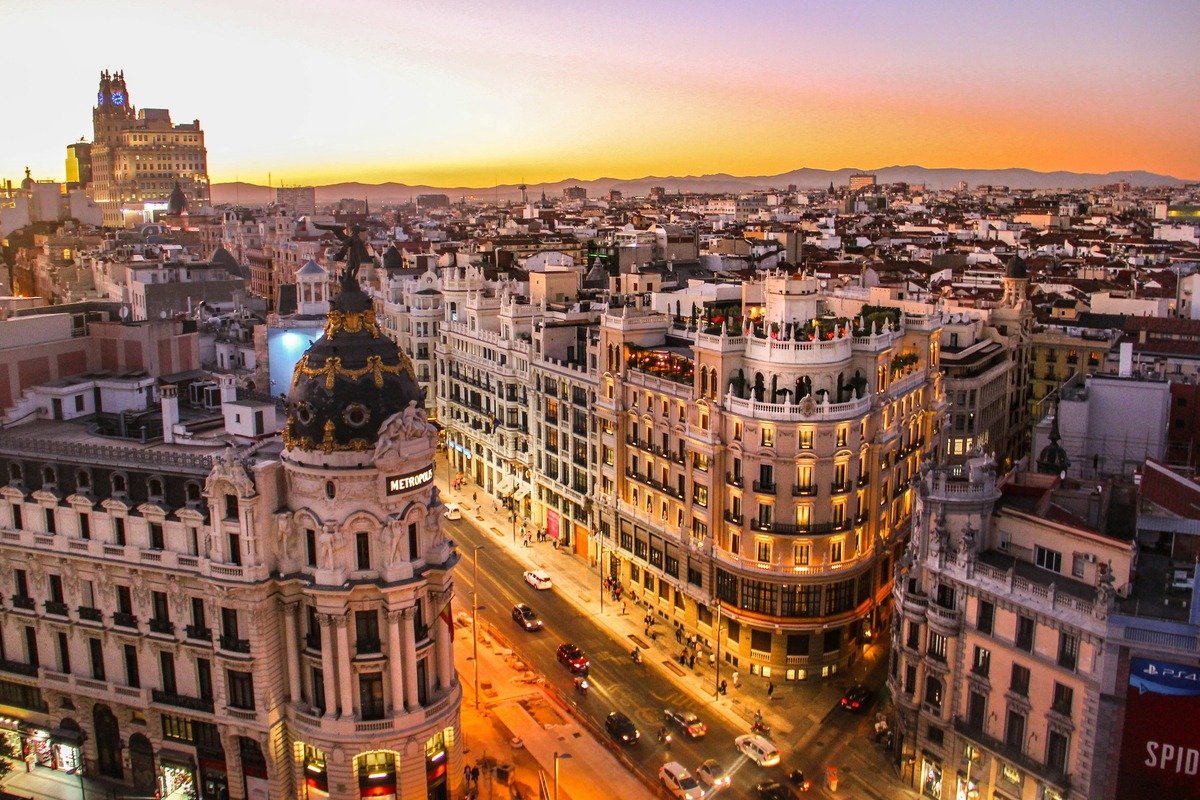
Portugal vs Spain at a glance
Ten rounds, scored honestly. Spain takes cities, food and nightlife; Portugal takes cost outright. Beaches and culture are splits. Select a category to jump to the full comparison.
| Category | PortugalSpain |
|---|---|
| The ten rounds | |
| CitiesFive world-class cities against Lisbon and Porto | Spain wins, clearly |
| BeachesAtlantic drama against warmer, wider choice | A split decision |
| FoodMore global prestige, but Portugal wins on value | Spain wins |
| CultureA unique identity against wider range | Fado vs flamenco |
| CostOne of Western Europe's best-value destinations | Portugal wins, clearly |
| NightlifeA later, bigger, more varied night | Spain wins, clearly |
| Things to doDouro wine and Sintra vs the Camino and the Alhambra | Different traditions |
| Getting aroundEurope's most extensive high-speed rail network | Spain wins, narrowly |
| WeatherThe same golden months across both | A genuine tie |
| SafetyBoth very safe, with tourist-hotspot pickpocketing | A draw |
| Best for | |
| Budget-conscious travellersConsistently 20–40% cheaper on hotels | Portugal |
| Food-led travellersTapas, jamón and San Sebastián | Spain |
| City collectorsFive world-class cities in a single country. | Spain |
| OverallValue and intimacy or variety and iconic sights | Depends on your priorities |
Intimate vs expansive
Two countries under the same Iberian sun, at very different scales and price points.
Western Europe's most underrated country
Small enough to explore properly in two weeks, cheap enough to feel genuinely good value, with a melancholy beauty, fado, azulejo tiles, Atlantic light, all its own. Lisbon's seven hills, Porto's port cellars and the Algarve's limestone coves sit in a measurably cheaper package.
A federation of distinct regions, simply inexhaustible
Madrid's Prado and tapas, Barcelona's Gaudí, Seville's flamenco, Granada's Alhambra and San Sebastián's Michelin stars. The trade-off is that its most popular destinations are noticeably more crowded and expensive than Portugal's.
Key facts side by side
| Fact | 🐓 Portugal | 💃 Spain |
|---|---|---|
| Mid-range daily budget | €60–110 | €80–150 |
| Best cities | Lisbon, Porto, Évora, Sintra | Madrid, Barcelona, Seville, Granada, San Sebastián |
| Best beaches | Algarve coves, Alentejo coast, Comporta | Balearics, Costa Brava, Canaries |
| UNESCO sites | 17 | 50, more than any European country |
| Best season | Apr–Jun & Sep–Oct | Apr–Jun & Sep–Oct; Canaries year-round |
| Food highlight | Bacalhau, sardines, pastel de nata | Jamón ibérico, tapas, pintxos, paella |
| Crowd level | Lower than Spain's top sites | High at major sites, book ahead |
| Visa | Schengen rules | Schengen rules |
Typical 2026 prices excluding flights. Both countries use the euro.
Round 1 of 10
Cities
Spain wins, clearly
Spain wins on sheer volume of world-class cities. But Lisbon is quietly exceptional.
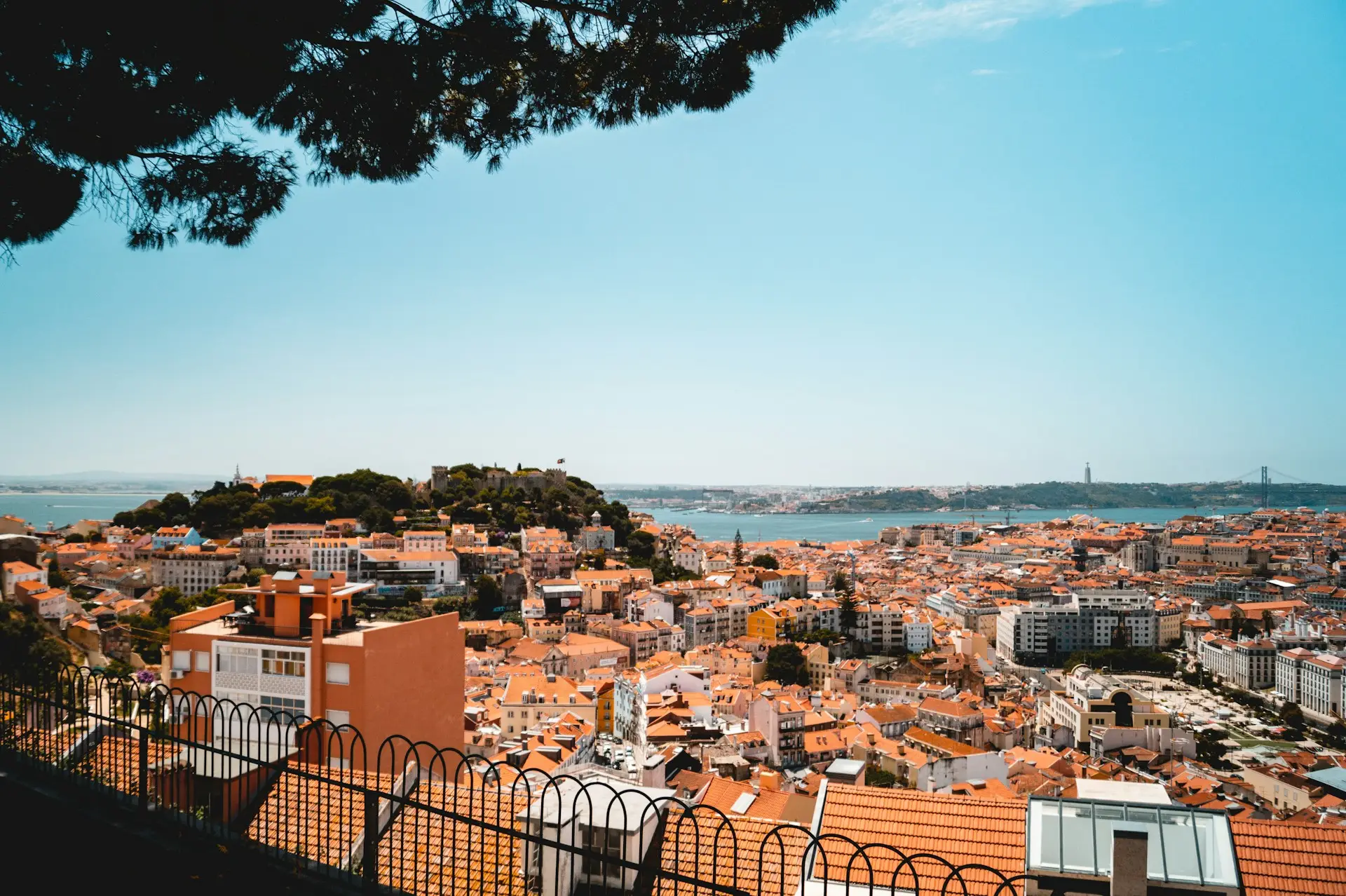 🐓 Portugal
Lisbon's seven hills and Porto's riverside, compact and deeply charming
Lisbon is small enough to walk and steep enough to make every hill a viewpoint, with azulejo tiles and fado drifting from Alfama taverns. Belém's tower and monastery and Sintra add heritage, while rawer Porto rewards two to three days. A smaller but deeply satisfying city menu.
- Don't miss
- Alfama, Belém, Sintra, Porto's São Bento
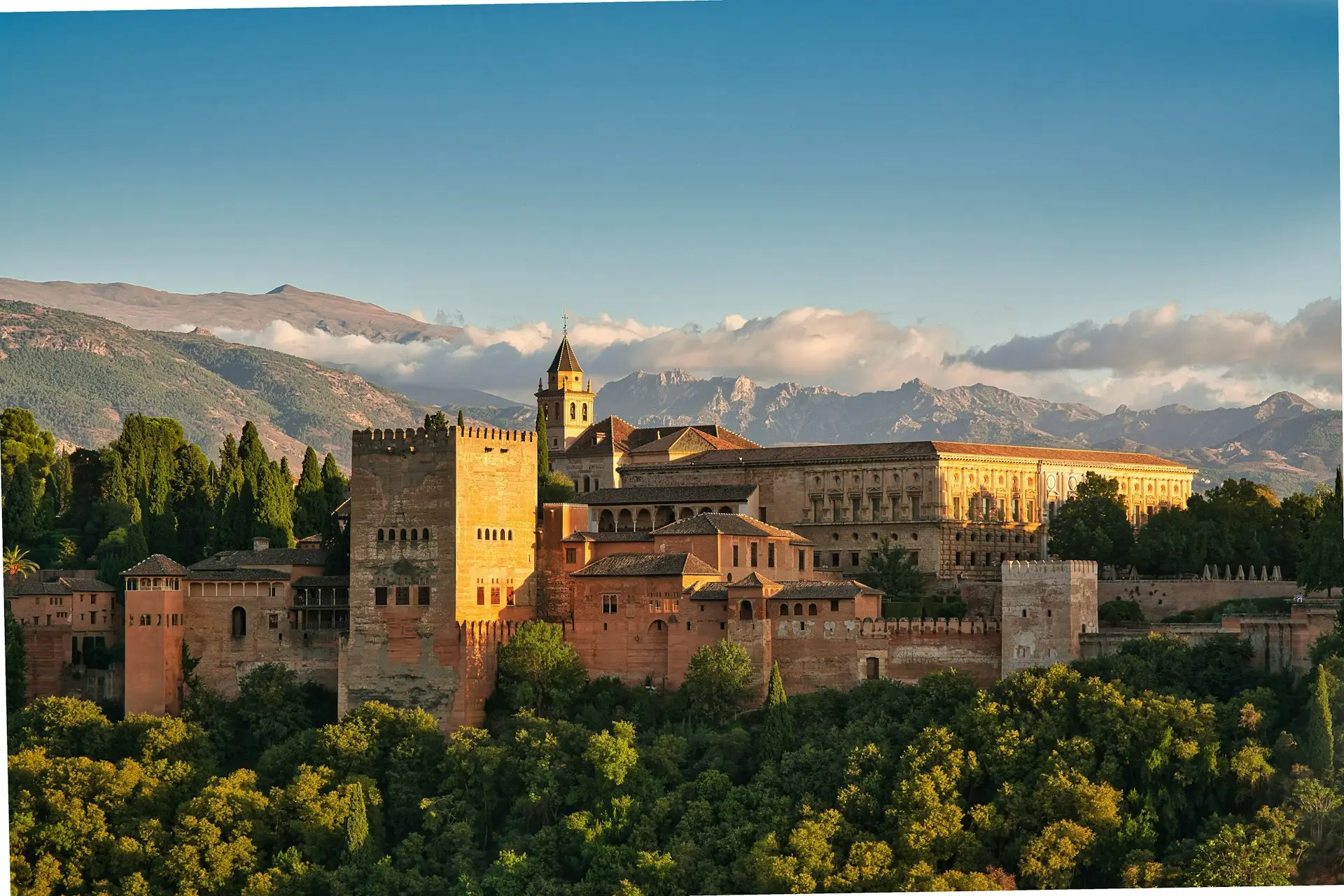 💃 Spain
Madrid, Barcelona, Seville, Granada and San Sebastián
Madrid has the Prado, the Reina Sofía's Guernica and Spain's best tapas-and-vermut culture. Barcelona pairs Gaudí with a proper beach, Seville is Andalucía at full intensity, the Alhambra is one of the world's great buildings, and San Sebastián is a Basque food capital. Spain's cities reward a month of serious travel.
- Don't miss
- The Alhambra, the Prado, Sagrada Família
Round 2 of 10
Beaches
A split decision
Portugal's Atlantic coves are more dramatic. Spain's Mediterranean and island beaches are warmer and more varied.
 🐓 Portugal
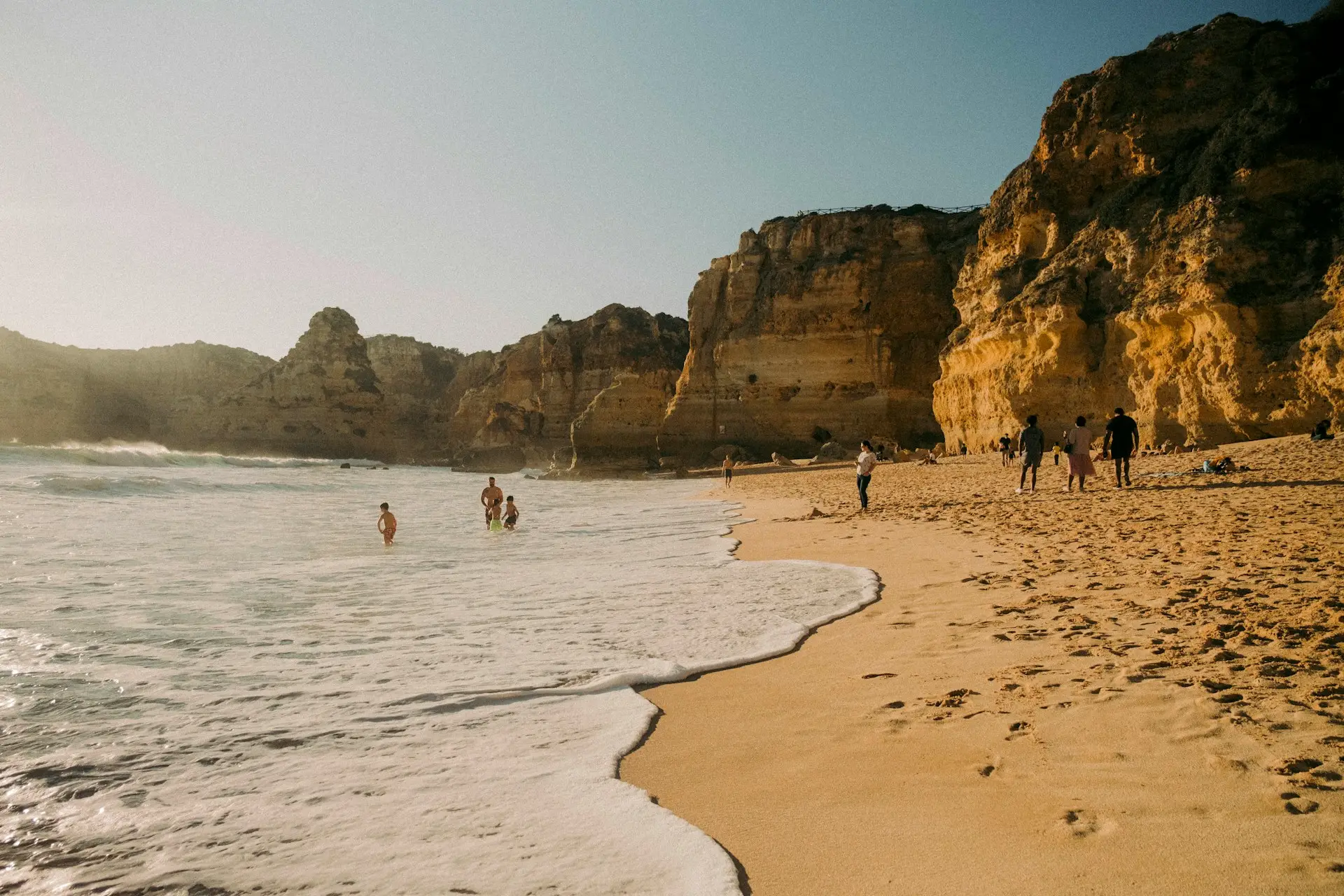
The Algarve's limestone arches and the wild Alentejo coast
Praia da Marinha, Ponta da Piedade and Benagil's sea cave make the most photogenic Atlantic beach landscape in Europe. The Alentejo is wilder and good for surfing, and Comporta is Portugal's most fashionable beach. The water is cooler, 18–22°C, but clear.
- Don't miss
- Praia da Marinha, Benagil, Comporta
 💃 Spain
Costa Brava, the Balearics and the year-round Canaries
Costa Brava coves, Formentera's Caribbean shallows, Mallorca's 200+ coves and the Canaries' year-round warmth give wider choice. Mediterranean water at 22–26°C is meaningfully warmer than Portugal's Atlantic.
- Don't miss
- Formentera, the Costa Brava, the Canaries
Round 3 of 10
Food and drink
Spain wins
Spain's food culture has more global prestige. Portugal's is excellent, more affordable, and deeply underrated.
 🐓 Portugal
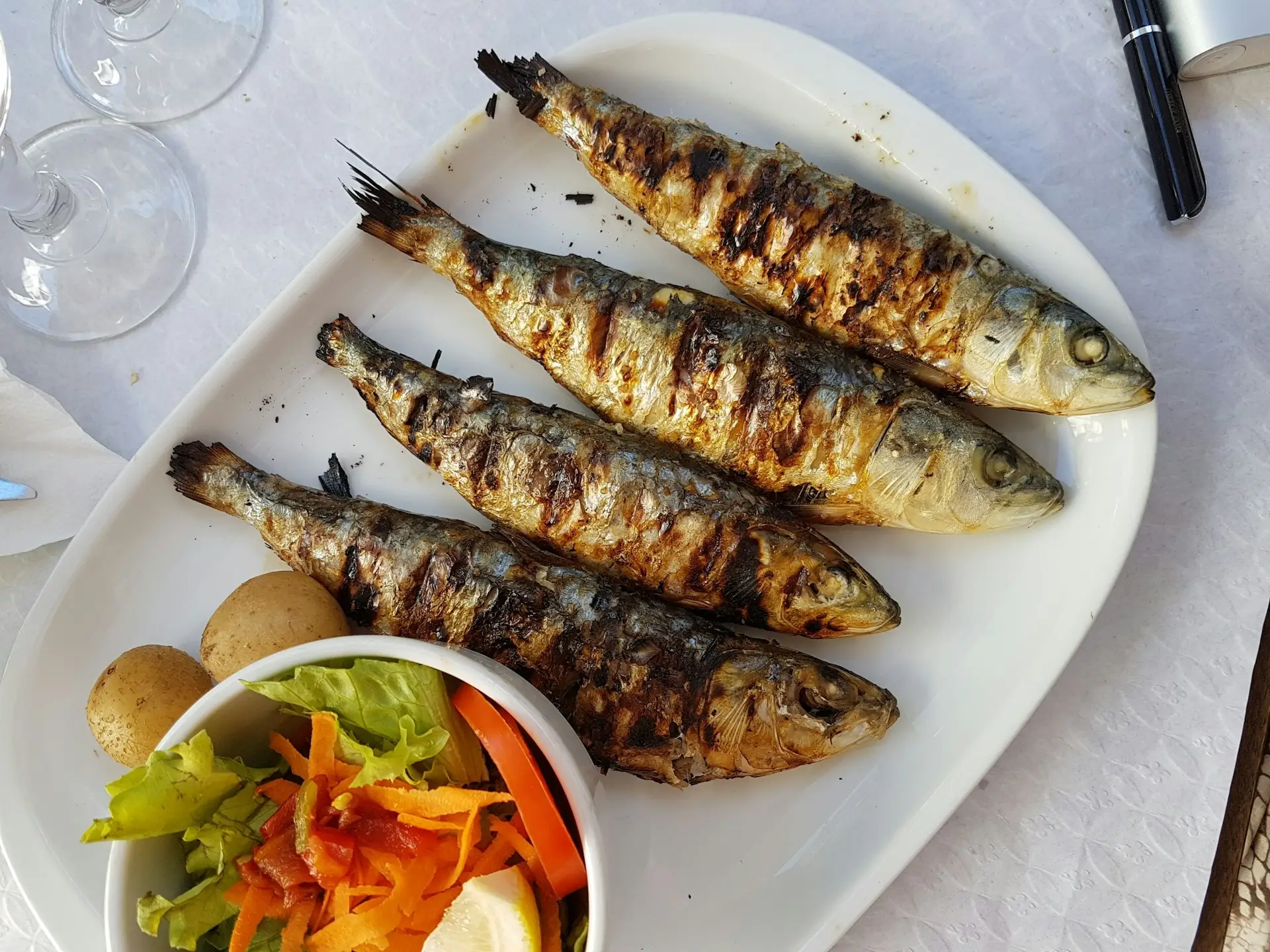
Bacalhau, grilled sardines and the world's best custard tart
Honest, seafood-heavy cooking at modest prices: bacalhau in 365 preparations, June sardines, petiscos in neighbourhood tascas, cheap vinho verde and the warm pastel de nata from Pastéis de Belém. It lacks Spain's Michelin glamour but beats it on everyday value.
- Must eat
- Bacalhau à Brás, grilled sardines, pastel de nata
 💃 Spain
Tapas, jamón ibérico and pintxos, the most celebrated food culture outside Asia
Tapas are one of the world's great social eating rituals, jamón ibérico de bellota is widely seen as the finest cured meat, and San Sebastián's pintxos bars are a tasting menu every evening. Paella valenciana done properly bears no relation to the tourist version, and Spain has more Michelin stars than France.
- Must eat
- Jamón ibérico, pintxos, paella valenciana
Round 4 of 10
Culture and atmosphere
Fado vs flamenco
Two of the world's great musical traditions, both worth experiencing in the right setting.
 🐓 Portugal
Fado, saudade and the melancholy beauty of the world's end
Saudade, an untranslatable longing, shapes everything. Fado, UNESCO Intangible Heritage, is sung in intimate Alfama tascas with a Portuguese guitar, and the azulejo tradition and Manueline architecture give the country a depth far beyond its size.
- Don't miss
- A fado night in Alfama, azulejo façades
 💃 Spain
Flamenco, Gaudí and the intensity of Andalucía
At least five culturally distinct regions, each with its own language and cuisine. Flamenco is most authentic in Seville's tablaos and Granada's Sacromonte, Gaudí's Barcelona is one of the 20th century's most ambitious artistic visions, and the festival calendar, La Tomatina, Semana Santa, San Fermín, has no equal.
- Don't miss
- A Seville tablao, Gaudí's Barcelona
Round 5 of 10
Which is cheaper, Portugal or Spain?
Portugal wins, clearly
Portugal is consistently cheaper, by a significant margin at most budget levels.
| Typical cost | 🐓 Portugal | 💃 Spain |
|---|---|---|
| Mid-range hotel, central | €80–150/night | €100–220/night |
| Mid-range dinner | €15–25/person | €20–40/person |
| Coffee | €0.80–1.20 | €1.50–2.50 |
| Glass of house wine | €1.50–3.00 | €2.50–5.00 |
| Major monument entry | €10–15 | €14–18 (Sagrada Família €26) |
| Intercity train | €15–30 Lisbon–Porto | €20–60 Madrid–Barcelona |
Typical 2026 prices in euros.
Bottom line: hotels run 20–40% cheaper in Lisbon and Porto than in Madrid and Barcelona, and everyday food and coffee are cheaper still. Portugal gives remarkable quality of experience for the money.
Round 6 of 10
Nightlife
Spain wins, clearly
Spain's night runs on a different timetable and at a different scale. Lisbon's Bairro Alto is the best of Portugal's.
Bairro Alto, Pink Street and Porto's Galerias de Paris
Lisbon has a genuine capital-city scene from fado houses to clubs until sunrise on Pink Street, and Porto has lively, smaller-scale bar streets. Good and affordable, but far smaller than Spain's.
Dinner at 10, bars at midnight, clubs at 2am
Madrid's Malasaña and Chueca run until 6am, Barcelona adds serious techno and beach clubs, and Ibiza is the world capital of club culture. Nightlife is central to Spanish social life, at a scale Portugal cannot match.
Round 7 of 10
Things to do beyond the cities
Different traditions
Portugal has wine-country and coastal charm; Spain has bigger set-pieces and more range.
| Activity | 🐓 Portugal | 💃 Spain |
|---|---|---|
| Wine touring | The Douro Valley, terraced and scenic | Rioja and Ribera del Duero, larger scale |
| Hiking | The Rota Vicentina coastal trail | The Camino de Santiago and Pyrenees |
| Palaces and monuments | Sintra and Belém | The Alhambra, Mezquita, Sagrada Família |
| Surfing | Nazaré, Ericeira and the Algarve | The Basque coast and Canaries |
| Music | Fado nights in Alfama | Flamenco tablaos across Andalucía |
| Island hopping | The Azores and Madeira | The Balearics and Canaries |
Honest verdict: a real split. Portugal offers charm and surf on a smaller scale; Spain offers bigger headline sights and more choice.
Round 8 of 10
Getting around
Spain wins, narrowly
Both are easy to tour. Spain's high-speed network is larger, but Portugal's compactness makes distances short.
Compact distances and the Alfa Pendular
Lisbon to Porto takes about 2h45 by Alfa Pendular from around €10 booked ahead, and Sintra and Cascais are short trains from Lisbon. Rail coverage beyond the main line is thinner, so the Algarve and Alentejo suit a hire car.
Renfe AVE and domestic flights
Spain's Renfe AVE is Europe's most extensive high-speed network, connecting Madrid, Barcelona, Seville and Valencia at up to 300km/h, with Madrid to Barcelona in about 2.5 hours. Distances are larger, but the trains make a multi-city trip easy.
Round 9 of 10
When to go: the best time for Portugal and Spain
A genuine tie
Both share the same golden windows. April to June and September to October are best, and July to August is intensely hot inland.
Regional notes: Seville and the Alentejo hit 35–40°C in July and August. The Canary Islands stay 20–26°C year-round, Europe's best winter sun, and northern Portugal is mild and green for hiking and wine outside summer.
Round 10 of 10
Is Portugal or Spain safer for tourists?
A draw
Both are very safe, with low violent crime. The real risk in both is petty theft in tourist crowds.
🐓 Portugal: what to watch
- Pickpocketing on Lisbon's crowded Tram 28 and in Alfama.
- Slippery cobblestones after rain; bring grippy shoes.
- Atlantic currents Heed lifeguard flags on surf beaches.
- Car break-ins Don't leave valuables visible in hire cars.
💃 Spain: what to watch
- Pickpocketing on Barcelona's Las Ramblas and metro and in Madrid's Puerta del Sol.
- Distraction scams and fake-police approaches occasionally target tourists.
- Heat in Seville and inland in summer is a real risk.
- Drink spiking at a small minority of nightlife venues.
Standard precautions, a zipped bag worn in front and wariness of distraction, cover both countries.
Which is better for specific trips?
Portugal for value, fewer crowds and compact trips. Spain for food, cities, warm beaches and nightlife.
Budget-conscious travellers
Portugal
One of Western Europe's best-value destinations.
Food-led travellers
Spain
More Michelin stars than France and the world's great tapas culture.
City collectors
Spain
Five world-class cities in a single country.
Dramatic-coastline lovers
Portugal
The Algarve's limestone arches and sea caves.
Warm-water beachgoers
Spain
Warmer Mediterranean water and the year-round Canaries.
Fewer crowds
Portugal
Noticeably less crowded at its top sights than Spain's.
Nightlife seekers
Spain
Clubs, late bars and a night that runs until dawn.
A compact 10-day first trip
Portugal
Lisbon, Sintra, Porto and the Algarve cover a country well in ten days.
Can you combine Portugal and Spain in one trip?
Yes, it is one of Europe's best two-country itineraries. Flights between Lisbon and Madrid take about 1h20, and Spain's AVE trains link its cities.
Portugal: days 1 to 6
- Days 1–3
Lisbon. Alfama, Belém and a Sintra day trip.
- Days 4–6
Porto. Train from Lisbon (about 2h45), the Ribeira, port cellars in Gaia and the Douro.
Spain: days 7 to 14
- Days 7–8
Madrid. The Prado and tapas in La Latina.
- Days 9–11
Seville and Granada. Flamenco in a tablao, the cathedral and the Alhambra.
- Days 12–14
Barcelona. Gaudí's Sagrada Família and Park Güell, then fly home.
When to go: April to June or September to October suit both countries. Spain's AVE connects Madrid to Seville and Barcelona in about 2.5 hours each.
Verdict: Portugal or Spain?
There's no single overall winner. The real question is which is better for you.
Choose Portugal if…
Portugal, for intimacy, value and the Atlantic
The right choice when budget matters, when you want fewer crowds, and when fado, azulejos and the Atlantic feel like the right register for a holiday.
- Value is a primary consideration
- Smaller, more intimate cities appeal
- The Algarve's cove beaches are on the list
- Fado, port wine and pastéis de nata
- A compact itinerary covering a country in 10 days
- A first Iberia visit that is less crowded
Choose Spain if…
Spain, for variety, food and iconic sights
The right choice when you want multiple world-class cities, the best food culture in Europe, the Alhambra, the Balearics and the variety of a large, diverse country.
- Multiple world-class cities on the itinerary
- The Alhambra or Sagrada Família are bucket-list items
- Food culture is a primary motivation
- Warmer Mediterranean beaches or the Canaries
- Flamenco in Seville is a specific goal
- A longer trip that rewards more time
Weigh it for your own trip
Select everything that matters to you.
Pick what matters on this trip and the needle will move.
Portugal vs Spain: frequently asked questions
Is Portugal or Spain better for beaches?
It depends on the type. Portugal's Algarve has Europe's most dramatic Atlantic coves with limestone arches and sea caves, but the water is cooler at 18–22°C. Spain wins on warmer water and wider choice: the Costa Brava, the Balearics and the year-round Canaries. For dramatic scenery, Portugal; for warmth, islands and choice, Spain.
Is Portugal or Spain cheaper?
Portugal, by a significant margin at most budget levels. A mid-range dinner in Lisbon is €15–25 against €20–40 in Madrid or Barcelona, hotels are 20–40% cheaper in Lisbon and Porto, and coffee is under €1 against €1.50–2.50.
Is Portugal or Spain better for food?
Spain has the more celebrated food culture, with tapas, jamón ibérico, pintxos in San Sebastián and paella. Portugal's food is excellent and underrated, with bacalhau, sardines and pastéis de nata, but lacks Spain's culinary prestige. For everyday value, Portugal; for food as a primary motivation, Spain.
Is Portugal or Spain better for nightlife?
Spain, clearly. Dinner at 10pm, bars at midnight and clubs from 2am to 7am, with Madrid, Barcelona and Ibiza as headline scenes. Lisbon's Bairro Alto and Pink Street are Portugal's best, at a smaller scale.
How do you get around Portugal and Spain?
Portugal is compact: Lisbon to Porto takes about 2h45 by Alfa Pendular. Spain's Renfe AVE is Europe's most extensive high-speed network, with Madrid to Barcelona and Seville in about 2.5 hours each. A hire car helps in the Algarve and Alentejo.
What is the best time to visit Portugal and Spain?
April to June and September to October are best for both. July and August are intensely hot inland (35–40°C in Seville and the Alentejo) and crowded at beaches. The Canary Islands stay at 20–26°C year-round.
Can you combine Portugal and Spain in one trip?
Yes. Flights between Lisbon and Madrid take about 1h20. A classic two-week circuit is Lisbon (3 nights), Porto (2), Madrid (2), Seville (2), Granada (2) and Barcelona (3), with Spain's AVE covering the Spanish legs.
Is Portugal or Spain better for a first Iberian trip?
Spain for maximum variety, with five world-class cities and more famous sights. Portugal for a better-value, less crowded, more intimate first experience. The classic Portugal itinerary of Lisbon, Sintra, Porto and the Algarve is one of Europe's most satisfying 10-day trips.
There's no wrong answer here
Portugal and Spain are compared so often because they share a peninsula and little else. Pick on what you want from this trip: Portugal's intimacy, value and Atlantic light, or Spain's variety, food and nightlife. Better still, do both, a short flight links them.