
Greece vs Italy at a glance
Twelve rounds, scored honestly. Italy takes food by the least contested margin in this whole series; Greece takes beaches just as clearly. History is a genuine tie between two different eras. Select a category to jump to the full comparison.
| Category | GreeceItaly |
|---|---|
| The twelve rounds | |
| Beaches6,000+ beaches across 227 islands | Greece, significantly |
| Cost & valueCheaper away from Santorini and Mykonos | Greece, marginally |
| History & ancient ruinsDifferent eras, both foundational | A genuine tie |
| CitiesRome, Florence, Venice and Naples vs Athens alone | Italy, comprehensively |
| Islands227 islands against a smaller, still-brilliant set | Greece, narrowly |
| Things to doGorge hikes and sailing vs wine country and mountains | Different adventures |
| FoodOne of the least contested verdicts in travel | Italy, emphatically |
| NightlifeMykonos clubbing vs Italy's aperitivo culture | Split decision |
| WeatherThe same golden shoulder seasons work for both | A genuine tie |
| Getting aroundWorld-class high-speed rail beats ferry timetables | Italy, clearly |
| SafetyFewer documented tourist scams | Greece, marginally |
| FamiliesEasy beach days vs easy train logistics | Split decision |
| Best for | |
| LGBTQ+ travellersMykonos is one of the world's great gay-friendly islands | Greece |
| Wine loversTuscany, Piedmont and Chianti country | Italy |
| First-time Mediterranean tripsMore highlights reachable by fast train | Italy |
| OverallNo outright winner; both are essential | Depends on your priorities |
The cradle of democracy vs the heart of the Roman world
Both civilisations shaped the entire trajectory of Western history, and both countries wear that legacy visibly, in every temple, every piazza, every olive tree. Choosing between them means choosing between two different relationships with beauty, time and pleasure.
Held together by light
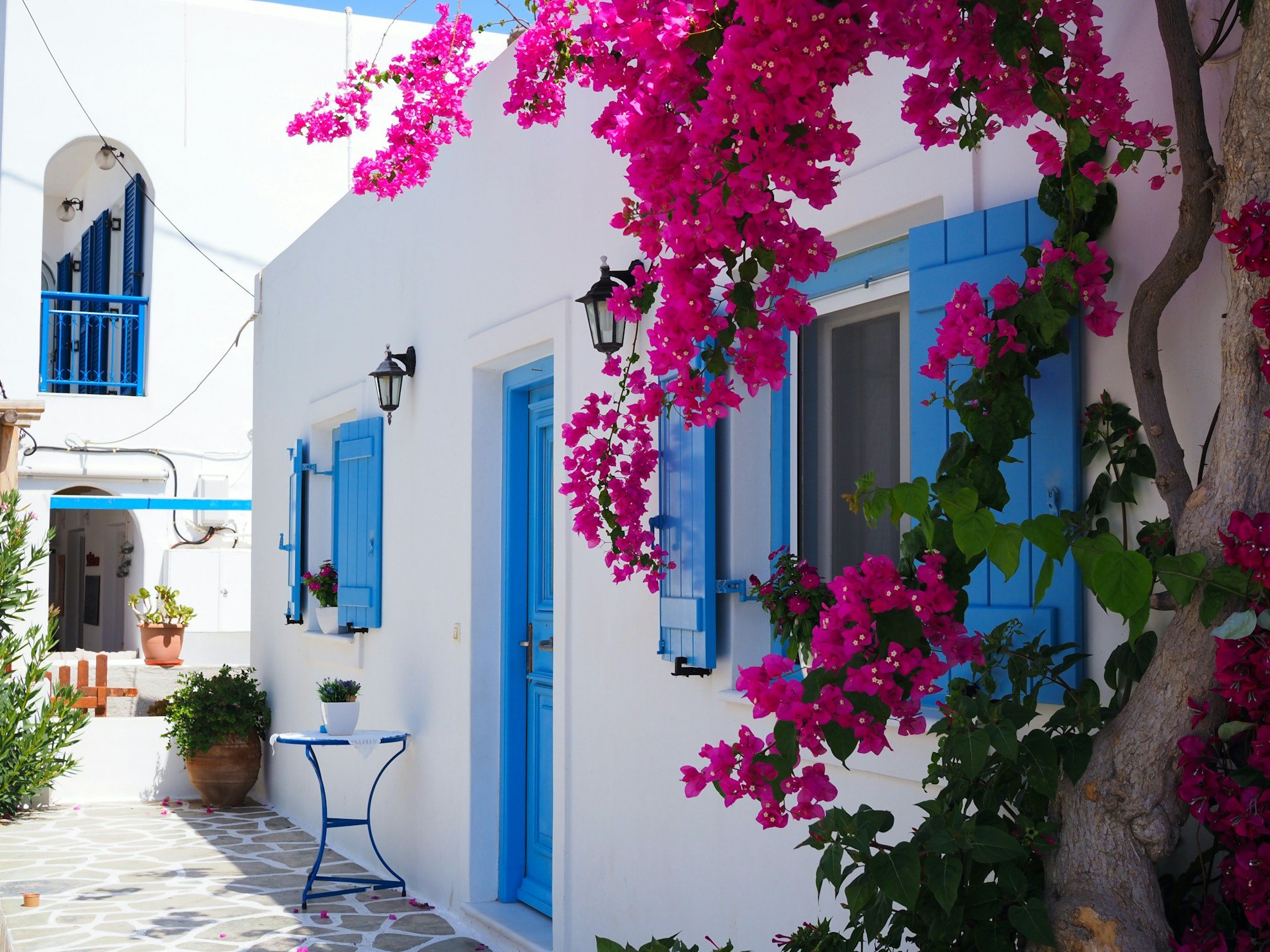
Greece is a country of extremes held together by the particular quality of Aegean light that has drawn philosophers, painters and travellers for three millennia. The mainland holds the foundations of Western civilisation: the Acropolis, the oracle at Delphi, the stadium at Olympia. But most visitors come for the islands, 227 inhabited ones, each with its own character: Santorini's caldera, Mykonos's windmills and party scene, Crete's Minoan palaces and epic beaches, Corfu's Venetian old town.
The most concentrated country of human achievement
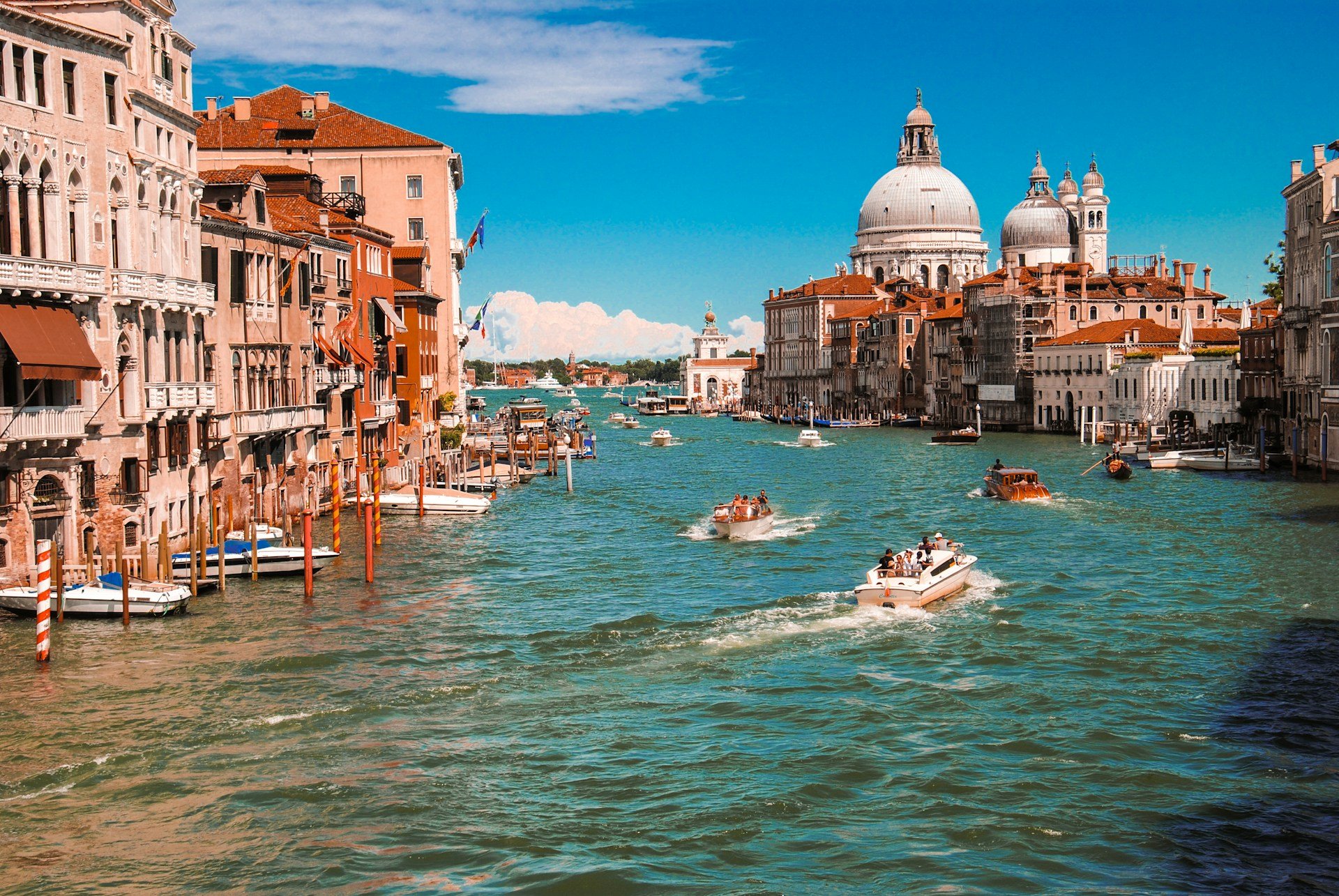
In no other nation of comparable size do you encounter such a density of world-class art, architecture, food and living culture all at once. Rome holds the Colosseum, the Vatican and the Pantheon within walking distance of each other. Florence holds the Uffizi and the Duomo. Venice is a city on wooden piles that should not exist and yet does. Then there's the countryside: Tuscany's hilltop towns, the Amalfi Coast road, the truffle farms of Piedmont.
Key facts side by side
| Fact | 🇬🇷 Greece | 🇮🇹 Italy |
|---|---|---|
| Mid-range daily budget | €80–130 per person | €100–160 per person |
| Best season | May–June & Sep–Oct, fewer crowds | Apr–Jun & Sep–Oct, best weather |
| Main airports | Athens (ATH), Thessaloniki (SKG), the islands | Rome (FCO/CIA), Milan (MXP), Venice (VCE), Naples (NAP) |
| Getting around | Ferries (Blue Star, SeaJets), domestic flights | Trenitalia/Italo high-speed trains |
| UNESCO sites | 18 | 60, the most of any country |
| Signature sight | The Acropolis, Santorini's caldera | The Colosseum, the Vatican, Florence's Duomo |
| Visa, most Western passports | None, Schengen 90 days | None, Schengen 90 days |
| Language barrier | Low, English widely spoken | Moderate, less English outside tourist hubs |
| Currency | Euro (€) | Euro (€) |
Both countries are Schengen members, so visa and entry rules are identical. Typical 2026 prices exclude international flights.
Round 1 of 12
Which has better beaches, Greece or Italy?
Greece wins, significantly
Greece's 6,000+ beaches across 227 islands make this a straightforward verdict. Italy's beaches are genuinely world-class, they're simply fewer and more concentrated.
 🇬🇷 Greece
6,000+ beaches, the Mediterranean's finest
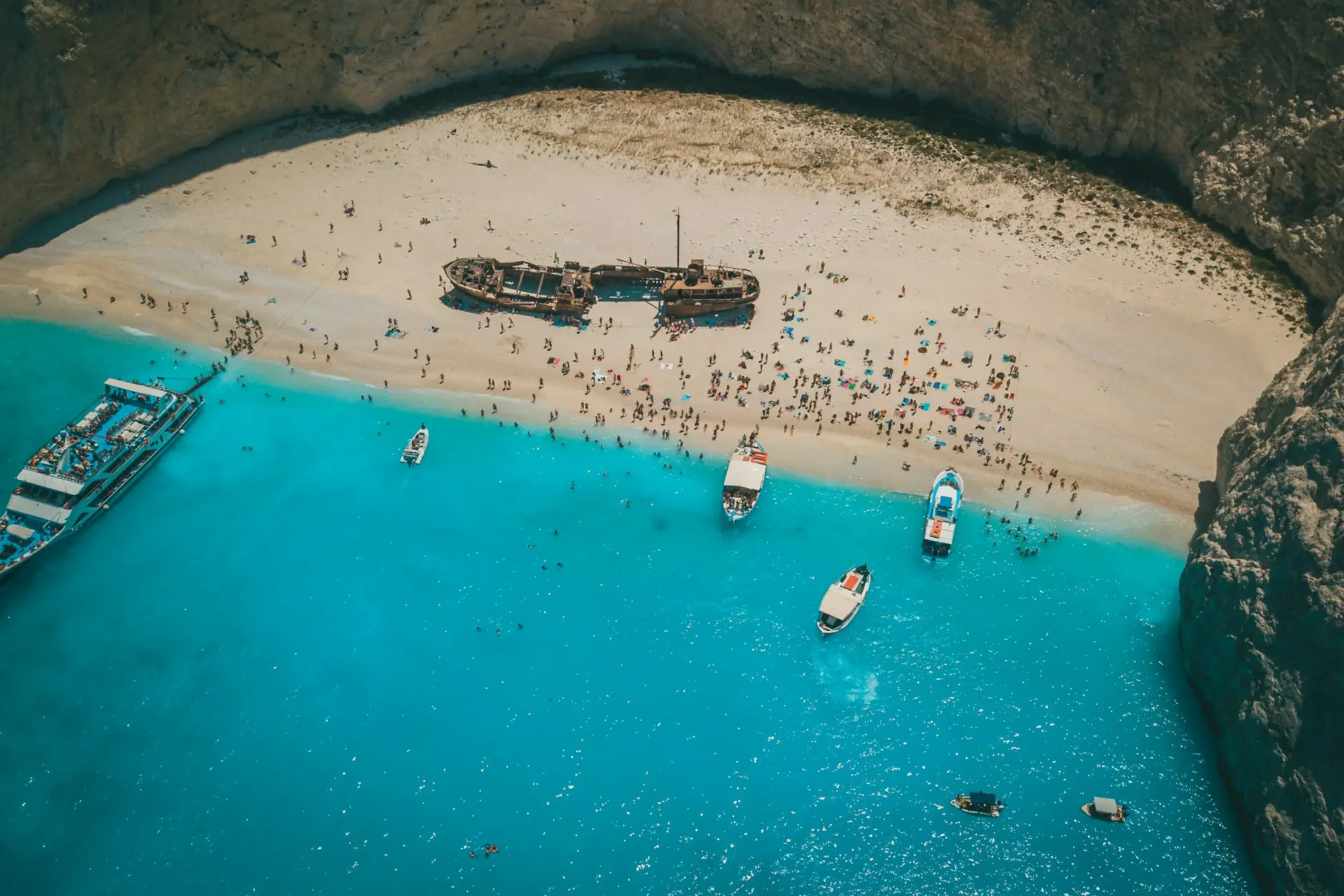
Navagio (Shipwreck Beach) on Zakynthos, a vertically walled limestone cove with a rusted freighter on white pebbles under impossibly turquoise water, is one of the world's most photographed beaches. Elafonisi on Crete has pink sand and a lagoon extending 500m from shore. Sarakiniko on Milos is a lunar landscape of white volcanic rock. The Aegean and Ionian seas are cleaner, clearer and calmer than most Italian equivalents.
- Don't miss
- Navagio, Elafonisi, Sarakiniko
 🇮🇹 Italy
Sardinia, Sicily and Puglia, a smaller canvas
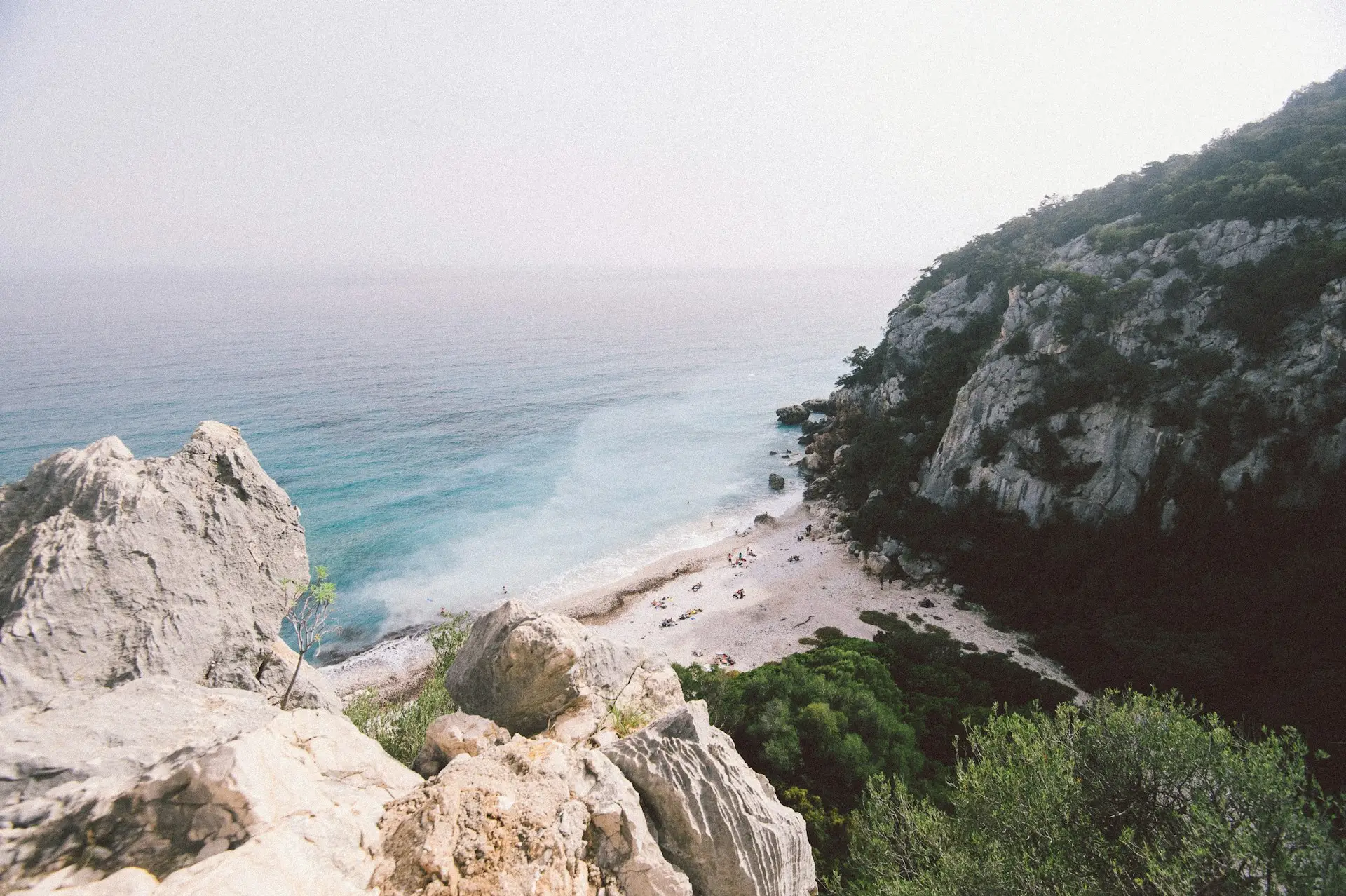
Sardinia is the standout: the Costa Smeralda's emerald water and white granite coves, and Cala Goloritzé, reachable only by boat or a two-hour hike, ranks among the Mediterranean's most dramatic. Sicily's San Vito lo Capo rivals anywhere in the Mediterranean. The Amalfi Coast is spectacular scenery but poor for swimming. Italy's best beaches require flying or driving to Sardinia or Sicily, an extra leg most cultural itineraries skip.
- Don't miss
- Cala Goloritzé, San Vito lo Capo
Round 2 of 12
Which is cheaper, Greece or Italy?
Greece wins, marginally
Greece holds a modest value edge, particularly outside the headline islands. Santorini and Mykonos in peak season now cost as much as Rome or Florence.
| Typical cost | 🇬🇷 Greece | 🇮🇹 Italy |
|---|---|---|
| Budget accommodation | €30–60 | €35–75 |
| Mid-range hotel | €80–160 | €100–220 |
| Taverna or trattoria dinner, with wine | €20–35 per person | €25–45 per person |
| Street food or quick lunch | €4–8 | €3–7 |
| Local wine or beer | €3–5 wine, €3–4 beer | €4–6 wine, €4–6 beer |
| Museum or site entry | €10–20 (Acropolis €20) | €16–25 (Colosseum €18, Uffizi €25) |
| Inter-city transport | €30–80 (ferries or flights) | €20–60 (high-speed train) |
| Mid-range daily budget | €80–130 | €100–160 |
Typical 2026 prices in euros, excluding international flights.
Important caveat: the price gap has narrowed sharply on the headline islands. Santorini and Mykonos in July–August now cost more than Rome or Florence in most accommodation categories. If budget is a real consideration, choose less-famous islands (Naxos, Paros, Milos, Sifnos) or travel in the shoulder season, when island prices drop 30–50%.
Round 3 of 12
History, art and ancient ruins
A genuine tie
Both countries are the fountainhead of Western civilisation, but from different eras. Greece wins for the origins; Italy wins for total historical breadth.
 🇬🇷 Greece
Where Western thought was born
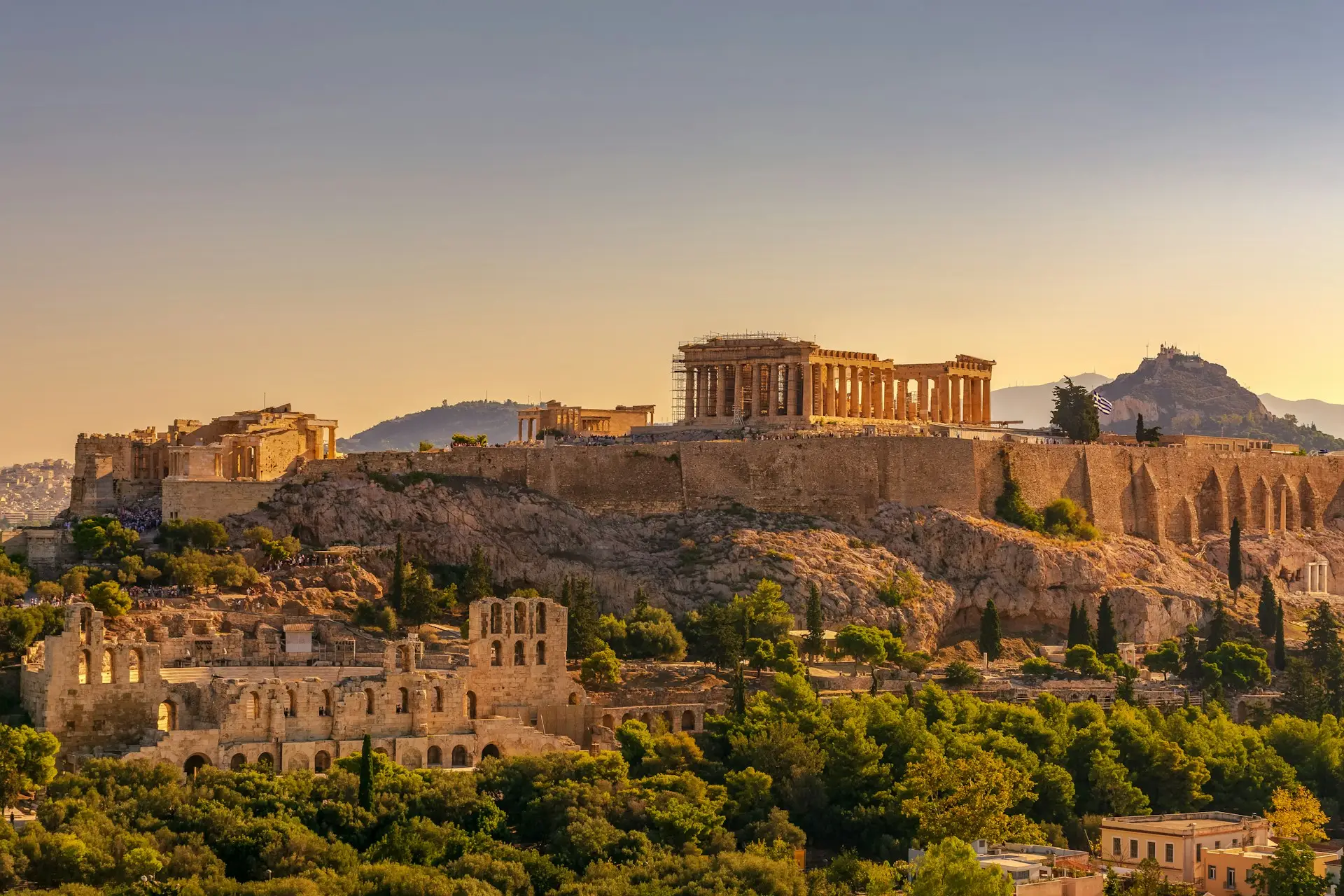
The Acropolis of Athens, the Parthenon, the Erechtheion, the Propylaea, is the most important monument in the Western world, a 2,500-year-old complex that has never lost its power to astonish. Delphi, Olympia's still-intact stadium, Epidaurus's 14,000-seat theatre with perfect acoustics, and the 3,500-year-old Minoan palace at Knossos are all among the most significant ancient sites on earth.
- Don't miss
- The Acropolis, Delphi, Knossos
 🇮🇹 Italy
2,800 years of layered history
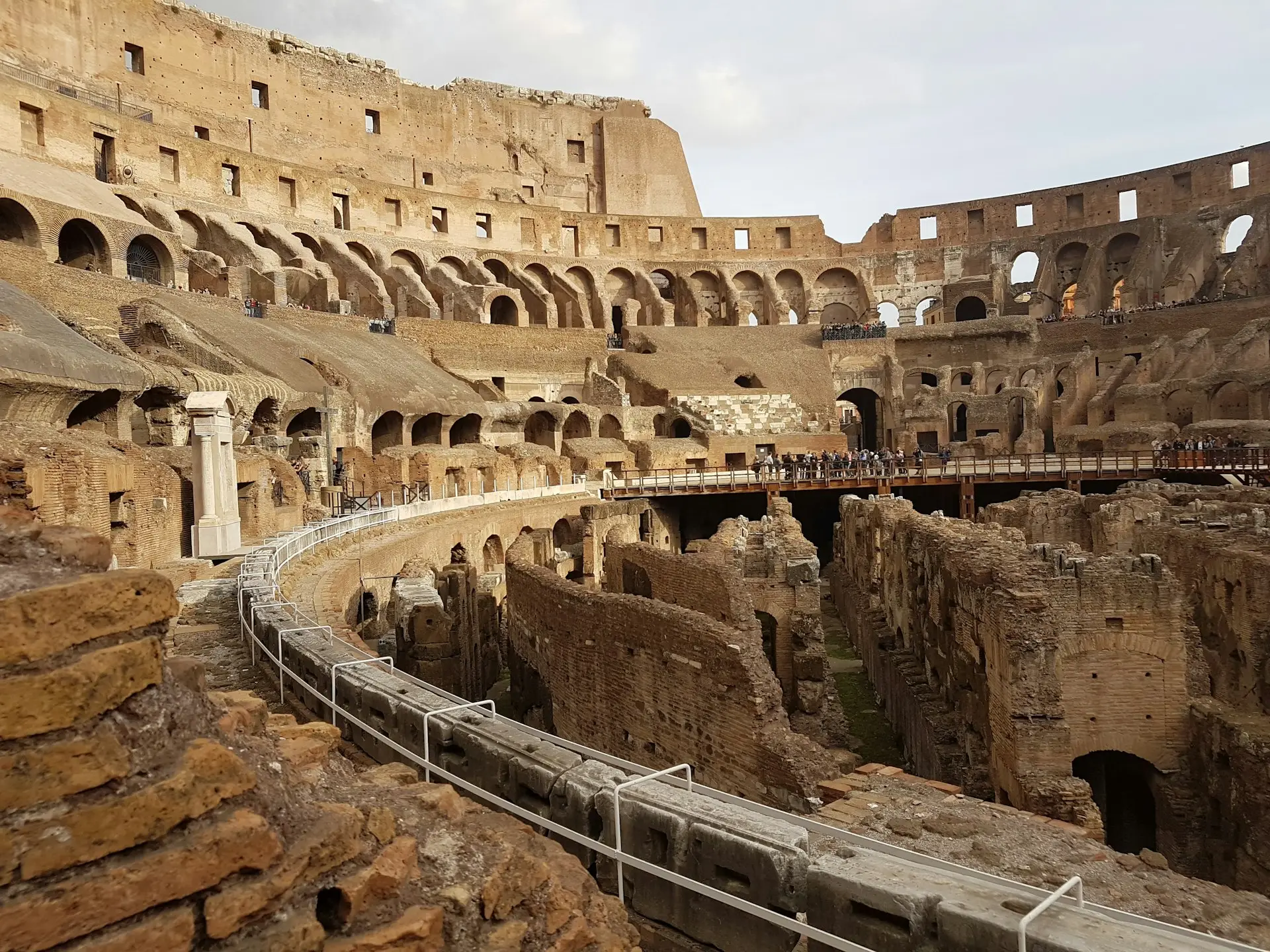
Italy has more UNESCO World Heritage Sites than any country on earth (60), and the density of history in Rome alone is unmatched: the Colosseum, the Roman Forum, the Pantheon (still its original dome after 1,900 years) and the Vatican Museums all sit within a 4km² area. Florence's Uffizi holds the world's greatest concentration of Renaissance painting, and Pompeii offers the most complete Roman city on earth.
- Don't miss
- The Colosseum, the Uffizi, Pompeii
Honest verdict: both win, for different eras. Greece is unmatched for the origins of Western civilisation; Italy is unmatched for the sheer density and variety of historical layers. Most serious travellers feel compelled to experience both.
Round 4 of 12
Cities
Italy wins, comprehensively
Athens is a genuinely great city. Italy has Rome, Florence, Venice, Naples and Bologna, all world-class, and that breadth is Italy's greatest single argument.
 🇬🇷 Greece
Athens: underrated, gritty and genuinely great
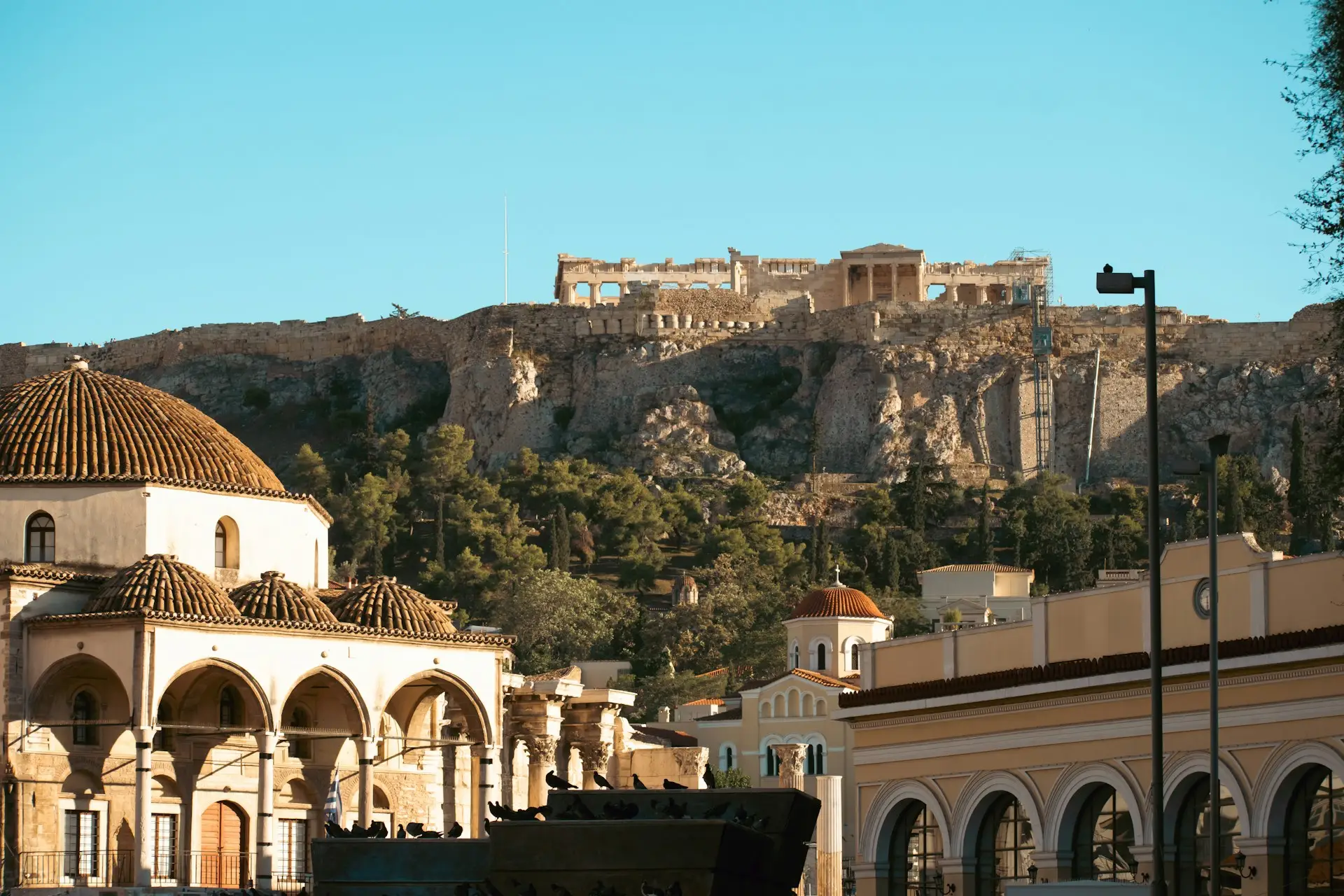
Athens has reasserted itself: the revamped Acropolis Museum, the Monastiraki and Psirri neighbourhoods with rooftop bars looking up at the lit Parthenon, and a food scene that has outgrown its tourist-taverna reputation. Thessaloniki, Greece's underrated second city, adds Byzantine churches and a laid-back university energy. Both are excellent, but Greece has one headline city where Italy has several.
- Don't miss
- Monastiraki, the Acropolis Museum
 🇮🇹 Italy
Rome, Florence, Venice, Naples, and counting
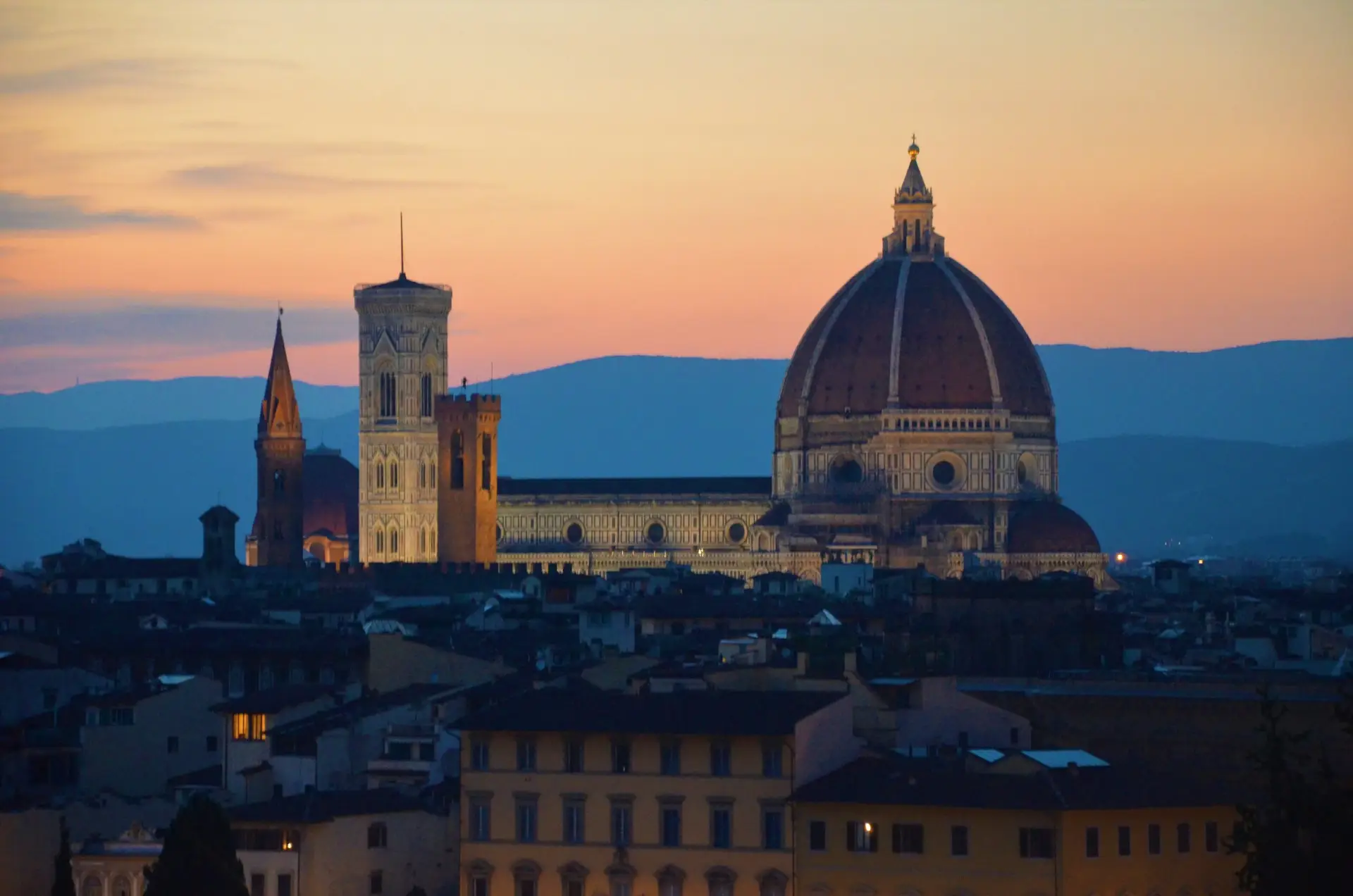
Rome is archaeologically layered across 2,800 years, with ancient monuments and Baroque fountains on the same street. Florence is compact, walkable and UNESCO-listed in its entirety. Venice, built on wooden piles in a lagoon with no cars, is one of the world's most extraordinary urban environments. Naples is chaotic, loud and extraordinary, home to the best pizza on earth. Bologna, Italy's food capital, is underrated and essential.
- Don't miss
- Rome's historic centre, Venice's canals
Round 5 of 12
Island experiences
Greece wins, narrowly
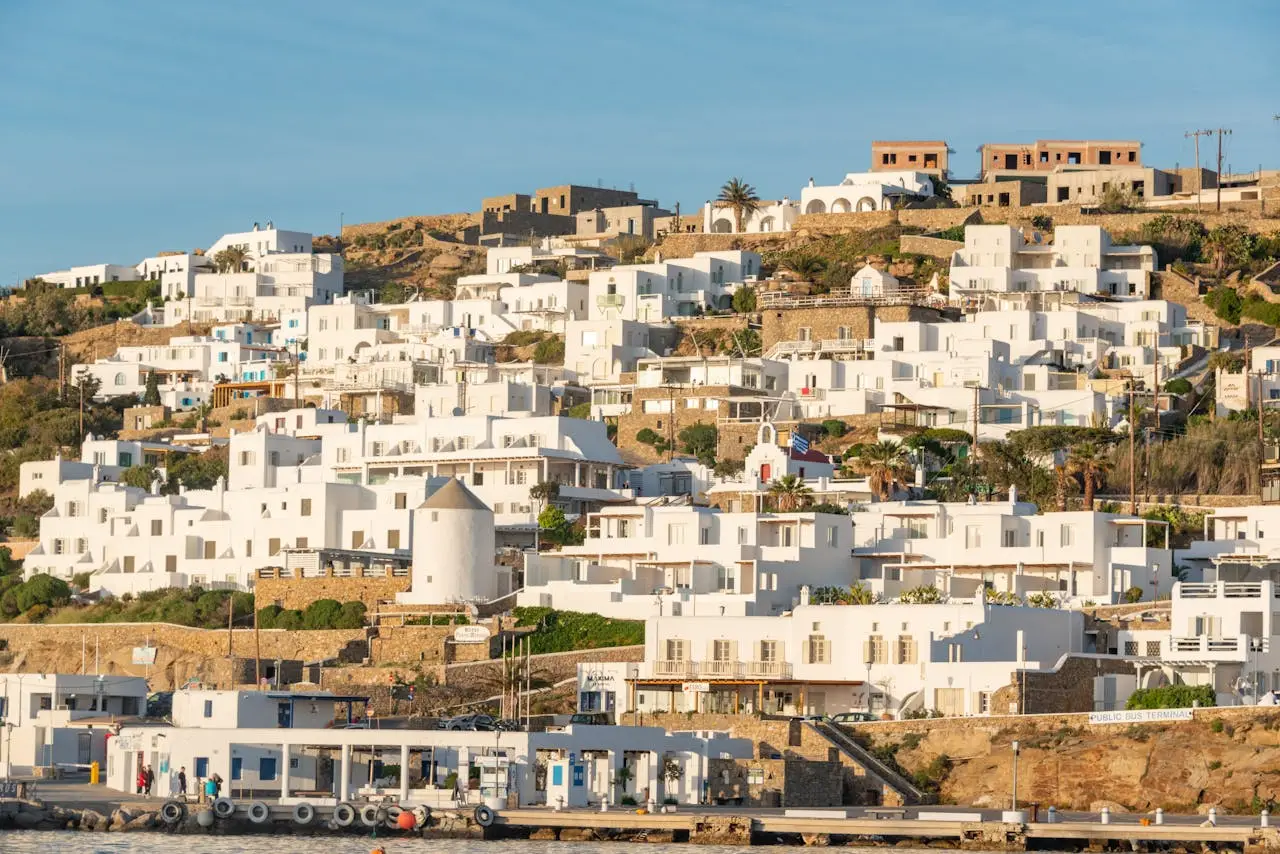
Greek island-hopping is one of the world's great travel experiences. Italy's islands and coastal drives are spectacular, but occupy a smaller canvas.
 🇬🇷 Greece
227 inhabited islands, each its own world
Santorini's volcanic drama, Mykonos's party scene and windmills, Crete's Minoan palaces and epic beaches, Rhodes's intact medieval walled city, Naxos's marble mountains, Corfu's Venetian old town. The ferry network connects most islands, and hopping across the Cyclades or the Ionian islands by boat is among the most pleasurable travel experiences in Europe.
- Don't miss
- Santorini, Crete, Naxos
 🇮🇹 Italy
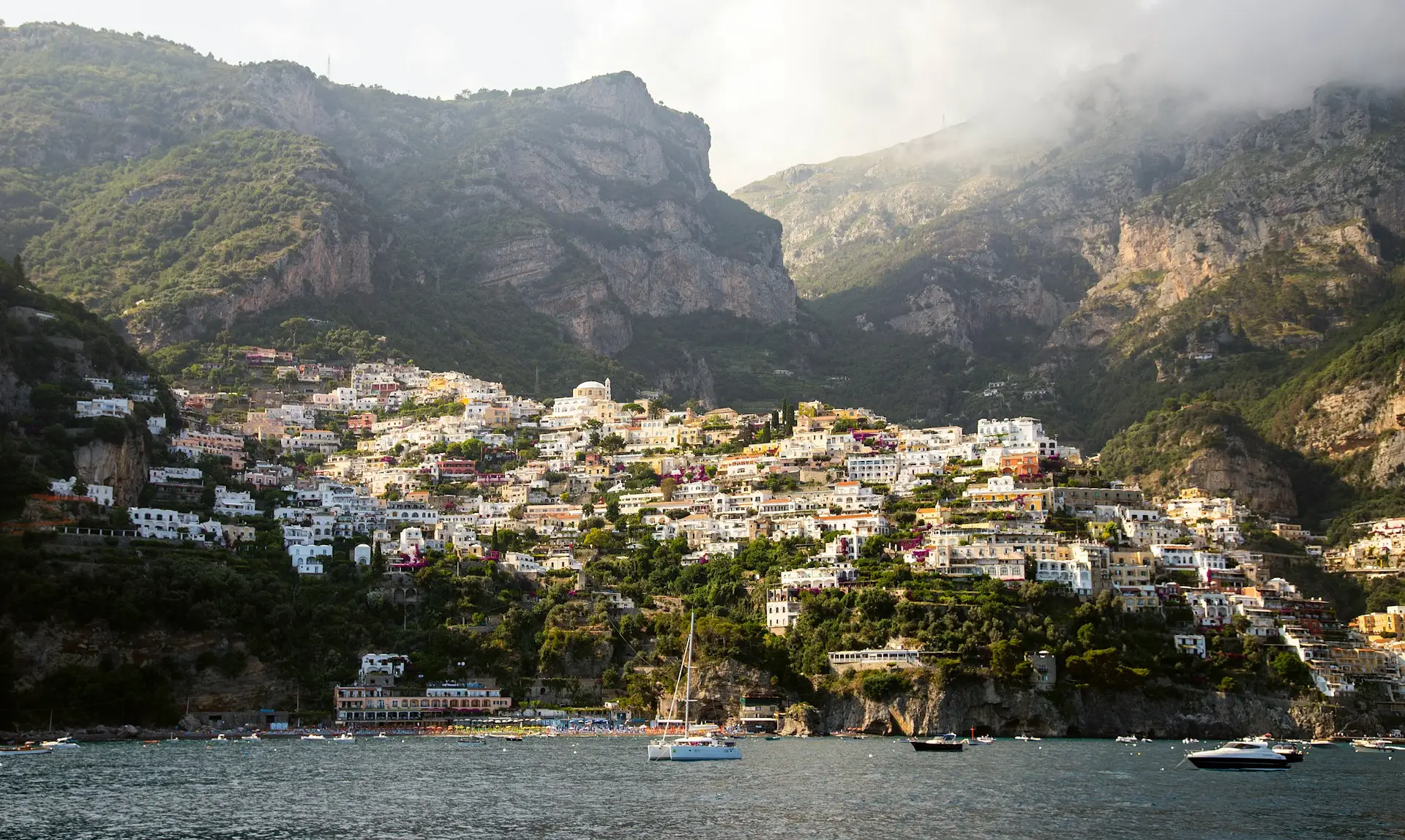
Sicily, Sardinia, Capri and the Amalfi Coast
Sicily is Italy's island crown: Greek temples at Agrigento, Baroque towns, active volcanoes and outstanding seafood. Sardinia has some of Europe's finest beaches. Capri is expensive but beautiful, and the Amalfi Coast road, 50km of cliff-hugging villages, is one of the world's great coastal drives. Italy's coastal experiences are arguably its greatest single argument, but Greece's sheer variety across 227 islands wins the overall comparison.
- Don't miss
- Sicily, the Amalfi Coast road
Round 6 of 12
Things to do beyond beaches and ruins
Different adventures
Greece leads on sailing, gorge hikes and diving; Italy leads on wine country and mountain sports.
| Activity | 🇬🇷 Greece | 🇮🇹 Italy |
|---|---|---|
| Hiking | Samaria Gorge, one of Europe's longest | Cinque Terre coastal trails, the Dolomites |
| Wine touring | A growing Santorini volcanic-wine scene | Tuscany, Piedmont, Chianti and Barolo country |
| Sailing & flotilla trips | A legendary island-hopping charter scene | Sardinia and the Amalfi coast, smaller scale |
| Diving & snorkelling | Exceptionally clear Aegean and Ionian water | Good, especially around Sicily and Sardinia |
| Mountains & skiing | Limited | The Dolomites, world-class skiing |
| Cooking classes | Widely available, taverna-style | Widely available, regionally distinct |
Round 7 of 12
Food and eating culture
Italy wins, emphatically
Greece has wonderful food. Italy has one of the world's greatest cuisines. These are not the same statement, and this is one of the least contested verdicts in travel.
 🇬🇷 Greece
Simple, honest Mediterranean cooking
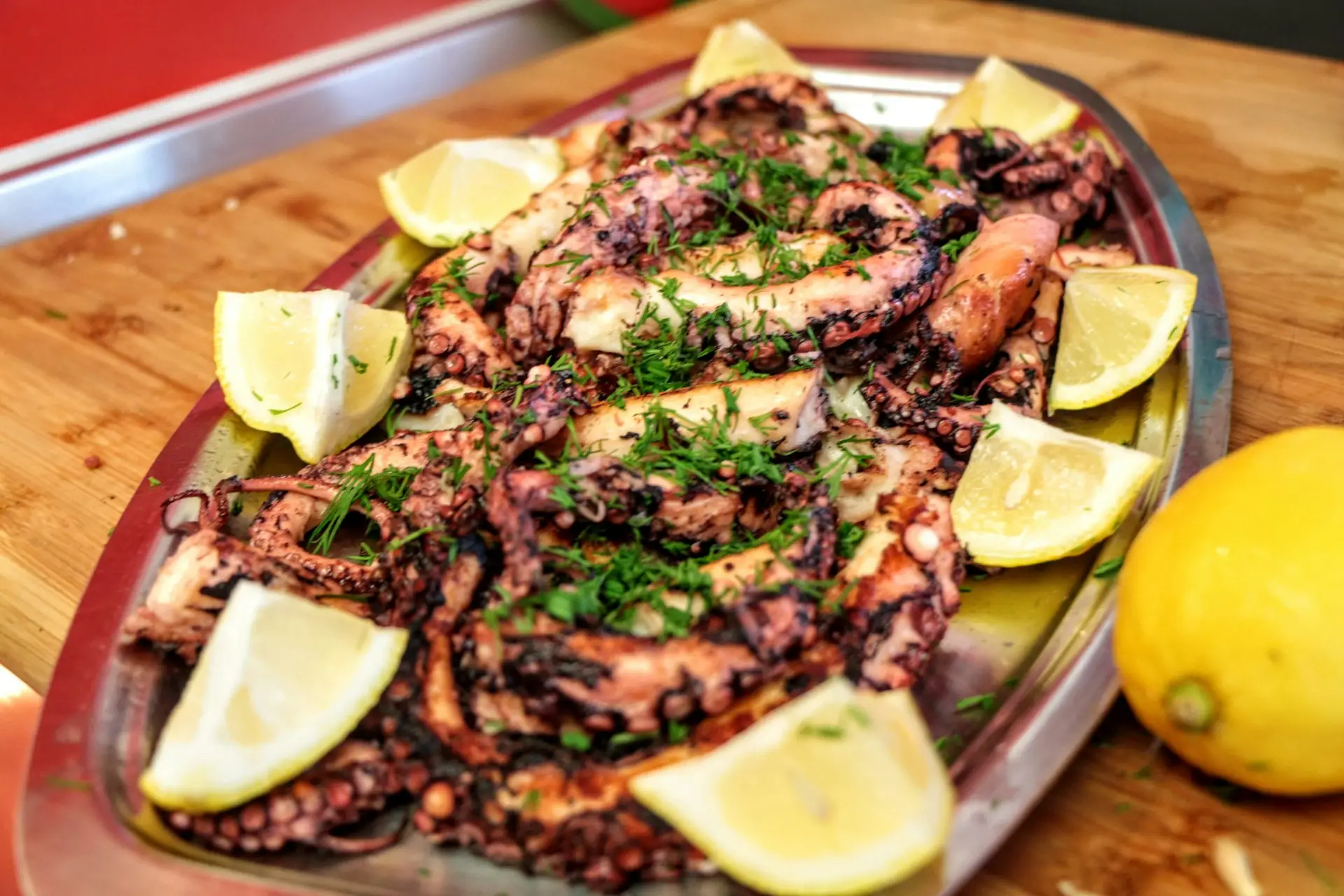
Greek food is genuinely excellent, the original Mediterranean diet built on olive oil, fresh vegetables and seafood. Grilled octopus, a horiatiki salad under barrel-aged feta, slow-cooked lamb kleftiko, and souvlaki from a sidewalk grill are among the Mediterranean's best casual meals. It's fresh, honest and deeply satisfying, but it isn't a cuisine of the technical complexity or regional variation that Italy offers.
- Must eat
- Grilled octopus, souvlaki, kleftiko
 🇮🇹 Italy
Twenty regions, twenty distinct cuisines
Naples' wood-fired pizza against Bologna's slow-cooked ragù, Rome's cacio e pepe and carbonara against Venice's seafood risotto, Piedmont's truffles and Barolo against Sicily's arancini and cannoli. The espresso culture, the aperitivo hour, the gelato, cheeses aged for 36 months. Italian food is an entire civilisation's relationship with pleasure and produce, and it's the world's most widely beloved cuisine for a reason.
- Must eat
- Neapolitan pizza, tagliatelle al ragù, cacio e pepe
Round 8 of 12
Nightlife: Mykonos or an Italian aperitivo?
Split decision
Greece has dedicated party islands; Italy has a more sophisticated food-and-drink-led evening. Which wins depends entirely on the kind of night you want.
Mykonos and Ios, Europe's party islands
Mykonos's beach clubs (Scorpios, Nammos) and Ios's dense strip of bars and clubs give Greece two of Europe's most famous party islands, with a scene that genuinely rivals Ibiza. Mykonos is also one of the world's great LGBTQ+ destinations. Athens' Gazi and Psirri neighbourhoods add a more local club and bar scene beyond the islands.
Aperitivo culture over dedicated clubbing
Italy doesn't have an equivalent party island; its nightlife runs through cities instead. Milan's aperitivo hour, Rome's Trastevere bars, and Naples' late-night piazza energy deliver a more food-and-drink-led evening than a dedicated dance-till-dawn scene. It's a different, more civilised kind of night out, not a lesser one.
Want to dance until sunrise? Mykonos or Ios. Want a long dinner that drifts into cocktails? Either country's cities deliver, but Italy's aperitivo culture is built specifically for it.
Round 9 of 12
When to go: the best time for Greece and Italy
A genuine tie
Both countries share classic Mediterranean climate patterns. Late April to mid-June and mid-September to late October are the golden windows for both.
Dry summers, mild winters
Athens ranges from 6–13°C in January to 23–33°C in July–August. The Aegean islands are even drier, with virtually no rain from June to August. Meltemi winds blow through the Cyclades from July to September, cooling the islands but disrupting ferries. Most island businesses close from November to March. Sea temperatures hit 25°C from late June to October.
Varies dramatically by latitude
Rome ranges from 3–12°C in January to 19–32°C in July–August. The north (Milan, Venice) is wetter and cooler than the south; Sicily is hotter than Greece in summer. Autumn brings the heaviest rainfall, particularly in Rome and the north. The Amalfi Coast and Cinque Terre are best visited May to early October.
Smart traveller hack: mid-May to mid-June or mid-September to mid-October are the best windows for either country, and especially for a combined trip: warm enough to swim, manageable crowds, and 30–50% lower prices than peak. Avoid July–August in both.
Round 10 of 12
Getting there and getting around
Italy wins, clearly
Italy's trains are simply more reliable than Greece's ferries. The ferry-hopping experience is part of Greece's appeal, but it comes with real logistical friction.
Ferries are the experience, and the bottleneck
Blue Star, SeaJets and Hellenic Seaways connect most islands, and the crossing itself is part of the pleasure. But schedules thin out off-season, the summer meltemi winds can cancel sailings with little notice, and strikes happen periodically. Domestic flights with Aegean or Sky Express fill the gaps for longer hops. Athens' metro is small but efficient.
One of the world's best rail networks
Frecciarossa and Italo high-speed trains connect Rome, Florence, Venice, Naples and Milan in one to three hours, reliably and comfortably, with no airport transfer required. City transit varies, Milan's metro is excellent, Venice runs entirely on vaporetti with no cars, Rome's is small and crowded, but the intercity network is the real headline.
Driving note: Italy's historic centre "ZTL" restricted zones catch out unwary tourists with automatic fines; check before driving into any old town. Renting a car is more useful in Greece's larger islands (Crete, Corfu) than in its cities.
Round 11 of 12
Safety and common scams
Greece wins, marginally
Both are very safe by global standards, with low violent crime. Italy has a more developed tourist scam ecosystem; Greek islands are exceptionally safe.
🇬🇷 Greece: what to watch
- Pickpocketing in Athens' Monastiraki, Syntagma and metro line 3, the airport line.
- Taxi overcharging at the airport, insist on the meter or a fixed fare.
- Ferry and flight strikes happen periodically; check local news the day before transit.
- Summer wildfires are a real risk, particularly on Attica and Evia; follow Civil Protection alerts.
🇮🇹 Italy: what to watch
- Pickpocketing at the Colosseum, Trevi Fountain, Vatican queues and on Rome's bus 64.
- Unlicensed taxis at Termini station; use only white, metered taxis.
- Restaurant overcharging near major sites; check menu prices before sitting down.
- Petty theft is higher in Naples than the rest of Italy; extra awareness at the train station and Spanish Quarter at night.
In both countries, train and ferry strikes can disrupt transport, check the news before key transit days, and Venice's gondola operators sometimes quote well above the official daytime rate.
Round 12 of 12
Family travel
Split decision
Greece wins on easy beach days; Italy wins on easy logistics between stops. Both are excellent, well-worn family destinations.
Calm bays and a relaxed pace
Many island beaches sit in calm, shallow bays that suit young children, and the taverna culture is naturally kid-friendly and unhurried. Crete and Naxos are well-established family islands with a good mix of easy beaches and low-key sights. The trade-off is ferry timetables, which can make multi-island trips slower with young kids in tow.
Easy trains, universal food, crowded queues
High-speed trains make multi-stop trips with children far simpler than juggling island ferries, and pizza and gelato are a guaranteed hit at every meal. The catch is the crowds: long queues at the Colosseum, the Vatican and the Uffizi test anyone's patience, let alone a toddler's. Sicily and Sardinia's beach resorts sidestep this if a calmer trip is the goal.
Pros and cons of each destination
No fluff, no marketing copy, just the realistic upsides and downsides of each.
The pros
- The world's best beaches, 6,000+ across 227 islands
- Island-hopping is one of travel's great experiences
- 20–30% cheaper than Italy on the mainland
- Exceptionally safe, especially on the islands
- The Acropolis and ancient Greek sites are foundational
- Very low language barrier, English widely spoken
The cons
- Santorini and Mykonos are now extremely expensive
- Ferry logistics complicate multi-island trips
- Most islands close from November to March
- Food is excellent but less varied than Italy's
- Summer wildfires are an increasing risk
The pros
- One of the world's greatest cuisines
- 60 UNESCO sites, the most of any country on earth
- Rome, Florence, Venice, Naples, four world-class cities
- Fast Frecciarossa trains connect everything brilliantly
- Pompeii and Roman archaeology are unrivalled
- Easy to combine cities, beaches and countryside
The cons
- 20–30% more expensive than Greece overall
- Rome, Florence and Venice are very crowded May–September
- More tourist scams than Greece (taxi, restaurant, pickpocket)
- Best beaches require flying to Sardinia or Sicily
- English less common outside major tourist hubs
Which is better for specific trips?
Greece for beach lovers, ancient history buffs and LGBTQ+ travellers. Italy for foodies, art lovers, wine country and first-time Mediterranean visitors.
Beach & island lovers
Greece
6,000+ beaches across 227 islands, with a variety and freedom of exploration Italy can't match.
Foodies
Italy
Twenty distinct regional cuisines, from Naples pizza to Piedmontese truffles, is a different order of depth.
Ancient history buffs
Greece
The Acropolis, Delphi, Olympia and Knossos are the literal foundations of Western thought.
Renaissance & art lovers
Italy
The Uffizi, the Vatican Museums and the Sistine Chapel are without parallel.
First-time Mediterranean visitors
Italy
Rome, Florence and Naples cover food, art and history by fast train, without ferry logistics.
Wine lovers
Italy
Tuscany, Piedmont and Chianti country are internationally renowned in a way Greek wine regions aren't yet.
LGBTQ+ travellers
Greece
Mykonos is one of the world's great LGBTQ+ destinations, with a long-established, welcoming scene.
Budget-conscious travellers
Greece
Cheaper across the board away from Santorini and Mykonos in peak season.
Can you combine Greece and Italy in one trip?
Yes, it's one of the Mediterranean's classic combinations. Flights between Athens and Rome, Venice or Milan take two to three hours, and the Bari–Corfu ferry route makes an overland-to-sea crossing possible without flying.
Italy: days 1 to 6
- Days 1–3
Rome. The historic centre and Trastevere on day one; the Colosseum, Roman Forum and Palatine Hill on day two; the Vatican Museums, Sistine Chapel and St Peter's on day three.
- Days 4–5
Naples and Pompeii. High-speed train from Rome (1hr 10min). A Margherita pizza in the historic centre, the National Archaeological Museum, and a day trip to Pompeii or Herculaneum.
- Day 6
Cross to Greece. Train to Bari then an overnight ferry to Corfu or Patras, or a direct flight from Naples to Athens.
Greece: days 7 to 16
- Days 7–9
Athens. Plaka in the evening, the Acropolis at opening (8am, ahead of the heat and crowds), the new Acropolis Museum, and a day trip to Delphi or Cape Sounion.
- Days 10–12
Santorini. Fly or ferry from Athens. Sunset at Oia, the caldera hike from Fira to Oia, and the Akrotiri archaeological site.
- Days 13–16
Crete or Naxos. Crete for depth (Knossos, Chania, the Samaria Gorge, Elafonisi); Naxos for a laid-back, better-value finale.
When to go: mid-May to mid-June or mid-September to mid-October are the best windows, sea warm enough to swim, manageable crowds, and 30–50% cheaper than peak. Avoid July–August in both countries.
Verdict: Greece or Italy?
There's no single overall winner. Your primary motivation decides everything, and both countries reward return visits for decades.
Choose Greece if…
Greece, for islands, beaches and ancient history
The right choice when the islands are the goal, beaches are the priority, you want ancient Greek civilisation at its source, or you want a more relaxed, sun-and-sea-focused trip.
- Island-hopping is specifically what you want
- Beaches are the primary priority
- The Acropolis, Delphi or Olympia are on the bucket list
- Budget is a consideration
- You want a more relaxed, unhurried pace
- You've already done Italy and want something new
Choose Italy if…
Italy, for food, art and the full cultural experience
The right choice when food is the central purpose, Renaissance art and culture are the goal, city-hopping by fast train appeals, or you want the broadest cultural experience in a single country.
- Food and dining culture is the central purpose
- Renaissance art, the Uffizi, the Vatican, is on the list
- Rome, Florence and Venice are all must-sees
- It's your first trip to Mediterranean Europe
- Wine country, Tuscany or Piedmont, is the draw
- Fast train travel between cities appeals
Weigh it for your own trip
Select everything that matters to you.
Pick what matters on this trip and the needle will move.
Greece vs Italy: frequently asked questions
Is Greece or Italy better for food?
Italy wins, and this is one of travel's clearer verdicts. Italian food culture is one of the world's greatest, with 20 distinct regional cuisines that differ as radically as different countries: Naples pizza, Bolognese ragù, Roman carbonara and cacio e pepe, Venetian cicchetti, Sicilian arancini and cannoli, Piedmontese truffles and Barolo. Greek food is genuinely good, fresh grilled seafood, honest taverna cooking, outstanding gyros and souvlaki, but cannot match Italy's depth and regional variety.
Is Greece or Italy cheaper?
Greece is moderately cheaper overall, though the gap has narrowed significantly. Santorini and Mykonos in peak season now cost as much as or more than Italy's major cities. If budget matters, choose less-famous Greek islands (Naxos, Paros, Milos, Lefkada) or travel in May, June or September when prices drop 30 to 50%. On the mainland and less-visited islands, Greece holds a clear value edge.
Is Greece or Italy better for beaches?
Greece wins clearly. The sheer variety across 227 inhabited islands, the volcanic beaches of Santorini, turquoise Navagio on Zakynthos, pink Elafonisi on Crete, lunar Sarakiniko on Milos, is unmatched in the Mediterranean. Italy's best beaches, Sardinia's Costa Smeralda, Sicily's San Vito lo Capo, are world-class but require extra travel from the main cultural cities, and the total offering is smaller.
Is Greece or Italy better for history and ancient ruins?
Both win, for different eras. Greece wins for the origins of Western civilisation: the Acropolis, Delphi, Olympia and Knossos are the foundational monuments of the Western world. Italy wins for total historical breadth: Rome layers 2,800 years of history in a single city, the Renaissance art of Florence is without parallel, and Italy has 60 UNESCO sites, the most of any country.
Which has better nightlife, Greece or Italy?
It's a split decision. Greece has Mykonos and Ios, two of Europe's most famous party islands, with a beach-club and clubbing scene that rivals Ibiza. Italy doesn't have an equivalent party island, but its aperitivo culture and city nightlife, Rome, Milan, Naples, deliver a more sophisticated, food-and-drink-led evening out rather than a dedicated clubbing scene.
Is Greece or Italy better for a first trip to the Mediterranean?
Italy is marginally better for a first Mediterranean trip because of the concentration of highlights accessible by fast train: Rome, Florence, Cinque Terre and Naples/Amalfi cover an enormous range of food, art, history and landscape in 10 to 12 days. Greece requires more logistical planning around island ferries. If beaches are the priority, Greece wins; if art, history and food variety are the goal, Italy wins.
How do you get around Greece and Italy?
Italy's Frecciarossa and Italo high-speed trains connect major cities in one to three hours and are among the world's best rail networks. Greece relies on ferries (Blue Star, SeaJets) between islands, which are part of the experience but slower and occasionally disrupted by strikes or the summer meltemi winds; domestic flights with Aegean or Sky Express fill the gaps for longer hops.
Can you combine Greece and Italy in one trip?
Yes, it's one of the Mediterranean's classic combinations. Flights between Athens and Rome, Venice or Milan take two to three hours. A classic combination: Rome (3 nights), Naples and Pompeii (2 nights), ferry from Bari to Corfu or a flight to Athens, then Athens (3 nights) and a Greek island (6 to 8 nights). Allow 14 to 18 days. Both are Schengen members, so there are no border complications.
Is Greece or Italy safer for tourists?
Both are very safe by global standards with low violent crime. Italy has a more developed tourist scam ecosystem than Greece, particularly in Rome and Naples: taxi overcharging, restaurant overcharging, and pickpocketing at major sites. Greek islands are exceptionally safe. Strikes can disrupt transport in both countries, so check the local news before key transit days.
When is the best time to visit Greece and Italy?
Both share similar climate patterns. Late April to mid-June and mid-September to late October are the golden windows: warm weather, sea swimming possible, manageable crowds and prices 30 to 50% lower than peak summer. July and August are hot and extremely crowded in both countries. Most Greek island businesses close from November to March, while Italy's cities remain rewarding, if rainier, through winter.
Is Greece or Italy better for families?
It's close. Greece's calm island bays and relaxed pace suit families who want easy beach days; Italy's high-speed trains make multi-stop trips with kids far simpler than island ferry schedules, and pizza and gelato are a universal hit. Crowded queues at Rome, Florence and Venice's major sights can be tough with young children, an area where a Greek island holiday has the edge.
Do I need a visa for Greece or Italy?
Both are Schengen Area members. Most Western nationalities, including the US, UK, Canada and Australia, can enter visa-free for tourist stays of up to 90 days within any 180-day period across the entire Schengen zone. The EU's ETIAS travel authorisation may apply to some non-EU visitors; check the official ETIAS site for the current status before you travel.
There's no wrong answer here
Greece and Italy are compared so often because both are extraordinary, not because one is secretly bad. Pick on what you want from this trip: islands, beaches and the roots of Western civilisation, or food, art and the full weight of the Renaissance. Better still, do both. A two-hour flight is all that separates them.