
Italy vs Spain at a glance
Eleven rounds, scored honestly. Spain takes beaches and nightlife by a distance; Italy takes art and historical density just as clearly. Food is one of Europe's great unresolved debates. Select a category to jump to the full comparison.
| Category | ItalySpain |
|---|---|
| The eleven rounds | |
| FoodRegional depth vs the social tapas experience | A genuine tie |
| CitiesHistorical depth vs contemporary energy | Different eras, same brilliance |
| BeachesThree coastlines, the Balearics and the Canaries | Spain, significantly |
| Art & history58 UNESCO sites against extraordinary individual peaks | Italy, narrowly |
| Cost & valueCheaper drinks, dinners and the menú del día | Spain, narrowly |
| NightlifeIbiza and a completely different nightly rhythm | Spain, emphatically |
| Things to doWine trails and hiking vs the Camino de Santiago | Different traditions |
| Getting aroundEurope's most extensive high-speed rail network | Spain, clearly |
| WeatherSame golden months, different climate extremes | A genuine tie |
| SafetyThe same tourist-crowd pickpocketing risks | Draw |
| FamiliesEasy trains vs later dinners | Split decision |
| Best for | |
| Long-distance walkersThe Camino de Santiago is unmatched anywhere | Spain |
| First-timers wanting iconic sightsThe Colosseum and the Vatican need no introduction | Italy |
| LGBTQ+ travellersMadrid's Chueca and Sitges are major scenes | Spain |
| OverallNo outright winner; it comes down to priorities | Depends on your priorities |
The weight of history vs the joy of now
Italy carries the past on its shoulders, visibly and beautifully. Spain has made peace with the past and turned its full energy toward the present. Both are extraordinary, and both deserve more than one visit.
The most concentrated country of human achievement
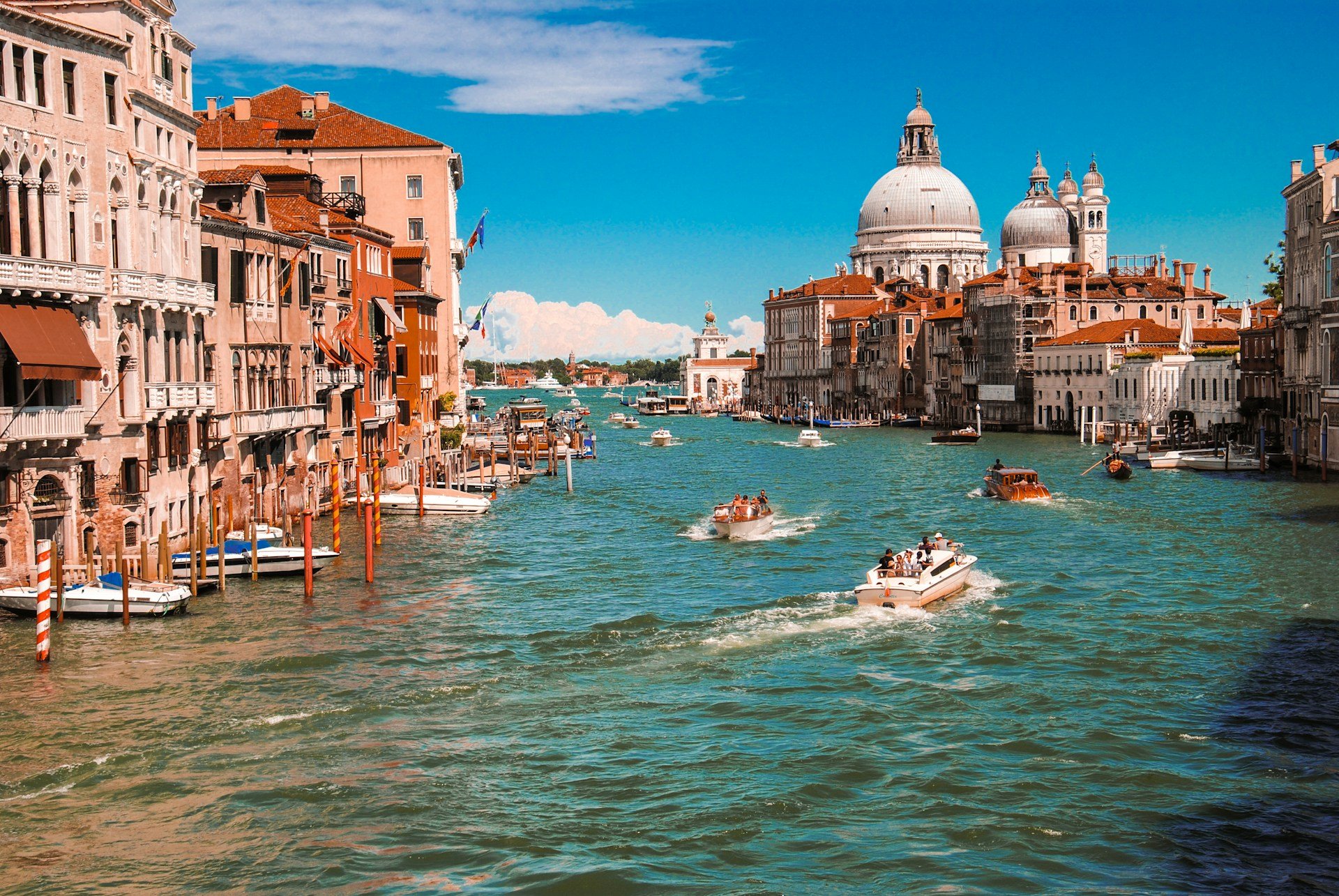
Rome contains the Colosseum, the Pantheon and the Vatican Museums within walking distance. Florence holds the world's greatest concentration of Renaissance painting. Venice is a city of impossible beauty built on wooden piles in a lagoon. Italy does not do things by halves, and la dolce vita, in the food, the beauty, the pace of a piazza in the afternoon, is freely available to anyone who slows down enough to notice it.
A patchwork of regions with their own identities
Barcelona is shaped by Gaudí's singular vision and a food scene at the global cutting edge for thirty years. Andalusia's Seville, Granada and Córdoba hold the finest Islamic architecture in Europe. San Sebastián has more Michelin stars per capita than any city on earth. Then there are the beaches: the Balearics, the Costa Brava, the Canary Islands, year-round warm-weather destinations within easy reach of the rest of Europe.
Key facts side by side
| Fact | 🇮🇹 Italy | 🇪🇸 Spain |
|---|---|---|
| Mid-range daily budget | €100–160 per person | €90–140 per person |
| Best season | Apr–Jun & Sep–Oct | Apr–Jun & Sep–Oct; Canaries year-round |
| Main airports | Rome (FCO), Milan (MXP), Venice (VCE), Naples (NAP) | Madrid (MAD), Barcelona (BCN), Málaga (AGP), Palma (PMI) |
| Getting around | Trenitalia / Italo high-speed trains | Renfe AVE, Europe's most extensive high-speed network |
| UNESCO sites | 58, the most of any country | 50 |
| Nightlife culture | Good, an earlier, more measured pace | World-class, Ibiza, Madrid, Barcelona |
| Typical dinner time | 7:30–9pm | 9–11pm |
| Visa, most Western passports | None, Schengen zone | None, Schengen zone |
| Currency | Euro (€) | Euro (€) |
Both countries are Schengen members, so visa and entry rules are identical. Typical 2026 prices exclude international flights.
Round 1 of 11
Food and eating culture
A genuine tie
Europe's two most passionate food cultures, and one of travel's genuine great debates. Italy wins on regional depth; Spain wins on the social eating experience and contemporary fine dining.
 🇮🇹 Italy
Twenty regional cuisines in one country
Bologna's tagliatelle al ragù, Naples' wood-fired Margherita, Rome's cacio e pepe and carbonara, Venice's cicchetti and seafood risotto, Sicily's arancini and cannoli, Piedmont's truffles and Barolo: each as different from the others as separate countries. The aperitivo hour, prosecco or a Negroni with free cicchetti at 6pm, is one of civilisation's more agreeable inventions, and Italy has more Michelin stars than France.
- Must eat
- Tagliatelle al ragù, Neapolitan pizza, cacio e pepe
 🇪🇸 Spain
Pintxos, paella and the world's most exciting kitchens
El Bulli's molecular gastronomy revolution left Spain with more three-Michelin-star restaurants than Italy and a generation of world-class chefs. At street level, moving between bars for a pintxo here and a glass of txakoli there, sharing jamón ibérico and patatas bravas, is one of Europe's great eating experiences. San Sebastián has more Michelin stars per capita than any city on earth, including Paris.
- Must eat
- Pintxos, paella valenciana, jamón ibérico
Honest verdict: Italy wins for regional depth and the breadth of its culinary tradition. Spain wins for the social eating experience and the contemporary fine-dining scene. The food alone justifies visiting both.
Round 2 of 11
Cities
Different eras, same brilliance
Italy has Rome, Florence and Venice. Spain has Barcelona, Madrid and Seville. Italy wins on historical depth; Spain wins on contemporary energy and variety.
 🇮🇹 Italy
2,800 years of layered urban history
Rome is unmatched: ancient temples beside medieval churches beside Renaissance palazzos beside Baroque fountains beside buzzing trattorias, all within a 20-minute walk. Florence is compact and concentrated, the Uffizi, Brunelleschi's Duomo, Michelangelo's David. Venice, a city of canals with no cars, isn't like anywhere else. Naples is chaotic, magnificent and completely itself.
- Don't miss
- Rome's historic centre, Florence's Uffizi
 🇪🇸 Spain
Four world-class cities, four different characters
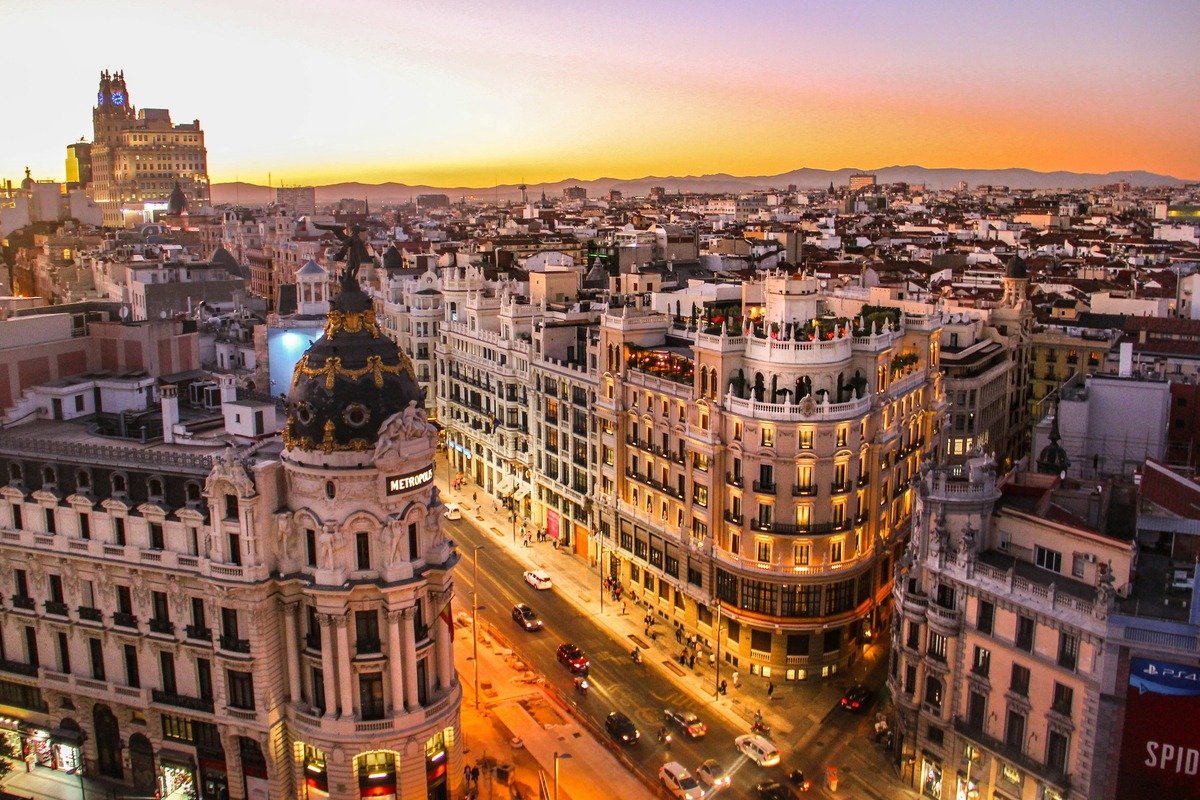
Barcelona has Gaudí's Sagrada Família, the Gothic Quarter, and a beach five minutes from the centre. Madrid's Prado is one of the world's great art museums, and its tapas bars run electric from midnight to 6am. Seville's flamenco culture and the world's largest Gothic cathedral, and Granada's Alhambra, one of the world's most beautiful buildings, round out a genuinely varied set.
- Don't miss
- Sagrada Família, the Alhambra
Round 3 of 11
Which has better beaches, Italy or Spain?
Spain wins, significantly
Spain's three coastlines, the Balearics and the Canary Islands give it a clear and significant edge. Italy's beaches are excellent but a smaller canvas.
 🇮🇹 Italy
Sardinia and Sicily, spectacular but concentrated
Sardinia's Costa Smeralda has turquoise water and white sand ranking among the Mediterranean's finest. Sicily's San Vito lo Capo is long, golden and backed by a dramatic limestone mountain. The Amalfi Coast is visually stunning but the beaches themselves are small, pebbled and often crowded. Italy's best beaches sit apart from the main cultural itinerary by a real extra journey.
- Don't miss
- Sardinia's Costa Smeralda, San Vito lo Capo
 🇪🇸 Spain
Four islands, three coastlines, one trump card
The Balearics alone offer four different experiences: Mallorca's dramatic mountains, Menorca's pristine UNESCO-protected coves, Ibiza's glamorous beach clubs, and Formentera's Caribbean-clear shallows. The Canary Islands add year-round warm-weather beaches two hours from mainland Europe, a trump card Italy simply doesn't hold. The Costa Brava's rocky coves round out an enormous total offering.
- Don't miss
- Menorca's Cala Macarella, the Canary Islands
Round 4 of 11
Art, architecture and history
Italy wins, narrowly
Italy has 58 UNESCO sites, the most of any country. Spain counters with the Alhambra and Gaudí, extraordinary individual peaks rather than Italy's sheer volume.
 🇮🇹 Italy
The world's greatest concentration of art
The Uffizi holds the world's greatest concentration of Renaissance painting: Botticelli, Titian, Caravaggio, Leonardo. The Vatican Museums hold the Sistine Chapel ceiling. The Colosseum, completed in 80 AD, remains the largest amphitheatre ever built, and Pompeii is the world's most complete Roman city. By almost any measure, Italy's art is the greatest concentration of human visual achievement on earth.
- Don't miss
- The Uffizi, the Sistine Chapel, Pompeii
 🇪🇸 Spain
Three traditions that rarely overlap elsewhere
The Alhambra's Nasrid Palaces represent Islamic architecture at its peak. The Mezquita in Córdoba, a mosque with a cathedral built inside it, is one of the world's most extraordinary religious buildings. Gaudí's Sagrada Família, still under construction after 143 years, is unlike anything built before or since. Spain can't match Italy's volume, but its individual peaks are extraordinary.
- Don't miss
- The Alhambra, the Mezquita, the Sagrada Família
Round 5 of 11
Which is cheaper, Italy or Spain?
Spain wins, narrowly
Spain is moderately cheaper, and its tapas culture provides a natural budget mechanism unavailable in Italy.
| Typical cost | 🇮🇹 Italy | 🇪🇸 Spain |
|---|---|---|
| Budget hostel | €35–75/night | €25–55/night |
| Mid-range hotel | €100–220/night | €80–180/night |
| Quick lunch | €8–14 | €6–12, or a full menú del día |
| Dinner, mid-range, with wine | €25–45 | €20–35 |
| Beer or glass of wine | €4–7 | €2–5 |
| Museum entry | €16–25 | €15–18 |
| High-speed train travel | €20–60 | €15–55 |
Typical 2026 prices in euros, excluding international flights.
Spain's secret weapon, the menú del día: almost every restaurant offers a weekday lunch of three courses with bread and a drink for €12–18. Italy has no direct equivalent, the closest is a pizza al taglio slice or a trattoria pasta, both excellent but less comprehensive.
Round 6 of 11
Nightlife
Spain wins, emphatically
Spain's nightlife culture operates on a different timetable from the rest of Europe, and at a different scale. Italy's is elegant but measured by comparison.
 🇮🇹 Italy
Aperitivo over clubbing
The aperitivo hour, a Negroni with free cicchetti at any bar from 6–9pm, is one of Europe's most civilised evening rituals. Rome's Trastevere, Milan's Navigli, Florence's San Frediano are lively and warm, running until midnight or 1am. Italy doesn't really do clubs the way Spain does; the evening is about eating well and ending with a digestivo, not dancing until dawn.
- Go-to areas
- Trastevere, the Navigli canal district
 🇪🇸 Spain
Ibiza, Madrid, Barcelona, a different philosophy entirely
Dinner at 9–10pm is normal, bars fill at midnight, clubs open at 2am and close at 7–8am. Ibiza from June to October is the world capital of club culture, with venues hosting residencies by the world's top DJs. Madrid's Malasaña and Chueca run until 6am on weekends with a grassroots bar culture, and Barcelona's Poblenou adds a serious techno scene.
- Go-to areas
- Ibiza, Malasaña, Poblenou
Round 7 of 11
Things to do beyond the headline sights
Different traditions
Italy leads on wine country and mountain scenery; Spain has something with no real equivalent anywhere, the Camino de Santiago.
| Activity | 🇮🇹 Italy | 🇪🇸 Spain |
|---|---|---|
| Long-distance walking | The Alta Via trails in the Dolomites | The Camino de Santiago, weeks of pilgrimage route |
| Wine touring | Tuscany, Piedmont, Chianti and Barolo | Rioja and Ribera del Duero, excellent but less iconic abroad |
| Mountain hiking | The Dolomites, dramatic and well-served by huts | The Pyrenees and Sierra Nevada, quieter |
| Coastal walking | The Cinque Terre trails | The Camino del Norte's coastal stretch |
| Flamenco & regional dance | Limited | Seville and Andalusia, a genuine living art form |
| Skiing | The Dolomites, world-class | The Pyrenees and Sierra Nevada, solid but smaller |
Round 8 of 11
Getting there and getting around
Spain wins, clearly
Both countries have excellent high-speed rail. Spain's network is simply larger, Europe's most extensive.
Frecciarossa and Italo, fast and reliable
High-speed trains connect Rome, Florence, Milan, Naples and Venice in one to three hours, with competition between Trenitalia's Frecciarossa and the private Italo keeping prices reasonable. Coverage thins out south of Naples and away from the main north-south spine, where regional trains are slower and older.
Renfe AVE, Europe's most extensive network
The AVE connects Madrid, Barcelona, Seville, Valencia and beyond at up to 300km/h, with more high-speed track than any other country in Europe. Madrid to Barcelona takes about two and a half hours, comparable to a short-haul flight door to door once you count airport transfers, and at a fraction of the hassle.
Round 9 of 11
When to go: the best time for Italy and Spain
A genuine tie
Both share the same golden shoulder seasons. The real difference is Madrid's continental extremes against Rome's milder, coastal Mediterranean climate.
Same golden windows: April to June and September to October are the sweet spot in both countries. July and August are hot and crowded in both, Madrid and Rome can both pass 35°C, while Spain's Canary Islands stay mild through winter when the mainland cools.
Round 10 of 11
Is Italy or Spain safer for tourists?
A draw
Both are very safe, with low violent crime. The real risk in both is petty theft in tourist crowds, not personal safety.
🇮🇹 Italy: what to watch
- Pickpocketing at the Colosseum, Trevi Fountain, Vatican queues and Rome's Termini station.
- Unlicensed taxis at Termini; use only white, metered taxis.
- Restaurant overcharging near major sites; check menu prices before sitting down.
- Petty theft is somewhat higher in Naples than elsewhere; extra awareness at the station and Spanish Quarter at night.
🇪🇸 Spain: what to watch
- Pickpocketing on Barcelona's Las Ramblas, the metro, and around Madrid's Puerta del Sol.
- Bag-slashing and distraction scams at crowded beach clubs and busy terraces; keep bags zipped and in view.
- Fake police scams occasionally target tourists in Barcelona; ask for ID and, if in doubt, suggest walking to the nearest station.
- Drink spiking and overcharging at a small minority of nightlife venues; stick to well-known bars and clubs.
In both countries, the same common-sense precautions apply: a bag worn in front in crowds, wariness of anyone creating a distraction, and using licensed transport.
Round 11 of 11
Family travel
Split decision
Italy wins on easy logistics and universally loved food; Spain wins on beach resorts, though its late dinner culture takes adjustment.
Easy trains, universal food, ancient wonders
High-speed trains make multi-stop trips with kids simple, and pizza and gelato are a guaranteed hit at every meal. The Colosseum and Pompeii genuinely fascinate older children interested in history. The catch is the crowds at major sights, long queues at the Vatican and the Uffizi test anyone's patience, let alone a toddler's.
Beach resorts built for families, late nights for parents
The Balearics and Costa del Sol have some of Europe's most established family beach resort infrastructure, and theme parks like PortAventura near Barcelona are a reliable day out. The adjustment is dinner culture, a 9 or 10pm restaurant seating doesn't suit every young child's bedtime, though tapas bars make an earlier, more flexible meal easy to improvise.
Which is better for specific trips?
Italy for first-timers wanting iconic sights, art lovers and wine tourists. Spain for long-distance walkers, beach and island hoppers, and LGBTQ+ travellers.
Long-distance walkers
Spain
The Camino de Santiago is a globally unique pilgrimage route with no real equivalent in Italy.
Art & Renaissance lovers
Italy
The Uffizi, the Sistine Chapel and Michelangelo's David are without parallel.
Beach & island hoppers
Spain
The Balearics and the Canary Islands offer a variety and volume Italy's islands can't match.
Ancient history buffs
Italy
The Colosseum, the Roman Forum and Pompeii are unrivalled anywhere in Europe.
Social, tapas-style eaters
Spain
Moving between bars for pintxos and wine is a fundamentally different, and for many more fun, way to eat out.
Budget-conscious travellers
Spain
Consistently 15–25% cheaper across accommodation, food and drink.
LGBTQ+ travellers
Spain
Madrid's Chueca is one of Europe's biggest and most historic gay districts, and Sitges near Barcelona is a major LGBTQ+ beach town.
First-timers wanting iconic sights
Italy
The Colosseum, the Leaning Tower and the Trevi Fountain are instantly recognisable bucket-list icons.
Can you combine Italy and Spain in one trip?
Yes, and it's one of Europe's most popular multi-destination combinations. Flights between Italian and Spanish cities take two to three hours and are often cheap with budget carriers.
Spain: days 1 to 6
- Days 1–3
Barcelona. The Sagrada Família, Park Güell and the Gothic Quarter, with an evening at La Boqueria market and a night in Poblenou.
- Days 4–6
Madrid. High-speed AVE train from Barcelona (2.5 hours). The Prado, tapas in La Latina, and a late night out in Malasaña.
Italy: days 7 to 13
- Day 7
Fly to Rome. Settle in, evening walk through the historic centre and Trastevere.
- Days 8–9
Rome. The Colosseum and Roman Forum, then the Vatican Museums and Sistine Chapel.
- Days 10–13
Florence or Naples. High-speed train onward: Florence for the Uffizi and the Duomo, or Naples for pizza and a day trip to Pompeii, before flying home.
When to go: April to June or September to October give the best weather in both countries with manageable crowds. Both are Schengen members, so there are no border complications, and both have excellent domestic train networks for the legs within each country.
Verdict: Italy or Spain?
There's no single overall winner. Your primary motivation decides everything, and both countries reward return visits for decades.
Choose Italy if…
Italy, for art, history and la dolce vita
The right choice when world-class art and ancient history are the primary motivation, when Italian food's regional depth is the specific draw, or when Rome, Florence and Venice are all on the bucket list.
- The Colosseum, the Vatican and Pompeii are on the list
- Renaissance art and architecture are the primary interest
- Regional Italian food culture, pasta, pizza, gelato
- Venice is a specific must-see destination
- The Dolomites or Tuscan wine country appeal
- A slower, more contemplative travel pace
Choose Spain if…
Spain, for beaches, nightlife and contemporary energy
The right choice when beaches are a priority, nightlife matters, budget is a consideration, or the Alhambra, Gaudí and Basque food culture are the specific draws.
- Beaches are a primary goal, Spain has far more options
- Nightlife matters, Spain is Europe's best by far
- Budget is a real consideration
- The Alhambra in Granada is on the bucket list
- Barcelona and Gaudí are the specific draws
- The Camino de Santiago or Basque food scene interest you
Weigh it for your own trip
Select everything that matters to you.
Pick what matters on this trip and the needle will move.
Italy vs Spain: frequently asked questions
Is Italy or Spain better for food?
A genuine tie at the highest level. Italy wins on regional depth: 20 distinct regional cuisines, more Michelin stars than France, and pasta, pizza and gelato at every price point. Spain wins on the social eating experience, tapas and pintxos culture is more fun and accessible than a sit-down trattoria, and on contemporary fine dining, where Spain now has more three-star Michelin restaurants than Italy. San Sebastián has more Michelin stars per capita than any city on earth.
Is Italy or Spain cheaper?
Spain is consistently cheaper, typically 15–25% less than Italy across accommodation, eating and drinking. A beer costs €2–4 in Spain against €4–6 in Italy, and Spain's menú del día, a three-course weekday lunch with wine for €12–18, has no real Italian equivalent. Both have expensive highlights (Venice, the Amalfi Coast, Ibiza) that skew the average, but across a typical trip Spain saves money without sacrificing quality.
Is Italy or Spain better for beaches?
Spain wins clearly. Three coastlines, the Balearic Islands and the Canary Islands give Spain an enormous and varied beach offering, including year-round warm-weather destinations. Italy's best beaches, Sardinia, Sicily, Puglia, are genuinely excellent but require deliberate extra travel from the main cultural cities, and the total variety is smaller than Spain's.
Is Rome or Barcelona better to visit?
Both are among Europe's greatest cities. Rome offers 2,800 years of layered history, the Colosseum, the Vatican, the Pantheon, in a city that's magnificently, messily alive. Barcelona offers Gaudí's architectural masterpieces, the Gothic Quarter, a beach within the city, and an exceptional food and nightlife scene. Barcelona is more compact and walkable; Rome rewards longer stays that uncover its layers.
Is Italy or Spain better for nightlife?
Spain wins, significantly. Spain's nightlife runs on a different timetable entirely, dinner at 9–10pm, bars at midnight, clubs from 2am to 7am. Ibiza from June to October is the world capital of club culture, and Madrid's Malasaña and Chueca run until 6am on weekends. Italy has good nightlife, Rome's Trastevere, Milan's Navigli, and an excellent aperitivo culture, but the scale and centrality of the night in Spain is a different league.
How do you get around Italy and Spain?
Both have excellent high-speed rail, but Spain's Renfe AVE network is Europe's most extensive, connecting Madrid, Barcelona, Seville and Valencia at up to 300km/h. Italy's Frecciarossa and Italo trains are reliable and fast between Rome, Florence, Milan and Naples, though the network covers less ground overall. Both countries make a car unnecessary for a city-based trip.
Is Italy or Spain safer for tourists?
Both are very safe by global standards with low violent crime. The real risk in both is petty theft in tourist crowds: Rome's Colosseum and Termini station, Barcelona's Las Ramblas and metro, and Madrid's Puerta del Sol are all known pickpocketing hotspots. Standard precautions, a bag zipped and worn in front, wariness of distraction scams, apply equally in both countries.
When is the best time to visit Italy and Spain?
Both share similar Mediterranean patterns, with April to June and September to October the best windows: warm weather, manageable crowds and lower prices than peak summer. July and August are hot and crowded in both, especially inland (Madrid, Seville and Rome can all pass 35°C). Spain's Canary Islands are a year-round exception, staying mild through winter when the mainland cools.
Can you combine Italy and Spain in one trip?
Yes, and it's one of Europe's most popular multi-destination combinations. Flights between Italian and Spanish cities take two to three hours and are often cheap with budget carriers. A classic circuit: fly into Barcelona (3–4 nights), train to Madrid (2–3 nights), fly to Rome (3–4 nights), train to Florence or Naples (2–3 nights). Both are Schengen members, so there are no border complications. Allow 14–18 days.
There's no wrong answer here
Italy and Spain are compared so often because both are extraordinary, just built on opposite relationships with time. Pick on what you want from this trip: the weight of history and the depth of a cuisine, or the joy of the present and some of the best nightlife on earth. Better still, do both, they're a two-hour flight apart.