
New Zealand vs Australia at a glance
Ten rounds, scored honestly. New Zealand takes landscapes and adventure; Australia takes wildlife and cities outright. Select a category to jump to the full comparison.
| Category | New ZealandAustralia |
|---|---|
| The ten rounds | |
| LandscapesMore variety per kilometre than almost anywhere | New Zealand wins |
| WildlifeThe world's most unique ecosystem | Australia wins, emphatically |
| AdventureQueenstown, the Great Walks and compressed variety | New Zealand wins |
| CitiesSydney and Melbourne are world-class | Australia wins, clearly |
| CultureAccessible Maori culture vs the world's oldest | Different strengths |
| FoodSydney and Melbourne's immigrant-fuelled dining | Australia wins, narrowly |
| CostCheaper, and a great-value campervan | New Zealand wins, narrowly |
| Getting aroundDrive it end to end, no flights needed | New Zealand wins |
| WeatherSeasons flipped from Europe, with shoulder months best | A genuine tie |
| SafetyNo dangerous wildlife at all | New Zealand wins, marginally |
| Best for | |
| Two-week first-timersThe most concentrated scenery in a tight window | New Zealand |
| Wildlife loversKangaroos, koalas, the Reef and Ningaloo | Australia |
| Adventure seekersQueenstown and the Great Walks | New Zealand |
| OverallCompact drama or continental scale | Depends on your priorities |
Compact drama vs continental scale
The core difference is one of scale and density. New Zealand fits a continent's worth of landscapes into a country smaller than California. Australia is the continent, and rewards accordingly.
Volcanoes, glaciers and fjords within a two-week drive
Sitting on the Pacific and Australian plate boundary, New Zealand holds active volcanoes and geothermal fields in the north, and the Southern Alps, Milford Sound, Fox Glacier and turquoise lakes in the south. Living Maori culture gives it an identity unique among English-speaking countries.
The world's sixth largest country, and endemic to its core
The Outback covers about 70% of the continent and holds Uluru and the Kimberley. The Great Barrier Reef is the world's largest living structure, Sydney and Melbourne are among the most liveable cities, and its wildlife exists nowhere else.
Key facts side by side
| Fact | 🌿 New Zealand | 🦘 Australia |
|---|---|---|
| Mid-range daily budget | NZD 150–250 (~€80–140) | AUD 180–300 (~€110–180) |
| Best season | Dec–Mar, all roads and walks open | Apr–Oct, avoiding northern and central heat |
| Main airports | Auckland, Christchurch, Wellington | Sydney, Melbourne, Brisbane, Perth |
| Driving | Left side, excellent sealed roads | Left side, huge distances |
| Internal travel | Compact, few flights needed | Mostly domestic flights |
| Entry | NZeTA (~NZD 23) + levy (~NZD 100) | ETA (~AUD 20) or eVisitor |
| Dangerous wildlife | None, no snakes or dangerous spiders | Real but manageable: crocs, jellyfish, snakes |
| Indigenous culture | Maori, integrated into national identity | Aboriginal, 65,000+ years continuous |
Typical 2026 prices excluding flights. Both are Southern Hemisphere countries with seasons opposite to Europe and North America.
Round 1 of 10
Landscapes and scenery
New Zealand wins
New Zealand packs more landscape variety per kilometre than almost anywhere on earth. Australia has scale and its own ancient, irreplaceable beauty.
 🌿 New Zealand
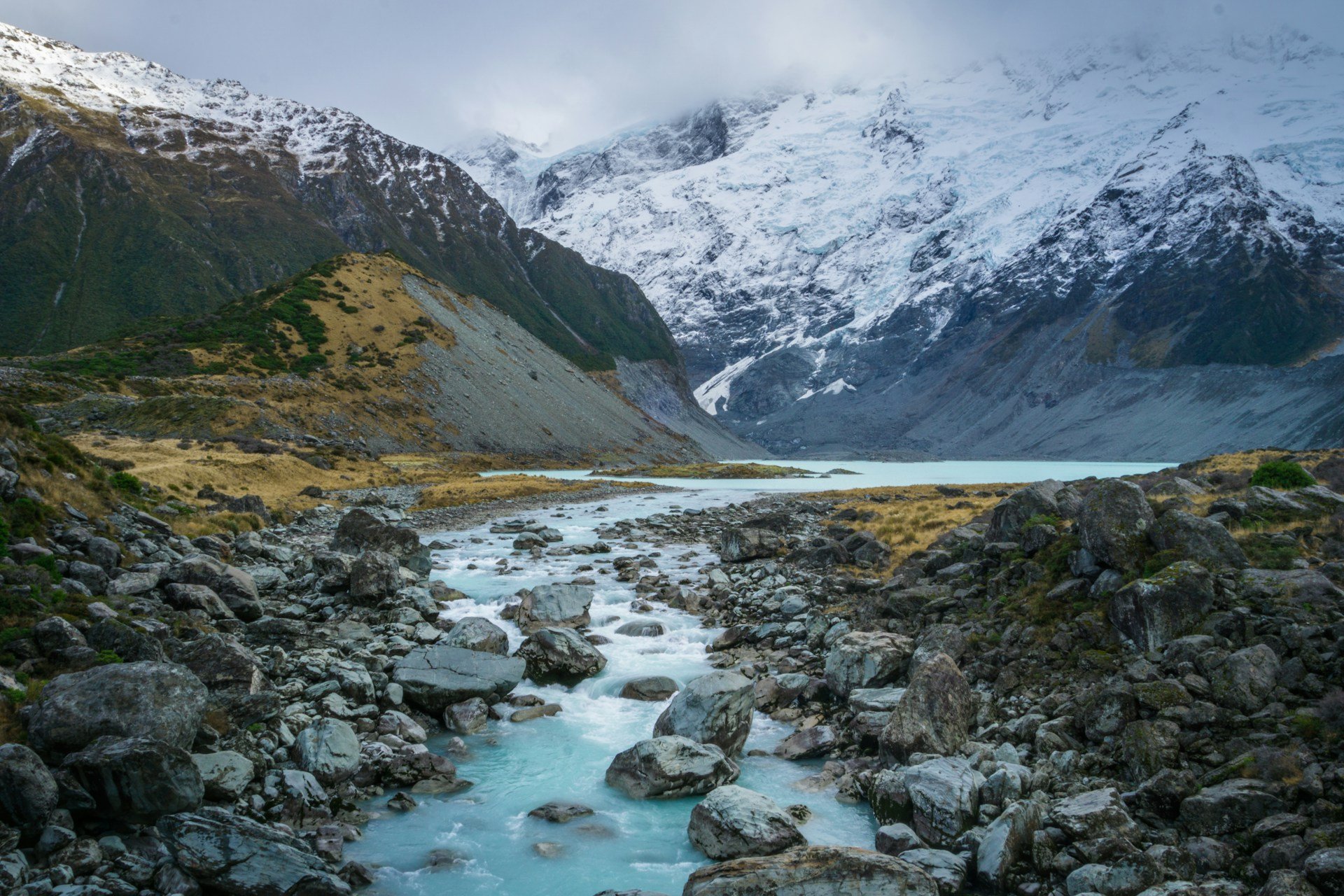
Fjords, glaciers, volcanoes and turquoise lakes, all within a two-week drive
Lake Tekapo's glacial turquoise, Aoraki/Mount Cook, the Remarkables above Queenstown, Mitre Peak rising 1,692m from Milford Sound and glaciers descending through rainforest, all on one South Island loop. The North Island adds the Tongariro Alpine Crossing and Rotorua's geothermal fields.
- Don't miss
- Milford Sound, Tekapo, Tongariro Crossing
 🦘 Australia
Uluru, the Kimberley and the Great Ocean Road
Defined by scale and age: Uluru's 348m sandstone shifts from terracotta to crimson, the Kimberley is 400,000 km² of ochre gorges and rock art, the Great Ocean Road runs past the Twelve Apostles, and the Daintree is the world's oldest tropical rainforest. Ancient grandeur that needs time and distance.
- Don't miss
- Uluru, the Great Ocean Road, the Daintree
Round 2 of 10
Wildlife
Australia wins, emphatically
Australia has some of the most unique wildlife on earth. New Zealand's is endemic but less varied.
 🌿 New Zealand
Kiwi, kea and fur seals
Endemic birds are the standout: the flightless kiwi, the kea (the world's only alpine parrot) and the tuatara, a reptile predating the dinosaurs. Fur seals at Kaikoura, royal albatross near Dunedin and year-round sperm whale watching add excellent marine life, all with no snakes or dangerous spiders.
- Don't miss
- Kaikoura whales, Otago Peninsula albatross
 🦘 Australia
Kangaroos, koalas, platypuses and the Great Barrier Reef
Shaped by 50 million years of isolation: kangaroos graze beside campsites, koalas cling to eucalyptus, wombats and platypuses are seen at dawn, and saltwater crocodiles add prehistoric menace. The Reef hosts 1,500 fish species, and Ningaloo offers whale shark snorkelling from March to July.
- Don't miss
- The Great Barrier Reef, Ningaloo whale sharks
Round 3 of 10
Adventure and outdoor activities
New Zealand wins
New Zealand built the commercial adventure tourism industry. Queenstown is still its world capital.
 🌿 New Zealand
Queenstown, the Great Walks and the world's most concentrated adventure menu
The first commercial bungee jump, from Kawarau Bridge in 1988, launched an industry. Within 30 minutes of Queenstown: bungee, the Nevis Swing, skydiving, Shotover jet boats, rafting and skiing. Nine Great Walks include the Milford Track, Routeburn and Tongariro Crossing.
- Don't miss
- Milford Track, Kawarau bungee, Tongariro Crossing
 🦘 Australia
Reef diving, Whitsunday sailing and world-class surfing
The Great Barrier Reef is the most accessible large-scale reef diving anywhere, the Whitsundays are a premier sailing destination with Whitehaven's 98% silica sand, and Bells Beach, Byron Bay and Margaret River are surf icons. World-class in specific categories, less concentrated than New Zealand.
- Don't miss
- Outer Reef diving, Whitsunday sailing, Bells Beach
Round 4 of 10
Cities
Australia wins, clearly
Australia's cities are among the world's most liveable. New Zealand's are pleasant but not the reason you crossed the Pacific.
 🌿 New Zealand
Auckland, Wellington and Queenstown: good cities in extraordinary settings
Auckland sits between two harbours with 53 volcanic cones, and Waiheke Island wine country is an hour by ferry. Wellington is the most walkable, with free-entry Te Papa and a creative laneway culture. Queenstown is an adventure resort town more than a city.
- Don't miss
- Wellington's Te Papa, Waiheke Island
 🦘 Australia
Sydney, Melbourne and Brisbane reward real time
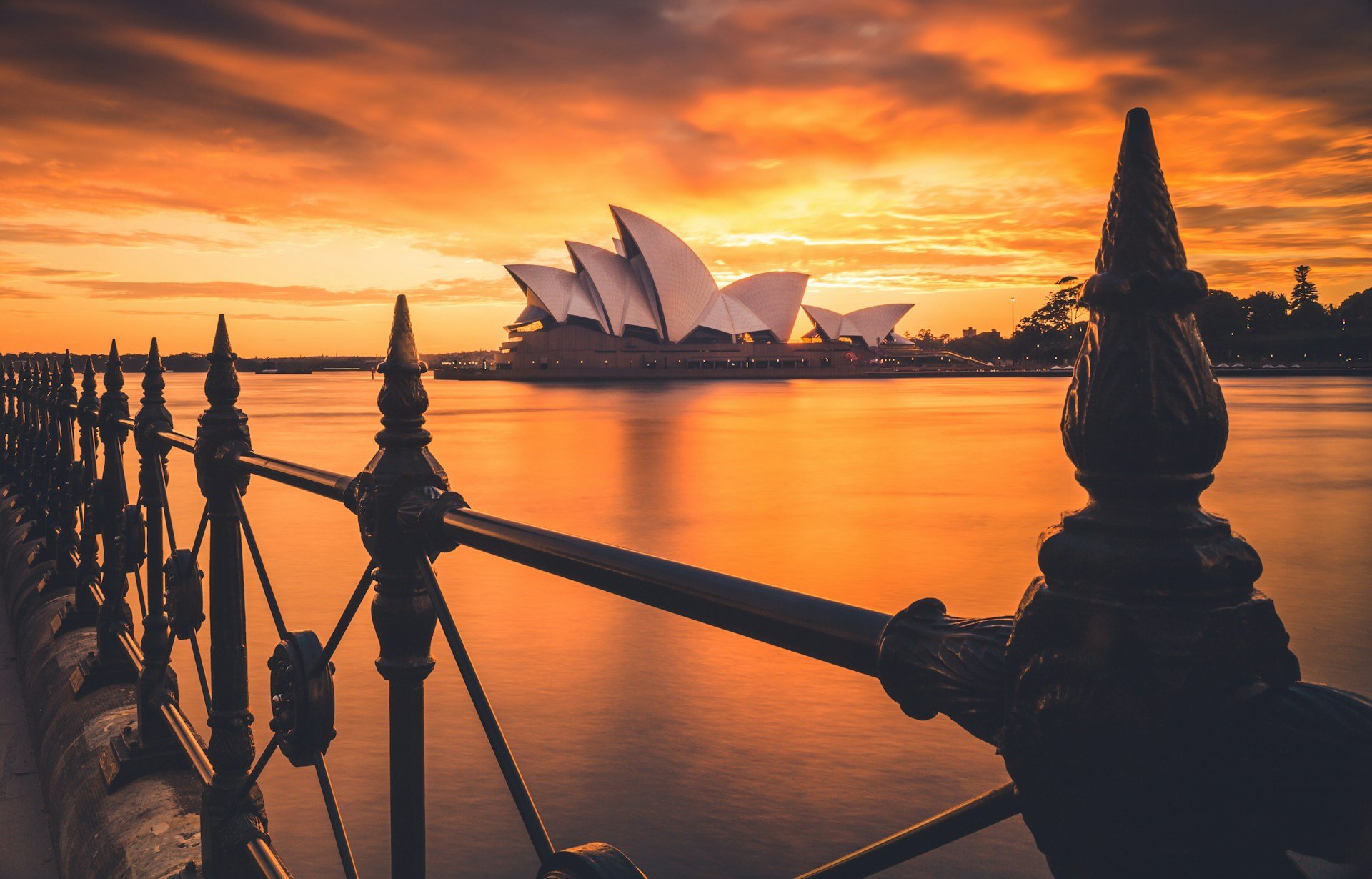
Sydney's harbour, Opera House and Bondi Beach 15 minutes from the CBD, and a food scene shaped by Asian and Middle Eastern immigration. Melbourne has laneway cafés, the NGV, the MCG and a restaurant scene that rivals any in Asia-Pacific. Both justify days of their own.
- Don't miss
- Sydney Harbour, Melbourne's laneways
Round 5 of 10
Indigenous culture
Different strengths
Two of humanity's most extraordinary cultural inheritances. New Zealand's is easier to access; Australia's is older and deeper.
 🌿 New Zealand
Maori culture, integrated into national identity
Te Reo Maori is an official language and appears on road signs. Rotorua's Te Puia and Tamaki Maori Village offer haka, waiata and hangi feasts cooked with geothermal heat, and Wellington's Te Papa holds the finest public collection of Maori taonga.
- Don't miss
- Te Puia, a hangi feast, Te Papa
 🦘 Australia
Aboriginal culture, the world's oldest continuous civilisation
At least 65,000 years of songlines and spiritual connection to land. Anangu-led base walks at Uluru explain the Tjukurpa, Kakadu's Ubirr and Nourlangie hold 20,000 years of rock art, and Arnhem Land is accessible by permit. It takes more deliberate effort to reach.
- Don't miss
- Anangu Uluru base walk, Kakadu rock art
Round 6 of 10
Food and wine
Australia wins, narrowly
Both eat and drink well. Australia's big-city dining is deeper; New Zealand's wine regions and seafood punch above their weight.
Lamb, seafood and cool-climate wine
Green-lipped mussels, Kaikoura crayfish and lamb sit alongside Marlborough Sauvignon Blanc, Central Otago Pinot Noir and Waiheke wineries. Excellent produce and wine, with a smaller restaurant scene outside Auckland and Wellington.
A world-class multicultural food scene
Immigration from across Asia and the Middle East has built dining in Sydney and Melbourne that rivals the best in Asia-Pacific, from laneway cafés and flat whites to fine dining. Barossa and Margaret River add major wine regions, and seafood is excellent.
Round 7 of 10
Which is cheaper, New Zealand or Australia?
New Zealand wins, narrowly
Both countries are expensive. Australia is slightly more so, particularly for internal travel given its size.
| Typical cost | 🌿 New Zealand | 🦘 Australia |
|---|---|---|
| Budget hostel | NZD 35–60 | AUD 35–65 |
| Mid-range hotel | NZD 150–280 | AUD 180–350 |
| Campervan hire | NZD 80–150/day | AUD 100–180/day |
| Restaurant dinner | NZD 25–50 pp | AUD 35–70 pp |
| Internal flights | NZD 60–150 | AUD 100–400 |
| Adventure activity | NZD 150–300 | AUD 150–350 |
| Entry | NZeTA + levy ~NZD 123 | ETA ~AUD 20 |
| Two-week trip estimate | €1,800–3,500 campervan | €2,500–4,500 East Coast |
Typical 2026 prices, excluding international flights.
The campervan advantage: for NZD 80–150 a day you cover accommodation and transport together, with DOC campsites at NZD 8–21 a night in spectacular spots. A 10-day South Island loop typically costs NZD 2,500–4,000 for two, competitive with budget travel in Europe.
Round 8 of 10
Getting around
New Zealand wins
Both drive on the left. New Zealand's compactness makes it far easier to explore without internal flights.
Compact, drivable, campervan-friendly
The classic South Island loop runs on sealed roads with excellent campervan infrastructure, and Auckland to Christchurch is around an hour by air. Winding rural roads and tourist driving accidents are the main caution, so take breaks.
Enormous distances mean domestic flights
Sydney to Perth takes 5 hours by plane and Sydney to Cairns 3. Most itineraries are built around flights between regions, with road trips like the Great Ocean Road or the Red Centre needing more time, and the Gibb River Road needing 4WD and 10+ days.
Round 9 of 10
When to go: the best time for New Zealand and Australia
A genuine tie
Both are Southern Hemisphere countries with seasons opposite to Europe and North America. Late October to December and mid-February to April suit both best.
Regional reality: New Zealand is four seasons in a day, carry a waterproof, and Fiordland gets 6,000mm+ of rain. Australia has three climate zones: the tropical north is best April to October, the Red Centre April to September, and the south is temperate. January is the worst month for a combined trip: New Zealand school holiday peak and Australian heat.
Round 10 of 10
Is New Zealand or Australia safer for tourists?
New Zealand wins, marginally
Both are exceptionally safe, with very low violent crime. The real risks are environmental.
🌿 New Zealand: what to watch
- Earthquakes and volcanoes are real; check GeoNet alerts before any volcanic tour.
- Sandflies in Fiordland and on the West Coast are intense; bring DEET or picaridin.
- River crossings on tramping tracks can become impassable after heavy rain; never cross flooded rivers.
- Extreme UV and narrow rural roads are the day-to-day hazards.
🦘 Australia: what to watch
- Bushfires October to March in southern states; follow state emergency alerts.
- Marine stingers Box and Irukandji jellyfish in north Queensland October to May; swim at netted beaches.
- Crocodiles in the tropical north; swim only in signed spots.
- Rip currents and heat Swim between the flags and carry 4+ litres of water a day in the Outback.
Australia's dangerous-wildlife reputation is real but vastly overstated for visitors who follow basic precautions. Both countries have extreme UV, so wear factor 50+ daily.
Which is better for specific trips?
New Zealand for two-week trips, road trippers and adventure seekers. Australia for wildlife lovers, divers, city breakers and longer trips.
Two-week first-timers
New Zealand
The South Island delivers more per day than anywhere else in the Southern Hemisphere.
Wildlife lovers
Australia
83% of its mammals exist nowhere else on earth.
Adventure seekers
New Zealand
The world's adventure capital, with nine Great Walks.
City breakers
Australia
Sydney and Melbourne are destinations in their own right.
Divers and snorkellers
Australia
The Great Barrier Reef and Ningaloo have no New Zealand equivalent.
Road trippers
New Zealand
The South Island is arguably the world's best two-week drive.
Wildlife-nervous travellers
New Zealand
No snakes, no dangerous spiders, no crocodiles.
Long-stay explorers (3+ weeks)
Australia
Continental variety from reef to desert to alpine needs the time.
Can you combine New Zealand and Australia in one trip?
Yes, it's one of the world's most popular long-haul combinations. Trans-Tasman flights take 3 to 4 hours, and three weeks is the minimum.
New Zealand: days 1 to 14
- Days 1–3
Auckland and Waiheke. Waterfront, a ferry to Waiheke wineries, optionally the Bay of Islands.
- Days 4–5
Rotorua and Taupo. Te Puia, Wai-O-Tapu and Huka Falls, with the Tongariro Crossing as an option.
- Days 6–13
South Island road trip. Tekapo, Mount Cook, Queenstown, Milford Sound and the West Coast glaciers.
- Day 14
Fly to Sydney. Christchurch to Sydney, around 3h15.
Australia: days 15 to 24
- Days 15–17
Sydney. Opera House, Bondi to Coogee coastal walk, the Blue Mountains.
- Days 18–20
Cairns. A Great Barrier Reef day trip and the Daintree Rainforest.
- Days 21–23
Uluru. Sunrise, an Anangu-led base walk and Kata Tjuta.
- Day 24
Depart Sydney. Fly home.
When to go: March to early April, or October to early December. Avoid January (NZ school holidays and Australian heat) and November to April in tropical north Australia (wet season and cyclone risk).
Verdict: New Zealand or Australia?
There's no single overall winner. It comes down to time, motivation and whether you want intensity or scale.
Choose New Zealand if…
New Zealand, for landscapes, adventure and a first Oceania trip
The right choice with 10 to 14 days, when compact landscape drama, hiking, adventure and the South Island road trip are the goals, and for most first-time visitors.
- 10 to 14 days available
- Landscapes are the motivation: fjords, glaciers, volcanoes
- Adventure activities and the Great Walks
- The South Island road trip is the goal
- Budget is a consideration
- You are nervous about dangerous wildlife
Choose Australia if…
Australia, for wildlife, reef, cities and the Outback
The right choice with three weeks or more, when unique wildlife is the main draw, the Great Barrier Reef is on the list, or Sydney and Melbourne are part of the plan.
- 3+ weeks available
- Wildlife is the primary motivation
- Great Barrier Reef diving or snorkelling
- Sydney and Melbourne on the itinerary
- Uluru and the Red Centre
- Surfing at Bells Beach or Margaret River
Weigh it for your own trip
Select everything that matters to you.
Pick what matters on this trip and the needle will move.
New Zealand vs Australia: frequently asked questions
Is New Zealand or Australia better for nature?
New Zealand wins for concentrated, accessible nature on a compact itinerary: volcanoes, glaciers, fjords and geothermal fields on one driveable loop. Australia wins for scale and unique biodiversity: the Reef, Outback, Daintree and Kimberley. For 10 to 14 days New Zealand delivers more variety per day.
Is New Zealand or Australia better for wildlife?
Australia wins emphatically: 83% of its mammals and 89% of its reptiles exist nowhere else, from kangaroos and koalas to the Great Barrier Reef. New Zealand has fascinating endemic birds (kiwi, kea, tuatara) and excellent marine wildlife, but not the same overall diversity.
Is New Zealand or Australia better for a road trip?
New Zealand's South Island offers arguably the world's best compact two-week road trip on sealed roads with excellent campervan infrastructure. Australia has outstanding drives, the Great Ocean Road, the Red Centre, the Gibb River Road, but they need more time and sometimes a 4WD.
Is New Zealand or Australia more expensive?
Australia is marginally more expensive overall, with higher costs and more internal flights. A two-week mid-range New Zealand trip typically costs €1,800–3,500 by campervan against €2,500–4,500 for Australia. DOC campsites at NZD 8–21 a night make the South Island especially affordable.
What is the best time to visit New Zealand and Australia?
New Zealand is best December to March, with October–November and April–May as quieter shoulders. Australia depends on region: the tropical north and Red Centre April to October, southern cities also April to October to avoid 40°C+ summers. The Reef is diveable year-round, best visibility June to October.
Can you combine New Zealand and Australia in one trip?
Yes. Flights between Auckland or Christchurch and Sydney, Melbourne or Brisbane take 3 to 4 hours. A classic route is 10 to 12 nights in New Zealand then Sydney, Cairns and optionally Uluru. Fly into one country and out of the other to avoid backtracking, and allow three weeks minimum.
Is New Zealand or Australia safer for tourists?
Both are exceptionally safe. New Zealand has the edge with no dangerous wildlife. Australia's risks, crocodiles in the tropical north, stingers October to May, bushfires October to March, are real but manageable and well signed. Both have extreme UV.
Do I need a visa for New Zealand or Australia?
Most Western nationalities need an online authorisation for both. Australia's ETA costs around AUD 20. New Zealand's NZeTA costs NZD 17–23 plus the NZD 100 tourism levy, about NZD 123 in total. Apply at least 72 hours before travel.
How do I deal with New Zealand sandflies?
Sandflies are intense in Fiordland and on the West Coast but harmless. Wear long sleeves, use DEET or picaridin repellent applied before bites, and avoid still air near water. They are absent above about 800m and on boats, so the Milford Sound cruise is sandfly-free.
There's no wrong answer here
New Zealand and Australia are compared so often because they share a hemisphere and almost nothing else. Pick on time and temperament: a compact, jaw-dropping drive, or a continent of wildlife, reef and cities. Better still, do both, most travellers say New Zealand overwhelms while Australia grows on you.