
South Africa vs Kenya at a glance
Ten rounds, scored honestly. South Africa takes cities, variety and value; Kenya takes the Migration and beaches. Safari itself is a split. Select a category to jump to the full comparison.
| Category | South AfricaKenya |
|---|---|
| The ten rounds | |
| SafariSelf-drive access against the Great Migration | Different models, different magic |
| WildlifeRhino stronghold and marine life on top | South Africa wins |
| CitiesCape Town, wine country and the Garden Route | South Africa wins, clearly |
| BeachesWarm water and coral reefs | Kenya wins |
| CostSelf-drive safari from around €50 a day | South Africa wins, clearly |
| FoodWorld-class wine and a braai culture | South Africa wins |
| Getting aroundAfrica's best roads and self-drive freedom | South Africa wins, clearly |
| WeatherOpposite seasons but overlapping dry-season sweet spots | A genuine tie |
| SafetyBoth need awareness, in different ways | A draw |
| FamiliesMalaria-free options and easier logistics | South Africa wins, narrowly |
| Best for | |
| First-time Africa visitorsThe most complete, easiest trip | South Africa |
| Great Migration chasersThe Mara River crossings, July to October | Kenya |
| Budget-conscious safari-goersKruger self-drive from around €50 a day. | South Africa |
| OverallThe complete trip or the purest safari | Depends on your priorities |
Complete vs pure
South Africa is Africa's most complete travel destination. Kenya is Africa's most iconic safari experience.
The most varied African travel destination
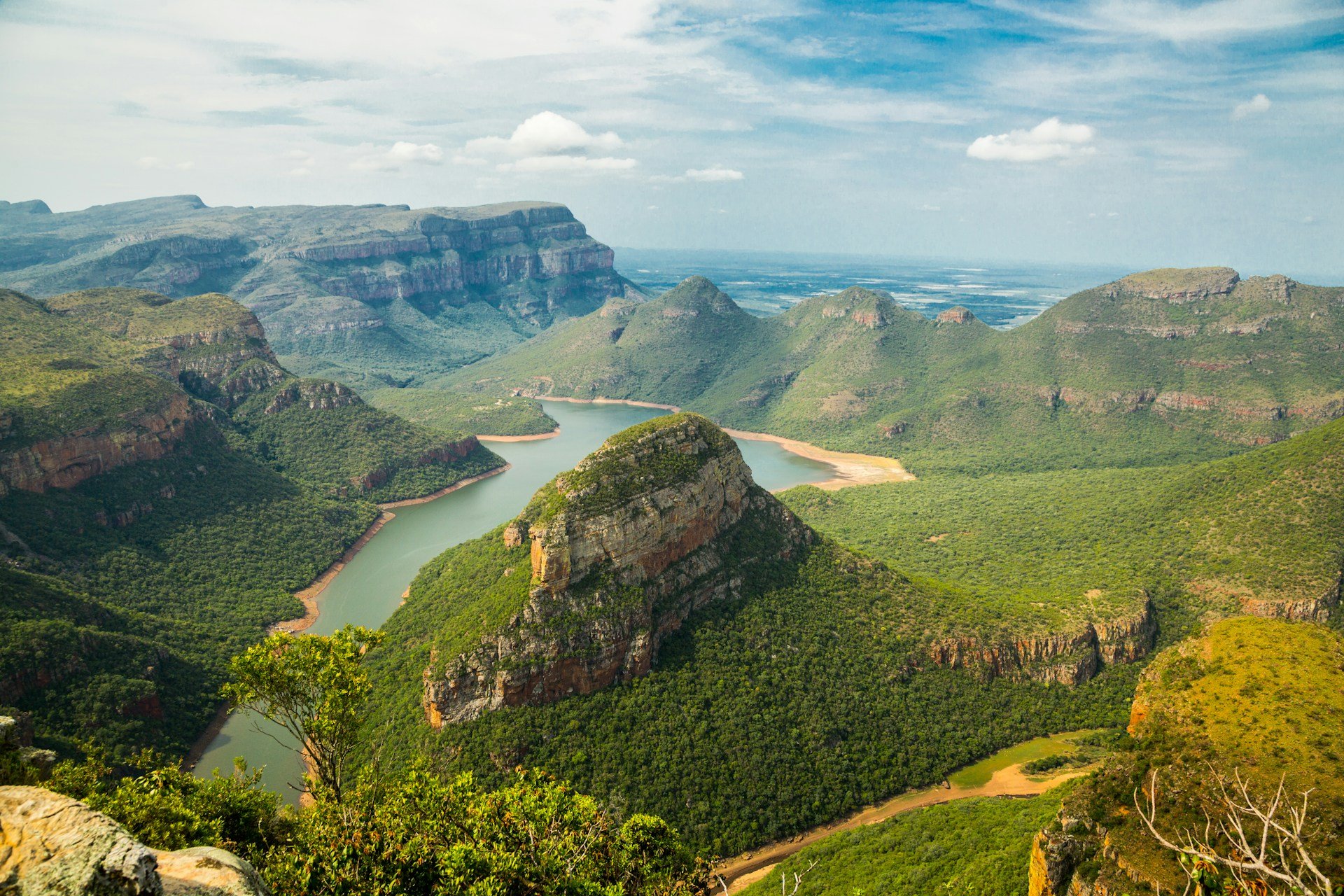
Cape Town's mountain backdrop, the Winelands, the whale-watching Garden Route, the Drakensberg and Kruger's Big Five bushveld. Africa's best infrastructure, English everywhere and self-drive safari make it ideal for a first trip, though urban crime and inequality need awareness.
Where the word "safari" was born
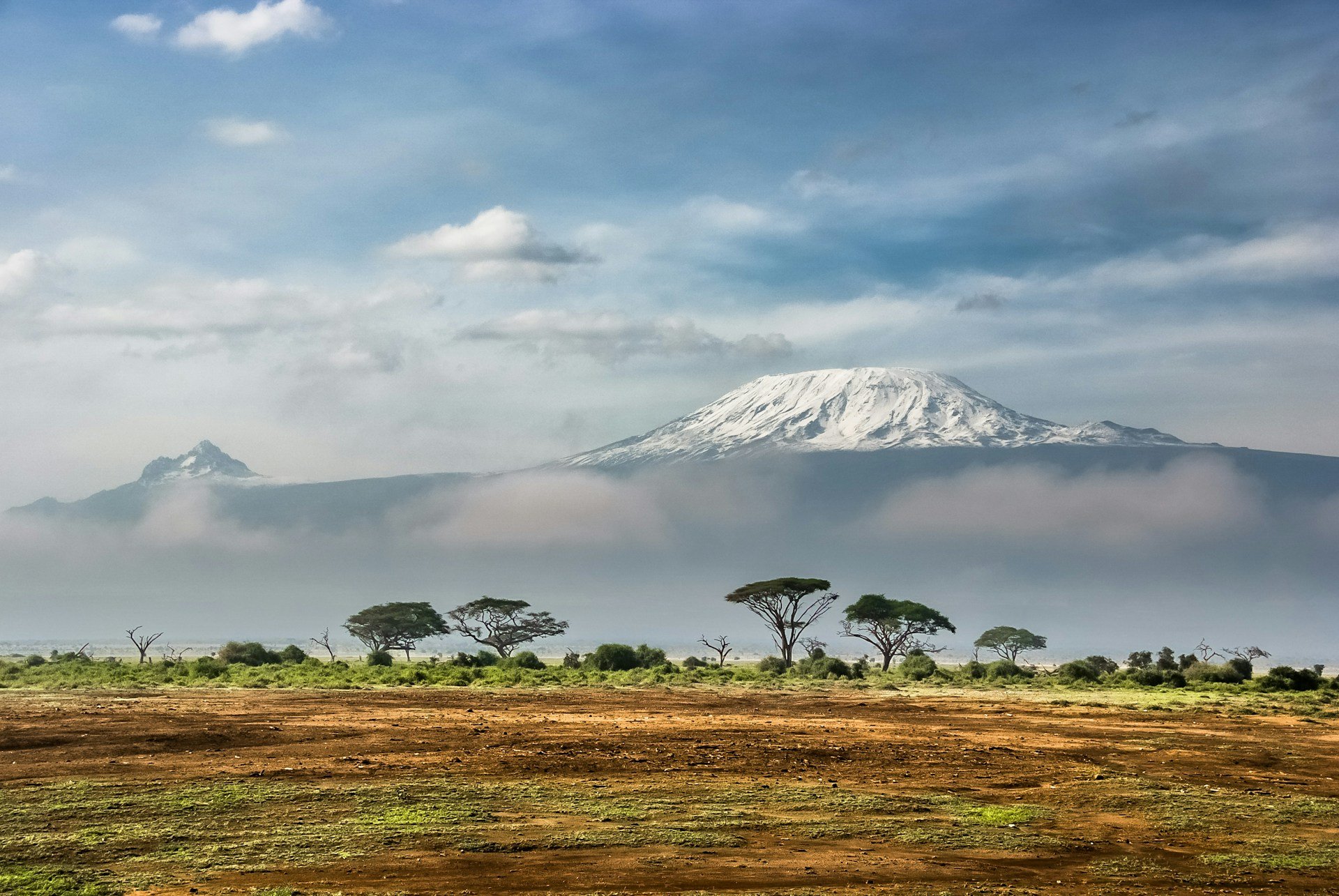
The Masai Mara is the template every other safari is measured against: open unfenced savannah, lion prides, cheetahs on termite mounds, and from July to October the Great Migration of 1.5 million wildebeest. More focused than South Africa, but unmatched at its best.
Key facts side by side
| Fact | 🦁 South Africa | 🐘 Kenya |
|---|---|---|
| Safari highlight | Kruger, self-drive Big Five | Masai Mara, the Great Migration Jul–Oct |
| Safari style | Self-drive or guided private reserve | Guided, no self-drive in major reserves |
| Best season | May–Sep, dry winter | Jul–Oct (Migration) or Jan–Mar (dry) |
| Rhino | Yes, white and black, best density | Rare; Ol Pejeta is the best chance |
| Budget safari | Yes, Kruger self-drive from ~$60/day | Limited, guide and 4WD required |
| Best city | Cape Town, world-class | Nairobi, a transit hub |
| Beaches | Garden Route and Cape Peninsula | Diani Beach and Lamu, Indian Ocean |
| Infrastructure | Africa's best | Less developed, mostly flights to reserves |
Typical 2026 prices excluding international flights.
Round 1 of 10
The safari experience
Different models, different magic
Different models, different magic, and one unmatchable seasonal event.
 🦁 South Africa
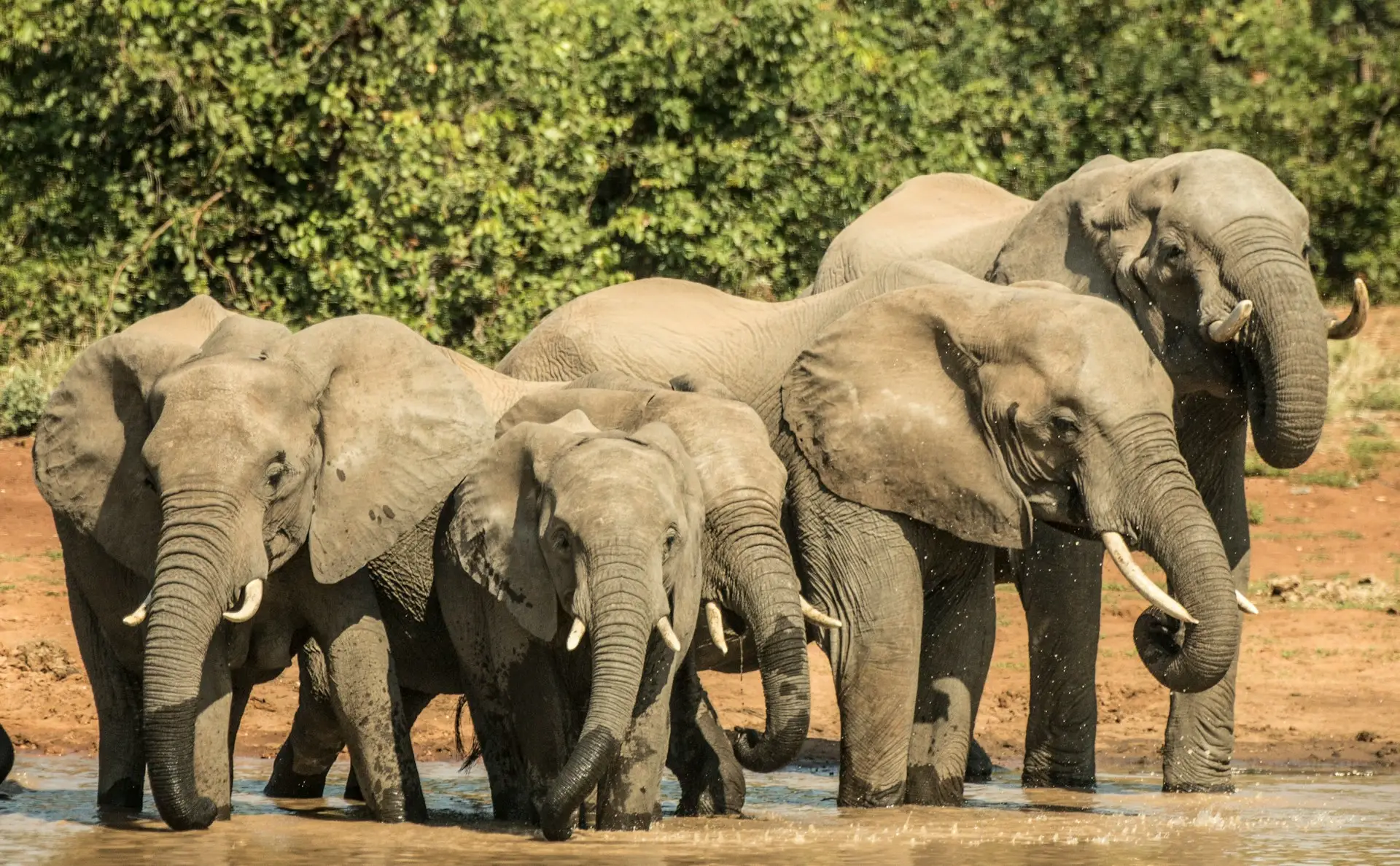
Kruger self-drive and Sabi Sands, Africa's most accessible Big Five
Kruger's 19,485 km² of bushveld hold all Big Five at excellent density and can be driven in your own hire car, staying in SANParks rest camps from around R400 a night. Adjacent Sabi Sands allows off-road driving and walks, with some of Africa's most reliably close leopard sightings.
- Don't miss
- Kruger self-drive, Sabi Sands walking safari
 🐘 Kenya
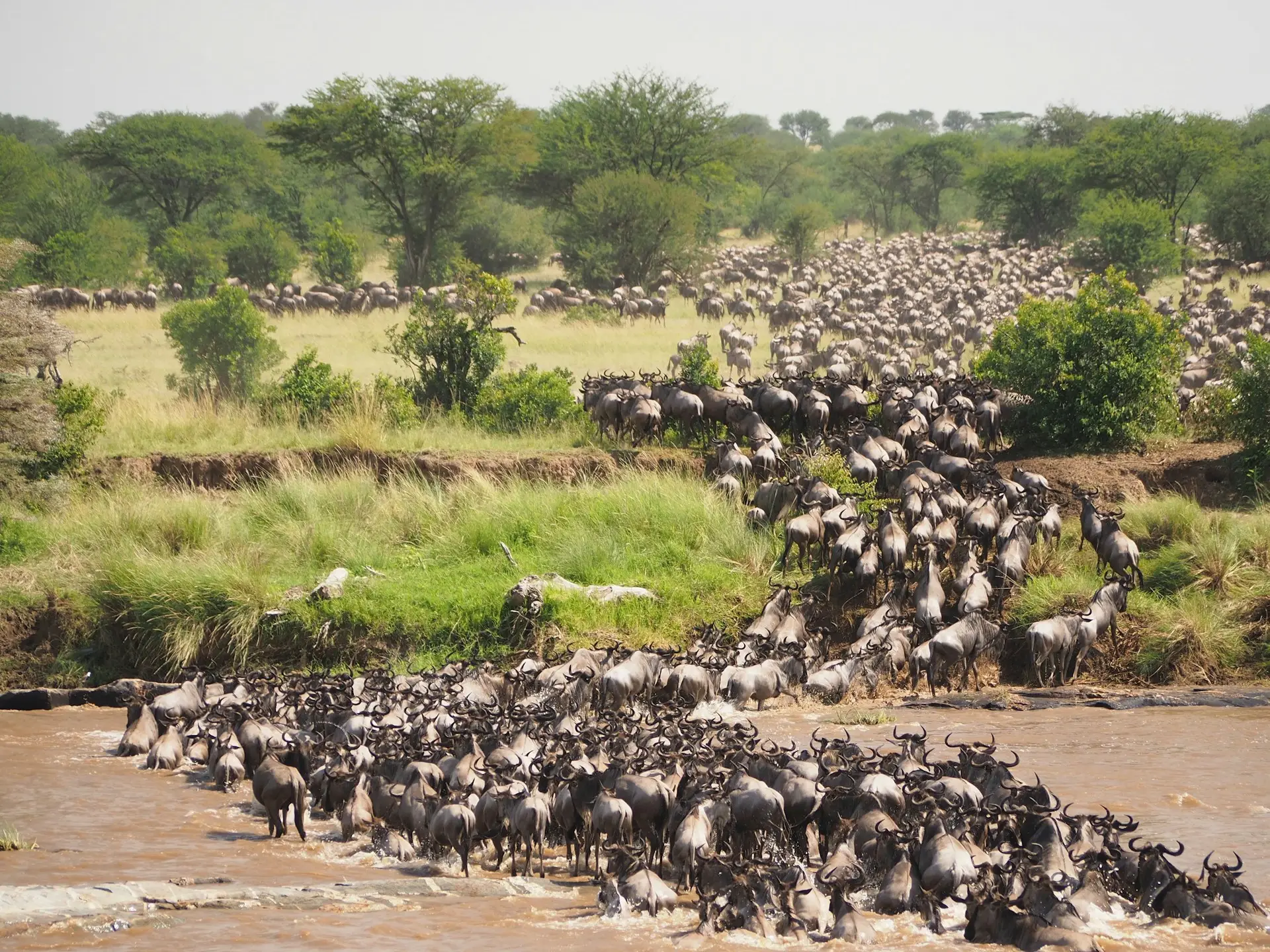
The Great Migration, the world's greatest wildlife event, July to October
1.5 million wildebeest follow the rains north and must cross the Mara River past waiting Nile crocodiles, a visceral, chaotic spectacle that exceeds its reputation. Year-round the Mara has outstanding predators, and Samburu, Amboseli and Laikipia add depth.
- Don't miss
- Mara River crossings, Amboseli, Samburu
Round 2 of 10
Wildlife beyond the Big Five
South Africa wins
Both countries deliver the Big Five, but each excels in different species.
 🦁 South Africa
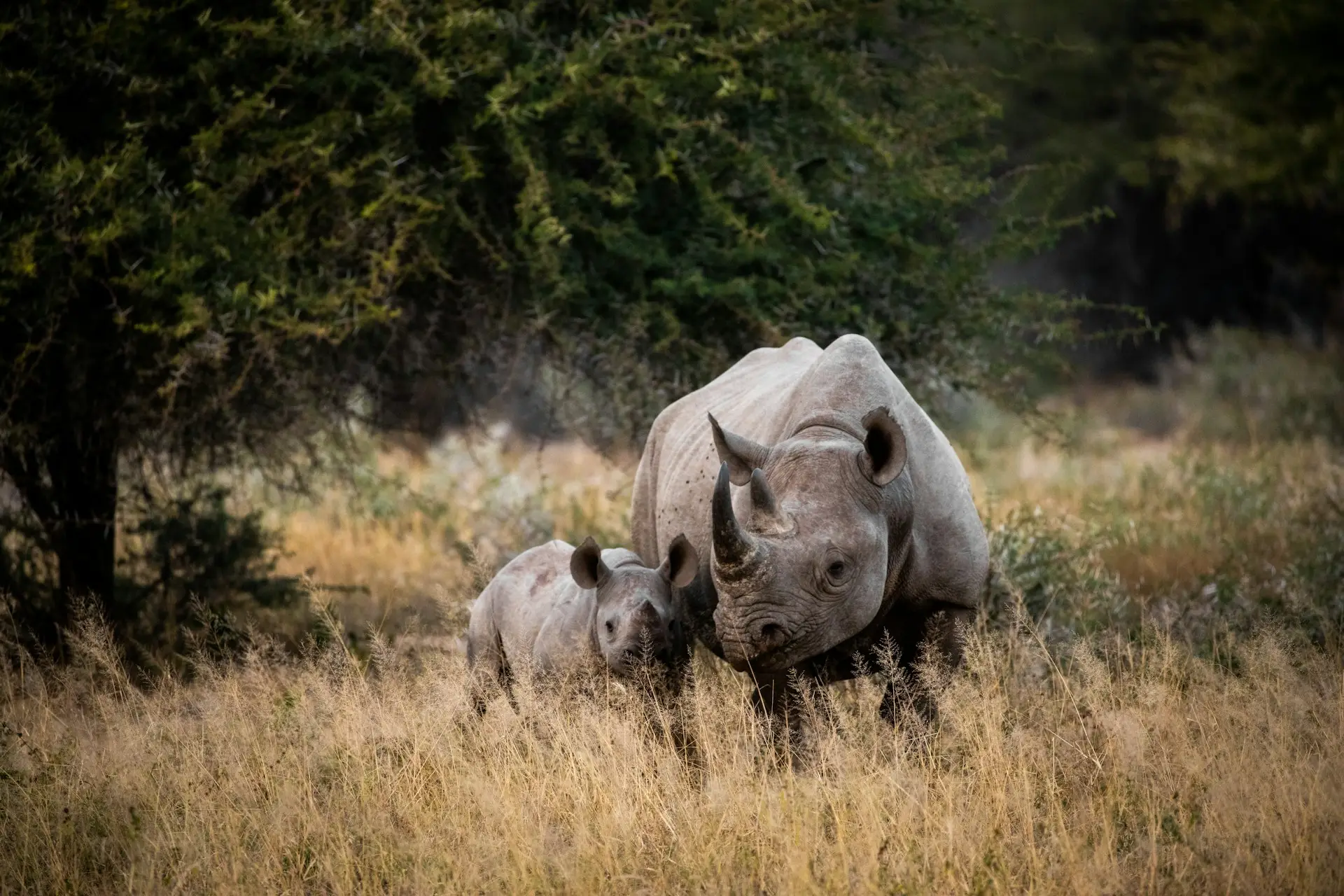
Rhino stronghold, wild dogs and whale watching on the same trip
South Africa holds roughly 80% of the world's remaining white rhino, regularly sees African wild dogs in Kruger, and adds Southern Right whales at Hermanus, great white sharks near Gansbaai and penguins at Boulders, marine variety Kenya cannot match.
- Don't miss
- Kruger rhino, Hermanus whales, Boulders penguins
 🐘 Kenya
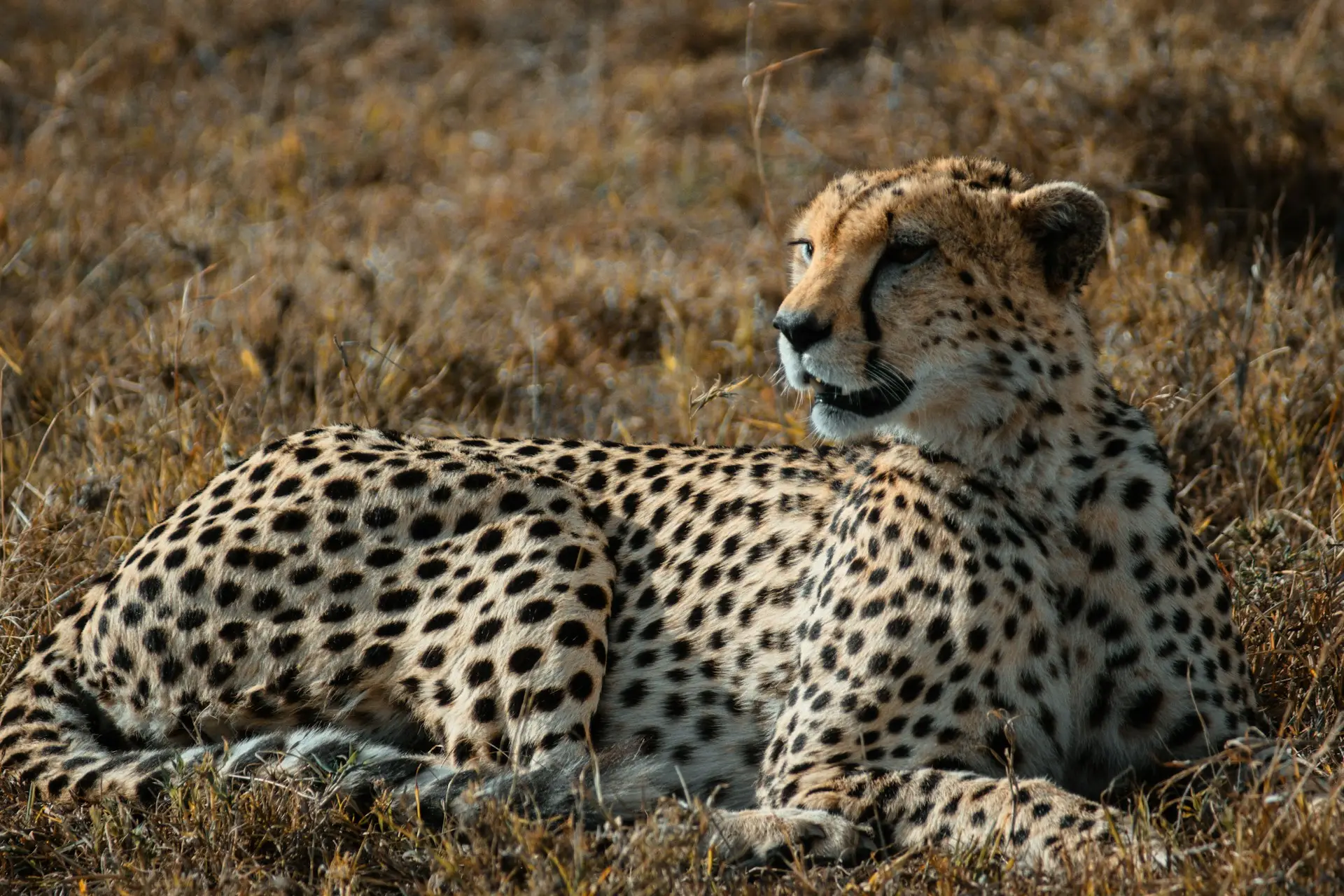
Highest cheetah density in Africa, Amboseli elephants and Samburu rarities
The Mara's cheetah density is Africa's highest and its lion population exceeds 800, so big-cat encounters are near-guaranteed in three days. Amboseli offers elephants against Kilimanjaro, Samburu holds the northern "Special Five", and Laikipia adds rhino and wild dogs.
- Don't miss
- Mara cheetahs, Amboseli, Samburu
Round 3 of 10
Cities and beyond safari
South Africa wins, clearly
Cape Town is one of the world's great cities. Nairobi is a functional base.
 🦁 South Africa
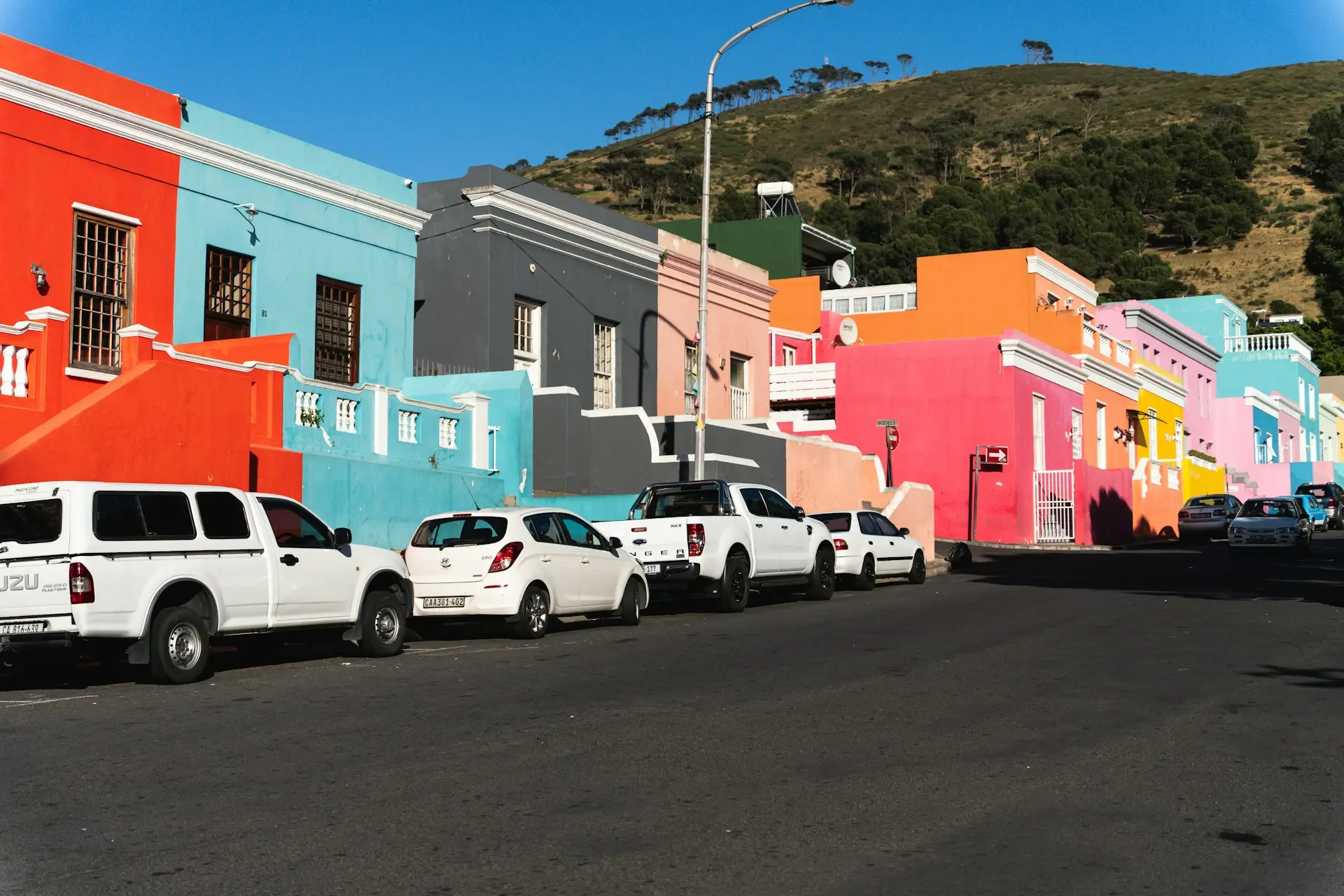
Cape Town, the Winelands and the Garden Route
Cape Town is Africa's most beautiful city, Table Mountain above a bowl of Victorian neighbourhoods, the colourful Bo-Kaap and two oceans meeting. An hour east, Stellenbosch and Franschhoek make some of the Southern Hemisphere's best wine, and the Garden Route adds 300km of coast, whales and forest.
- Don't miss
- Table Mountain, Chapman's Peak, Stellenbosch
 🐘 Kenya
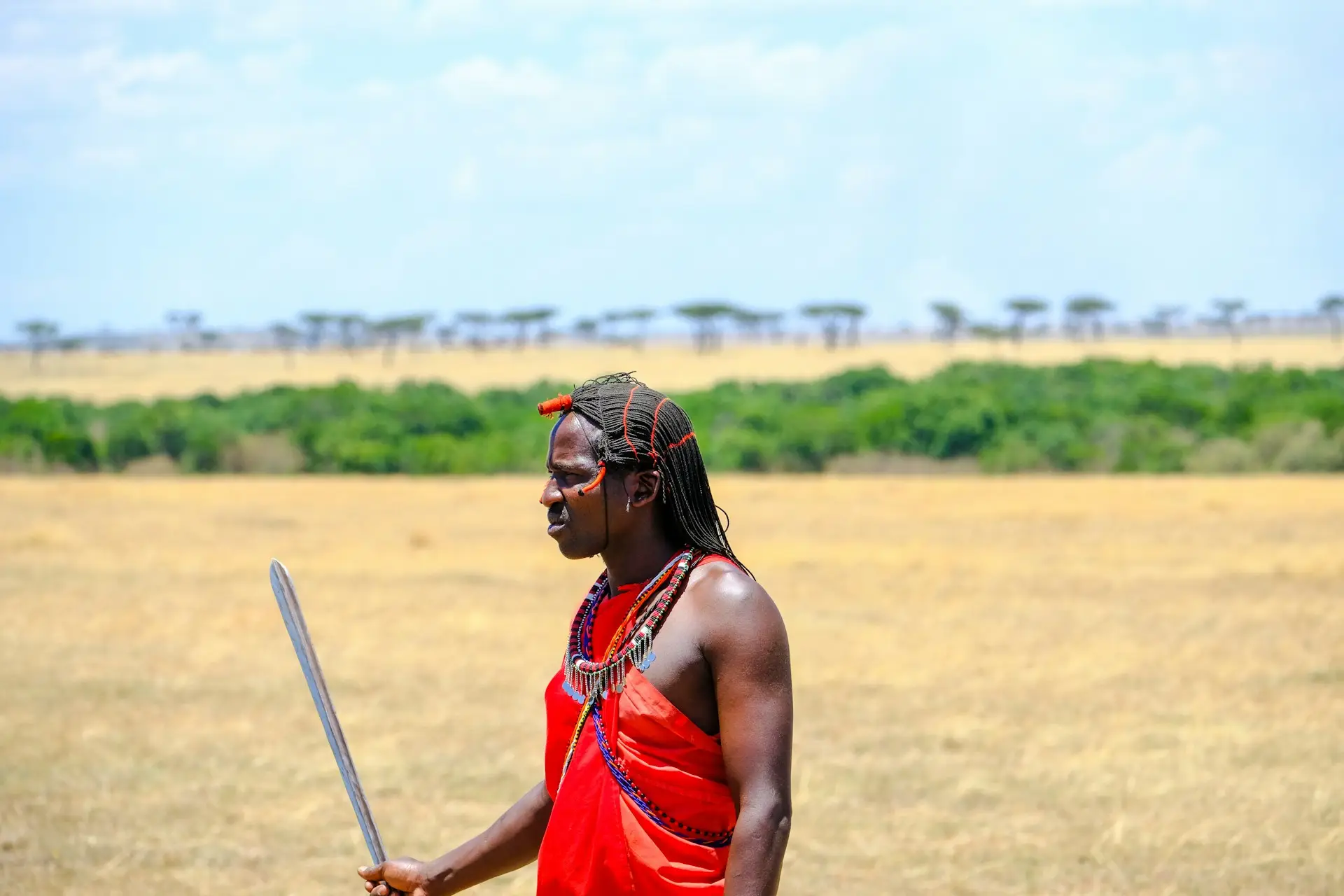
Maasai culture, Nairobi National Park and Lamu's Swahili island
Nairobi is primarily a transit hub, but its National Park, the only one in the world inside a capital, has lions and rhino against the skyline. The Karen Blixen Museum, the Sheldrick elephant orphanage, authentic Maasai visits in the Mara conservancies and Lamu's donkey-lane Swahili town add rewarding extras.
- Don't miss
- Nairobi National Park, a Maasai manyatta, Lamu
Round 4 of 10
Beaches
Kenya wins
Both have excellent Indian Ocean beaches. Kenya's are warmer and better for snorkelling.
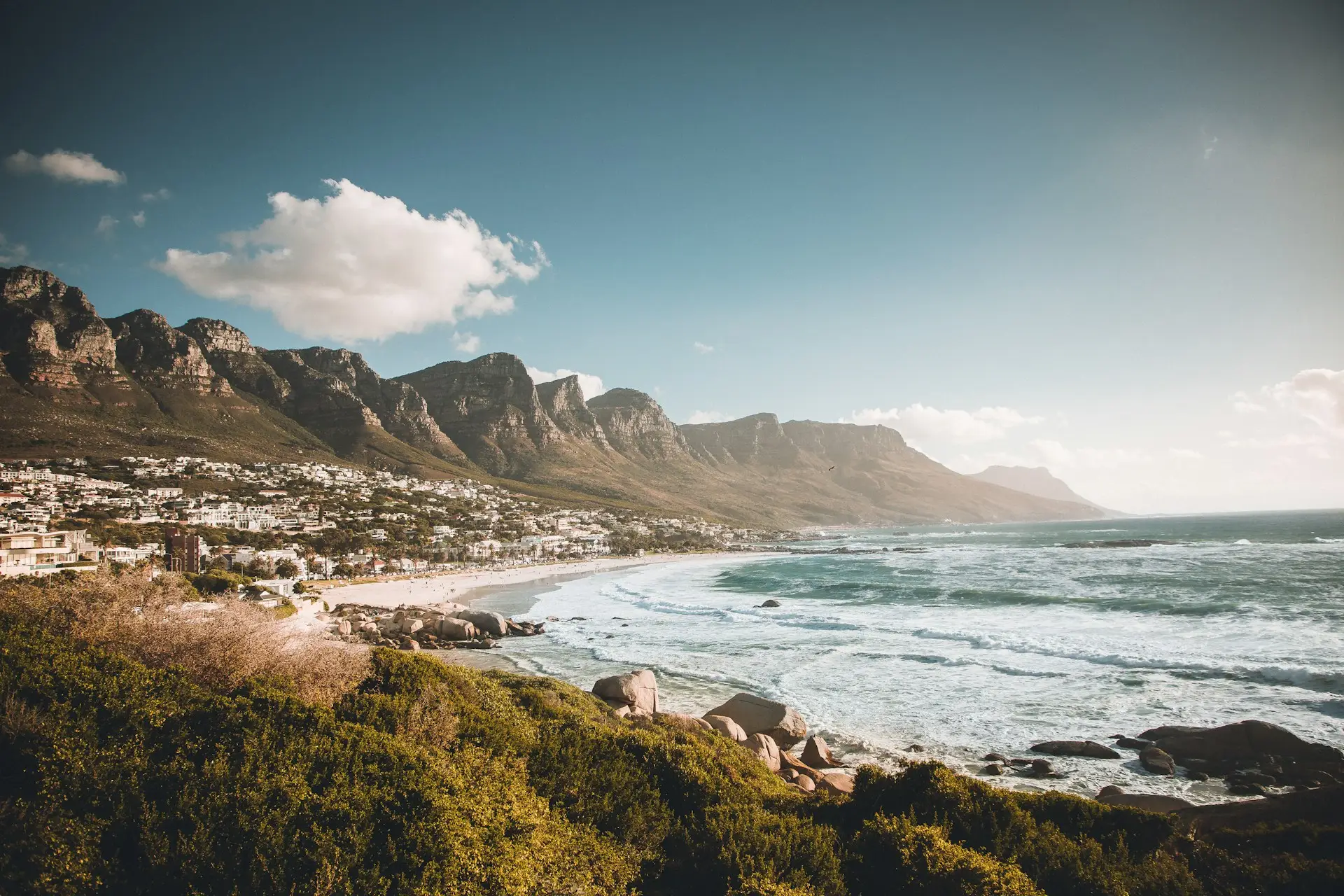 🦁 South Africa
The Garden Route and the Cape Peninsula, dramatic but cold
The Atlantic side (Camps Bay, Clifton) stays at 12–16°C year-round, too cold for most swimmers. The Garden Route's Indian Ocean side is warmer at 18–22°C, with Plettenberg Bay and Hermanus' world-class land-based whale watching, and the Wild Coast is remote hiking country.
- Don't miss
- Plettenberg Bay, Hermanus
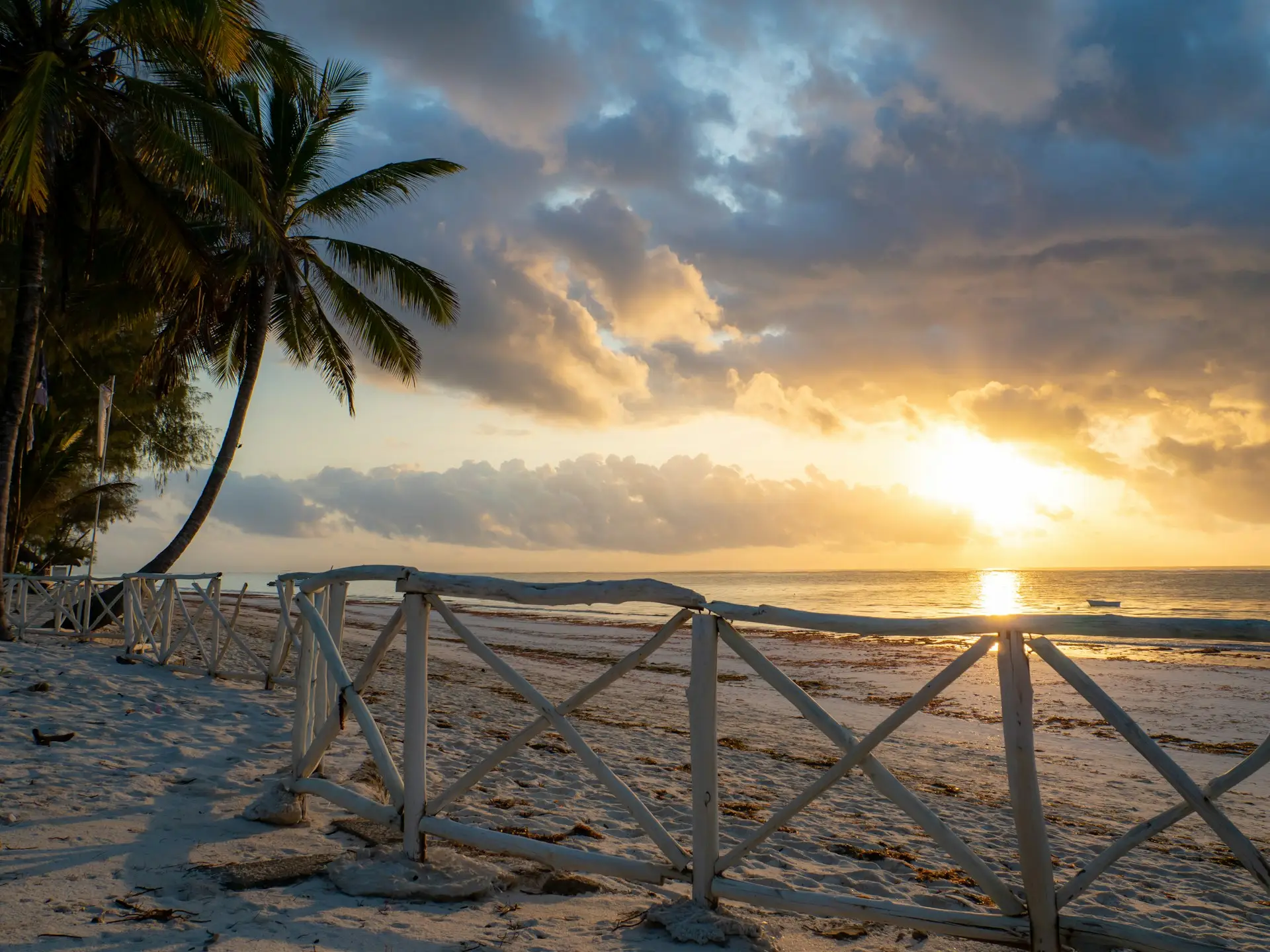 🐘 Kenya
Diani Beach and Lamu, warm Indian Ocean with coral reefs
Water at 26–28°C, white sand and fringing coral reefs for snorkelling. Diani has good resorts and watersports, and Lamu's UNESCO Swahili town offers quiet Shela and Manda beaches. A Mara-to-Mombasa flight makes a safari-plus-beach combination.
- Don't miss
- Diani Beach, Lamu
Round 5 of 10
Which is cheaper, South Africa or Kenya?
South Africa wins, clearly
South Africa is better value, especially for self-drive safari. Kenya's top-end lodges are among Africa's most expensive.
| Typical cost | 🦁 South Africa | 🐘 Kenya |
|---|---|---|
| Budget safari | Self-drive from ~€50/day | Guide and 4WD required, from ~€150/day |
| Mid-range lodge, per person | €150–350/night all-inclusive | €250–600/night all-inclusive (Mara) |
| Luxury lodge, per person | €400–900/night (Sabi Sands) | €600–1,500/night (top Mara camps) |
| City hotel, mid-range | €80–200/night, Cape Town | €60–150/night, Nairobi |
| Mid-range city meal | ZAR 200–400 (~€10–22) | KES 2,000–5,000 (~€14–35) |
| Internal transport | Self-drive and cheap domestic flights | Flights to reserves, USD 200–400 a leg |
Typical 2026 prices, excluding international flights.
Bottom line: South Africa's self-drive Kruger is the most affordable Big Five safari in Africa, and its private reserves start lower than equivalent Kenyan properties. For a budget safari, South Africa wins convincingly.
Round 6 of 10
Food and drink
South Africa wins
South Africa's wine regions and braai culture give it the edge; Kenya's coastal and nyama choma cooking is underrated.
Wine country, braai and Cape Malay cooking
The Winelands pair world-class wines with restaurants in Dutch-gabled estates, and the braai (barbecue) is a national ritual. Biltong, bobotie and Cape Malay curries, and fresh seafood on the coast round out a varied, good-value food scene.
Nyama choma, ugali and Swahili coastal flavours
Nyama choma, grilled meat shared with kachumbari, is Kenya's social dish, served with ugali and sukuma wiki. The coast adds Swahili cooking, coconut curries, fresh seafood and pilau, and safari lodges often serve excellent food. A smaller, less internationally celebrated scene.
Round 7 of 10
Getting around
South Africa wins, clearly
South Africa has Africa's best infrastructure. Kenya's safari circuit is run on guides and small planes.
Good roads, cheap domestic flights and self-drive
Hire cars make self-drive easy across the Cape, the Garden Route and Kruger, domestic flights from FlySafair are cheap, and English is spoken everywhere. Independent travel is straightforward.
Guides, 4WDs and internal flights to reserves
No self-drive in the major reserves, so a guide and 4WD are required, and internal flights to reserves typically cost USD 200–400 a leg. Roads beyond the main routes are rougher, so most visitors book an organised safari.
Round 8 of 10
When to go: the best time for South Africa and Kenya
A genuine tie
Both are best in the dry season, but the seasons differ. South Africa is best May to September; Kenya's peak is July to October.
Safari timing: Kruger's dry winter (May–September) gives the best game viewing as animals gather at water. Kenya's Great Migration crossings run late July to October, peaking August–September, with January–March excellent for predators. Avoid April–June, Kenya's long rains. Book Mara camps for August–September a year ahead.
Round 9 of 10
Is South Africa or Kenya safer for tourists?
A draw
Both are well-travelled by tourists, with the main risks being urban crime and wildlife rules.
🦁 South Africa: what to watch
- Urban crime is real in parts of cities; use ride-hailing at night and avoid walking with valuables.
- Car safety Keep windows up and valuables out of sight, and avoid driving after dark outside cities.
- Wildlife rules In Kruger, stay in your vehicle outside designated areas.
- Malaria Kruger is in a malaria zone; Cape Town and the Western Cape are not.
🐘 Kenya: what to watch
- Petty theft and muggings in Nairobi; use taxis or ride-hailing after dark.
- Safari rules Follow your guide's instructions; never leave the vehicle.
- Malaria is present across most of the country; take advice on prophylaxis.
- Travel advisories Check official advice for border and coastal regions.
Booking reputable operators and following guide instructions covers most safari risks in both.
Round 10 of 10
Family travel
South Africa wins, narrowly
Both work with children. South Africa offers malaria-free private reserves and easier logistics.
Malaria-free reserves, easy logistics and variety
Malaria-free private reserves, family-friendly lodges, easy driving and variety beyond safari, beaches, penguins, cable cars and aquariums, suit families well, including with younger children.
A thrilling safari, best for older children
The Mara and Amboseli are unforgettable for older children, but many lodges set a minimum age for game drives, malaria is widespread, and long drives and internal flights add logistics.
Which is better for specific trips?
South Africa for first-timers, budget safaris, rhino and self-drive. Kenya for the Migration, big cats and safari-plus-beach trips.
First-time Africa visitors
South Africa
City, wine country, coast and Big Five safari in one itinerary.
Great Migration chasers
Kenya
The world's greatest wildlife spectacle.
Budget-conscious safari-goers
South Africa
Kruger self-drive from around €50 a day.
Big-cat and cheetah fans
Kenya
The highest cheetah density in Africa and large lion prides.
Rhino seekers
South Africa
Roughly 80% of the world's white rhino, best seen here.
Safari-plus-beach trips
Kenya
Fly from the Mara to Diani or Lamu on the warm Indian Ocean.
Wine and food lovers
South Africa
The Winelands and Cape Town's restaurants.
Self-drive travellers
South Africa
Africa's best roads and a Big Five you can drive yourself.
Can you combine South Africa and Kenya in one trip?
Yes, a popular combination for serious Africa travellers. Flights between Johannesburg and Nairobi take 4 to 5 hours.
South Africa: days 1 to 9
- Days 1–3
Cape Town. Table Mountain, Chapman's Peak and the Winelands.
- Days 4–5
Garden Route. Coastal drive, forest and whale watching at Hermanus.
- Days 6–9
Kruger or Sabi Sands. Big Five game drives, then fly Johannesburg to Nairobi.
Kenya: days 10 to 16
- Days 10–12
Masai Mara. Game drives and, July to October, the Mara River crossings.
- Days 13–14
Amboseli (optional). Elephants against Kilimanjaro.
- Days 15–16
Diani Beach. Warm Indian Ocean rest and snorkelling before flying home.
When to go: July to October suits both, Kruger's dry winter and the Migration. Book Mara camps a year ahead for August–September.
Verdict: South Africa or Kenya?
There's no single overall winner. The decision comes down to what kind of Africa you're looking for.
Choose South Africa if…
South Africa, for the complete Africa trip
The right choice for a first Africa trip, budget-conscious safari, self-drive itineraries, or anyone wanting city, wine country, coast and wildlife in one trip.
- A first Africa trip, the most complete package
- Budget matters, Kruger self-drive is affordable
- Cape Town is on the itinerary
- Rhino sightings are a priority
- The Garden Route drive appeals
- Self-drive freedom rather than guided-only
- Wine and food alongside wildlife
Choose Kenya if…
Kenya, for the Great Migration and pure safari
The right choice when the Great Migration is a bucket-list goal, open-savannah safari is the priority, or you can visit between July and October.
- The Mara River crossing is the goal
- Visiting July to October
- Open, unfenced savannah safari is the priority
- Cheetah and big-cat encounters
- Combining with Tanzania's Serengeti
- Diani Beach or Lamu afterwards
- The Maasai cultural experience
Weigh it for your own trip
Select everything that matters to you.
Pick what matters on this trip and the needle will move.
South Africa vs Kenya: frequently asked questions
Is South Africa or Kenya better for safari?
It depends on your priority. Kenya's Masai Mara offers the Great Migration (July to October), the world's greatest wildlife spectacle, and the purest open-savannah safari atmosphere. South Africa's Kruger is self-drivable with all Big Five and the world's best rhino sightings, and Sabi Sands adds off-road driving and walks. For the Migration, Kenya; for self-drive, value and rhino, South Africa.
Is South Africa or Kenya better for a first Africa trip?
South Africa is the more complete first trip: Cape Town, the Winelands, the Garden Route and Kruger add city, wine, coast and Big Five safari to a two-week itinerary, with Africa's best infrastructure. Kenya is more focused, with exceptional safari and less variety outside the reserves.
Is South Africa or Kenya more expensive?
Kenya is generally more expensive for safari, with Mara lodges at €250–600 a person a night mid-range and up to €1,500 at top camps. South Africa's self-drive Kruger starts around €50 a day, the most affordable Big Five safari in Africa. For budget safari, South Africa wins convincingly.
What is the best time to visit Kenya for the Great Migration?
River crossings happen mainly late July through October, peaking August–September. Outside that, the Mara still delivers outstanding game year-round, and January–March is excellent for predators. Avoid April–June's long rains. Book August–September camps a year ahead.
Can you combine South Africa and Kenya in one trip?
Yes. Flights between Johannesburg and Nairobi take 4 to 5 hours. A classic three-week combination is Cape Town, the Garden Route, Kruger or Sabi Sands, then the Masai Mara, optionally Amboseli, and Diani Beach.
Does South Africa or Kenya have better beaches?
Kenya wins for warm swimming: Diani's 26–28°C water, white sand and coral reefs, plus Lamu. South Africa's Atlantic coast is stunning but cold at 12–16°C, while the Garden Route's Indian Ocean side is warmer and Hermanus adds world-class whale watching.
Is South Africa or Kenya safer for tourists?
Both are well-travelled, with risks that need awareness. South Africa's main issue is urban crime, so use ride-hailing at night and keep valuables out of sight. Kenya has petty theft in Nairobi and widespread malaria. Booking reputable operators and following guides covers most safari risks.
Do I need malaria tablets for South Africa or Kenya?
Kruger and parts of the northeast of South Africa are malaria zones, while Cape Town, the Winelands and the Garden Route are not. Most of Kenya carries malaria risk. Take advice from a travel clinic before you go.
There's no wrong answer here
South Africa and Kenya are compared so often because they are the two great entry points to an African safari. Pick on what you want from this trip: South Africa's variety, value and ease, or Kenya's Migration and pure savannah. Better still, do both, a short flight links them.