
India's capital doesn't ease you in
Delhi is really several cities layered on top of each other: the walled Old Delhi built by Shah Jahan in the 17th century, the broad colonial boulevards of New Delhi laid out by the British in the 1910s and 20s, and the sprawling modern metropolis of roughly 33 million people that has grown around both. It is the most chaotic first impression most visitors get of India, and for that reason it either sets the trip up well or overwhelms people who arrive expecting something gentler.
What rewards the effort is density: nowhere else in the country packs a Mughal fort, a Sultanate-era minaret, a Bahá'í temple shaped like a lotus and some of the best street food on the subcontinent into a single metro network. Old Delhi's lanes are still full of the same trades, wedding cards, spices, silver jewelry, that have operated there for generations, two streets from a Connaught Place coffee chain and a Metro station.
The honest complications
Delhi's traffic and crowds are genuinely intense, and Old Delhi in particular can feel sensorially overwhelming on a first visit: narrow lanes, competing horns, and a level of physical crowding that takes adjustment. Touts and commission-seekers are a constant, low-grade presence around major monuments and especially near New Delhi Railway Station's Paharganj side; a firm, polite "no" handles most of it. And from late November through January, Delhi's air quality turns genuinely severe due to crop burning, vehicle emissions and winter temperature inversion, at times affecting outdoor sightseeing and health more than most visitors expect from a city break. None of this makes Delhi not worth the time. It makes it a city that rewards arriving with a plan rather than winging it.
Old Delhi, New Delhi, and the sprawl between them
Delhi's neighborhoods split broadly into Old Delhi (Mughal-era, dense, chaotic), New Delhi (colonial-era, planned, central) and South Delhi (modern, upscale, residential). Where you base yourself matters more here than in most cities because distances are large and traffic is unpredictable.
Connaught Place
Connaught Place, built by the British in the 1930s as a shopping and business district, is Delhi's geographic and commercial center: white colonnaded buildings arranged in concentric circles, multiple metro lines converging underneath, and a wide spread of restaurants, bars and shops. It's loud and chaotic during the day but central enough that everything else in the guide is a manageable metro or auto-rickshaw ride away.
Old Delhi
Old Delhi, the walled city Shah Jahan built in the 1640s, is where the Red Fort, Jama Masjid and Chandni Chowk's bazaars and food lanes sit. It's best treated as a place to spend a day rather than a base: narrow lanes, intense crowds and limited hotel quality make it a better sightseeing destination than a place to sleep for most visitors.
Hauz Khas
Hauz Khas Village mixes a 13th-century reservoir, madrasa ruins and Deer Park with a dense cluster of boutique cafes, bars and independent shops. It's the closest thing Delhi has to a bohemian neighborhood, popular with young professionals and a livelier base for evenings out than Connaught Place's more corporate energy.
South Delhi (Greater Kailash & Vasant Kunj)
Leafy, upscale residential areas with Delhi's best malls, some of its best restaurants, and a noticeably calmer pace than the center. A good choice for longer stays or families who want a residential feel, at the cost of being further from Old Delhi's sights.
Paharganj
Paharganj, right by New Delhi Railway Station, has run Delhi's backpacker scene for decades: cheap guesthouses, budget shopping, and a genuinely chaotic, unfiltered slice of the city. It's also the neighborhood with the highest concentration of touts and scam attempts in this guide's Safety chapter, so weigh the savings against the extra vigilance it requires.
From colonial-era grandeur to well-run hostels
Delhi's hotel scene runs from some of Asia's most storied luxury properties to a genuinely solid hostel network built for the backpacker circuit. These picks span the full range and each earns its place.
At the top, The Imperial, open since 1936 with an extraordinary collection of colonial-era art and antiques lining its corridors, and The Oberoi, New Delhi, consistently ranked among the city's best with views over Humayun's Tomb and the golf course from its higher floors, both sit from roughly $170-180 a night and represent Delhi's grand hotel tradition at its best. The Lodhi (from around $250) takes a more contemporary approach, with private plunge pools attached to many rooms and a genuinely excellent spa, close to Lodi Gardens.
In the mid-range, boutique options in Hauz Khas and South Delhi put you closer to the newer restaurant scene than the Connaught Place grand hotels, generally for $60-120 a night. For committed budget travelers, Moustache Delhi and The Hosteller Delhi both run social, well-reviewed dorms with included breakfast and Delhi-specific city tours organized through the front desk, from around $8-15 a night, and are the two properties that anchor the city's backpacker scene alongside the Zostel chain's Delhi outposts.
Mughal kebabs, Punjabi comfort food and a hundred years of Old Delhi bazaar cooking
Delhi's food identity is built on Mughlai and Punjabi cooking, tandoor-grilled meats, rich gravies, stuffed breads, refined over centuries in the imperial kitchens and reinvented after Partition by Punjabi refugees who reshaped the city's restaurant scene entirely. The range runs from century-old Old Delhi institutions charging a few hundred rupees to tasting menus that rank among Asia's best.
Old Delhi kebabs
Karim's, tucked behind Jama Masjid and serving Mughlai food since 1913, is Old Delhi's defining restaurant: mutton burra kebabs, tandoori chicken and a rich mutton korma cooked to a recipe with imperial-kitchen roots. Expect a queue and a no-frills room; the food is the point.
Bukhara
Bukhara, inside the ITC Maurya hotel, has been one of Delhi's most celebrated restaurants for decades: a rustic, open-kitchen room built around the tandoor, famous for its Sikandari raan (slow-roasted leg of lamb) and Dal Bukhara, black lentils simmered for roughly 24 hours into a signature dish diners return specifically for.
Indian Accent
Indian Accent, chef Manish Mehrotra's modern Indian tasting-menu restaurant, reworks classic dishes with international technique, galawat kebab with foie gras among the signatures, and is regularly ranked among Asia's best restaurants. Book several days ahead.
Paranthe Wali Gali
A single narrow lane off Chandni Chowk lined with stalls frying stuffed parathas, some family-run for well over a century, filled with everything from potato to lentils to sweetened khoya. Come hungry and order two or three different fillings to share.
Mughal monuments, colonial Delhi, and one genuinely essential bazaar
Delhi's sights split naturally across Old Delhi, New Delhi and South Delhi, and trying to do all three in one day means spending most of it in traffic. This chapter walks through the city roughly the way a good three days would.
Old Delhi: forts, mosques and one unmissable bazaar
Start at the Red Fort (₹600 foreigner entry), Shah Jahan's red sandstone Mughal citadel and the site of India's Independence Day flag-raising each 15 August, then walk to the Jama Masjid, India's largest mosque, whose minaret offers a sweeping rooftop view over Old Delhi's rooftops for a small separate camera fee. From there, Chandni Chowk, the 17th-century bazaar street running from the fort, rewards slow, deliberate wandering: spice merchants, wedding card printers, silver jewelers and the Paranthe Wali Gali food lane all sit within a few hundred meters of each other. A cycle-rickshaw food tour through the lanes at dusk, when the street lights come on and the crowds thin slightly, is one of the best-value experiences in the city.
New Delhi: colonial boulevards and Mughal tombs
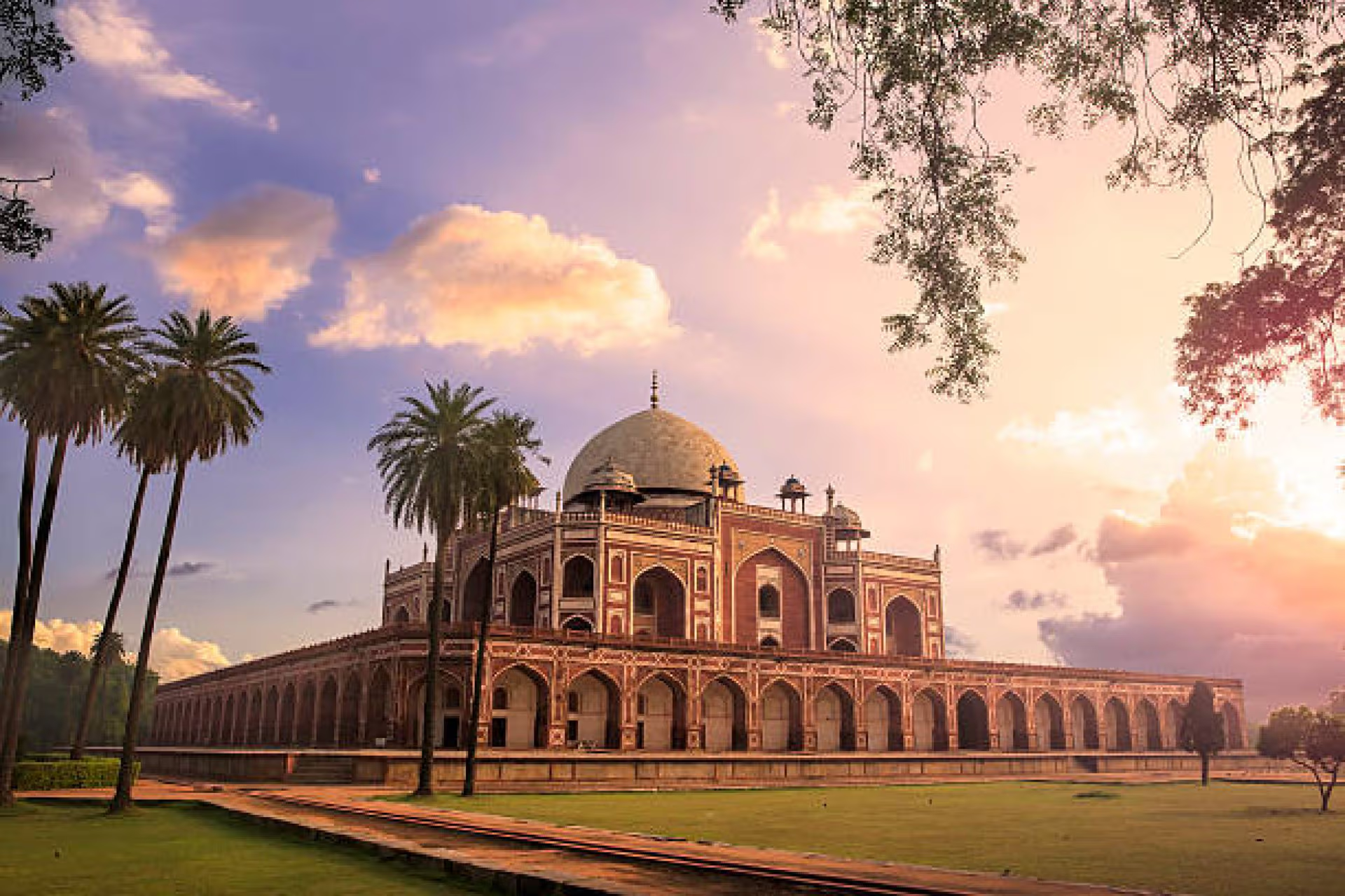
Humayun's Tomb (₹550 foreigner entry), the 16th-century Mughal garden tomb that directly inspired the Taj Mahal's design a century later, is one of Delhi's best-kept and least crowded major sights. India Gate, the 42-meter war memorial arch anchoring the ceremonial boulevard the British built as their new capital's spine, is worth an early morning or evening visit when the surrounding lawns fill with local families rather than midday when the heat and traffic circling it are unpleasant. The National Museum, with an extensive collection spanning the Indus Valley Civilization through the Mughal era, and Lodi Gardens, a landscaped park scattered with 15th and 16th-century tombs that locals use for their daily walk and jog, both reward an unhurried couple of hours.
South Delhi: Sultanate ruins and modern temples
The Qutub Minar (₹550 foreigner entry), a 73-meter Sultanate-era minaret begun in 1193 and the tallest brick minaret in the world, anchors a genuinely beautiful ruins complex including the Iron Pillar, a 1,600-year-old column that has never rusted. The Lotus Temple, a Bahá'í house of worship shaped like a 27-petaled white marble lotus and open to all faiths for silent meditation, and Akshardham Temple, an enormous, ornately carved modern Hindu temple complex on the Yamuna's east bank (bring a passport or photo ID, security is strict and bags are heavily restricted), both offer a different, more contemporary register of Delhi's religious architecture than the Mughal-era sites.
Markets and an evening out
Dilli Haat, an open-air crafts market organized like a village fair with stalls representing every Indian state, is a genuinely useful one-stop option for souvenirs at fixed, non-negotiated prices. Khan Market, consistently ranked among the world's most expensive retail streets by rent despite its unassuming appearance, mixes bookshops, boutiques and some of Delhi's best casual restaurants. For an evening out, Hauz Khas Village's cafes and rooftop bars overlooking the illuminated 14th-century ruins are the city's most atmospheric option.
One, two or three days, planned zone by zone
Three full days covers Delhi properly; even one well-planned day delivers the essentials. These routes group sights by zone to minimize the cross-city traffic that eats most first-timers' schedules.
- Morning
Red Fort and Jama Masjid. Arrive early to beat both the heat and the crowds; climb the minaret for the rooftop view over Old Delhi.
- Midday
Chandni Chowk and Paranthe Wali Gali. Walk the bazaar lanes and share a few stuffed parathas for lunch.
- Afternoon
Humayun's Tomb. A calmer, less crowded contrast to the morning's intensity, and the direct architectural ancestor of the Taj Mahal.
- Evening
India Gate at dusk, dinner in Connaught Place or Khan Market.
- Day 1
The one-day route: Red Fort, Jama Masjid, Chandni Chowk, Humayun's Tomb, India Gate at dusk.
- Day 2 morning
Qutub Minar complex. The minaret, the Iron Pillar and the surrounding ruins, ideally before 10am to avoid both heat and tour groups.
- Day 2 afternoon
Lotus Temple and Lodi Gardens. A quieter, more contemplative pair of stops after the morning's sightseeing.
- Day 2 evening
Hauz Khas Village. Dinner and drinks overlooking the illuminated ruins and reservoir.
- Days 1-2
The two-day route above, at a gentler pace, adding the National Museum and Dilli Haat.
- Day 3
Taj Mahal day trip. The Gatimaan Express to Agra and back, one of the great half-day train journeys anywhere, with several hours at the Taj Mahal and Agra Fort. Full detail in the Day Trips chapter below.
A sprawling city that the metro makes manageable
Delhi is geographically enormous, and traffic is unpredictable enough that a route Google Maps says takes 20 minutes can take 50. From Indira Gandhi International Airport (DEL), the Airport Express Metro (Orange Line) runs from Terminal 3 to New Delhi Station in about 20 minutes for roughly ₹60, against ₹400-700 for a prepaid taxi or app-based cab and considerably longer in traffic. In the city, the Delhi Metro is genuinely excellent by any international standard: clean, efficient, air-conditioned, and the single best way to cross the city, with a dedicated women's coach on every train, usually the first one, clearly marked on the platform.
Auto-rickshaws are cheap for shorter hops (₹50-150) but require agreeing the fare upfront or insisting on the meter; app-based cabs (Uber, Ola) remove the negotiation entirely and are the easier default for visitors. Cycle-rickshaws are the right way to move through Old Delhi's lanes, too narrow and crowded for cars. For a full day covering multiple zones, hiring a car and driver (₹2,000-3,500 for 8 hours) is often better value and far less stressful than piecing together individual rides.
Best time to visit and the smog season
Delhi has a continental climate with brutal extremes. October and February-March offer the best combination of warm days, cool nights and reasonably clean air. November through January brings similarly pleasant temperatures but a real air-quality problem: severe smog from crop burning, vehicle emissions and winter inversion that can affect outdoor sightseeing, particularly for anyone with respiratory sensitivity. April to June regularly exceeds 40°C. July to September is the humid monsoon, with heavy but generally brief downpours and a lush, green city in between them.
If Delhi is your gateway city and your trip dates are flexible, October or February-March give you the Golden Triangle's best conditions with the cleanest air; if traveling November-January is unavoidable, an N95-style mask for the worst days and flexible outdoor plans are a reasonable accommodation rather than a reason to skip the trip.
More expensive than the rest of India, still cheap by world standards
Delhi runs 40-60% above the Indian national average, the price of being the capital and the main international gateway, but remains inexpensive compared to almost any Western or East Asian city. The main cost trap is eating and shopping exclusively in tourist-facing areas near major monuments, where prices run well above what the same quality costs two streets away.
- Hostel dorm ₹500-1,000
- Street food and dhaba meals ₹150-350
- Metro and auto-rickshaws ₹100-300
- Free sights plus one paid monument
- Boutique or mid-range hotel ₹5,000-10,000
- Restaurant meals ₹800-2,000/person
- Metro plus the occasional cab
- Guided monument tours, one fine-dining meal
- The Imperial, The Oberoi or equivalent
- Tasting menus at Indian Accent or Bukhara
- Private driver for the full day
- Gatimaan Express day trip to Agra
Generally safe, with a real need for street-smarts
Delhi rates 6.5/10 on our safety scale: safe for the large majority of visitors who take normal precautions, but not a city where you can switch off the way you might in Tokyo or Porto. Violent crime against tourists is uncommon, but Delhi has one of the more developed tourist-scam ecosystems in this guide, concentrated around New Delhi Railway Station, Paharganj and the areas immediately outside major monuments.
The three things that actually catch visitors: fake travel agents and "government tourist office" scams, especially around the railway station, where a well-dressed stranger walks you to a private agency disguised as an official office and pressures overpriced packages or fake train tickets; rickshaw and taxi detours, where a driver claims your destination is "closed today" and redirects to a commission-paying shop instead, which you avoid by confirming hours independently and agreeing the route upfront; and traffic, which is the single biggest practical risk in the city, chaotic, fast-moving, and not reliably yielding to pedestrians even at marked crossings. Emergency number is 112 from any phone, and the tourist helpline is 1363.
Delhi is also, honestly, a city where solo women need more active vigilance than most destinations in this guide: use the metro's marked women's coach, book app-based cabs rather than hailing an unmarked taxi or rickshaw after dark, dress modestly, and choose accommodation in Connaught Place or South Delhi over Paharganj if traveling alone. The full India country guide covers this in more depth.
The Taj Mahal alone justifies a day away from Delhi
Delhi's position at the head of the Golden Triangle makes it an excellent base for day trips, or a launch point for a longer Rajasthan loop. Three trips are worth building around, all reachable by train from Delhi's main stations.
Agra & the Taj Mahal
The Gatimaan Express, India's fastest train, departs Hazrat Nizamuddin station at 08:10 and reaches Agra by 09:50, giving a full day at the Taj Mahal (₹1,300 foreigner entry, arrive at sunrise opening for the best light and thinnest crowds) and the Agra Fort before the 17:50 return. A day-trip package with a private car and guide costs roughly $40-105 and removes the logistics entirely if that's worth the premium.
Jaipur & the Pink City
Jaipur is too far for a comfortable single day trip; most visitors combine it with Agra as the third leg of the Golden Triangle rather than a Delhi day trip. See the full India country guide for the complete Golden Triangle itinerary.
Rishikesh
The Himalayan foothill town where the Ganges emerges from the mountains is a long day trip and a much better overnight or two-night add-on: whitewater rafting, yoga ashrams, and a noticeably cooler climate than the Delhi plains.
Delhi FAQ
Is Delhi safe for tourists?
Delhi is generally safe for tourists who take normal precautions. The main concerns are traffic, pickpocketing in crowded markets and stations, and tourist-targeted scams around monuments and the railway station, not violent crime. Solo women should take extra care after dark and use the metro's women's coach and app-based cabs.
How many days do I need in Delhi?
Three full days covers the city well: one for Old Delhi's Mughal monuments and food, one for New Delhi's colonial landmarks and museums, one for South Delhi's temples and markets. A fourth day fits the Taj Mahal day trip to Agra and is worth adding.
How much does Delhi cost per day?
Budget travellers manage on ₹1,800-3,200 a day with hostels and street food; mid-range runs ₹7,000-14,000. Delhi runs 40-60% above the Indian national average, more expensive than most of the country but still cheap by international standards.
When is the best time to visit Delhi?
October and February-March offer warm days, cool nights and the cleanest air. November through January has similarly pleasant temperatures but severe smog that affects outdoor sightseeing and health. April to June is extremely hot, and July to September is the humid monsoon.
Should I do Delhi or skip straight to Agra and Jaipur?
Do Delhi first. It's the natural gateway with the main international airport, has enough of its own Mughal and colonial history to justify two to three days, and sets up the Golden Triangle circuit to Agra and Jaipur logically rather than doubling back.
How do I get from Delhi airport to the city center?
The Airport Express Metro (Orange Line) runs from IGI Airport Terminal 3 to New Delhi Station in about 20 minutes for roughly ₹60. Prepaid taxis and app-based cabs (Uber, Ola) from the airport cost ₹400-700 depending on destination and time of day.
What is the best area to stay in Delhi?
Connaught Place or South Delhi (Hauz Khas, Greater Kailash) for first-timers: central or upscale, walkable to metro lines, and away from the more chaotic station-adjacent areas. Paharganj suits committed budget travelers who prioritize price over comfort.
Do I need to speak Hindi in Delhi?
No. English is widely spoken in hotels, restaurants, tourist sites and by most educated urban Indians. A few Hindi words, dhanyavaad (thank you), namaste (hello), are appreciated but not necessary to get around comfortably.
Is Delhi walkable?
Parts of it. Old Delhi's lanes and Connaught Place's inner circle reward walking, but Delhi is a sprawling city and most cross-town journeys need the metro, an auto-rickshaw or a cab rather than walking. Traffic and heat make long walks between distant sights impractical.
Can I do the Taj Mahal as a day trip from Delhi?
Yes, easily. The Gatimaan Express covers Delhi to Agra in about 1 hour 40 minutes, making a full day trip with several hours at the Taj Mahal and Agra Fort straightforward without needing to overnight in Agra.
What Stays With You
Delhi doesn't soften itself for visitors, and most people who spend real time here come to see that as the point rather than a flaw. The call to prayer drifting over Jama Masjid at dusk, the specific hush inside Humayun's Tomb's gardens after the Chandni Chowk crowds, a stranger insisting you try one more paratha at a stall that has fried the same recipe for a hundred years: none of it was arranged for tourists, which is exactly why it lands the way it does.
Go up to the Jama Masjid's minaret in the late afternoon, watch Old Delhi's rooftops stretch out toward the modern city beyond the walls, and understand in one view why this has been worth fighting over, rebuilding and calling a capital for eight centuries running.