
A whole town built around one waterfall
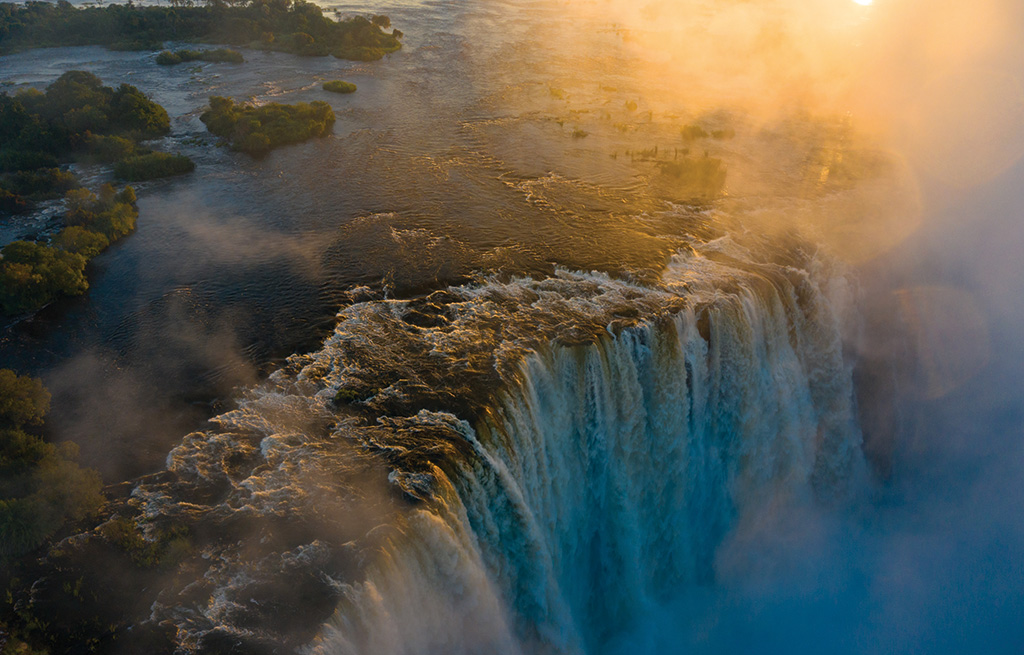
Victoria Falls, Mosi-oa-Tunya, "the smoke that thunders," in the local Lozi name, is not a single drop but a curtain of water nearly two kilometers wide crashing into a narrow basalt gorge, loud enough to hear from the edge of town on a still day and visible as a permanent column of spray from kilometers off. The town that grew up around it is small, easy to walk, and unusually candid about the fact that wildlife doesn't respect the town limits: warthog families cross the main road, baboons raid unattended tables, and elephants occasionally wander through at dusk. None of it feels staged.
What's changed in the last decade is scale. Victoria Falls has grown from a sleepy border outpost into Zimbabwe's best-resourced tourist town, with an international airport built for the volume, a genuine range of accommodation from $18 dorm beds to $380-a-night riverfront suites, and an adventure-sports industry, bungee, rafting, gorge swinging, that draws a younger, more adrenaline-focused crowd than the safari lodges further into the bush.
The honest complications
The Falls themselves change dramatically by season: peak flood (February-May) is the most dramatic volume but can shroud the viewpoints in spray thick enough to soak you without much of a view, while the driest months (September-November) show the rock face clearly but reduce the flow, occasionally down to a trickle on the Zimbabwean side's outer sections in the driest years. Prices in town run noticeably higher than elsewhere in Zimbabwe, since the whole local economy is tourism, and everything from ATMs to card machines can be unreliable, so plan on carrying cash. The adventure activities are genuinely safe by industry standard, but they are also genuinely intense; read the specifics before booking if heights or white water aren't your thing.
A small town, four ways to base yourself
Victoria Falls town is small enough to walk end to end in twenty minutes, so "neighbourhoods" is a generous word. Where you stay comes down to budget and whether you want to fall asleep to bar noise, bush sounds, or nothing at all.
Town Centre
The compact grid around Parkway and Livingstone Way holds most restaurants, the curio market, banks, and a ten-minute walk to the Falls entrance. Staying here means everything is reachable on foot, including after dark within the lit central blocks.
The Safari Lodge Strip
Several of the town's best-known hotels sit just outside the centre overlooking bush or a waterhole, close enough for a five-minute transfer into town but far enough to genuinely feel like a safari stay, elephants at the waterhole from your balcony rather than a photo from a game drive.
The Backpacker Zone
A cluster of hostels a short walk from the centre, built around pools, bars and the kind of shared-table dinners that make solo travel easy. This is where the adventure-sports crowd tends to land, and where trip logistics, rafting bookings, shared taxis to Chobe, get sorted over breakfast.
Across the Bridge: Livingstone, Zambia
Technically a different country, but close enough that many visitors treat it as a day trip: walk or drive across the Victoria Falls Bridge, see the Falls from the Zambian side, and be back in Zimbabwe for dinner. The KAZA UniVisa makes this straightforward without a second visa application.
From dorm beds to the closest room to the spray
Victoria Falls has more accommodation choice than anywhere else in Zimbabwe, from award-winning backpacker hostels to riverfront suites within earshot of the Falls. These picks span every budget and each earns its place.
At the top of town, Ilala Lodge is the closest hotel to the Falls, an eight-minute walk from the entrance, 73 rooms with old-world charm, a private path into the rainforest, and the award-winning Cassia Restaurant on site, from around $380 a night in peak season.
For wildlife at the room, Victoria Falls Safari Lodge (from about $227) overlooks a floodlit waterhole where elephant, buffalo and antelope come to drink most evenings, watched from the lodge's own sundowner deck, one of the more reliable wildlife experiences in town without leaving your hotel. Batonka Guest Lodge, a smaller boutique property styled around the region's Batonka heritage, is a well-regarded mid-range alternative a short drive from the centre.
At the budget end, Shoestrings Backpackers, running since 1997 and a five-minute walk from town, is the property that built Victoria Falls' hostel reputation: dorms, dome tents and private ensuite rooms around a pool and bar, from roughly $37 a night, considerably cheaper for food and drink than anywhere else in town.
A boma dinner, a jazz band, and a gorge-view lunch
Victoria Falls' food scene runs on two tracks: cultural dinner experiences built for visitors, done well here rather than as an afterthought, and a smaller set of genuinely excellent restaurants that happen to have the best views in town.
The Boma
The Boma - Dinner & Drum Show, set in a large wooden kraal near Victoria Falls Safari Lodge, is the town's best-known cultural dinner: a four-course buffet spanning game meats, potjiekos and, for the adventurous, mopane worms, plus traditional drumming and storytelling that pulls guests in rather than just performing at them. Book ahead in peak season.
Mama Africa's Eating House
A contemporary township-style restaurant behind the Trading Post serving a broad spread of African dishes with a resident jazz band most nights. Reservations recommended; it's popular with both visitors and Victoria Falls' small expat community.
The Lookout Café
Perched on the edge of Batoka Gorge with front-row views of the gorge swing and zipline in action, the Lookout Café pairs African-fusion cooking and craft cocktails with the best restaurant view in town, award-nominated and worth the trip even without booking an adventure activity.
The Falls, the gorge, and everything built around them
Victoria Falls packs an unusual amount into a small town: a genuine natural wonder, a serious adventure-sports lineup, and wildlife encounters that don't require a multi-day safari. A few of these need advance booking, especially in peak season (July-October).
The Rainforest and the Falls themselves
Start at the Victoria Falls Rainforest, the Zimbabwe National Parks-managed walking trail along the gorge rim (main gate entry around $58 for international visitors), with a series of numbered viewpoints culminating at Danger Point, the closest and wettest vantage. Go early to beat both the crowds and the heat, and expect to get properly soaked in high-water months (February-May); a rain poncho or dry bag for your phone is worth packing. Cross the Victoria Falls Bridge on foot for the classic view back at the gorge and, with a KAZA UniVisa, continue into Zambia for the closer Zambian-side viewpoints and, in low water (September-November), a chance to book Devil's Pool, swimming at the literal edge of the falls.
Adventure sports
The 111-metre bungee jump off the Victoria Falls Bridge (around $160) is the signature activity, with the gorge swing and zipline at the Lookout Café site offering a less committing alternative at a similar thrill level. White-water rafting through Batoka Gorge's grade 3-5 rapids runs $150-180 for a half day and is best June through early January, before the Zambezi rises too high to run safely. The Flight of Angels helicopter flight (from around $150 for 12-13 minutes) is the best way to grasp the Falls' actual scale, which is difficult to process from the ground.
On and along the Zambezi
A sunset cruise above the Falls, boats depart from several jetties along the river most afternoons, is the least strenuous way to spend an evening: gin and tonics, hippos and crocodiles along the banks, and a genuinely spectacular sky as the sun drops over the Zambezi National Park treeline. For wildlife without leaving town, Zambezi National Park, five kilometers from the centre, offers game drives for buffalo, elephant and occasional lion in a couple of hours rather than a full safari day.
The Big Tree and the curio market
The Big Tree, a roughly 1,500-year-old baobab near the bridge, is free and worth the short walk for the scale alone. The main curio market and the Elephant's Walk shopping village both sell wood carving, stone sculpture and textiles; expect to haggle, and a friendly, unhurried tone gets a noticeably better price than an aggressive one.
One, two or three days, mapped out
Two to three full days covers Victoria Falls properly; even one well-planned day delivers the Falls and a taste of the adventure-sports scene.
- Morning
The Rainforest walk. Enter early, work through the numbered viewpoints to Danger Point, and expect to get wet in high-water months.
- Midday
The Big Tree and lunch. A short walk to the baobab, then lunch at the Lookout Café for gorge views.
- Afternoon
One adventure activity. Bungee, gorge swing or a shorter zipline session, all bookable same-day outside peak season.
- Sunset
Zambezi sunset cruise. Dinner back in town, or the Boma if it's your only night.
- Day 1
The one-day route: Rainforest walk, Big Tree, one adventure activity, sunset cruise.
- Day 2 morning
Across the bridge to Zambia. The closer Zambian-side viewpoints, and Devil's Pool if visiting September-November.
- Day 2 afternoon
White-water rafting or a Zambezi National Park game drive, depending on whether you want adrenaline or wildlife.
- Day 2 evening
The Boma dinner and drum show, or Mama Africa for live jazz.
- Days 1-2
The two-day route above, at a gentler pace.
- Day 3, option A
Chobe National Park day trip. Cross into Botswana via Kazungula for a boat cruise and game drive among the world's largest elephant population.
- Day 3, option B
Fly into Hwange for one night. If time allows an overnight, Hwange's waterholes are a short flight away and worth extending the trip for.
Small enough to walk, spread out enough to need a lift after dark
Victoria Falls International Airport (VFA) sits about 18-20km from town, with no public transit connection; pre-booked transfers or hotel shuttles are the standard way in, and worth arranging before you land rather than expecting options on arrival. The town centre itself, the restaurants, curio market and Falls entrance, is easily walkable in daylight.
After dark, arrange transport rather than walk, not primarily for crime but because baboons, warthogs and occasionally elephant or buffalo move through town at night and are unpredictable at close range. Hotel shuttles and registered taxis cover the safari lodge strip and backpacker zone; agree the fare before getting in if it's not a metered or fixed-rate service. Self-driving is unnecessary within town, though a rental car (arranged in Victoria Falls or picked up at the airport) makes sense if you're continuing on to Hwange or self-driving further into Zimbabwe.
Best time to visit, and the Zambezi's two very different moods
June to October is the dry season and the most reliable window: clear skies, cooler temperatures early and late in the range, and the best wildlife viewing in Zambezi National Park and nearby Hwange. September-November brings the lowest water levels, exposing more of the rock face and enabling Devil's Pool on the Zambian side, though the Falls' own flow is at its thinnest.
February to May is peak flood: the Zambezi at its most powerful and the spray column at its most dramatic from a distance, though up close the mist can genuinely obscure the view and soak you before you reach a viewpoint. Rafting typically pauses when the river runs too high, usually mid-January through May depending on the year's flow.
Cheap to sleep, expensive to play
Victoria Falls has genuine budget accommodation, unusual for a destination this iconic, but adventure activities are priced at international rates and add up fast. Most visitors underestimate the activities line item and overestimate the accommodation one.
- Backpacker dorm $18-35
- Local meals and market food $5-12
- Free: Big Tree, town walks
- One activity every couple of days
- Mid-range hotel or guest lodge $100-230
- Restaurant meals $15-30
- Rainforest entry plus one activity
- Sunset cruise or Boma dinner
- Riverfront suite $300-400+
- Multiple adventure activities
- Helicopter flight and private transfers
- Chobe or Hwange day trip
Zimbabwe's safest town, with wildlife as the main variable
Victoria Falls is one of the safest places in Zimbabwe for visitors: the entire local economy depends on tourism running smoothly, and incidents against tourists are rare. The main things that actually catch visitors out aren't crime-related.
Wildlife in town is the single most distinctive safety consideration: baboons raid unattended food and bags, warthogs cross roads without warning, and elephant or buffalo occasionally wander through at night, particularly near the golf course and safari lodge strip. Keep a respectful distance from all of it, never feed or approach, and avoid walking alone after dark outside the lit central blocks. Petty theft, bag-snatching and pickpocketing in the curio market and busy tourist areas, is the standard urban risk and manageable with normal awareness. And unlicensed tour touts near the Falls entrance sometimes pressure visitors into unnecessary paid "guiding"; the walk from the gate to the viewpoints needs no guide, and any paid activity should go through a Zimbabwe Tourism Authority-registered operator.
Victoria Falls is also excellent for solo travelers of any gender: the backpacker scene makes meeting other travelers easy, and the town's small size and tourism-dependent economy keep it low-key and watchful. Emergency numbers are the national 999 (general), 995 (police) and 994 (ambulance); your hotel or lodge is often the fastest first call for anything urgent given the town's small size.
Two countries and two national parks within reach
Victoria Falls' position at the meeting point of Zimbabwe, Zambia, Botswana and (a short drive further) Namibia makes it an unusually good base for day trips beyond the Falls themselves.
Chobe National Park, Botswana
An hour from Victoria Falls via the Kazungula border, Chobe holds one of Africa's largest elephant populations, plus large buffalo herds, lion prides and excellent birding along the Chobe River. Full-day trips typically combine a river cruise with a game drive and include transport, park fees and lunch; book with a registered operator and confirm your visa covers Botswana entry if not traveling on a KAZA UniVisa.
Hwange National Park
Zimbabwe's largest park and one of Africa's great elephant destinations is a short charter flight from Victoria Falls. A day trip is possible but an overnight at a waterhole-facing lodge is far more rewarding, giving you both a sunset and a dawn game drive rather than a single rushed midday visit.
Zambezi National Park
The closest safari option to Victoria Falls itself, along the Zambezi's upper reaches just outside town. A half-day game drive here delivers buffalo, elephant and good birdlife without the transfer time Chobe or Hwange require, a solid choice if your schedule is tight.
Livingstone, Zambia
The Zambian twin town, closer viewpoints of the Falls, the Livingstone Museum, and, in low water, Devil's Pool. Straightforward with the KAZA UniVisa; otherwise confirm Zambian entry requirements before crossing.
Victoria Falls FAQ
Is Victoria Falls safe for tourists?
Yes. Victoria Falls town is one of Zimbabwe's safest, most tourist-oriented places, with incidents against visitors rare. The main things to watch for are opportunistic petty theft and wild animals, baboons, warthogs, occasionally elephant, wandering into town, not crime aimed at tourists.
How many days do I need in Victoria Falls?
Two to three full days covers it well: one for the Falls themselves and the Zambian side, one for adventure activities like bungee jumping or rafting, and a third for a sunset cruise and a day trip to Chobe or Hwange.
How much does Victoria Falls cost per day?
Budget travelers manage on $40-70 a day with backpacker lodges and local food. Mid-range runs $100-200 a day. Adventure activities are priced separately and add up fast, bungee and rafting alone can run $150-180 each.
When is the best time to visit Victoria Falls?
June to October, the dry season, gives the clearest views of the Falls and the best wildlife viewing in nearby parks. February to May brings the Zambezi to peak flood, spectacular but often obscured by spray; September to November is best for Devil's Pool swimming on the Zambian side.
Should I see Victoria Falls from Zimbabwe or Zambia?
Zimbabwe has roughly 75% of the viewing frontage and the best panoramic angles; Zambia gets closer to the edge and has Devil's Pool in low water. Most visitors base themselves on one side and cross the bridge for a day using the KAZA UniVisa.
How do I get from Victoria Falls Airport to town?
Victoria Falls International Airport sits about 18-20km from town. Pre-booked transfers and hotel shuttles cover the trip; there's no public transit option, so arrange a transfer or taxi in advance rather than expecting to find one on arrival.
Is it safe to walk around Victoria Falls town?
Yes during the day. At night, stick to lit central streets and arranged transport between venues, since wild animals, not people, are the main reason to avoid wandering alone after dark.
What is the best area to stay in Victoria Falls?
Near the town centre for walkable access to restaurants and the Falls entrance, or along the safari lodge strip if you want bush views and wildlife at your room. Backpacker lodges cluster a short walk from the centre and are the best budget base.
Do I need a visa to visit both the Zimbabwe and Zambia sides?
The KAZA UniVisa ($50) covers Zimbabwe and Zambia together for 30 days with multiple entries, making a day trip across the bridge straightforward without buying a second visa.
What is the Big Tree?
A roughly 1,500-year-old baobab near the Victoria Falls Bridge that served as a meeting point for early explorers and traders before the town existed. It's free to see and one of the easiest fixed landmarks to navigate by.
What Stays With You
You can prepare for Victoria Falls with every statistic in this guide, the width, the height, the flow rate, and still not be ready for the sound of it from the rainforest trail, a low constant roar underneath the spray hitting your face before you've reached the first viewpoint. The town around it does a good job of not getting in the way: no high-rise hotels crowding the gorge, no arena built around the noise, just a handful of small streets, a baobab that's outlived several empires, and warthogs that own the road as much as anyone does.
Go to the bridge at sunset if you do nothing else, watch the spray catch the last light over the gorge, and understand why the name that stuck locally was never about a person.