
What You're Actually Getting Into
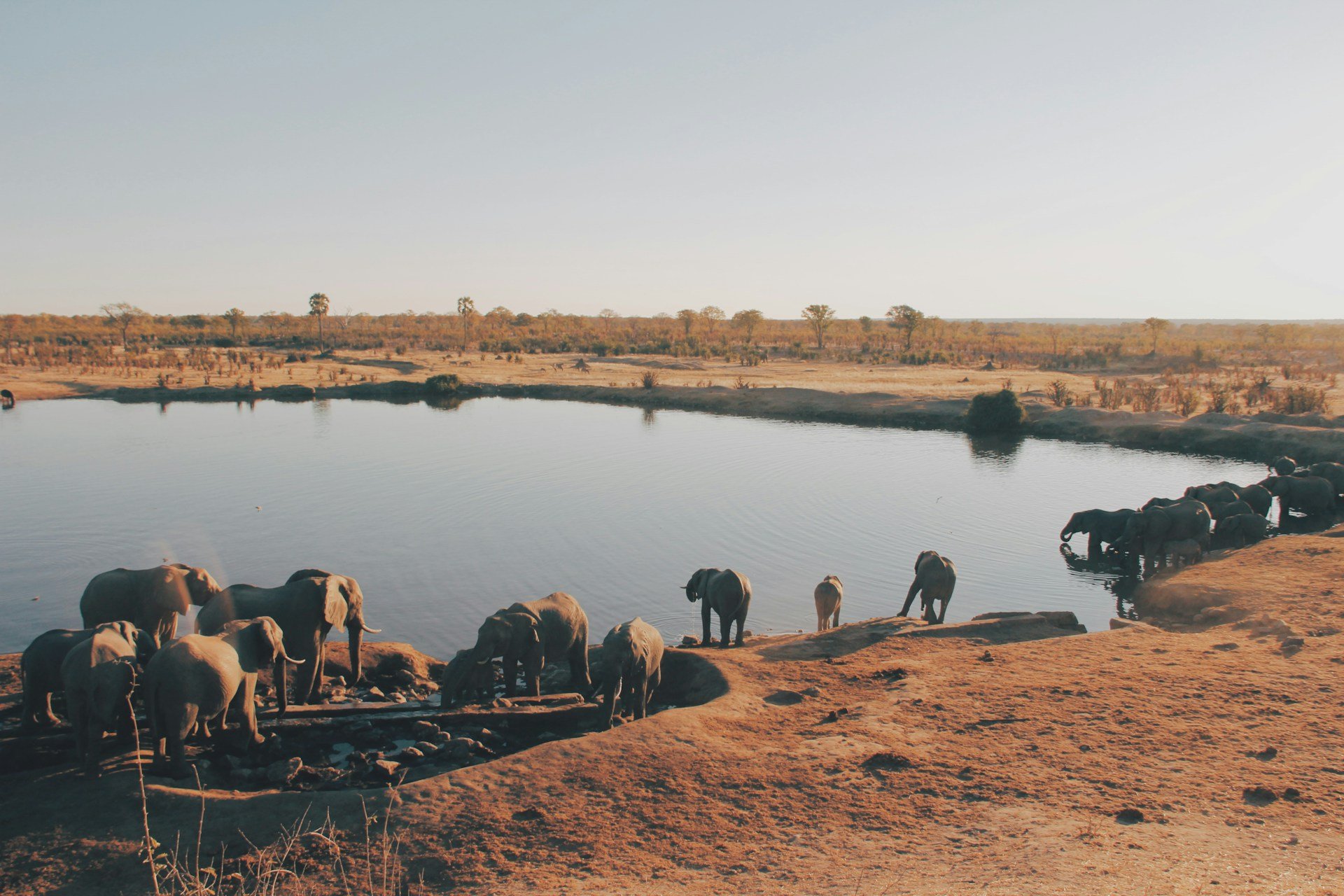
Zimbabwe's tourist circuit is small, spectacular and well run, even when the rest of the country's economic story is complicated. Victoria Falls, Hwange's elephants and the stone ruins of Great Zimbabwe sit inside a country that has been through hyperinflation dramatic enough to produce 100-trillion-dollar banknotes, a 2017 military-led transition of power, and a currency that has been reissued more than once this decade. None of that touches the traveler experience on the main routes: lodges, tour operators and hotels run on US dollars, staff are professional and often multilingual, and the wildlife and landscapes are as good as anywhere in Southern Africa.
What makes Zimbabwe distinct from its neighbors is density and value. Hwange has some of the highest elephant concentrations left on the continent. Victoria Falls shows roughly three-quarters of its full width from the Zimbabwean side, with more viewpoints than the Zambian side opposite. And because the country's tourism recovery has been slower than Zambia's or Botswana's, popular sites still feel less crowded than their reputations would suggest.
The honest complications
Zimbabwe runs a dual-currency system: the US dollar is what nearly every tourist transaction happens in, alongside the domestic ZiG (Zimbabwe Gold), introduced in April 2024 after the collapse of the previous Zimbabwe dollar. Carry small USD bills (1s, 5s, 10s), because change is frequently unavailable and card machines are inconsistent outside the main hotels. Fuel and power supply can be unreliable outside Victoria Falls and Harare, which is one reason self-driving beyond the main tourist routes takes more planning than in Zambia or South Africa. Politically, the country remains under a Level 2 US travel advisory for crime and occasional demonstrations; these very rarely intersect with the tourist circuit, but it's worth knowing the context rather than being surprised by it in the local news.
A History Worth Knowing
Zimbabwe takes its name from the Great Zimbabwe ruins, "great stone houses" in Shona, the capital of a trading kingdom that flourished from the 11th to 15th centuries. British colonization from 1888 turned the territory into Rhodesia, a white-minority-ruled colony that unilaterally declared independence from Britain in 1965 rather than accept majority rule, triggering a 15-year guerrilla war. Independence came in 1980 under Robert Mugabe, whose nearly four-decade rule included both real gains in education and health and deep damage: the Gukurahundi killings of the 1980s, land reform that collapsed commercial agriculture in the 2000s, and hyperinflation that peaked in 2008. A 2017 military intervention ended Mugabe's presidency; Emmerson Mnangagwa has led the country since.
- 11th-15th c.
Great Zimbabwe. A Shona trading kingdom builds the largest stone structures in pre-colonial sub-Saharan Africa, later giving the modern country its name.
- 1888-1965
Rhodesia. Cecil Rhodes's British South Africa Company colonizes the territory; it becomes the self-governing colony of Southern Rhodesia under white minority rule.
- 1965-1979
UDI & the Bush War. Ian Smith's government unilaterally declares independence to avoid majority rule; ZANU and ZAPU wage guerrilla war from bases in Zambia and Mozambique.
- 1980
Independence. The Lancaster House Agreement leads to internationally recognized independence on 18 April, with Robert Mugabe as prime minister.
- 1983-87 & 2000s
Gukurahundi & land reform. Mugabe's Fifth Brigade kills thousands in Matabeleland; two decades later, fast-track land reform collapses commercial farming and triggers hyperinflation that peaks in 2008.
- 2017-present
Transition. A military intervention forces Mugabe's resignation in November 2017; Emmerson Mnangagwa becomes president and the country adopts the ZiG currency in 2024.
Read the full history: Great Zimbabwe, Rhodesia, the Bush War and the currency crisis
Long before Rhodes, the plateau between the Zambezi and Limpopo rivers hosted a sequence of Shona-speaking states: Great Zimbabwe first, then the Mutapa and Rozvi states after its decline around the 15th century, trading gold and ivory as far as the Swahili coast and, from there, into the Indian Ocean world. The Ndebele kingdom, formed by a breakaway Zulu group under Mzilikazi in the 1830s, settled in the southwest around what is now Bulawayo and remained a distinct political force through the colonial period.
Cecil Rhodes's British South Africa Company occupied the territory from 1890, naming it Rhodesia after himself. Southern Rhodesia became a self-governing colony in 1923 under a white-settler electorate. When Britain moved toward decolonization across Africa in the 1960s, Ian Smith's government issued the Unilateral Declaration of Independence in 1965 rather than accept the principle of majority rule, one of the few internationally unrecognized secessions of the era. The Second Chimurenga, the guerrilla war fought by ZANU and ZAPU forces from bases in newly independent Zambia and Mozambique, ran through the 1970s until the Lancaster House Agreement produced elections and independence in 1980, with the country renamed Zimbabwe and Mugabe elected prime minister, later president.
Mugabe's rule delivered genuine early achievements, particularly in education and healthcare, but its later decades were defined by two crises. The Gukurahundi campaign of 1983-87 saw the North Korean-trained Fifth Brigade kill an estimated 10,000-20,000 people, overwhelmingly Ndebele civilians, in a campaign the government has never fully acknowledged. Fast-track land reform beginning in 2000, which redistributed white-owned commercial farms often violently and without compensation, collapsed agricultural export earnings and helped drive the economy into a hyperinflation spiral that peaked in 2008 at rates estimated in the sextillions of percent, forcing the country to abandon its own currency for the US dollar in 2009. A new Zimbabwe dollar reintroduced in 2019 also collapsed, and the government launched the gold-backed ZiG (Zimbabwe Gold) currency in April 2024 in another attempt at stabilization; as of 2026 the dollar remains dominant in everyday and tourist transactions.
The 2017 transition. In November 2017, the military placed Mugabe under house arrest after he moved to position his wife Grace as successor over former vice president Emmerson Mnangagwa. Mugabe resigned days later rather than face impeachment; Mnangagwa was sworn in and has led the country, and the ruling ZANU-PF party, since.
Top Destinations
Zimbabwe's tourism geography clusters around five zones: Victoria Falls in the far west, the wildlife of Hwange just south of it, Great Zimbabwe and Matobo Hills in the south, Lake Kariba in the north, and the Eastern Highlands on the Mozambique border. Victoria Falls and Hwange combine naturally into a single trip; the other three each add a genuinely different Zimbabwe if you have the days.
Victoria Falls, the reason most people come
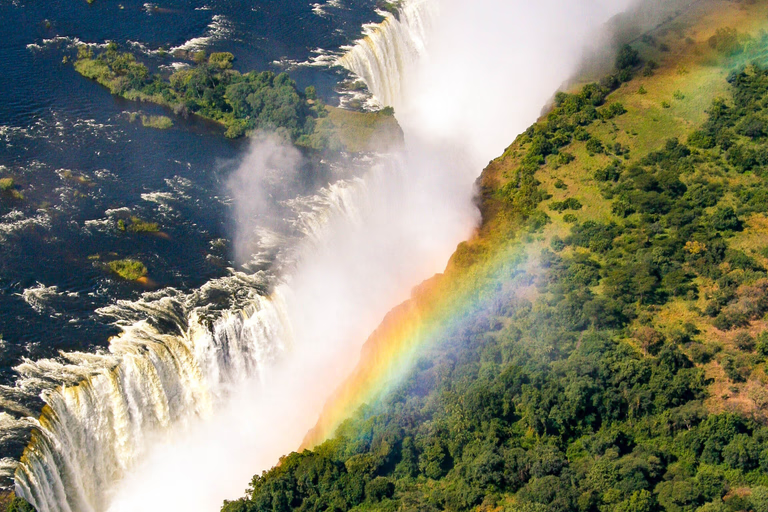
Locally called Mosi-oa-Tunya, "the smoke that thunders," Victoria Falls is over 1,700 meters wide and drops more than 100 meters into the Batoka Gorge. The Zimbabwe side, inside Victoria Falls National Park, shows more of the falls than the Zambian side and stays impressive later into the dry season, when Zambia's Eastern Cataract can run nearly dry. Adventure activities cluster around the Victoria Falls Bridge: bungee jumping, the gorge swing and white-water rafting on the Zambezi's Class IV-V rapids below. See the full Victoria Falls city guide for hotels, restaurants and a chapter-by-chapter plan.
Hwange National Park
Zimbabwe's largest national park, roughly two hours south of Victoria Falls by road, holds one of Africa's densest elephant populations, with herds regularly numbering in the hundreds at the park's pumped waterholes in the dry season. Lion, leopard, wild dog and large buffalo herds are also well represented. Hwange is unfenced and works well both as a self-drive destination staying at public campsites and as a lodge-based safari; game drives and walking safaris are both offered depending on the property.
Mana Pools, the wilder alternative
A UNESCO World Heritage Site on the Zambezi's floodplain in the north, Mana Pools is known for walking and canoe safaris that put visitors on foot and at eye level with elephant, buffalo and predators, a more immersive and more expensive experience than Hwange's vehicle-based safaris, and it requires more logistics to reach.
Great Zimbabwe
The stone ruins that gave the country its name: a walled royal city built by a Shona trading kingdom between roughly the 11th and 15th centuries, its granite blocks stacked without mortar into walls up to 11 meters high. It's the largest ancient structure in sub-Saharan Africa outside Egypt and a UNESCO World Heritage Site, near the town of Masvingo in the country's south.
Matobo Hills
South of Bulawayo, Matobo (also called Matopos) is a landscape of balanced granite boulders and wooded valleys with some of the densest concentrations of ancient San rock art in Africa, plus tracking on foot for black and white rhino in the national park. Cecil Rhodes is buried at World's View, on a granite dome inside the park, itself a piece of the country's colonial history worth seeing critically rather than just scenically.
Lake Kariba
The world's largest reservoir by volume, formed by damming the Zambezi in the 1950s and 60s, a project that displaced tens of thousands of Tonga people and famously prompted "Operation Noah" to rescue stranded wildlife. Today it's Zimbabwe's houseboat destination: multi-day trips from Kariba town drift along the shoreline for tiger fishing, sundowners and game viewing from the water, typically a five-to-six-hour drive or a short flight from Harare or Victoria Falls.
Nyanga, Vumba & Chimanimani
A chain of misty highlands along the Mozambique border, a deliberate contrast to the lowveld heat of Hwange and Victoria Falls: pine forest, waterfalls, trout streams and tea and coffee estates. Nyanga has Zimbabwe's highest peak and waterfalls to hike to; Vumba's Botanical Gardens and the cool air around Tony's Coffee Shop make it a popular short break from Mutare; Chimanimani offers the most serious hiking, with trails into the mountains on the Mozambique border. Least visited by international tourists of any zone in this guide, and correspondingly quiet.
Culture & Etiquette
Zimbabwean social life runs on hunhu (Shona) or ubuntu (Ndebele), the idea that a person's humanity is bound up with their treatment of others: greetings, patience and respect for elders are not formalities but the actual texture of daily interaction, and visitors who slow down to observe them are treated noticeably better than those who don't. English is the language of government and tourism, but a few words of Shona or Ndebele go a long way, and Zimbabwe's Shona stone sculpture tradition, a serious modern art movement rooted in older spiritual carving traditions, is worth seeking out beyond the curio-stall versions sold to tourists.
Do
- Greet properly before any request. Skipping straight to a question, even a simple one, reads as rude; "how are you" and a reply come first, always.
- Shake hands and address elders formally, using titles or surnames until invited to do otherwise.
- Carry small USD bills. $1, $5 and $10 notes in good condition; torn or heavily worn bills are sometimes refused, and change for larger notes is often unavailable.
- Tip in cash, in USD, for safari guides, drivers and hotel staff; card tipping infrastructure is inconsistent.
- Ask before photographing people, particularly in rural areas and at Great Zimbabwe or Matobo, where some sites carry ongoing spiritual significance.
Don't
- Photograph government buildings, military installations or the president's motorcade. Enforcement is inconsistent but the consequences for the rare enforcement can be serious.
- Discuss politics casually with strangers. Zimbabweans will often speak frankly about their own country's politics with visitors they trust, but it's not a safe conversational opener from your side.
- Assume dollars and ZiG are interchangeable at a 1:1 glance. The ZiG exchange rate moves; check the current rate rather than estimating.
- Walk through Victoria Falls town after dark without a light or a plan. Wild animals, especially elephants, regularly pass through the town at night.
- Bargain aggressively at curio markets as though it's adversarial. Friendly negotiation is expected and welcomed; treating vendors as obstacles is not.
Deeper culture: Shona sculpture, mbira music and the two majority peoples
Shona and Ndebele. The two largest ethnic groups, Shona (roughly 80% of the population) and Ndebele (roughly 15%, concentrated around Bulawayo and Matabeleland), have distinct languages, histories and, at times, a fraught political relationship rooted in events like the 1980s Gukurahundi killings. Visitors will notice the country genuinely operates in both languages plus English, and greetings and hospitality customs differ subtly between them.
Shona stone sculpture. A modern art movement that emerged from the 1950s onward, carving serpentine and other stones into figures that draw on Shona spiritual concepts, ancestor reverence and folklore. Galleries in Harare and better curio outlets in Victoria Falls sell serious work; the roadside stalls sell a much simpler commercial version, both legitimate but worth knowing the difference between.
Mbira music. The mbira dzavadzimu, a hand-held instrument of metal keys over a wooden soundboard, is central to Shona spiritual ceremonies, used to communicate with ancestors at all-night bira ceremonies, and has also become a mainstream popular music instrument, most associated internationally with musician Thomas Mapfumo's "chimurenga music."
Food & Drink
Zimbabwean food centers on sadza, a stiff maize porridge that anchors nearly every traditional meal, eaten with a relish of meat, beans or leafy greens. It's plain, filling and cheap outside tourist restaurants, and the best versions are found at local eateries rather than hotel buffets, which tend to soften it into something closer to polenta for foreign palates.
Sadza $3-6
The staple: stiff maize meal porridge, eaten by hand, rolled into a small ball and dipped into a relish. Order it with muriwo (leafy greens), nyama (meat stew) or dovi (peanut butter stew) at any local restaurant.
Biltong & Boerewors $5-10
Dried, spiced cured meat (biltong) and coiled grilled sausage (boerewors), both inherited from the region's broader Southern African braai culture and sold everywhere from farm stalls to supermarket counters.
Zambezi Lager $1.50-3
The national beer, a crisp lager brewed since the 1990s, drunk everywhere from safari lodge bars to Victoria Falls sundowner cruises. Chibuku, a traditional fermented sorghum beer sold in cartons, is the more local, sourer alternative worth trying once.
Bota ~$2
A thin, porridge-like breakfast version of sadza, cooked with peanut butter or milk and sugar, eaten with a spoon rather than by hand.
Mopane Worms $3-5
Dried caterpillars, high in protein, fried or stewed with onion and tomato, a genuine rural staple rather than a novelty dish; found at local markets and some tourist-facing restaurants as a tasting portion.
Bream & Tiger Fish $10-20
Freshwater fish from Lake Kariba and the Zambezi, grilled or fried, a highlight of houseboat trips and riverside lodges; tiger fish is more prized as a sport fish than a plate, but bream shows up on most Kariba and Victoria Falls menus.
When to Go & Itineraries
May through October, the dry season, is the easiest all-round time to visit: clear skies, cooler temperatures and the best wildlife viewing at Hwange and Kariba as animals concentrate around remaining water sources. Victoria Falls itself peaks in volume from February to May, spectacular but often shrouded enough in spray that you get soaked rather than see the whole drop clearly; late dry season (September-December) trades some water volume for the clearest photographs and the best conditions for rafting and Devil's Pool.
All seasons compared, with temperatures
| Season | Verdict | Temps | What it's good for |
|---|---|---|---|
| May-Aug | Best overall | 8-25°C, cool nights | Wildlife viewing, clear skies, comfortable days |
| Sep-Oct | Very good, hotter | Up to 35-38°C | Peak wildlife concentration at waterholes; falls at their driest, best for rafting/Devil's Pool |
| Feb-May | Good for the falls | 22-30°C, humid | Victoria Falls at maximum flow; wildlife more dispersed |
| Nov-Jan | Shoulder, rainy | 25-32°C | Green season, fewer tourists, some roads and camps affected by rain |
Victoria Falls town and Hwange run hot October-November before the rains break; Eastern Highlands stay noticeably cooler year-round than the rest of the country.
Itineraries
Seven days covers Victoria Falls and Hwange well. Two weeks adds either Great Zimbabwe and Matobo in the south or a Kariba houseboat in the north; three weeks does a genuine loop through all of it.
- Days 1-3
Victoria Falls. The Rainforest walk on the Zimbabwe side, one adventure activity (rafting, bungee or the gorge swing), a sunset cruise, and a half-day crossing to the Zambian side.
- Days 4-6
Hwange National Park. Two hours south by road or a short charter flight; two full days of game drives centered on the dry-season waterholes.
- Day 7
Chobe day trip or departure. An optional day trip across the border into Botswana's Chobe National Park before flying out of Victoria Falls.
- Days 1-3
Victoria Falls, as above, with an extra day for the helicopter flight and the curio market.
- Days 4-7
Hwange, extended. Four days allows both a public-area self-drive stretch and a private-concession lodge stay for walking safaris.
- Days 8-11
Bulawayo, Matobo & Great Zimbabwe. Fly or drive south; rhino tracking and rock art at Matobo, then the stone ruins near Masvingo.
- Days 12-14
Harare. The capital's galleries and Shona sculpture scene, a lower-key close to the trip before flying home.
- Days 1-4
Victoria Falls & Chobe, including a full day trip into Botswana.
- Days 5-9
Hwange & Mana Pools. Vehicle-based Hwange, then a fly-in walking and canoe safari at Mana Pools for a genuinely different wildlife experience.
- Days 10-13
Lake Kariba houseboat. A multi-day drift along the shoreline, tiger fishing and sundowners from the water.
- Days 14-17
Matobo & Great Zimbabwe. Rhino tracking, rock art and the stone ruins in the south.
- Days 18-21
Eastern Highlands. Nyanga's waterfalls, Vumba's cool air, and Chimanimani's mountain trails to close the trip somewhere few tourists reach.
Getting there & around
Victoria Falls Airport (VFA) is the main gateway for visitors heading straight to the falls, 21 km south of town, served by Airlink, Fastjet and Ethiopian Airlines from Johannesburg, Harare and other regional hubs. Robert Gabriel Mugabe International (HRE) in Harare and Joshua Mqabuko Nkomo International (BUQ) in Bulawayo serve the rest of the country. Domestic connections between the main tourist points typically go through Harare or by light aircraft charter; renting a car makes sense for a Bulawayo-Matobo-Great Zimbabwe loop but is unnecessary if your trip is Victoria Falls and Hwange only, since lodges run their own transfers.
All transport options with prices: transfers, charters, self-driving
| Option | Price | Notes |
|---|---|---|
| Airport transfer, Victoria Falls | $10-25 | Shared or private shuttle from VFA into town, 21 km. |
| Victoria Falls-Hwange road transfer | ~$50-80 pp | About 2 hours; most lodges arrange this directly. |
| Light aircraft charter | $150-350+ pp | Connects Victoria Falls, Hwange, Kariba and Mana Pools without backtracking through Harare. |
| Rental car | $60-100/day | Best for the Bulawayo-Matobo-Great Zimbabwe loop; less useful for a Victoria Falls/Hwange-only trip. |
| Chobe day trip transfer | Included in tour | ~1 hr each way to the Kazungula border with Botswana; passport required. |
Practical prep: buy a Zimbabwean SIM (Econet has the widest coverage) at the airport or in town, or set up an eSIM before landing; signal drops in Hwange, Mana Pools and on Kariba, so download offline maps first. Confirm your travel insurance covers medical evacuation, standard for safari areas given the distance to hospitals, and take malaria prophylaxis seriously for Hwange, Mana Pools, Kariba and the Zambezi Valley (Victoria Falls town and Harare are lower risk but not zero).
Where to stay
Victoria Falls backpacker lodges
Shoestrings Backpackers and Victoria Falls Backpackers both offer dorms, private rooms and campsites a short walk or ride from town, and both arrange activity bookings directly. Pay in USD cash; card acceptance is inconsistent at this tier.
Victoria Falls hotels
The Victoria Falls Hotel, an Edwardian-era grand hotel dating to 1904, and Ilala Lodge, the closest property to the falls at an eight-minute walk, are the two best-known choices in town. See the Victoria Falls city guide for the full breakdown.
Hwange safari lodges
Rates are typically all-inclusive of game drives, meals and park fees. Properties range from public-area tented camps to private-concession lodges bordering the park, priced accordingly; book through a specialist safari operator for the best fit to your budget and interests.
Lake Kariba houseboats
Priced per boat rather than per person for multi-day charters out of Kariba town, typically including crew, meals and fishing tackle; splitting the cost across a group brings the per-person price down substantially.
Budget Planning
Zimbabwe splits cleanly into two cost tiers. Outside safari lodges, it's genuinely affordable: backpacker accommodation, local food and public transport keep daily costs low. Safaris and Victoria Falls adventure activities are priced in line with the rest of Southern Africa and add up fast, so the honest budget conversation is really two separate ones.
- Backpacker dorm or campsite $15-25
- Local sadza meals $3-6
- Public transport & shared shuttles
- Victoria Falls Rainforest walk only
- Boutique hotel or mid-range lodge
- Restaurant meals $15-30/person
- One adventure activity per few days
- Group safari day trips
- All-inclusive Hwange or Mana Pools lodge
- Private guiding and transfers
- Helicopter flights, private cruises
- Kariba houseboat charter
Quick reference prices: activities, entry fees, transport
| Victoria Falls Rainforest entry (international) | $58 |
| Hwange National Park entry (international) | $20-24/day |
| Matobo National Park entry + rhino tracking | ~$15 + $15-20 |
| Bungee jump, Victoria Falls Bridge | $160 |
| White-water rafting, full day | ~$162 + $10 park fee |
| Flight of Angels helicopter (12-13 min) | $150 + $25 fees |
| Zambezi lager at a bar | $1.50-3 |
| Sadza meal, local restaurant | $3-6 |
| KAZA univisa (Zimbabwe + Zambia) | $50 |
Prices reflect August 2026 research, including the 2026 VAT-driven increase in ZimParks entry fees, and drift over time. Treat them as a planning baseline, not a quote.
Visa & Entry
Most nationalities need a visa for Zimbabwe, available on arrival at major ports of entry including Victoria Falls, Harare and the land borders: $30 single entry, $45 double entry, $55 multiple entry, payable in USD cash. Travelers planning to see both sides of the falls or continue into Zambia should get the KAZA univisa instead: $50, multiple entries into both Zimbabwe and Zambia for up to 30 days, and cheaper than buying both countries' visas separately. Rules change; the Zimbabwe eVisa portal is the official source, not third-party sites that charge extra for the same on-arrival process.
✓ Valid passport
At least 6 months validity from date of entry, with blank pages for stamps.
✓ Visa fee in USD cash
Bring exact or close change; visa fees are collected in cash at the border or airport regardless of any e-visa pre-approval.
✓ Return/onward ticket
May be requested at immigration, particularly for air arrivals.
✓ Consider KAZA if crossing to Zambia
The $50 univisa is cheaper than separate visas if you plan to see both sides of Victoria Falls or continue to Livingstone.
| Zimbabwe | Zambia | |
|---|---|---|
| Falls view | ~75% of the falls, more viewpoints, holds up better late in the dry season | Closer to the spray via Knife Edge Bridge, best at high water Feb-May |
| Devil's Pool | Not accessible from this side | The only side you can swim to the edge, via Livingstone Island |
| Accommodation range | Wider range, from backpacker lodges to the historic Victoria Falls Hotel | Smaller but growing selection around Livingstone |
| Wildlife pairing | Hwange, two hours away, exceptional elephant density | South Luangwa is further; Mosi-oa-Tunya park is smaller and closer |
| Currency & cash | Dual USD/ZiG system, carry small USD bills | Kwacha and USD both used, generally more card-friendly |
Safety, Solo Women & Family
Zimbabwe carries a US State Department Level 2 advisory, Exercise Increased Caution, driven by crime and occasional harassment or restriction around political events rather than anything specific to tourists. In practice, Victoria Falls and the safari lodges are safe and well used to visitors; risk concentrates around opportunistic theft in crowded areas, not violence against travelers, and the country's tourism infrastructure has decades of experience hosting foreign visitors safely.
Petty theft
Pickpocketing and smash-and-grab theft from cars occurs in Harare and Bulawayo more than in Victoria Falls; keep valuables out of sight and use hotel safes.
Wildlife in town
Elephants, hippos and occasionally other wildlife move through Victoria Falls town at night. Don't walk unlit or alone after dark; take a taxi or ask your lodge for an escort.
Political demonstrations
Gatherings can escalate quickly around elections and political events, virtually always away from tourist areas. Avoid demonstrations if you encounter one and follow local news for any planned events during your trip.
Two more things worth knowing: LGBTQ+ safety and malaria
LGBTQ+ travelers. Zimbabwe criminalizes same-sex relationships between men and social attitudes are broadly conservative. Enforcement against foreign visitors is rare, but public displays of affection between same-sex couples are not advisable anywhere in the country, and discretion is the practical reality rather than a suggestion.
Malaria. Hwange, Mana Pools, Lake Kariba and the Zambezi Valley are malaria-risk areas; Victoria Falls town and Harare carry lower but non-zero risk. Talk to a travel clinic about prophylaxis before you go, and use repellent and mosquito nets in the lower-lying safari areas regardless.
The 3 scams to actually know about
Zimbabwe is not a high-scam destination for tourists who stay on the main circuit, but three patterns are worth knowing before you land. The full country list lives on our Zimbabwe travel alerts page.
Black-market currency changers
Street changers offering rates better than the official ZiG rate are a common trap, sometimes shortchanging outright, occasionally drawing police attention to the tourist as well as the changer. Use licensed bureaus or banks, or simply transact in USD and avoid changing money on the street entirely.
The "no change" squeeze
Vendors and even some taxis claim they have no change for larger bills, effectively rounding the price up. Carry small denominations ($1, $5, $10) specifically to avoid this, and count change before walking away.
Overcharging & pressure selling
Curio stalls in Victoria Falls sometimes quote inflated opening prices to tourists and use persistent follow-up selling. Friendly, unhurried negotiation is expected and normal; walking away calmly, rather than engaging heatedly, ends unwanted pressure fastest.
Solo women travelers
Zimbabwe is manageable for solo women with standard precautions rather than an easy destination by default: avoid walking alone after dark in any town, use registered taxis or arrange transfers through your accommodation rather than hailing on the street, and stick to established tour operators for activities and transport between towns. Victoria Falls town and the safari lodge circuit are well used to solo travelers of every kind, and lodge and hostel staff are generally attentive and helpful. The caution applies more in Harare and Bulawayo's busier urban environments than at the tourist sites themselves. Full detail on our Solo Woman Explorer pages.
Emergency numbers
Alternate mobile emergency lines and embassy contacts
Mobile emergency numbers vary slightly by network: 112 on Econet, 114 on NetOne, 911 on Telecel. Response times outside Harare, Bulawayo and Victoria Falls can be slow; safari lodges maintain their own medical evacuation arrangements, which is why confirming your travel insurance covers evacuation matters more here than in most destinations.
- USA (Harare)
- +263-24-2758800
- UK (Harare)
- +263-24-2338810
- Germany (Harare)
- +263-24-2431930
- France (Harare)
- +263-24-2286213
- Australia
- via Pretoria, +27-12-4233000
- Canada
- via Pretoria, +27-12-4223000
Family travel & pets
Zimbabwe works well for families with children old enough to engage with safaris and hiking, typically eight and up; many safari lodges set minimum ages for game drives and walking safaris for safety reasons, so check individual lodge policies when booking. Victoria Falls itself has enough non-adrenaline activities (the Rainforest walk, a sunset cruise, the Big Tree) to fill a family day without the bungee jump or gorge swing. Malaria prophylaxis for children needs pediatric-specific advice from a travel clinic before visiting Hwange, Kariba or Mana Pools.
Bringing pets and more on family safari logistics
Pets: importing pets into Zimbabwe requires an import permit from the Department of Veterinary Services, a valid rabies vaccination certificate, and a veterinary health certificate issued shortly before travel; this is a specialist process best arranged through a relocation agent rather than attempted independently, and not something most tourists will need.
Family safari logistics: many lodges offer family units or interconnecting rooms and can tailor game drive lengths for children; some private-vehicle safaris waive the standard minimum age with a private vehicle booking. Ask specifically when booking rather than assuming a lodge's general policy applies to your situation.
Zimbabwe FAQ
Is Zimbabwe safe to visit?
Yes, for tourists sticking to the main circuit. Victoria Falls and the safari areas are generally safe; the US State Department rates the country Level 2, Exercise Increased Caution, mainly for opportunistic crime and occasional political demonstrations away from tourist routes.
What currency does Zimbabwe use?
A dual system: the US dollar is preferred and accepted everywhere tourists go, alongside Zimbabwe's own ZiG (Zimbabwe Gold), worth roughly 25 ZiG to the dollar in 2026. Bring small USD bills; change is often unreliable.
Do I need a visa for Zimbabwe?
Most nationalities need a visa, available on arrival for many passports: $30 single entry, $45 double entry, or the $50 KAZA univisa covering both Zimbabwe and Zambia with multiple entries for 30 days.
When is the best time to visit Zimbabwe?
May to October, the dry season: clear skies, easier wildlife viewing at Hwange and Kariba, and comfortable temperatures. February to May brings Victoria Falls to its most spectacular flow, at the cost of mist that can obscure the view and rain elsewhere.
How many days do you need in Zimbabwe?
Seven days covers Victoria Falls and one safari destination properly. Two weeks adds Great Zimbabwe, Matobo Hills or Lake Kariba without rushing.
Should I visit Victoria Falls from the Zimbabwe side or the Zambia side?
Zimbabwe shows around 75% of the falls and has more viewpoints and accommodation; Zambia gets you closer to the spray via the Knife Edge Bridge, especially at high water. Many visitors base in Zimbabwe and cross for a half-day on the Zambia side.
Is Zimbabwe expensive?
Outside safari lodges, Zimbabwe is affordable: budget travelers manage on $30-50 a day. Guided safaris and premium Victoria Falls activities push costs up quickly, similar to elsewhere in the region.
What language is spoken in Zimbabwe?
Zimbabwe has 16 official languages; Shona and Ndebele are the most widely spoken alongside English, which is the language of government, business and tourism.
Is Zimbabwe good for a first African safari?
Yes. Hwange National Park has some of Africa's densest elephant populations and well-developed lodge infrastructure, and it pairs naturally with Victoria Falls for a major wildlife destination and a world wonder in one trip.
Is Zimbabwe safe for solo female travelers?
Manageable with sensible precautions: avoid walking alone after dark, use registered taxis or lodge transfers, and stick to reputable tour operators. Victoria Falls town and the safari lodges are used to solo travelers of all kinds.
Can I drink the tap water in Zimbabwe?
Not recommended outside upmarket hotels and lodges, which typically filter or provide bottled water. Stick to bottled or purified water in towns and rural areas.
What Stays With You
Zimbabwe asks something most first-time visitors don't expect: to hold the scale of the country's recent economic and political history alongside the fact that none of it is what you'll actually experience on the ground. The mist rising off the Zambezi visible from kilometers before you reach it. An elephant herd at a Hwange waterhole that just keeps arriving, family after family, past the point where you stop trying to count. A guide at Great Zimbabwe explaining, without prompting, exactly how nine-hundred-year-old walls stay standing without mortar.
Go for Victoria Falls, because everyone should see it once. Stay for Hwange, because the elephants are the actual argument for coming back.