
Uganda's Capital, and the Hinge Your Trip Swings Through
Almost nobody flies to Uganda for Kampala the way they fly to Paris for Paris. They fly in for Bwindi's gorillas or Murchison's game drives, and Kampala is where the trip actually starts and ends: airport transfers, permit collection, a last decent coffee. Treated that way, though, it undersells a genuinely interesting city, built by the Baganda kings centuries before any road existed, still centered on a functioning royal palace, and running on a street-food economy built around a dish, the rolex, that didn't exist anywhere else on earth until Kampala invented it.
The traffic is real and constant, boda-boda motorcycles threading through jams in every direction, and the city rewards a plan more than aimless wandering does. Most visitors get one or two nights here, once before heading to the parks and once on the way out, and that's genuinely enough to see the essentials without feeling like you're missing the country.
The honest complications
Kampala's traffic is among the worst in East Africa at peak hours, and distances that look short on a map can take 45 minutes by road; build in buffer time around any airport transfer. The city is also currently operating under Uganda's national Level 4, Do Not Travel advisory, driven by a mix of regional health, terrorism and crime factors covered in full in the next chapter, which is genuinely worth reading before you finalize plans, not just before you land.
What Kampala Specifically Involves Right Now
Uganda as a whole sits at Level 4, Do Not Travel, per the US State Department, renewed 4 June 2026, citing crime, health, terrorism and unrest together; the full national picture, including the Ebola outbreak's status and the Anti-Homosexuality Act, is covered in depth on the Uganda country guide, and reading that chapter before booking is genuinely the right order to do this in. What follows is what those factors mean specifically for Kampala.
The US State Department has assessed Kampala as a high-threat location for terrorism, tied to the ISIS-affiliated Allied Democratic Forces, though the group's actual attacks have concentrated far to the west near the DRC border rather than in the capital itself; Kampala experienced twin bombings in 2021, the most recent attack of that kind in the city. Day to day, the more immediate concern is a documented rise in crime through 2026: pickpocketing in crowded markets and taxi parks, muggings involving boda-boda riders (sometimes armed), theft from cars stopped in traffic, and drink or food spiking, including methanol poisoning from counterfeit alcohol, in bars and on public transport. None of this is unusual for a large East African capital, but the trend has been upward this year rather than flat.
Transport
Use hotel-arranged airport transfers and the SafeBoda app for short hops rather than hailing a boda-boda or matatu off the street; both carry a real accident and mugging risk that vetted app-based rides substantially reduce.
After dark
Avoid walking, especially alone, once it's dark, including between nearby bars in Kololo. Arrange a car both ways for evening plans rather than assuming you'll find safe onward transport later.
Everyday awareness
Don't carry large cash sums, use indoor ATMs, keep car doors locked in traffic, decline drinks from strangers, and carry a passport photocopy since officials can request ID.
Kampala is also, like the rest of Uganda, subject to the Anti-Homosexuality Act 2023, which carries life imprisonment for same-sex sexual activity and a potential death sentence for offences classed as "aggravated homosexuality." This applies in the capital exactly as it does everywhere else in the country; see the country guide's Safety chapter for the full detail.
Emergency numbers
Seven Hills, Five Neighbourhoods That Matter
Kampala's neighbourhoods sort roughly by hill and by how central, secured and walkable they feel. For a short visit built around airport transfers and safari logistics, that's the whole decision.
Kololo
Kampala's most prestigious hill, home to embassies, gated compounds and the city's best concentration of bars and restaurants along Acacia Avenue. Well-patrolled and generator-backed, it's the easiest neighbourhood to feel settled in on a short visit, and the boutique Latitude 0 Degrees Hotel here is a popular first-and-last-night base for safari travelers precisely because of that.
Nakasero
The historic heart of colonial and post-independence Kampala, now the central business district, home to government offices, Nakasero Market, and the city's largest hotels, including the Kampala Serena Hotel and the Sheraton Kampala Hotel. Well-patrolled given the concentration of official buildings, and central enough to walk between several sights.
Muyenga & Buziga
"Tank Hill" and neighbouring Buziga Hill rise above the city with views stretching to Lake Victoria on a clear day, and a large resident population of diplomats and NGO staff. Cassia Lodge, on Buziga Hill, is the standout for its infinity pool looking out over the lake, and Muyenga's branch of Endiro Coffee gives the area a genuine cafe culture of its own.
Bugolobi
East of the centre, blending residential streets with a growing cafe and restaurant scene anchored by the Village Mall. Quieter and more local than Kololo, with good direct roads back into the CBD.
Old Kampala & Mengo
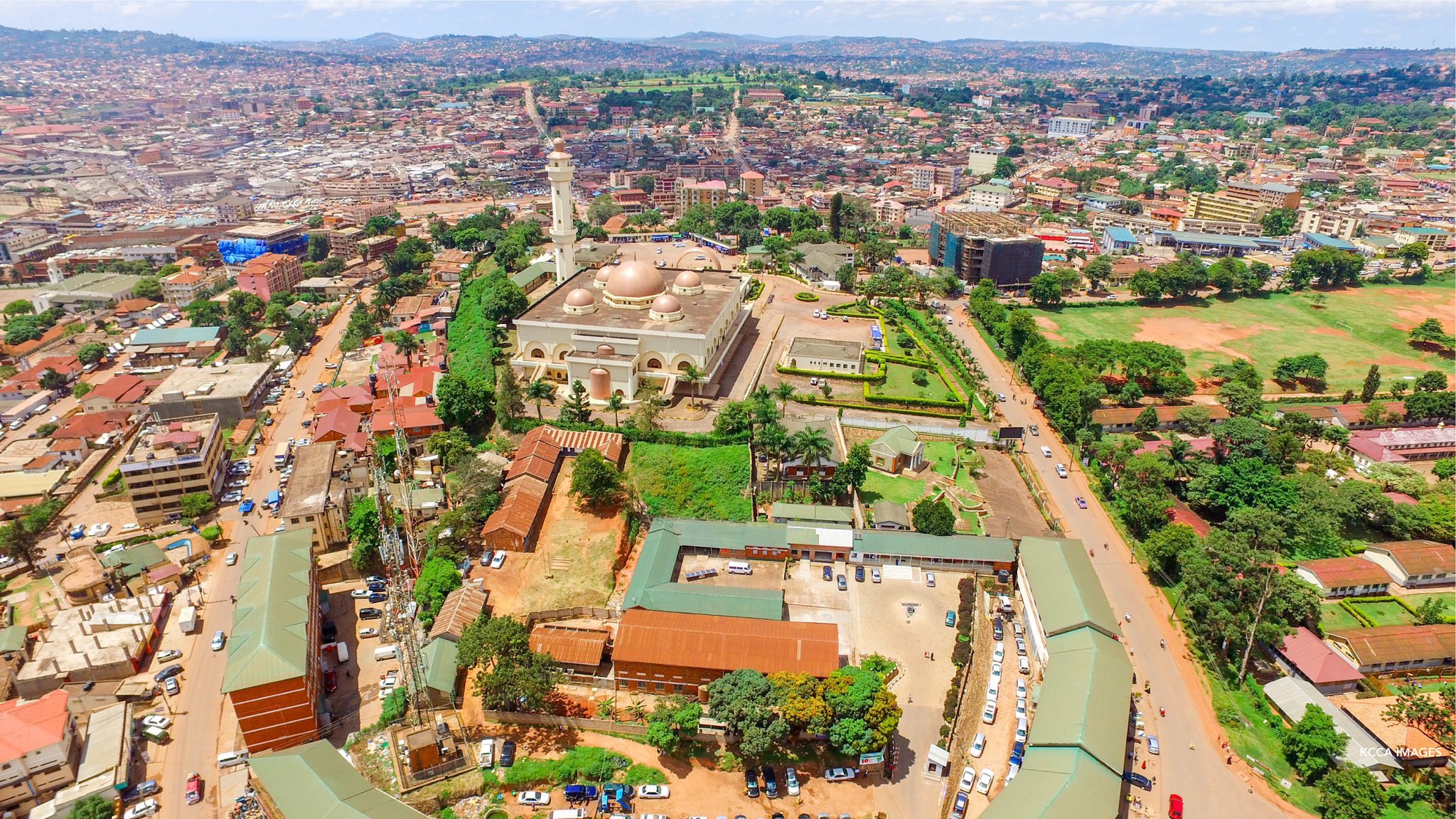
Where the actual sightseeing concentrates: the Uganda National Mosque on Old Kampala Hill, and Mengo, seat of the Buganda Kingdom, with the Kabaka's Palace and the Bulange along the ceremonial Royal Mile. Not a place to base yourself overnight, but essential for a day of walking.
From Safari-Base Hotels to a Lakeside Backpacker Camp
Kampala's hotel market is built around safari travelers passing through, which means strong options at the top and in the mid-range, and one long-standing institution at the budget end that most overlanders already know by name.
At the top, the Kampala Serena Hotel on Kintu Road sets the standard: 186 rooms across 17 acres of gardens in the city centre, six restaurants, a spa and a freeform pool, the kind of hotel that functions as a genuine destination for a first or last night rather than just a place to sleep. The Sheraton Kampala Hotel in Nakasero is the other major international flag downtown, close to government offices and the Nakasero Market.
In the boutique bracket, The Emin Pasha Hotel & Spa on Akii Bua Road in Nakasero occupies a converted colonial-era house a few minutes from State House, with a genuinely personal feel that the bigger hotels don't attempt. In Kololo, Latitude 0° Hotel is the address most safari operators default to for arriving and departing guests: walkable to Acacia Avenue's restaurants, and used to early gorilla-trekking departure times. For the view, Cassia Lodge on Buziga Hill looks out over Lake Victoria from its infinity pool and is worth the short drive out from the centre for exactly that reason.
At the budget end, Red Chilli Hideaway, out in the quiet lakeside suburb of Butabika near Port Bell, has been Uganda's default overlander and backpacker base since 1999: dorms, camping, en-suite rooms, a pool and an on-site safari desk, about 10 kilometers from the centre. It trades proximity for a genuinely relaxed, garden setting that the city-centre hotels can't offer at the same price.
Rolex Stalls, Indian Kitchens and Serious Coffee
Kampala eats well and cheaply if you follow the rolex stalls and local eateries, and increasingly well at the mid and upper end too, where a strong specialty coffee scene and a long-established Indian food tradition both punch above what the city's reputation suggests.
Rolex
A chapati rolled around a fried egg omelette with tomato, onion and cabbage, cooked to order on a roadside griddle: Kampala's own invention and the definitive local street food, sold from stalls across the city and increasingly at sit-down spots too, including Cafe Javas' popularised, cleaned-up version served across its branches around town.
Indian & Punjabi kitchens
Khana Khazana, on John Babiha Road, has served Punjabi cuisine from a menu running past 140 dishes for more than two decades, set in a historic house with a garden and Rajasthan-inspired decor, a legacy of Uganda's long-standing South Asian community.
Kampala's coffee scene
1000 Cups Coffee House on Buganda Road hand-roasts its own beans and has been called Uganda's best cafe by more than one guidebook. Endiro Coffee, with branches in Muyenga, Kisementi-Kololo and Bugolobi, and Prunes in Kololo on Wampewo Avenue, round out a specialty coffee scene built on the fact that Uganda grows some of the best Robusta in the world and, increasingly, keeps a share of the good stuff at home.
A Royal Capital Hiding Inside a Modern One
Kampala's sights concentrate around Old Kampala and Mengo, walkable to each other with a car for the connecting stretches, and cover enough ground for a full, satisfying day even on a tight safari-bookend schedule.
Old Kampala Hill
The Uganda National Mosque, still widely known by its former name, the Gaddafi National Mosque, after the Libyan leader who funded its completion, is East Africa's largest mosque and the best single viewpoint in the city: climb the minaret for a 360-degree view across Kampala's seven hills, weather permitting. Modest dress is required and a guide is generally offered at the entrance.
Mengo and the Royal Mile
A short drive from Old Kampala, Mengo is the seat of the Buganda Kingdom: the Kabaka's Palace (Lubiri) and the Bulange, the kingdom's parliament building, sit along the ceremonial Royal Mile, both still functioning institutions rather than museum pieces. The palace grounds include the notorious Idi Amin-era torture chambers, opened to visitors as a sobering historical site alongside the kingdom's more celebratory ceremonial buildings.
Kasubi Tombs
Kampala's only UNESCO World Heritage Site: the burial ground of four Buganda kings on Kasubi Hill, centred on the Muzibu Azaala Mpanga, a vast domed structure built almost entirely from reed, wood and thatch rather than stone, still tended by traditional caretakers. A working religious site as much as a historical one, and guided visits are the norm.
Uganda Museum
On Kira Road, East Africa's oldest museum, with collections spanning traditional musical instruments, royal regalia and archaeological finds that outline Uganda's ethnic and political history well beyond what a single day of sightseeing otherwise covers. Modest, a little dated in presentation, and worth an hour regardless.
Beyond the obvious
The Baháí House of Worship on Kikaaya Hill, the Mother Temple of Africa and one of only a handful of Baháí temples worldwide, sits in quiet gardens with sweeping views and is open to visitors of any faith. For an evening of traditional performance, the Ndere Cultural Centre on the Kampala-Gayaza road stages music and dance from across Uganda's ethnic groups on Wednesday, Friday and Sunday evenings, a genuinely worthwhile counterpoint to a day of history and traffic.
One or Two Days, Bookending a Safari
Most visitors don't build a Kampala trip in isolation; they slot one or two days around a gorilla-trekking or safari itinerary. These routes assume that context and a car arranged for each leg rather than street transport.
- Morning
Old Kampala. The Uganda National Mosque and its minaret climb, then a rolex stop at a stall near Old Kampala or in Nakasero.
- Midday
Mengo. The Kabaka's Palace, the torture chambers, and the Bulange along the Royal Mile.
- Afternoon
Kasubi Tombs. A guided walk through the royal burial ground before it closes.
- Evening
Kololo. Dinner and a drink on Acacia Avenue, transport arranged both ways.
- Day 1
The one-day route above: mosque, Mengo, Kasubi Tombs, dinner in Kololo.
- Day 2 morning
Uganda Museum. An unhurried hour on Kira Road, then coffee at 1000 Cups or Prunes.
- Day 2 afternoon
Baha'i Temple. Kikaaya Hill's gardens and views, a quieter counterpoint to the morning.
- Day 2 evening
Ndere Cultural Centre. A performance evening, if your dates land on a Wednesday, Friday or Sunday.
One Airport, Real Traffic, and an App That Fixes the Worst of It
Entebbe International Airport (EBB) sits about 40 kilometers south of the city, and the transfer takes 45 minutes to well over an hour depending on traffic; the Kampala-Entebbe road is also the one road in the country visitors are advised it's fine to use after dark. A private transfer or hotel car costs roughly $20-30, a shared airport shuttle around $13, and a shared minibus taxi under $2 but slower and not the safest choice with luggage after dark.
Within the city, the SafeBoda app is the standard recommendation over street-hailed boda-bodas: same motorcycle-taxi convenience, vetted drivers, in-app tracking and fixed pricing that removes the negotiation and most of the risk. Uber also operates in Kampala for car trips. Given current advisories, arranging transport through your hotel or a tour operator for anything after dark, rather than relying on either app alone, is the more conservative and sensible choice.
Practical prep: SIM cards, money and timing
A Ugandan SIM (available at the airport) or an eSIM covers connectivity in the city; signal is generally reliable in Kampala itself, unlike in the national parks. ATMs are widely available; use ones inside banks or shopping malls rather than free-standing street machines. Kampala sits on the equator, so weather and daylight hours stay fairly constant year-round; the traffic, not the climate, is what actually shapes a day's plan here.
Cheap by International Standards, Priced for Safari Travelers Too
Kampala itself is inexpensive; the cost variable most visitors actually feel is the gap between a genuine backpacker budget and a hotel built for pre- and post-safari comfort.
- Red Chilli Hideaway dorm or room
- Rolex stalls and local eateries
- SafeBoda for getting around
- Free/low-cost sights, one guided stop
- Boutique hotel in Kololo or Nakasero
- Restaurant meals, Indian or coffee-shop dining
- Hotel car or Uber for transport
- A guided city tour
- Kampala Serena or equivalent
- Private guide and driver throughout
- Fine dining and evenings on Acacia Avenue
- Private airport transfers
The Source of the Nile Is an Hour and a Half Away
Kampala's position near Lake Victoria and the start of the Nile makes it a reasonable base for one standout day trip, best treated as a full day rather than squeezed into a half.
Jinja & the source of the Nile
The point where the White Nile leaves Lake Victoria and begins its run to the Mediterranean, and East Africa's adventure-sports hub in the same stretch of river: day tours from Kampala typically combine a boat trip to the actual source point with a choice of white-water rafting through Grade 4 and 5 rapids, bungee jumping, or a calmer town visit and lunch by the river. Photographing Owen Falls Dam itself is prohibited under Ugandan law. Most operators pick up directly from Kampala hotels in the early morning and return by evening.
Kampala FAQ
Is Kampala safe for tourists?
Kampala functions as a busy, normal East African capital day to day and most visits pass without incident, but the US State Department assesses it as a high-threat location for terrorism and street crime, including boda-boda muggings and pickpocketing, has been rising in 2026. Use hotel-arranged transport or the SafeBoda app, avoid walking after dark, and check the current national advisory before you book, since Uganda is rated Level 4 overall.
How many days do I need in Kampala?
One full day covers the essentials: the Uganda National Mosque, Kasubi Tombs and a rolex stop. Two days adds the Uganda Museum, the Baha'i Temple and time in Kololo or Bugolobi's restaurant scene. Most visitors treat Kampala as a one-to-two-night bookend before and after a gorilla-trekking or safari trip rather than a standalone destination.
What is a rolex in Kampala?
Not the watch: a rolex is a chapati rolled around a fried egg omelette with tomato, onion and cabbage, sold from roadside stalls across the city for about a dollar. The name is a local contraction of "rolled eggs" and it's the single most Kampala thing you can eat.
Where should I stay in Kampala?
Kololo and Nakasero for first-timers: both are central, well-secured and close to restaurants and the airport road. Nakasero is the business district with the biggest hotels; Kololo is quieter, leafier and has the best nightlife street, Acacia Avenue. Muyenga and Bugolobi suit longer stays with a more residential, local feel.
How do I get from Entebbe Airport to Kampala?
It's about 40 kilometers and takes 45 minutes to over an hour depending on traffic. A private transfer or hotel car costs roughly $20-30; a shared airport shuttle runs about $13; a shared minibus taxi is the cheapest option at under $2 but slower and not the safest choice with luggage after dark.
Are boda-bodas safe in Kampala?
Street-hailed boda-bodas (motorcycle taxis) are involved in a disproportionate number of accidents and muggings, and UK and US advisories both flag them. The SafeBoda app, which vets and tracks its drivers, is a materially safer version of the same transport and is what most residents and longer-term visitors use instead.
Can I do a day trip to the source of the Nile from Kampala?
Yes. Jinja is about 80 kilometers and 1.5 to 2 hours from Kampala, and day tours combine a boat trip to the actual source point with white-water rafting, bungee jumping or a calmer town visit. It's the single best day trip from the capital.
What is Kampala's national mosque?
The Uganda National Mosque, formerly known as the Gaddafi National Mosque after the Libyan leader who funded its completion, is East Africa's largest mosque, set on Old Kampala Hill with a minaret you can climb for a 360-degree view over the city's seven hills.
What Stays With You
Kampala rarely gets credit for itself, sandwiched between an airport transfer and a five-hour drive to Bwindi in most itineraries, but the city that built the rolex out of nothing and still runs a functioning royal palace in the middle of its traffic deserves more than the one night most visitors give it. See it on those terms, with the current safety picture taken seriously rather than glossed over, and it earns its place in the trip rather than just being the place the trip starts.
Climb the mosque minaret at the end of the day if the light's right: seven hills, a lake on the horizon, and a city that's been the capital of something, in one form or another, for a very long time.