
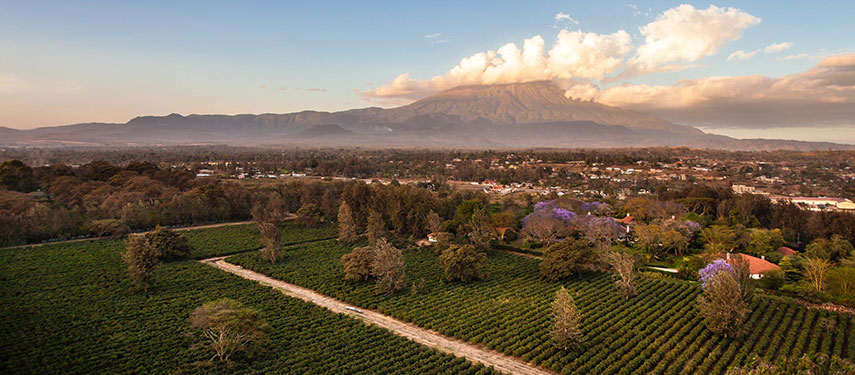
Everyone passes through. Not everyone stops to look.
Arusha is not trying to be a bucket-list city, and being honest about that upfront makes it easier to enjoy. Its role, since the colonial era, has been logistics: the last real town before the Serengeti, Ngorongoro and Tarangire, and the base camp for Kilimanjaro climbs. Most travelers spend one or two nights here, once on arrival to adjust and shop for last-minute gear, once on departure to decompress and shower properly before the flight home.
What most people miss is that Arusha earns a day of its own. Julius Nyerere delivered the 1967 Arusha Declaration here, the policy document that launched Tanzania's Ujamaa socialism and still shapes how the country talks about itself. The city sits inside a working coffee-growing region, several of its lodges are converted plantations rather than purpose-built hotels, and the Cultural Heritage Centre holds one of East Africa's largest art collections in a building most visitors would otherwise drive straight past.
The honest complications
Arusha's city centre is congested, dusty in the dry season and muddy in the rains, and traffic around the Clock Tower can be slow at peak hours. It is not a walkable city in the way a European capital is; distances between the coffee-lodge estates, the airport and the centre require a vehicle. And travelers should know that Arusha itself saw protests and a curfew during the violent unrest that followed Tanzania's October 2025 election, covered honestly in the safety chapter below rather than glossed over.
Four areas, one obvious choice for most first safaris
Arusha spreads out rather than stacking up, and where you base yourself depends mostly on whether you want a resort feel before your safari or a cheaper, more central stopover.
City Centre / Clock Tower
The Arusha Clock Tower, a modest roundabout monument locals like to (inaccurately but proudly) call the halfway point between Cairo and Cape Town, marks the functional center of town: banks, the central market, safari operator offices and the cheapest guesthouses. This is where you handle errands, buy a SIM card, and change money.
Themi Hill & the coffee estates
West and southwest of the city, working and former coffee plantations climb the lower slopes toward Mount Meru. This is where Arusha's best-known lodges sit, set among coffee bushes with the mountain as a backdrop, close enough to town for a half-day visit but removed from its noise.
Njiro
A newer residential district southeast of the centre, home to much of Arusha's expat and NGO community, with a concentration of the city's better restaurants and cafes. A good base if you want quiet nights and don't mind a short drive into the centre.
Usa River & Tengeru
Roughly 20km east of the centre, on the road toward Kilimanjaro International Airport, this area holds a cluster of garden-set lodges that suit travelers arriving late or leaving early, trading a short extra drive into town for proximity to the airport.
From working coffee plantations to simple city guesthouses
Arusha's best-regarded lodges are converted or working coffee estates rather than conventional hotels, which is part of what makes an overnight stop here worthwhile rather than just necessary.
At the top of the market, Arusha Coffee Lodge sits inside Tanzania's largest coffee plantation below Mount Meru, its Plantation Suites built with four-poster beds, private verandas over the coffee bushes and open fireplaces; the lodge runs its own tours of the neighboring Shanga workshop. A short drive away, Legendary Lodge occupies a similar coffee-plantation setting at the end of a long drive through rows of coffee bushes, with gardens shaded by mature trees under Mount Meru.
Closer to Kilimanjaro Airport in Tengeru, Tanzania Safari Lodge offers villa rooms with private verandas around a tropical garden and pool, a practical choice for late arrivals or early flights. In a quiet residential pocket of the city, Acacia Retreat pairs a swimming pool and a restaurant serving Tanzanian and international dishes with easy access for last-minute shopping or a half-day trip into Arusha National Park. And Arusha Safari Lodge, consistently well-rated, rounds out the mid-range with gardens and a pool within easy reach of the centre.
Compare hotels on the map
A workshop turned barbecue, and some of Africa's best coffee
Arusha's food scene reflects its role as a crossroads: Indian-influenced barbecue from the city's South Asian community, expat-favorite pizza and grills in Njiro, and a coffee culture backed by the arabica actually grown on the hillsides around the city.
Khan's Barbecue
Khan's Barbecue is Arusha's best-known food experience: a motor-repair workshop by day that transforms after sunset into an open-air barbecue serving grilled chicken, lamb kebabs and fresh salads, cooked by a family that has run it for decades. No beer is served; go hungry and expect to queue.
Blue Heron
Blue Heron has long been the expat community's go-to for alfresco dining: wood-fired Italian pizza, local wines and beers, and an all-you-can-eat Sunday brunch, served under a canopy of twisted beach wood looking out over lawns toward Mount Meru.
Africafe
Africafe is a reliable, casual spot for Ethiopian and East African dishes alongside Indian-African fusion plates, a good option when you want something other than grilled meat.
Enough for a genuinely good day, before the safari starts
Arusha's sights cluster into a half-day of culture in town and a half-day of nature just outside it, an easy combination if you're building in a rest day either side of your safari.
Culture in town
The Arusha Cultural Heritage Centre, on the road out toward the coffee estates, holds a multi-story art gallery that is genuinely the largest collection of its kind in East Africa, alongside fossils, traditional Maasai jewelry and a gift shop selling work directly from the artists. Next door, the Tanzanite Experience explains the geology and mining of tanzanite, the blue-violet gemstone found in only one place on earth, a hillside near Mount Kilimanjaro. On the same grounds as Arusha Coffee Lodge, Shanga is a social enterprise employing artisans with disabilities to turn recycled glass and beads into jewelry and glassware, with a workshop tour that's as much about the people as the product. In the centre, the Maasai Market is the place for beadwork, carvings and fabric, best visited with a little bargaining patience.
Arusha National Park
Smaller and far less crowded than the Serengeti or Ngorongoro, Arusha National Park makes an excellent half-day trip: giraffes, zebras, buffalo and the rare black-and-white colobus monkey are common, and because the park holds no lions, it's one of the only places in northern Tanzania where walking safaris and canoe trips on the Momella Lakes are permitted, with the lakes themselves often hosting flocks of flamingos and views up toward Mount Meru's crater rim.
Meserani Snake Park
About 25km outside the city on the road toward the Serengeti, Meserani Snake Park combines a reptile collection with a small Maasai cultural museum, a practical stop to break up the drive out to the northern circuit rather than a standalone destination.
One day, or two, planned around your safari dates
Arusha rarely gets more than a day or two on its own; the itinerary below assumes you're slotting it in before or after the main event.
- Morning
Cultural Heritage Centre & Tanzanite Experience. Give the art gallery an unhurried hour before the tour groups arrive.
- Midday
Shanga workshop tour. Watch glass and beadwork being made, then lunch at Arusha Coffee Lodge if you're visiting the estate.
- Afternoon
Maasai Market. Beadwork and fabric in the city centre; bargaining is expected.
- Evening
Khan's Barbecue. Arrive after dark when the workshop-turned-grill is in full swing.
- Day 1
The one-day route above: Cultural Heritage Centre, Shanga, Maasai Market, dinner at Khan's.
- Day 2 morning
Arusha National Park. A half-day game drive or canoe trip on the Momella Lakes, with good odds of giraffes and colobus monkeys.
- Day 2 afternoon
Coffee tour & departure prep. A plantation walk at your lodge, last-minute packing, and an early night before an early safari departure.
A car-dependent city, and that's fine, everyone arrives with a driver anyway
Almost every international arrival lands at Kilimanjaro International Airport (JRO), about 50km from Arusha, roughly 50-60 minutes by road; a pre-booked shuttle or private transfer costs around $50-60, and most hotels and safari operators arrange pickup directly. Arusha Airport (ARK), a small domestic-only field about 8km from the centre, handles short hops to the Serengeti and other bush airstrips rather than international flights.
Within the city, Bolt ride-hailing operates reliably and is the easiest way to move between the centre, Njiro and the coffee estates, with short in-town trips running $2-4 and airport transfers $20-30. Dala dala minibuses cover the same routes for under a dollar but are crowded and not geared toward visitors with luggage. Most travelers, though, simply move by safari vehicle or hotel car, since that's already arranged as part of the broader trip.
Booking your safari or Kilimanjaro climb from Arusha
Arusha is where most northern-circuit safaris and Kilimanjaro climbs are actually organized, and several established operators are based here rather than only online. Thomson Safaris, operating in Tanzania for over 30 years from its Arusha office, runs scheduled and private safaris plus Kilimanjaro treks. Access2Tanzania, also Arusha-based, offers customizable wildlife safaris across the northern parks. Booking with a Tanzania Association of Tour Operators (TATO) member, in person or through a well-reviewed local office, is the most reliable way to avoid the unlicensed-operator issues covered in the safety chapter.
Cheap by comparison to the safari that follows it
Whatever you spend in Arusha itself will likely be a small fraction of a Tanzania trip's total cost, since the safari days dominate the budget. Arusha's own prices are moderate for East Africa.
- Simple city-centre guesthouse
- Local restaurant meals $3-6
- Dala dala and short Bolt rides
- Maasai Market browsing, free sights
- Coffee-estate lodge or boutique hotel
- Restaurant meals $8-15
- Bolt rides throughout
- Cultural Heritage Centre, Shanga, half-day park trip
- Plantation Suite at Arusha Coffee Lodge
- Private guided city and park tours
- Private airport transfers
- Full coffee-plantation experience
A calm logistics city that was not immune to 2025's unrest
Arusha's tourist-facing areas, the Clock Tower, the Cultural Heritage Centre, the coffee estates and the main hotels, are generally calm and see very little violent crime against visitors. But Arusha was one of the cities where protests broke out during Tanzania's disputed October 2025 election, alongside Dar es Salaam and Mbeya, and the nationwide curfew and internet shutdown that followed applied here too. This is covered in full, countrywide detail in our Tanzania country guide, and the same advice applies locally: check your government's current travel advisory before booking and again close to departure, since the situation escalated quickly once already.
Day to day, the realistic concerns are more mundane: petty theft and pickpocketing in crowded markets like the Maasai Market and the central bus station, and the unlicensed safari-operator and street-tout scams covered in the country guide's safety chapter. Walk with normal city awareness after dark, use Bolt rather than unmarked taxis at night, and keep valuables secured in markets. The general emergency number is 112.
This is why almost everyone is actually here
Arusha's real purpose is as a launchpad. Four trips justify treating it as more than an overnight stop, and the first three are, in practice, the reason most people book a flight to Kilimanjaro Airport at all.
Northern Safari Circuit
Tarangire is the closest major park, roughly two hours away; the Ngorongoro Crater and Serengeti are three to five hours further by road, or a short scheduled flight from Arusha Airport. Full detail on when to go and what to expect lives on our Tanzania country guide.
Mount Meru
At 4,566 meters, Mount Meru is Africa's fifth-highest peak and a serious trek in its own right, climbed over 3-4 ranger-escorted days starting from Momella Gate, about an hour from the city. It's quieter and cheaper than Kilimanjaro, with views over the Momella Lakes and Kilimanjaro itself from the ash cone near the summit, and works well either as a standalone climb or acclimatization warm-up.
Lake Duluti
A near-perfectly circular volcanic crater lake ringed by indigenous forest, Lake Duluti is an easy half-day of guided canoeing (2-2.5 hours) or a 4km forest walking trail, with over 130 recorded bird species plus colobus and vervet monkeys in the surrounding trees. A good, low-key alternative to Arusha National Park if you'd rather paddle than drive.
Meserani Snake Park
A reptile collection paired with a small Maasai cultural museum, best treated as a stop to break up the drive out to the northern circuit rather than a dedicated half-day.
Arusha FAQ
Is Arusha safe for tourists?
Arusha's central tourist areas are generally calm, but the city saw protests and a curfew during the violent nationwide unrest that followed Tanzania's October 2025 election. Check current advisories before traveling, keep valuables secured in markets, and avoid walking alone after dark.
How many days do I need in Arusha?
One full day covers the Cultural Heritage Centre, Shanga and the Maasai Market. Two days adds a half-day trip into Arusha National Park. Most visitors pass through for 1-2 nights on either side of a safari or Kilimanjaro climb rather than making Arusha itself the main event.
How do I get from Kilimanjaro Airport to Arusha?
Kilimanjaro International Airport (JRO) is about 50km from Arusha, roughly a 50-60 minute drive. Pre-booked shuttles and private transfers cost around $50-60; most safari operators and hotels can arrange pickup directly.
What is there to do in Arusha itself?
The Arusha Cultural Heritage Centre's multi-story art gallery, the Shanga workshop where artisans with disabilities make jewelry and glassware, the Maasai Market for beadwork and fabric, and a half-day into Arusha National Park for Momella Lakes and Mount Meru views are the main draws.
Can I climb Mount Meru from Arusha?
Yes. Mount Meru (4,566m), Africa's fifth-highest peak, is climbed over 3-4 ranger-escorted days starting from Momella Gate in Arusha National Park, about an hour from the city. It's a quieter, cheaper alternative or acclimatization climb to Kilimanjaro.
Where should I stay in Arusha before a safari?
Coffee-plantation lodges just outside the city, like Arusha Coffee Lodge or Legendary Lodge, give a resort feel with Mount Meru views. Staying in the city centre near the Clock Tower is cheaper and more convenient for last-minute shopping and errands.
How much does a day in Arusha cost?
Budget travelers manage on $40-60 a day with a simple guesthouse and local meals; a comfortable coffee-lodge stay with restaurant meals runs $150-300 a day. Most costs in a Tanzania trip come from the safari itself, not the Arusha stopover.
What Stays With You
Arusha will never be the reason someone books a flight to Tanzania. But give it a day, walk the Cultural Heritage Centre's gallery, watch the Shanga artisans turn broken glass into something worth keeping, and drink coffee grown on the hillside you can see from the veranda, and it stops feeling like a waiting room and starts feeling like a place with its own reasons to exist.
Then get in the vehicle heading west, because the reason you actually came is still two hours up the road.