
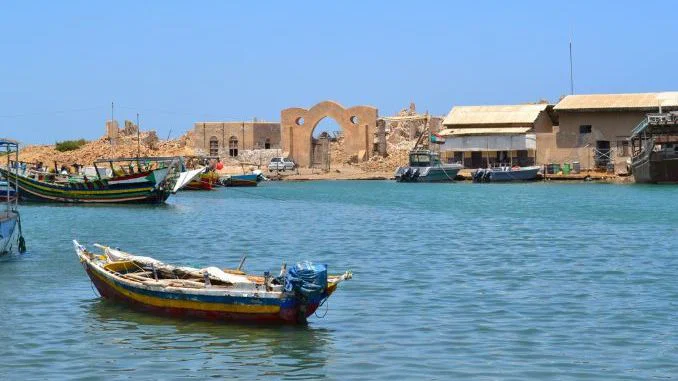
Sudan's Working Gateway, and Only Barely
Port Sudan was built between 1905 and 1909 specifically to replace Suakin, the historic Ottoman-era port down the coast that had become too silted and coral-choked for modern shipping. It has been Sudan's main maritime outlet ever since, handling around 90 percent of the country's external trade, and it grew through the 2023-2026 war into something else entirely: the country's de facto operational hub, serving briefly as the wartime seat of government from 2023 until the cabinet returned to Khartoum in January 2026. Port Sudan New International Airport (PZU) now handles roughly 40 flights a day, most connecting abroad, making it the only civilian airport in Sudan the UK FCDO currently describes as consistently running international flights.
None of that makes Port Sudan a safe or ordinary place to be. In May 2025 the city itself was hit by a six-day wave of RSF drone strikes targeting the airport, fuel depots, a naval base and the Marina Hotel, a stark reminder that "more stable than Khartoum" is a relative measure, not a guarantee. What Port Sudan has going for it, relative to the rest of the country, is concentration: the airport, the harbour, the NGO and diplomatic compounds and the handful of usable hotels sit within a few kilometers of each other, which is why it is the only place in Sudan this guide can realistically tell a visitor to be.
What day-to-day life in Port Sudan is actually like
Port Sudan has a near-desert climate, hot most of the year with fresh water drawn from Wadi Arba'at in the Red Sea Hills and from desalination, and infrastructure strained further by the war's displacement pressures. Electricity and water reliability vary outside hotels and well-resourced compounds, most of which run generators as standard. The city's real economy, the harbour trade, the fish market, the roadside tea stalls, keeps functioning, but this guide does not pretend a first-time visitor should be navigating it alone.
More Stable Than Khartoum Is Not the Same as Safe
Sudan carries a Level 4, Do Not Travel advisory from the US State Department, renewed 15 May 2026, and the UK FCDO advises against all travel to the entire country, Port Sudan included. The city has generally avoided the sustained, intensifying drone attacks that have hit Khartoum through 2026, but it is not untouched: RSF drones struck Port Sudan's airport, fuel depots and the Marina Hotel over six days in May 2025, and the risk of a repeat, or of the front line shifting again, has not gone away.
Movement
Use a known, pre-arranged driver for all movement, ideally the same one for your whole stay. Avoid unnecessary time lingering near the airport, port facilities or fuel depots, which have been the specific targets of past strikes.
Checkpoints
Official and unofficial checkpoints appear around the city and can change with little notice. Carry identification at all times, stay calm and cooperative, and let your driver, who will know current conditions, handle the interaction.
Crime & kidnapping
Armed robbery and kidnapping risk exist nationwide, including of foreign aid workers and journalists. Stick to known routes and venues, and travel in company where possible rather than alone.
The fuller advisory picture, entry requirements and country-level emergency detail for Sudan are covered in the Sudan country guide; the short version repeated here because it matters at the city level too: 999 is the number most consistently cited for police (333 ambulance, 777 fire), though the nationwide rollout of this system is incomplete and response, including in Port Sudan, cannot be assumed to be fast or reliable. Your employer's or embassy's security contact should be your first call in a real emergency, not a public number.
One Practical Choice, Not a List of Neighbourhoods to Explore
Port Sudan's layout matters here mainly for where the hotels, the harbour and the airport sit relative to each other, not as areas to wander between. Nearly every legitimate visitor ends up in the same small stretch of the city.
The harbour entrance
The city's two hotels that matter to visitors, the Marina Hotel and the Coral Port Sudan Hotel, both sit at the entrance to Port Sudan's harbour with views over the Red Sea and the working port, a short drive from the airport and from Port Sudan's fish market and its adjacent seafood restaurants.
The airport corridor
Port Sudan New International Airport (PZU) sits on the edge of the city; most visitors pass through it on arrival and departure and spend no independent time in its immediate surroundings, consistent with the safety guidance above about the airport being a past strike target.
Two Hotels Cover Nearly Everyone Who Legitimately Needs One
Port Sudan's hotel market is small and international-facing by necessity rather than design. These are not leisure properties; they are the ones with the location, generator power and name recognition that make them the realistic choices for essential travelers.
The Marina Hotel, at the entrance to Port Sudan harbour with panoramic Red Sea and city views, is the property most familiar to diplomats and international aid workers, having housed a large number of them before it was among the sites damaged in the RSF drone strikes of May 2025. Confirm its current operating status and security posture directly before booking rather than assuming continuity with pre-2025 reviews. The Coral Port Sudan Hotel, also at the harbour entrance, is the more consistently available alternative day to day: guest reviews are mixed, some travelers flag intermittent hot water and humidity in the rooms, but it is functioning, centrally located, and frequently described by recent guests as the best realistic option in the city.
A Fishing City's Food, Eaten Mostly Near Your Hotel
Port Sudan does not have a restaurant scene in the way most guides mean it, but it has something inland Sudanese cities don't: a genuine seafood culture built around the working harbour. Most visitors eat most of their meals at their hotel or nearby, and the few independent options worth knowing sit close to the water.
Port Sudan Fish Market & the restaurant in front of it
The fish market is the heart of the city's food identity, and the seafood restaurant directly in front of it, well known enough to appear unnamed but specifically in visitor photos and reviews, serves the day's catch simply grilled or fried. Sayadia, seasoned fish paired with cumin-scented rice, is the dish to order: Port Sudan's answer to the meat-and-grain cooking found further inland, and a genuine point of local pride.
Hotel dining at the Marina and the Coral
Both hotels run their own restaurants and are, in practice, where most essential travelers eat when they aren't at the fish market. Reliability, not ambition, is the point: consistent hot food and safe water, which matters more here than a memorable meal.
A Short List, Each Item Worth Confirming First
Port Sudan is not a sightseeing city and this guide isn't going to pad out a list to look like one. A small number of things are genuinely worth doing if you have time, a trusted driver or boat operator, and current, confirmed access, in roughly that order of importance.
Port Sudan Fish Market
Covered in the Food chapter above and worth repeating here: a daytime visit to the working fish market gives a real, unvarnished sense of the city's economy and identity, the boats, the catch, the trade, that the hotel district doesn't show you.
The harbour waterfront
Walking the stretch of waterfront near the Marina and Coral hotels, watching cargo and fishing traffic move through one of the Red Sea's busiest working ports, is the closest thing the city has to a simple, low-risk outing. Stay within the harbour-entrance area covered in the Where to Base chapter rather than wandering further afield.
Suakin's Ottoman ruins and the Sanganeb and Dungonab Bay marine reserves are real, verified places within reach of Port Sudan by road or boat; because they involve leaving the city, they're covered in the Beyond the City chapter below rather than here, along with the honest caveats around arranging them right now.
One Airport, One Way to Move Around the City
Port Sudan New International Airport (PZU) is Sudan's main functioning international gateway, handling roughly 40 flights a day, about 78 percent of them connecting abroad, mostly to the Middle East; Qatar Airways resumed service on the route in July 2026, alongside long-standing connections via Jeddah, Cairo and Addis Ababa. Khartoum International Airport has also resumed limited service since early 2026, but given the intermittent drone-strike risk there, this guide treats Port Sudan as the reliable point of entry. Arrange pickup in advance through your hotel or organization rather than engaging an unarranged driver at arrivals.
Inside the city, movement happens by pre-arranged driver, hotel transfer or organizational vehicle, generally the same vehicle and driver for the length of a stay. A known local driver has current knowledge of which routes and checkpoints are fine on a given day, which independent ride-hailing in Port Sudan cannot replicate, and which most visitors, including long-term NGO staff, don't try to replace.
Port Sudan has a near-desert coastal climate, hot for most of the year with high humidity off the Red Sea, and daytime highs that regularly exceed 40°C (104°F) in summer. November through March is markedly more comfortable and eases logistics generally, but it does not change the underlying security picture.
Small Market, Dollar Pricing, Cash Only
Port Sudan is not cheap for visitors relative to the local economy. The small pool of hotels and services that meet a workable standard for essential travelers prices in or around US dollars, and there is essentially no lower tier a first-time visitor should be relying on.
Hotels
Roughly $60-150 a night at the Coral Port Sudan Hotel or the Marina Hotel, depending on room type and current availability; NGO guesthouses, where they exist, are typically arranged through an organization rather than booked independently.
Meals
$3-6 for a simple meal at the fish market or a local stall, $10-20 for a sit-down seafood meal at a hotel restaurant. Street tea and coffee cost a small fraction of that where stalls are operating.
The Sudanese pound has depreciated sharply during the war and remains extremely volatile, so a printed exchange rate here would likely be stale by the time you read it. Check a live rate immediately before travel.
Two Real Places, Neither One a Casual Day Trip
Unlike some of the other capitals this guide covers under a Do Not Travel advisory, Port Sudan does sit near genuine, documented points of interest. That doesn't make either one a normal day trip right now, and this chapter is written to be honest about that gap.
Suakin, roughly an hour's drive south along the coast, is the Ottoman and medieval-era port city that Port Sudan was built in 1905 to replace, once a major transit point for pilgrims and traders moving between Africa and Arabia. Its coral-stone ruins, largely abandoned since the early 20th century, are a genuine and rarely visited historical site. Sanganeb Marine National Park, roughly 25km northeast of the city, is the only atoll-shaped reef in the entire Red Sea, a marine reserve since 1990 with coral walls dropping to 800 meters and a lighthouse marking the atoll's edge; Dungonab Bay and Mukkawar Island further north form a second protected marine area. Both are reached by boat from Port Sudan and have, per recent travel reporting, continued to draw some visitors even during the war.
Port Sudan FAQ
Is Port Sudan safe for visitors?
Sudan carries a Level 4, Do Not Travel advisory from the US State Department and the UK FCDO advises against all travel; Port Sudan has been comparatively more stable than Khartoum since a wave of RSF drone strikes hit its airport, fuel depots and the Marina Hotel in May 2025, but that is a relative, not absolute, statement. Visitors move by pre-arranged driver, avoid unnecessary time near the airport and port facilities, and follow current guidance from their employer or embassy.
What is the best hotel in Port Sudan?
The Marina Hotel, at the entrance to Port Sudan harbour, is the city's best-known internationally used property, though it was among the sites hit in the May 2025 drone strikes. The Coral Port Sudan Hotel, also at the harbour entrance, is the most consistently available alternative, with mixed but current guest reviews.
How do I get around Port Sudan?
Through a pre-arranged driver, hotel transfer or organizational vehicle, ideally the same driver for your whole stay. Independent ride-hailing and unarranged taxis are not the norm for visitors here.
Can I dive the Red Sea reefs from Port Sudan?
Sanganeb Marine National Park and the Suakin ruins are both historically reached by boat from Port Sudan and, per recent travel reporting, have continued to draw some visitors even during the war. Current 2026 operator availability could not be verified for this guide, so confirm directly with a named, currently operating dive or tour company before planning around either, and do not arrange a boat trip informally at the waterfront.
What currency should I bring to Port Sudan?
US dollars in cash, clean and newer bills. Sudan is in an active banking and cash liquidity crisis, ATMs are unreliable even in Port Sudan, and older or damaged dollar notes are frequently refused.
Is Port Sudan the same as Sudan's capital, Khartoum?
No. Khartoum is Sudan's official capital and the government returned there in January 2026, but Port Sudan, roughly 800km east on the Red Sea, is the country's main functioning international airport and the more realistic base for essential travelers in 2026.
What This Page Won't Pretend
Port Sudan is a real, working city, a harbour that has moved Sudan's trade for over a century and, unexpectedly, became the country's operational center of gravity for most of this war. It has genuine Red Sea heritage on its doorstep, Suakin's ruins, Sanganeb's reef, that would headline a normal travel guide. This page won't dress any of it up as a travel destination, because right now it isn't one. It exists so that the people who genuinely have to be here, for work, for aid, for family, have something accurate to work from.
If a trip to Port Sudan is unavoidable, lean on your employer's security team, your embassy and a known local driver, not on this page alone, and reread the Safety chapter before you land.