
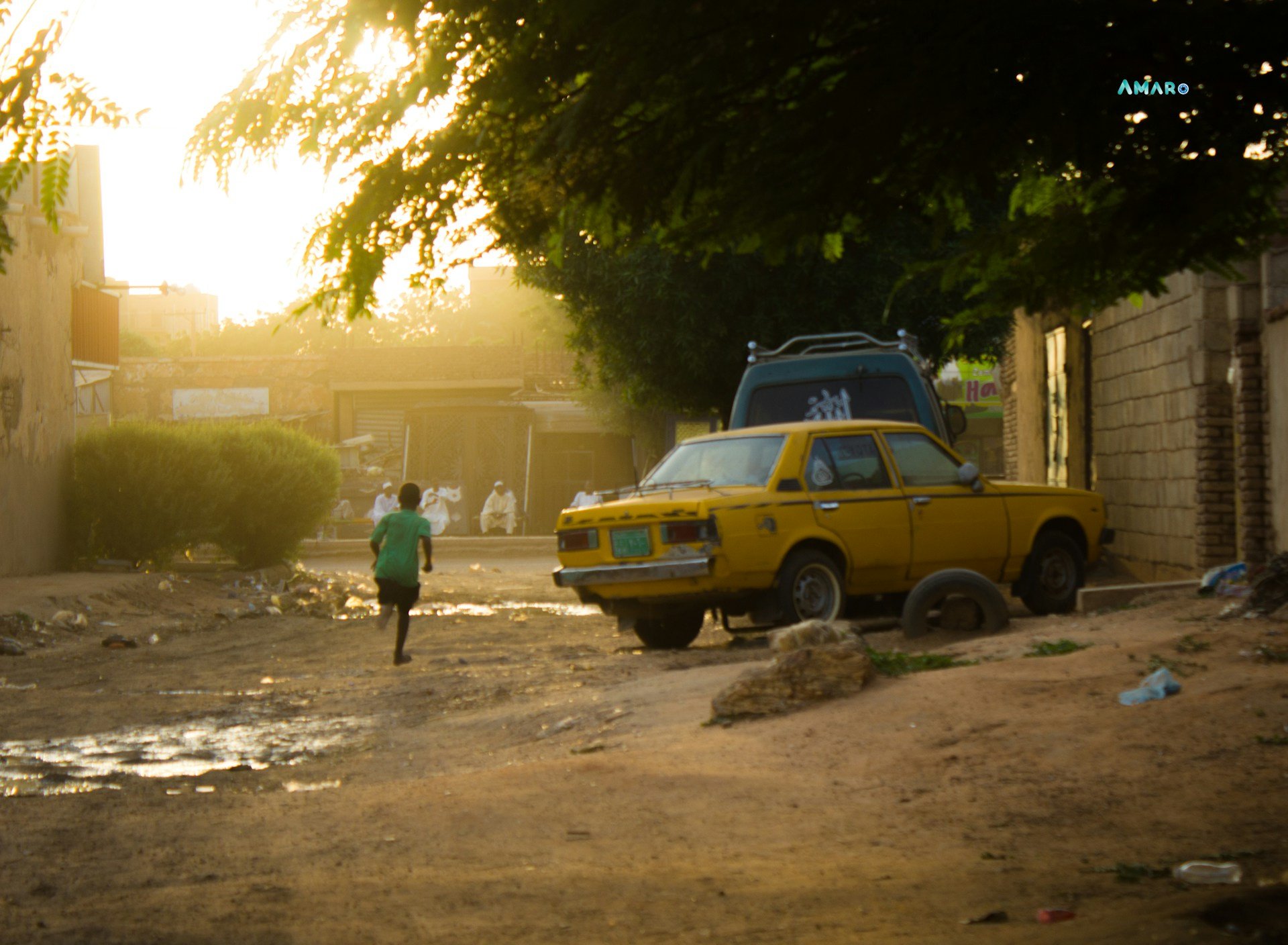
What You're Actually Getting Into
South Sudan became the world's newest country in 2011, after decades of war with Sudan to its north, and within two years fell into its own civil war that killed an estimated 400,000 people and displaced a third of the population before a 2018 peace agreement brought the worst of the fighting to a halt. That agreement is still only partly implemented. Since 2025 the power-sharing arrangement between the country's rival leaders has been deteriorating again, with recurring armed clashes and elections pushed back to December 2026, and the United Nations estimates that more than 70 percent of the population needs humanitarian assistance in 2026. This is the context every other fact on this page sits inside.
It is also true that South Sudan holds landscapes almost nobody gets to see: the Sudd, one of the largest wetlands on the planet, and a migration of an estimated six million white-eared kob, tiang and Mongalla gazelle across the Boma-Badingilo landscape that researchers now believe is the largest overland mammal migration on Earth, larger than the Serengeti's. That is not an invitation. It is context for why this page exists at all, rather than simply telling you to stay away and stopping there.
Who this guide is actually for
This is not a leisure travel guide, and we are not going to pretend otherwise by wrapping a Do Not Travel country in itinerary language. It exists for aid workers, diplomatic and NGO staff, journalists, researchers and people with genuine family ties who are traveling to South Sudan regardless of the advisory, and who need honest, current, practical information rather than either alarmism or a sanitized brochure. If you are choosing a first African destination for a holiday, this is not it; our Kenya guide covers a safer, well-established alternative in the same region.
The Advisory, and What It Means in Practice
The US State Department rates South Sudan Level 4, Do Not Travel, its most severe advisory level, citing unrest, crime, kidnapping, landmines and extremely limited medical services; the advisory was last updated 17 May 2026. The UK FCDO advises against all travel to the entire country, and its most recent update, 26 May 2026, tells British nationals already in South Sudan to leave now if they judge it safe to do so. Neither government issues advisories at this level lightly, and both cite the same underlying problem: the political and security situation is unpredictable and can deteriorate with little warning.
Crime & kidnapping
Foreign nationals have been victims of armed robbery, sexual assault and kidnapping, including kidnapping for ransom or political leverage. Criminal and military checkpoints, official and unofficial, appear throughout the country and can turn violent.
Landmines & ordnance
Landmines and unexploded ordnance remain scattered outside Juba, often unmarked. This alone is reason not to leave paved, regularly used roads or travel independently into rural areas.
Travel outside Juba
US government personnel in South Sudan operate under curfew, move only in armored vehicles, and have official travel outside Juba restricted. That is the operating standard to model your own movements on, not a bureaucratic formality.
Medical care, consular support and why this isn't a normal risk calculation
Medical facilities in South Sudan, including in Juba, are extremely limited, and serious injury or illness typically means medical evacuation at the traveler's own expense. Both the US and UK governments describe their ability to provide in-country consular assistance as severely limited; the US Embassy has been on ordered departure status for non-emergency personnel. Comprehensive medical evacuation insurance is not optional here in the way it might be elsewhere, it is a baseline precondition for going at all.
If you are reading this guide because your organization requires you to travel, work through your employer's or agency's security team rather than treating this page as sufficient preparation on its own: they will have current, situation-specific guidance this page cannot replicate.
Emergency numbers
999 is the number most consistently cited for police, ambulance and fire in South Sudan, though reporting on local emergency numbers is inconsistent and response capacity, especially outside Juba, cannot be assumed. Treat any emergency number here as a starting point, not a guarantee, and rely first on your employer's or embassy's security contacts.
Embassy contact in Juba
The US Embassy in Juba is on Kololo Road, Tongping: +211-912-105-188 during business hours, +211-912-105-107 for after-hours emergencies. Most other missions maintain a presence in the Tongping and Thongpiny areas near the embassy district; confirm your own country's embassy location and current operating status before travel, since several missions have reduced staffing amid the 2025-2026 deterioration.
A History Worth Knowing
South Sudan's modern history is short and violent by necessity: two long wars with Sudan over 1955-1972 and 1983-2005, a 2005 peace deal that set up a 2011 independence referendum, and independence itself on 9 July 2011 after 98 percent of voters chose separation. Two years later the new country's own political rivalry, between President Salva Kiir and former Vice President Riek Machar, turned into civil war. Understanding that rivalry is understanding most of what follows.
- 1983-2005
The Second Sudanese Civil War. Roughly two million dead, mostly from war-related famine and disease, fought largely along the fault line between the Arab, Muslim north and the African, Christian and animist south.
- 2011
Independence. South Sudan separates from Sudan on 9 July after a referendum in which 98 percent voted to secede, becoming the world's newest country.
- 2013-2018
Civil war. A political split between President Kiir and former Vice President Machar becomes an ethnicized civil war, an estimated 400,000 dead, roughly a third of the population displaced.
- 2018
The Revitalised Peace Agreement. Ends the worst of the fighting and brings Kiir and Machar into a unity government, but implementation stalls repeatedly over the years that follow.
- 2025-2026
Renewed deterioration. Power-sharing arrangements erode further, recurring armed clashes are reported, and long-delayed elections are pushed back to 22 December 2026 amid unresolved disputes over security-force unification.
Read further: the 2018 agreement's unfinished business
The 2018 Revitalised Agreement on the Resolution of the Conflict in South Sudan brought Riek Machar back into government as First Vice President alongside President Kiir, but core provisions, most importantly unifying the country's rival armed forces into a single national army, were never fully completed. Analysts tracking the situation through 2025 and 2026 describe the current trajectory as the most serious risk of a full relapse into civil war since 2018, driven by mistrust between the two men's factions, unilateral moves to consolidate power, and repeated clashes between forces nominally covered by the same peace deal. Roughly 7.8 million people face acute food insecurity in 2026, with famine risk in parts of the country, a humanitarian dimension that sits alongside and is worsened by the political instability.
Juba, and the Migration You Almost Certainly Won't Reach
South Sudan does not have a travel circuit in the normal sense. Juba is the country's capital, largest city, sole international gateway and the only place with hotels, communications and infrastructure a visitor can actually rely on, which makes it the only realistically viable base for anyone who has to be here. Everywhere else in the country falls outside what the advisories above consider acceptable movement for anyone without a specific operational reason and a security plan to match.
The Boma-Badingilo migration: real, and not something you arrange casually
Beyond Juba, the Boma-Badingilo landscape in the country's east hosts what researchers and African Parks, which has managed the two national parks under a 10-year government agreement since 2022, now believe is the largest overland mammal migration on Earth: an estimated six million white-eared kob, tiang, reedbuck and Mongalla gazelle moving in an annual circuit between the Sudd wetland and the parks' grasslands, tracking the rains between roughly November and June. It is a genuine natural spectacle that very few outsiders have ever witnessed.
It is also not independent tourism. Access exists only through a small number of specialist operators running charter flights from Juba to bush airstrips near the parks, with armed ranger escorts arranged in advance; there is no scenario in which visiting this region on your own, by road, is a reasonable idea given the security and landmine risks already described. Anyone seriously considering it should be working with African Parks or a named, currently operating specialist safari company, not planning independently from this page, and should check the latest advisory guidance immediately before booking, since access can close on short notice.
Culture & Etiquette
South Sudan is home to more than 60 ethnic groups, the Dinka and Nuer are the largest, alongside Bari, Azande, Shilluk and many others, each with its own language and traditions, and English is the official language of government and business alongside widely spoken Juba Arabic and dozens of local languages. Hospitality runs deep in South Sudanese culture even amid conflict, and visitors who are respectful and low-key are generally treated warmly in the settings, mainly secured compounds, hotels and offices, where most legitimate visitor activity happens.
Do
- Dress conservatively. Modest, covered clothing is expected for both men and women in a socially conservative society; this matters more than in most tourist destinations because you are not visiting as a tourist.
- Greet people properly. A handshake and a few words of greeting matter here; rushing past pleasantries reads as rude across most South Sudanese cultures.
- Defer to your security contact. Whether that's an employer, an NGO security officer or a fixer, their local, current knowledge overrides general guidance, including this page.
- Carry identification and travel documents at all times, including at checkpoints, and keep copies separate from the originals.
Don't
- Discuss tribal or party politics casually. The Kiir-Machar rivalry runs along ethnic lines and is a live, sensitive subject, not small talk.
- Photograph government buildings, checkpoints, military personnel or airports without explicit permission; this is taken seriously and can escalate quickly.
- Travel after dark outside secured compounds, or move around Juba without a known, trusted driver.
- Assume normal tourist behavior applies. Wandering with a camera, haggling loudly in markets, or improvising a route are all judgment calls that carry more weight here than they would elsewhere.
Food & Drink
Juba's food scene is small and concentrated around the hotels, compounds and a handful of restaurants that serve the international and NGO community, rather than a developed dining culture built for visitors. Most reliable meals happen inside secured properties; independent street-level exploring for food is not something this guide recommends given the safety context above.
Hotel restaurants
The most consistent and secure food options are inside Juba's international-standard hotels, which run their own kitchens and, in some cases, multiple restaurants and bars on site. This is where most legitimate visitors eat most of their meals.
Ethiopian & Ugandan kitchens
Restaurants serving Ethiopian and Ugandan cuisine operate around Juba's city center, reflecting the region's cross-border trade and NGO community, and are a common, relatively reliable option outside hotel dining.
Konyo Konyo Market
Juba's main market, a sprawling area of stalls selling produce, goods and street food, gives a real sense of everyday Juba life. It is best visited briefly, in daylight, with a trusted local guide or driver rather than alone.
Getting There, Getting Around & When
Juba International Airport (JUB) is the country's sole international gateway, served by a small number of regional carriers connecting through Nairobi, Addis Ababa, Cairo and other East African hubs; there are no direct long-haul flights from Europe or North America. Arrange airport pickup in advance through your hotel, employer or a known driver rather than using an unarranged taxi on arrival.
Getting around once you're there
Independent car rental and ride-hailing apps are not a realistic option in Juba the way they would be in a typical capital city. Visitors move by pre-arranged driver, hotel shuttle or organizational vehicle, generally the same vehicle and driver for the duration of a stay, which also gives you someone with current local knowledge of which routes and checkpoints are fine on a given day and which aren't. Walking around central Juba in daylight in a small group is done by some residents and long-term visitors, but it is a judgment call that should follow current local advice, not a default.
If travel truly cannot be avoided, when to go
December to March, South Sudan's dry season, is the more practical window logistically: unpaved roads outside Juba are more passable and the rains that flood large parts of the country, including much of the Sudd, ease movement for the organizations that do operate here. This is a logistics note, not a safety recommendation; the advisory situation applies year-round and does not meaningfully improve by season.
South Sudan's climate is hot and humid year-round, with a wet season roughly May to October and a hotter, drier stretch December to March; Juba averages highs in the low-to-mid 30s°C (90s°F) most of the year.
Budget Planning
South Sudan is not cheap for visitors despite the country's poverty, because the small pool of secured, reliable accommodation and services caters to an international market with international pricing. There is also no meaningful "budget tourism" tier: costs cluster around the hotels and services that meet the security bar described in the Safety chapter above.
Accommodation
Juba's international-standard hotels run roughly $100-180 a night; a small number of guesthouses used by NGOs run lower but are typically arranged through an organization rather than booked independently.
Cash, not cards
South Sudan is a cash economy, and both the South Sudanese pound and US dollars circulate, with dollars often preferred for larger payments. Carry clean, newer US bills; older or damaged notes are frequently refused.
The South Sudanese pound has depreciated dramatically against the dollar since independence and continues to be extremely volatile; any specific exchange rate printed here would likely be wrong by the time you read it, so check a live rate immediately before travel rather than budgeting from this page.
Visa & Entry
Almost every nationality needs a visa for South Sudan; there is no meaningful visa-free access for Western passport holders. Most travelers apply for the online eVisa before departure, submitting passport scans and proof of vaccination, with approval typically taking a few days; fees quoted for the eVisa have ranged roughly $50-100, while visas issued directly through an embassy have been quoted around $100 for single entry and $200 for multiple entry. Given how much these figures move, confirm the current fee and process directly with South Sudanese immigration or your nearest embassy within a few weeks of travel rather than relying on any fixed number, including the ones on this page.
✓ Yellow fever certificate
Mandatory. Proof of yellow fever vaccination is required both for the visa application and on arrival; travel without it is not a realistic option.
✓ Valid passport
With significant validity remaining and blank pages for entry stamps and visa documentation.
✓ Entry point
Juba International Airport or one of a small number of designated land border crossings; arriving anywhere else is not an option.
✓ A reason to be there
Given the advisory context, having documented purpose, an employer letter, invitation or clear itinerary, smooths both the visa process and questions at the border.
| South Sudan | Kenya | |
|---|---|---|
| US advisory | Level 4: Do Not Travel | Level 2: Exercise Increased Caution |
| Tourism infrastructure | Essentially none outside secured Juba hotels | Established, with a full range of budgets and operators |
| Wildlife | Boma-Badingilo migration, specialist charter access only | Maasai Mara and beyond, mature safari infrastructure |
| Entry | eVisa plus yellow fever certificate, essential travel only | Straightforward eVisa, genuinely open to leisure travelers |
| Region | East Africa, landlocked | East Africa, coastal and inland |
South Sudan FAQ
Is South Sudan safe to visit?
No, not for leisure travel. The US State Department rates South Sudan Level 4, Do Not Travel, and the UK FCDO advises against all travel, citing armed conflict, crime, kidnapping and landmines. This guide is written for people who must travel for work, aid or family reasons.
Do I need a visa for South Sudan?
Yes. Almost all nationalities need a visa, most commonly the eVisa applied for online before arrival, plus proof of yellow fever vaccination. Confirm current fees and required documents directly with South Sudanese immigration before you travel, as requirements shift.
What is the capital of South Sudan and where should visitors base themselves?
Juba is the capital and the only city with functioning international flights, secured hotels and any real infrastructure. It is effectively the only viable base for a visitor; travel beyond it carries substantially higher risk.
Can tourists visit the Boma-Badingilo wildlife migration?
In theory, via a handful of specialist fly-in operators using charter flights and armed ranger escorts from Juba. This is not independent tourism and is not something to arrange casually; it requires a licensed operator and current security clearance.
Is South Sudan in a civil war right now?
A 2018 peace agreement formally ended the 2013-2018 civil war but is only partly implemented. Since 2025 the power-sharing arrangement has been deteriorating, with recurring armed clashes and elections delayed to December 2026, so the situation remains volatile rather than settled.
What currency does South Sudan use?
The South Sudanese pound (SSP), though US dollars in cash are widely used and often preferred for larger payments. The pound has depreciated dramatically and the country is in a severe cash and banking liquidity crisis, so carry clean, newer US bills.
Are there landmines in South Sudan?
Yes, in scattered locations, mostly outside Juba, and unexploded ordnance is not always marked. This is a specific reason not to leave marked roads or travel independently outside the capital.
Can I use ATMs in South Sudan?
Unreliably. Juba has a handful of bank ATMs but the country is in an active cash liquidity crisis with some banks capping withdrawals under $10, so ATMs should not be your plan. Bring sufficient US dollars in cash.
What This Guide Won't Do
It won't tell you South Sudan is secretly safe if you're careful, and it won't dress up a Level 4 advisory in adventure-travel language. What it will say is that the people who do have to be here, aid workers, diplomats, journalists, South Sudanese families abroad returning to see relatives, deserve accurate, current, unromanticized information rather than either panic or a brochure. The Nile still runs through Juba, the migration still moves across the Sudd every year, and none of that is a reason to travel here before the advisories say otherwise.
If a trip is genuinely necessary, plan it through people with current, specific, local knowledge, your employer's security team, a licensed operator, an embassy, not primarily through this page or any other general guide.